JOHOR SET 2 2025 P2 Q11
HardWrite your answer on paper. Then open the answer to check it.
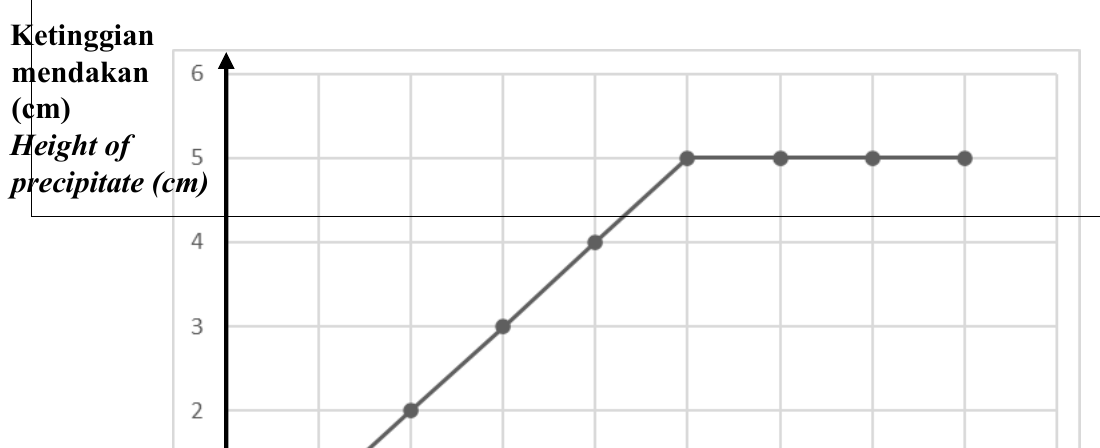
(a) Diagram 11.1 shows 0.5 mol dm⁻³ potassium iodide, KI solution of volume 1 to 8 cm³ added into 8 test tubes, each containing 2.5 cm³ of 0.5 mol dm⁻³ lead(II) nitrate, Pb(NO₃)₂. The graph shows the height of precipitate (cm) against volume of potassium iodide solution (cm³) added: the height rises in a straight line to 5 cm and then stays constant.
Hard20 marks- (a)(i)
State the type of reaction between lead(II) nitrate solution and potassium iodide solution.
[1]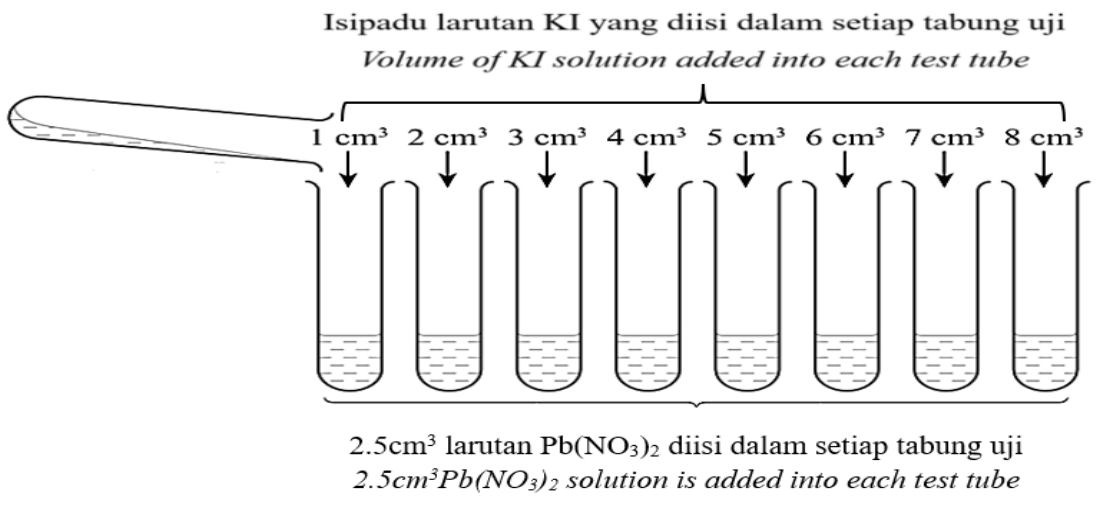
- (a)(ii)
Based on the graph, state the volume of potassium iodide solution needed to completely react with 0.5 mol dm⁻³ lead(II) nitrate solution.
[1] - (a)(iii)
Calculate the number of moles of: potassium iodide solution based on volume in (a)(ii); lead(II) nitrate solution used in the experiment.
[2] - (a)(iv)
Determine the number of moles of iodide ion, I⁻ that reacts completely with 1 mol of lead(II) ion, Pb²⁺.
[1] - (a)(v)
Construct the ionic equation for the formation of the precipitate formed in this experiment.
[2] - (b)
Diagram 11.2 shows the experiment for the heating of copper(II) carbonate (Experiment I, gas passed into lime water) and copper(II) nitrate (Experiment II, moist blue litmus paper and glowing wooden splinter at the mouth of the tube). Both salts decompose when heated. Compare and contrast the observation and product for both experiments.
[4]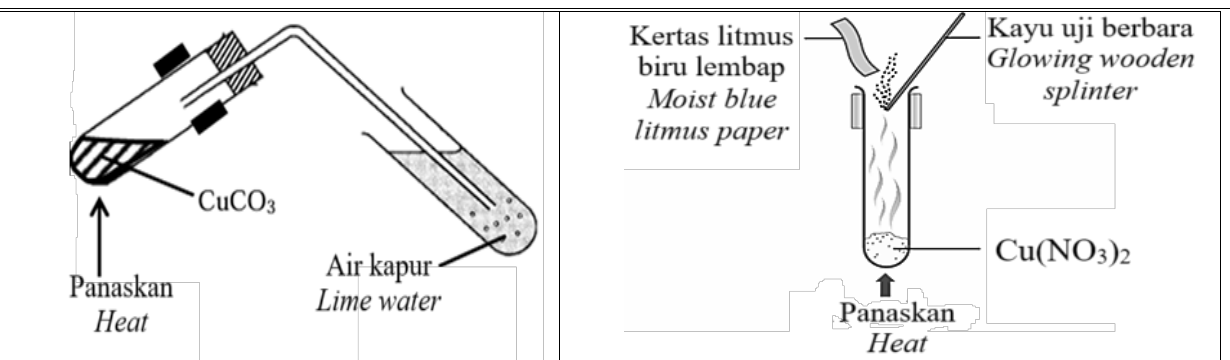
- (c)(i)
Diagram 11.3 shows a shell, made from a type of salt. Ali crushes the shell into small pieces and puts them into a test tube, then adds 50 cm³ of 1.0 mol dm⁻³ hydrochloric acid. Gas T is released and a colourless solution is produced. State the name of gas T and the colourless solution produced.
[2]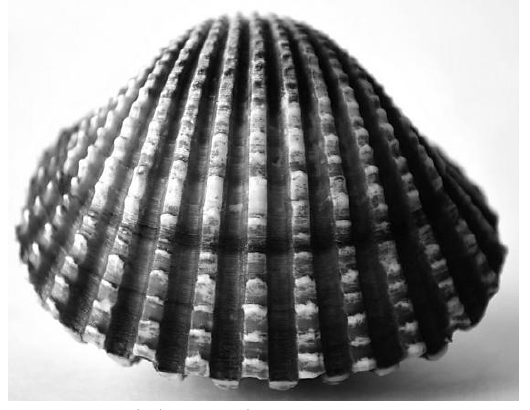
- (c)(ii)
As a chemist, suggest a chemical that can be added to the colourless solution in (c)(i) to regenerate the salt solid that exists in the shell. Describe the experiment on how you can prepare the salt solid that exists in the shell using the chemical you suggested and the colourless solution in (c)(i). Write the balanced chemical equation for the reaction that occurs.
[7]