SBP 2022 P2 Q10
MediumWrite your answer on paper. Then open the answer to check it.
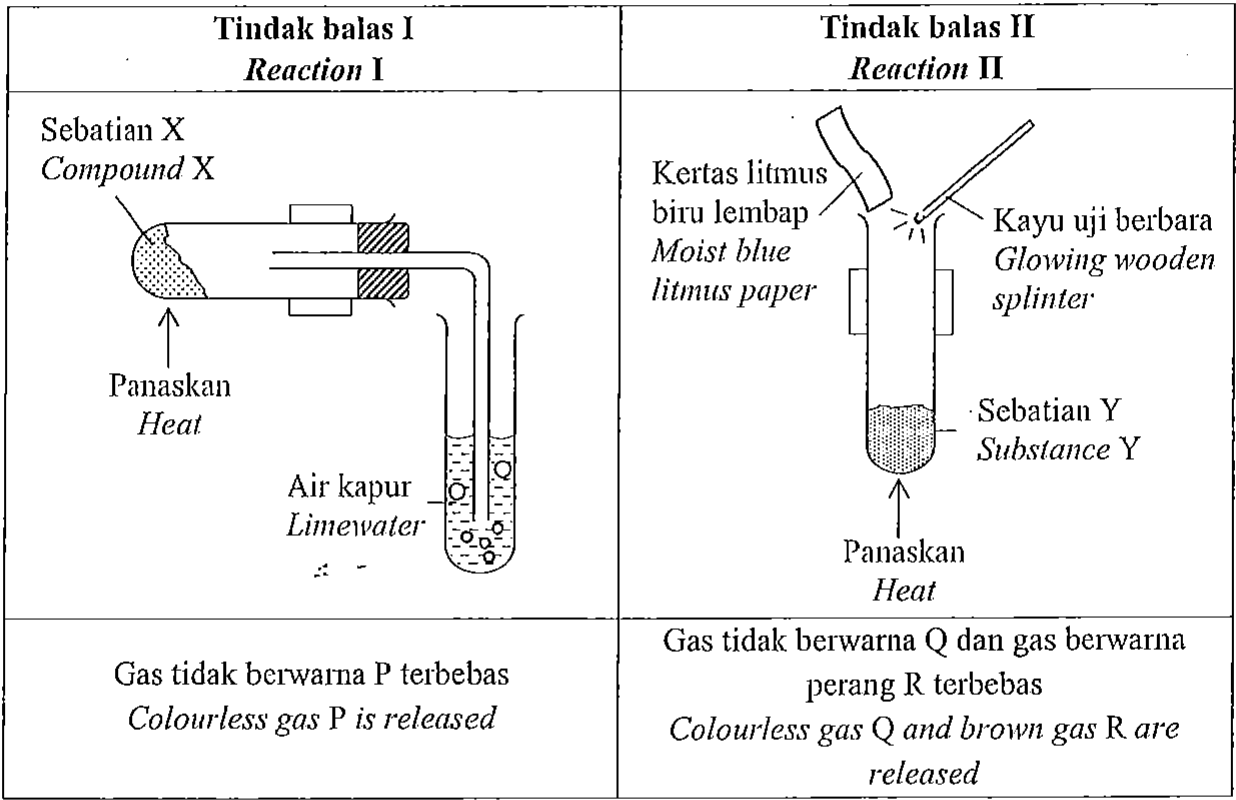
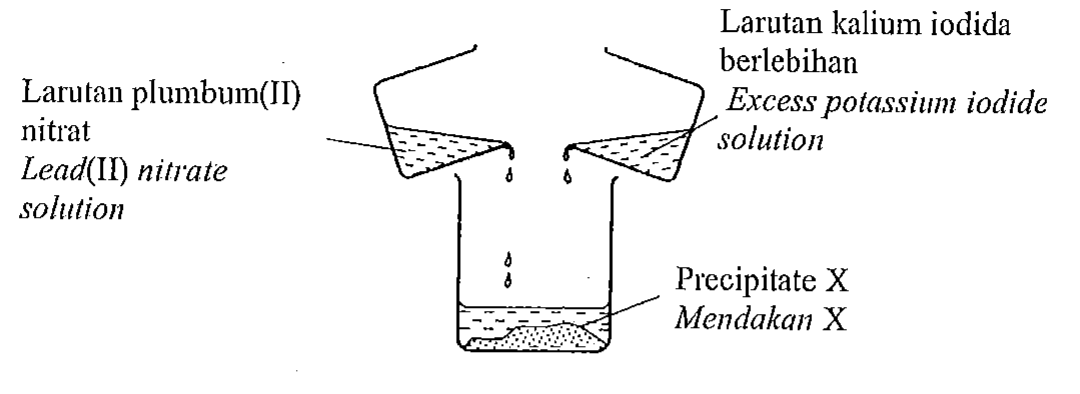
(a) Table 10.1 shows the concentration and pH value for two types of acid with the same basicity: Acid A 1.0 mol dm⁻³, pH value between 3 to 7; Acid B 1.0 mol dm⁻³, pH value less than 3. (b) Table 10.2 shows the effect of heat on two different ionic compounds which are compound X and Y. The compounds consist of the same cation. Heating of the compounds produces yellow solid when hot and white solid when cold. Reaction I: compound X is heated and colourless gas P is released into limewater. Reaction II: substance Y is heated; colourless gas Q and brown gas R are released (moist blue litmus paper and glowing wooden splinter are used to test the gases). (c) Diagram 10 shows the apparatus set-up to produce an insoluble salt: lead(II) nitrate solution is mixed with excess potassium iodide solution to give precipitate X.
Medium20 marks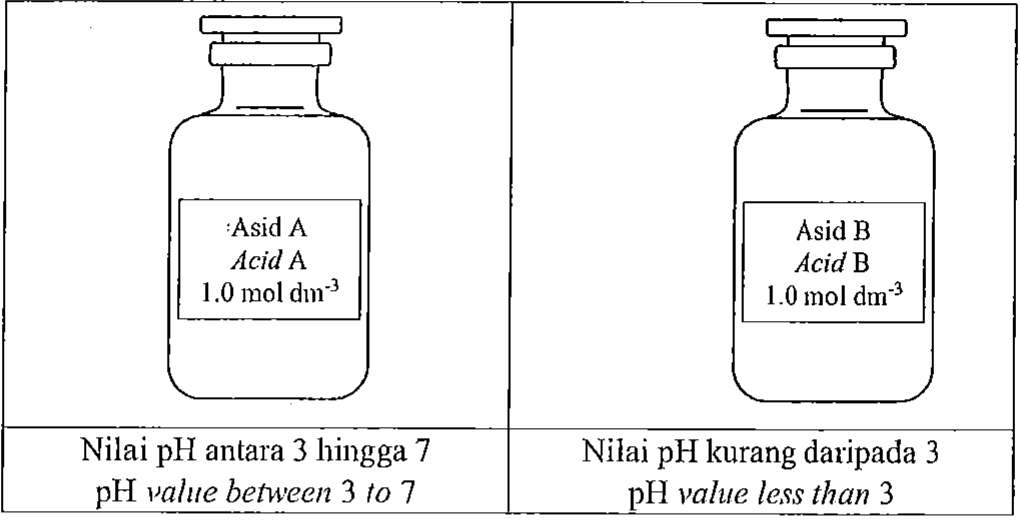
- (a)
What is meant by acid? Based on Table 10.1, suggest acid A and acid B and explain the difference in pH values of these two acids.
[6] - (b)
Write chemical formula for compound X and Y. State the name of gas P, Q and R released in Reaction I and II. Suggest reactants to produce compound X. Write a chemical equation for Reaction II.
[9] - (c)
Name the reaction to produce insoluble salt. Based on Diagram 10, write an ionic equation to show the formation of precipitate X. If 0.05 mol of lead(II) nitrate reacts with excess potassium iodide solution, calculate the mass of precipitate X. [Relative atomic mass: I = 127, Pb = 207]
[5]