SARAWAK SET 2 2024 P2 Q10
HardWrite your answer on paper. Then open the answer to check it.
Diagram 9.1 shows the process that occurs for two different situations. Situation I: extraction of iron in a blast furnace (iron ore Fe2O3 + limestone CaCO3 and coke C added at the top, hot air in, molten iron and slag out). Situation II: brown solid is formed on an iron window frame.
Hard20 marks- (a)(i)
Based on Situation I, the production of iron in industry through the reaction between iron ore, Fe2O3 and coke, C is shown in the chemical equation 2Fe2O3 + 3C → 4Fe + 3CO2 [Relative atomic mass: O = 16; Fe = 56]. Determine the oxidation number of iron in compound Fe2O3 and state the name of the compound according to the IUPAC nomenclature.
[2]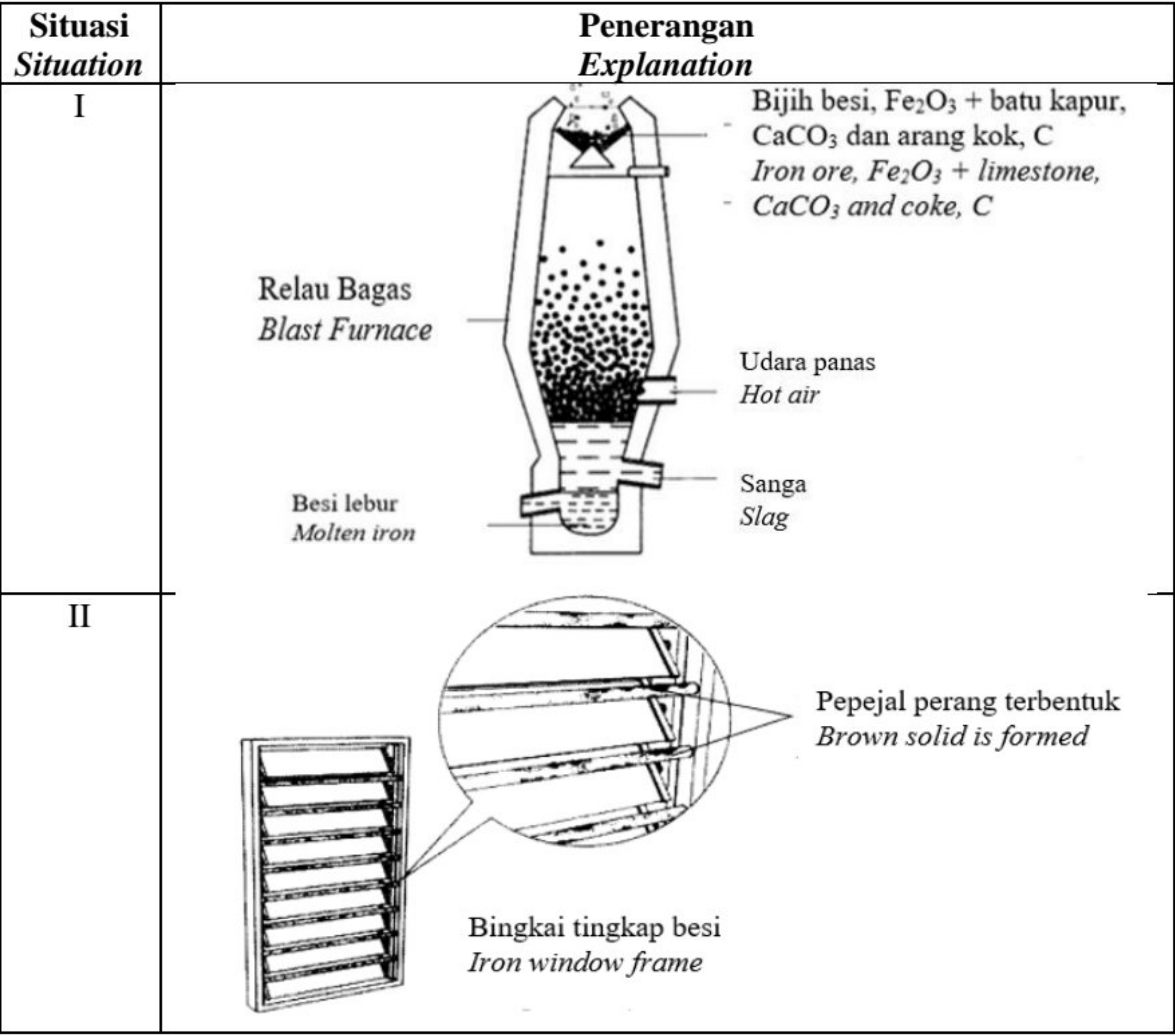
- (a)(ii)
If the factory is able to process 360 kg iron ore a day by using excess carbon, calculate the mass of the iron produced.
[4] - (a)(iii)
Based on Situation II, explain the formation of brown solid and suggest one way to prevent the formation.
[6] - (b)
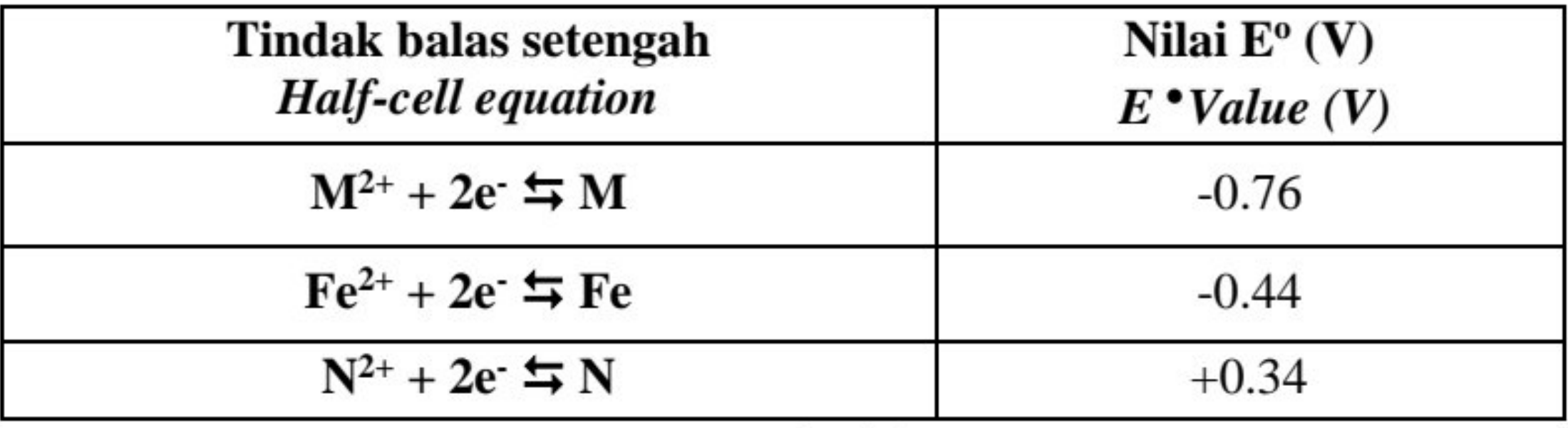
Diagram 9.2 shows the apparatus set-up of an experiment to investigate the effect of metal M and metal N on the rusting of iron (iron nail in contact with metal M in test tube I, with metal N in test tube II, in hot agar solution containing potassium hexacyanoferrate(III) and phenolphthalein). Table 3 shows the standard electrode potential E° for metal M, metal N and iron: M²⁺ + 2e⁻ ⇌ M, −0.76 V; Fe²⁺ + 2e⁻ ⇌ Fe, −0.44 V; N²⁺ + 2e⁻ ⇌ N, +0.34 V. Compare the observations in test tube I and test tube II and explain the differences in the observations between both test tubes.
[6]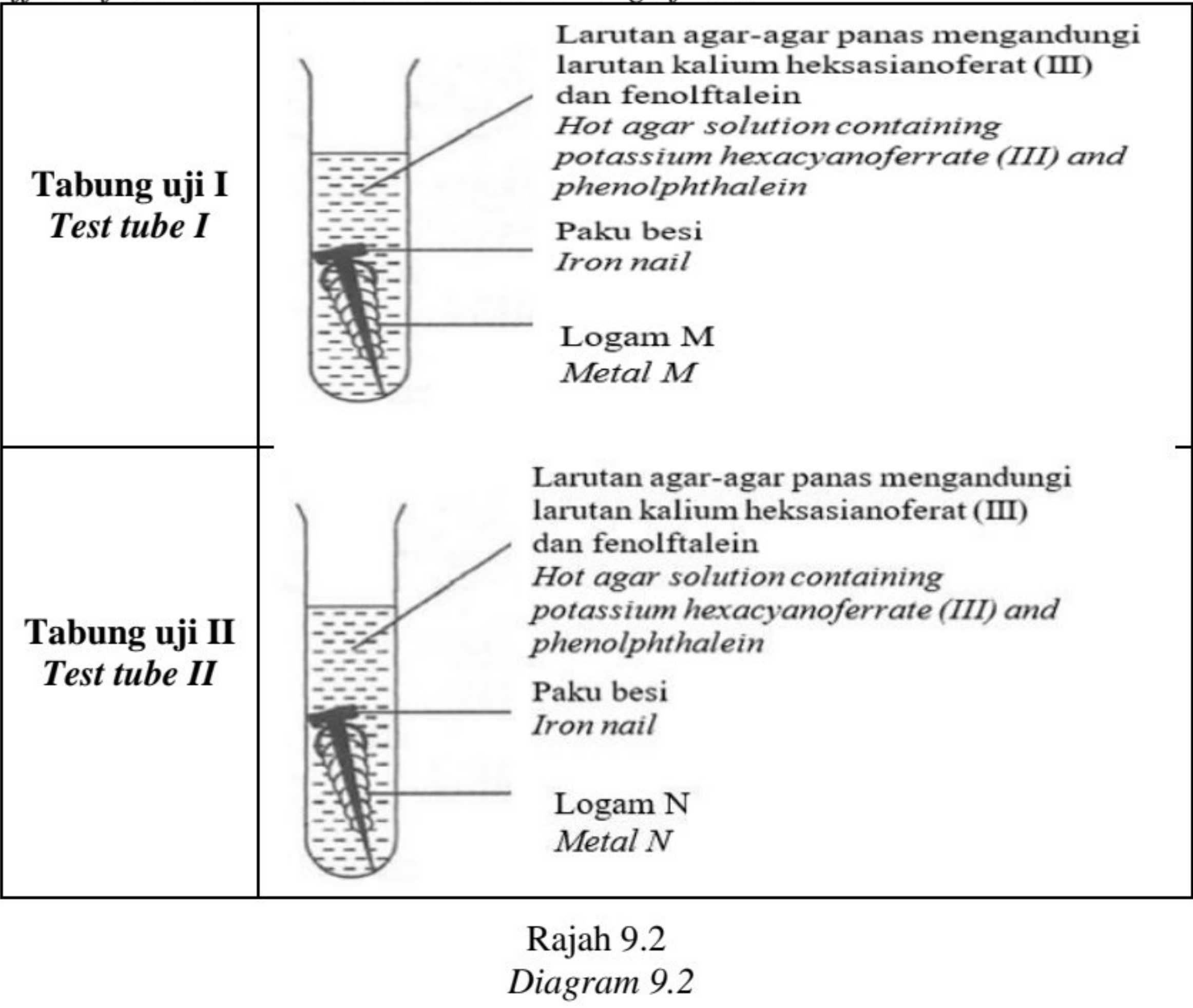
- (c)
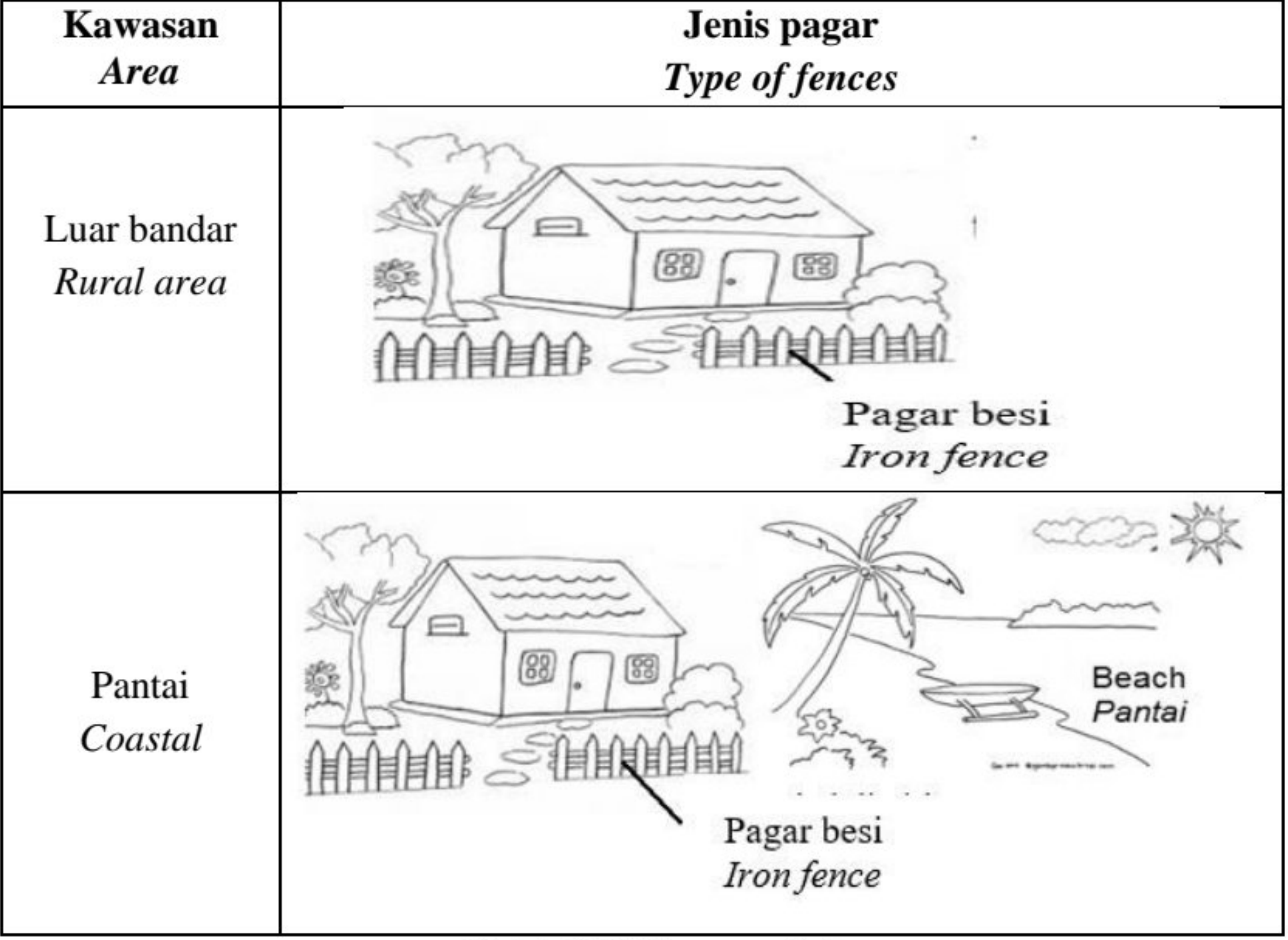
Diagram 9.3 shows two houses with iron fences built at two different areas (rural area; coastal). In your opinion, iron fence at which area rusts faster? Give reasons for your answer.
[2]