SBP 2022 P2 Q7
MediumWrite your answer on paper. Then open the answer to check it.
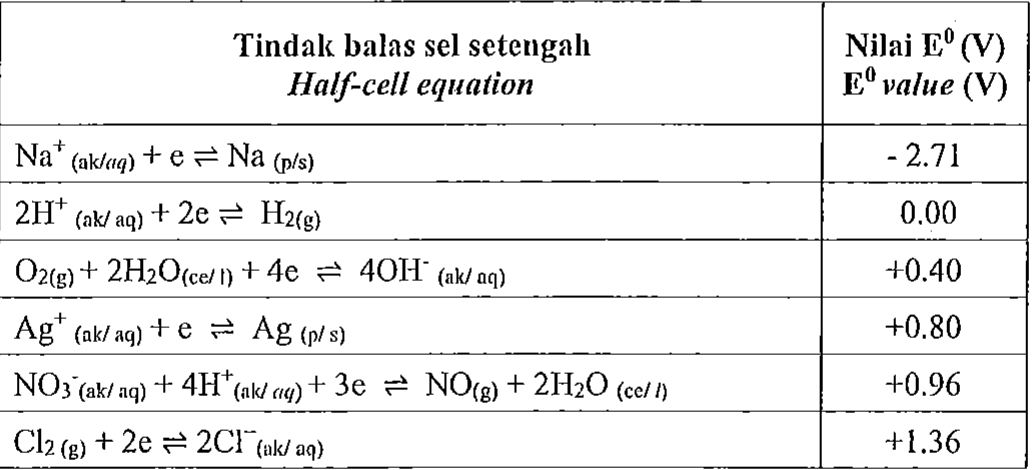
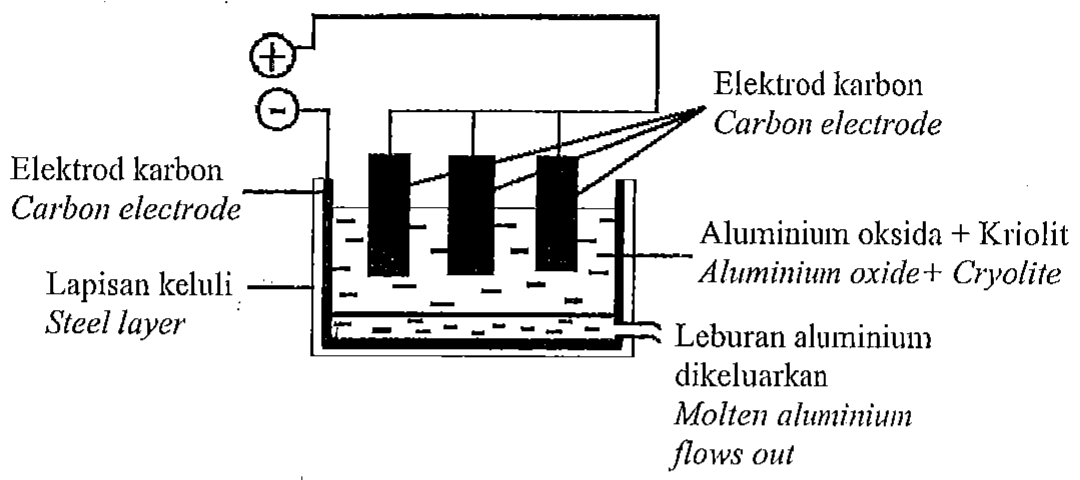
(a) Table 7.1 shows the apparatus set-up (two electrodes X in an electrolyte connected to a battery and ammeter) and observation for the electrolysis process: at the anode the electrode becomes thinner; at the cathode a shiny grey solid is deposited. Table 7.2 shows the E° value for a few half-cells: Na⁺ + e ⇌ Na, -2.71 V; 2H⁺ + 2e ⇌ H₂, 0.00 V; O₂ + 2H₂O + 4e ⇌ 4OH⁻, +0.40 V; Ag⁺ + e ⇌ Ag, +0.80 V; NO₃⁻ + 4H⁺ + 3e ⇌ NO + 2H₂O, +0.96 V; Cl₂ + 2e ⇌ 2Cl⁻, +1.36 V. (b) Diagram 7.2 shows the extraction process of aluminium from aluminium oxide (carbon electrodes, aluminium oxide + cryolite, steel layer, molten aluminium flows out).
Medium10 marks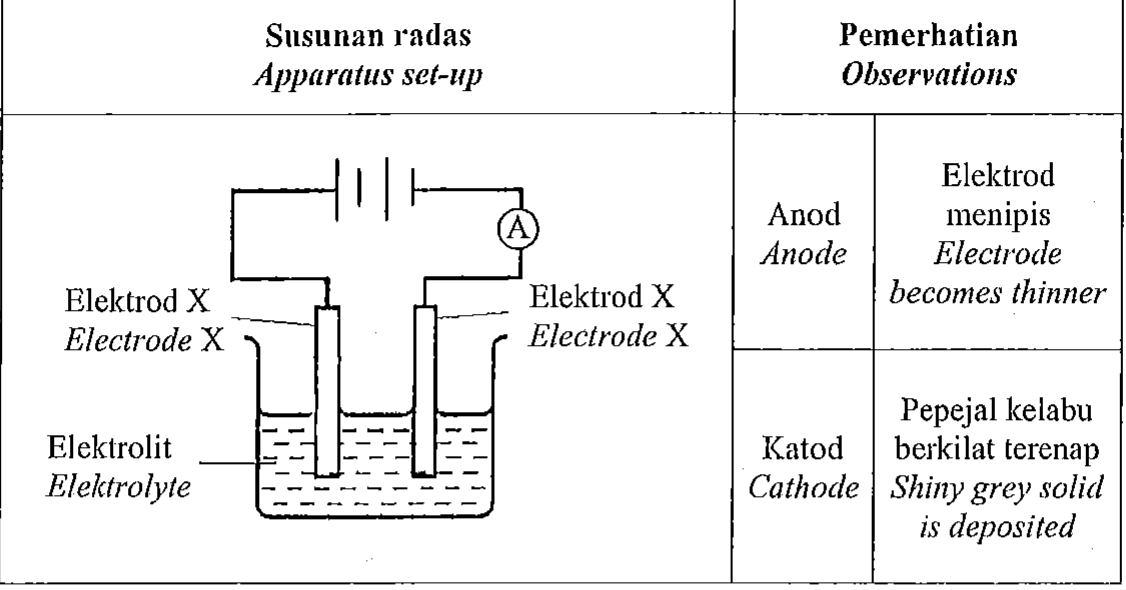
- (a)(i)
The value of standard electrode potential, E° of an electrode can be measured by pairing up the electrode to the standard hydrogen electrode under standard conditions. State one of the conditions.
[1] - (a)(ii)
Based on the observation in Table 7.1 and E° value given in Table 7.2, what is the electrolyte used?
[1] - (a)(iii)
Experiment in Table 7.1 is repeated by modifying the apparatus set-up and the gas collected at anode is tested as shown in Diagram 7.1 (colourless gas relights a glowing wooden splinter). As a chemistry student, what modification has been done to the apparatus set-up in Table 7.1? Explain how the gas is produced.
[3]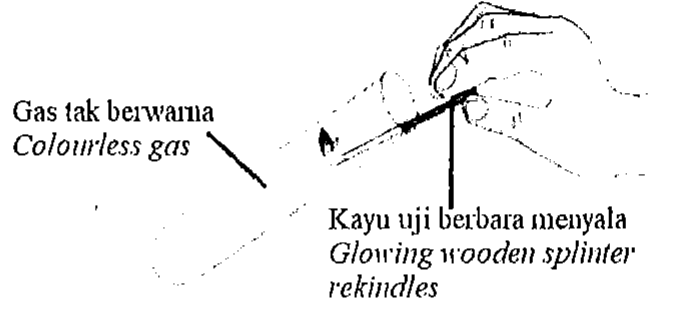
- (b)
Diagram 7.2 shows the extraction process of aluminium from aluminium oxide. Is the extraction process suitable to be run in industry? Justify.
[2] - (c)
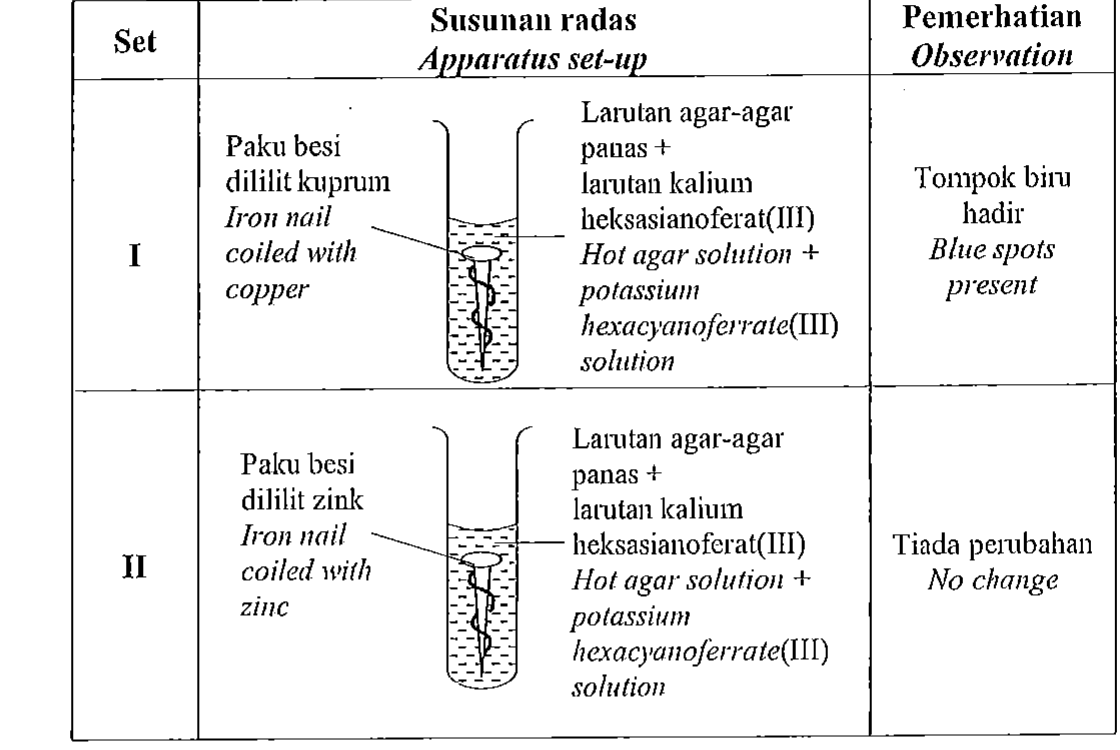
Table 7.3 shows the apparatus set-up in an experiment to investigate the effect of different metals on the rusting of iron nail: Set I iron nail coiled with copper in hot agar solution + potassium hexacyanoferrate(III) solution, blue spots present; Set II iron nail coiled with zinc in the same solution, no change. Explain the differences of observation in the test tubes for both sets of experiment in Table 7.3.
[3]