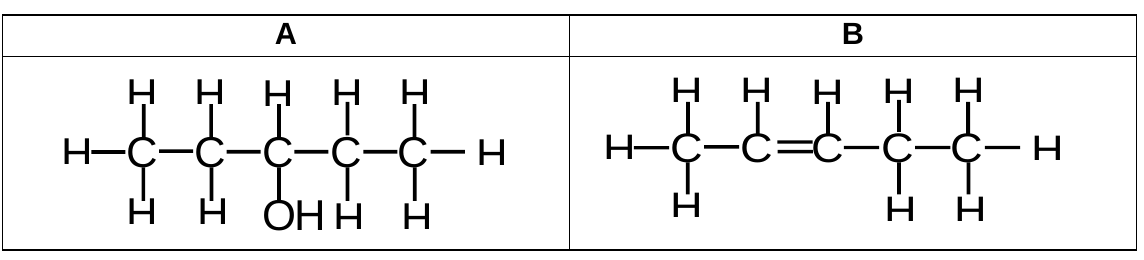
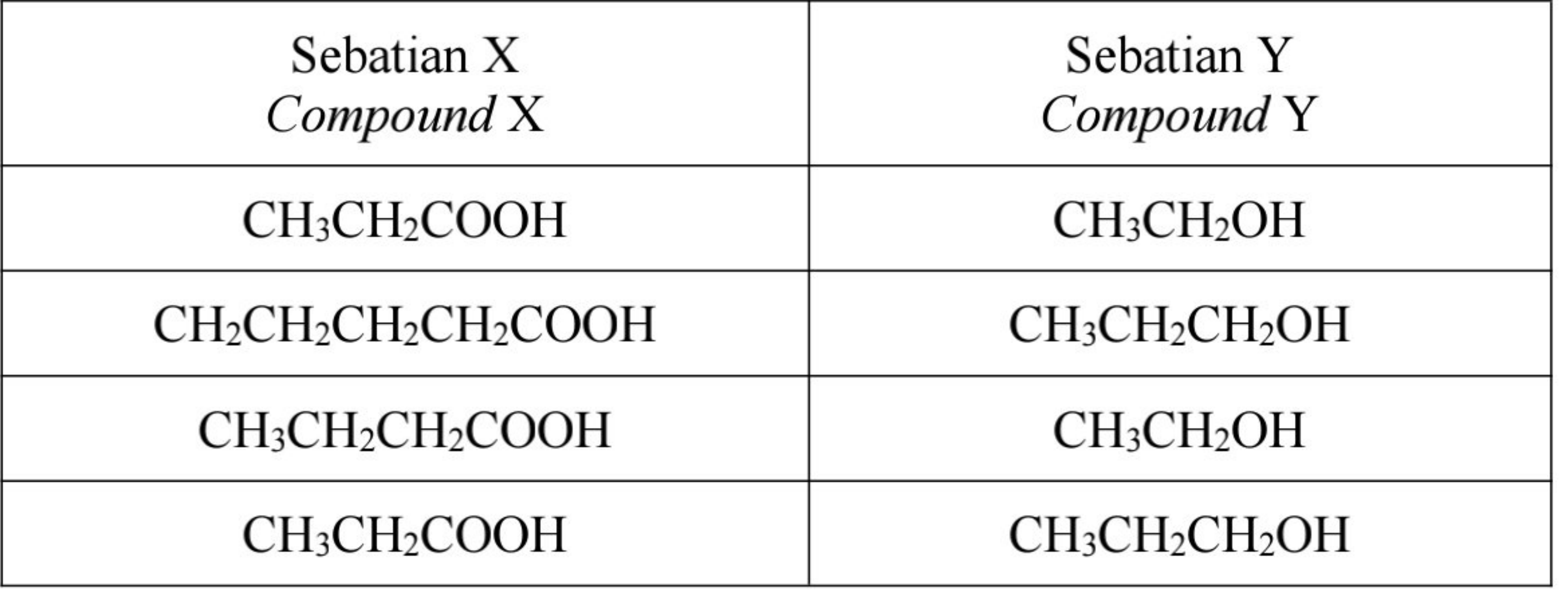
Which of the following statements is true about alkyne?
I Dissolve in organic solvent
II Saturated hydrocarbon
III Cannot conduct electricity
IV Has lower boiling point than alkene
Medium
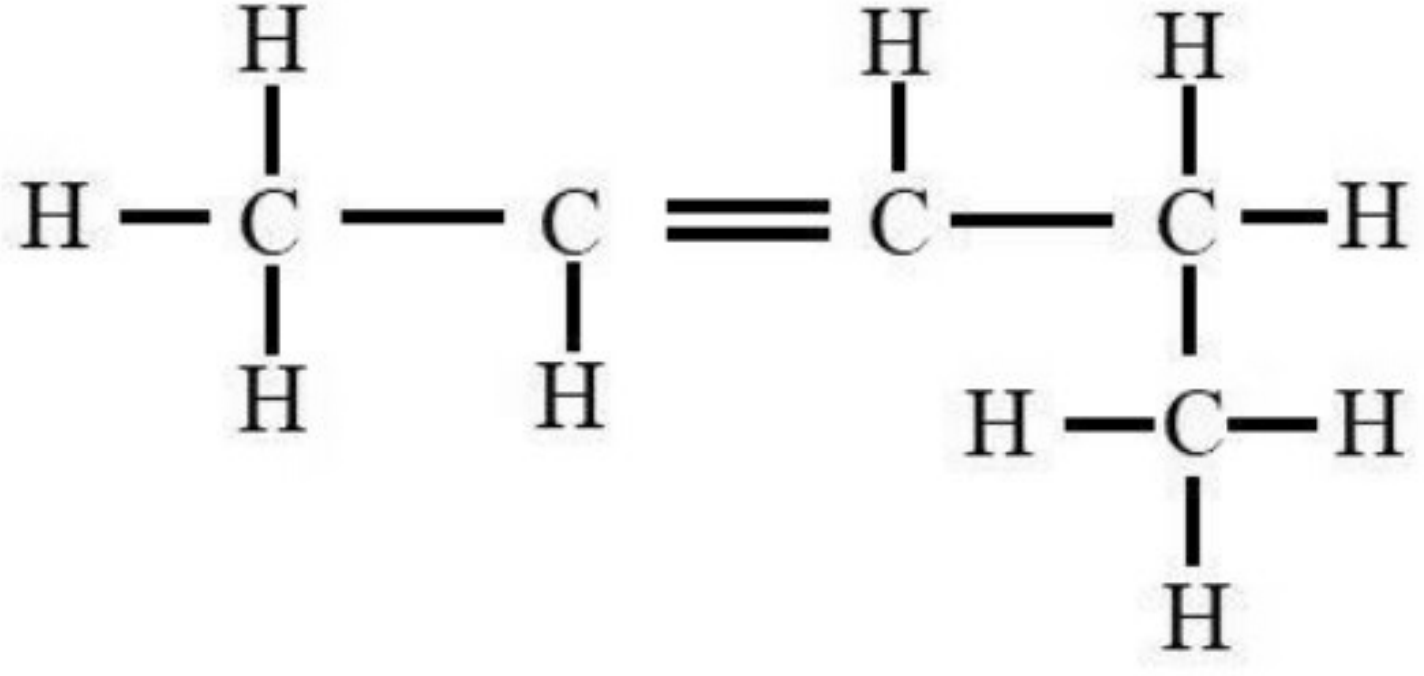
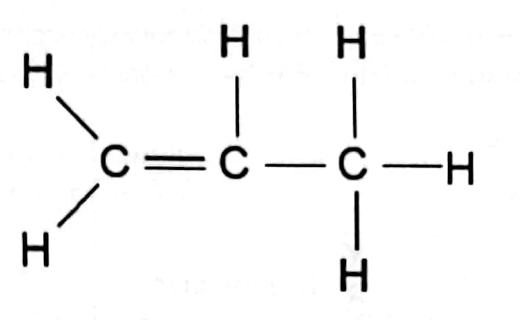
Diagram 11 shows the structural formula for a carbon compound.
Which of the following is the IUPAC nomenclature for the compound?
Medium
Which of the following is a hydrocarbon?
Easy
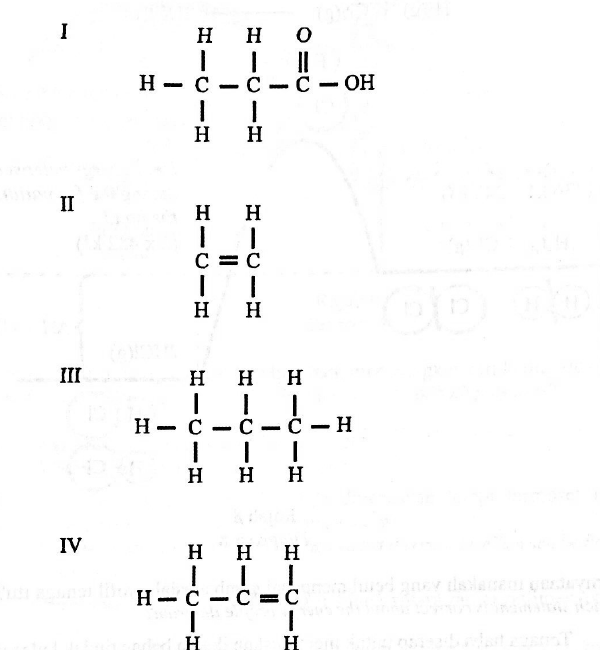
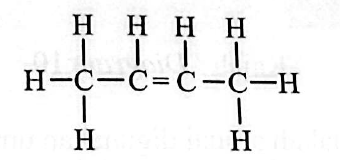
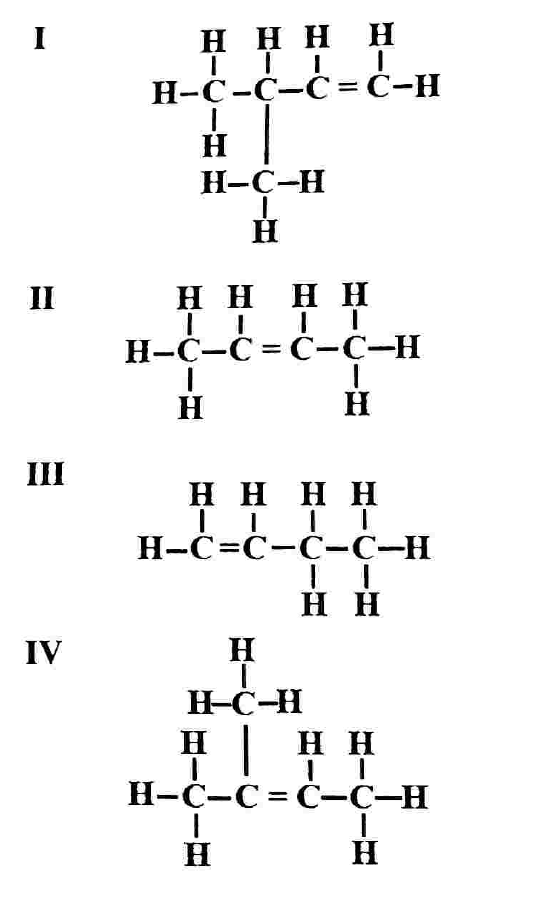
Which of the following is an isomer of butene? (structures I to IV in the diagram)
A I and II B I and III C II and III D I, II and III
Medium
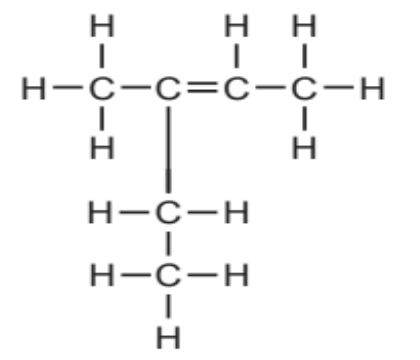
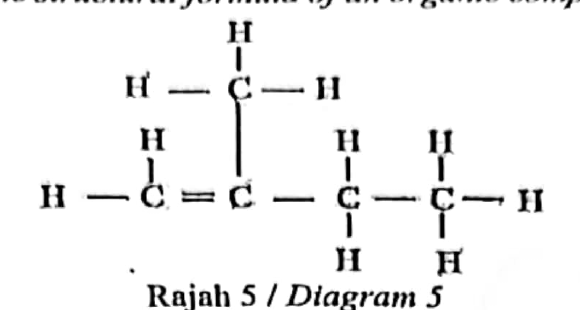
The diagram shows the structural formula of an organic compound. What is the IUPAC name of this compound?
Medium
Which of the following statements is correct about isomer?
Easy
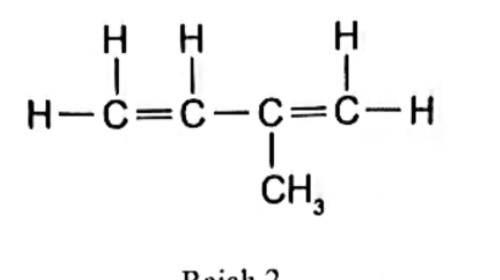
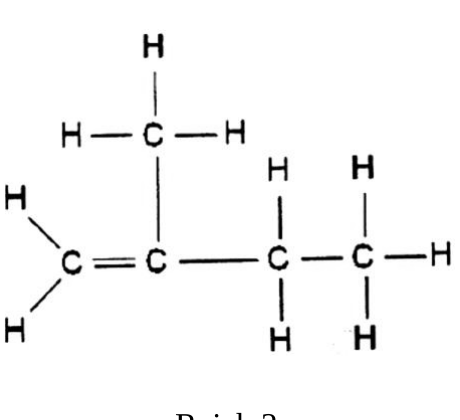
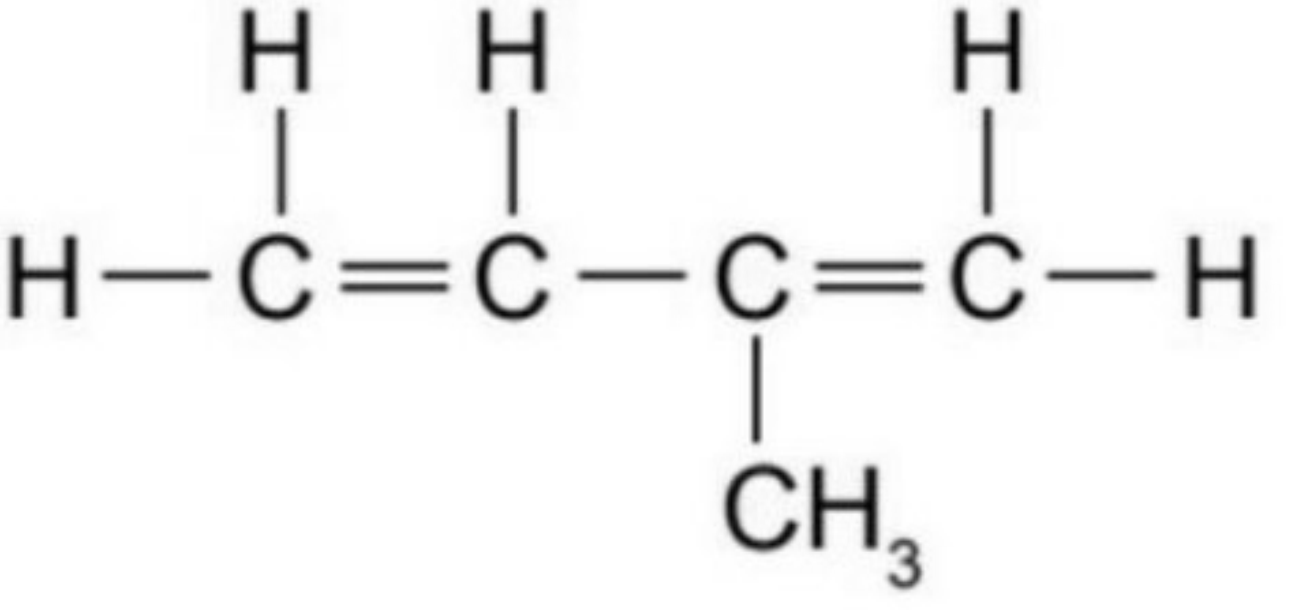
Diagram 2 shows the monomer for natural rubber (CH₂=CH–C(CH₃)=CH₂ drawn as structural formula). What is the name of the monomer following IUPAC nomenclature?
Medium
Antiseptic contains substance W that burns with a blue flame. What is the functional group for W?
Medium
Which of the following is an isomer for butanol? I Butan-1-ol; II 2-methylpropan-1-ol; III 2-methylpropan-3-ol; IV 3-methylpropan-1-ol
Medium
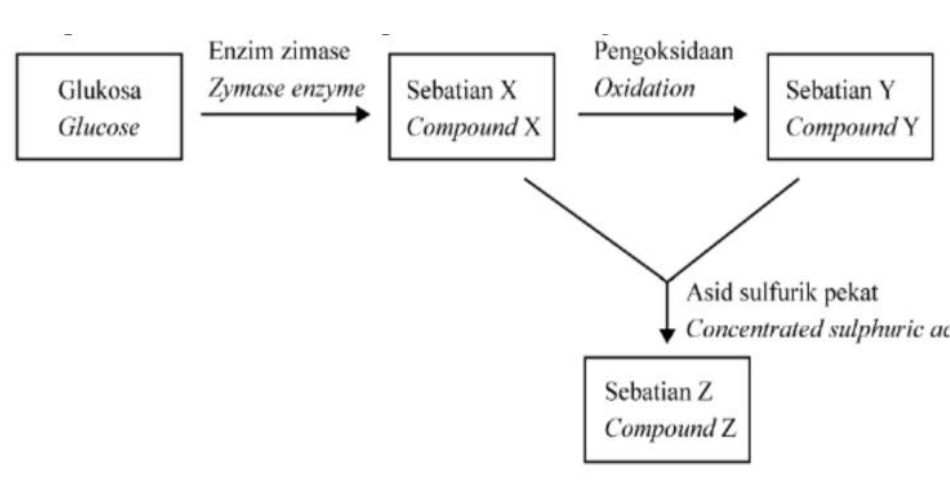
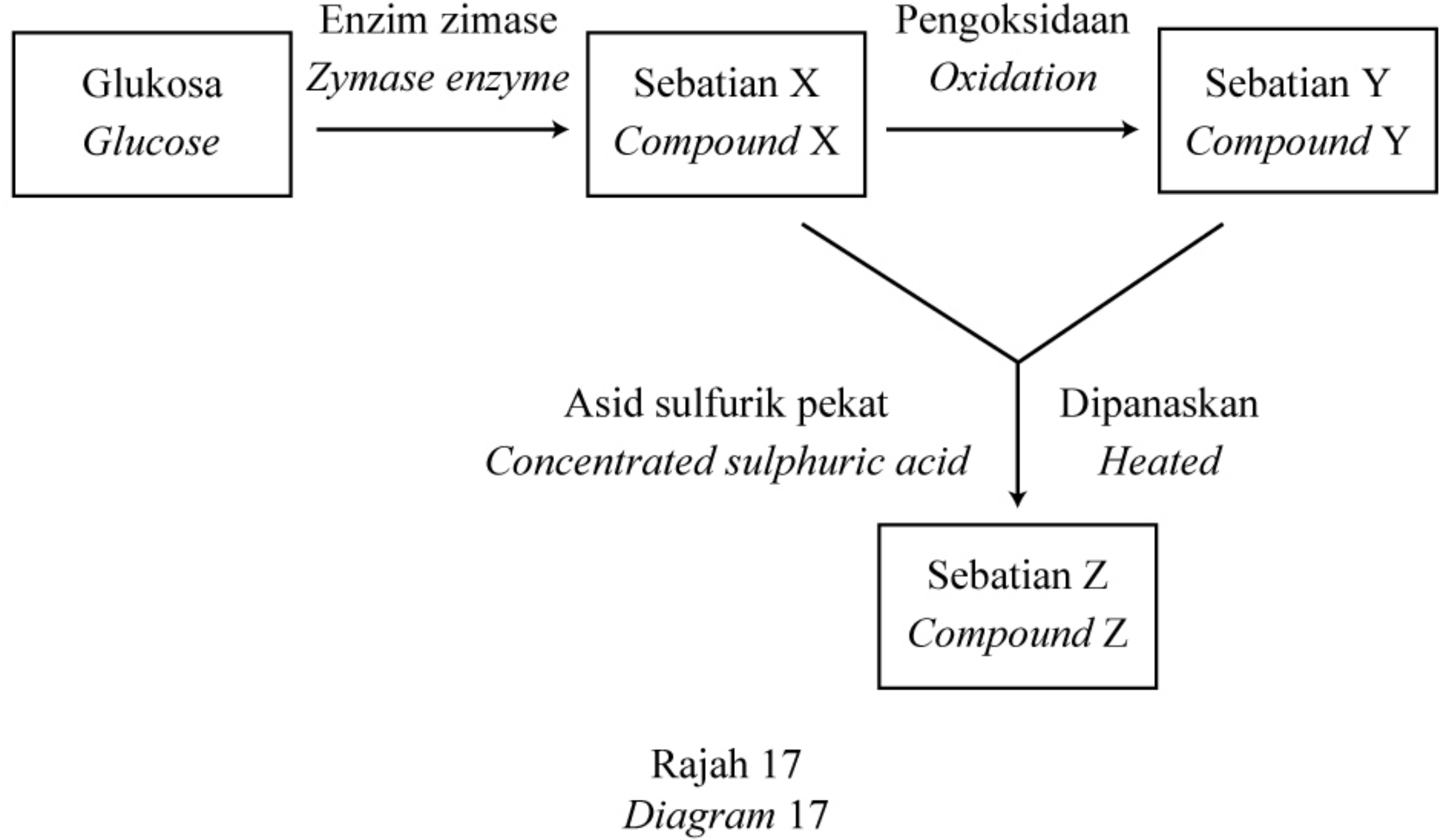
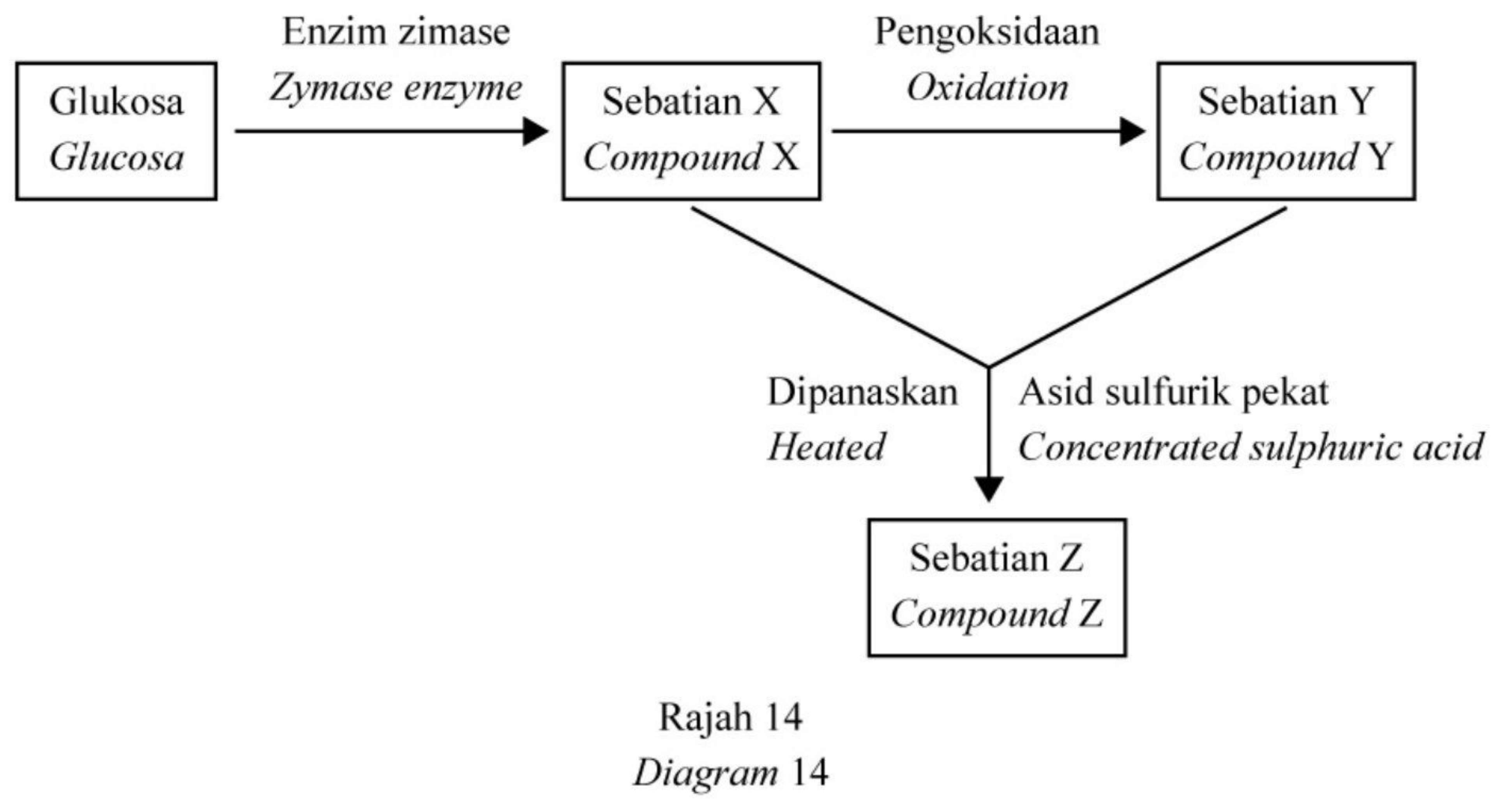
Diagram 7 shows the conversion of glucose (zymase enzyme) to compound X, oxidation of X to compound Y, and reaction of X and Y with concentrated sulphuric acid to give compound Z. Compound X is a colourless liquid, volatile and soluble in water. What is compound Z?
Medium
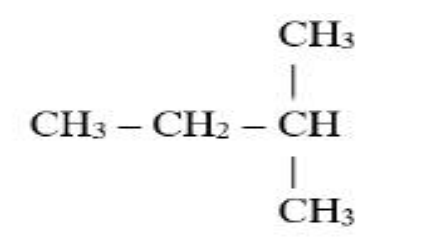
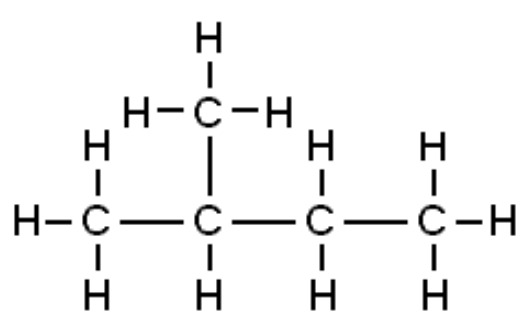
The structural formula of an alkane is shown in Diagram 8: CH₃–CH₂–CH(CH₃)–CH₃ (a CH₃ branch on the third carbon of the chain). What is the IUPAC name of the compound?
Medium
Hydrocarbon is organic compound containing only carbon atom and hydrogen. Based on the statement, which of the following organic compound is hydrocarbon?
Medium
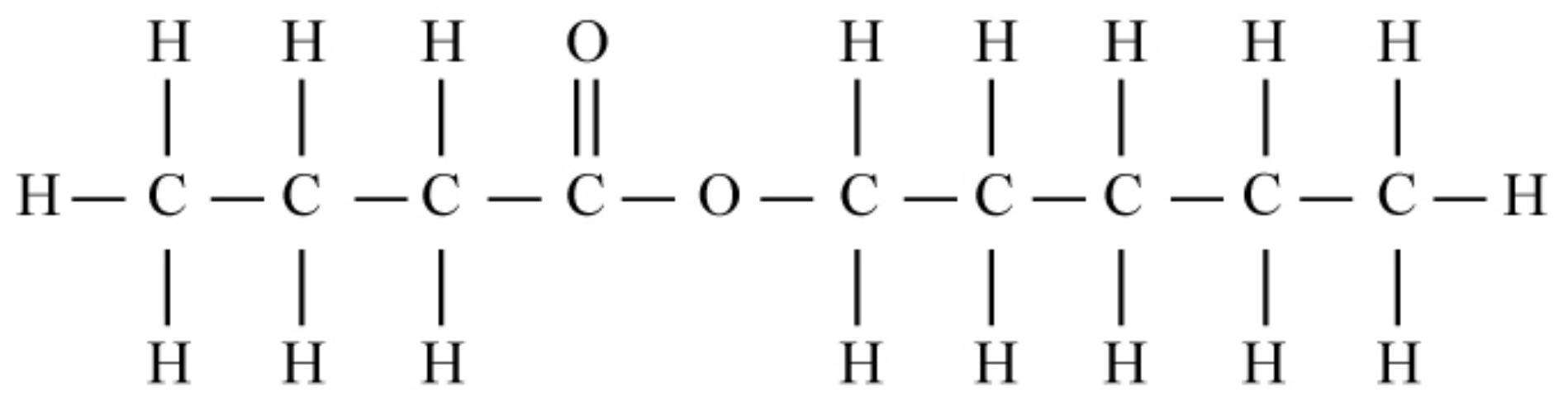
What is the homologous series of propyl propanoate?
Medium
Compound P undergoes combustion in excess oxygen to produce carbon dioxide and water: P + 3O₂ → 2CO₂ + 3H₂O. What is compound P?
Medium
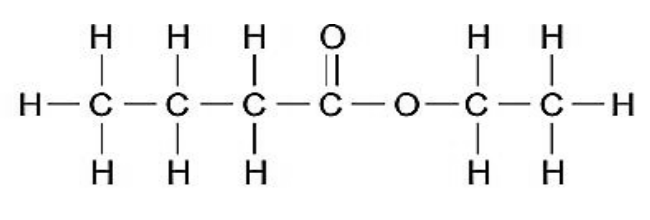
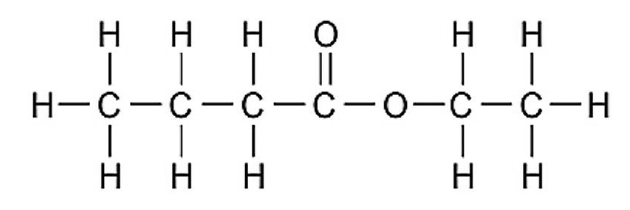
Diagram 14 shows the structural formula of a food flavouring found in fruits: CH₃CH₂CH₂–C(=O)–O–CH₂CH₃. Which of the following can be used to make the food flavouring?
Medium
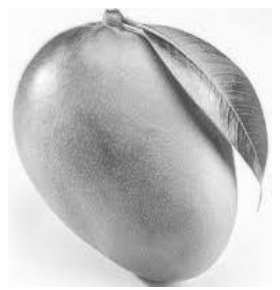
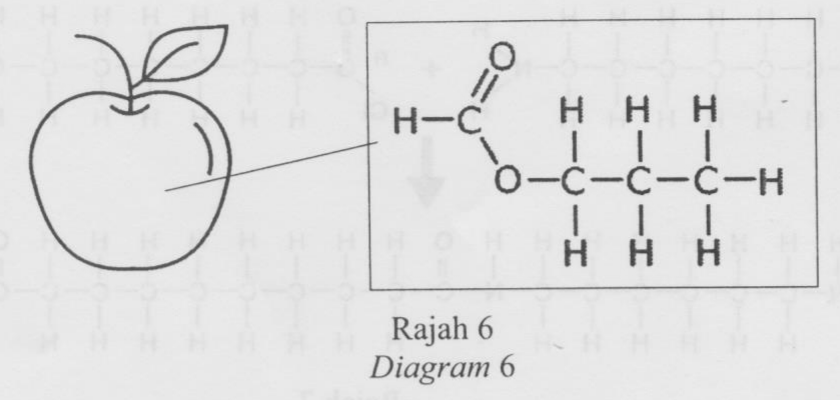
Diagram 10 shows a fruit (mango) that contains compound R which has fruity smell. What is the functional group of compound R?
Medium
Compound Q has the following properties: cannot conduct electricity; insoluble in water; decolourises acidified potassium manganate(VII). What is compound Q?
Medium
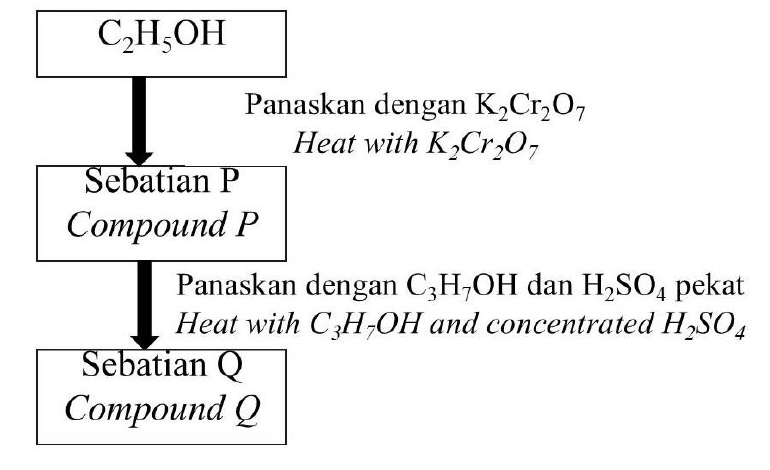
Diagram 26: C2H5OH heated with K2Cr2O7 gives compound P; compound P heated with C3H7OH and concentrated H2SO4 gives compound Q. What is compound Q?
Medium
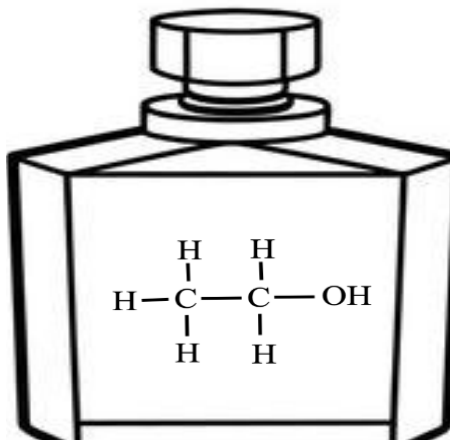
Diagram 35 shows a structural formula (ethanol, C2H5OH) of an organic compound contains in a bottle of perfume. Why is the organic compound used in the perfume?
Medium
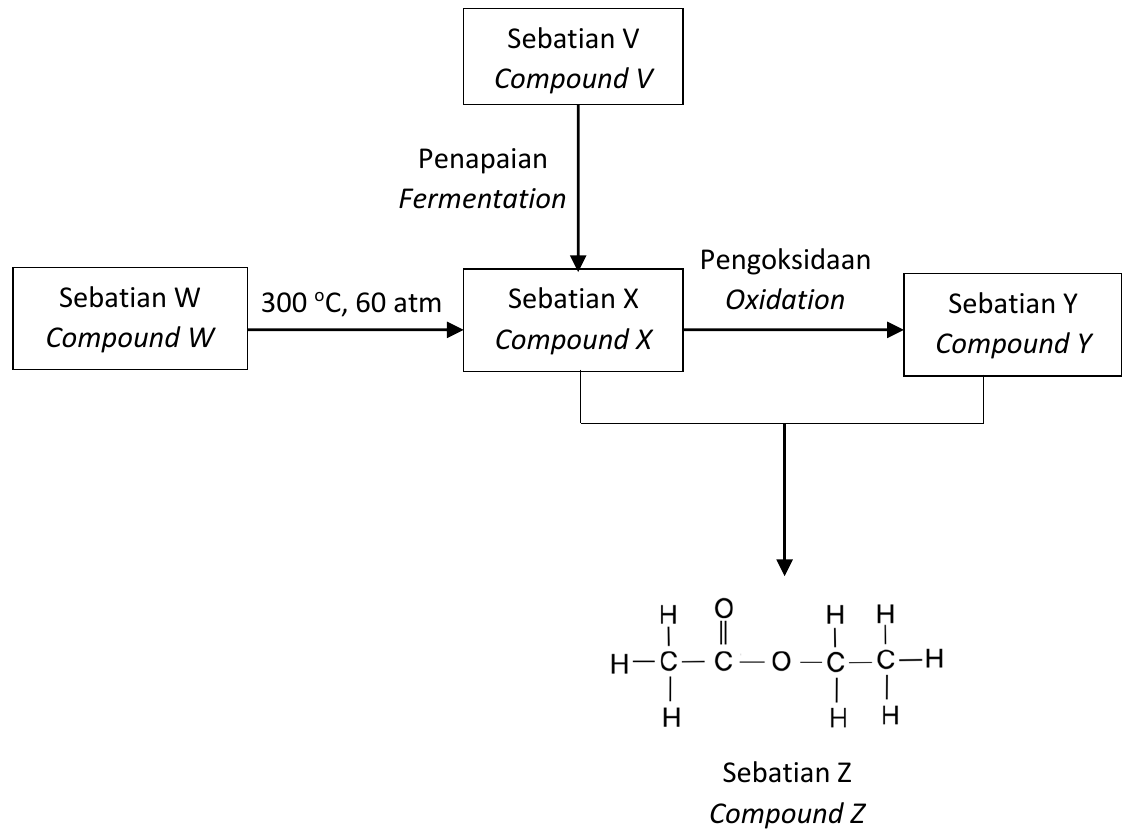
Diagram 39 shows a series of chemical reaction of compound Z. Compound V undergoes fermentation to give compound X; compound W at 300 °C, 60 atm gives compound X; compound X is oxidised to compound Y; X and Y react to give compound Z (ethyl ethanoate). Which of the following refer to compound V and compound W?
Medium
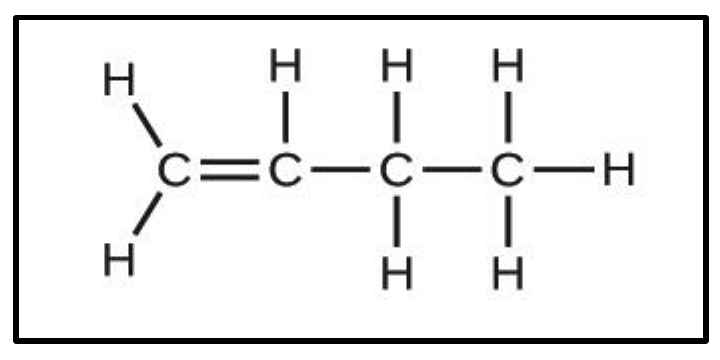
Diagram 2 shows the structural formula of a hydrocarbon. What is its name?
Medium
The number of carbon atoms increases going down the group. Which of the following is correct about the properties of the members?
I Becomes more reactive
II Relative molecular mass increases
III Electrical conductivity increases
IV Melting and boiling points increase
Medium
Hydrocarbons are organic compounds that contain only hydrogen and carbon. Which of the following is a source of hydrocarbons?
Easy
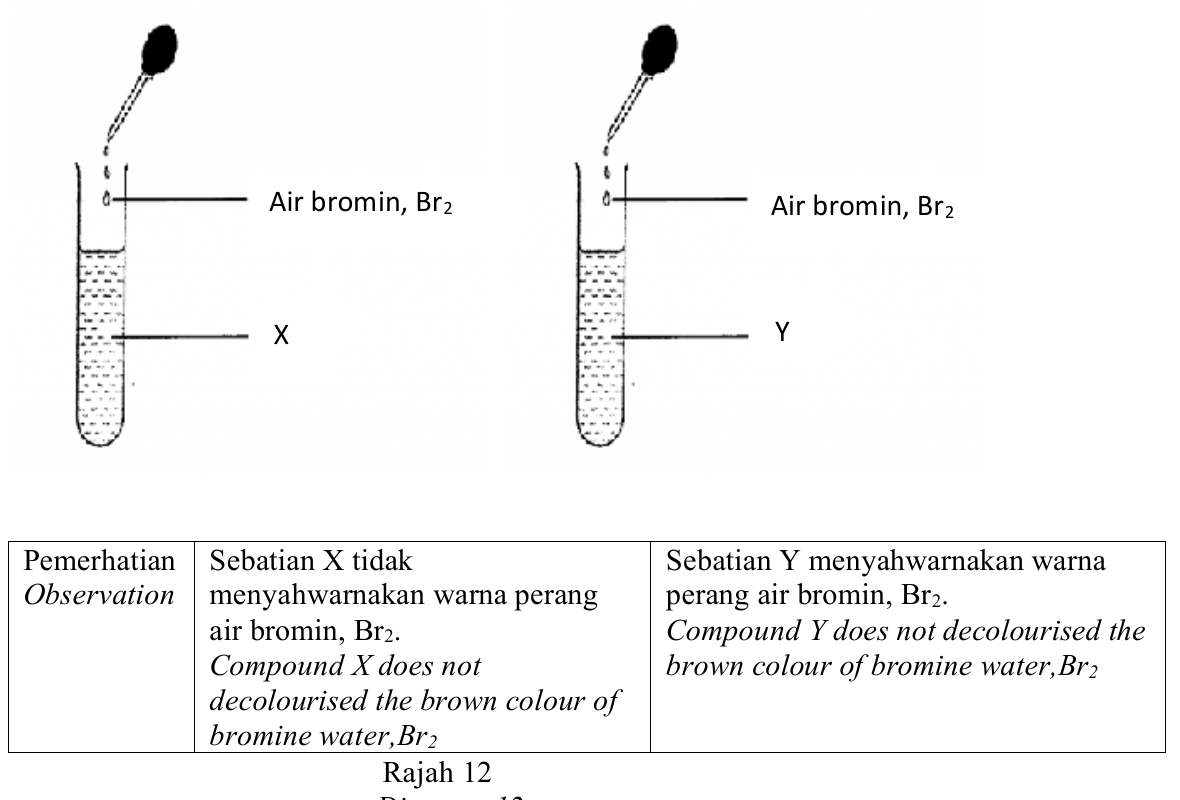
Diagram 12 shows an experiment in a dark room to differentiate two hydrocarbons, X and Y, using bromine water. Compound X does not decolourise the brown colour of bromine water; compound Y decolourises it. Which of the following compounds are X and Y?
A X: CH₃COOH, Y: C₂H₅COOH
B X: C₂H₆, Y: C₂H₄
C X: C₃H₆, Y: C₃H₈
D X: C₂H₅OH, Y: C₃H₇OH
Medium
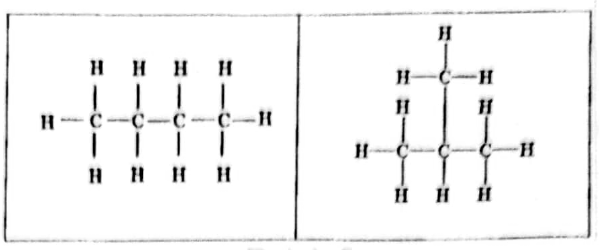
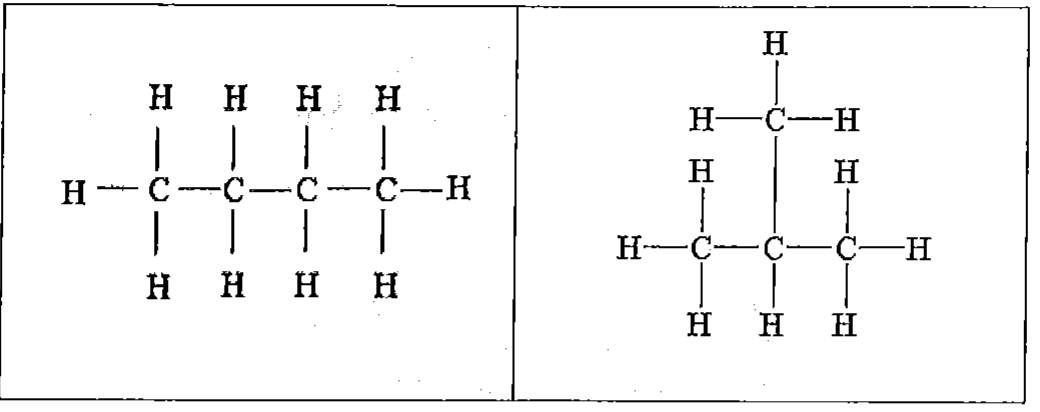
Diagram 9 shows the structural formulae of two hydrocarbon compounds (butane and 2-methylpropane). Which of the following statements is correct about both compounds?
Medium
The molecular formula of a substance is CH₃COOCH₂CH₂CH₂CH₃. What is the functional group of the substance?
Medium
Reaction X changes butene to butane. What is X?
Medium
The information below is about carbon compound X that exists as a liquid in the chemical laboratory of SMK Skudai: Can react with acidic potassium dichromate(VI) solution. What is X?
Medium
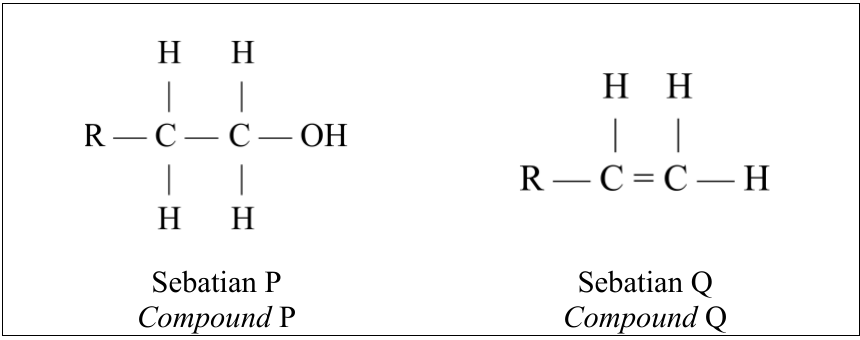
Diagram 10 shows the structural formula of compounds P (R–CH2–CH2–OH) and Q (R–CH=CH2). Which of the following is true about the reaction to convert compound P into compound Q?
Medium
Diagram 19 shows a structure formulae of food flavouring which found in fruits (CH3CH2CH2COOCH2CH3). Which of the following can be used to make the food flavouring?
Medium
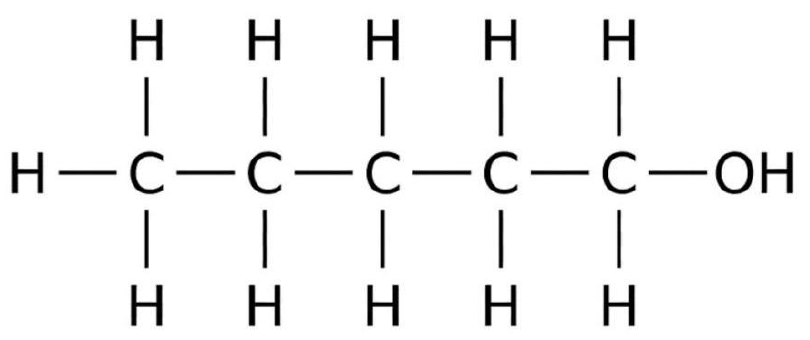
Diagram 26 shows a carbon compound (CH3CH2CH2CH2CH2OH, pentan-1-ol). Which of the following is the isomer of the compound?
Medium
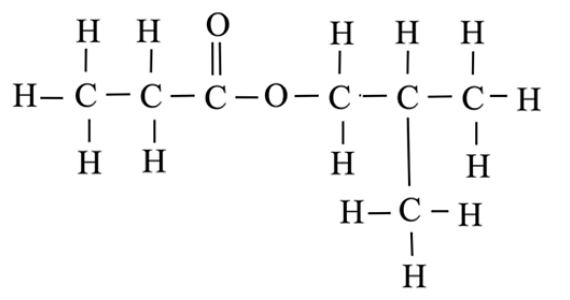
Diagram 35 shows the structural formula of an organic compound which produced from a chemical reaction between an alcohol and a carboxylic acid (CH3CH2COO–CH2CH(CH3)CH3). What is the IUPAC name of the alcohol used to produce organic compound in Diagram 35?
Medium
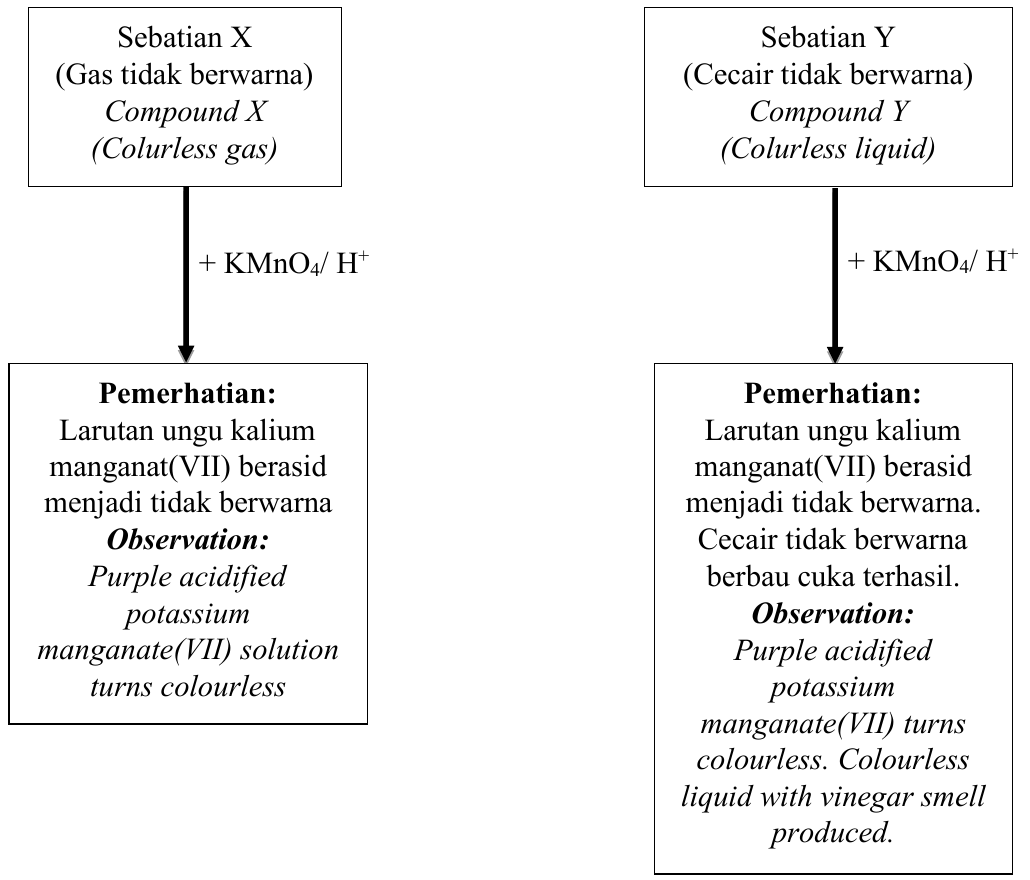
Diagram 39 shows a series of chemical reaction of organic compound X and organic compound Y. Both compound X and Y has two carbon atoms. Compound X (colourless gas) with acidified KMnO4: purple solution turns colourless. Compound Y (colourless liquid) with acidified KMnO4: purple solution turns colourless; colourless liquid with vinegar smell produced. What is the process to change compound X to compound Y?
Medium
Diagram 2 shows the conversion of propene into propanol through process X in the presence of catalyst Y (Propene → Propanol). What are process X and catalyst Y?
Medium
Which of the following describe the physical properties of ethanol? I Not soluble in water; II Low density; III Not an electrolyte; IV Exists as gas at room temperature
Medium
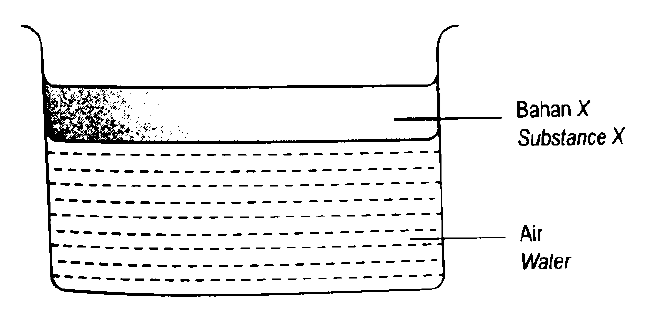
Diagram 7 shows a beaker containing two layers of substance: substance X on top, water below. What is substance X?
Medium
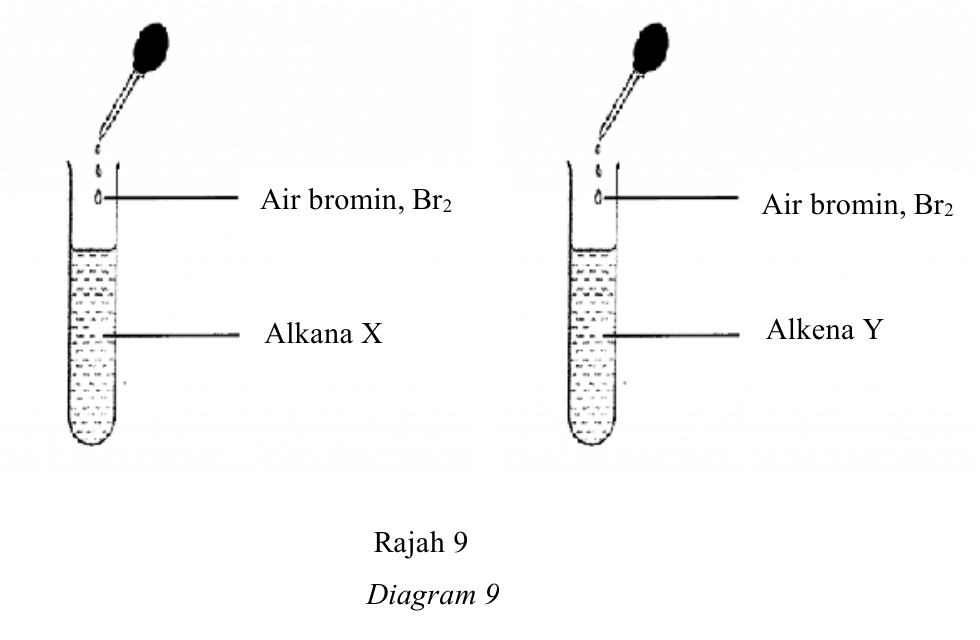
Diagram 9 shows an experiment in a dark room to differentiate two hydrocarbons, alkane X and alkene Y, each with bromine water added. Which are the observations?
Medium
Which of the following is a saturated hydrocarbon?
Easy
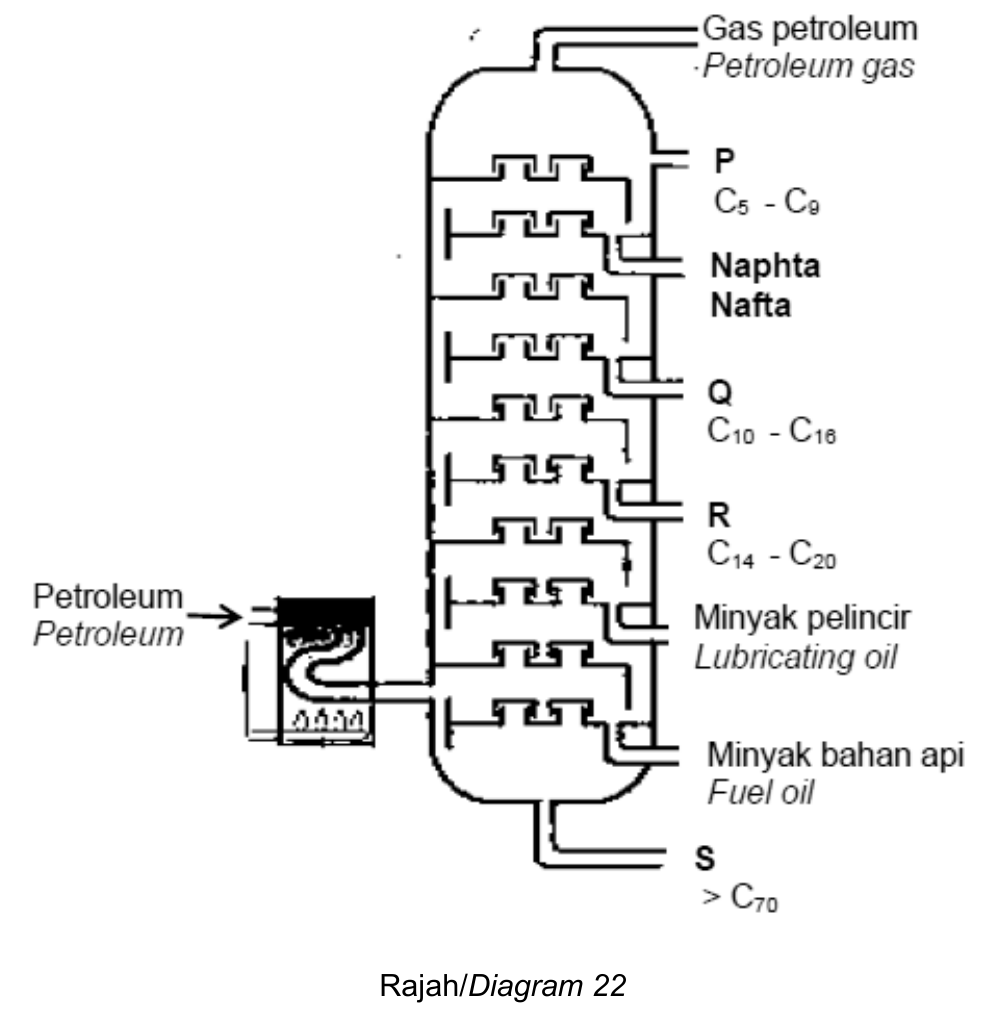
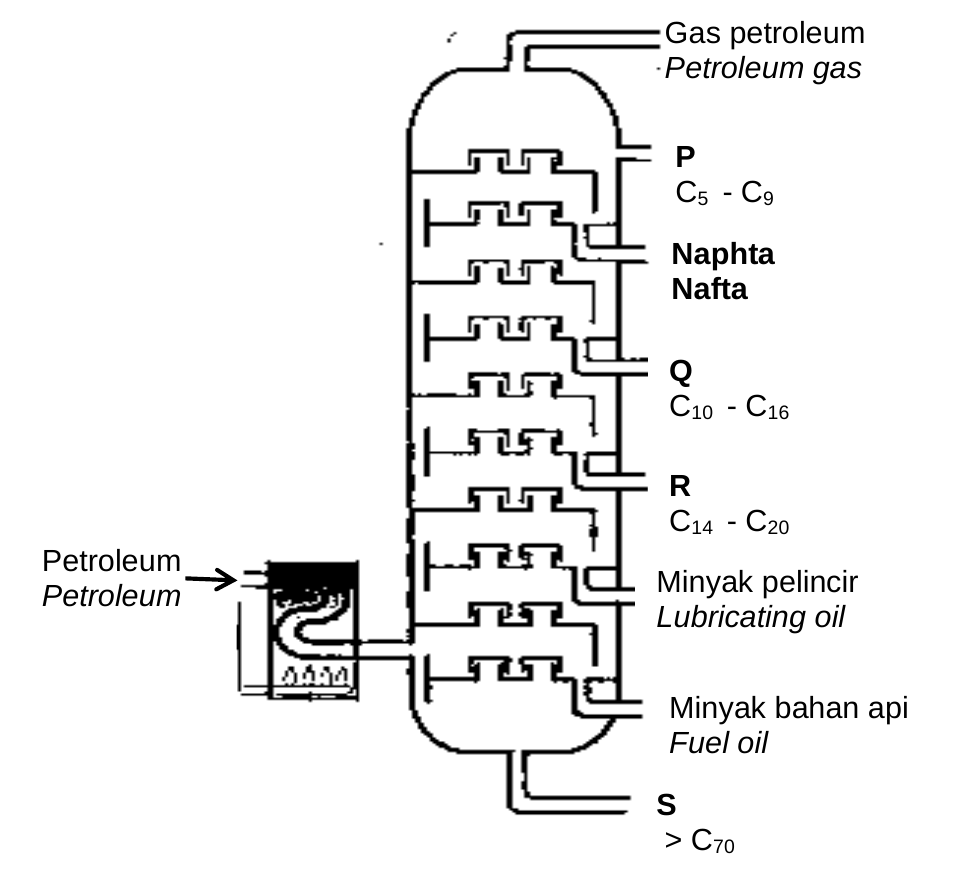
Diagram 22 shows the fractional distillation of petroleum. Which of the following is used as fuel for heavy vehicles such as buses and lorries?
Easy
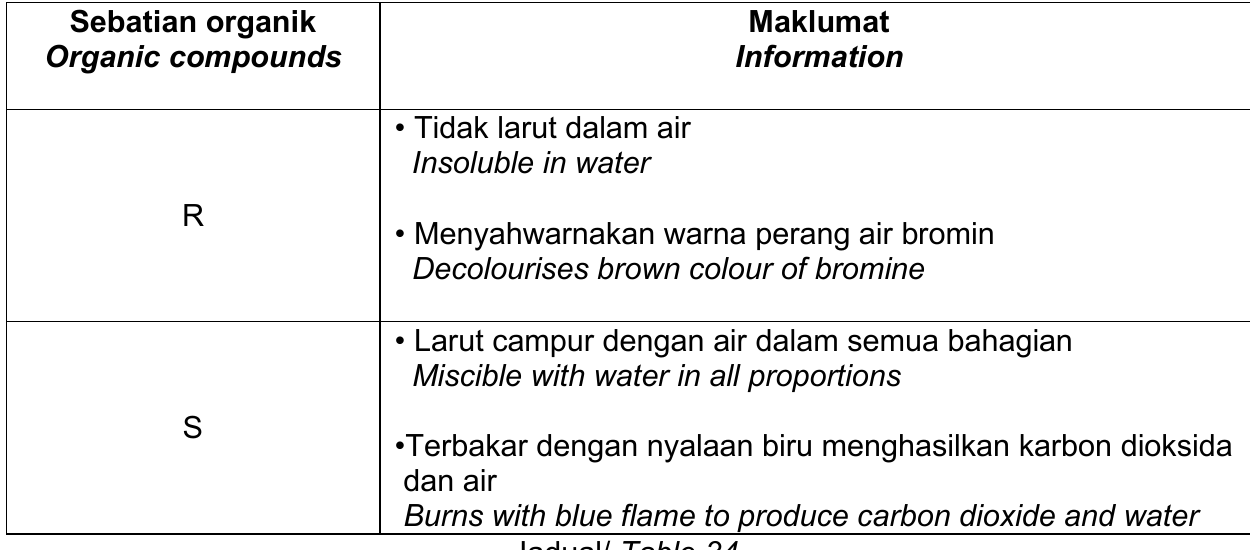
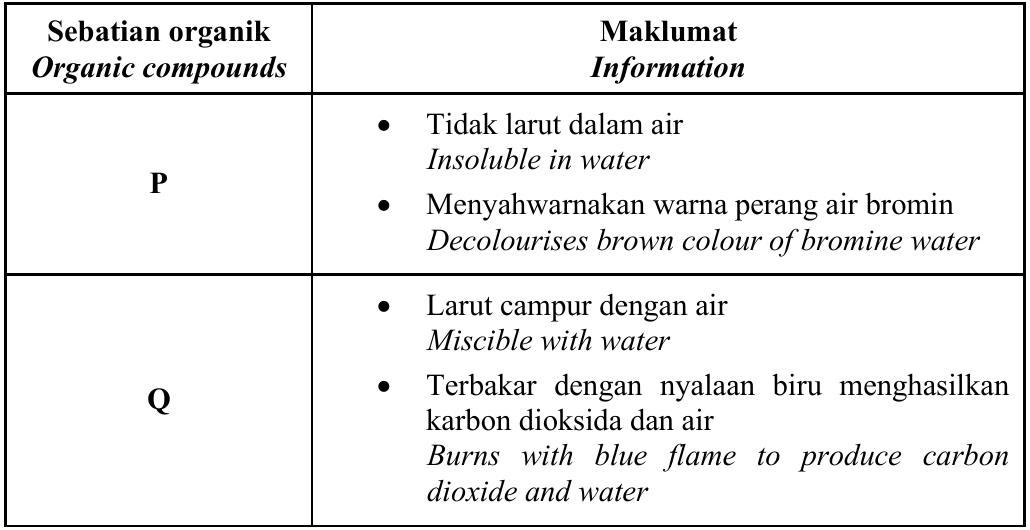
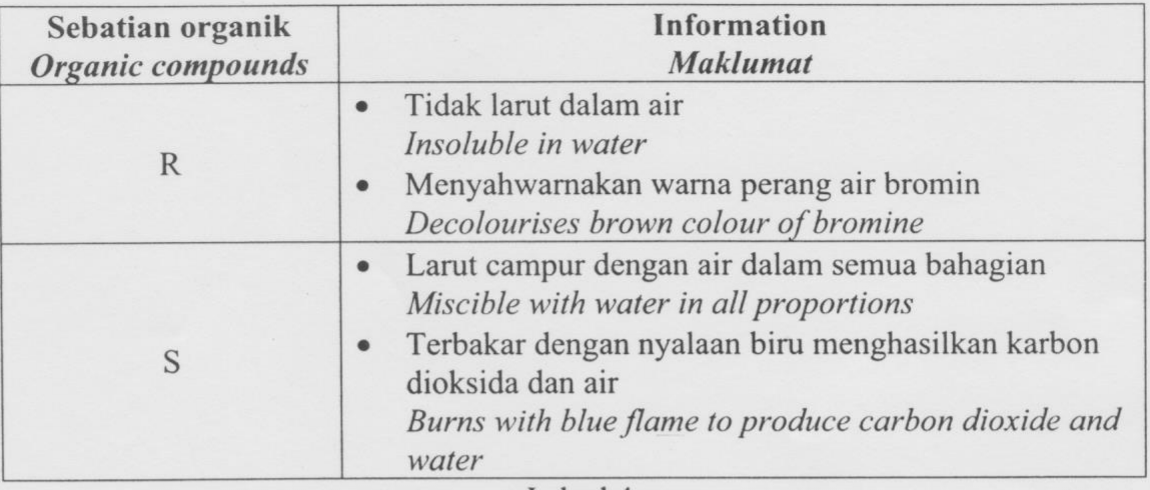
Table 34 shows information about two organic compounds R and S. R: insoluble in water; decolourises the brown colour of bromine water. S: miscible with water in all proportions; burns with a blue flame to produce carbon dioxide and water. Based on the information given, which structural formula has the same characteristics?
Medium
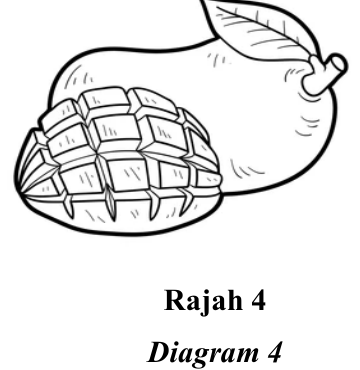
Diagram 4 shows a fruit that contains compound R which has a fruity smell. What is the homologous series of compound R?
Medium
The natural smell of an apple is due to the presence of ethyl pentanoate. Which of the following is a property of ethyl pentanoate?
Medium
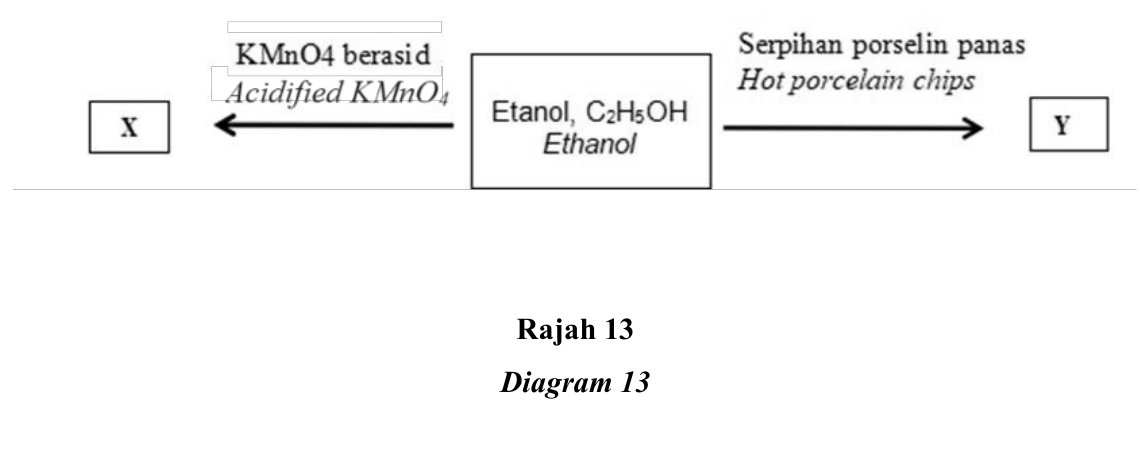
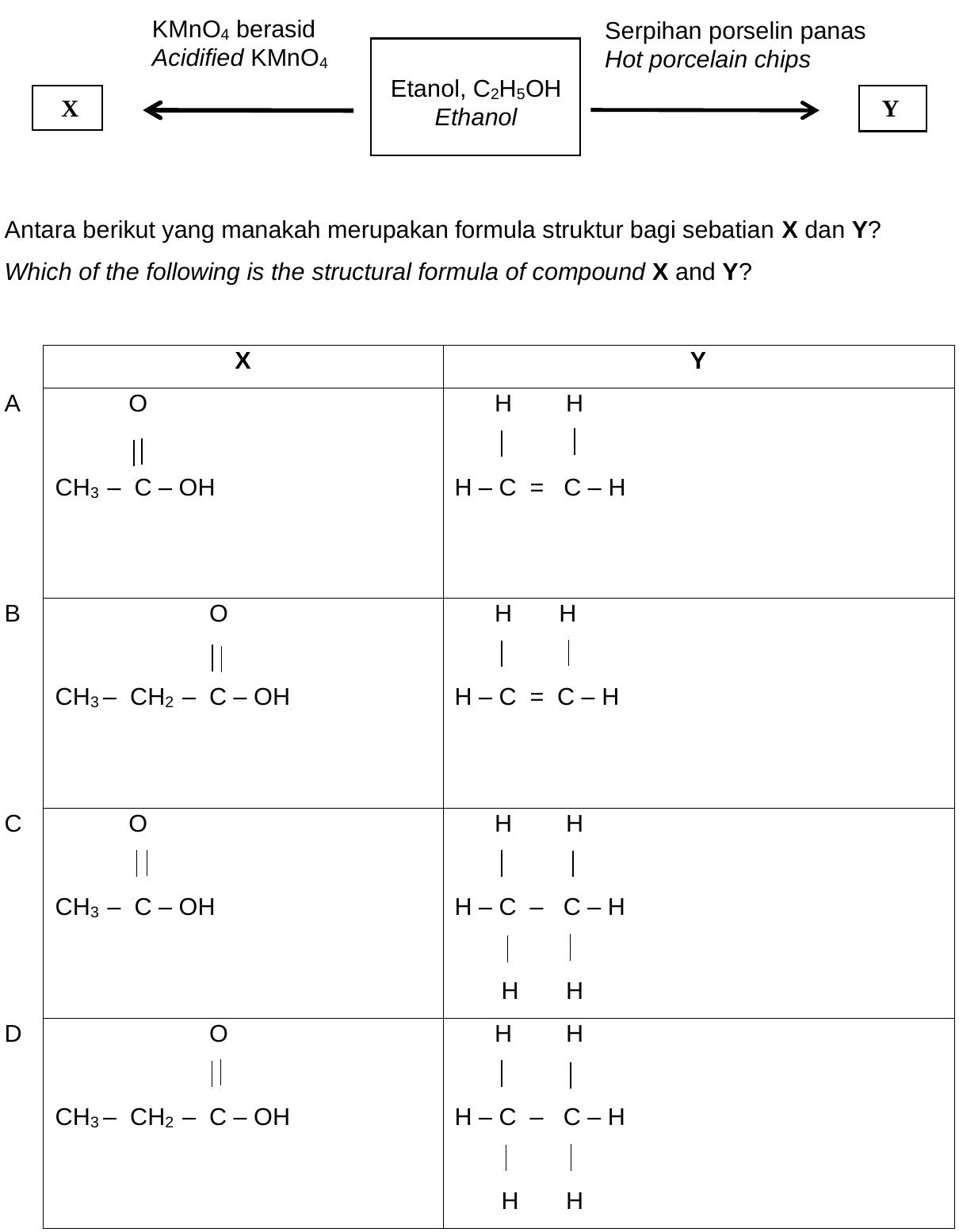
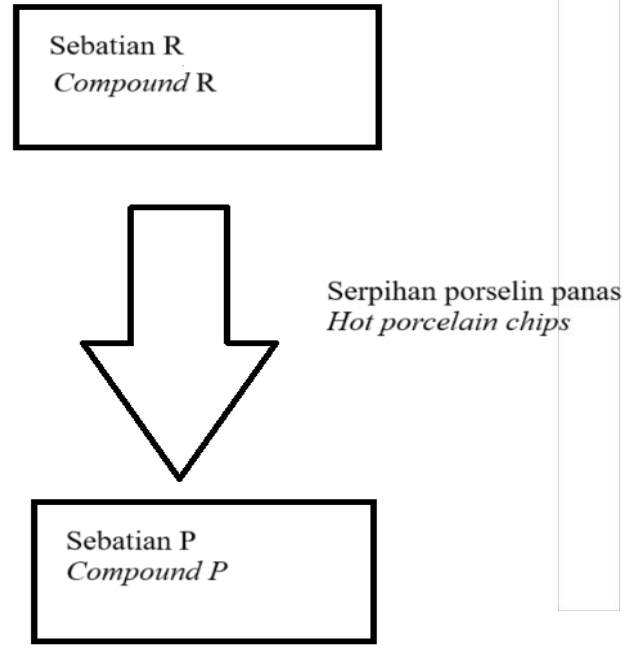
Diagram 13 shows the chemical reactions of ethanol: with acidified KMnO4 it forms X; with hot porcelain chips it forms Y. Which of the following are compounds X and Y?
Medium
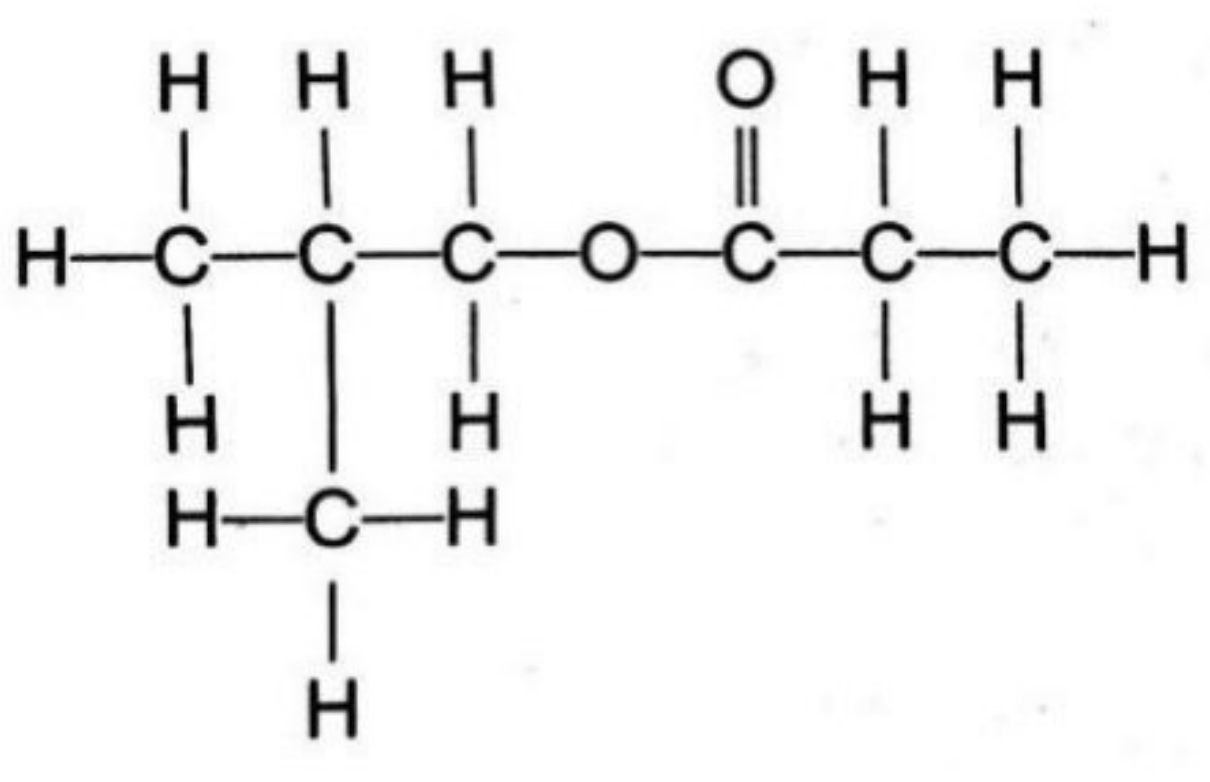
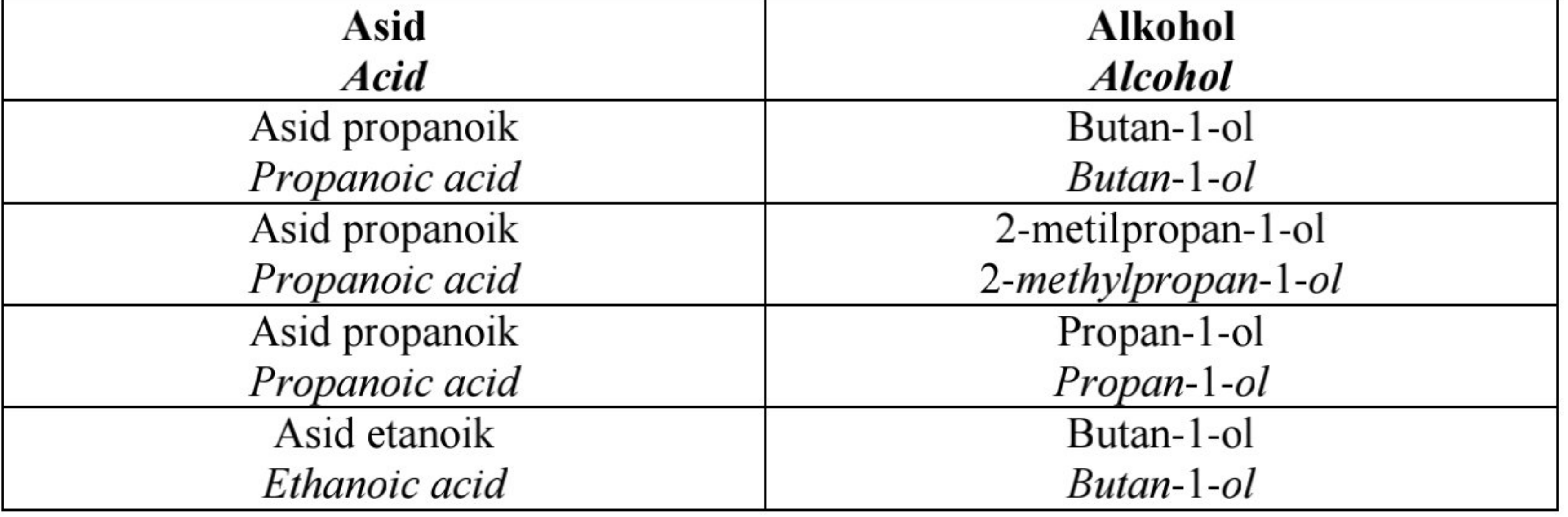
Diagram 11 shows the structural formula of hydrocarbon compound P (CH3-CH(CH3)-CH2-O-C(=O)-CH2-CH3, i.e. 2-methylpropyl propanoate). Which of the following pairs of acid and alcohol will produce substance P through reflux?
Medium
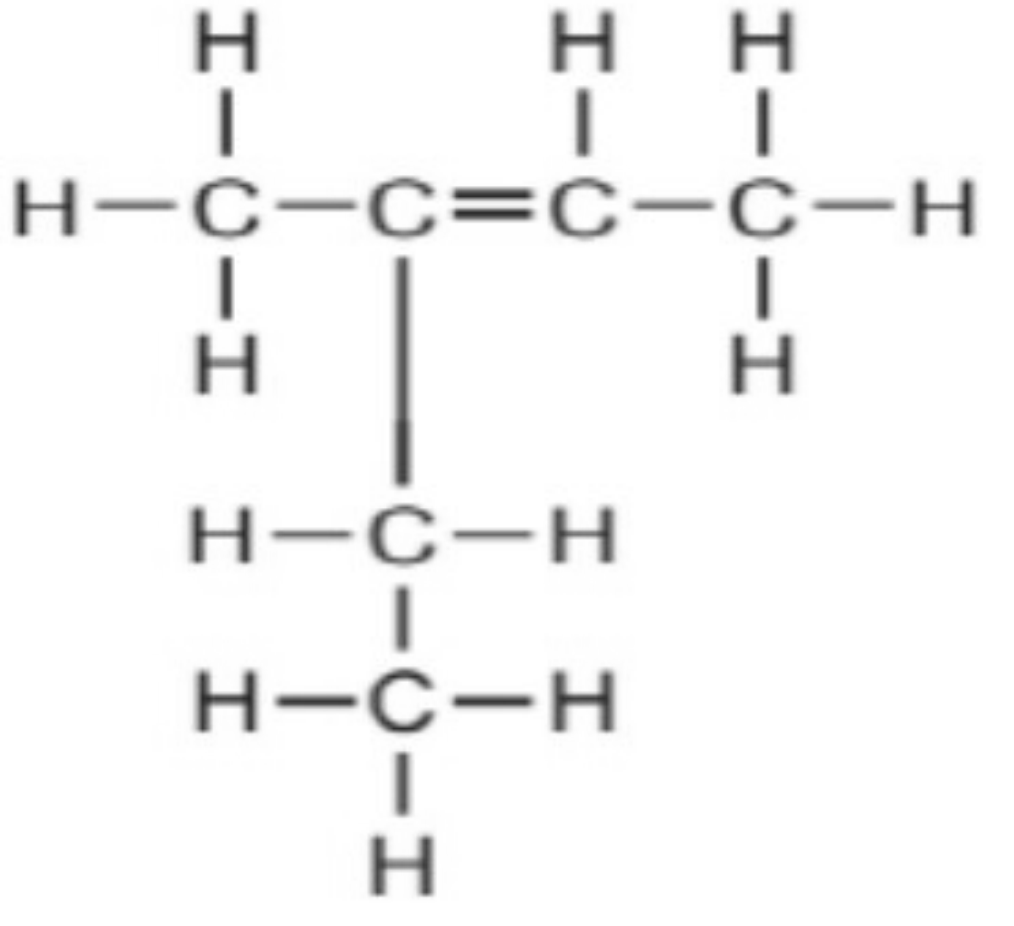
Which of the following is the structural formula of 2-methylbut-2-ene?
Medium
Which of the following structural formula is a saturated hydrocarbon?
Medium
What is the name of process of preparation of ethyl ethanoate?
Easy
Petroleum consists of hydrocarbons. How are these hydrocarbons refined?
Easy
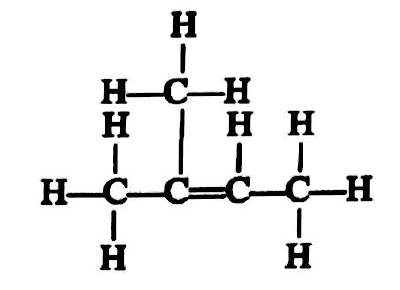
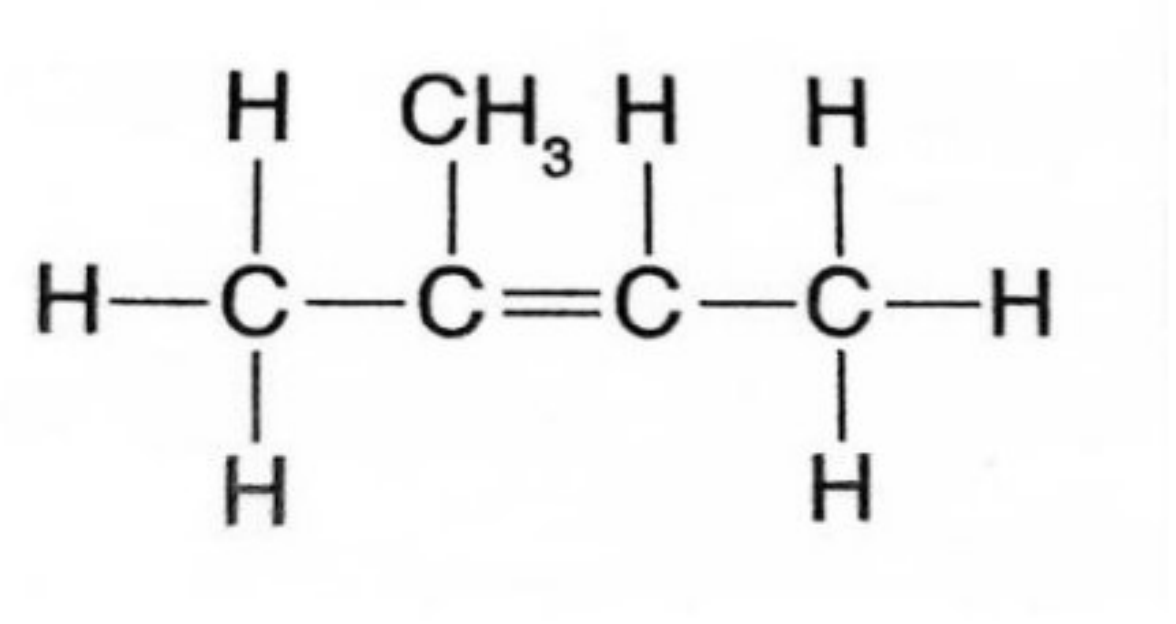
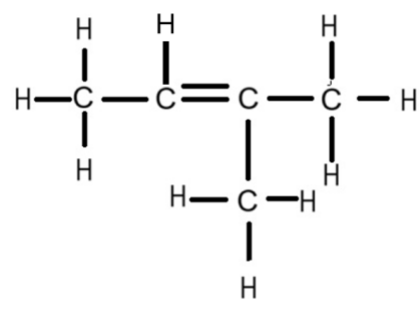
Diagram 16 shows the structural formula of an organic compound (CH3-C(CH3)=CH-CH3). What is the IUPAC name of this compound?
Medium
The information below are the properties of liquid Z.
- Colourless
- Clean fuel
- Very soluble in water
- Used as disinfectant in medical field
- Reacts with acidified potassium manganate(VII) solution produces colourless liquid with sour smell
What is the functional group of liquid Z?
Medium
Which compound is an unsaturated hydrocarbon?
Medium
Which of the following is the structural formula of 4-methylpent-2-ene?
Medium
What are the products formed when ethanol burns completely in excess air?
Medium
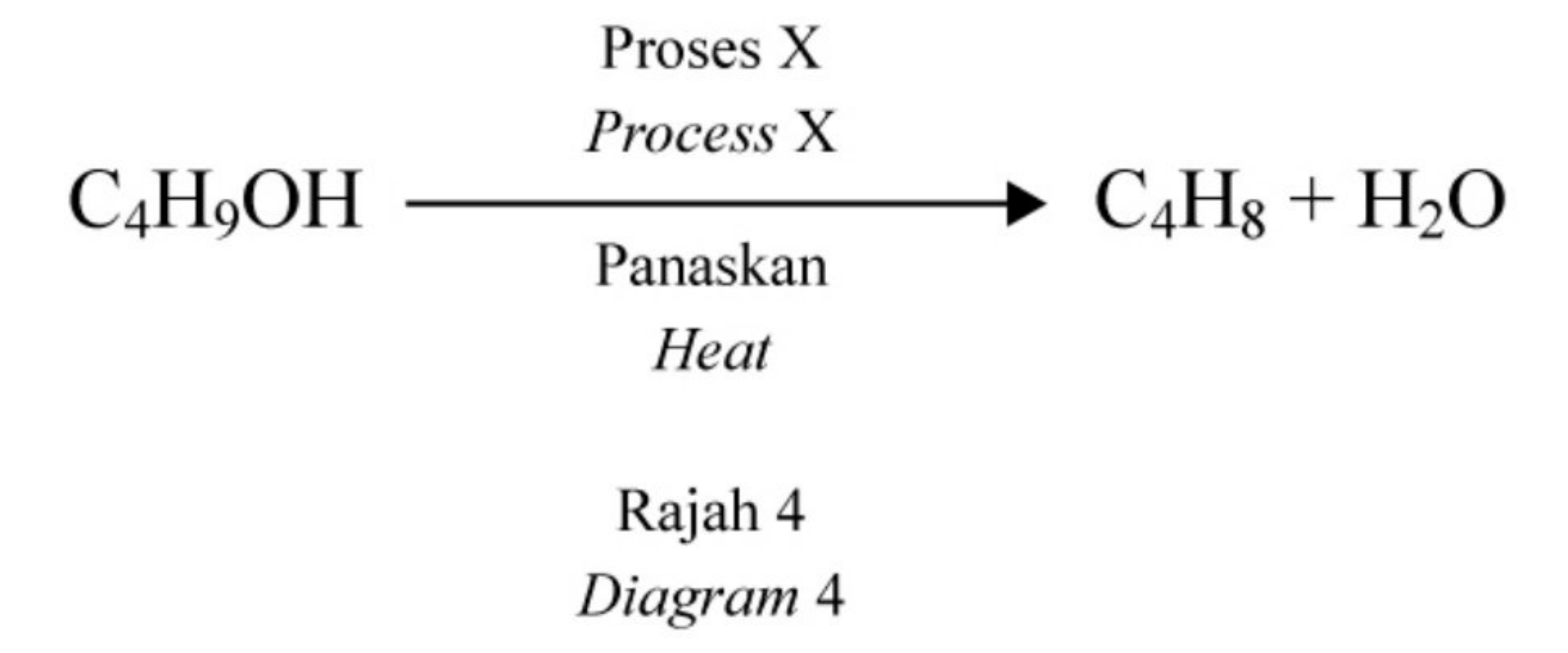
The following equation shows the conversion of butanol to butene: C4H9OH → C4H8 + H2O (heat). What is process X?
Easy
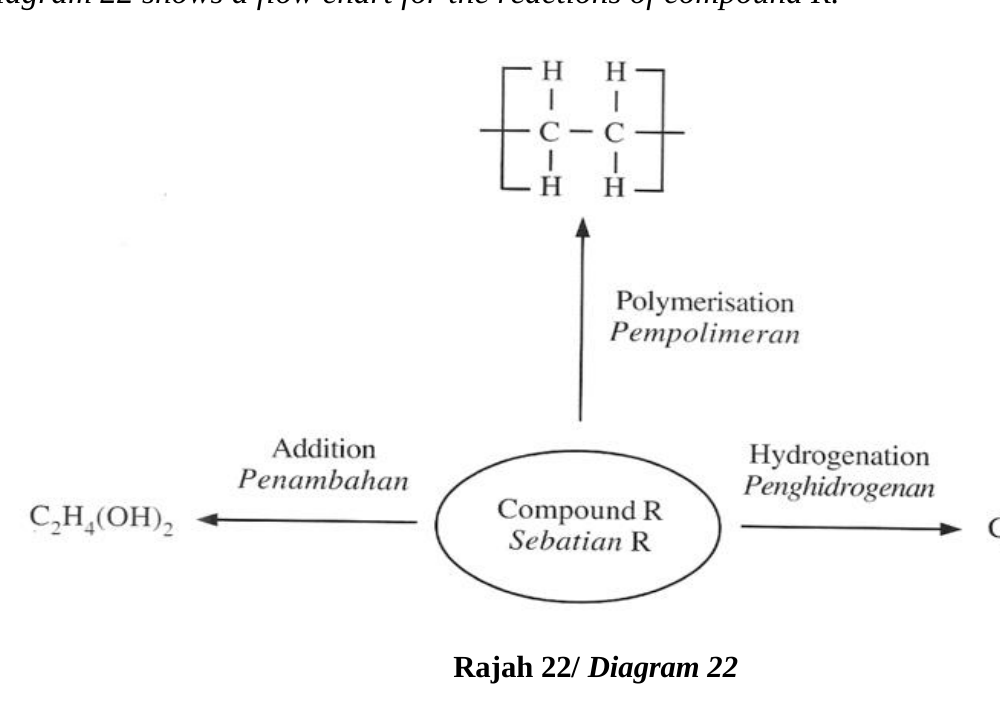
Diagram 22 shows a flow chart for the reactions of compound R: polymerisation gives poly(ethene) (–CH2–CH2–)n, addition gives C2H4(OH)2, hydrogenation gives C2H6. What is the general formula of R?
Medium
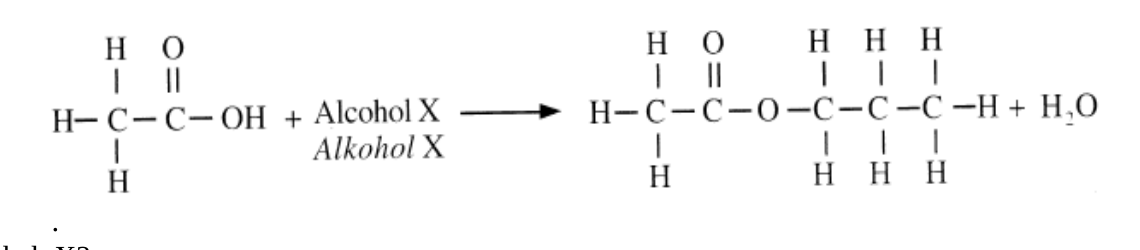
The equation represents an esterification reaction: ethanoic acid + alcohol X → ester (propyl ethanoate) + H2O. What is X?
Medium
Which compound is an unsaturated hydrocarbon?
Medium
Diagram 36 shows the structural formula of an organic compound. What is the IUPAC name of the organic compound?
Medium
Diagram 10 shows the structural formula of a hydrocarbon (butane, CH₃CH₂CH₂CH₃). The hydrocarbon in Diagram 10 can be obtained when hydrocarbon X and hydrogen are passed over a nickel catalyst at 180 °C. What is the name of hydrocarbon X?
Medium
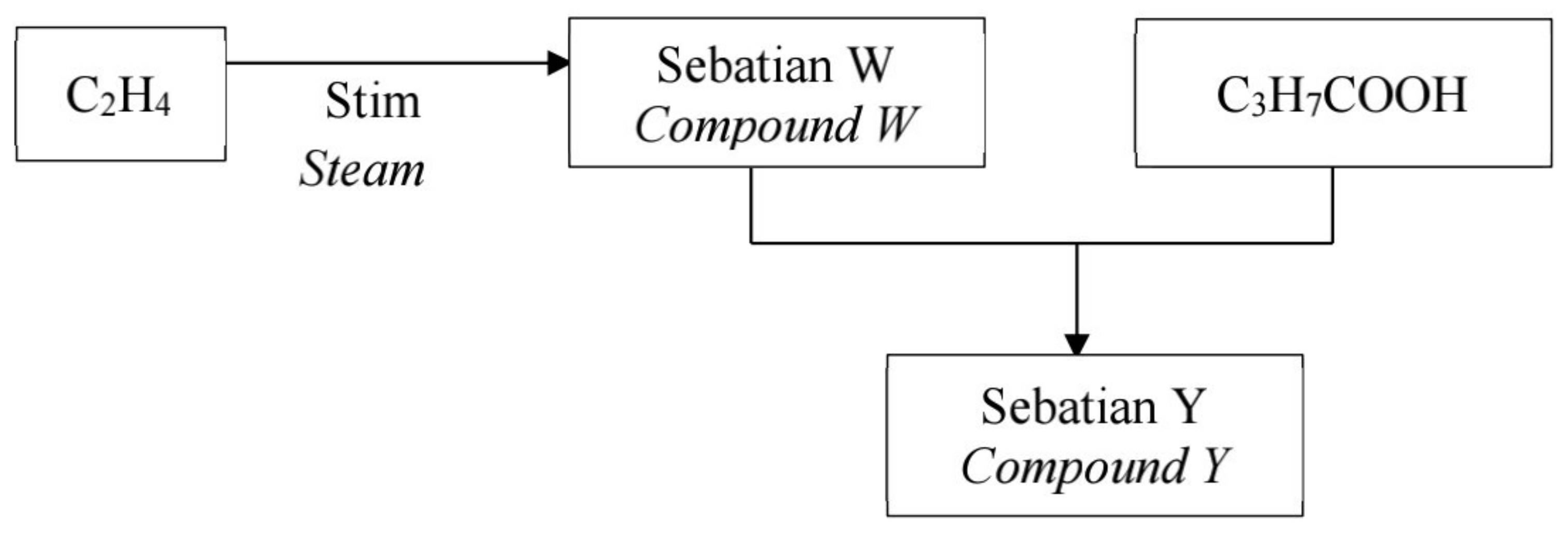
Diagram 11 shows the flow chart in producing compound Y: C₂H₄ reacts with steam to form compound W; compound W reacts with C₃H₇COOH to form compound Y. What is Y?
Medium
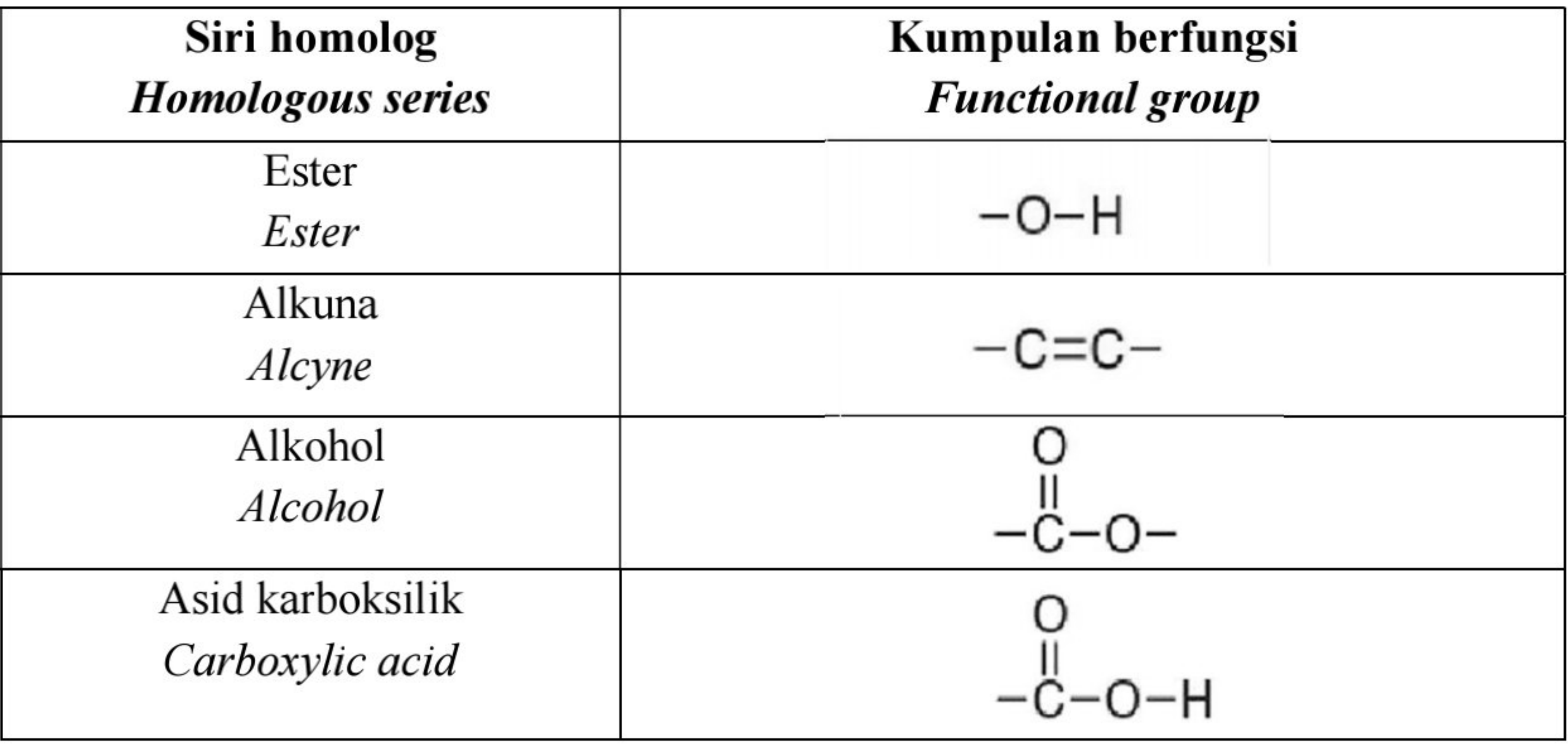
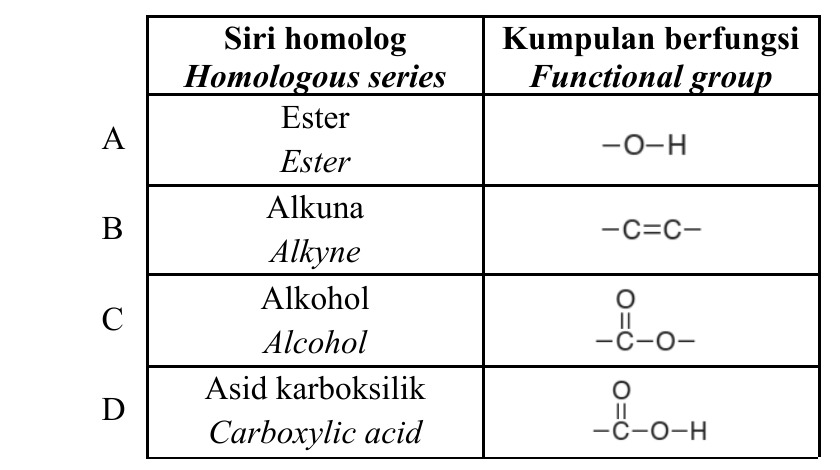
What is the correct functional group for the following homologous series? A Ester: –O–H; B Alkyne: –C=C–; C Alcohol: –COO– (ester linkage); D Carboxylic acid: –COOH.
Medium
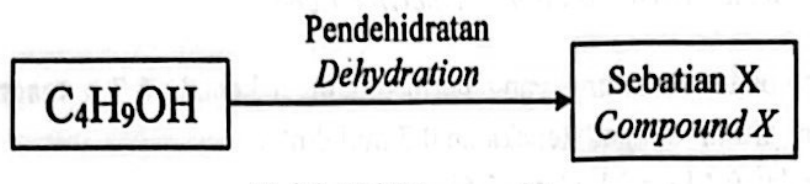
Which of the following substances undergoes dehydration reaction?
Medium
Which compound is an unsaturated hydrocarbon?
Medium
The following equation represents the reaction between butene and steam to produce compound M: Butene + H₂O → Compound M (H₃PO₄, 300 °C, 60 atm). What is M?
Medium
Which statement shows the difference between hexene and hexane?
Medium
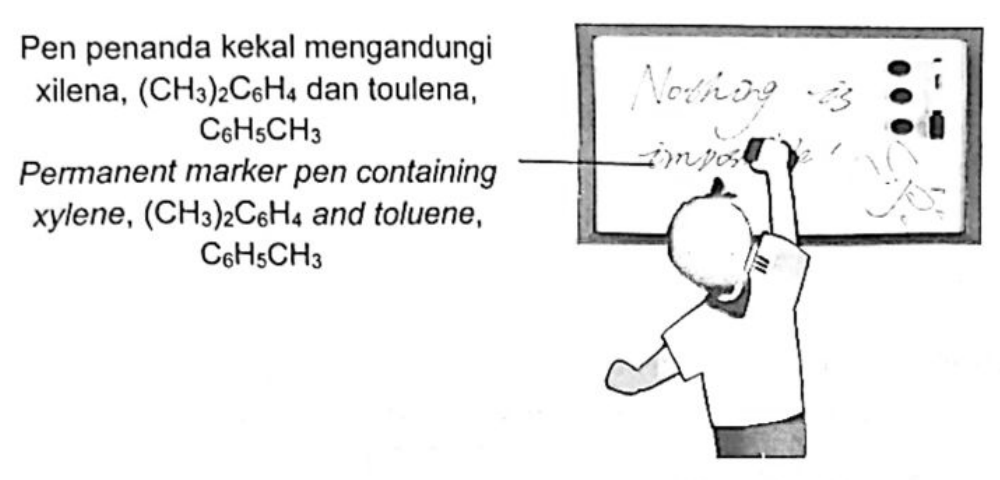
The diagram shows Ahmad cleaning a whiteboard that has been written with a permanent marker pen (containing xylene, (CH₃)₂C₆H₄ and toluene, C₆H₅CH₃). Which of the following materials can be used by Ahmad to clean the whiteboard?
Medium
The following are characteristics of substance M: organic compound; soluble in water; used as food flavouring. Which of the following equations can produce substance M? I C₂H₅OH + 2[O] → CH₃COOH + H₂O II HCOOH + C₂H₅OH → HCOOC₂H₅ + H₂O III C₂H₅COOH + KOH → C₂H₅COOK + H₂O IV C₄H₉OH + CH₃COOH → CH₃COOC₄H₉ + H₂O
Medium
What is the general formula of carboxylic acid?
Easy
Petroleum is main source of hydrocarbon. However, the petroleum needs to be separated into its constituents through a refining process. Cracking is one of the refining processes. What is meant by cracking?
Easy
Diagram below shows a saturated hydrocarbon (2-methylbutane structure). Which of following are the isomers of the hydrocarbon? I Pentane II Butane III 2,2-dimethylpropane IV 3-methylbutane
Medium
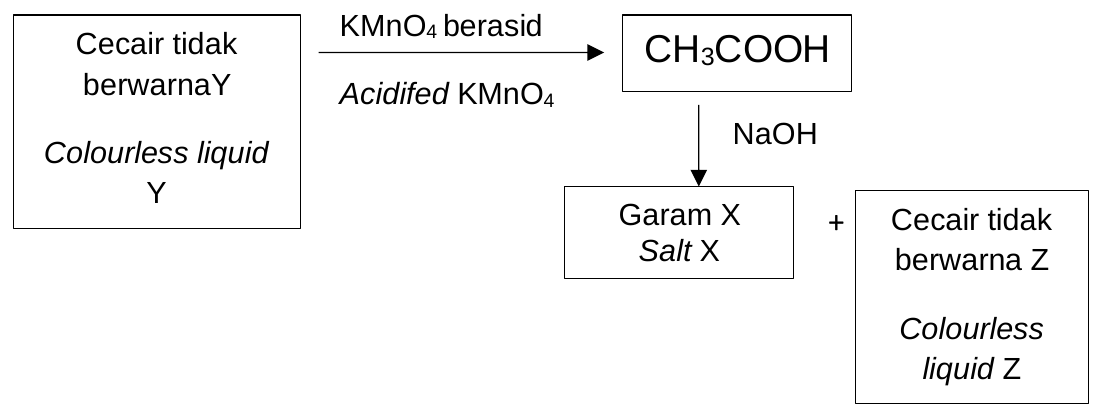
Diagram shows the conversion of colourless liquid Y to ethanoic acid (with acidified KMnO4) and the reaction of ethanoic acid with NaOH to give salt X and colourless liquid Z. Based on diagram, identify X, Y and Z.
Medium
Which of the following process involves only non-hydrocarbon compound?
Medium
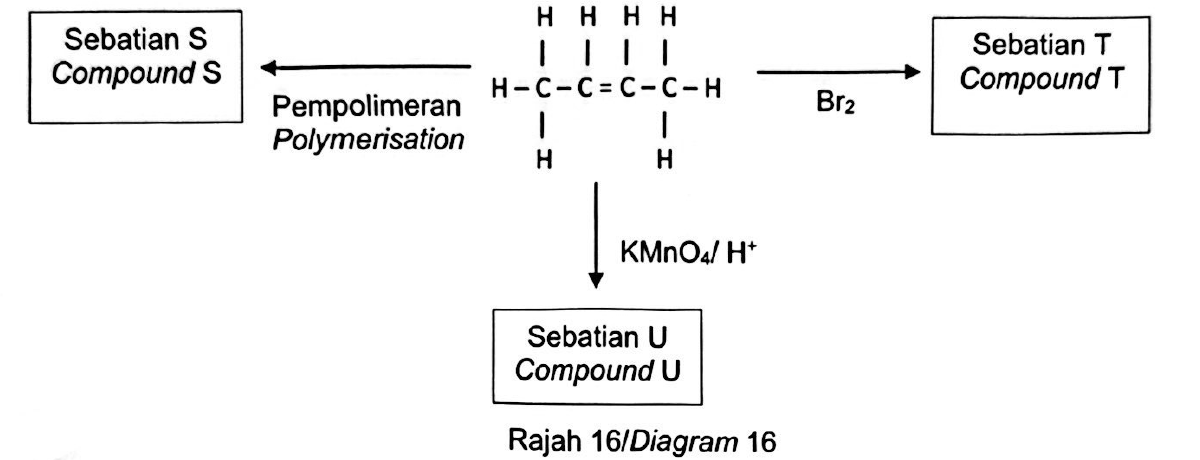
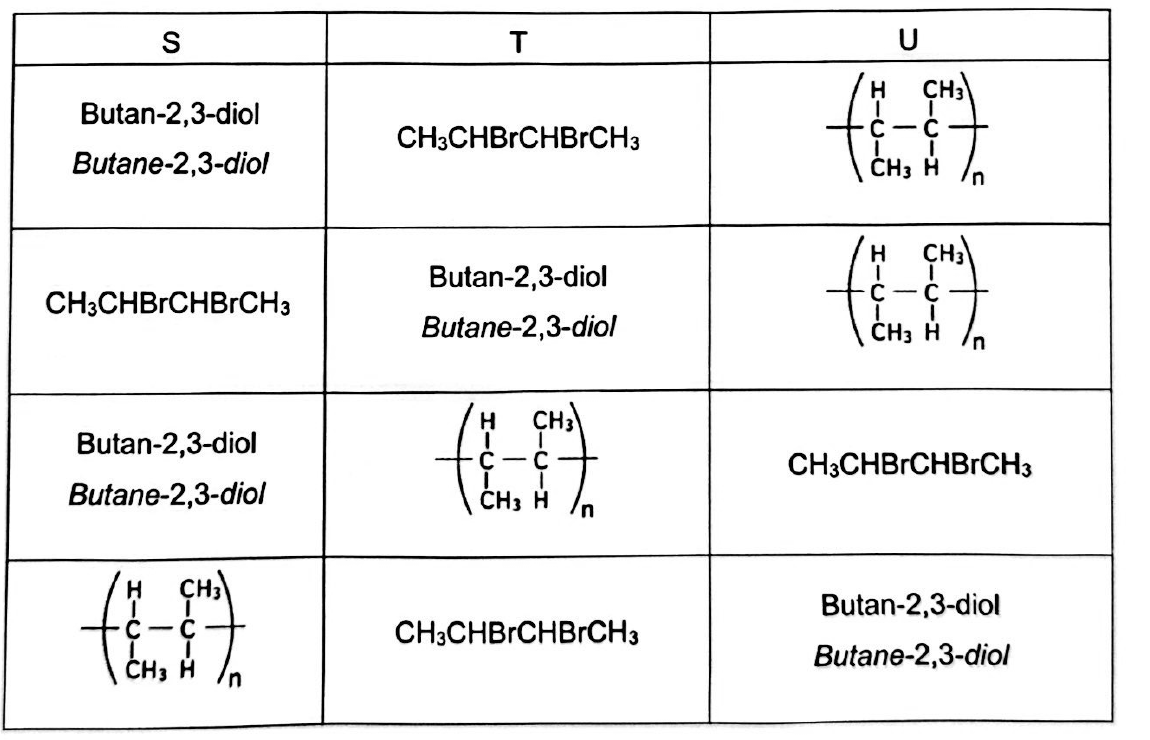
Diagram 16 shows a series of reactions of butene isomer (but-2-ene): polymerisation gives compound S; Br₂ gives compound T; KMnO₄/H⁺ gives compound U. Based on Diagram 16, identify S, T and U.
Medium
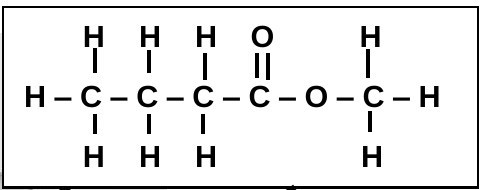
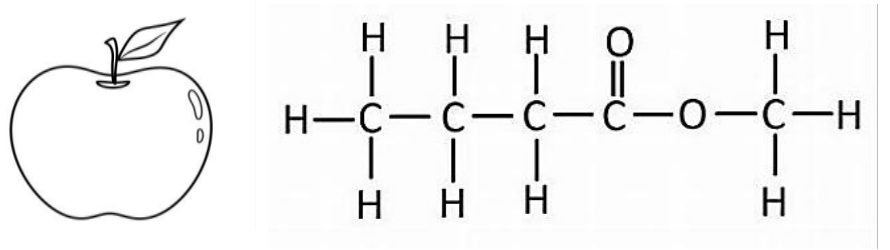
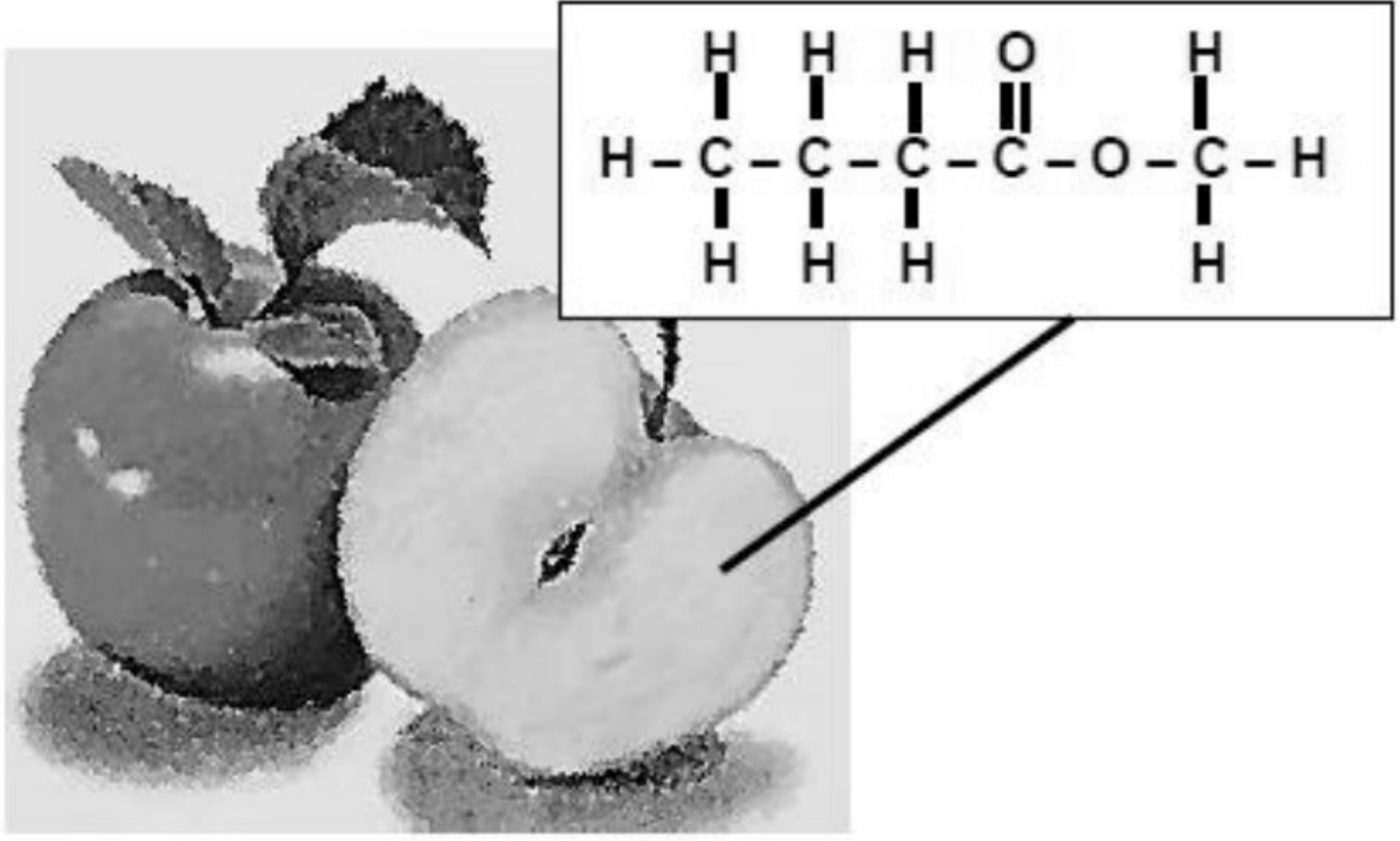
The diagram shows the structural formula of the ester that produces the fragrant smell found in green apple: CH3CH2CH2COOCH3 (H-C-C-C-C(=O)-O-C-H, all carbons with H atoms). Alia wants to prepare the ester in the laboratory. Which of the following can be used to prepare the ester?
Medium
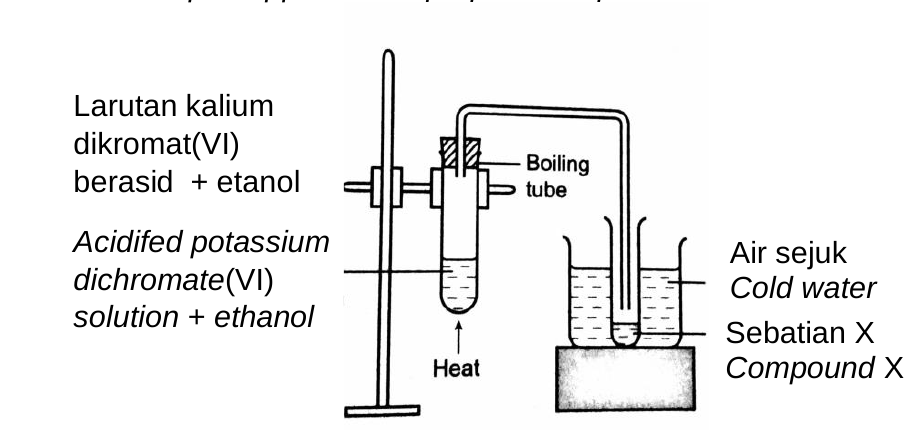
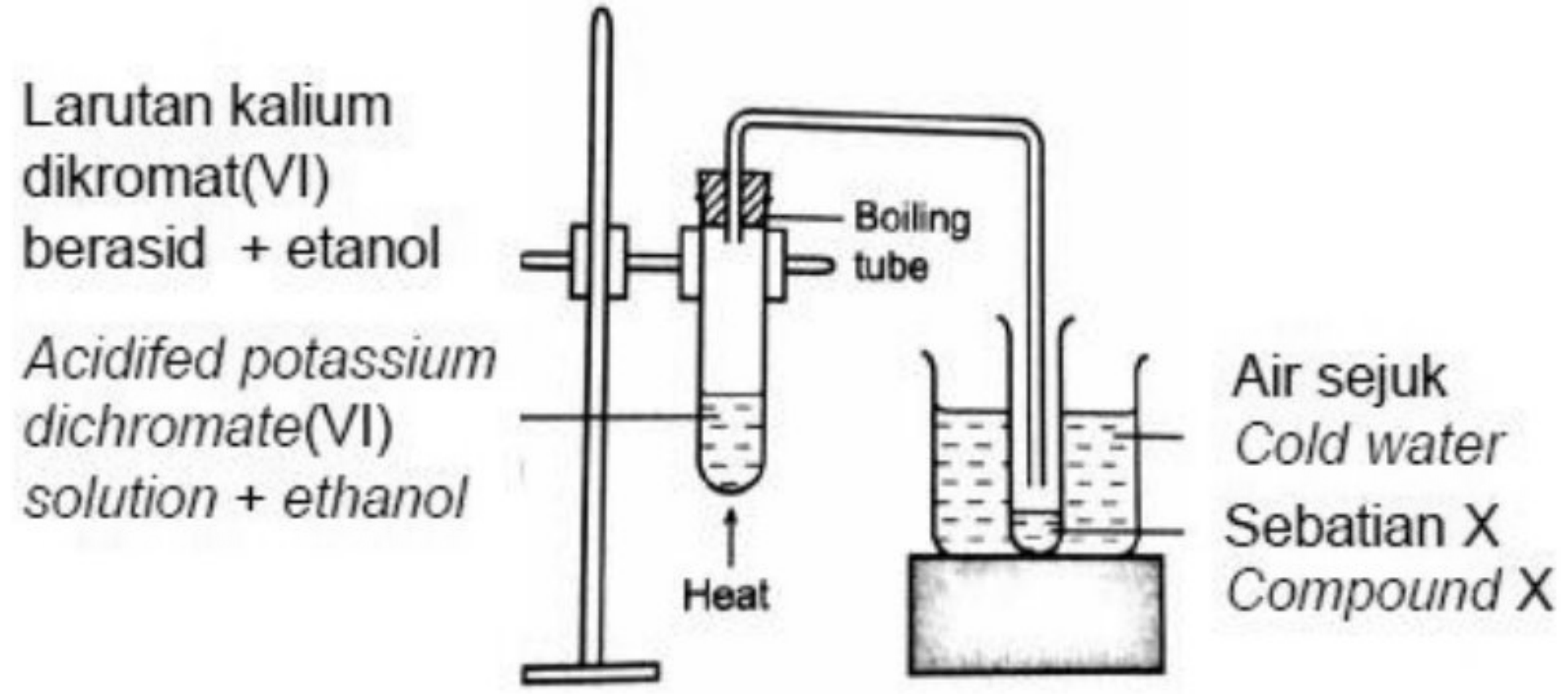
The diagram shows the set-up of apparatus to prepare compound X (acidified potassium dichromate(VI) solution + ethanol, heated; compound X collected in cold water). Which of the following statements is true about compound X?
I Has general formula CnH2n
II Has functional group of –COOH
III Reacts with magnesium to produce hydrogen gas
IV Reacts with hydrogen at 180 °C in the presence of nickel to produce alkane
Medium
The diagram shows the fractional distillation of petroleum. Which of the following is used as fuel for heavy vehicles such as buses and lorries?
Medium
Which of the following is the structural formula of an unsaturated hydrocarbon?
Easy
Diagram shows the chemical reactions of ethanol: with acidified KMnO₄ it forms X; over hot porcelain chips it forms Y. Which of the following is the structural formula of compound X and Y?
Medium
The following equation represents the complete combustion of alcohol.
CpHqOH + (q − p) O₂ → p CO₂ + (q − p) H₂O
What is the value of p and q?
Medium
Diagram 6 shows the structural formula of an isomer of an alkene. Name the isomer according to the IUPAC nomenclature system.
Medium
Ethene can be differentiated from ethane because ethene can:
Easy
Compound P has the following characteristics: very soluble in water; can be prepared from an alkene. What is probably compound P?
Medium
The complete combustion of a hydrocarbon is represented by the equation: CH2x + xO2 -> CO2 + xH2O. What is the value of x?
Medium
Which of the following is a homologous series for hydrocarbons?
Easy
Which carbon compounds are soluble in water?
Medium
Which of the following structural formulas is a saturated hydrocarbon?
Medium
Which of the following results in the reaction if butene burns with a lack of oxygen?
Medium
What substance is produced when ethanol burns in excess oxygen?
Easy
Unsaturated hydrocarbons can be converted to saturated hydrocarbons through a hydrogen addition reaction using substance X as a catalyst. What is substance X?
Easy
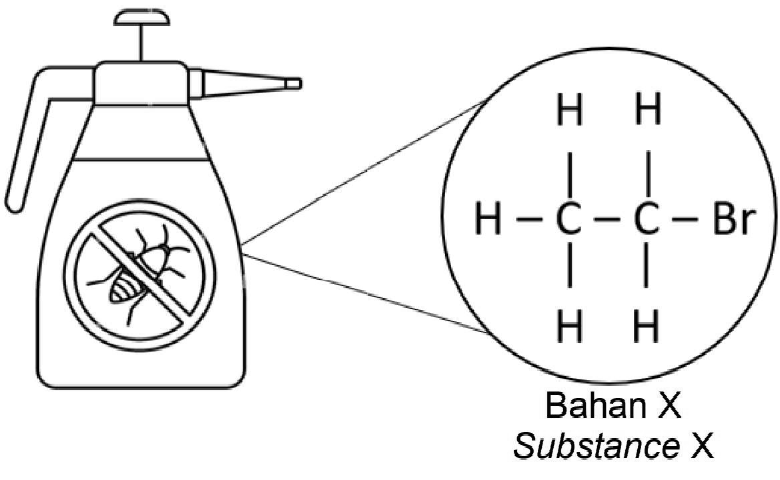
Diagram 13 shows the structural formula of substance X (CH3CH2Br, bromoethane) used in insecticides. Which of the following is a property of substance X?
Medium
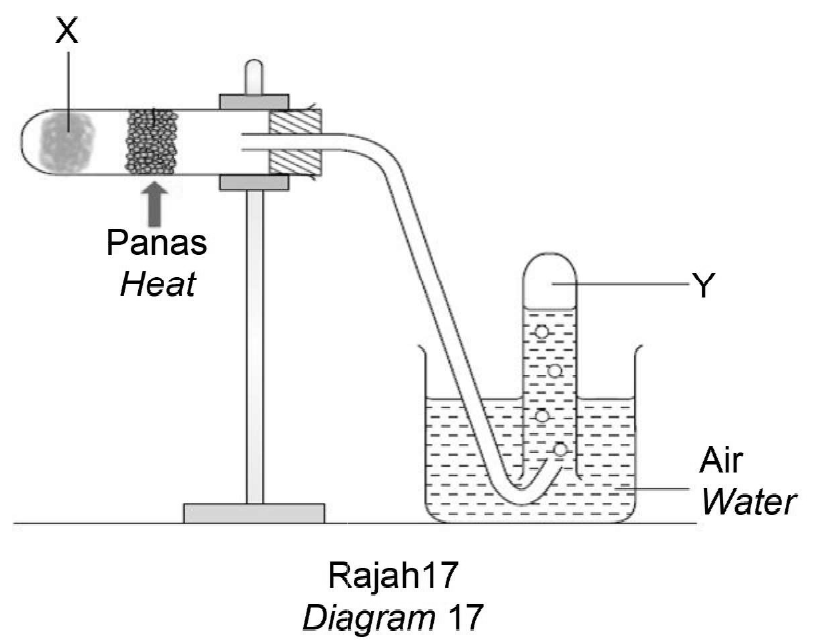
Diagram 17 shows the arrangement of apparatus used in a chemical reaction involving carbon compounds (substance X heated in a boiling tube, gas Y collected over water). What are X, Y and the chemical equation for the reaction shown in Diagram 17?
Medium
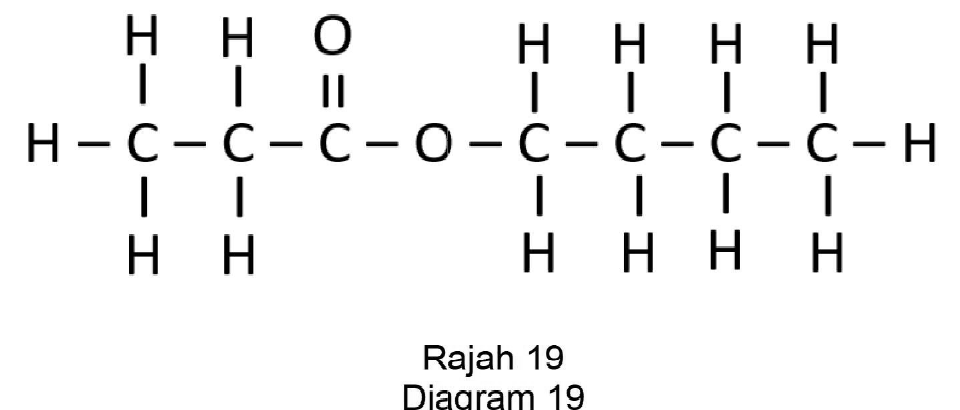
Diagram 19 shows a structural formula of compound P (an ester: CH3CH2COO-CH2CH2CH2CH3). What alcohol is used to prepare compound P?
Medium
What substance is produced when hydrocarbon burns in excess oxygen?
Easy
Which hydrocarbon has 5 carbon atoms in its molecule?
I. 2-methylpentane
II. 3-methylbut-1-ene
III. 3-methylpent-1-ene
IV. 2,2-dimethylpropane
Medium
Which of the following is an unsaturated hydrocarbon?
Medium
Which of the following reactions produce artificial food flavours?
I. C3H7OH + 2[O] -> C2H5COOH + H2O
II. C2H5OH + C3H6O2 -> C2H5COOC2H5 + H2O
III. CH3COOH + NaOH -> CH3COONa + H2O
IV. C2H5COOH + C3H7OH -> C2H5COOC3H7 + H2O
Medium
Which of the following carbon compounds will produce the most soot when burned in air? [Relative atomic mass: H=1, C=12, O=16]
Medium
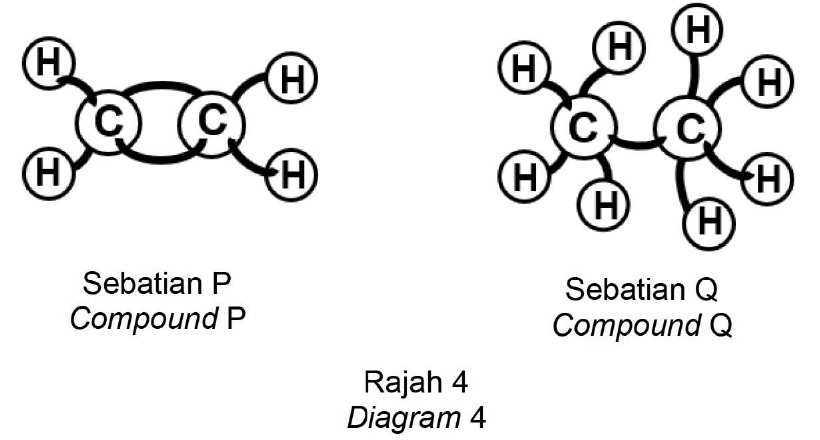
Diagram 4 shows the structural formulas of two carbon compounds (Compound P: unsaturated, C=C; Compound Q: saturated, all single bonds). Which of the following properties is correct for compound P and compound Q?
Medium
What is the product formed when hydrogen gas and propene are passed over a nickel catalyst at temperature 180 °C?
Medium
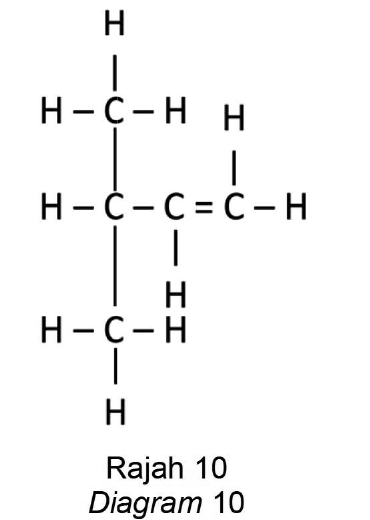
Diagram 10 shows the structural formula of a carbon compound. What is the name of the compound?
Medium
The following information is about a type of compound: • Has carbon and hydrogen atoms only • Single bond between carbon atoms • Insoluble in water. What is the general formula for the compound?
Medium
Which of the following is an example of a carbon allotrope? I Silica; II Kevlar; III Diamond; IV Graphene
Easy
Diagram 11 shows the structural formula of ester that produces the fragrant smell found in green apple (CH₃CH₂CH₂COOCH₃). Which of the following can be used to prepare the ester?
Medium
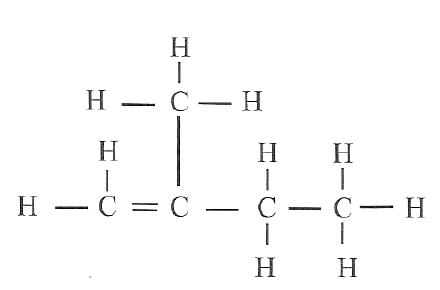
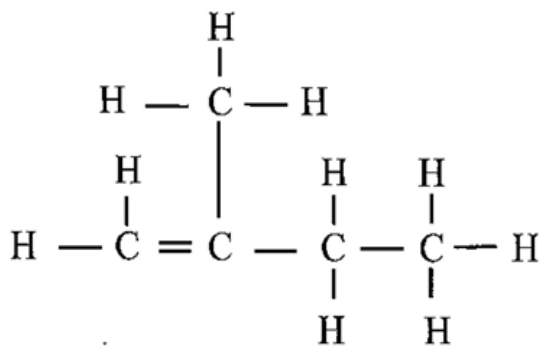
Diagram 16 shows the structural formula of an organic compound (CH₂=C(CH₃)–CH₂–CH₃). What is the IUPAC name of the organic compound?
Medium
Table 5 shows the information of two organic compounds. P: insoluble in water; decolourises brown colour of bromine water. Q: miscible with water; burns with blue flame to produce carbon dioxide and water. Based on the information given, which structural formula has the same characteristics as above?
Medium
What are the products formed when ethanol burns completely in excess air?
Easy
Which of the following is a saturated hydrocarbon?
Easy
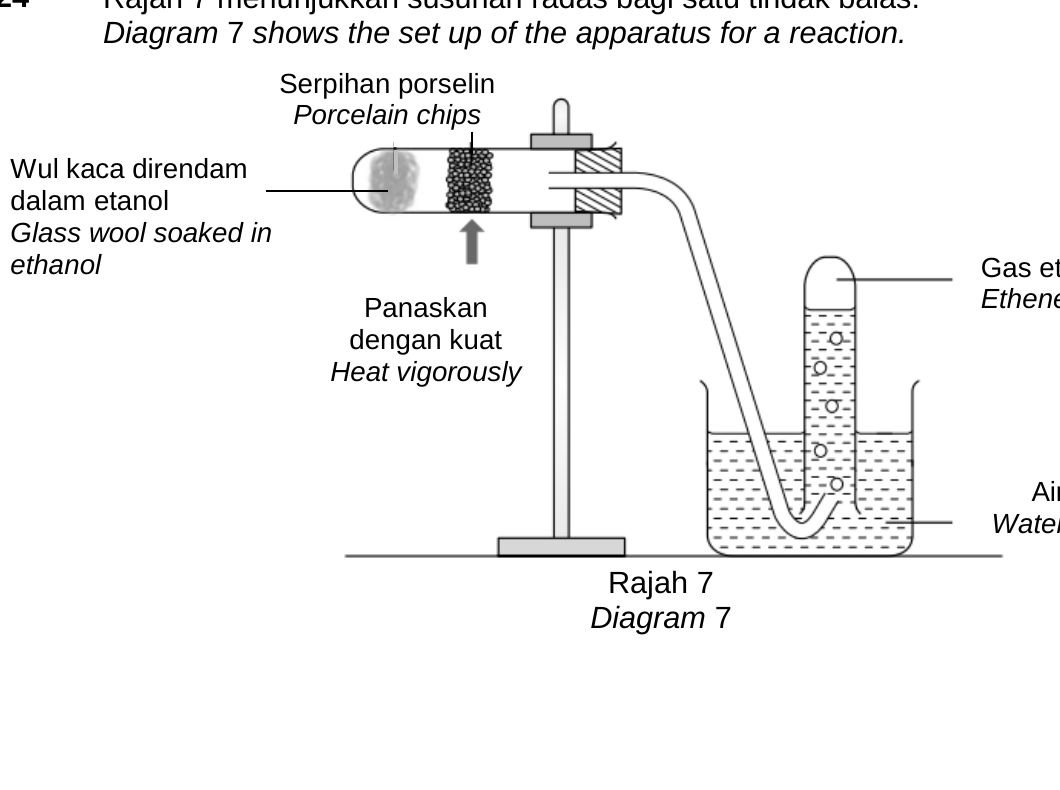
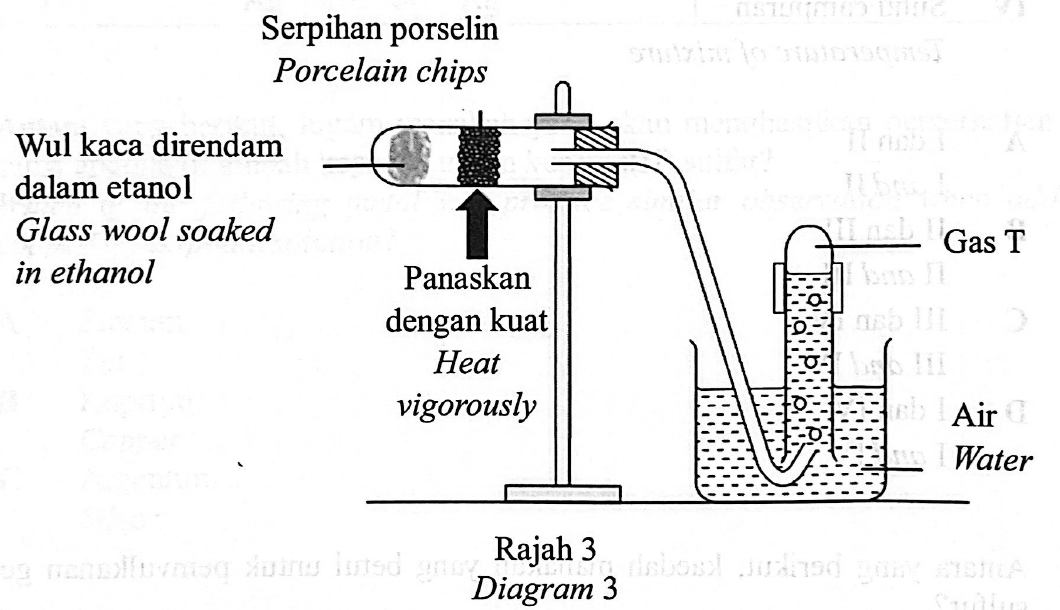
Diagram 7 shows the set up of the apparatus for a reaction (glass wool soaked in ethanol, porcelain chips heated vigorously, ethene gas collected over water). What is the reaction?
Medium
Which of the following is the structural formula of an unsaturated hydrocarbon?
Medium
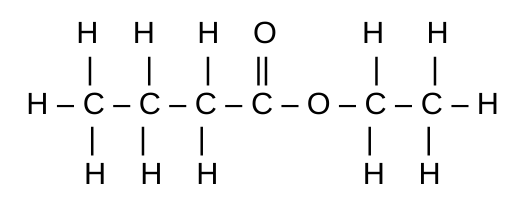
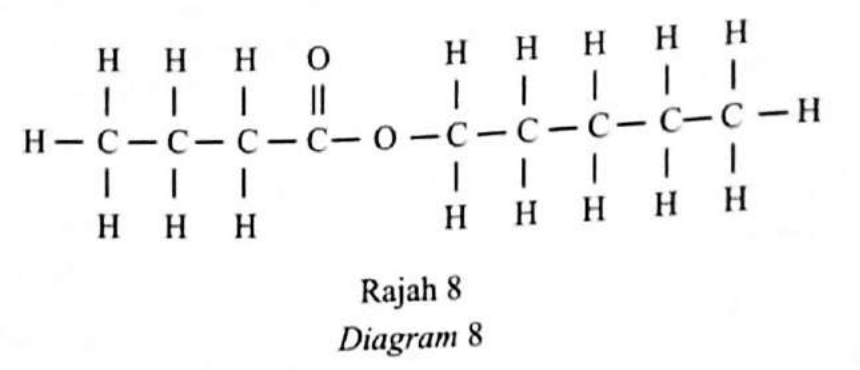
Diagram 8 shows the structural formula of a carbon compound (CH3CH2CH2COOCH2CH3, an ester). The compound is produced by the reaction between
Medium
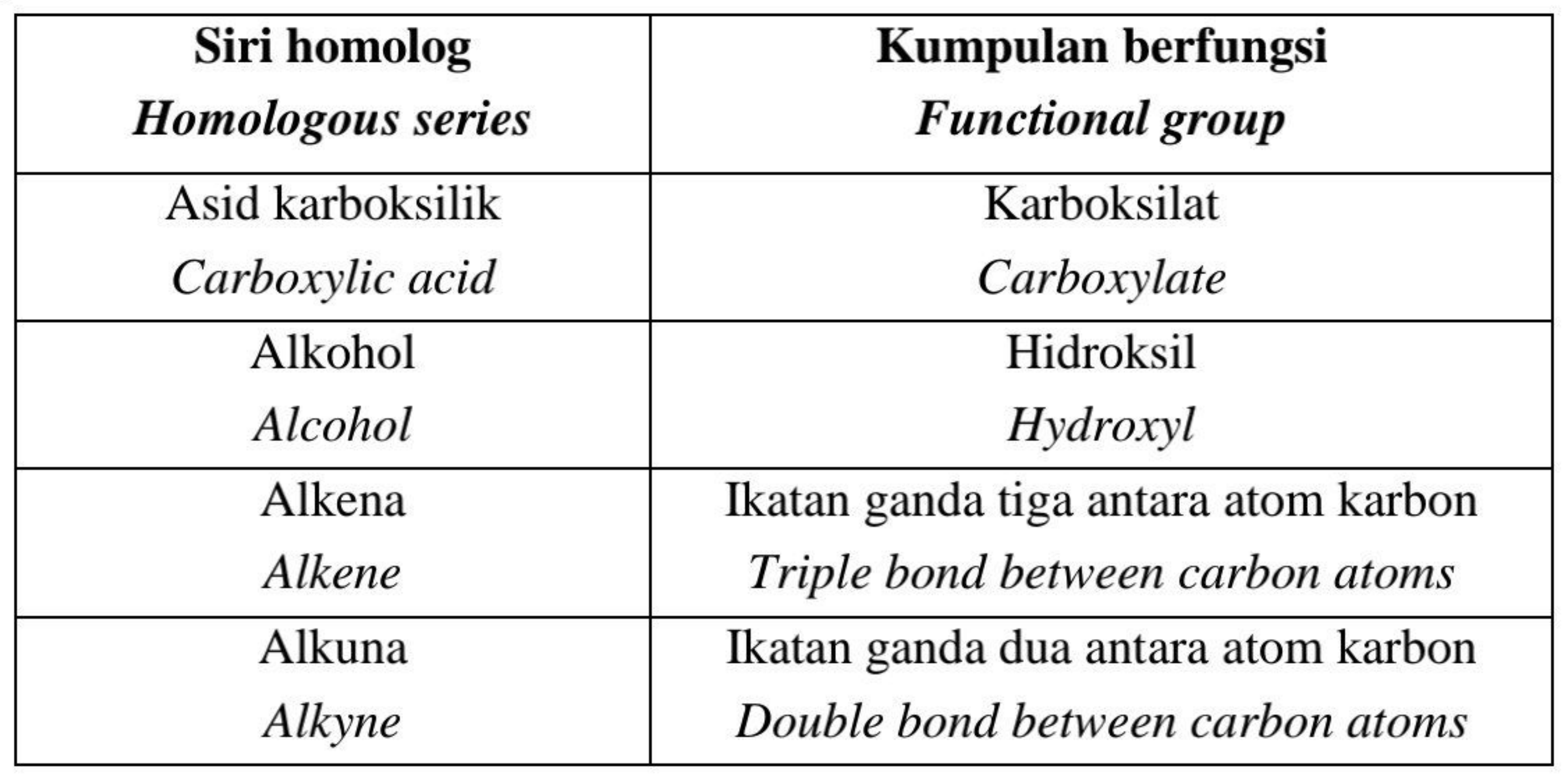
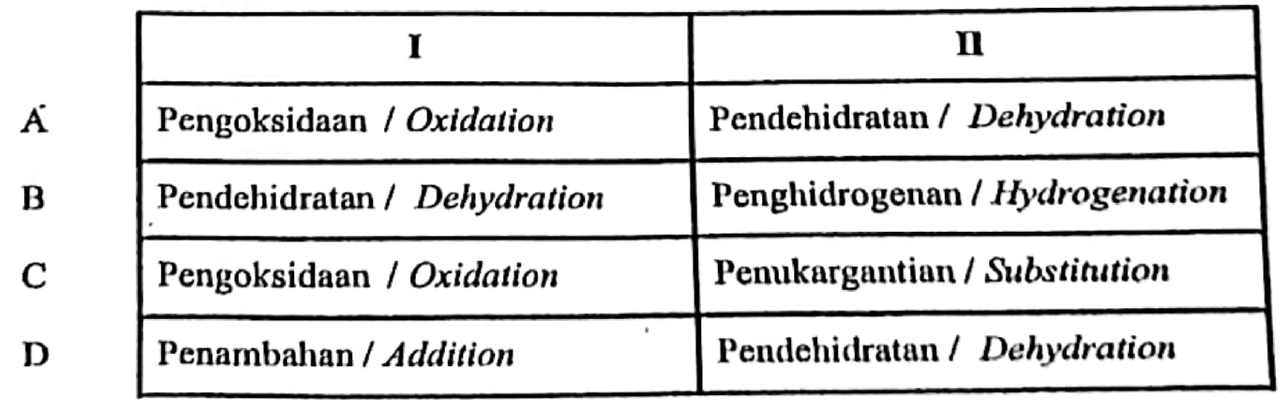
Which of the following shows the correct pair of homologous series and its functional group?
Easy
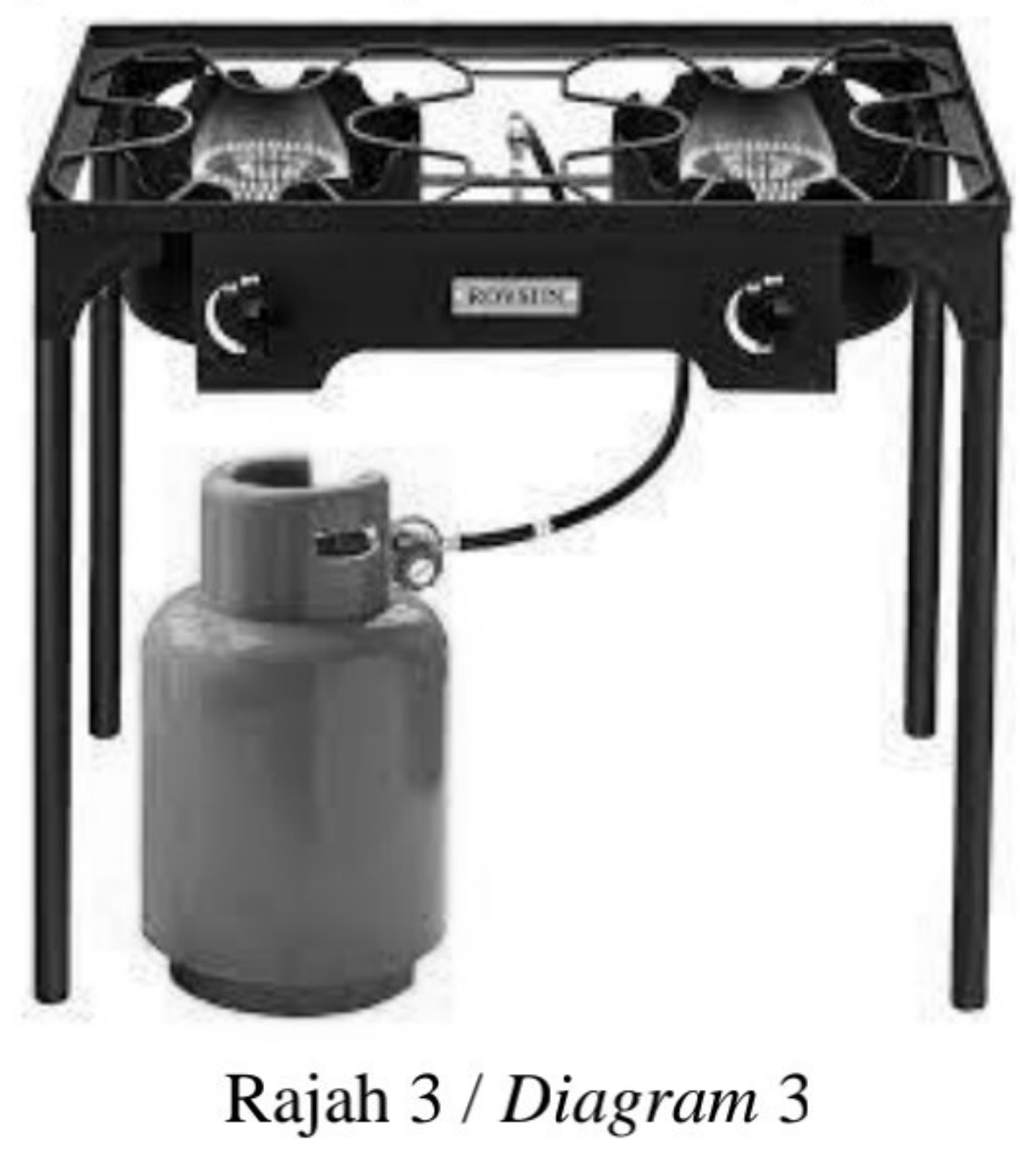
Diagram 3 shows a uses of carbon compound in daily life (a gas stove with a gas cylinder).
What is the homologous series for this carbon compound.
Easy
Compound X changes the brown colour of bromine water to colourless. What is the homologous series for X?
Easy
Ripening fruits such as bananas naturally produce ethene gas which causes the fruit to ripen. Which of the following is the structural formula for ethene?
Easy
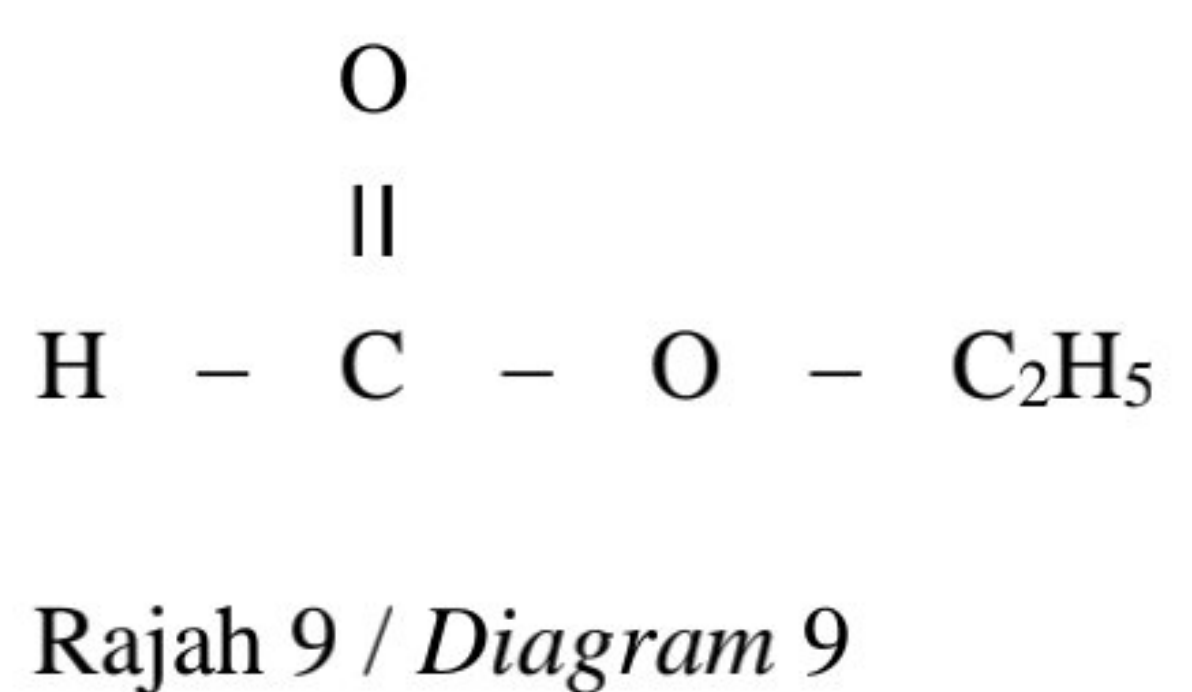
Diagram 9 is a molecular formula which represents an organic compound: H-C(=O)-O-C₂H₅.
What is the name of the organic compound?
Medium
The content of the antiseptic liquid contains homologous series Z. This homologous series is also used as a solvent in cough medicine. What is homologous series of Z?
Medium
Which of the following is non hydrocarbon?
Easy
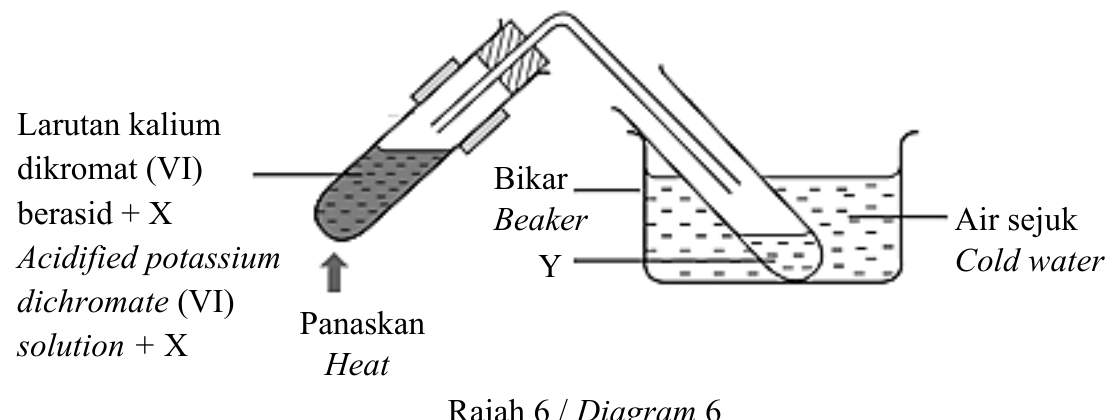
Diagram 6 shows an apparatus set-up to study chemical properties of X carried out by a group of students in a laboratory (acidified potassium dichromate (VI) solution + X is heated; product Y collects in a tube in a beaker of cold water). Which of the following is correct matches for X and Y?
X | Y
A Ethanol | Ethanoic acid
B Ethanol | Ethene
C Ethene | Ethanol
D Ethene | Ethanoic acid
Medium
S is a carboxylic acid that has three carbon atoms per molecule. What is the relative molecular mass of S? [Relative atomic mass: H = 1, C = 12, O = 16]
Medium
When ethanol is reacted with heptanoic acid, an ester with grape-like aroma is produced. Which of the following shows the structural formula for the ester?
Medium
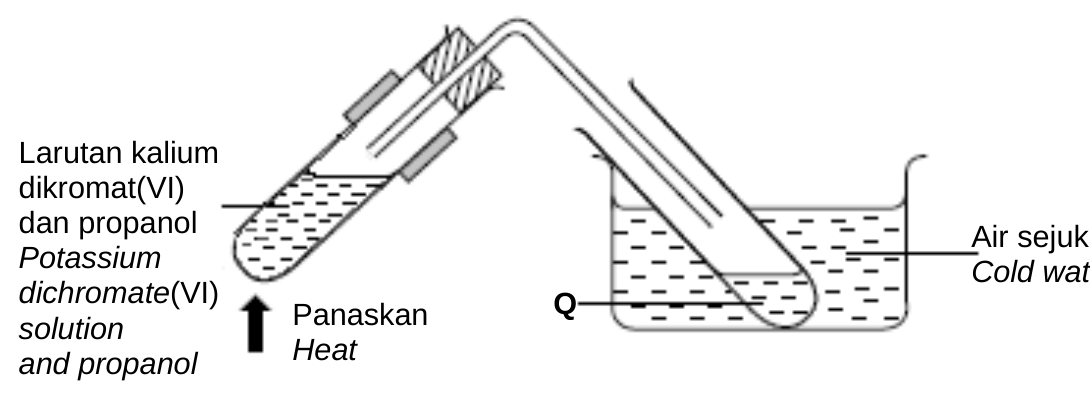
Diagram 13 shows the apparatus set-up for the reaction between propanol and acidified potassium dichromate(VI) to produce substance Q. Substance Q reacts with propanol to form an ester. Which is the molecular formula for the ester formed?
Medium
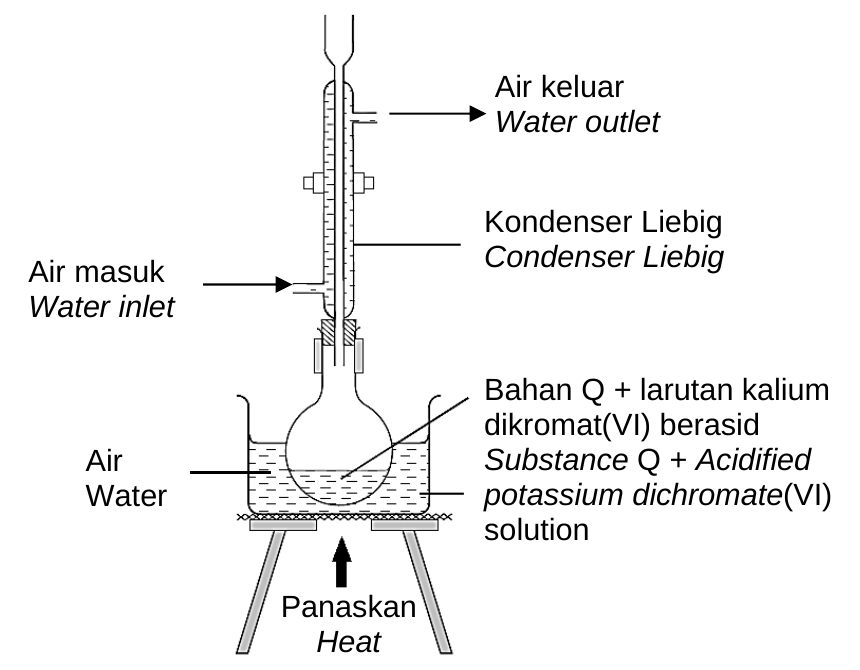
Diagram 19 shows the apparatus set up (reflux with Liebig condenser) for conversion of carbon compound Q to compound R using acidified potassium dichromate(VI) solution. State the molecular formula for compound R.
Medium
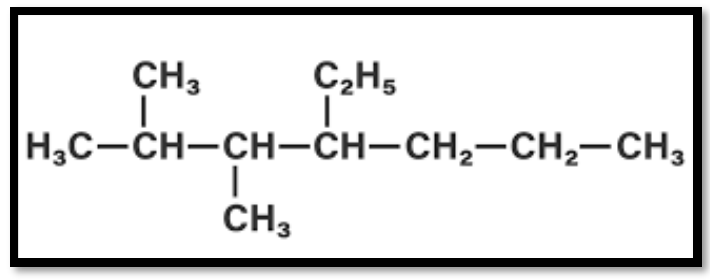
Diagram 20 shows the structural formula of a carbon compound: H3C-CH(CH3)-CH(CH3)-CH(C2H5)-CH2-CH2-CH3. State the name of the compound based on IUPAC nomenclature.
Medium
Diagram 23 shows the structural formula of homologous series A (an alcohol, pentan-3-ol) and B (an alkene, pent-2-ene). Which of the following is correct related to A and B?
Medium
Which of the following is a saturated hydrocarbon?
Medium
Diagram 13 shows the conversion reaction of ethene, C2H4, to ethanoic acid, CH3COOH: Ethene → (hydration) → Compound A → (Process Y) → Ethanoic acid. Which of the following is compound A and process Y?
Medium
Diagram 14 shows the structural formula of a hydrocarbon compound (CH3-CH=C(CH3)-CH3). Which of the following is an isomer of the hydrocarbon compound?
Medium
The following equation represents addition reaction of an alkene.
C₂H₄ + H₂ → C₂H₆
What is the catalyst used in the reaction?
Easy
Which of the following pair of compounds is classified in the same homologous series?
(Table: Compound I | Compound II.)
Medium
Which of the following compounds will decolourise bromine water?
I: CH₃CH₂COOH (propanoic acid, structural formula shown)
II: CH₂=CH₂ (ethene)
III: CH₃CH₂CH₃ (propane)
IV: CH₃CH=CH₂ (propene)
Medium
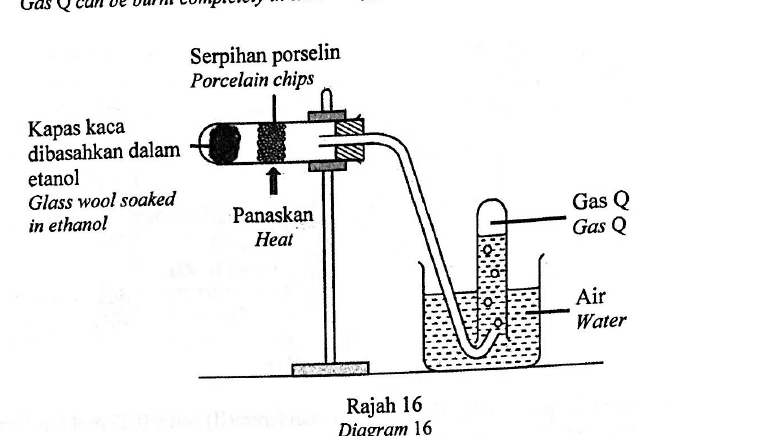
Diagram 16 shows the apparatus set-up for the reaction to produce gas Q (glass wool soaked in ethanol, porcelain chips heated, gas collected over water). Gas Q can be burnt completely in excess oxygen.
What is gas Q and the chemical equation for the complete combustion?
Medium
Substance W has the following properties: (1) Gives off carbon dioxide gas and water when burnt in oxygen; (2) Dissolves in water. What is substance W?
Medium
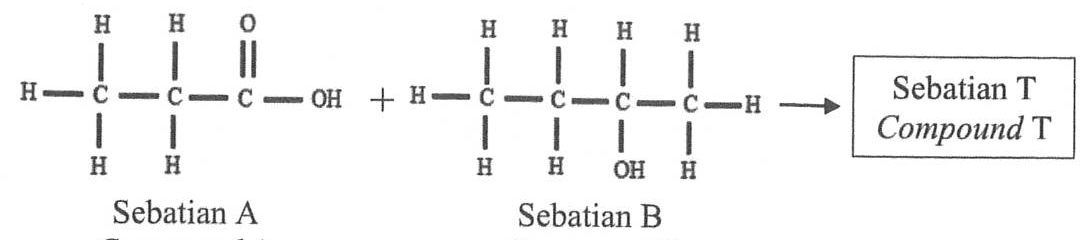
Diagram 5 shows a reaction to produce compound T with the presence of concentrated sulphuric acid as a catalyst. Compound A is propanoic acid and compound B is an alcohol (butan-2-ol). Which of the following is the structural formula of compound T?
Medium
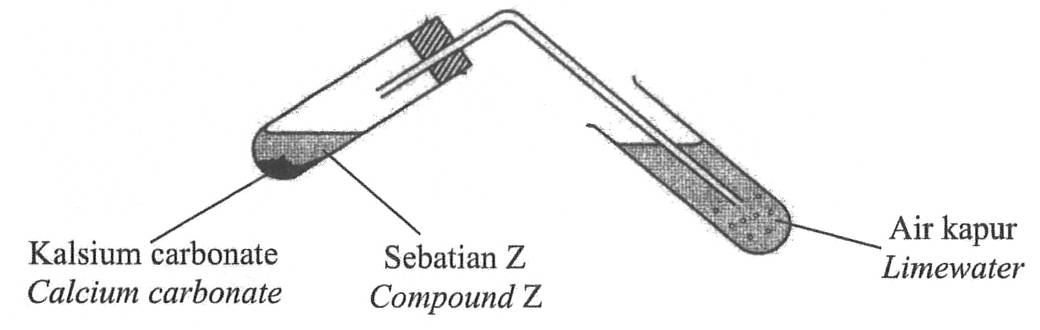
Diagram 16 shows the apparatus set-up for the reaction between compound Z and calcium carbonate. At the end of the experiment, limewater turns cloudy. What is the chemical formula for compound Z?
Medium
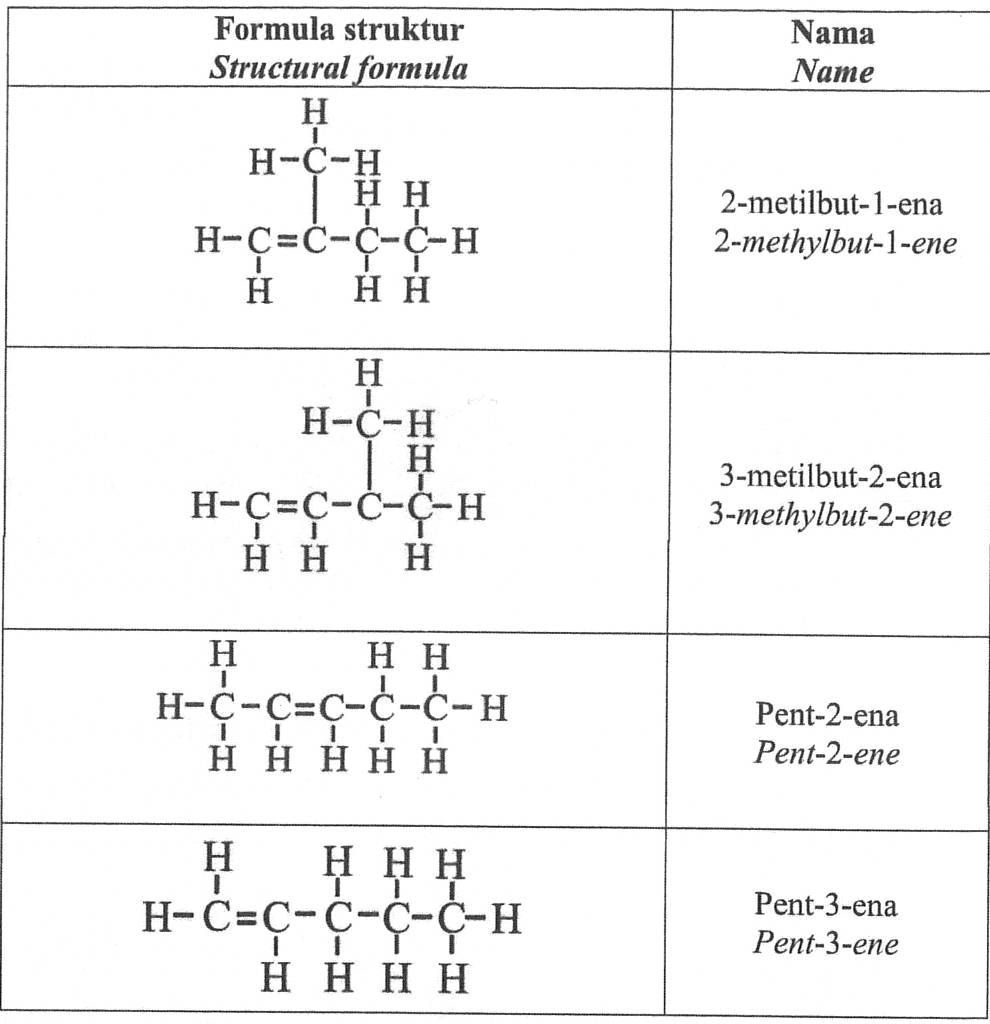
Which of the following is the correct structural formulae and its name for the isomer of C₅H₁₀? (I 2-methylbut-1-ene, II 3-methylbut-2-ene, III Pent-2-ene, IV Pent-3-ene; structures in Table)
Medium
Which substance is used to differentiate between hexane and hexene?
Easy
Diagram 6 shows the structural formula of an ester contained in an apple (HCOO-CH2CH2CH3). What is the name of the ester based on IUPAC system nomenclature?
Medium
Table 4 shows the information of two organic compounds R and S. R: insoluble in water; decolourises brown colour of bromine. S: miscible with water in all proportions; burns with blue flame to produce carbon dioxide and water. Based on the information given, which structural formula has the same characteristics as above?
Medium
Which of the following statements is correct about unsaturated hydrocarbon?
Easy
Diagram 3 shows the apparatus set-up for a reaction to produce gas T (glass wool soaked in ethanol heated, porcelain chips heated vigorously, gas collected over water). Which of the following statements is correct about gas T?
Medium
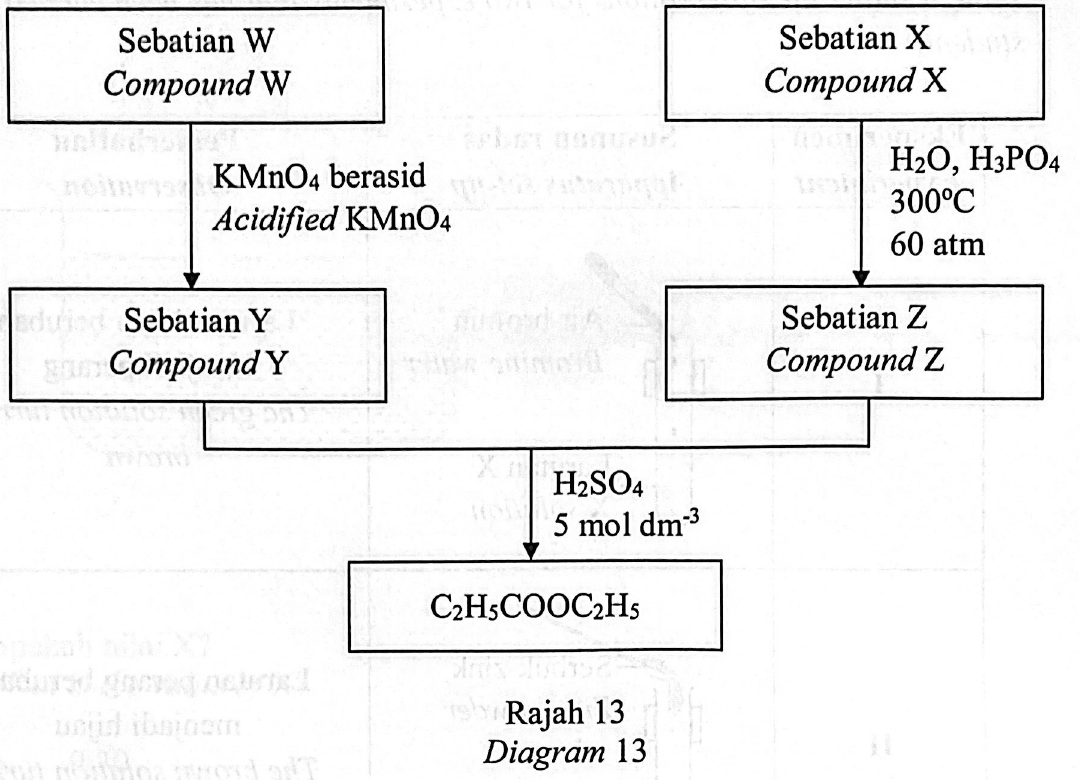
Diagram 14 shows a series of reactions for carbon compound W, X, Y and Z (W with acidified KMnO₄ gives Y; X with H₂O, H₃PO₄, 300 °C, 60 atm gives Z; Y + Z with 5 mol dm⁻³ H₂SO₄ gives C₂H₅COOC₂H₅). Which of the following compounds will produce blue flame when reacted with excess oxygen gas? I W; II X; III Y; IV Z
Medium
Which of the following compounds has its number of carbon atoms correctly matched?
Medium
Carbon compound M formed when ethanol reacts with acidified potassium manganate(VII) solution. What is the general formula for M?
Medium
Which of the following functional groups represent a non-hydrocarbon? I Single bond between carbon atoms; II Triple bond between carbon atoms; III Carboxyl; IV Carboxylate.
Medium
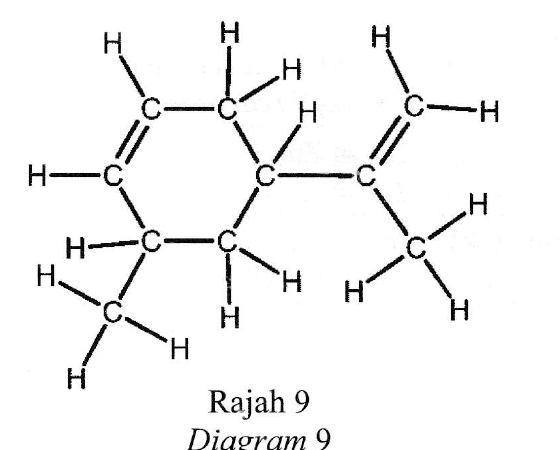
Diagram 9 shows the molecular structure of limonene (C₁₀H₁₆, with two C=C double bonds) which is extracted from oranges. What is the mass of the product when bromine molecules react completely with 1 mol of limonene during the addition reaction? [Relative atomic mass: H = 1, C = 12, Br = 80]
Medium
Which of the following is true about the physical properties of alkene?
Easy
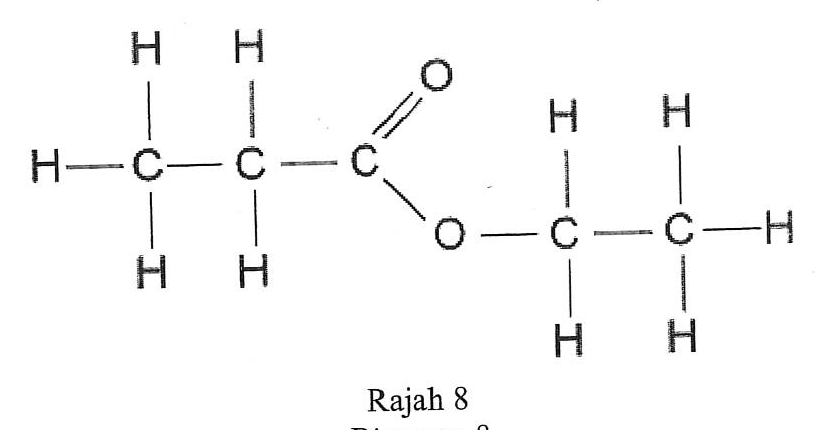
Diagram 8 shows the structural formula of a compound (ethyl propanoate). Which of the following are the correct statements about the compound?
I Soluble in water
II Non-hydrocarbon
III Produced from the reaction between ethanol and propanoic acid
IV Reacts with reactive metal to produce hydrogen gas
Medium
The following equation represents the complete combustion of a compound.
CₓH₂ₓ₊₁OH + zO₂ → xCO₂ + yH₂O
What are the values of x, y and z?
Medium
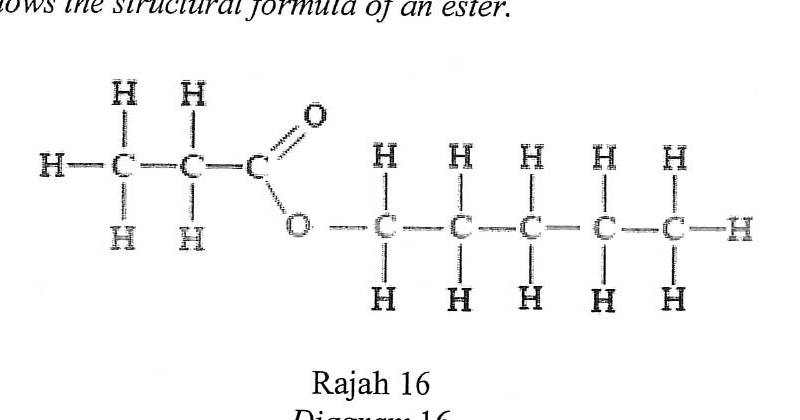
Diagram 16 shows the structural formula of an ester. Which of the following are the names of alcohol and carboxylic acid used to prepare the ester?
Medium
Which of the following is a saturated hydrocarbon?
Easy
What is the correct functional group for the following homologous series? (A Ester: -O-H; B Alkyne: -C=C-; C Alcohol: -COO- (C(=O)-O); D Carboxylic acid: -COOH (C(=O)-O-H))
Medium
Diagram 12 shows the conversion of compound X to two organic compounds through oxidation process (to C2H5COOH) and dehydration process (to C3H6). What is the general formula of compound X?
Medium
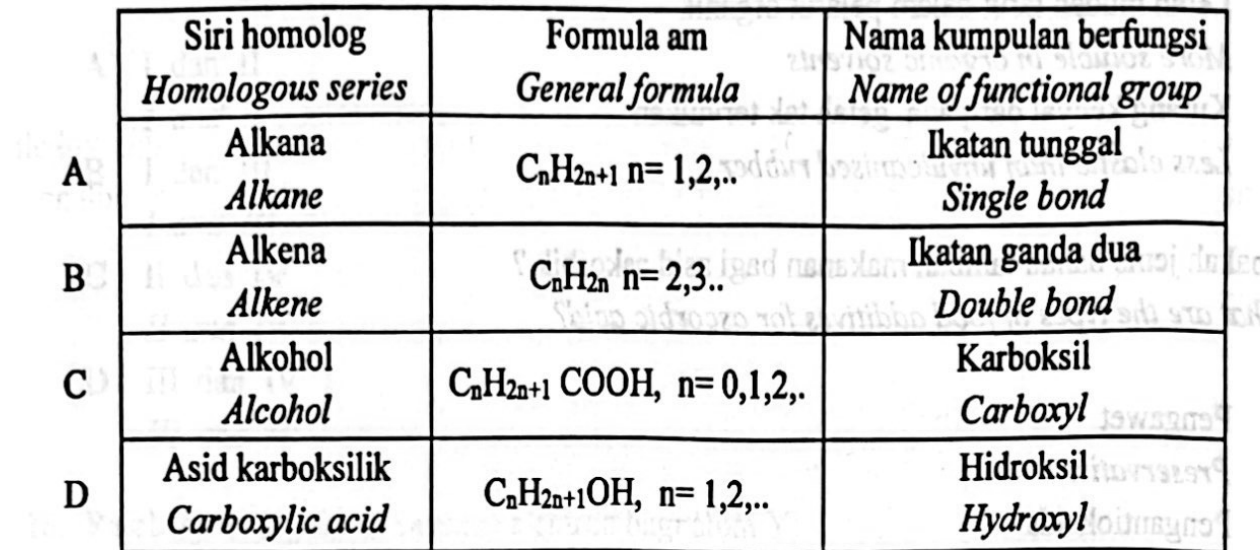
Which of the following is the correct match? (table of homologous series, general formula and name of functional group)
Medium
Which of the following are characteristics of the homologous series of alkenes? I Saturated hydrocarbon compounds; II Produces more sooty flame; III Single covalent bond in a molecule; IV The percentage of carbon by mass per molecule is higher
Medium
Diagram 13 shows a conversion of butanol: C₄H₉OH undergoes dehydration to form compound X. Which of the following is the isomer of compound X? I But-1-ene; II 2-methylpropane; III 2-methylprop-1-ene; IV 2,2-dimethylbutane
Medium
The equation represents an esterification reaction: ethanoic acid + Alcohol X → ester (CH3COO–CH2CH2CH3) + H2O. What is X?
Medium
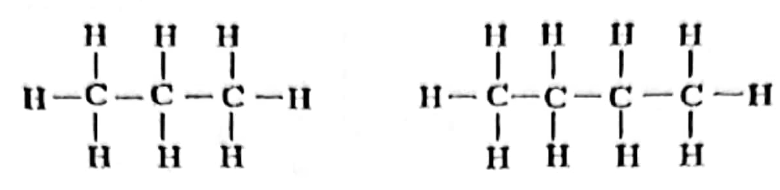
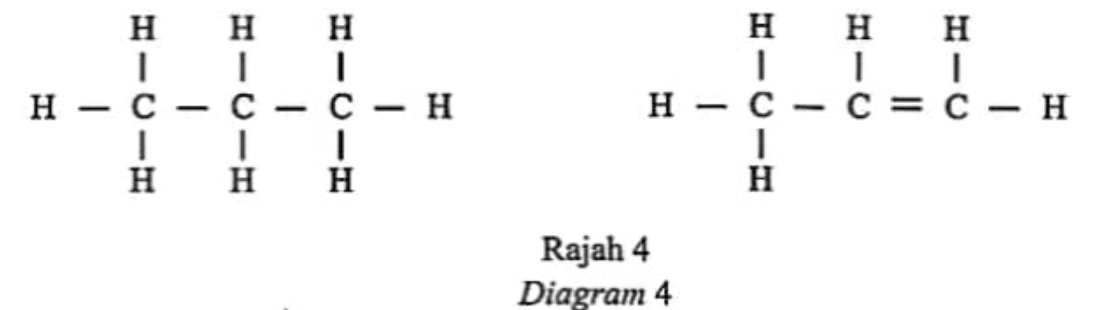
The following shows the structural formulae of two hydrocarbons (propane and butane). Which property of both compounds is similar?
Medium
A substance has the following characteristics: turns moist blue litmus paper to red; sour taste; gas bubbles released when reacts with magnesium. What is the molecular formula of the substance?
Medium
Diagram 5 shows the structural formula of an organic compound. What is the IUPAC name of the organic compound?
Medium
Diagram 6 shows a chemical reaction: propanol → propanoic acid (reaction I) and propanol → propene (reaction II). Name the reaction I and II.
Medium
What is the process for producing alcohol from ethene in the presence of phosphoric acid as a catalyst at 300°C and 60 atm?
Easy
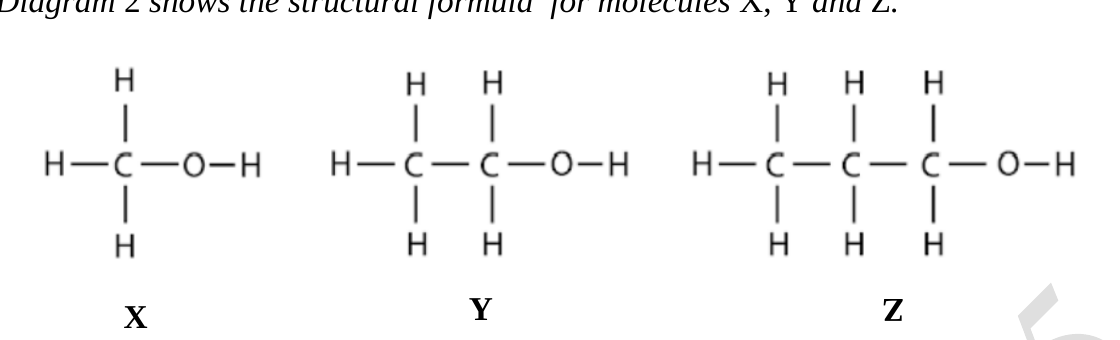
Diagram 2 shows the structural formula for molecules X (CH₃OH), Y (C₂H₅OH) and Z (C₃H₇OH). Which statement is true for all the above molecules?
I X, Y and Z are non hydrocarbon compounds.
II X, Y and Z have different chemical properties.
III X, Y and Z are represented by the same general formula.
IV X, Y and Z have different functional groups.
Medium
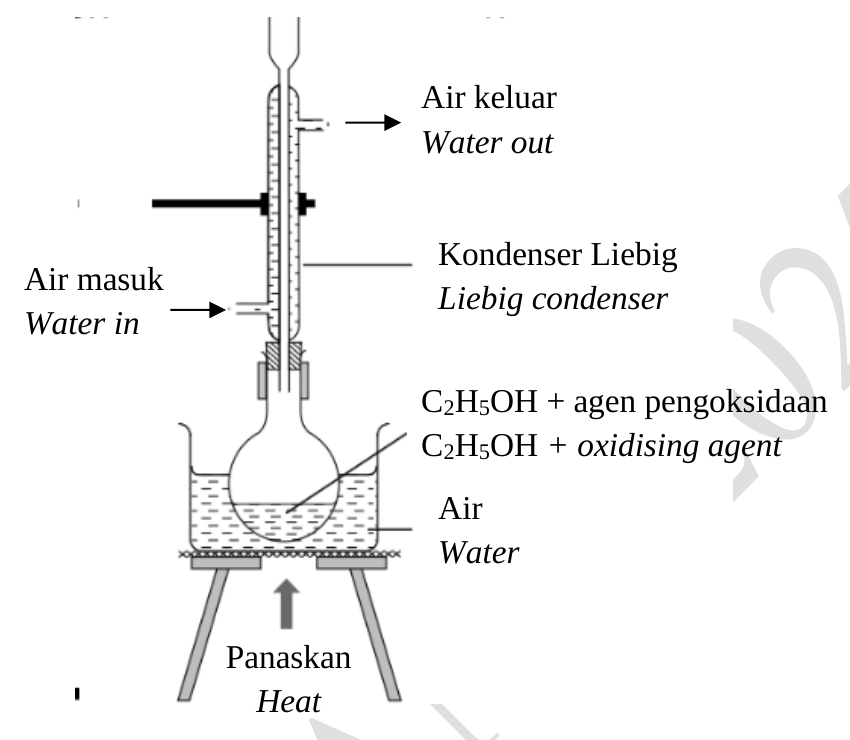
Diagram 14 shows an apparatus set-up (Liebig condenser, heating in a water bath) for chemical reaction of C₂H₅OH + oxidising agent. Which of the following is correct for the above reaction?
Medium
The equation C4H9OH → C4H8 + H2O (heat) shows the conversion of butanol to butene. What is process X?
Medium
What is the general formula of alkenes?
Easy
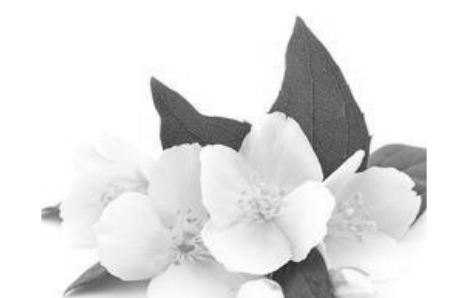
Diagram 6 shows a flower that has a pleasant fragrance. What is the name of the substance that gives the pleasant fragrance?
Easy
Which of the following is a hydrocarbon compound?
Easy
The name of the functional group for carboxylic acid is
Easy
Diagram 2 shows structural formula of compound X (CH2=C(CH3)-CH2-CH3). Name the product when compound X reacts with chlorine gas.
Medium
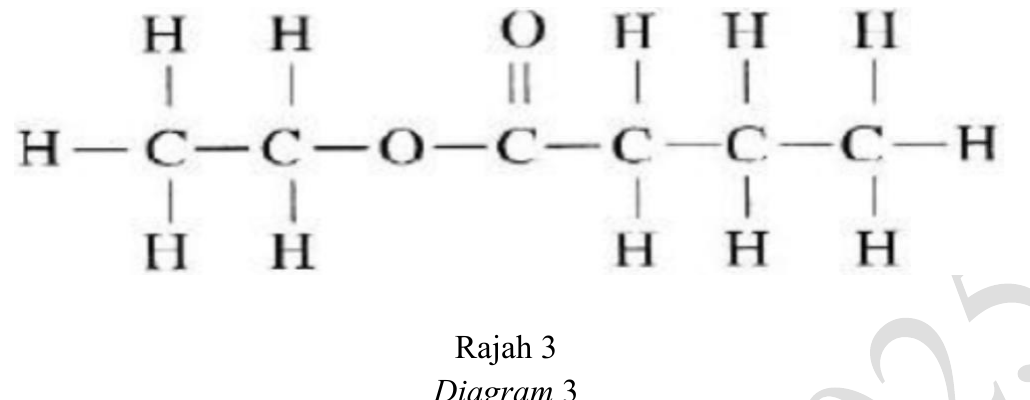
Diagram 3 shows structural formula of ester (ethyl group attached through O to C(=O) followed by a three-carbon chain). Name this ester.
Medium
Butene reacts with steam at the temperature of 300°C using concentrated phosphoric acid as a catalyst to produce compound P. What is P?
Medium
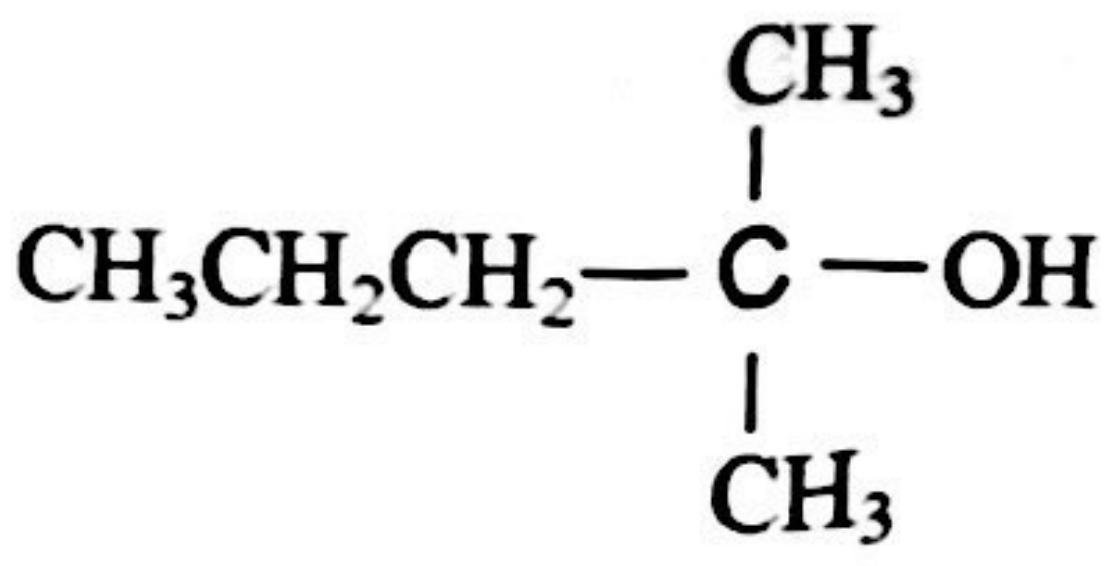
Diagram 8 is a structural formula of an organic compound: CH₃CH₂CH₂-C(CH₃)(CH₃)-OH. What is the name of the organic compound?
Medium
Which of the following is the isomers for butanol? I. Butan-2-diol II. 2-methylpropan-3-ol III. 2-methylpropan-2-ol IV. 2-methylpropan-1-ol
Medium
What type of bond present between carbon atoms in a propyne, C₃H₄ molecule?
Medium
Which of the following substances is miscible in water in all proportions?
Medium
Diagram 9 shows the structural formula of an alkene (but-2-ene, CH₃-CH=CH-CH₃). What is the product formed when the alkene reacts with steam?
Medium
Which of the following are the isomer for C₅H₁₁OH? I Pentan-2-ol II 2-ethylpropanol III 2,2-dimethylpropan-1-ol IV 2,3-dimethylpropan-2-ol
Medium
Diagram 10 shows the structural formula of an organic compound (CH3-CH=CH-CH2-CH3, five carbon atoms with one C=C bond between carbon 2 and 3). What is the name of the organic compound?
Medium
Which of the following are the isomers of C4H9OH?
I Propan-2-ol
II Butan-1-ol
III 2-methylpropan-2-ol
IV 2-methylbutan-2-ol
Medium
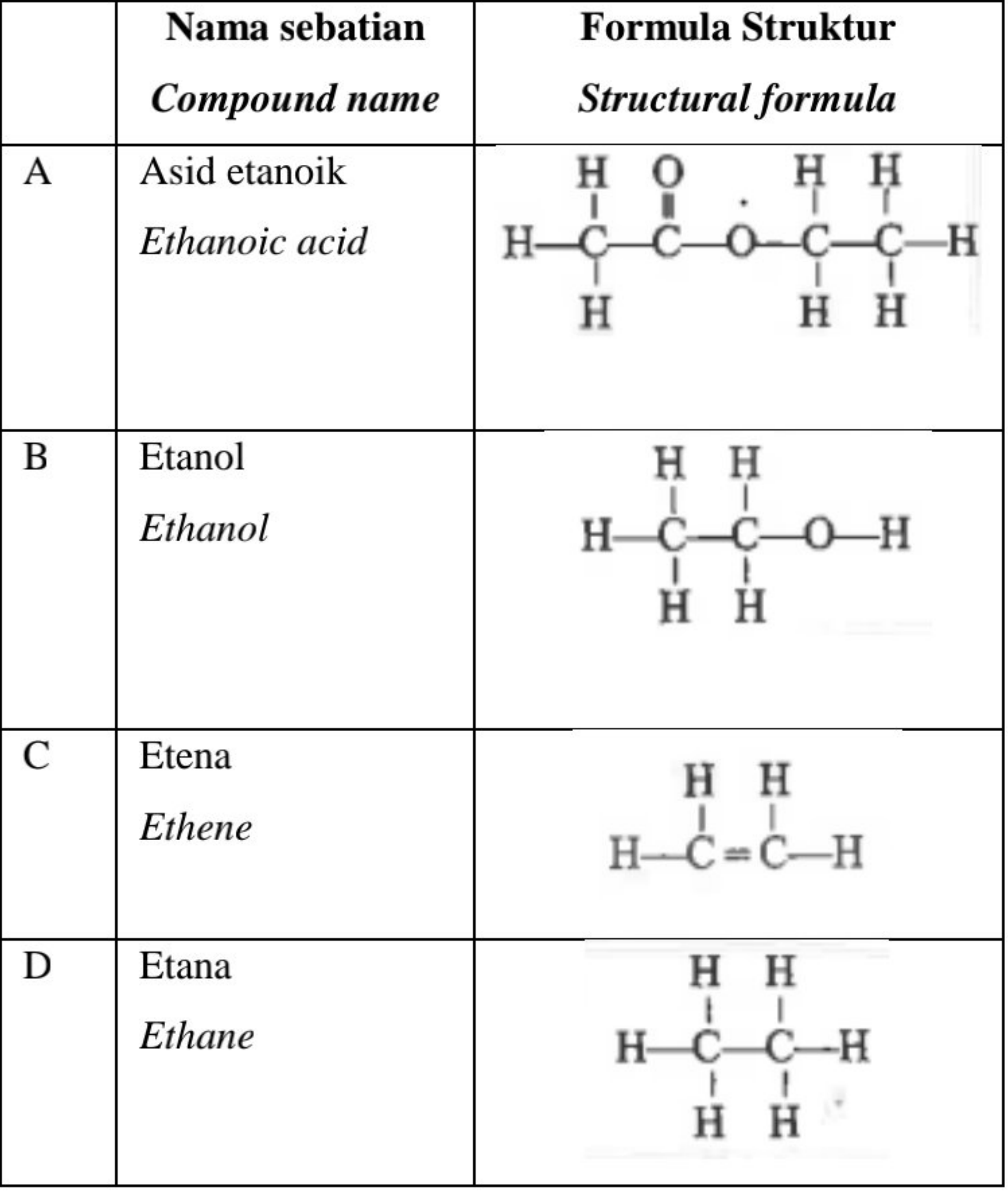
Which structural formula does not correspond to the named compound? (A: ethanoic acid, B: ethanol, C: ethene, D: ethane; structural formulae are shown in the table)
Medium
Diagram 9 shows the structural formula for a carbon compound (butane, CH₃CH₂CH₂CH₃, is shown in the diagram). Which of the following is the isomer for the above carbon compound?
Easy
Petroleum consists of hydrocarbons. How are these hydrocarbons separated?
Easy
The following chemical equation represents the reaction of ethane with chlorine gas: CH₄(g) + Cl₂(g) → CH₃Cl(g) + HCl(g). What is the name of the reaction?
Medium
Which of the following is the similarity between ethene and alcohol?
Medium
Which of the following is non hydrocarbon?
Easy
The natural smell of a pineapple is due to the presence of an ester. Which of the following is the name of the ester?
Medium
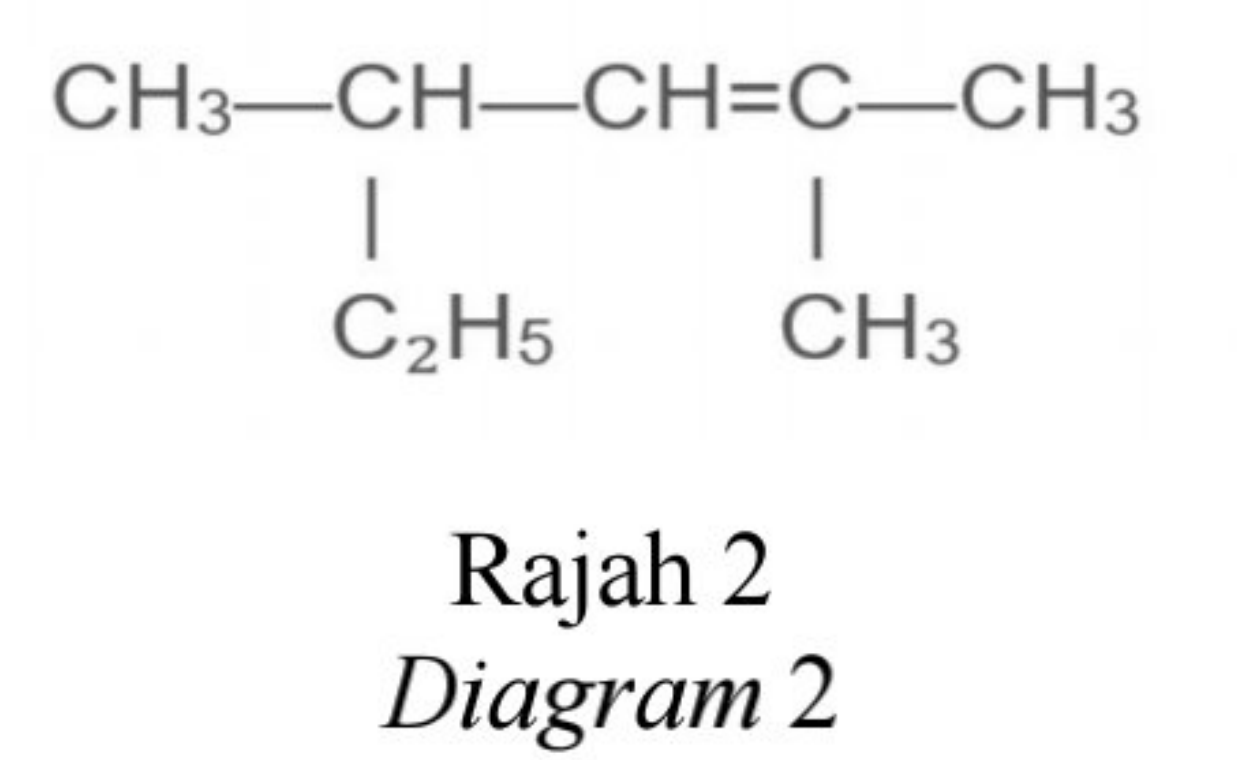
Diagram 2 shows the structural formula of an organic compound CH3-CH-CH=C-CH3 with C2H5 on the second carbon and CH3 on the fourth carbon. What is the homologous series for the organic compound?
Medium
The following molecular formula represents a carbon compound formed from the reaction between compounds X and Y: C2H5COOC3H7. What are compounds X and Y? (X = carboxylic acid, Y = alcohol)
Medium
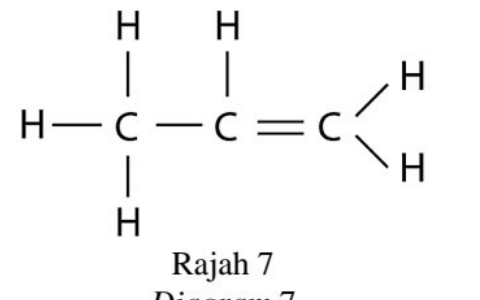
Diagram 7 shows the structural formula of rubber monomer (CH2=CH-C(CH3)=CH2... drawn as H2C=CH-C(CH3)=CH-H). What is the name of the compound based on the IUPAC nomenclature?
Medium
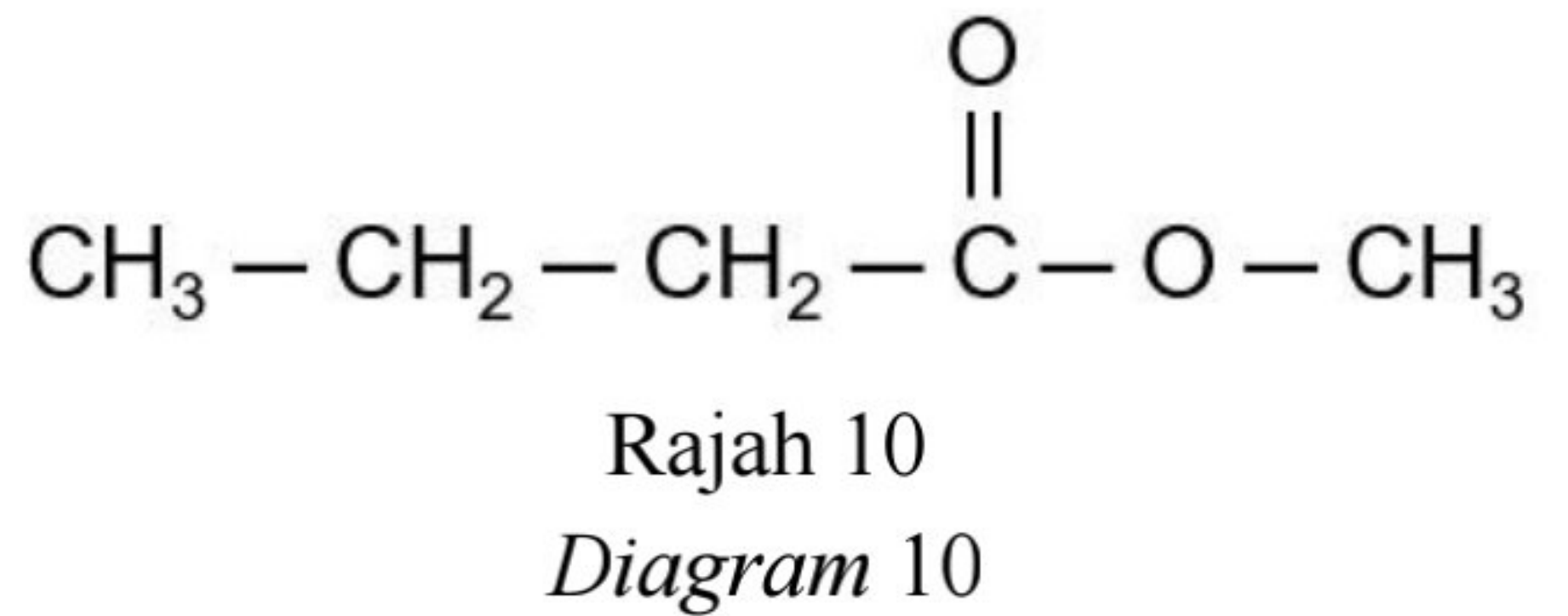
Diagram 10 shows the structural formula of a compound: CH3-CH2-CH2-C(=O)-O-CH3. What is the name of the compound?
Medium
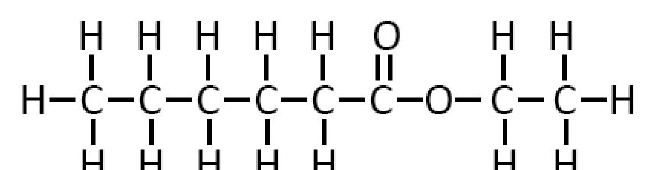
An organic compound Y has the structure as shown in Diagram 5 (an ester: a five-carbon alkyl chain attached to C(=O)-O-CH2CH3, i.e. ethyl hexanoate). Which pair of compounds will react to produce organic compound Y?
Medium
Diagram 13 shows reaction to produce compound P from compound R using hot porcelain chips. Chemical formula for compound R is C4H9OH. What is the percentage of carbon by mass in compound P? [Relative atomic mass: C = 12, H = 1, O = 16]
Medium
Which of the following is an inorganic compound?
Easy
Diagram 3 shows a flower that has a pleasant fragrance. What is the name of the substance that gives the pleasant fragrance?
Easy
Which of the organic compound is an unsaturated hydrocarbon?
Easy
Which of the following is not a hydrocarbon compound?
Easy
The following chemical equation represents the reaction of ethane with chlorine gas.
CH₄(g) + Cl₂(g) → CH₃Cl(g) + HCl(g)
What is the name of the reaction?
Easy
The following information is about organic compound P.
• Has 3 carbon atoms
• Soluble in water
• Reacts with zinc to produce hydrogen gas
What is the name of the organic compound P?
Medium
Which substance is used to differentiate between hexane and hexene?
Easy
Petroleum consists of hydrocarbons. How are these hydrocarbons separated?
Easy
Diagram 6 shows set-up of apparatus to prepare compound X (heating acidified potassium dichromate(VI) solution + ethanol in a boiling tube, product collected in a test tube in cold water). Which of the following statement is true about compound X? I Has general formula CnH2n II Has functional group of -COOH III Reacts with magnesium to produce hydrogen gas IV Reacts with hydrogen at 180 °C in the presence of nickel to produce alkane
Medium
Diagram 8 shows the structural formula of an isomer for an alkene (CH3-C(C2H5)=CH-CH3 drawn with an ethyl branch on the second carbon). Name the isomer according to the IUPAC nomenclature system.
Medium
Diagram 12 shows the structural formula of ester that produces the fragrant smell found in green apple (CH3CH2CH2COOCH3). Alia wants to prepare the ester in laboratory. Which of the following can be used to prepare the ester?
Medium
Ethene can be differentiate from ethane because ethene can
Medium
Which of the following is observed when an alkene gas is passed through an acidified potassium manganate(VII) solution?
Medium
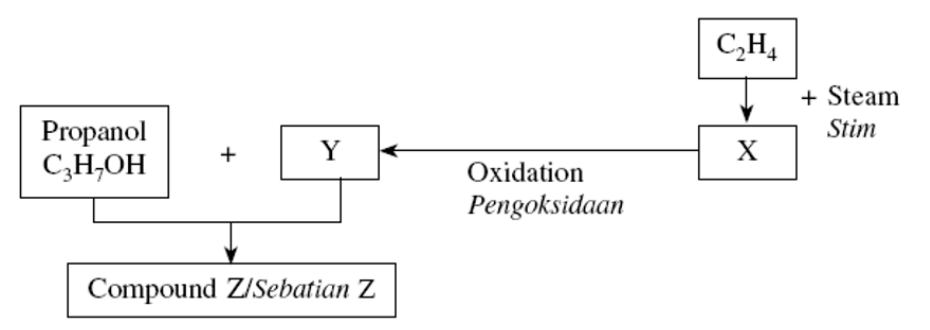
Diagram 26 shows the process of producing compound Z: C2H4 + steam gives X; oxidation of X gives Y; propanol C3H7OH + Y gives compound Z. Which of the following is the structure of compound Z?
Medium
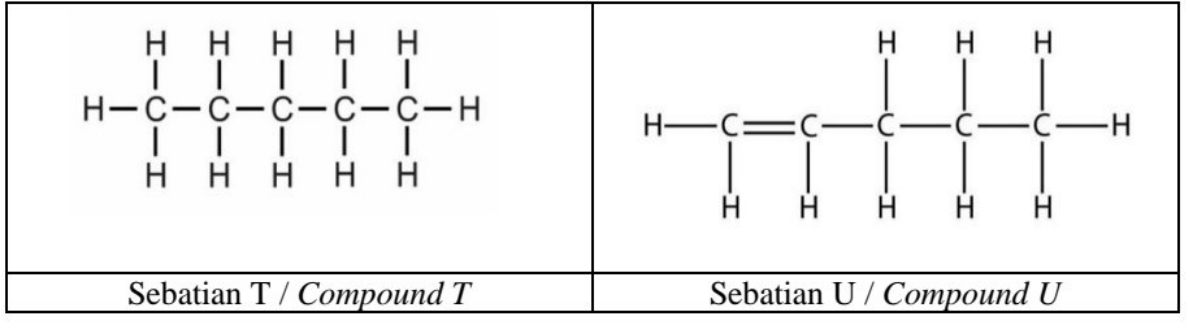
Diagram 10 shows the structural formulae of compound T (pentane, saturated) and compound U (pentene, with C=C). Which of the following shows the correct comparison between compound T and compound U?
Medium
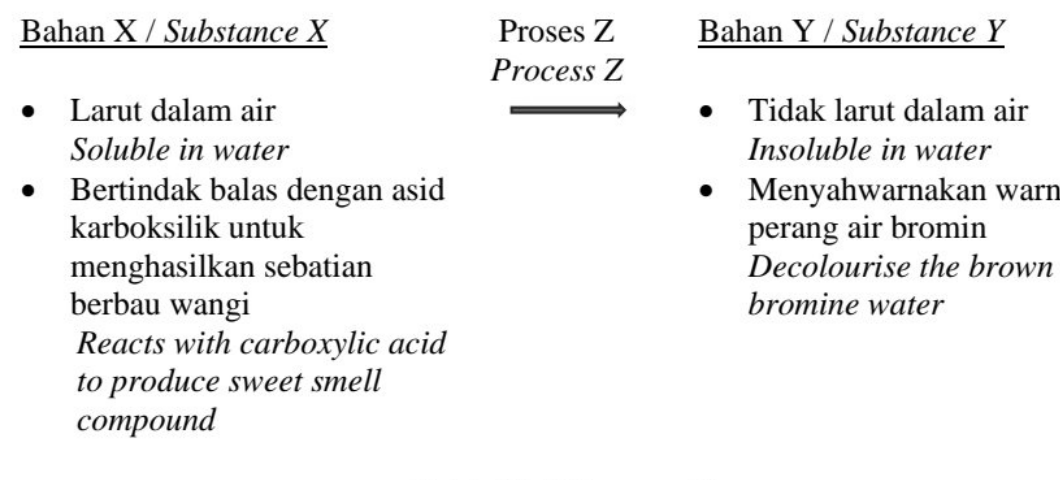
Diagram 11 shows the change of substance X to substance Y through process Z. Substance X: soluble in water; reacts with carboxylic acid to produce sweet smell compound. Substance Y: insoluble in water; decolourises brown bromine water. Which of the following is correct about process Z?
Medium
Which of the following equations can produce a substance with fruity smell?
Medium
Diagram 7 shows the structural formula of compound P (propene, CH3-CH=CH2). Which of the following structural formula of product is correct after passing compound P and steam through concentrated phosphoric acid at 300 °C, 60 atm?
Medium
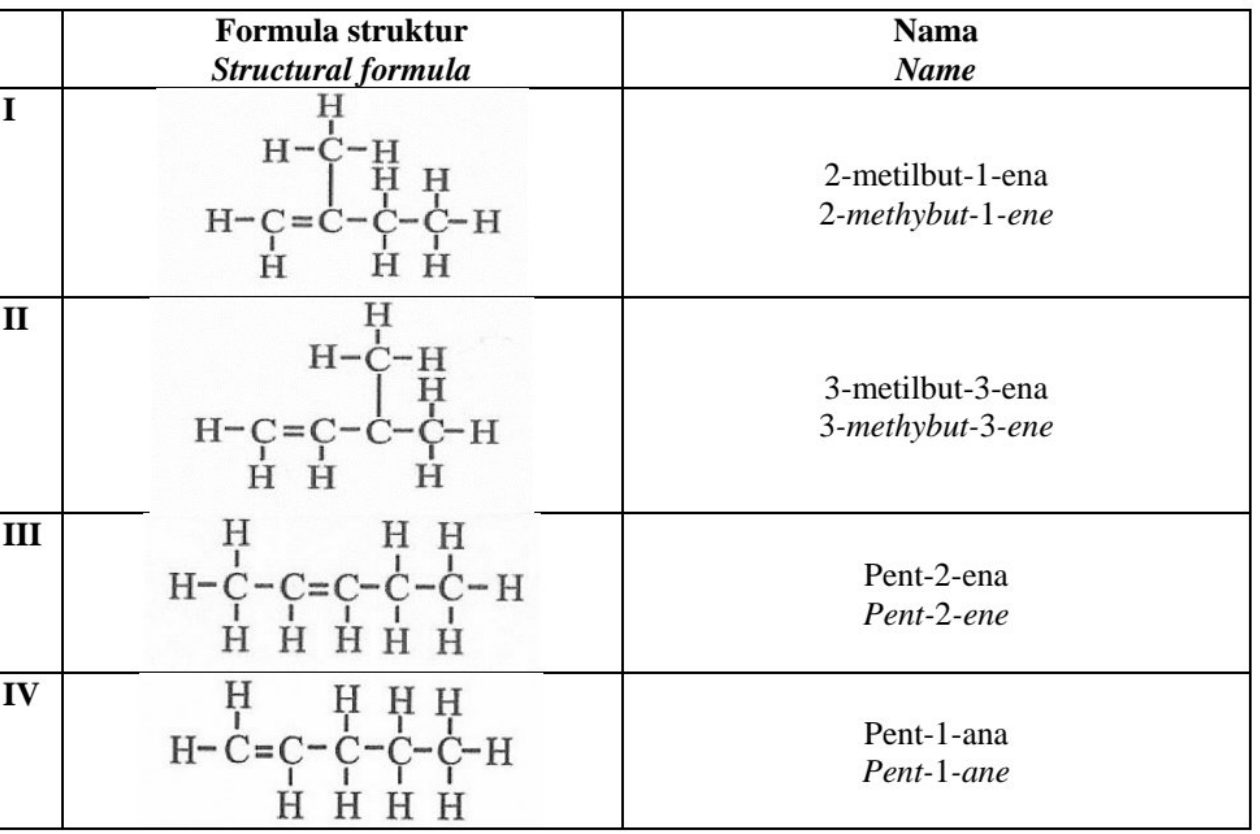
Which of the following is the correct structural formulae and its name for the isomer of C5H10? (Table of four structures I-IV: I 2-methylbut-1-ene, II 3-methylbut-3-ene, III Pent-2-ene, IV Pent-1-ane)
A I and II
B I and III
C II and IV
D III and IV
Medium
Which of the following substances is an organic compound?
Easy
Which of the following are isomers for butene? I, II, III and IV are the structural formulae shown in the figure.
Medium
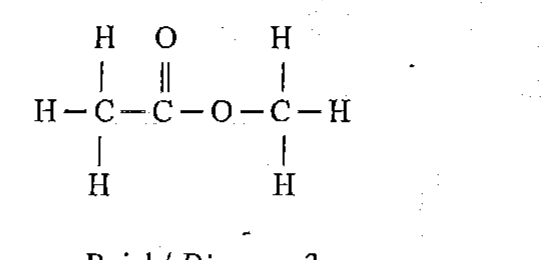
Diagram 3 shows the structural formula of a carbon compound (CH₃-CO-O-CH₃). What is the homologous series of the carbon compound?
Medium
Diagram 5 shows the structural formulae of two organic compounds (butane and 2-methylpropane).
Which of the following characteristics is different for both compounds?
Medium
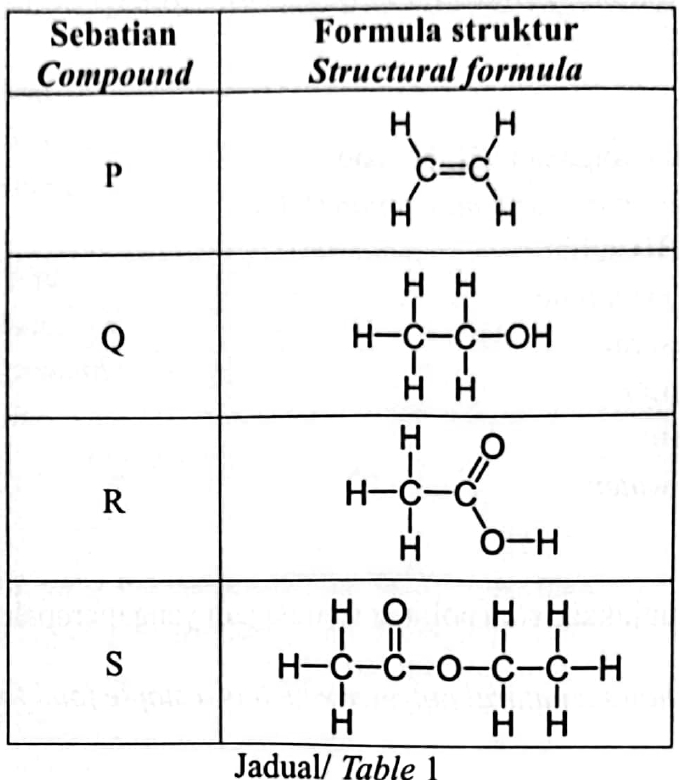
Table 1 shows the structural formulae of four different compounds: P (ethene, CH2=CH2), Q (ethanol, CH3CH2OH), R (ethanoic acid, CH3COOH), S (ethyl ethanoate, CH3COOCH2CH3). Which of the following substances is ester?
Easy
The following chemical equation represents cracking process. C₇H₁₆ → Y + C₅H₁₂. What is the homologous series of compound Y?
Medium
Diagram 13 shows the structural formula of compound Q (propene, CH2=CH-CH3). Which of the following substances are formed when compound Q reacts with steam?
I Propan-1-ol
II Propan-2-ol
III Propanoic acid
IV Propan-1,2-diol
Medium
Reaction Q occurs when methane gas reacts with chlorine gas under sunlight. What is reaction Q?
Medium
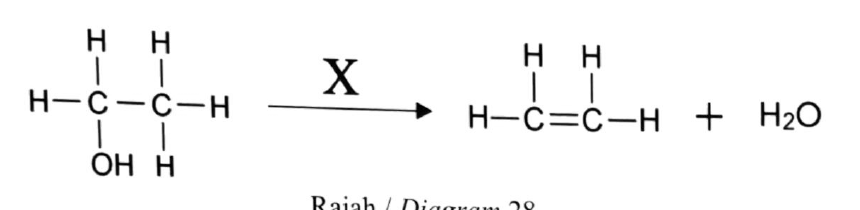
Diagram 28 shows a chemical equation for a reaction of a carbon compound (ethanol → ethene + H₂O, with X). Which of the following substances are suitable to be used as X?
I Porcelain chips
II Phosphoric acid
III Slaked lime
IV Concentrated sulphuric acid
Medium
Diagram 35 shows a chemical equation of a chemical reaction: C₆H₁₂O₆ → (yeast) W + X. What is substance W and the observation of chemical test to identify X?
A: W = CH₃COOH; blue litmus paper turns red
B: W = CH₃COOH; lighted wooden splinter produced pop sounds
C: W = C₂H₅OH; glowing wooden splinter lights up
D: W = C₂H₅OH; lime water turns cloudy
Medium
The following equation shows the conversion of an organic compound. C4H9OH → C4H8 + H2O (Process X, Heat). What is process X?
Easy
Which of the following substances is a hydrocarbon?
Medium
Which of the following is the correct general formula for alkyne?
Easy
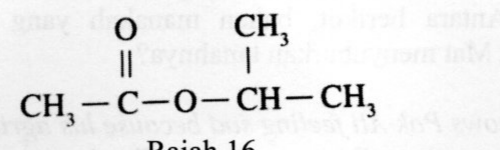
Diagram 16 shows a structural formula of an ester (CH₃-C(=O)-O-CH(CH₃)-CH₃). What are the reactants used to prepare this ester?
Medium
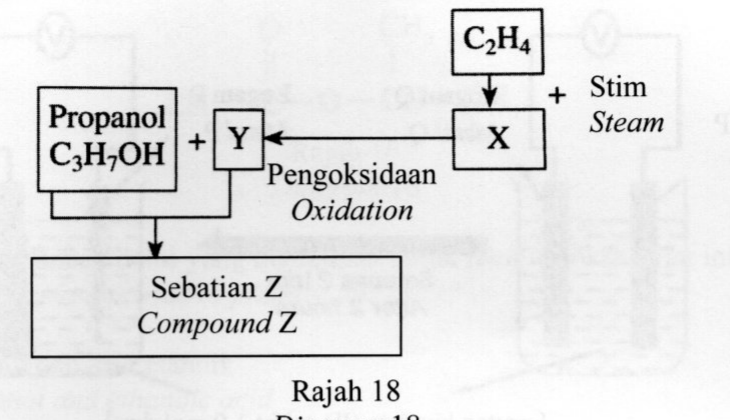
Diagram 18 shows the process of producing compound Z (C₂H₄ + steam → X; X oxidised → Y; propanol + Y → compound Z). Based on Diagram 18, which of the following statement is true?
Medium
Which of the following is the molecular formula for propanol?
Easy
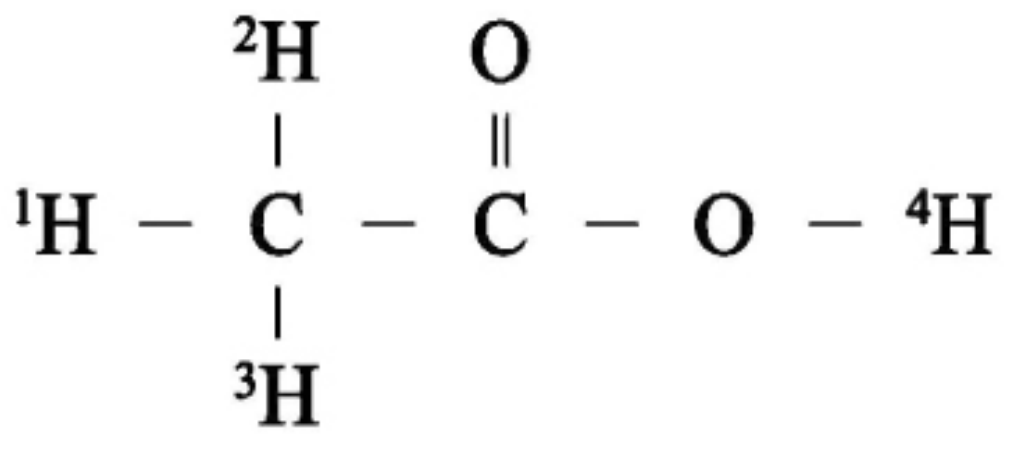
Diagram 5 shows the structural formula of ethanoic acid (hydrogen atoms labelled 1H, 2H, 3H on the CH3 group and 4H on the -OH group). Which of the following hydrogen atom will be involved in a chemical reaction?
Medium
Which of the following is not a hydrocarbon compound?
Easy
Diagram 12 shows a structural formula of a compound that is used as an artificial banana flavouring (an ester with a 4-carbon acid part and a 5-carbon alcohol part). What is the reactants used to produce this compound?
Medium
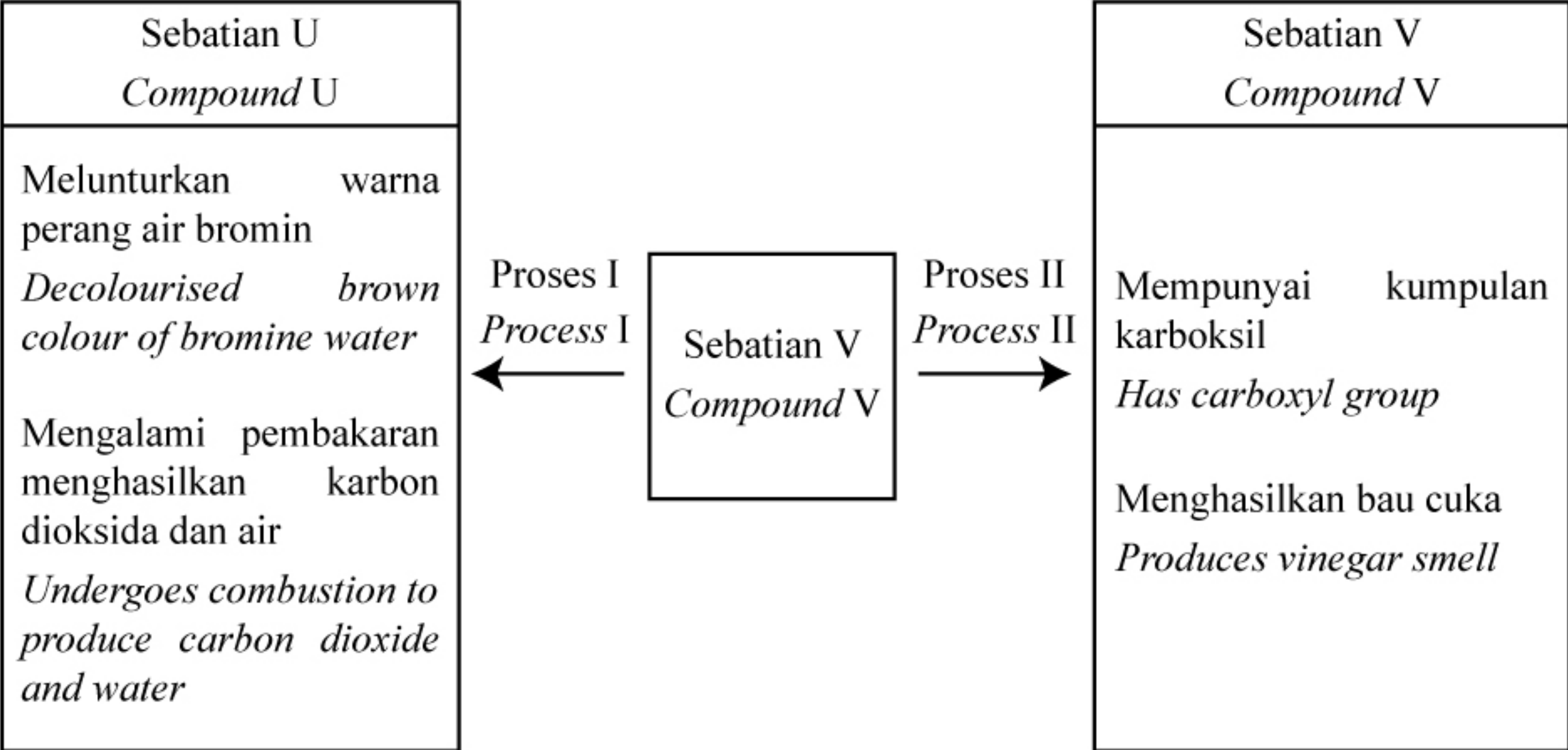
Diagram 13 shows two processes involving compound W. Process I gives compound U, which decolourises brown colour of bromine water and undergoes combustion to produce carbon dioxide and water. Process II gives compound V, which has carboxyl group and produces vinegar smell. Which structural formula represents compound W?
Medium
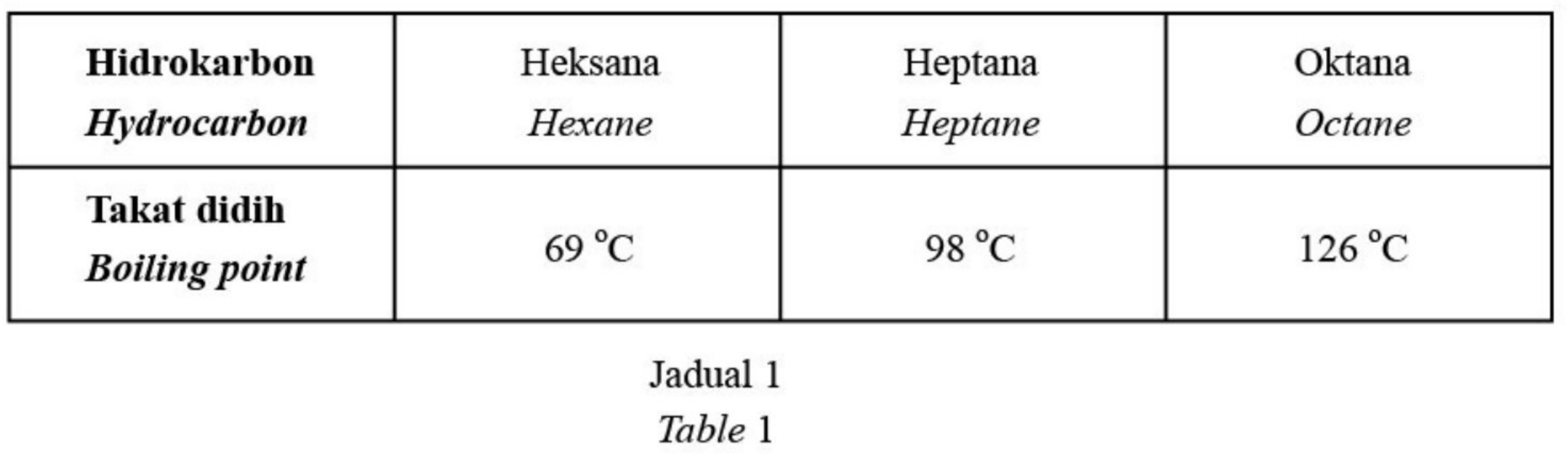
Table 1 shows boiling points for 3 alkanes: Hexane 69 °C; Heptane 98 °C; Octane 126 °C. The boiling point of hexane is the lowest. Which statement exactly explains this phenomenon?
Medium
Which of the following is the molecular formula for propanoic acid?
Medium
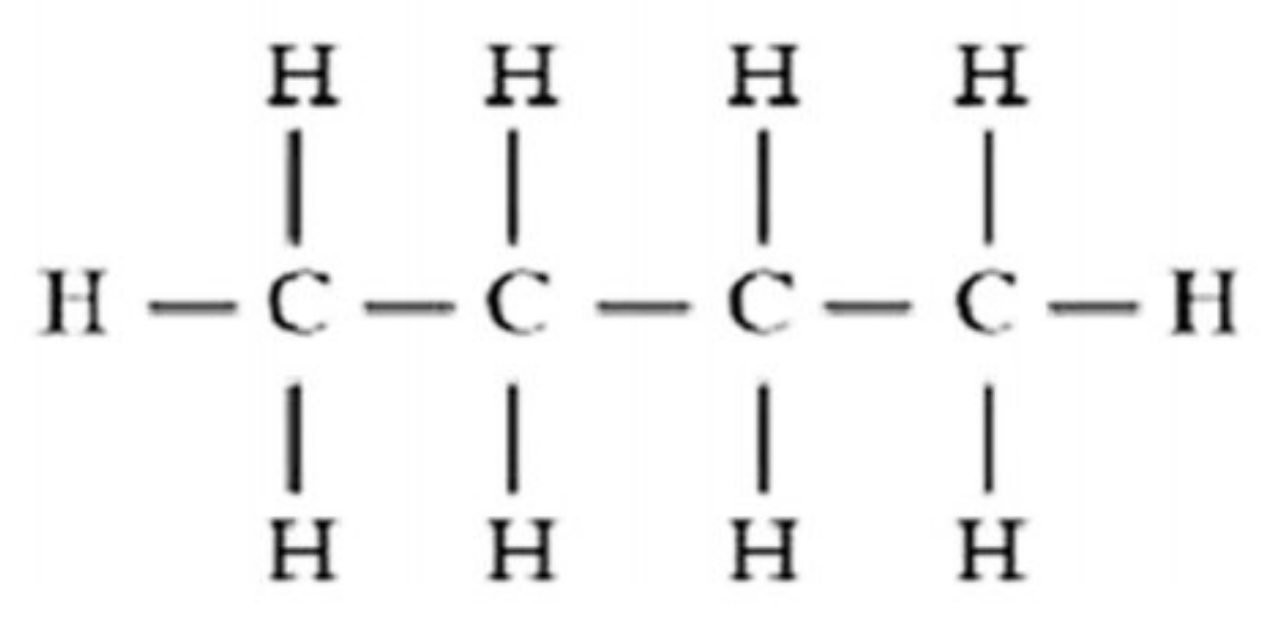
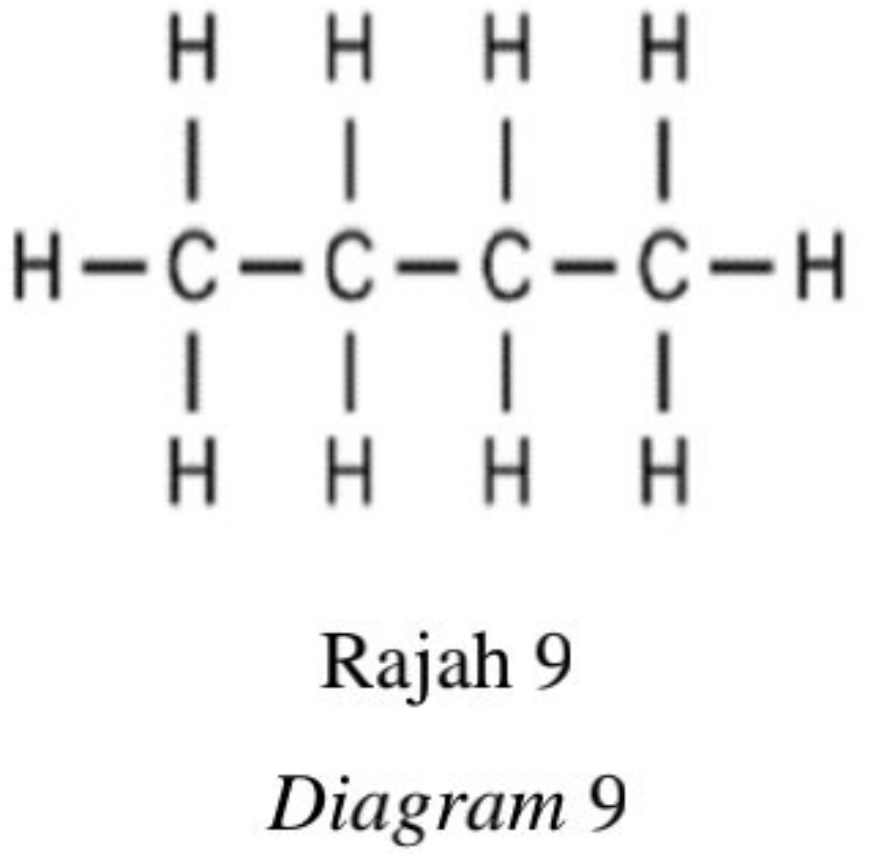
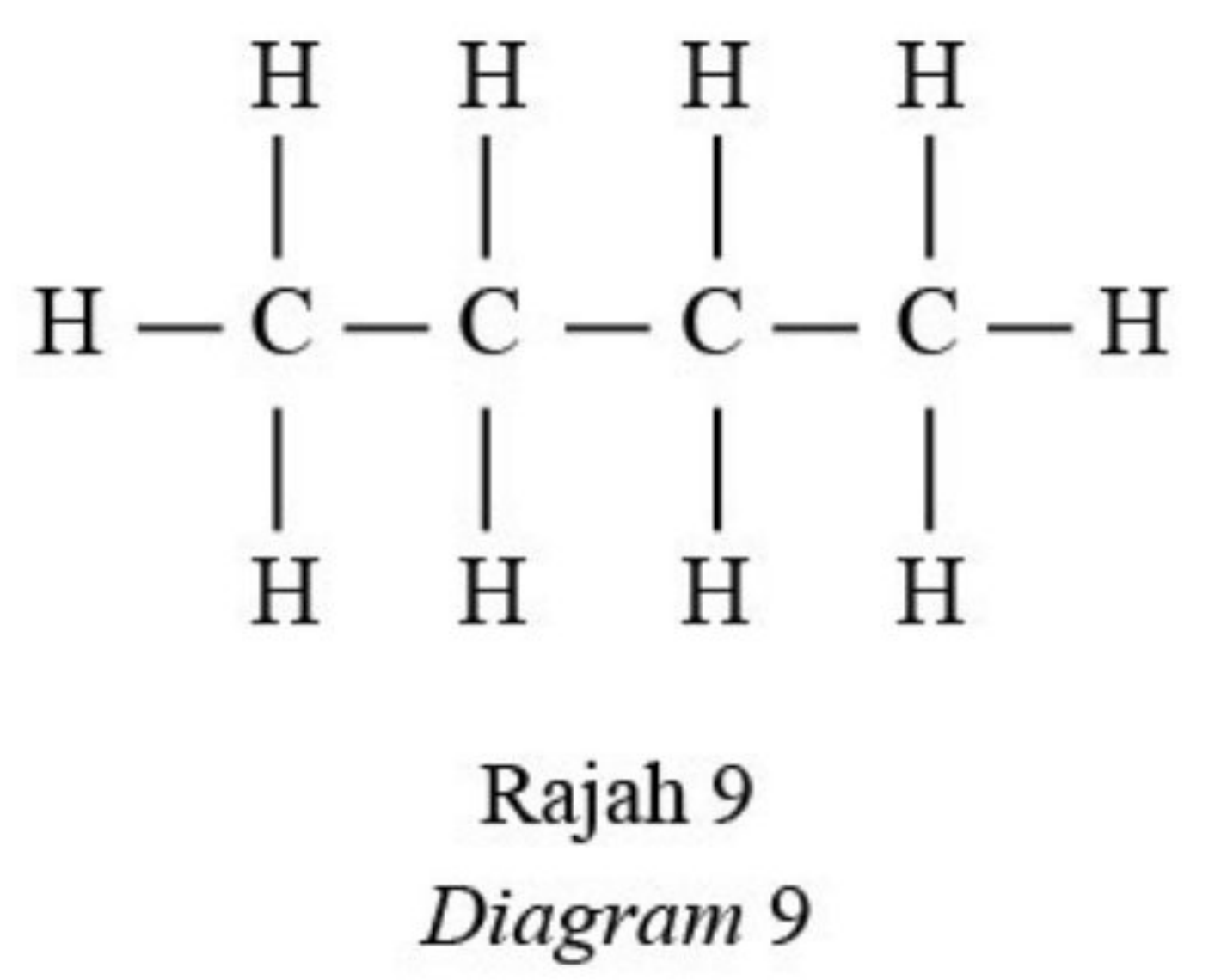
Diagram 9 shows the structural formulae of a hydrocarbon (four carbon atoms joined by single bonds, each carbon bonded to hydrogen atoms). What is the name for the hydrocarbon?
Easy
Which of the following tests are suitable to use to differentiate between alkane and alkene? I Reaction with bromine water under sunlight; II Reaction with acidified potassium manganate(VII) solution; III Reaction with acidified potassium dichromate(VI) solution; IV Sootiness of flame
Medium
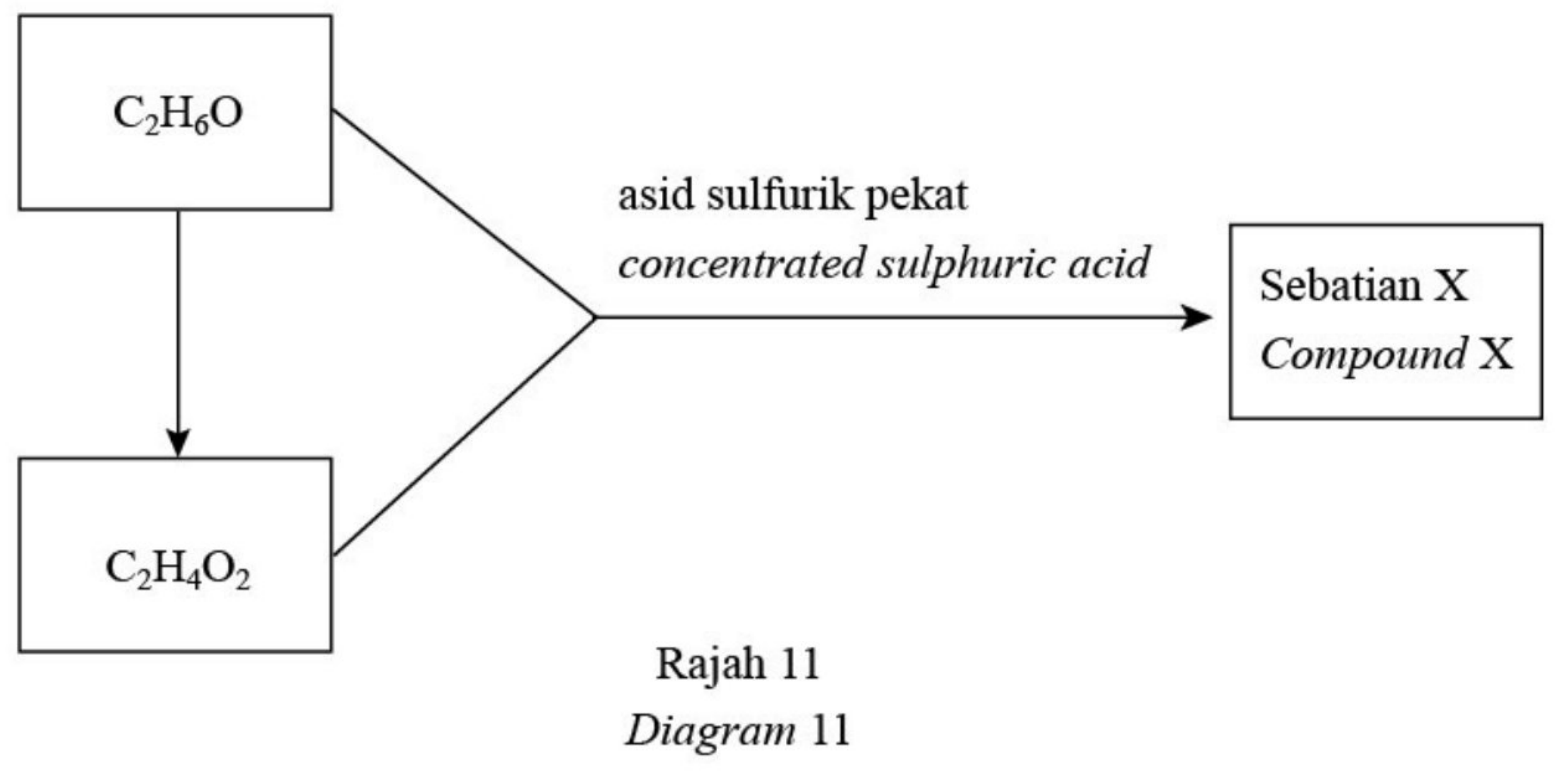
Diagram 11 shows the conversion of compound C₂H₆O into compound C₂H₄O₂. Compound C₂H₆O is a colourless liquid, easy volatile and soluble in water. Reaction between compound C₂H₆O and compound C₂H₄O₂ (with concentrated sulphuric acid) produces compound X. What is compound X?
Medium
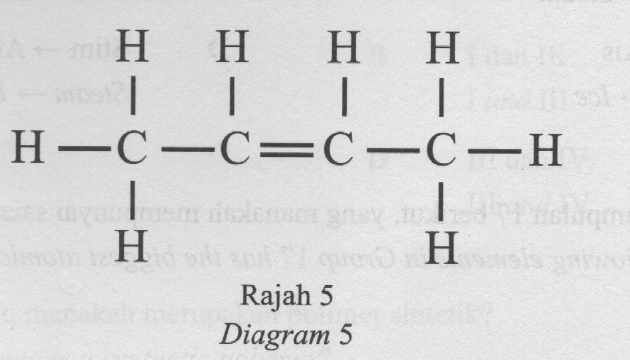
Diagram 5 shows a chemical compound (H₃C–CH=CH–CH₃, drawn as a structural formula). What is the number of isomers for compound in Diagram 5?
Medium
Which of the following is true about carbon compound?
Medium
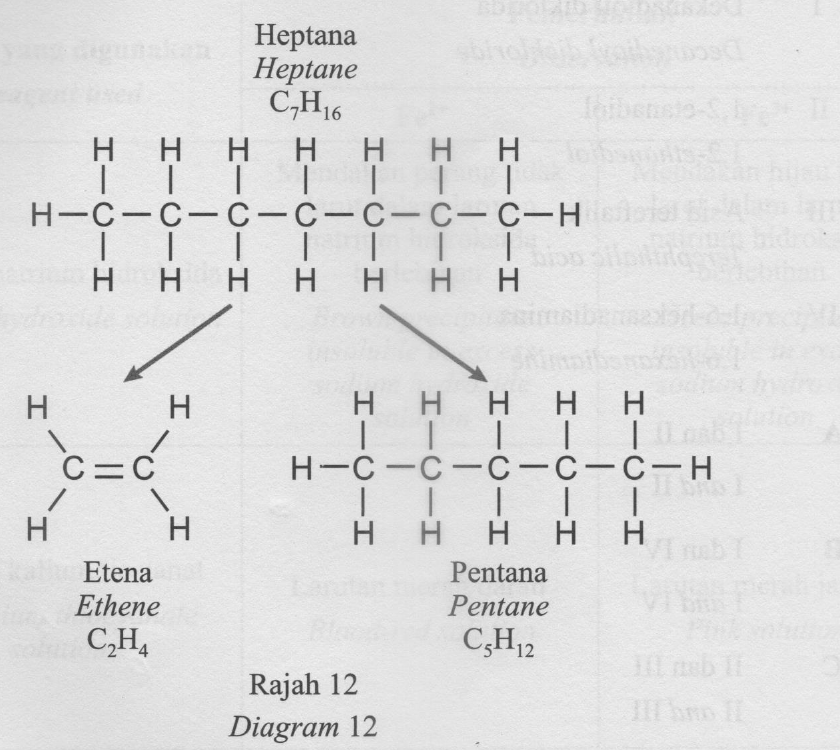
Diagram 12 shows a process which a long chain molecule change to two types of compounds: heptane, C₇H₁₆ forms ethene, C₂H₄ and pentane, C₅H₁₂. What is the name of the process?
Easy
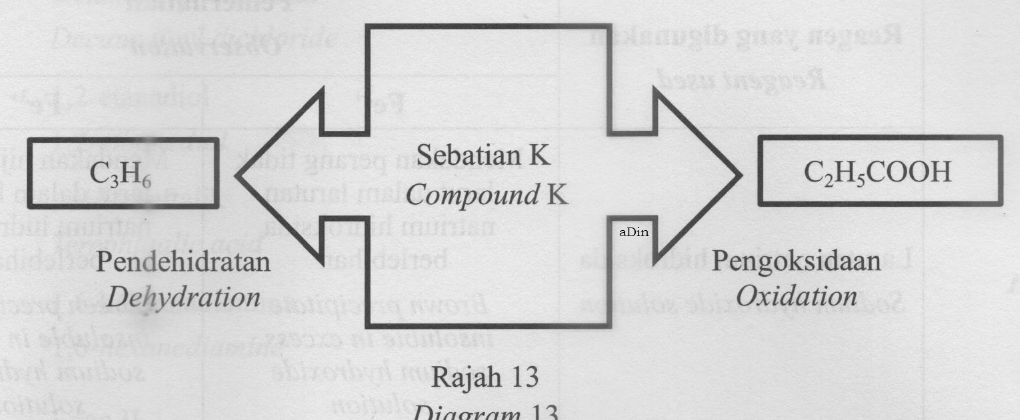
Diagram 13 shows the conversion of compound K to two organic compounds through oxidation process (to C₂H₅COOH) and dehydration process (to C₃H₆). What is the general formula for compound K?
Medium
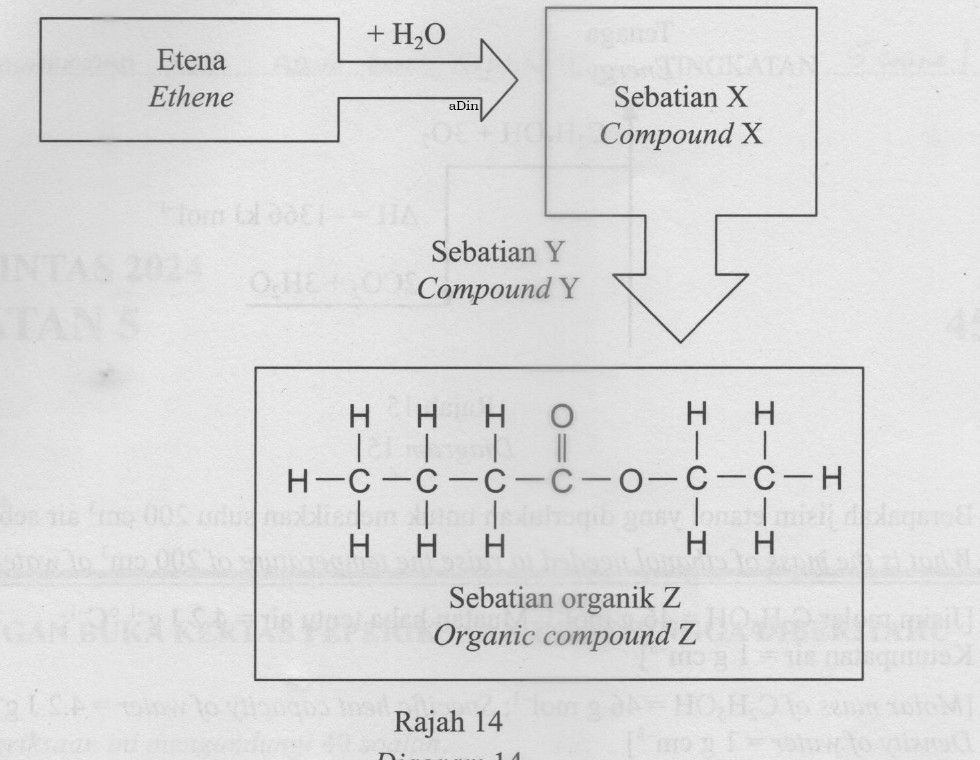
Diagram 14 shows series of reactions to produce organic compound Z: ethene + H₂O gives compound X; X gives compound Y; X and Y react to give compound Z (the ester CH₃CH₂CH₂COOCH₂CH₃). What is compound X, Y and Z?
Medium
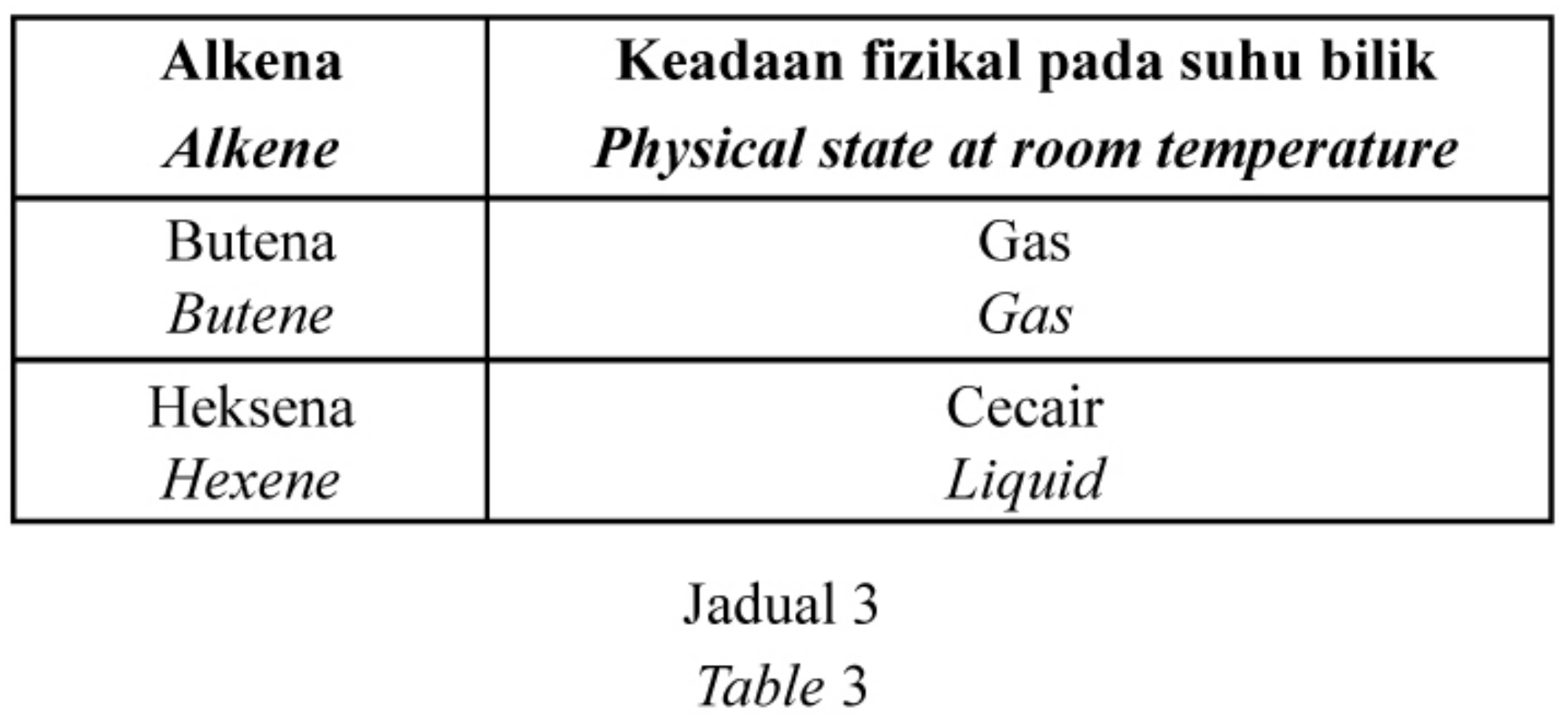
Table 3 shows the physical state of two alkenes (butene: gas; hexene: liquid at room temperature). Butene and hexene are members in the homologous series of alkenes. Which statement accurately describes the difference of physical states at room temperature?
Medium
The following information is about organic compound P: has 3 carbon atoms; soluble in water; reacts with zinc to produce hydrogen gas. What is the name of the organic compound P?
Medium
Which of the following are isomers of compound that has molecular formula of C₄H₉OH? I: 2-methylpropan-1-ol; II: Propan-2-ol; III: 2-methylpropan-2-ol; IV: 3-methylbutan-2-ol
Medium
Diagram 17 shows the conversion of compound X into compound Y. Compound X is a colourless liquid, volatile easily and soluble in water. Reaction between compound X and compound Y to produce compound Z. What is compound Z?
Medium
Table 1 shows boiling points for 3 alkanes: methane -161.6 °C, ethane -89 °C, propane -42 °C. The boiling point of methane is the lowest. Which statement exactly explains this phenomenon?
Medium
Which of the following is the molecular formula for butanol?
Medium
Which of the following substances is an organic compound?
Easy
Diagram 8 shows a structural formula of a compound that is used as an artificial banana flavouring. What is the reactants used to produce this compound?
Medium
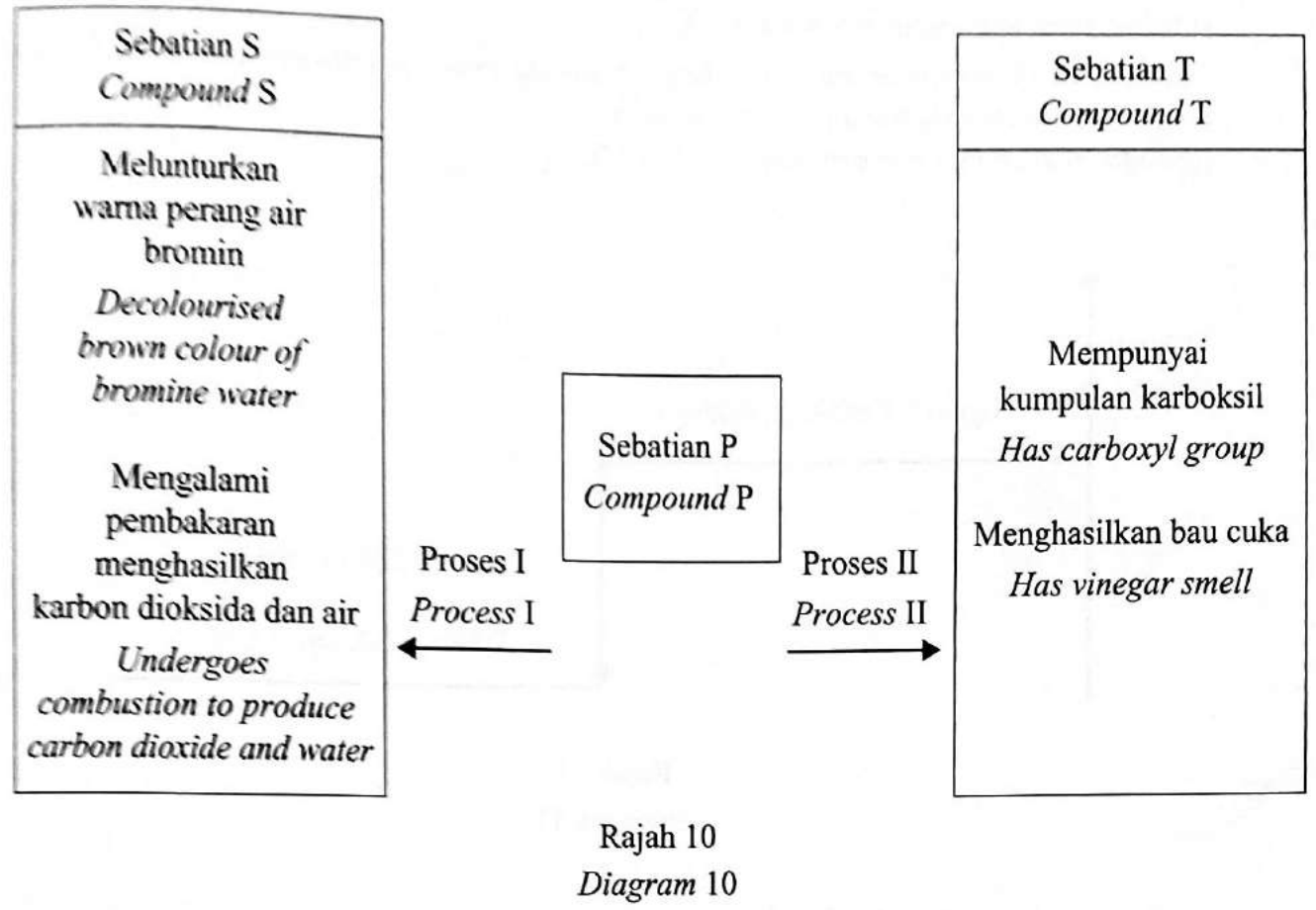
Diagram 10 shows two processes involving compound P. Compound S decolourised brown colour of bromine water and undergoes combustion to produce carbon dioxide and water (Process I from P). Compound T has carboxyl group and has vinegar smell (Process II from P). Which structural formula represents compound P?
Medium
Diagram 4 shows the structural formula of two hydrocarbons (propane and propene). Which property is similar for both hydrocarbons?
Medium
Which of the following statements is true about carbon compounds?
Medium
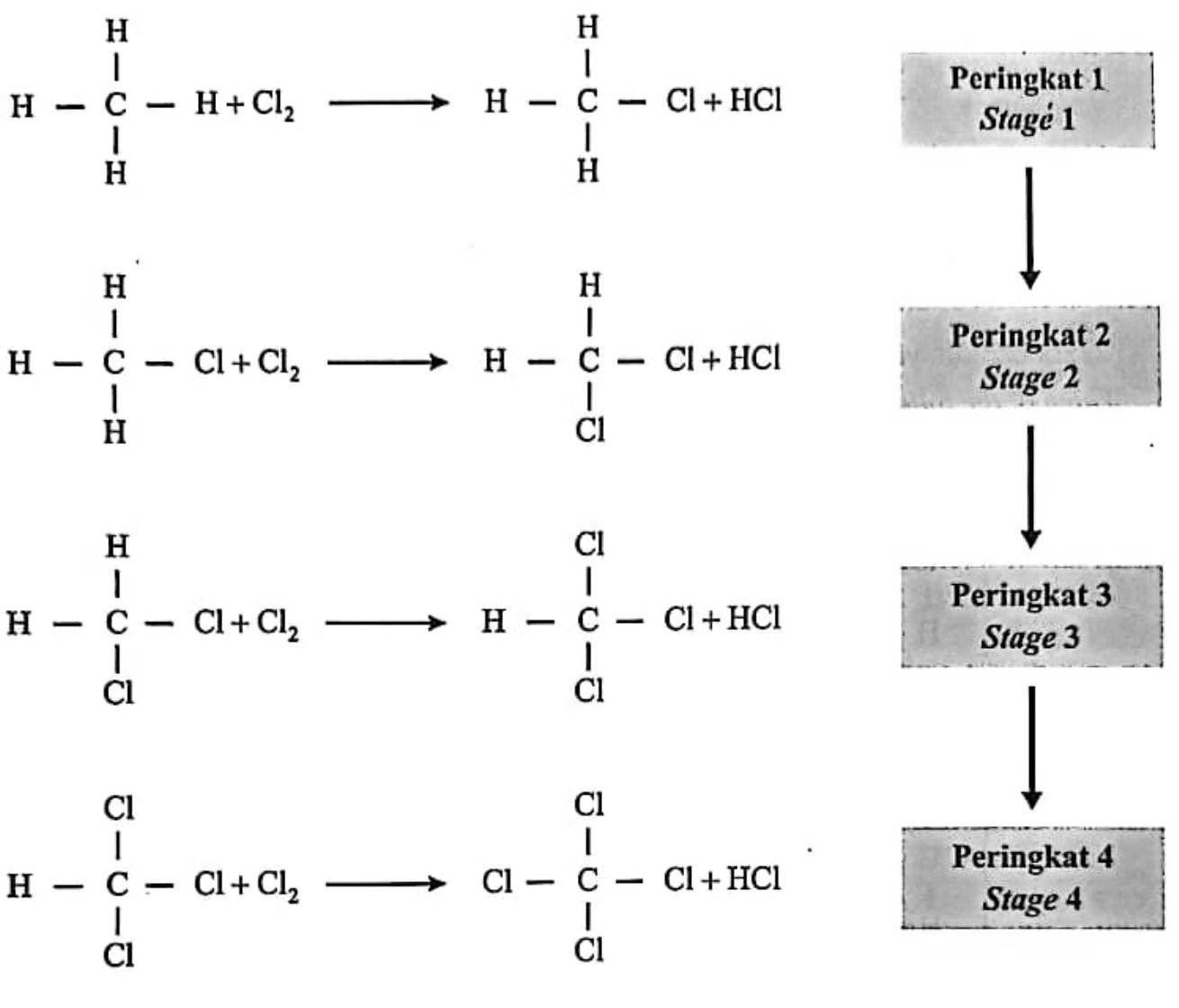
Diagram 12 shows a type of reaction (methane reacting with chlorine in four stages, replacing H atoms with Cl and giving HCl). What is the name of the reaction?
Easy
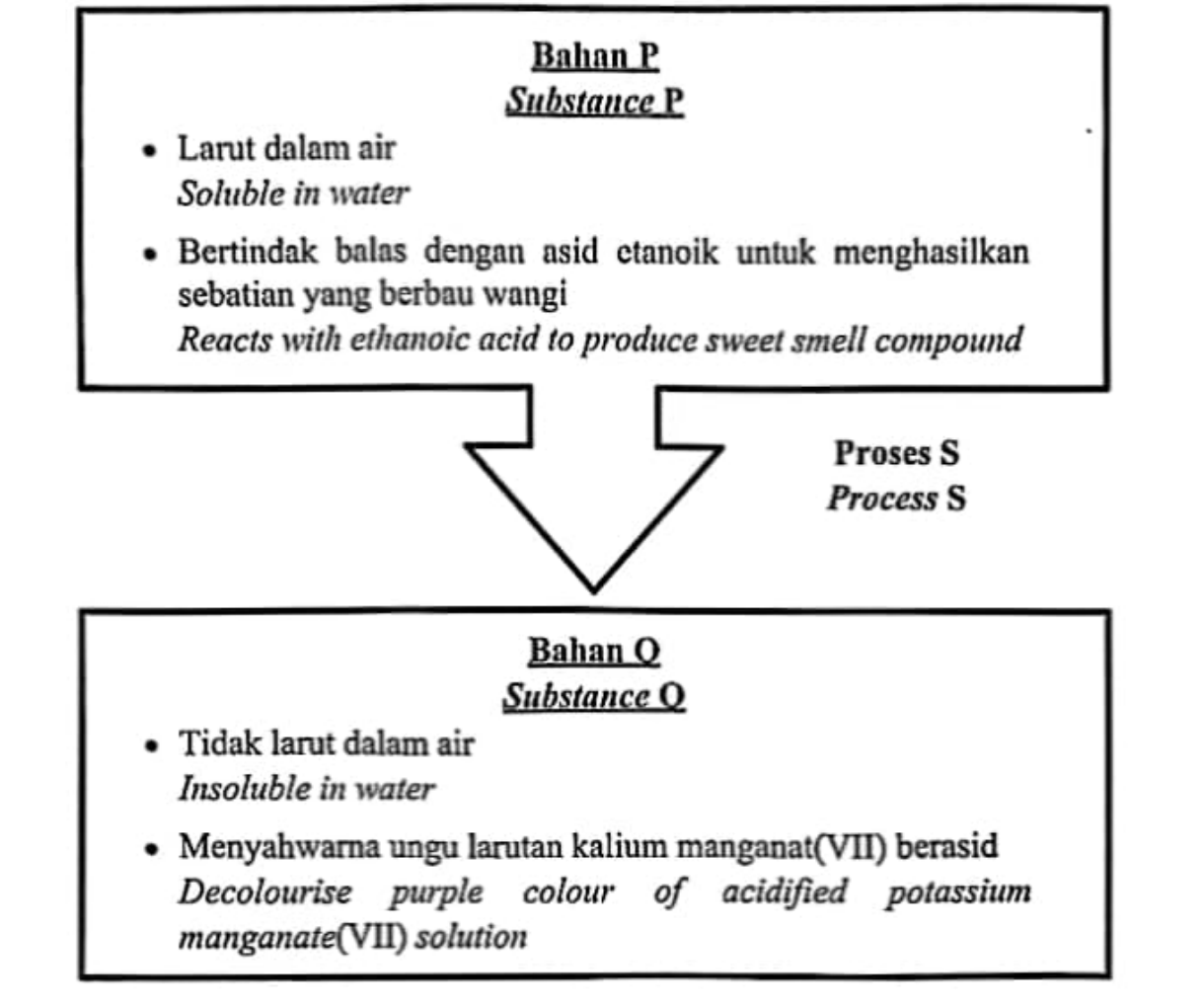
Diagram 16 shows the change of substance P to substance Q through process S. P: soluble in water; reacts with ethanoic acid to produce sweet smell compound. Q: insoluble in water; decolourises purple colour of acidified potassium manganate(VII) solution. Which of the following is correct about process S?
Medium
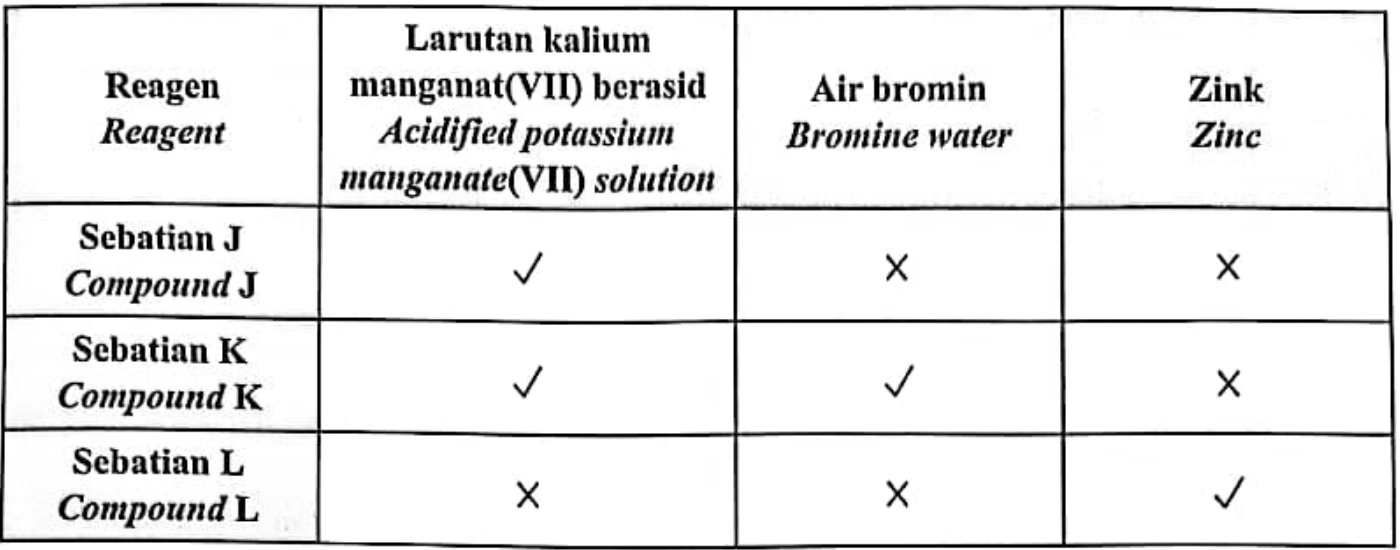
Table 3 shows the experiment results for reactions between compound J, K and L with several reagents. Compound J, K and L has two carbon atoms.
Acidified KMnO₄: J ✓, K ✓, L ✗
Bromine water: J ✗, K ✓, L ✗
Zinc: J ✗, K ✗, L ✓
Name the compound J, K and L.
Medium
Diagram 4 shows the chemical equation of the conversion of butanol to butene: C₄H₉OH → C₄H₈ + H₂O (Process X, Heat). What is process X?
Easy
Which of the following are the members of esters? I Ethyl methanoate; II Butanoic acid; III Propanoic acid; IV Methyl pentanoate
Medium
Which compound is unsaturated hydrocarbon?
Easy
Which of the following compounds will react with zinc to release hydrogen gas?
Easy
Diagram 14 shows the conversion of compound X into compound Y (glucose → compound X by zymase enzyme; X → Y by oxidation; X + Y heated with concentrated sulphuric acid → compound Z). Compound X is a colourless liquid, volatile easily and soluble in water. Reaction between compound X and compound Y will produce compound Z. What is compound Z?
Medium
Which of the following are the members of esters?
I ethyl methanoate
II Butanoic acid
III Propanoic acid
IV methyl pentanoate
Medium
C4H8 is the molecular formula for isomer M and N. Which of the following statements is true about M and N?
Medium
What is the name of the process involved in the production of tuak?
Easy
Diagram 12 shows the molecular formula of a hydrocarbon: C₁₀H₂₂. What is the name of the hydrocarbon compound?
Easy
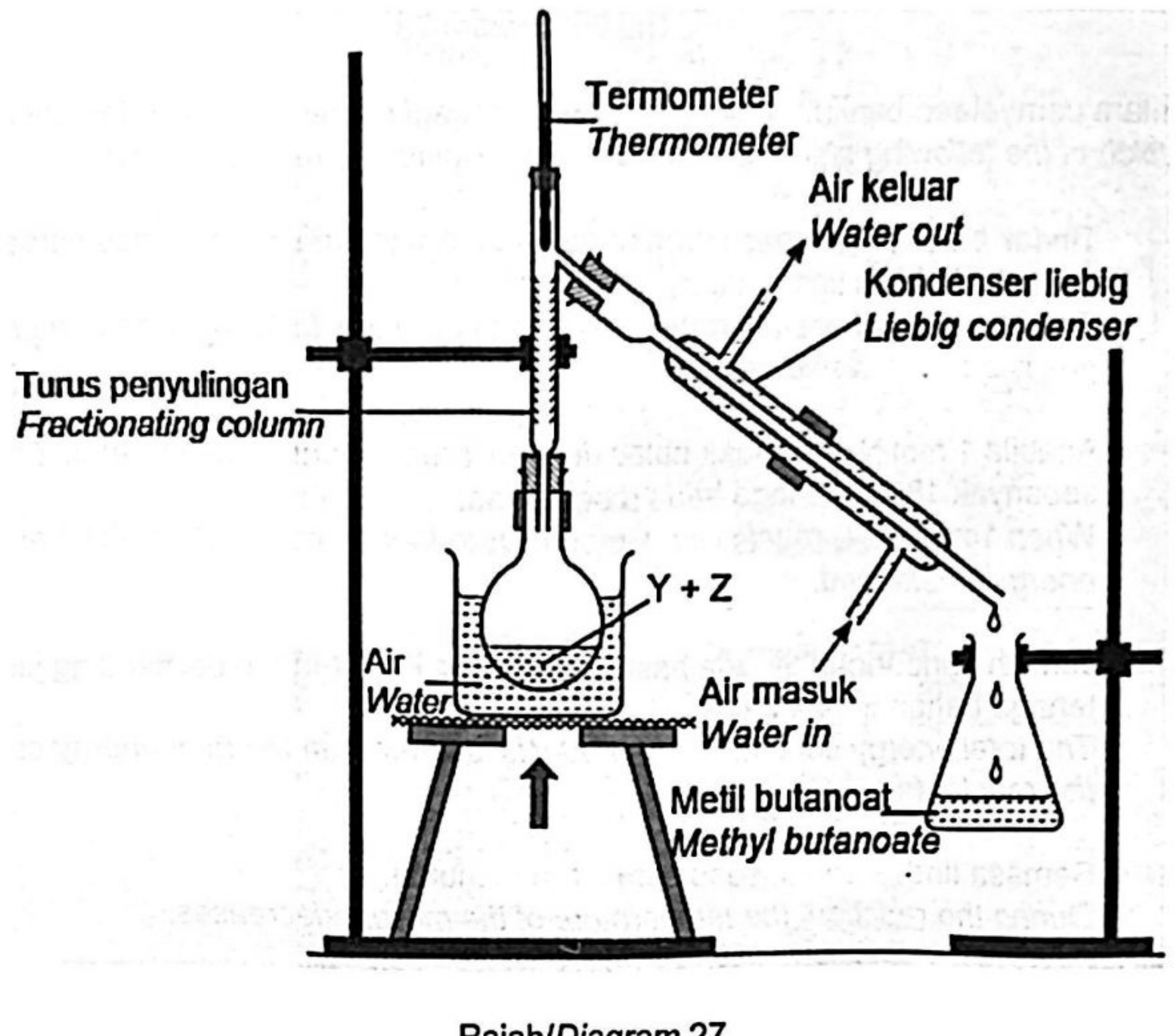
Diagram 27 shows the arrangement of the apparatus for the process of producing methyl butanoate ester. Y and Z are two substances used to produce methyl butanoate which smells like apples. What substances are Y and Z?