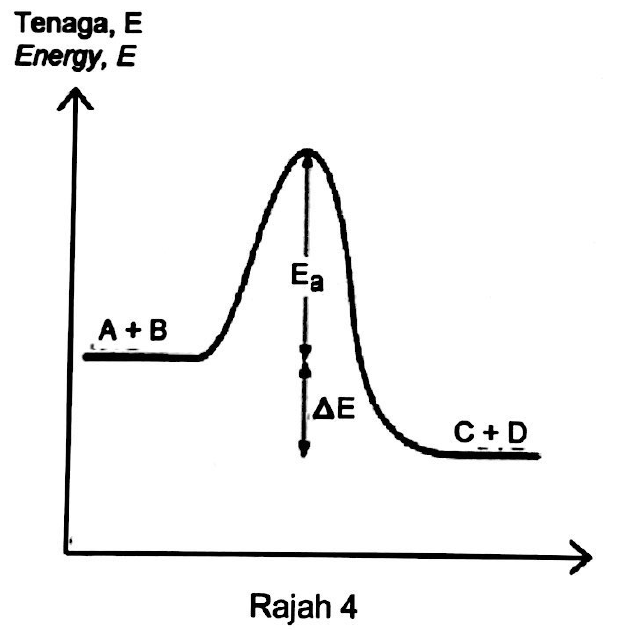
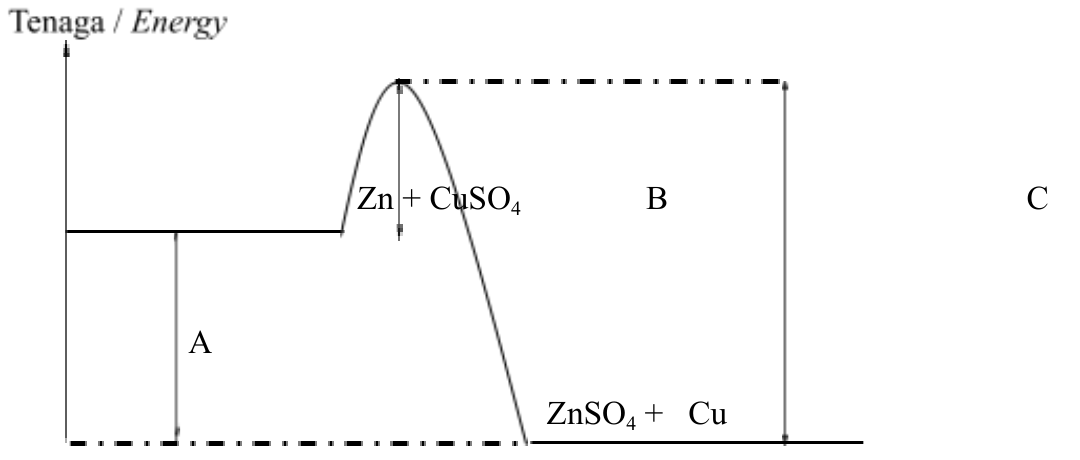
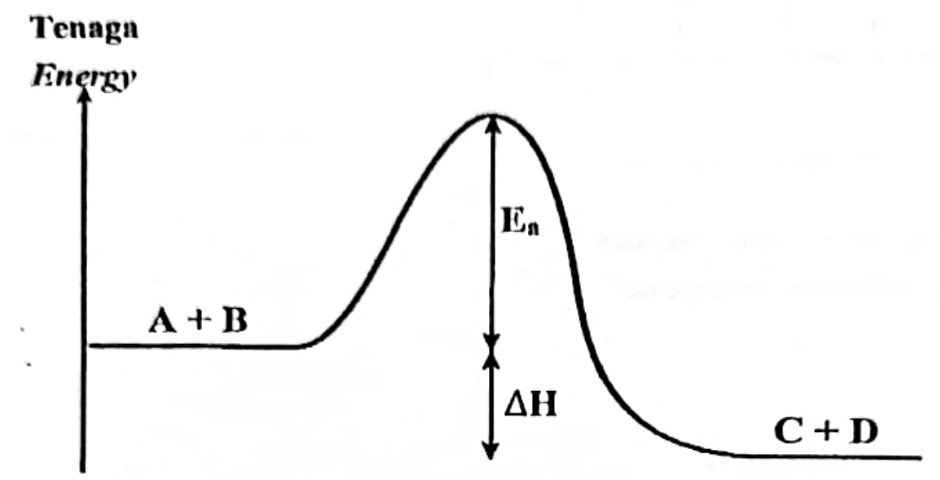
Diagram 4 shows an energy profile diagram of an exothermic reaction.
Which of the following is true about the diagram?
Medium
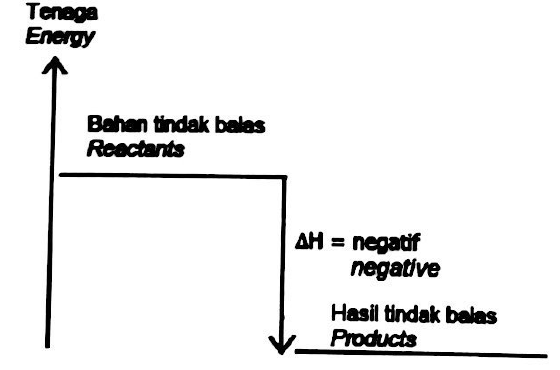
Diagram 5 shows an energy level diagram for a reaction.
What is the reaction?
Medium
Which of the following statements is true about endothermic reaction?
Medium
When 50 cm³ of 2.0 mol dm⁻³ lead(II) nitrate was added to 50 cm³ of 2.0 mol dm⁻³ sodium sulphate, the temperature increased by 10 °C. What is the value of heat of precipitation?
[Specific heat capacity of solution = 4.2 J g⁻¹ °C⁻¹; Density of solution = 1.0 g cm⁻³]
Medium
Cold packs contain chemicals that react to absorb heat. Which substance is used in cold packs?
Easy
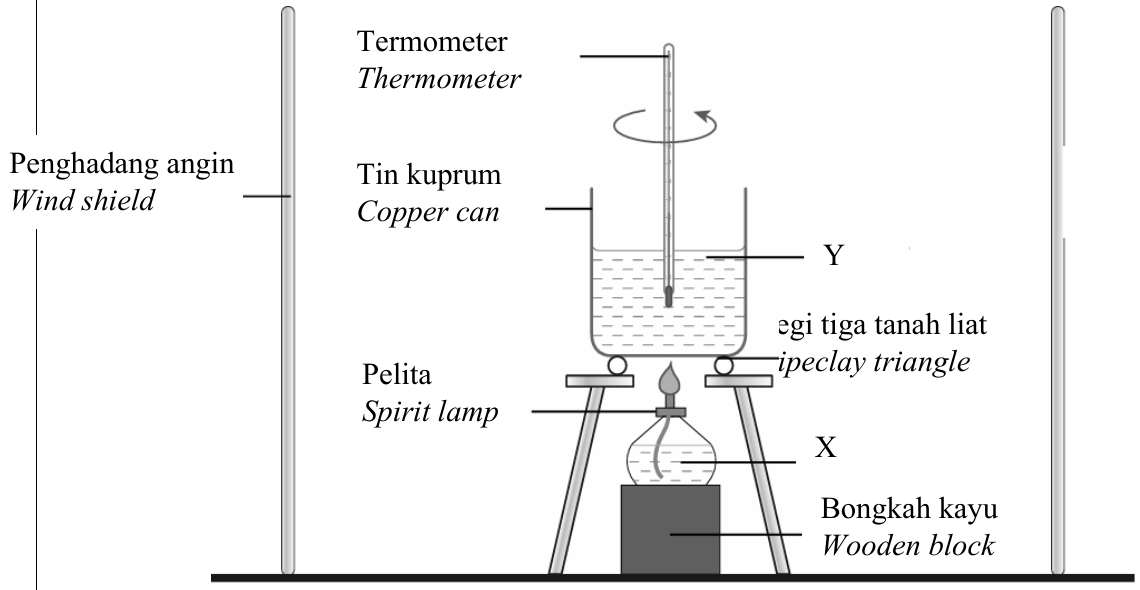
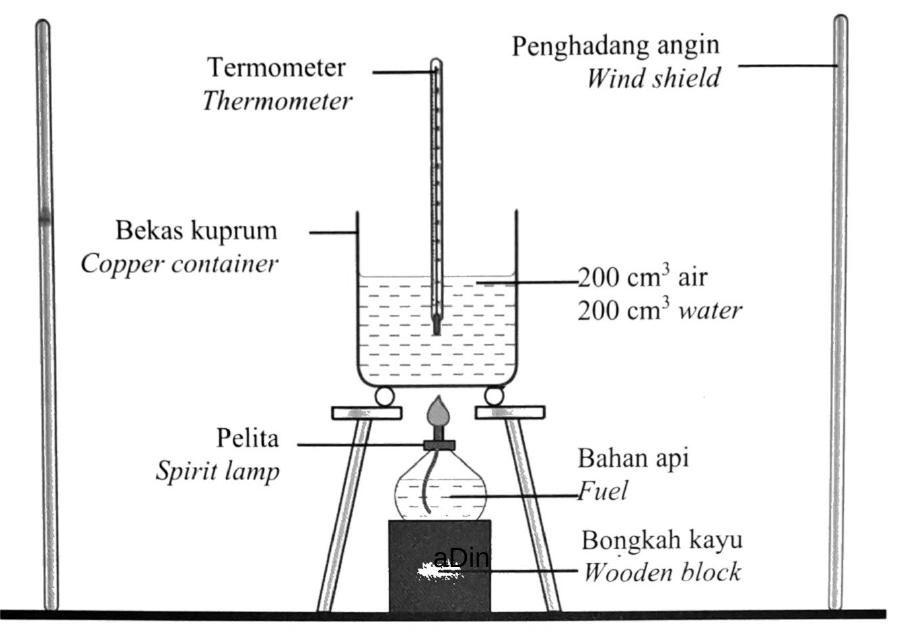
Diagram 27 shows the apparatus set up for an experiment to determine the heat of combustion of a fuel. Which of the following are used to determine the heat released of the fuel?
I Rise of water temperature
II Density of fuel
III Mass of water
IV Volume of fuel
Medium
Table 40 shows the temperature changes when silver nitrate solutions react with different chloride solutions: 50 cm³ of 1.0 mol dm⁻³ silver nitrate + 50 cm³ of 1.0 mol dm⁻³ sodium chloride gives θ °C; 50 cm³ of 1.0 mol dm⁻³ silver nitrate + 50 cm³ of 1.0 mol dm⁻³ potassium chloride gives X. What is X? (A ½θ, B θ, C 2θ, D 4θ)
Medium
What is the meaning of heat of neutralisation?
Easy
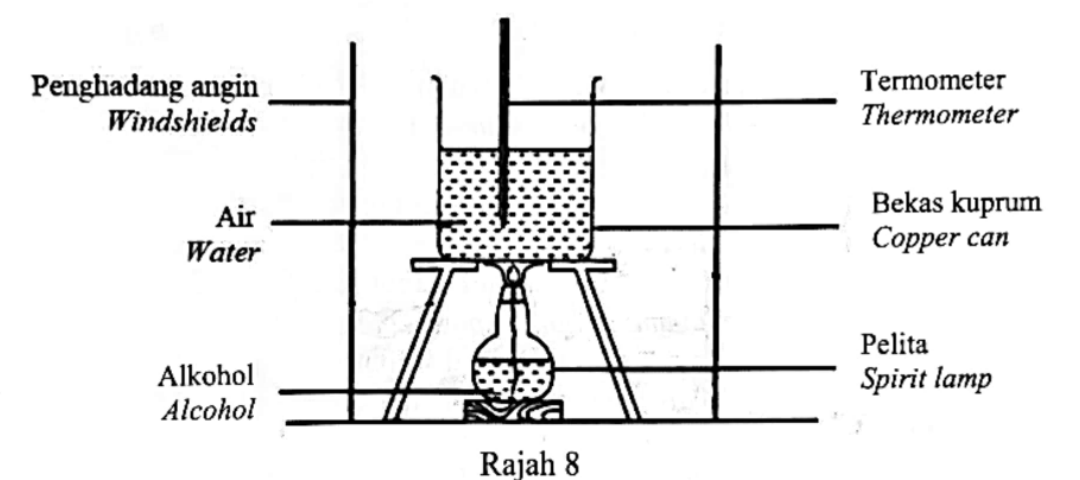
Diagram 8 shows the apparatus set-up to determine the heat of combustion of alcohols. Which of the following alcohol gives the highest value of heat of combustion?
Medium
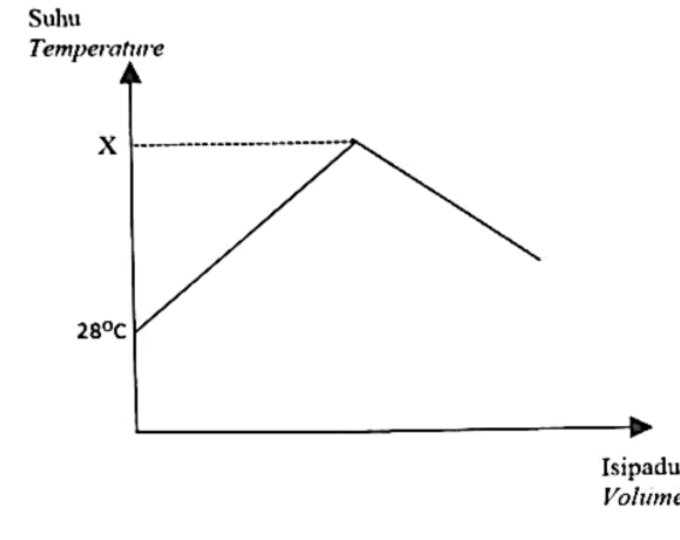
Diagram 15 shows the graph of temperature against volume of acid added for the reaction between sulphuric acid and sodium hydroxide solution that released 5.7 kJ of heat energy (initial temperature 28 °C, maximum X). 50 cm³ of 1 mol dm⁻³ sulphuric acid reacts completely with 100 cm³ of 1.0 mol dm⁻³ sodium hydroxide solution. Which pair is correct about the heat of neutralisation and the value of X? [Specific heat capacity of solution = 4.2 J g⁻¹ °C⁻¹, density of solution = 1.0 g cm⁻³]
Medium
Which of the following absorb heat from the surrounding? I Photosynthesis II Ammonium nitrate dissolves in water III Respiration IV Combustion
Medium
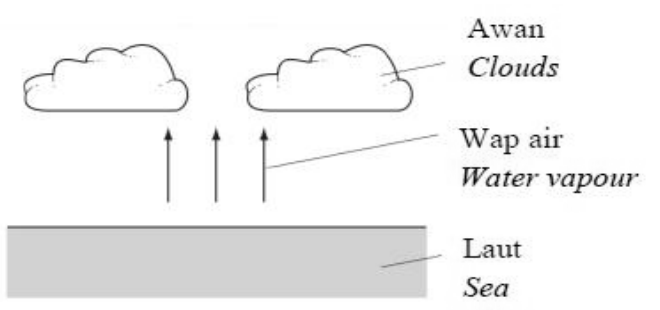
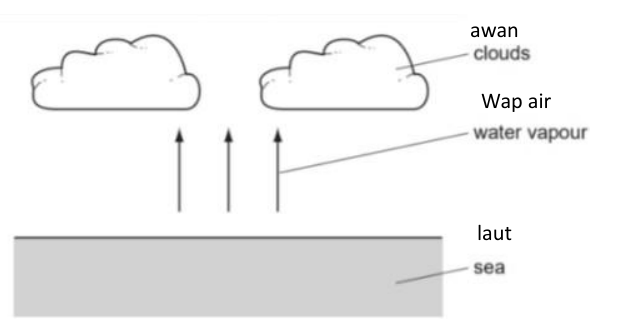
Diagram 9 shows the formation of clouds when water vapour evaporates from the sea. What is the heat change and types of process occurs when water evaporates? A Heat energy given out, Evaporation B Heat energy given out, Condensation C Heat energy absorbed, Evaporation D Heat energy absorbed, Condensation
Easy
The thermochemical equation HNO₃(aq) + KOH(aq) → KNO₃(aq) + H₂O(l), ΔH = −57.3 kJ mol⁻¹ represents the neutralisation between 25 cm³ nitric acid and 25 cm³ potassium hydroxide solution of the same molarity. The temperature of the mixture increased by 7.0 °C. [Specific heat capacity of solution = 4.2 J g⁻¹ °C⁻¹, density of solution 1 g cm⁻³] What is the molarity of both solutions?
Hard
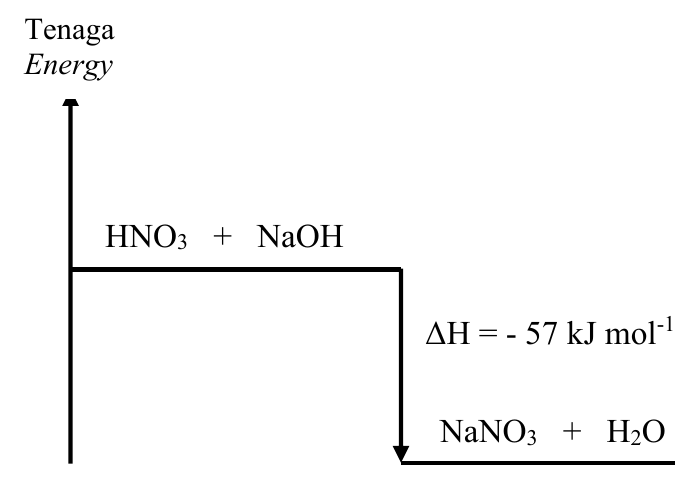
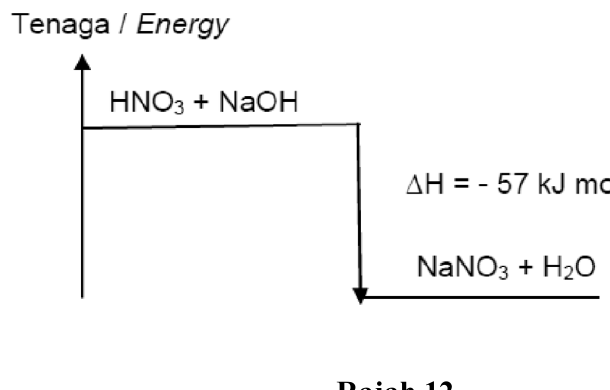
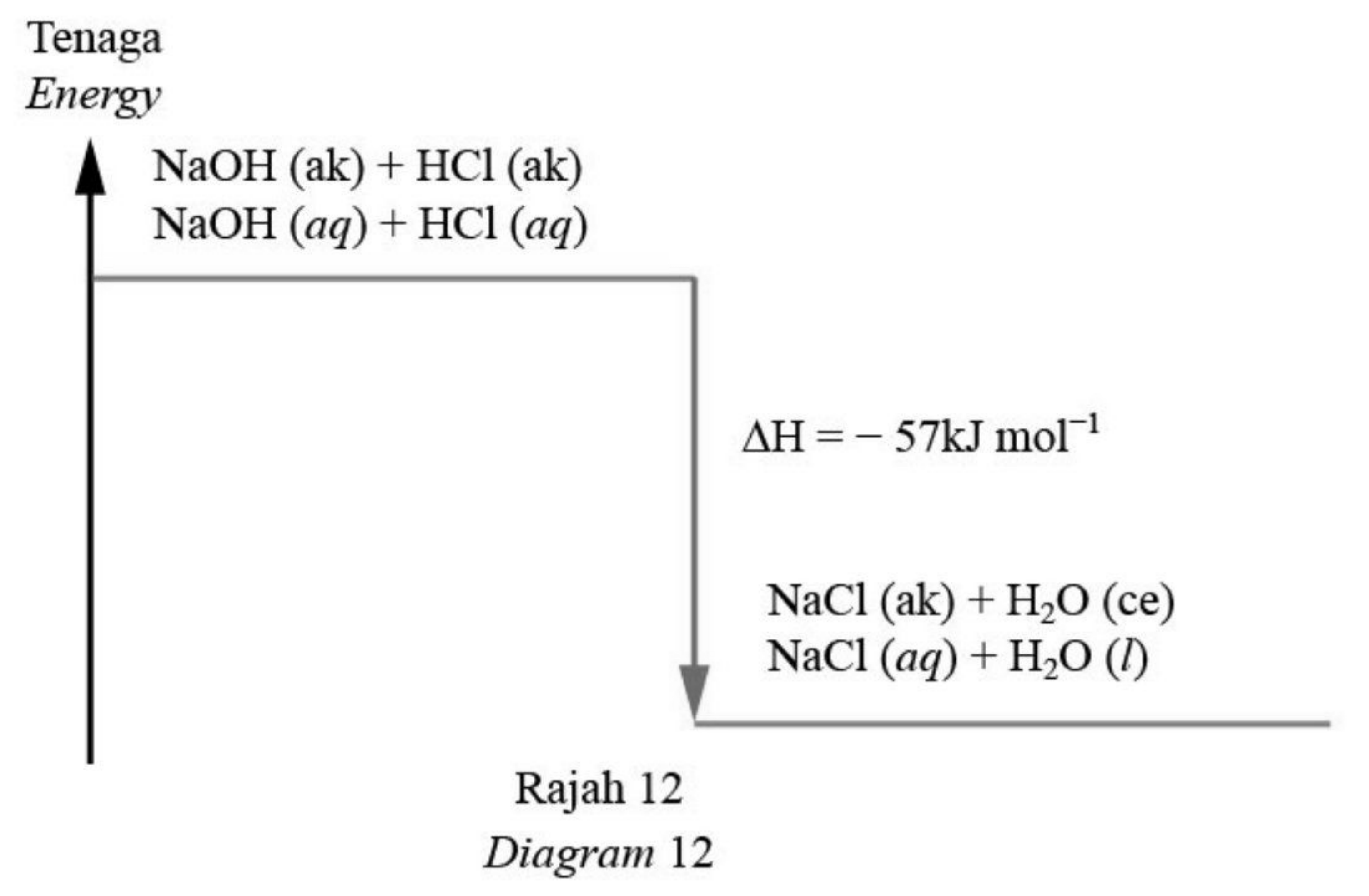
Diagram 11 shows the energy level diagram of a reaction: HNO3 + NaOH → NaNO3 + H2O, ΔH = -57 kJ mol⁻¹. Which of the following acids is suitable to replace nitric acid, HNO3 to obtain the same ΔH value?
Medium
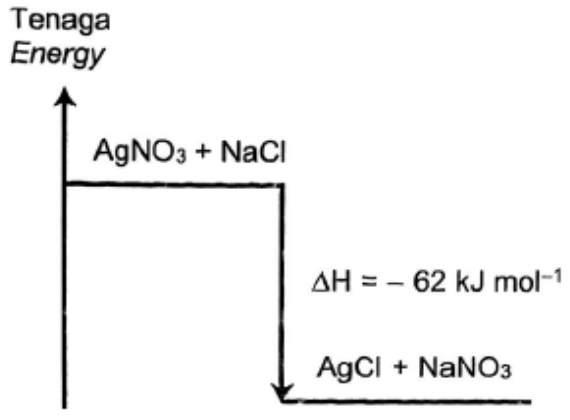
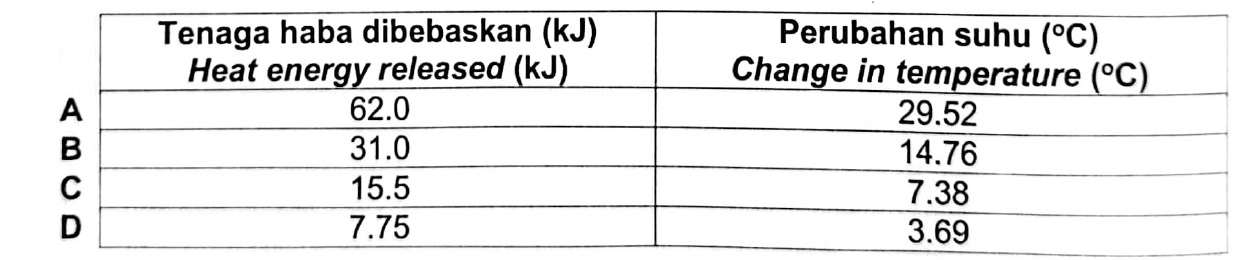
Diagram 33 shows the energy level diagram to determine the heat of precipitation of silver chloride: AgNO3 + NaCl → AgCl + NaNO3, ΔH = -62 kJ mol⁻¹. What is the heat energy released and the change in temperature of the mixture when 250 cm³ of 1 mol dm⁻³ silver nitrate solution is added into 250 cm³ of 1 mol dm⁻³ sodium chloride solution in polystyrene cup? [Specific heat capacity of water = 4.2 J g⁻¹ °C⁻¹; density of water = 1.0 g cm⁻³]
Medium
When 15 g of carbon burns completely in air, the heat produced raises the temperature of 500 cm³ of water by 25.0 °C. What is the heat of combustion of carbon? [Relative atomic mass: C = 12; Specific heat capacity of water, c = 4.2 J g⁻¹ °C⁻¹; Density of water = 1 g cm⁻³]
Medium
Chemical reactions involve changes of heat energy, either heat released or heat absorbed. Which of the following statements explains the change of heat correctly?
Medium
Table 2 shows the heat of combustion of three alcohols: CH₃OH -710, C₂H₅OH -1370, C₄H₉OH -2670 kJ mol⁻¹. Which statement explains the increase in the heat of combustion?
Medium
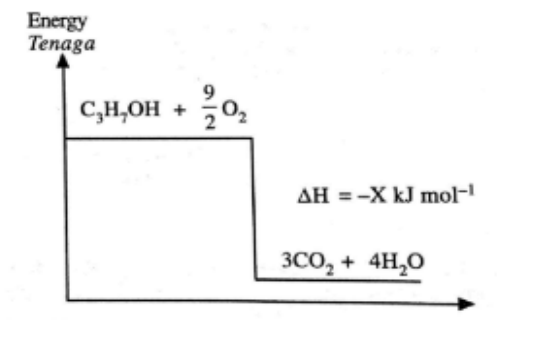
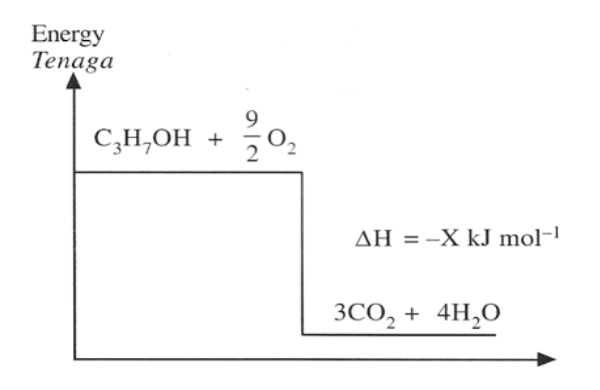
Diagram 14 shows the energy level diagram for the combustion of propan-1-ol (C₃H₇OH + 9/2 O₂ → 3CO₂ + 4H₂O, ΔH = -X kJ mol⁻¹). Which of the following statements is correct about the reaction?
Medium
The following is a thermochemical equation for a reaction: AgNO₃(aq) + KCl(aq) → AgCl(s) + KNO₃(aq), ΔH = −65.5 kJ mol⁻¹. Which of the following is correct about the equation?
Medium
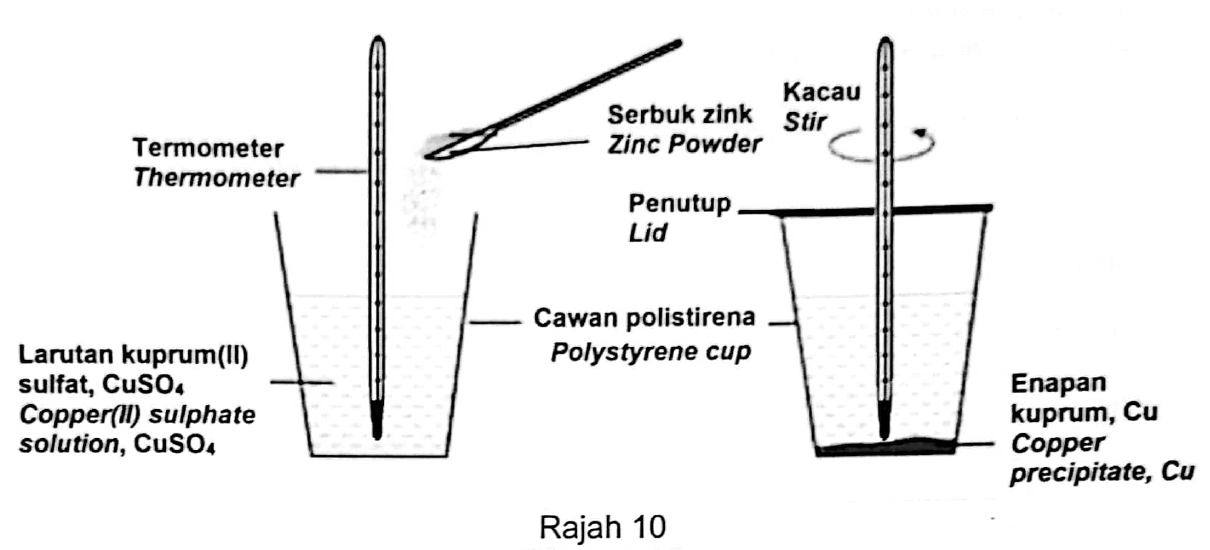
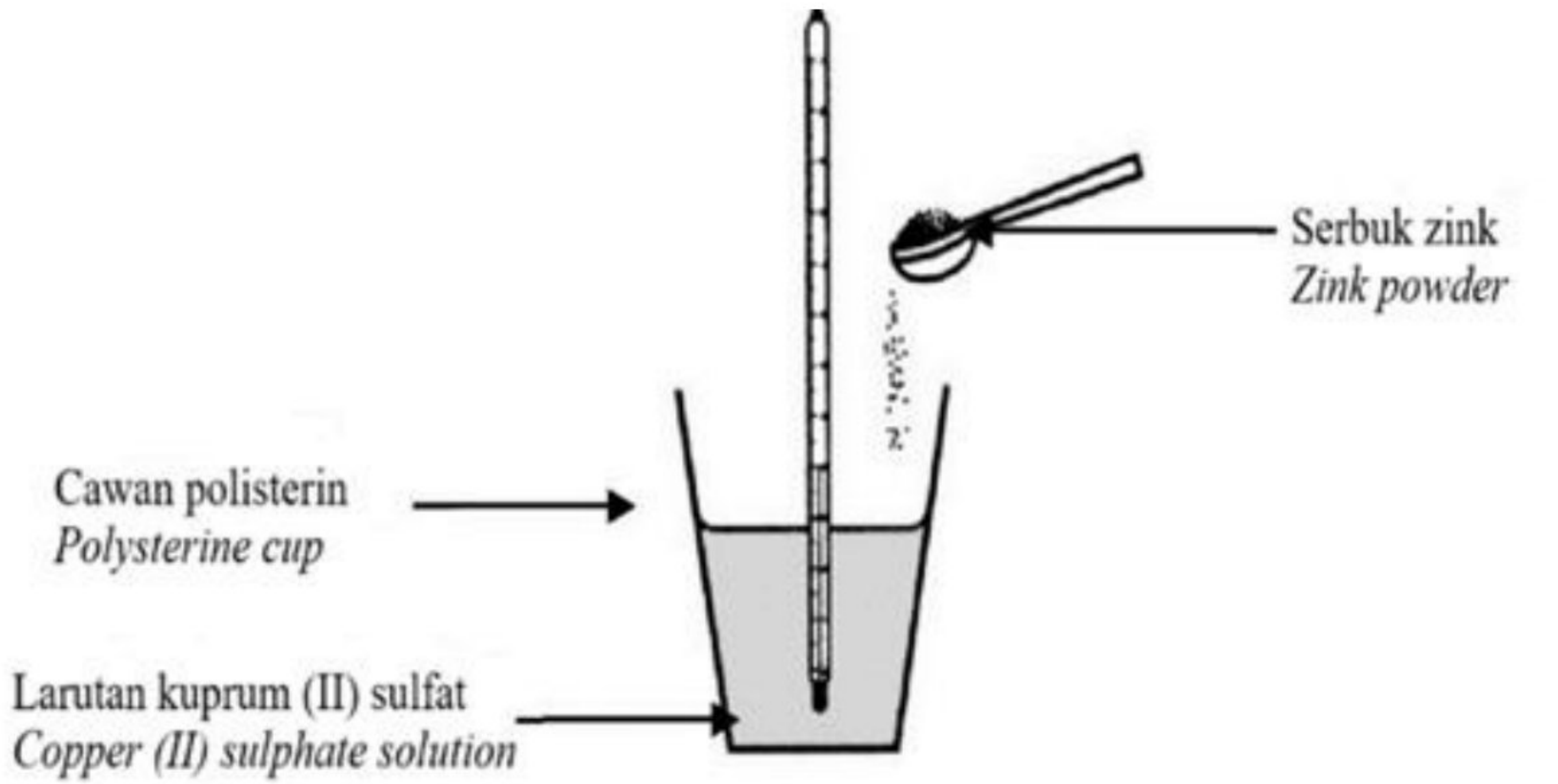
Diagram 10 shows a chemical reaction (zinc powder added to copper(II) sulphate solution in a polystyrene cup with thermometer, giving copper precipitate). Which of the following statements is true about the reaction?
Medium
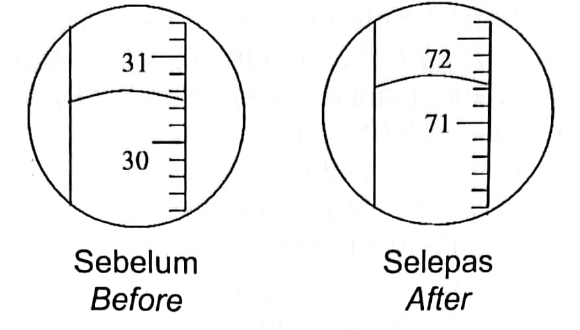
Diagram 11 shows the thermometer reading of a reaction (before and after). Which of the following reactions represents this change in temperature?
Medium
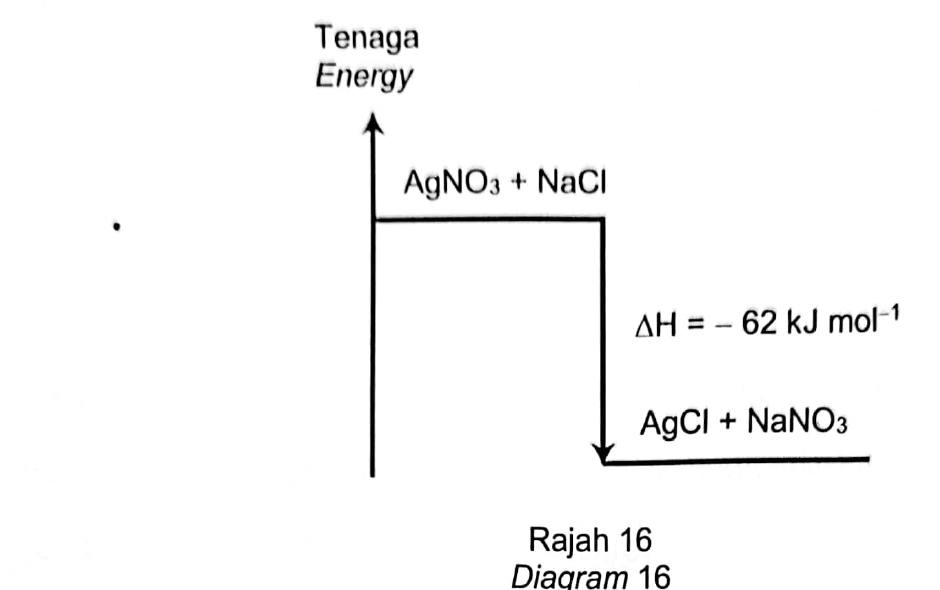
Diagram 16 shows the energy level diagram to determine the heat of precipitation of silver chloride (AgNO₃ + NaCl → AgCl + NaNO₃, ΔH = −62 kJ mol⁻¹). What is the heat energy released and the change in temperature of the mixture when 250 cm³ of 1 mol dm⁻³ silver nitrate solution is added into 250 cm³ of 1 mol dm⁻³ sodium chloride solution in polystyrene cup? [Specific heat capacity of water = 4.2 J g⁻¹ °C⁻¹; density of water = 1.0 g cm⁻³]
Medium
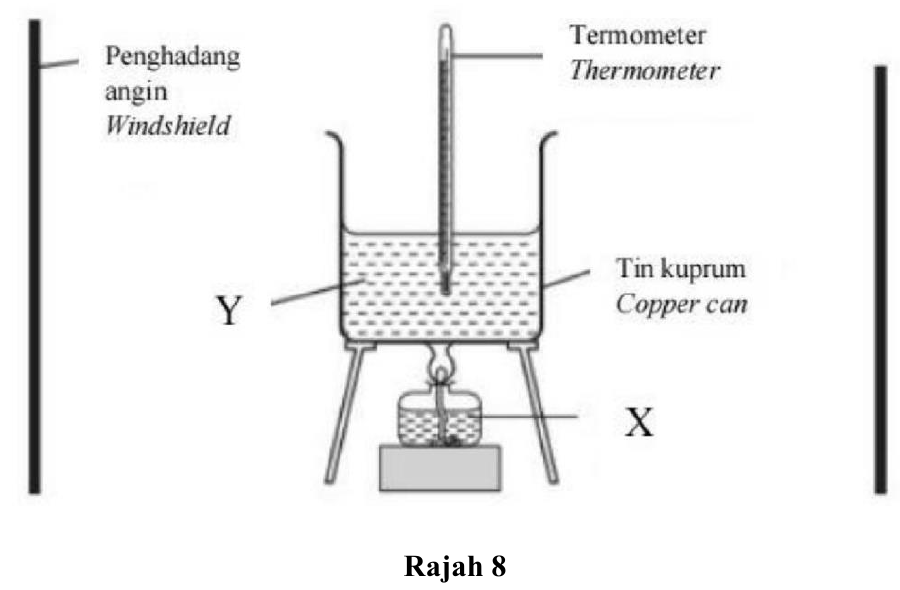
Diagram 11 shows the experimental set-up to determine the heat of combustion of ethanol, C2H5OH. What is X and Y? (X is the fuel in the spirit lamp; Y is the liquid in the copper can.)
Medium
In an experiment, 100 cm³ of 0.5 mol dm⁻³ hydrochloric acid is mixed with 100 cm³ of sodium hydroxide solution, 0.5 mol dm⁻³ in a polystyrene cup. The temperature of the mixture increases by 7.0 °C. [Specific heat capacity of the solution = 4.2 J g⁻¹ °C⁻¹; Density of solution = 1 g cm⁻³] Which statements are correct if the experiment is repeated by replacing 0.5 mol dm⁻³ hydrochloric acid and 0.5 mol dm⁻³ sodium hydroxide solution with 1.0 mol dm⁻³ hydrochloric acid and of 1.0 mol dm⁻³ sodium hydroxide solution while other conditions remain the same?
I Temperature change of mixture increases two times
II Heat of reaction increases two times
III Heat change increases two times
IV Number of mol of water increases two times
Medium
The following chemical equation represents the reaction between zinc and copper(II) nitrate solution: Zn + Cu²⁺ → Zn²⁺ + Cu, ΔH = −210 kJ mol⁻¹. What is the mass of zinc required to release 5250 J of heat energy? [Relative atomic mass: Zn = 65; Specific heat capacity of the solution = 4.2 J g⁻¹ °C⁻¹]
Medium
Which reaction is an endothermic reaction?
Easy
CH₃OH(l) + 3/2 O₂(g) → CO₂(g) + 2H₂O(l), ΔH = -726 kJ mol⁻¹. Which energy level diagram represents the reaction?
Medium
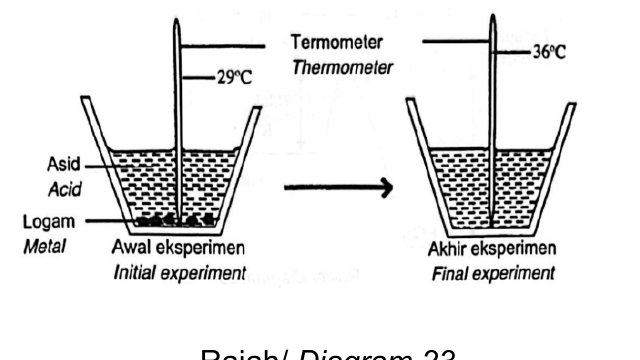
Diagram 23 shows the setup of apparatus for the determination of heat of reaction (initial temperature 29 °C, final temperature 36 °C). Which of the following statements is true?
Medium
Which of the following reactions absorbs heat from the surroundings?
Easy
Which of the following absorbs heat from the surroundings?
Medium
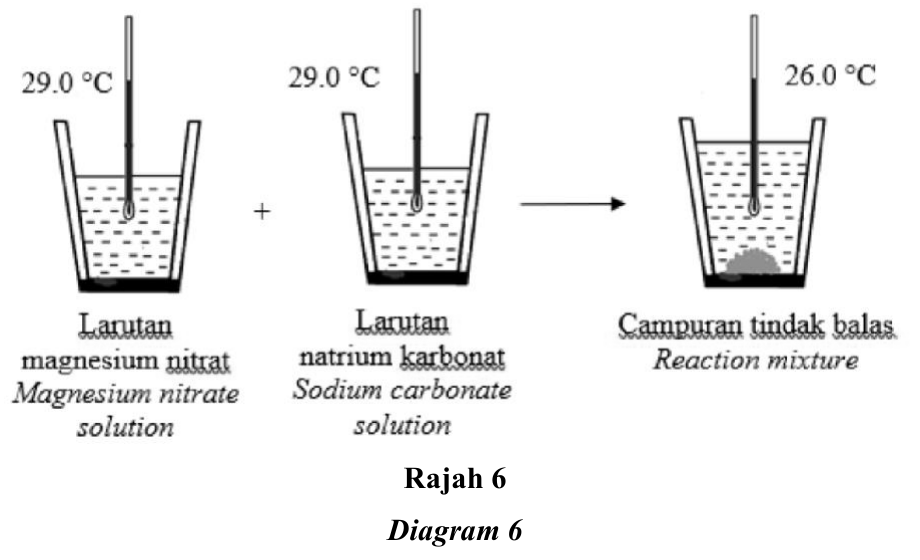
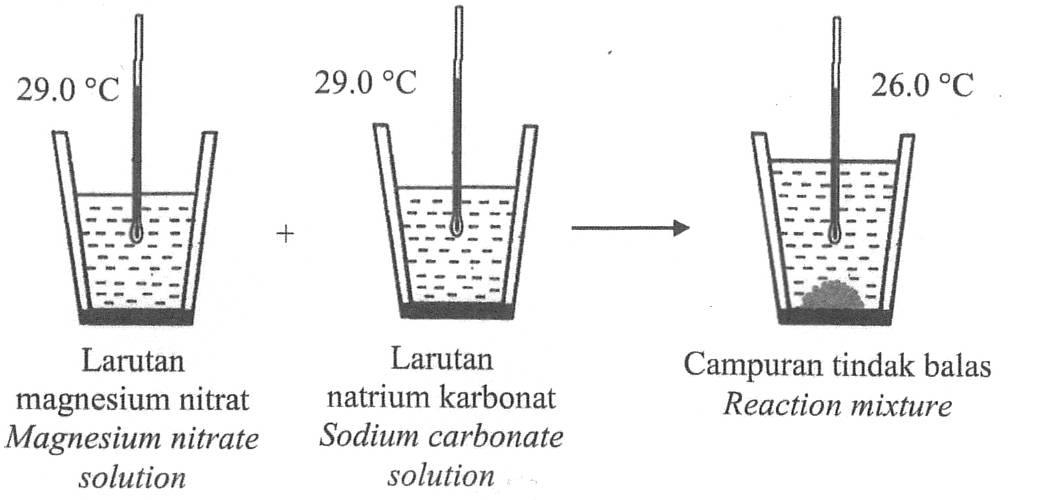
Diagram 6 shows the apparatus set-up to determine the heat of reaction (magnesium nitrate solution 29.0 C + sodium carbonate solution 29.0 C gives reaction mixture 26.0 C). Which of the following statements is true? I Bond formation occurs. II The temperature decreases during the reaction. III The value of ΔH for the reaction is negative. IV The total energy content of the products is higher than the total energy content of the reactants.
Medium
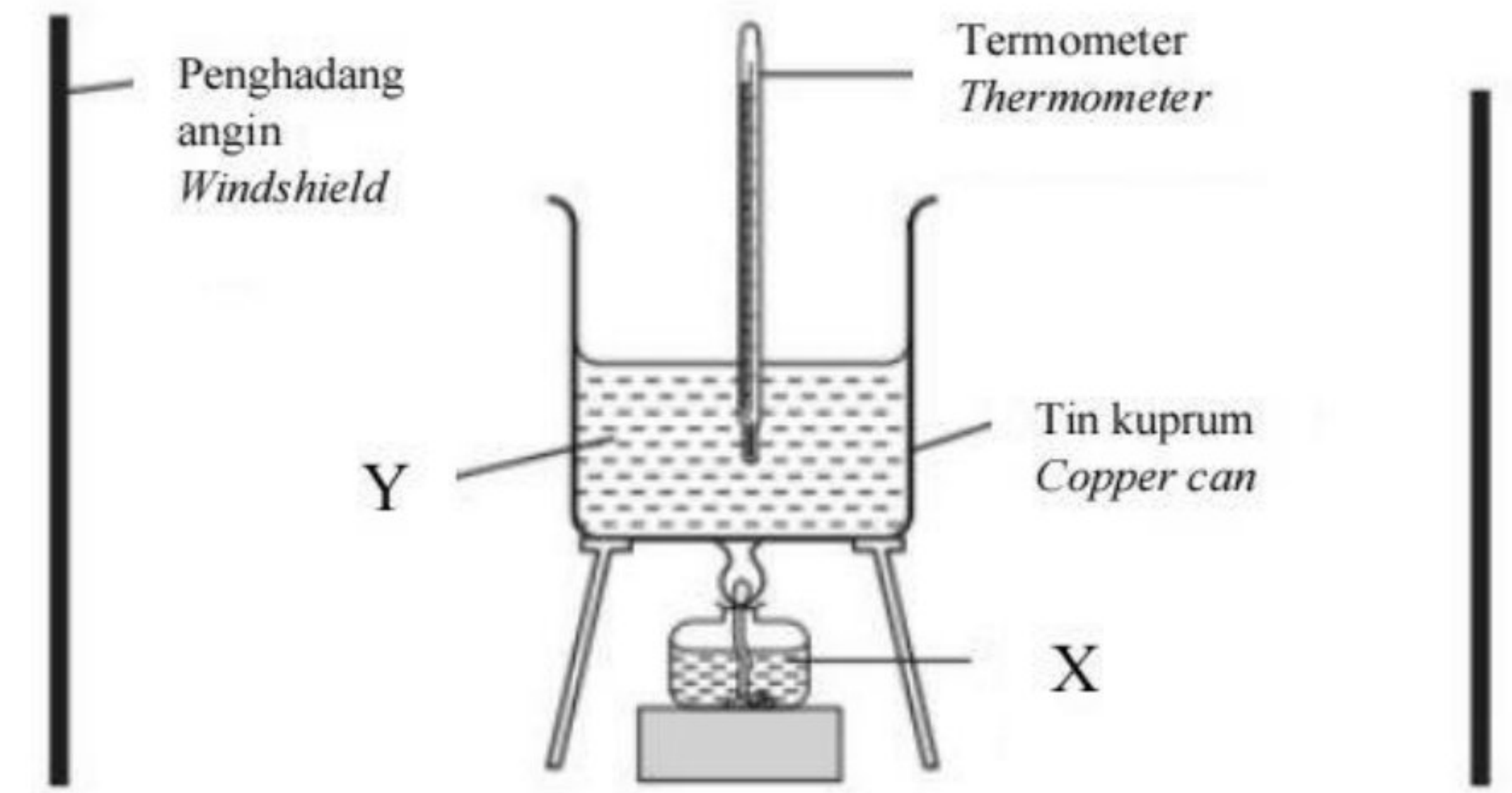
Diagram 8 shows the experiment set-up to determine the heat of combustion of ethanol, C2H5OH (a copper can Y with thermometer above a spirit lamp X, with windshield). What is appropriate for X and Y?
Medium
Diagram 12 shows the energy level diagram of a reaction: HNO3 + NaOH → NaNO3 + H2O, ΔH = -57 kJ mol-1. Which of the following acids is suitable to replace nitric acid, HNO3, to obtain the same heat change?
Medium
The thermochemical equation HNO3 + KOH → KNO3 + H2O, ΔH = -57.3 kJ mol-1 represents the neutralisation of 25 cm3 nitric acid with 25 cm3 potassium hydroxide solution of the same molarity. The temperature of the mixture rises by 7 C. [Specific heat capacity of solution = 4.2 J g-1 C-1; density of solution = 1 g cm-3] What is the molarity of both solutions?
Medium
Which of the following are the assumptions made in the calculation of heat of reaction?
I Small amount of heat energy is absorbed by the apparatus
II Density of the aqueous solution is 1 g cm⁻³
III Some of the heat energy is lost to the surrounding
IV Specific heat capacity of the solution is the same as specific heat capacity of water
Medium
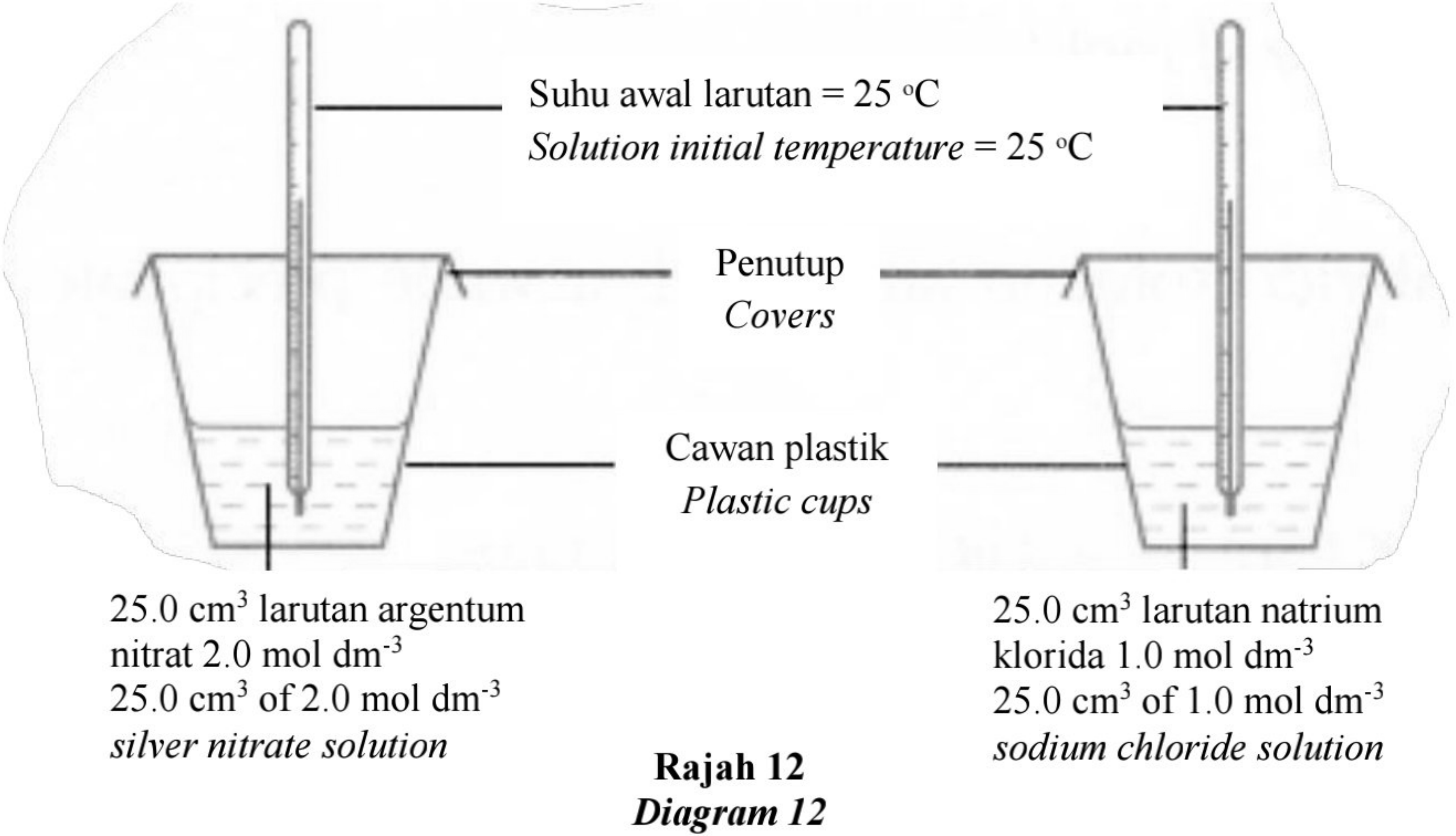
Diagram 12 shows the apparatus set-up to investigate the heat of precipitation of silver chloride: 25.0 cm³ of 2.0 mol dm⁻³ silver nitrate solution and 25.0 cm³ of 1.0 mol dm⁻³ sodium chloride solution, each at an initial temperature of 25 °C, in plastic cups with covers. What is the final temperature of the mixture if the heat of precipitation of silver chloride is 65.5 kJ mol⁻¹? [Specific heat capacity of solution = 4.2 J g⁻¹ °C⁻¹, density of solution = 1.0 g cm⁻³]
Hard
The reaction between 50.0 cm³ hydrochloric acid and 50.0 cm³ of sodium hydroxide solution releases heat of 3360 J. What is the temperature change of mixture? [Specific heat capacity of solution = 4.2 J g⁻¹ °C⁻¹; density of solution = 1.0 g cm⁻³]
Medium
50 cm³ of 1.0 mol dm⁻³ potassium chloride solution is mixed into a polystyrene cup which containing 50 cm³ of 1.0 mol dm⁻³ silver nitrate solution. The heat of precipitation for the reaction is -51 kJ mol⁻¹. What is the maximum temperature of the mixture if the average of initial temperature of the solution is 29.0 °C? [Specific heat capacity of solutions = 4.2 J g⁻¹ °C⁻¹]
Medium
Which of the following particles absorb heat energy from the surroundings when dissolve in water?
Medium
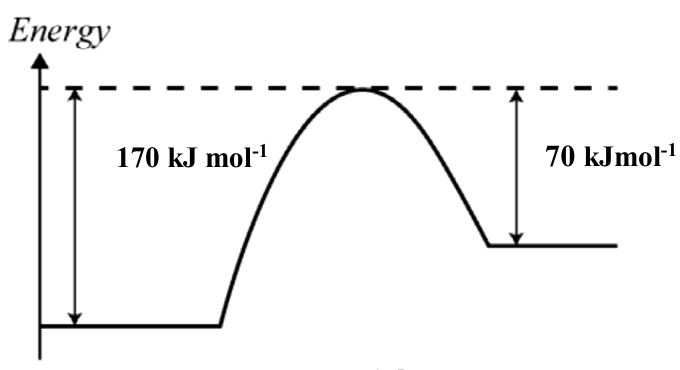
Diagram 9 shows the energy profile diagram for the reaction between P and Q: P + Q → R + S, ΔH = X kJ mol⁻¹. The activation energy is 170 kJ mol⁻¹ and the products are 70 kJ mol⁻¹ below the peak. What is the value of X?
Medium
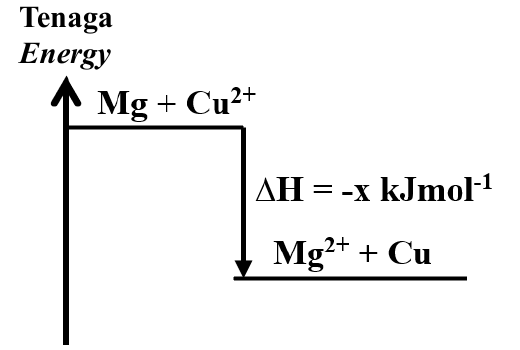
Diagram 11 shows an energy level diagram for the displacement reaction Mg + Cu²⁺ → Mg²⁺ + Cu, ΔH = -x kJ mol⁻¹. Which statement can be deduced from the diagram?
Medium
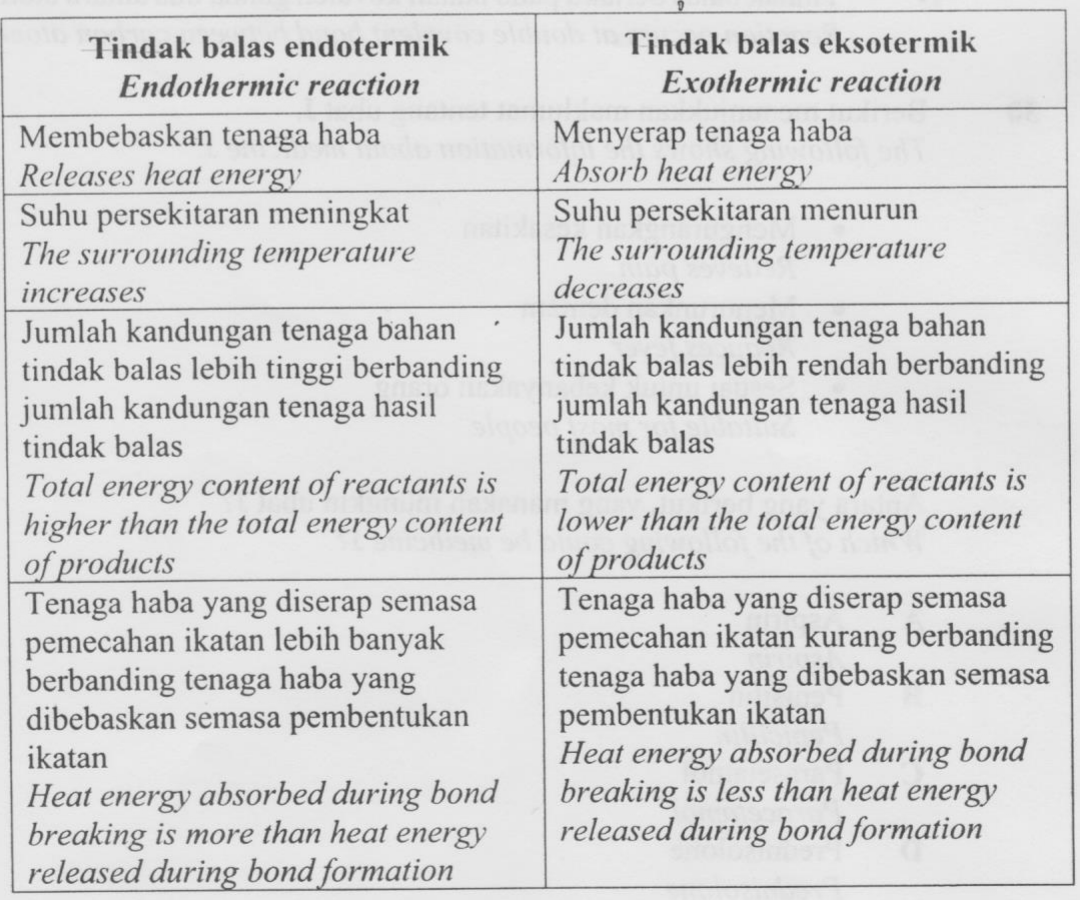
Which of the following is true about endothermic reaction and exothermic reaction? (A: endothermic releases heat energy; exothermic absorbs heat energy. B: endothermic - surrounding temperature increases; exothermic - surrounding temperature decreases. C: endothermic - total energy of reactants higher than products; exothermic - lower. D: endothermic - heat absorbed during bond breaking is more than heat released during bond formation; exothermic - heat absorbed during bond breaking is less than heat released during bond formation.)
Medium
50 cm³ of 1.0 mol dm⁻³ potassium chloride solution is mixed into a polystyrene cup which contains 50 cm³ of 1.0 mol dm⁻³ silver nitrate solution. The heat of precipitation for the reaction is -51 kJ mol⁻¹. What is the maximum temperature of the mixture if the average initial temperature of the solution is 29.0 °C? [Specific heat capacity of solutions = 4.2 J g⁻¹ °C⁻¹]
Medium
Diagram 23 shows the energy level diagram for the combustion of propan-1-ol (reactants C3H7OH + 9/2 O2 above products 3CO2 + 4H2O, ΔH = –X kJ mol–1). Which statement is correct?
Medium
Diagram 26 shows the formation of clouds when water vapour evaporates from the sea. What is the heat energy change and the type of reaction that occur when water evaporates?
Medium
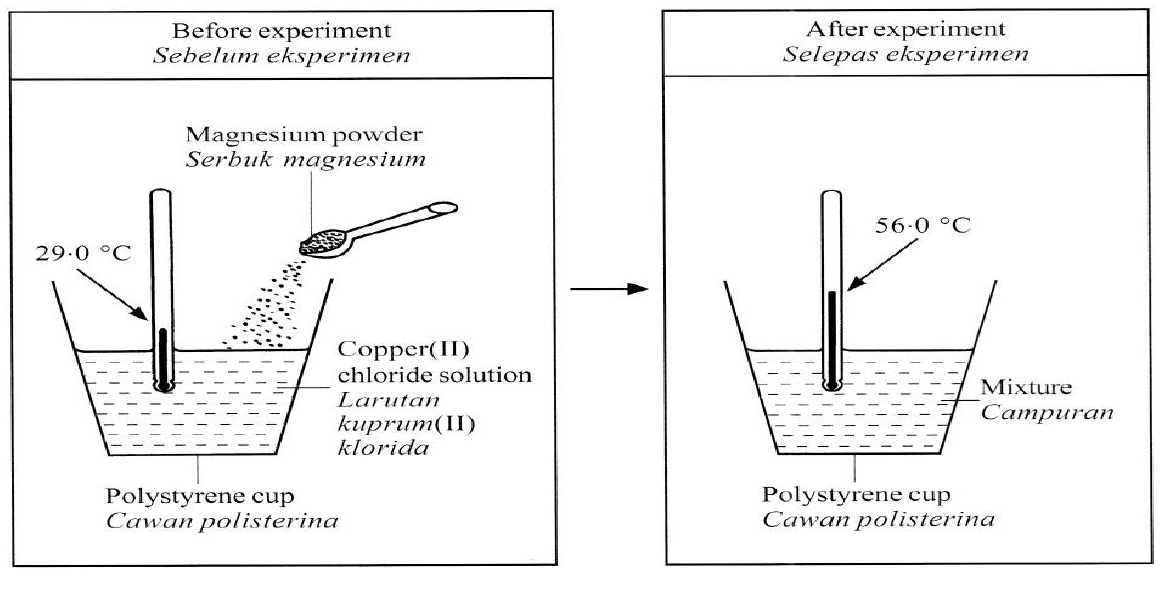
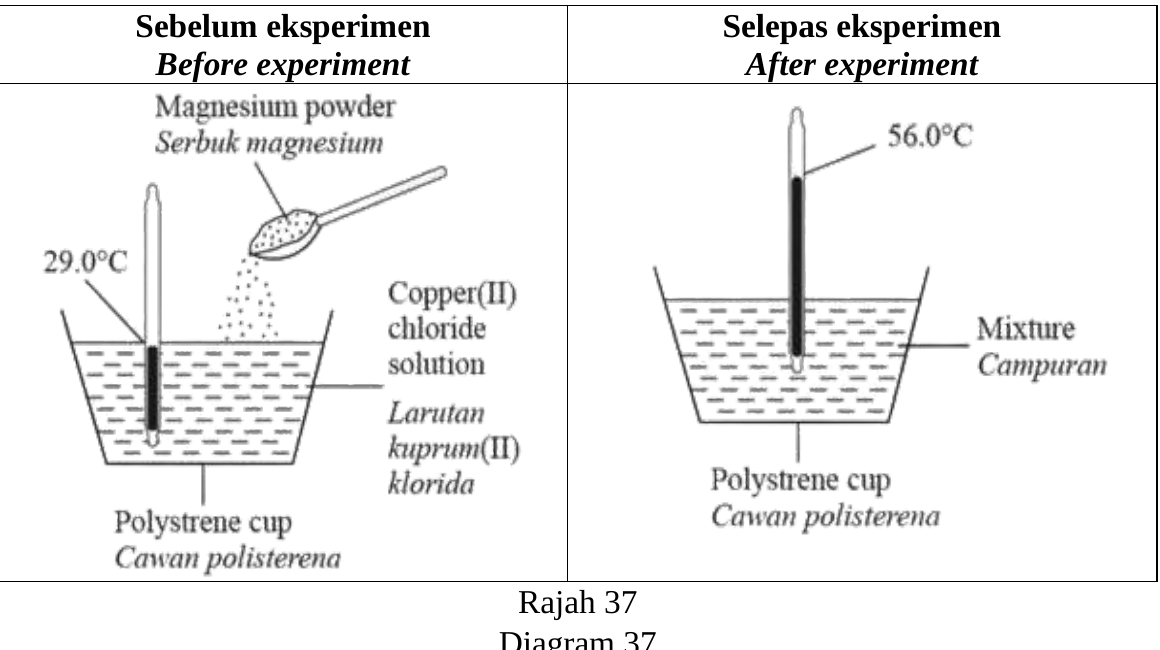
Diagram 38 shows the thermometer readings (29.0 °C before, 56.0 °C after) when excess magnesium powder is added into 50 cm3 of 0.5 mol dm-3 copper(II) nitrate solution in a polystyrene cup. What is the heat of displacement for the reaction? [Specific heat capacity = 4.2 J g-1 °C-1; Density of water = 1.0 g cm-3]
Medium
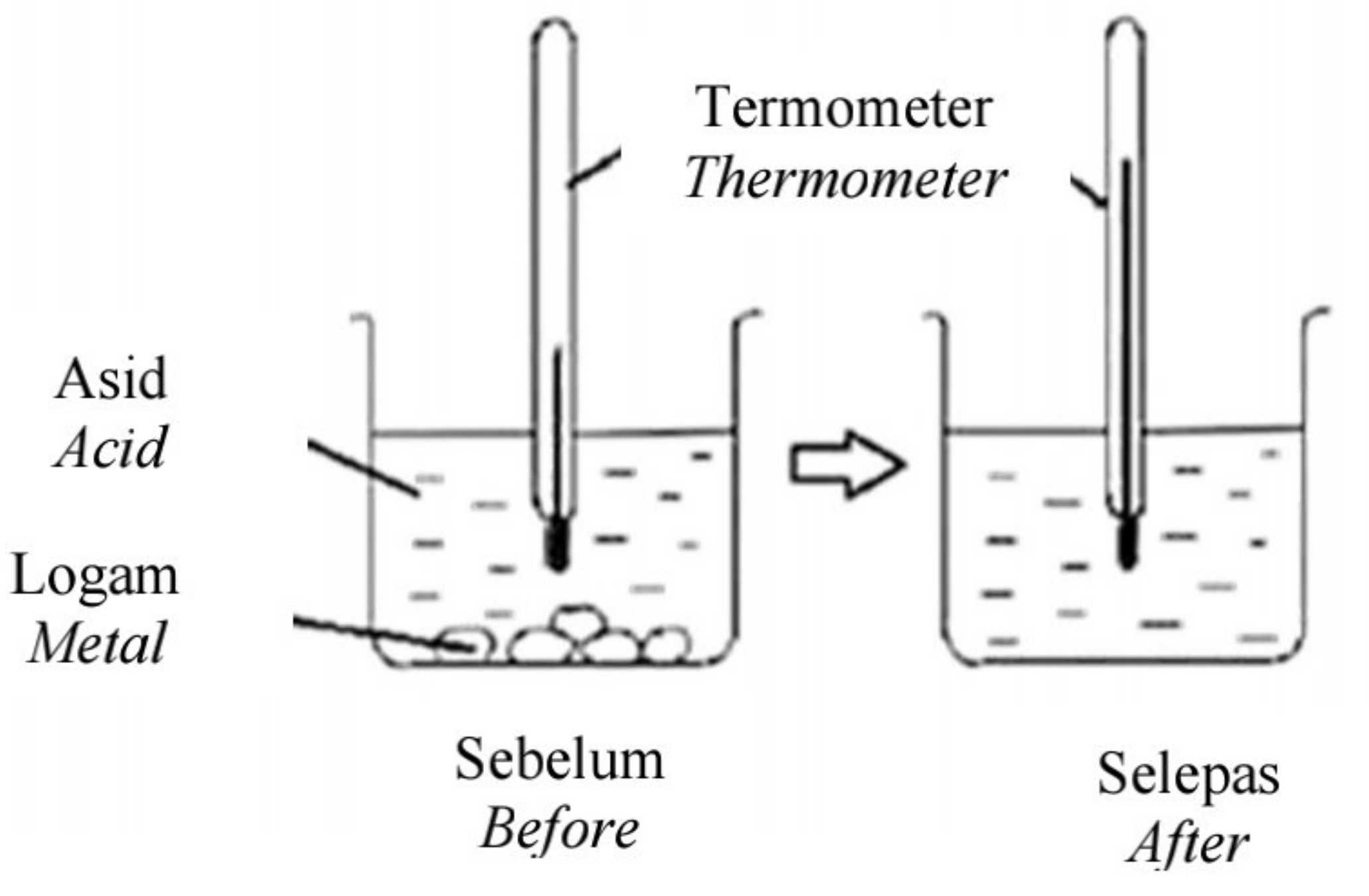
Diagram 12 shows the observation of a reaction between an acid and a metal in a beaker with a thermometer (before and after; the thermometer reading rises). Which of the following information is correct about the reaction? I Container becomes cold. II Heat is absorbed from surrounding. III The value of ΔH in the reaction is negative. IV The total energy content of the reactants is higher than the energy content of the products.
Medium
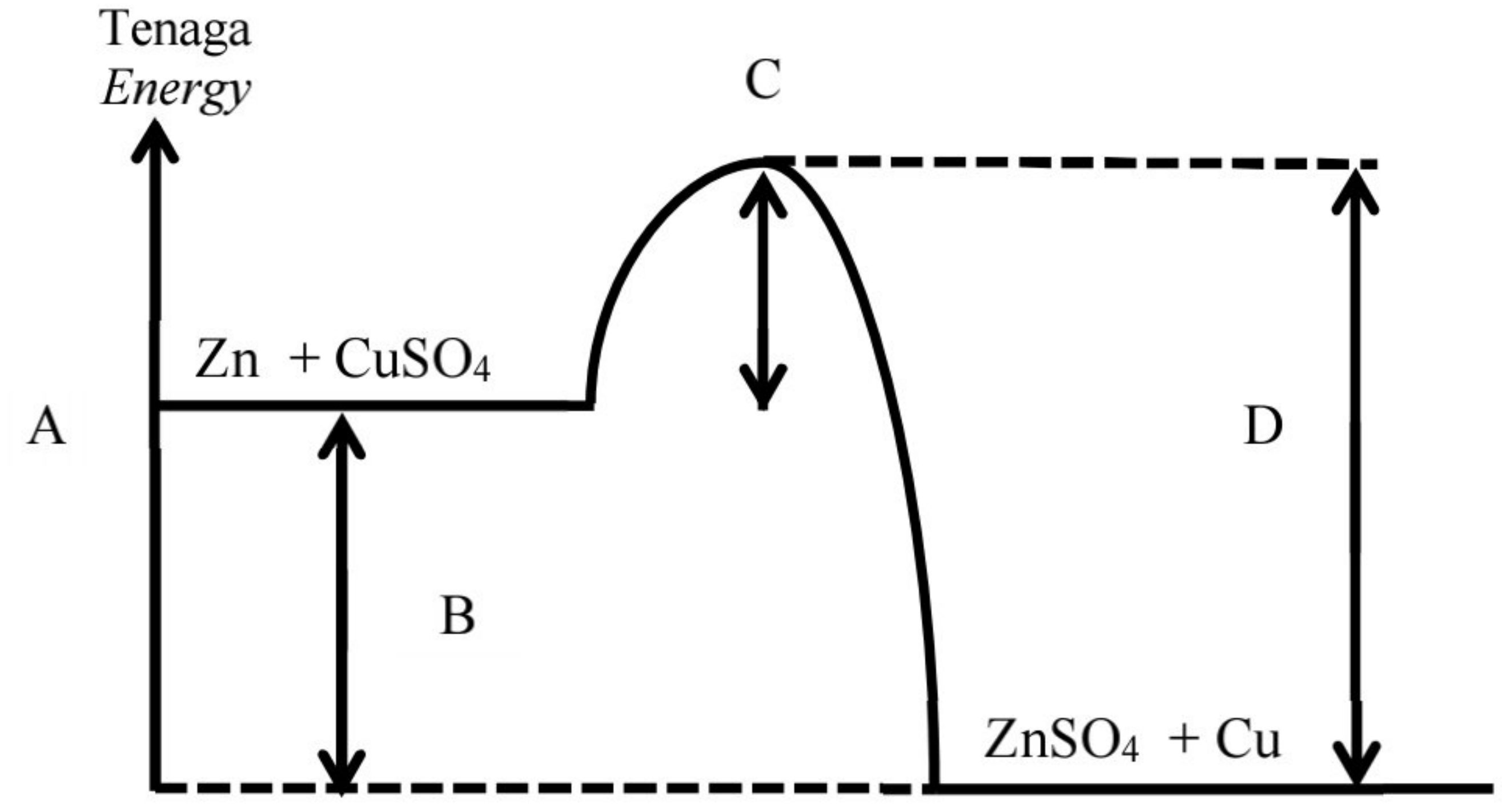
Diagram 13 is an energy level diagram for the reaction Zn + CuSO₄ → ZnSO₄ + Cu. Among A, B, C and D, which represents the value of heat of displacement for this reaction? (A: energy axis; B: arrow between the energy level of Zn + CuSO₄ and the lower level of ZnSO₄ + Cu; C: arrow from the reactant level up to the peak; D: arrow from the product level up to the peak.)
Medium
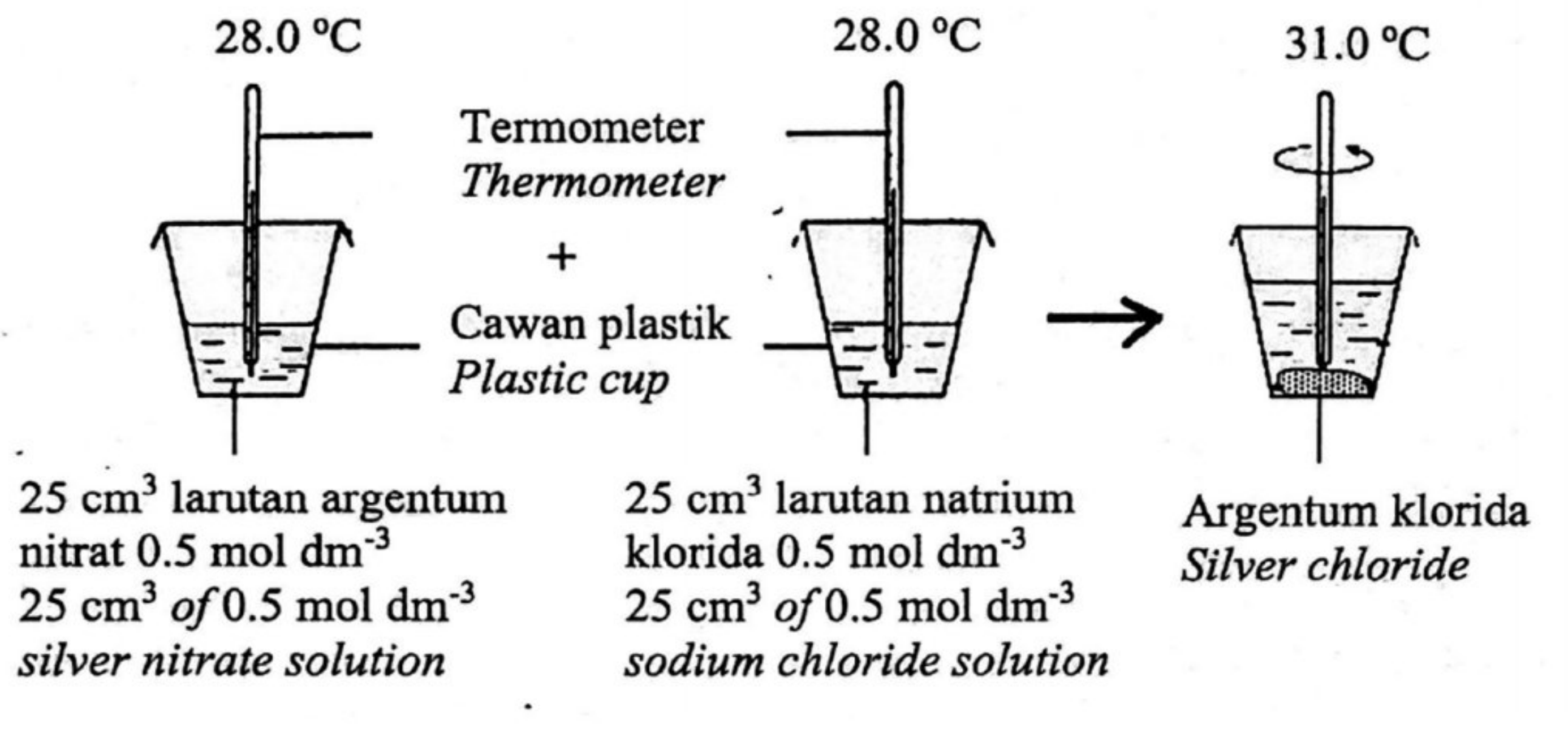
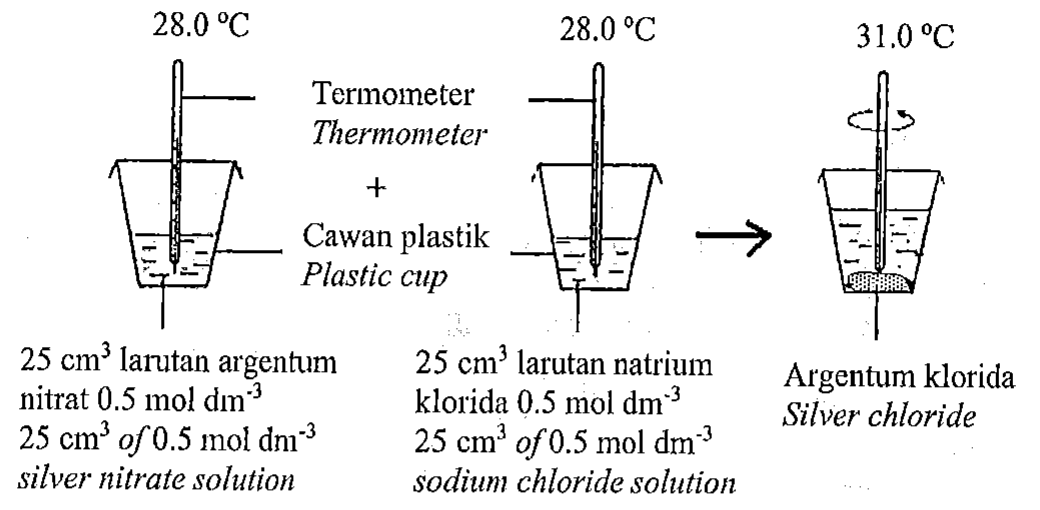
Diagram 19 shows the apparatus set-up to determine the heat of precipitation of silver chloride: 25 cm³ of 0.5 mol dm⁻³ silver nitrate solution (28.0 °C) is mixed with 25 cm³ of 0.5 mol dm⁻³ sodium chloride solution (28.0 °C); the highest temperature is 31.0 °C. What is the heat of precipitation of silver chloride? [Specific heat capacity of solution = 4.2 J g⁻¹ °C⁻¹, density of solution = 1 g cm⁻³]
Medium
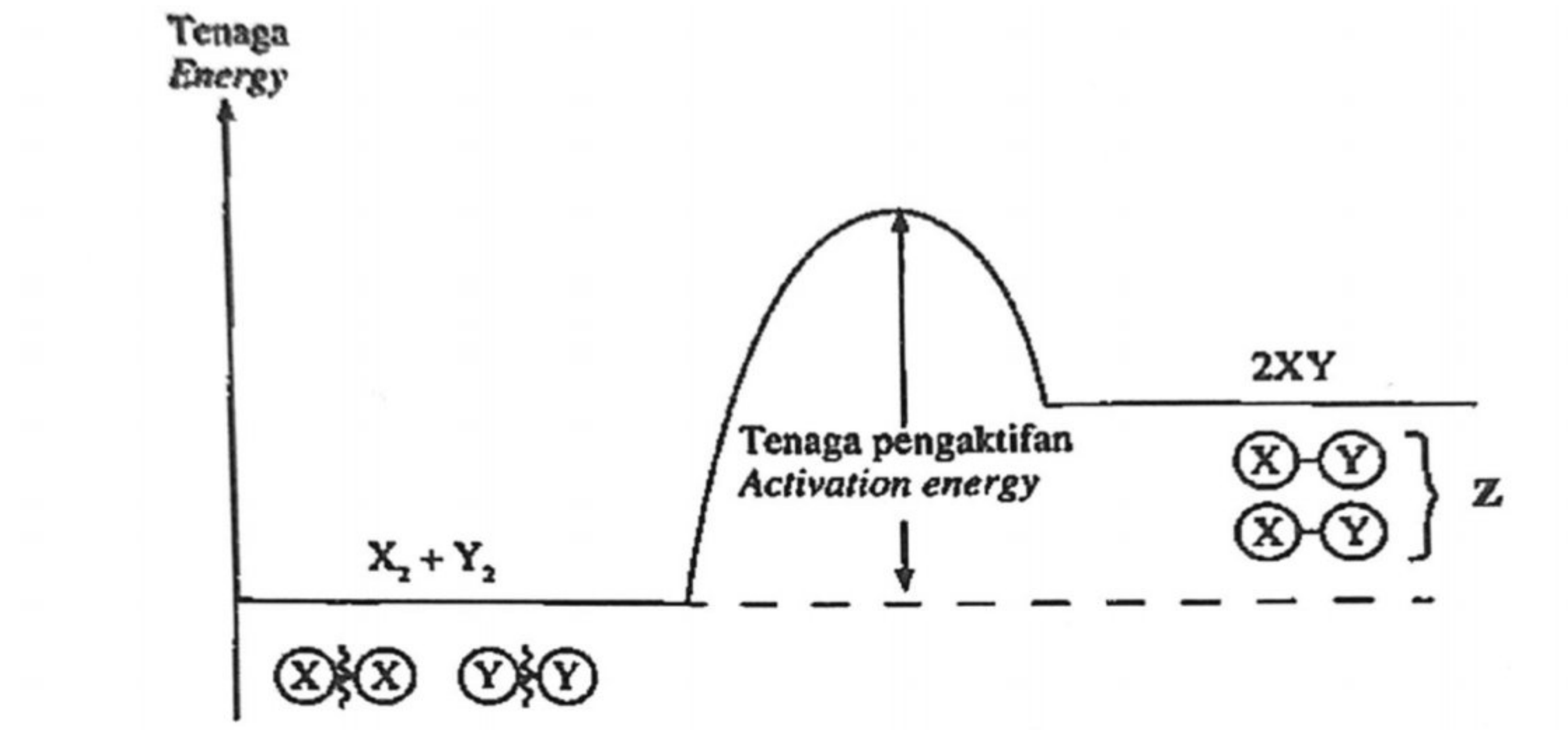
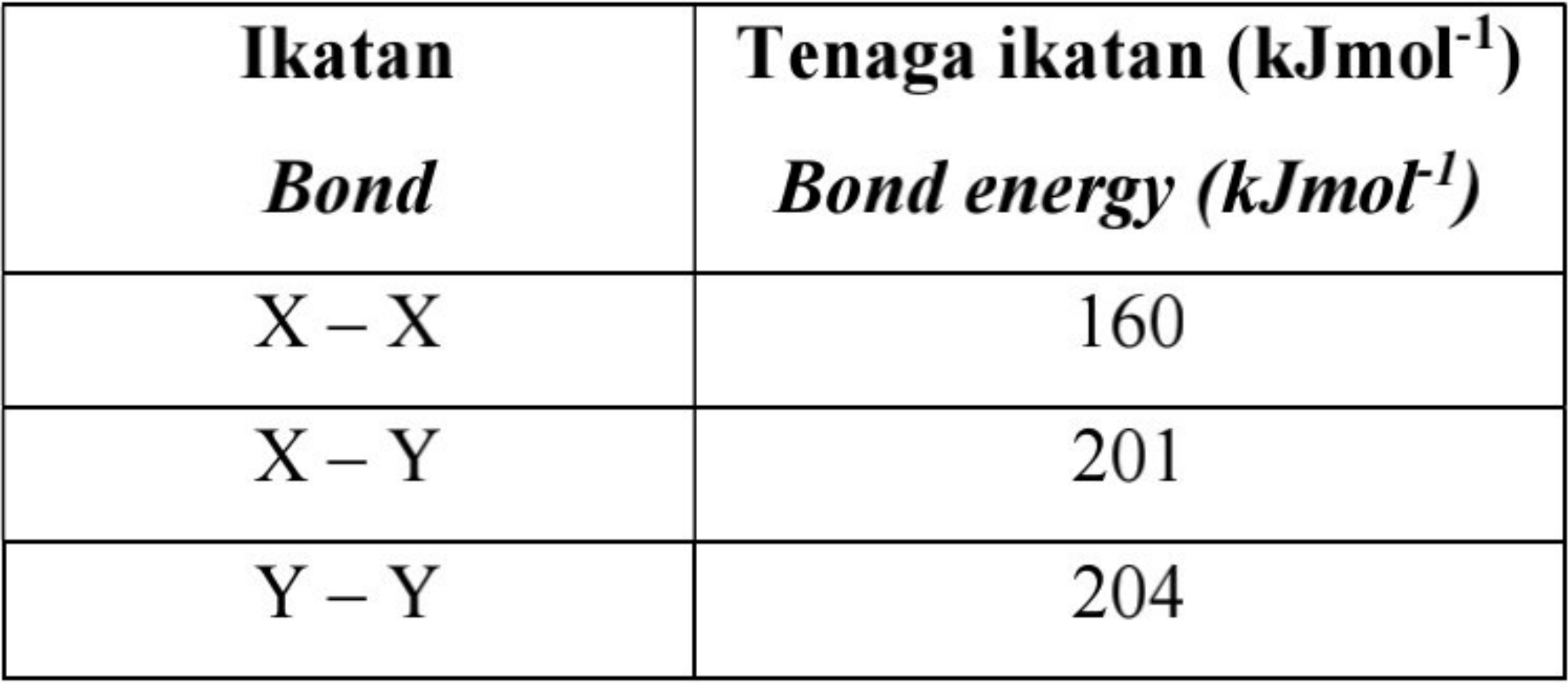
Diagram 21 shows the energy profile of X₂ + Y₂ → 2XY (bond breaking in X–X and Y–Y, bond formation in two X–Y; the energy of 2XY is drawn higher than X₂ + Y₂; Z labels the two X–Y bonds). Table 6 shows bond energies: X–X 160 kJ mol⁻¹; X–Y 201 kJ mol⁻¹; Y–Y 204 kJ mol⁻¹. Based on Diagram 21 and Table 6, what is the value of Z?
Medium
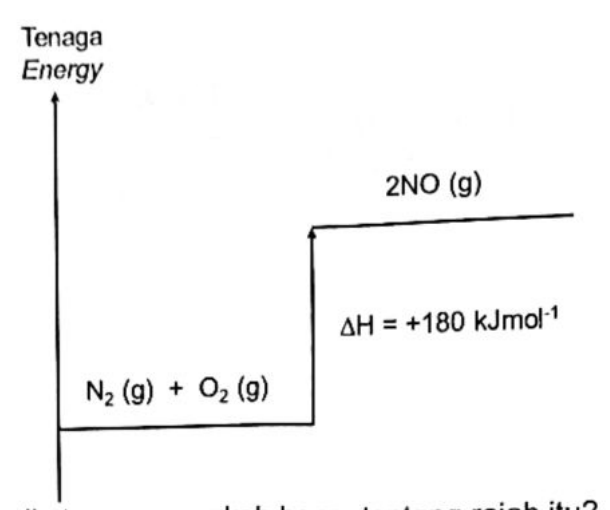
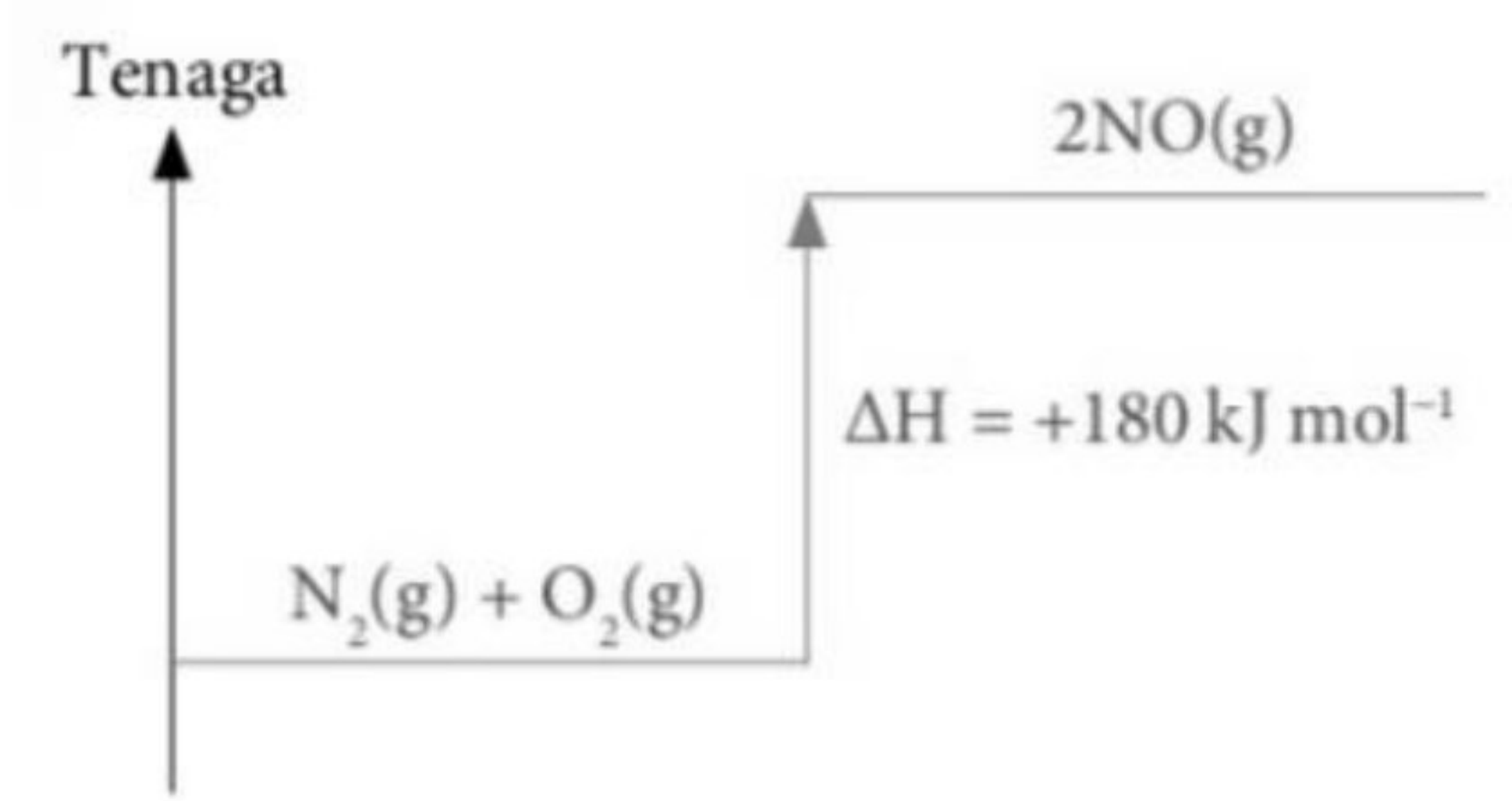
The diagram shows an energy level of a reaction: N₂(g) + O₂(g) → 2NO(g), ΔH = +180 kJ mol⁻¹. Which of the following statements is correct about the diagram?
Medium
Which of the following is correct when water is added to solid ammonium nitrate?
Medium
The following information shows the data of an experiment to determine the heat of combustion of hexane, C₆H₁₄: mass of hexane = 15.48 g; volume of water = 2 kg; initial temperature of water = 25 °C; highest temperature of water = 100 °C. What is the value of heat of combustion of hexane? [Relative atomic mass: C = 12, H = 1; specific heat capacity of water = 4.2 J g⁻¹ °C⁻¹]
Medium
Which of the following statements is related to an exothermic reaction?
Easy
The thermochemical equation 2H2(g) + O2(g) → 2H2O(l) ΔH = -570 kJ represents a reaction. Which statement explains this reaction?
Medium
Pak Rosli's leg was sprained. He asked his son to take substance Y from the store and mix it into a plastic bag containing water. His son shook the plastic bag and pressed it onto the sprained part. What is substance Y?
Medium
Which of the following is the example of endothermic reaction?
Medium
Which assumptions need to be made in determining the heat of reaction? I No heat is absorbed by the apparatus; II Only a small amount of heat is lost to surrounding; III The density of any aqueous solution is equal to the density of water, 1 g cm⁻³; IV The specific heat capacity of any aqueous solution is equal to the specific heat capacity of water, 4.2 kJ g⁻¹ °C⁻¹
Medium
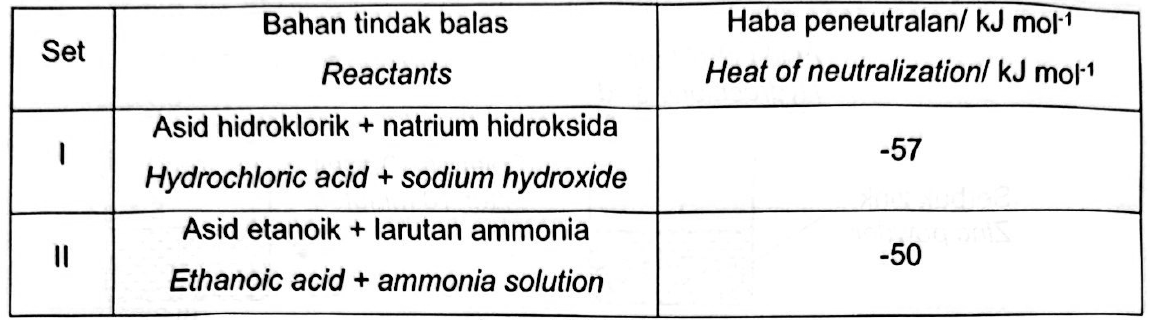
Table 2 shows heat of neutralisation, ΔH for a few types of acid and alkali. Set I: hydrochloric acid + sodium hydroxide, -57 kJ mol⁻¹. Set II: ethanoic acid + ammonia solution, -50 kJ mol⁻¹. What is the reason for this situation?
Medium
Zara adds a spatula of ammonium nitrate powder into a beaker filled with 100 cm³ of distilled water. When the ammonium nitrate powder dissolves in water, the beaker becomes cold. Which of the following explains the observation?
Medium
Anas opened a freezer in a shop to buy an ice-cream. He can see the dry ice in the freezer changed into smoke. What are the process and energy change that occur to the dry ice?
Medium
The thermochemical equation Ba²⁺(aq) + SO4²⁻(aq) → BaSO4(s), ΔH = -x kJ mol⁻¹ represents the precipitation reaction between barium ion and sulphate ion. Which of the following statements is true about the equation?
Medium
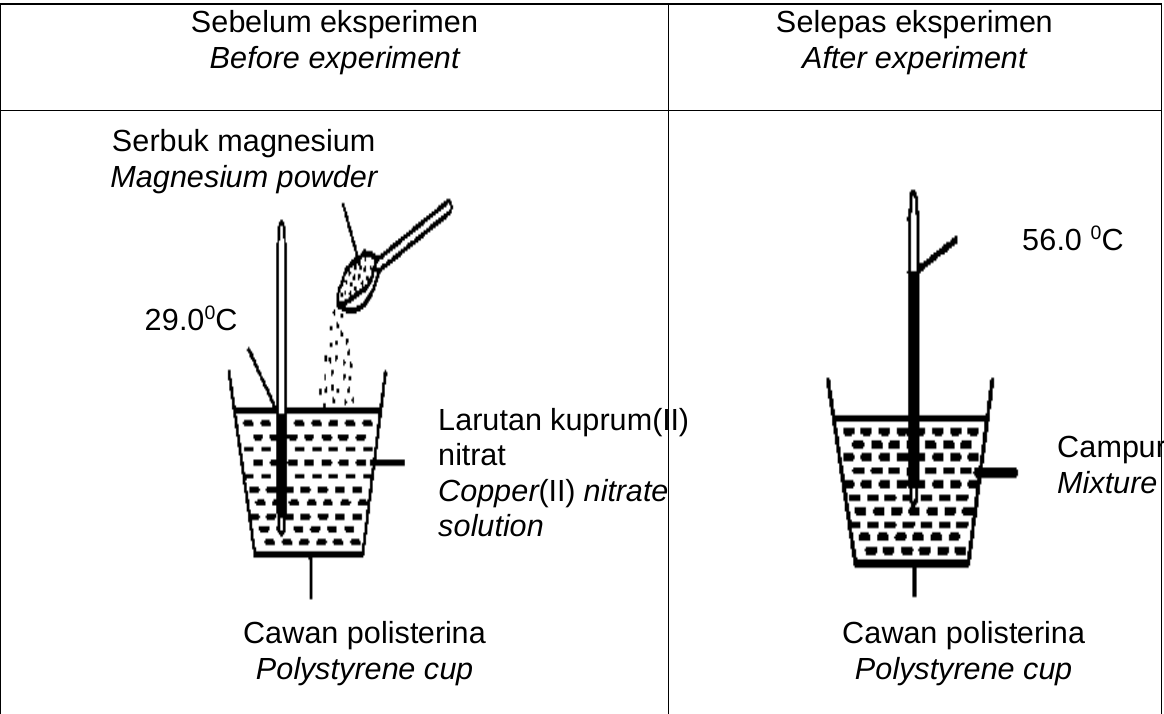
The diagram shows thermometer readings when excess magnesium powder is added to 50 cm³ of 0.5 mol dm⁻³ copper(II) nitrate solution in a polystyrene cup. Before: 29.0 °C; after: 56.0 °C. What is the heat of displacement for the reaction? [Specific heat capacity of water = 4.2 J g⁻¹ °C⁻¹; density of water = 1.0 g cm⁻³]
Medium
When zinc is added to a solution of tin(II) chloride, the following reaction occurs.
Zn(s) + SnCl₂(aq) → ZnCl₂(aq) + Sn(s) ΔH = -p kJ mol⁻¹
Which of the following definitions is correct about the heat of the reaction?
Medium
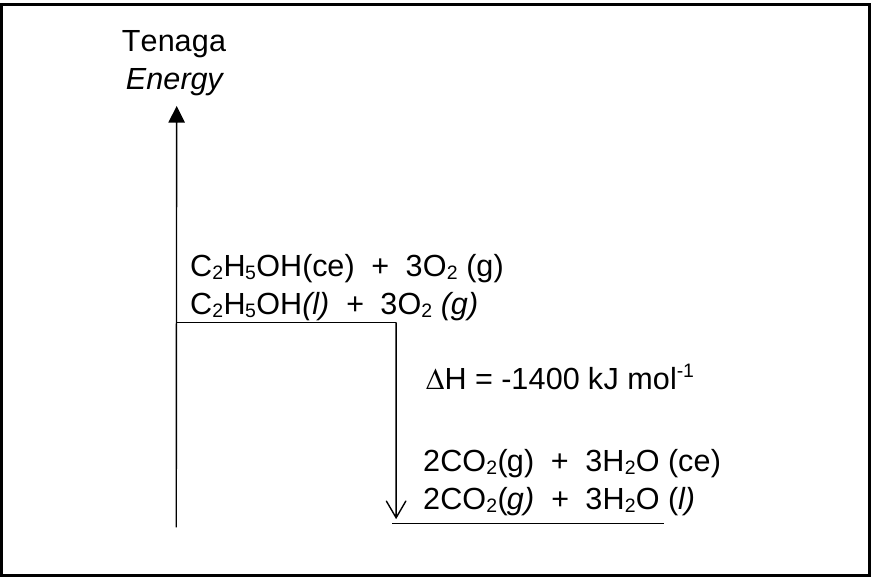
The energy changes that occur during the combustion of ethanol are shown in the diagram (C₂H₅OH(l) + 3O₂(g) to 2CO₂(g) + 3H₂O(l), ΔH = -1400 kJ mol⁻¹). In the reaction that happen,
Medium
Chromium(III) ions precipitated by sodium hydroxide solution form chromium(III) hydroxide.
CrCl₃(aq) + 3NaOH(aq) → Cr(OH)₃(s) + 3NaCl(aq) ΔH = -12 kJ mol⁻¹
What is the volume of 1.0 mol dm⁻³ sodium hydroxide solution that should be used for the reaction to produce 1.2 kJ of heat?
Medium
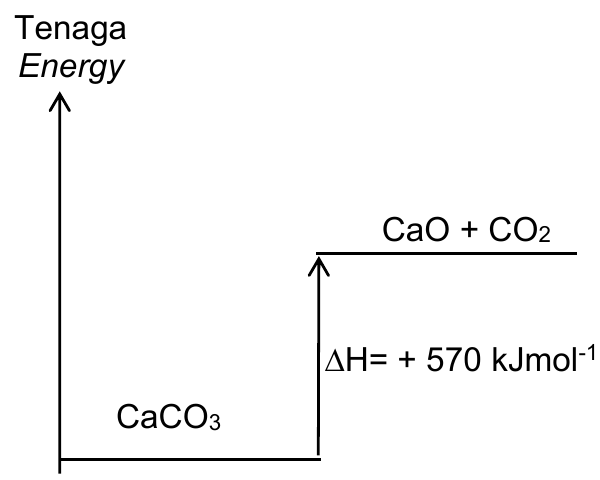
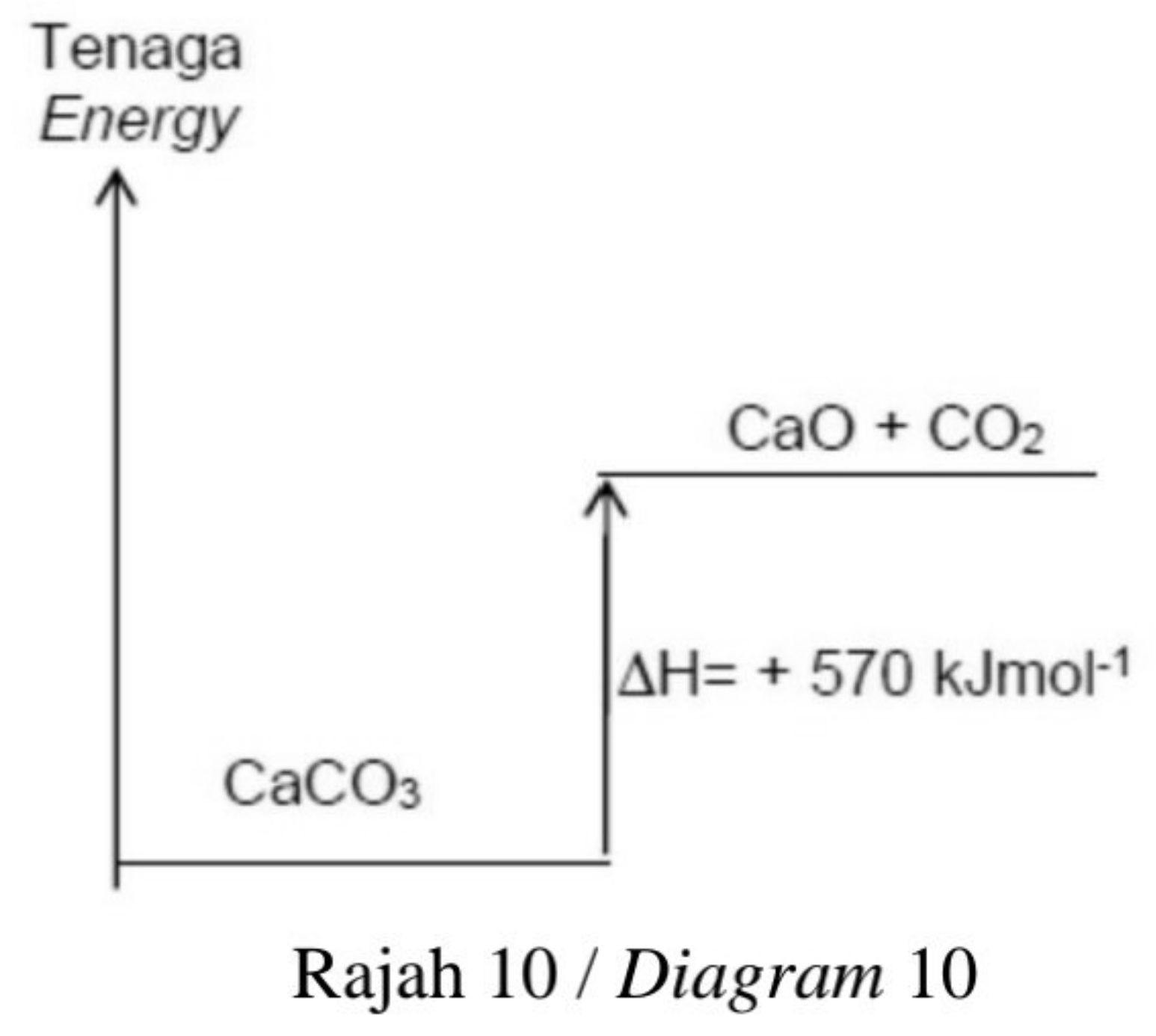
Diagram 7 shows an energy level diagram for the decomposition of calcium carbonate (CaCO3 at lower level, CaO + CO2 at higher level, ΔH = +570 kJ mol-1). Which statement can be deduced from Diagram 7?
Medium
Table 4 shows the heat of neutralisation of two different monoprotic acids, P and Q, with potassium hydroxide solution. Set I: 50 cm3 of 1.0 mol dm-3 monoprotic acid P + 50 cm3 of 1.0 mol dm-3 KOH; heat of neutralisation -57.0 kJ mol-1. Set II: 50 cm3 of 1.0 mol dm-3 monoprotic acid Q + 50 cm3 of 1.0 mol dm-3 KOH; heat of neutralisation -54.0 kJ mol-1. Based on Table 4, what are P and Q? (Set I; Set II)
Medium
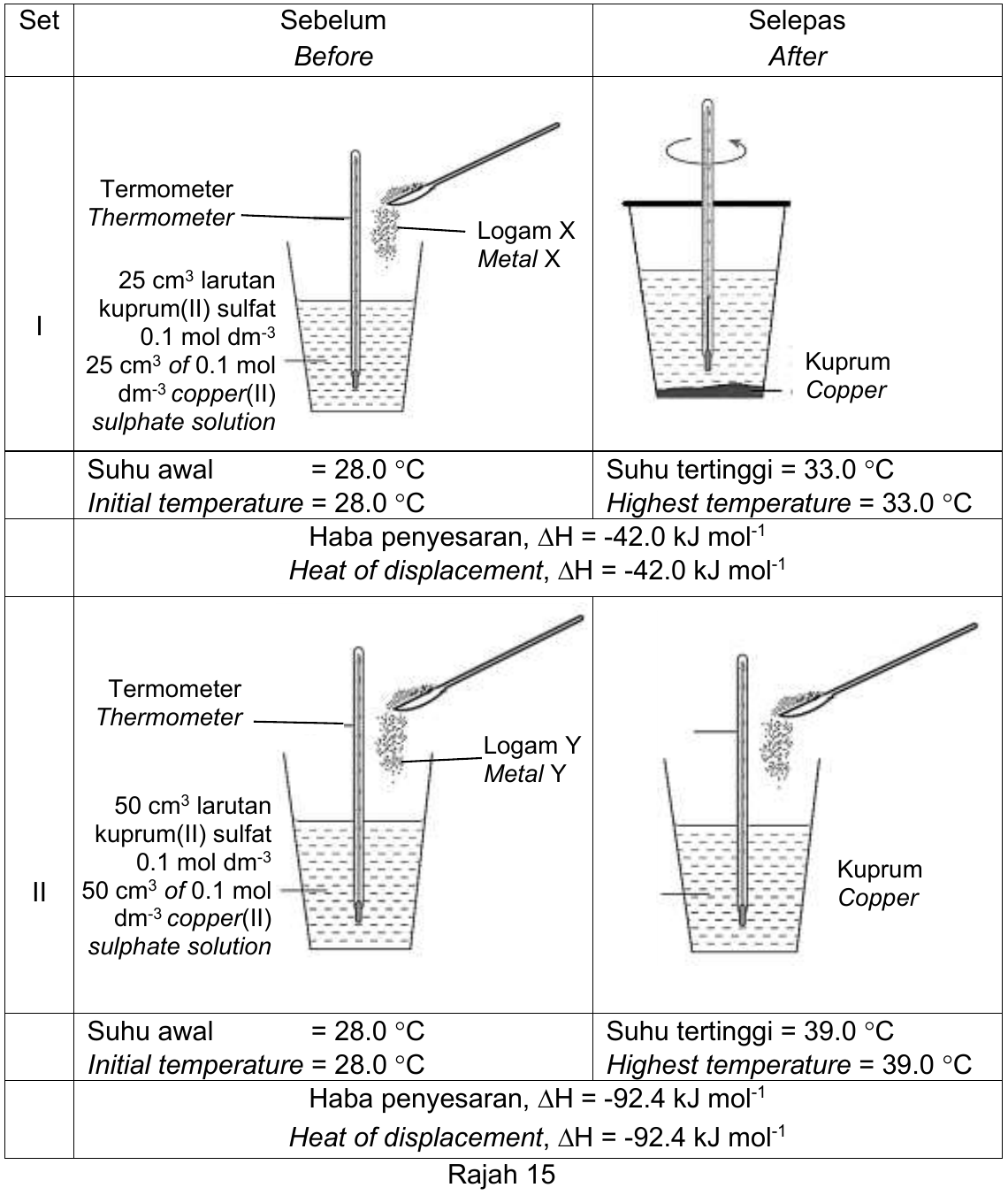
Diagram 15 shows two sets of experiments on copper(II) sulphate solution (Set I: 25 cm3 of 0.1 mol dm-3, metal X, 28.0 C to 33.0 C, ΔH = -42.0 kJ mol-1; Set II: 50 cm3 of 0.1 mol dm-3, metal Y, 28.0 C to 39.0 C, ΔH = -92.4 kJ mol-1). Magnesium powder is added in excess. Which statements describe the two sets of experiments correctly? I Total energy content of the products is more than that of the reactants for both sets. II Both sets absorb heat from the surroundings. III Heat change in Set II is higher than Set I. IV Y is more electropositive than X.
Medium
Which reaction produces the highest heat change?
Medium
Which of the following energy level diagrams represents the reaction between copper(II) sulphate solution and zinc?
Medium
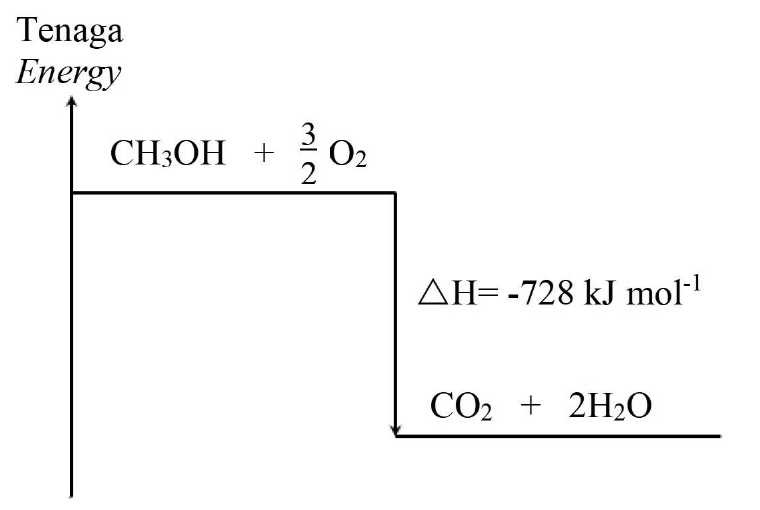
Diagram 13 shows the energy level diagram for the combustion of methanol, CH₃OH (CH₃OH + 3/2 O₂ → CO₂ + 2H₂O, ΔH = -728 kJ mol⁻¹). What is the mass of methanol needed to raise the temperature of 200 cm³ of water by 30.5 °C? [Molar mass of methanol, CH₃OH = 32, specific heat capacity of water = 4.2 J g⁻¹ °C⁻¹; density of water = 1 g cm⁻³]
Medium
Which statement is correct about endothermic reaction?
Medium
The following is the thermochemical equation for the combustion of butan-1-ol: C4H9OH + 6O2 → 4CO2 + 5H2O ΔH = -2675 kJ mol⁻¹. What is the fuel value of butan-1-ol? [Relative atomic mass: H=1, C=12, O=16]
Medium
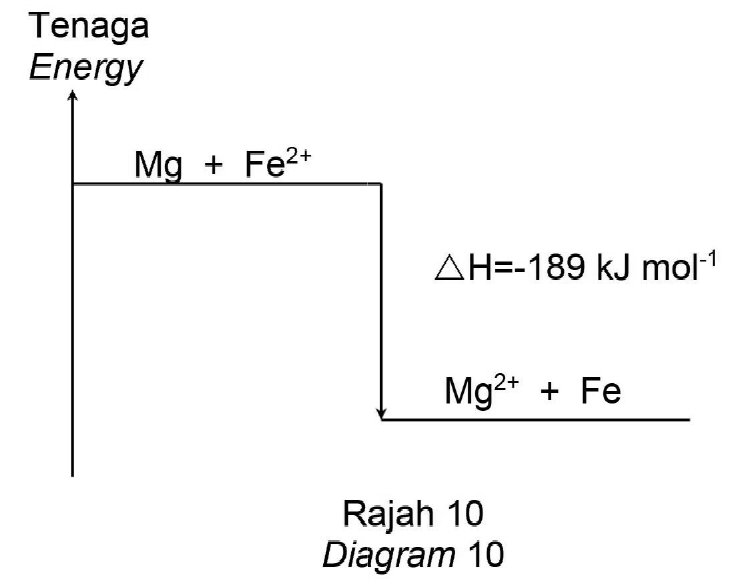
Diagram 10 shows the energy levels for a displacement reaction: Mg + Fe²⁺ at a higher level, Mg²⁺ + Fe lower, ΔH = -189 kJ mol⁻¹. Which of the following is true about the information that can be obtained from the energy level diagram?
I. Exothermic reaction
II. The temperature decrease during reaction
III. The container of mixture become hot
IV. Heat is absorbed more during the formation of new bonds
Medium
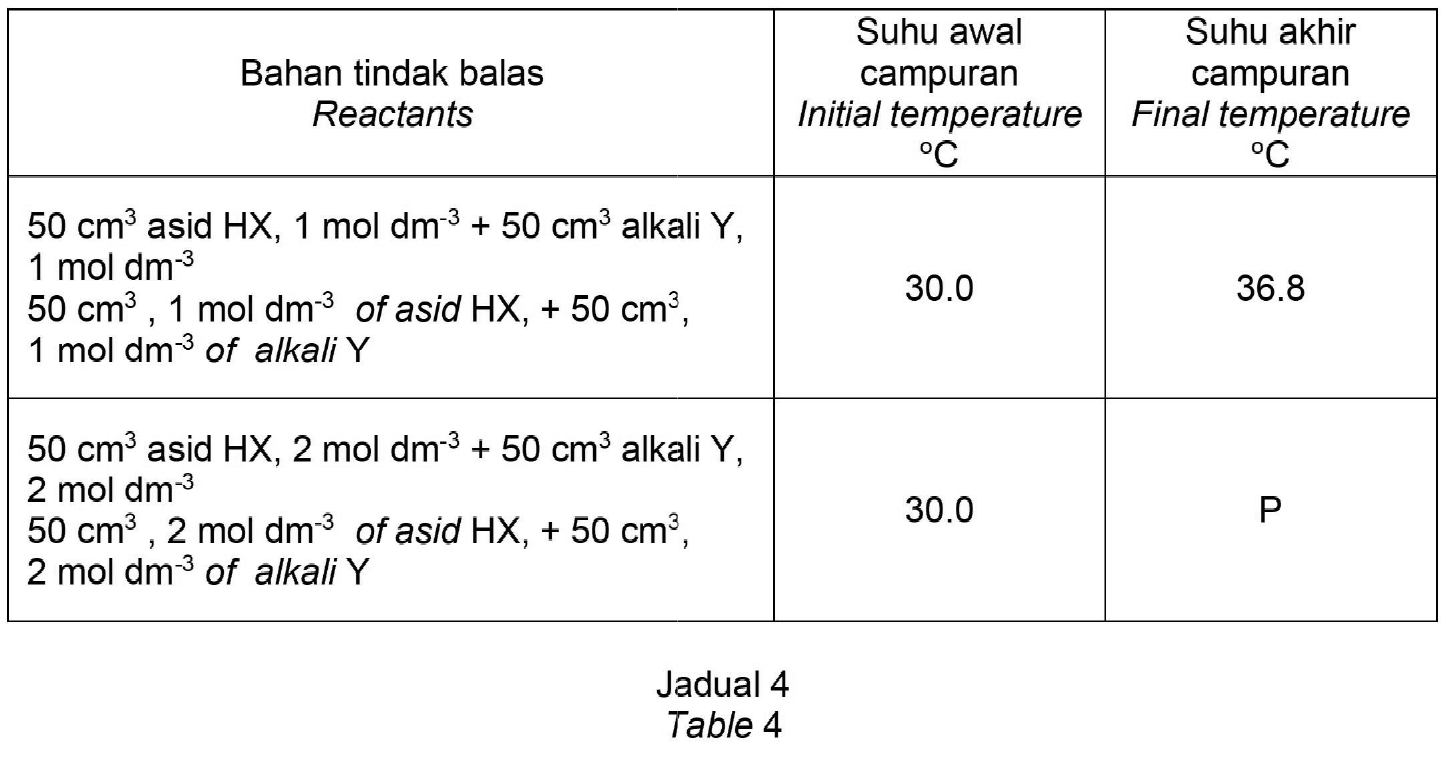
Table 4 compares two neutralization reactions between acid HX and alkali Y. (1) 50 cm3 of 1 mol dm⁻³ HX + 50 cm3 of 1 mol dm⁻³ Y: initial 30.0 °C, final 36.8 °C. (2) 50 cm3 of 2 mol dm⁻³ HX + 50 cm3 of 2 mol dm⁻³ Y: initial 30.0 °C, final P. What is the value of P?
Medium
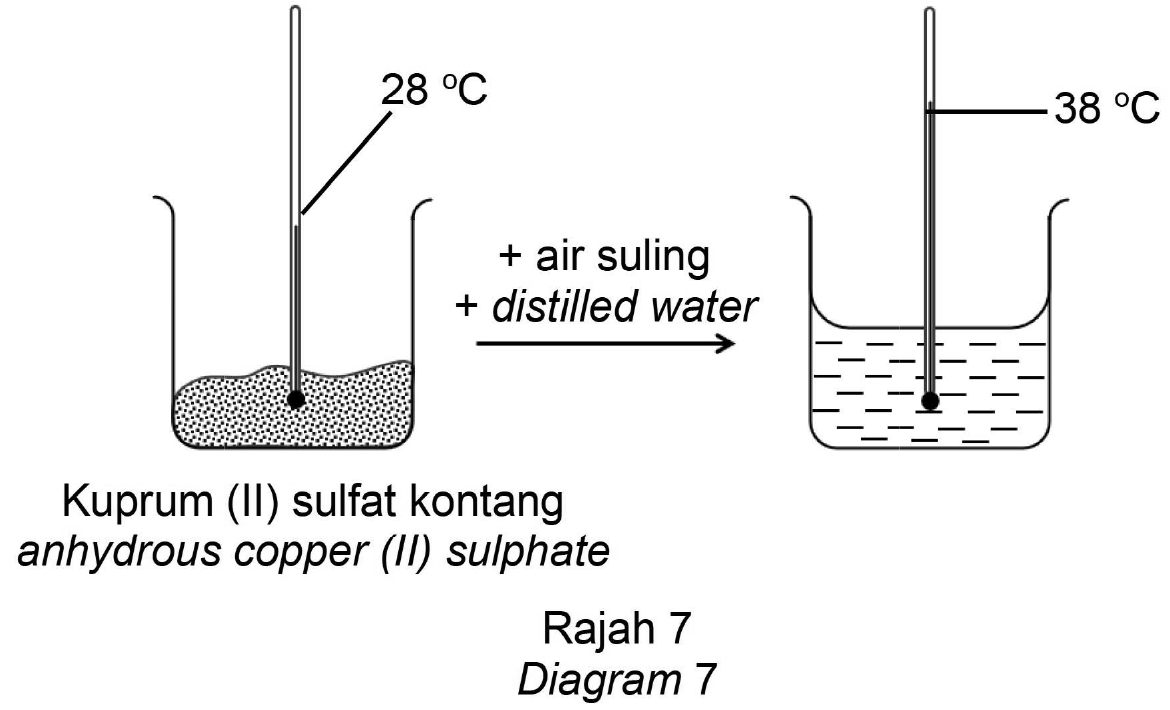
Diagram 7 shows the change in temperature when anhydrous copper(II) sulphate powder is dissolved in distilled water (28 °C to 38 °C). What type of reaction takes place in Diagram 7?
Easy
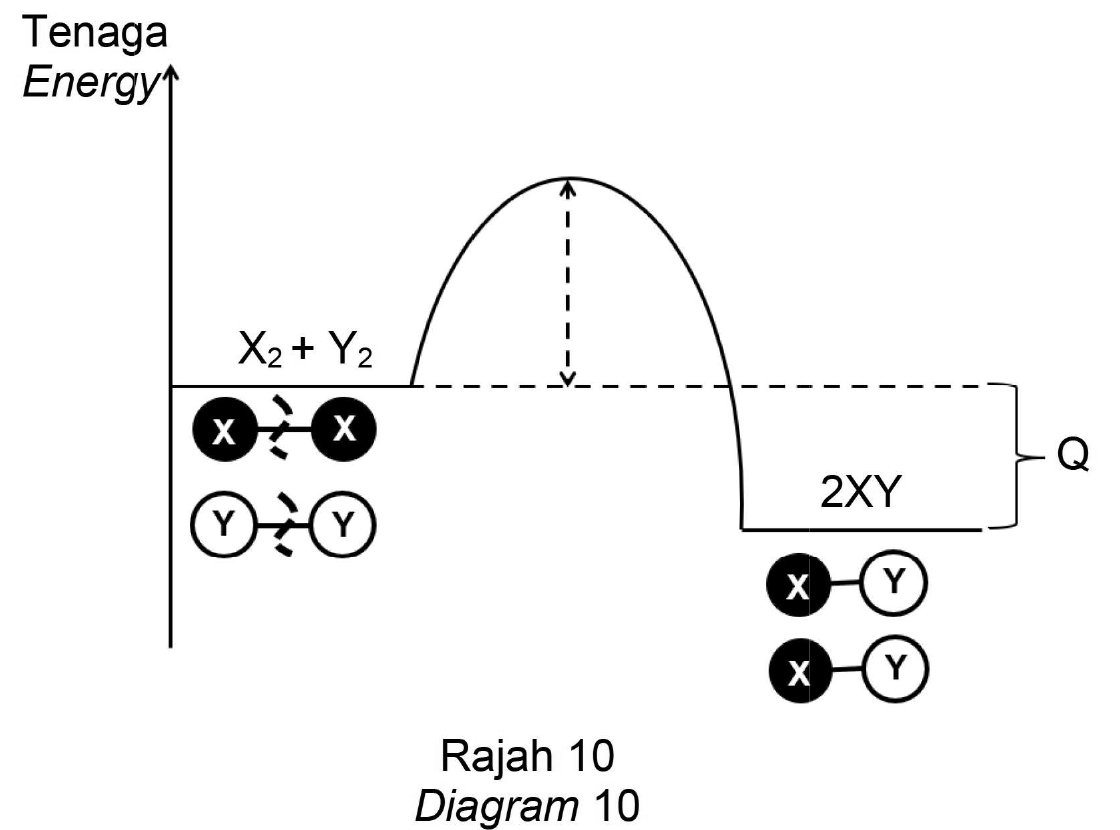
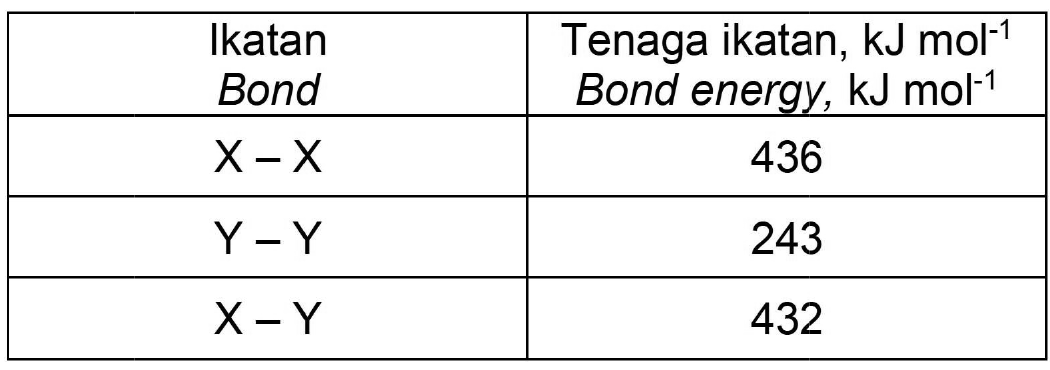
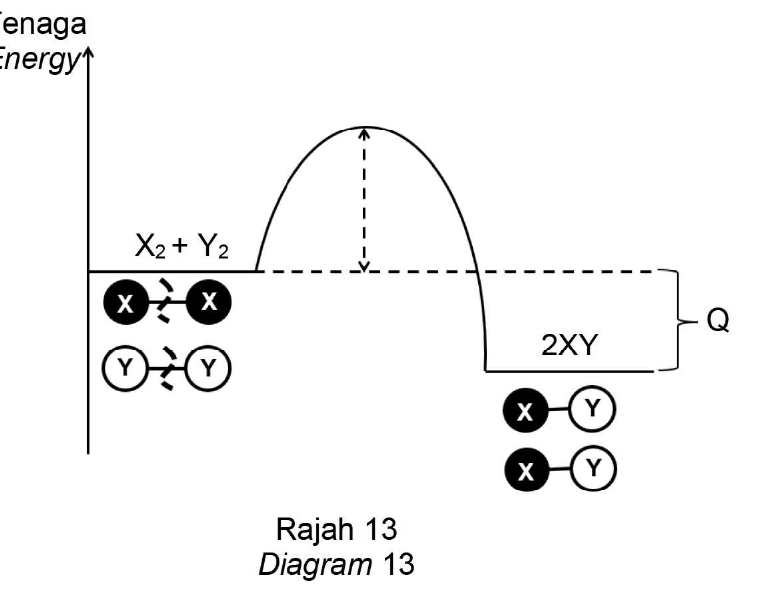
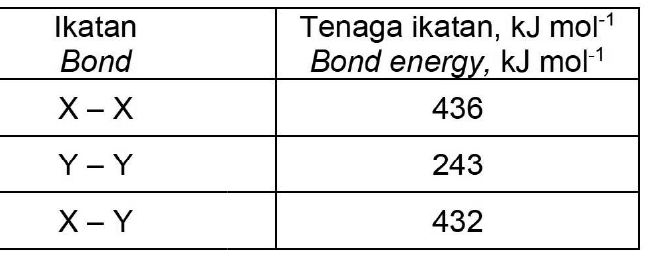
Diagram 10 shows a diagram of bond breaking and formation in a chemical reaction (X2 + Y2 -> 2XY, energy released Q). Bond energies: X-X 436 kJ mol⁻¹; Y-Y 243 kJ mol⁻¹; X-Y 432 kJ mol⁻¹. What is the value of Q?
Medium
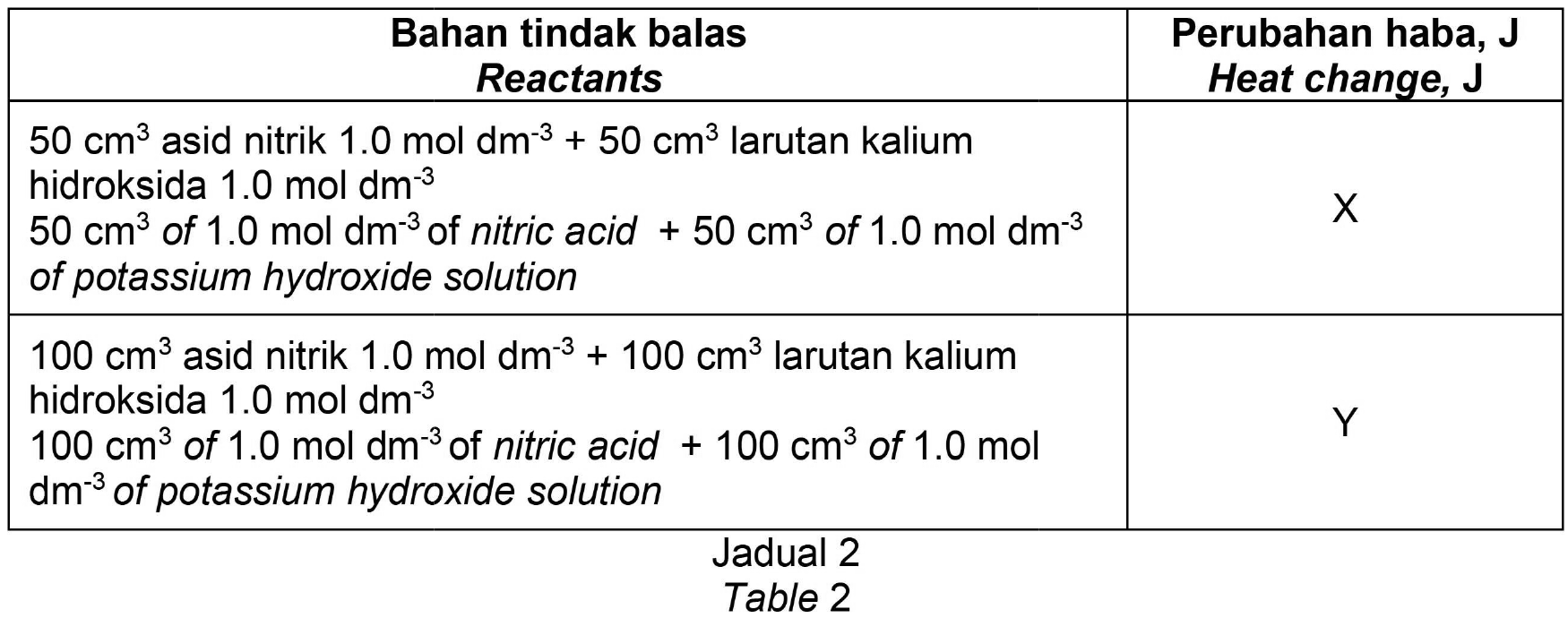
Table 2 shows the heat changes for two neutralisation reactions: 50 cm³ of 1.0 mol dm⁻³ nitric acid + 50 cm³ of 1.0 mol dm⁻³ potassium hydroxide solution gives heat change X; 100 cm³ of 1.0 mol dm⁻³ nitric acid + 100 cm³ of 1.0 mol dm⁻³ potassium hydroxide solution gives heat change Y. Which is true about X and Y?
Medium
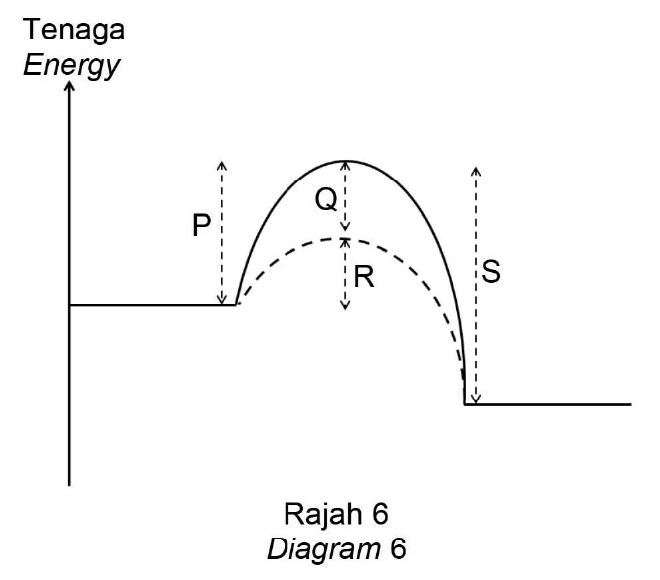
Diagram 6 shows the energy profile of a chemical reaction. Which of the following is the heat of reaction for the reaction?
Medium
When excess zinc powder is added to 25 cm³ of a 0.2 mol dm⁻³ copper (II) sulphate solution, the temperature of the mixture increases from 30 °C to 40 °C. What is the heat of displacement for copper? [Specific heat capacity of the solution = 4.2 J g⁻¹ °C⁻¹; Density of solution = 1 g cm⁻³]
Medium
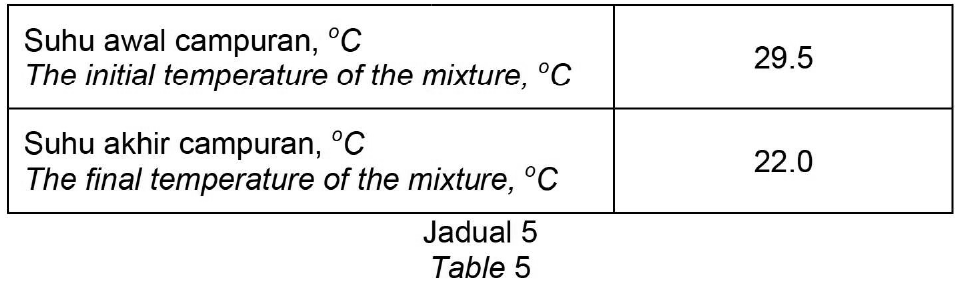
Table 5 shows the thermometer readings when two substances are mixed together to react: the initial temperature of the mixture is 29.5 °C and the final temperature of the mixture is 22.0 °C. What are those two substance?
Medium
Diagram 13 shows a diagram of bond breaking and formation in a chemical reaction (X₂ + Y₂ → 2XY). The table shows the energies of the chemical bonds in X, Y and XY: X–X 436 kJ mol⁻¹, Y–Y 243 kJ mol⁻¹, X–Y 432 kJ mol⁻¹. What is the value of Q?
Medium
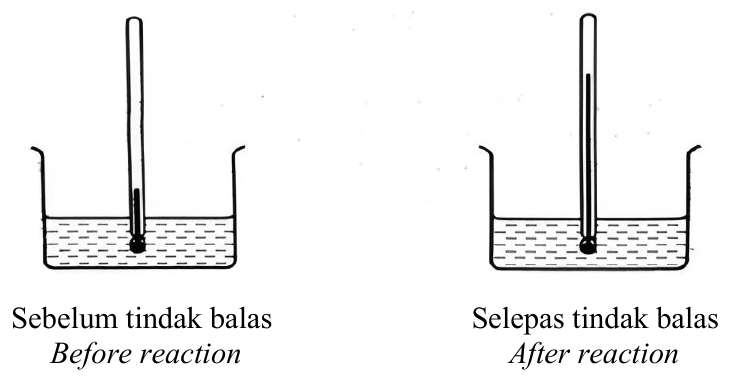
Diagram 8 shows the mercury level of thermometer in a reaction (before and after reaction). Which of the following explains the reaction above?
Medium
The heat of combustion of propanol C₃H₇OH is −2016 kJ mol⁻¹. When 0.3 g of propanol is completely burnt in oxygen, the heat released is used to heat 250 cm³ of water. What is the rise in temperature of the water? [Specific heat capacity of solution = 4.2 J g⁻¹ °C⁻¹] [Molar mass of propanol: 60 g mol⁻¹]
Medium
Which of the following neutralization reactions releases the least heat?
Medium
The following ionic equation shows the reaction between Ag⁺ and Cl⁻ ions. Ag⁺(aq) + Cl⁻(aq) → AgCl(s), ΔH = -65 kJ mol⁻¹. Which of the following is the correct statement?
Medium
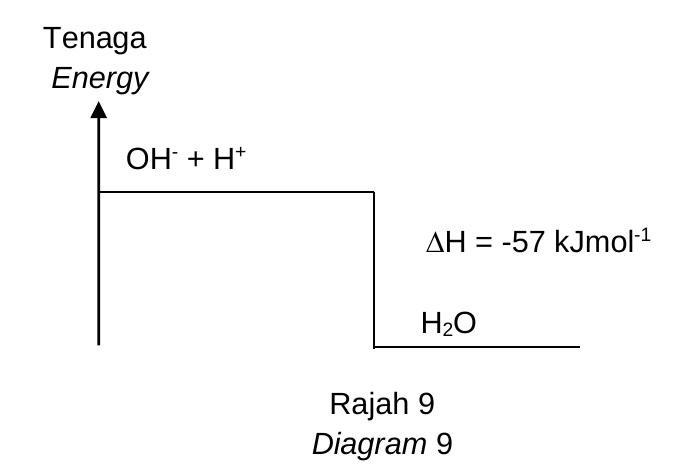
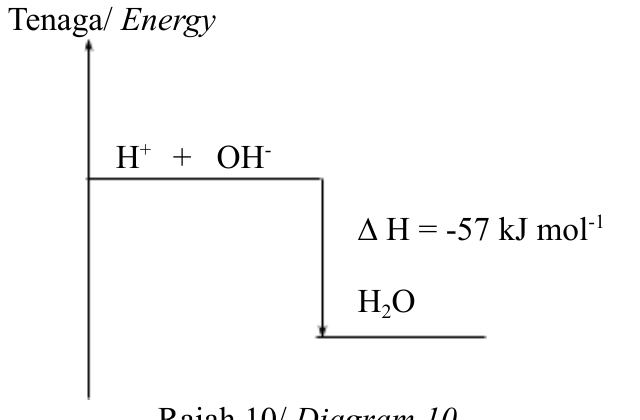
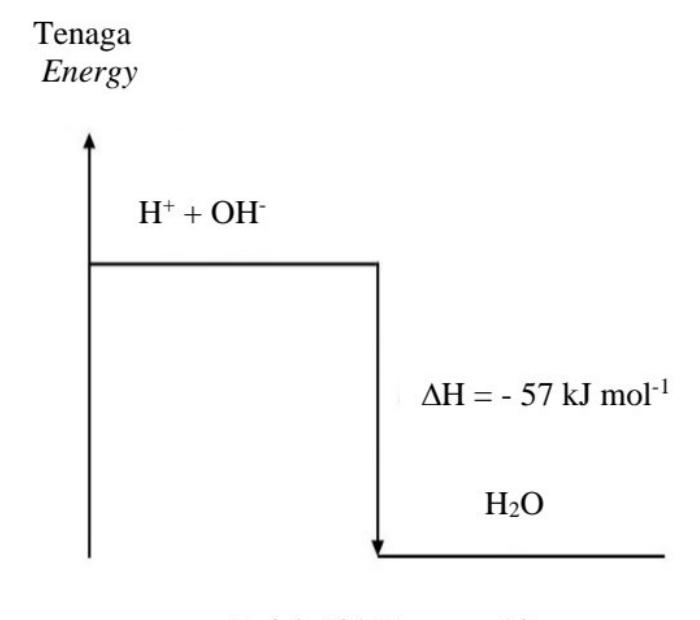
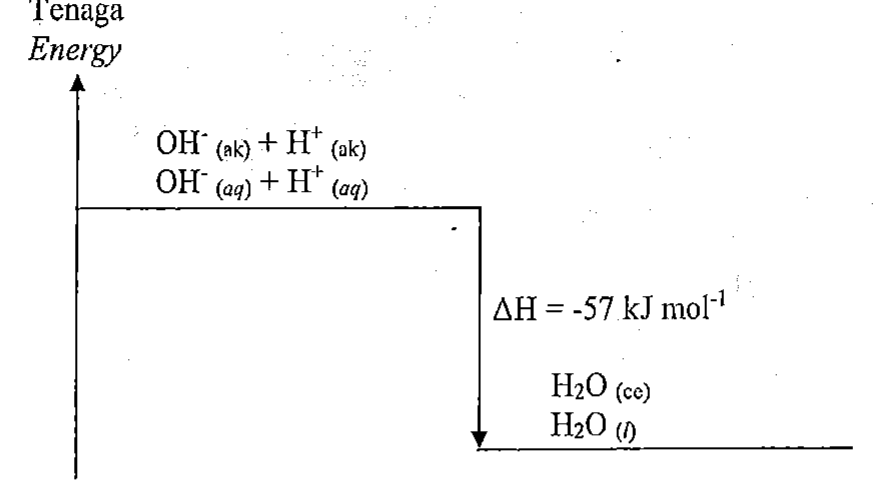
Diagram 9 shows an energy level diagram (OH⁻ + H⁺ at the higher level, H2O at the lower level, ΔH = -57 kJ mol⁻¹). Based on Diagram 9, it can be concluded that
Easy
Yogurt is prepared by adding 20.0 cm³ of lime juice into 200.0 cm³ of fresh milk. It is found that the temperature of the yogurt increases by 2.0 °C. What is the total amount of heat released? Use the information that the specific heat capacity of yogurt = X J g⁻¹ °C⁻¹. Assume that 1 cm³ of solution is equal to 1 gram of solution.
Medium
Which of the following processes absorb heat from surrounding?
Medium
Alcohol burns completely in oxygen producing carbon dioxide gas and water. Which of the following alcohols releases the highest heat of combustion?
Medium
Diagram 10 shows an energy level diagram for the decomposition of calcium carbonate (CaCO₃ lower than CaO + CO₂; ΔH = +570 kJ mol⁻¹).
Which statement can be deduced from Diagram 10?
Medium
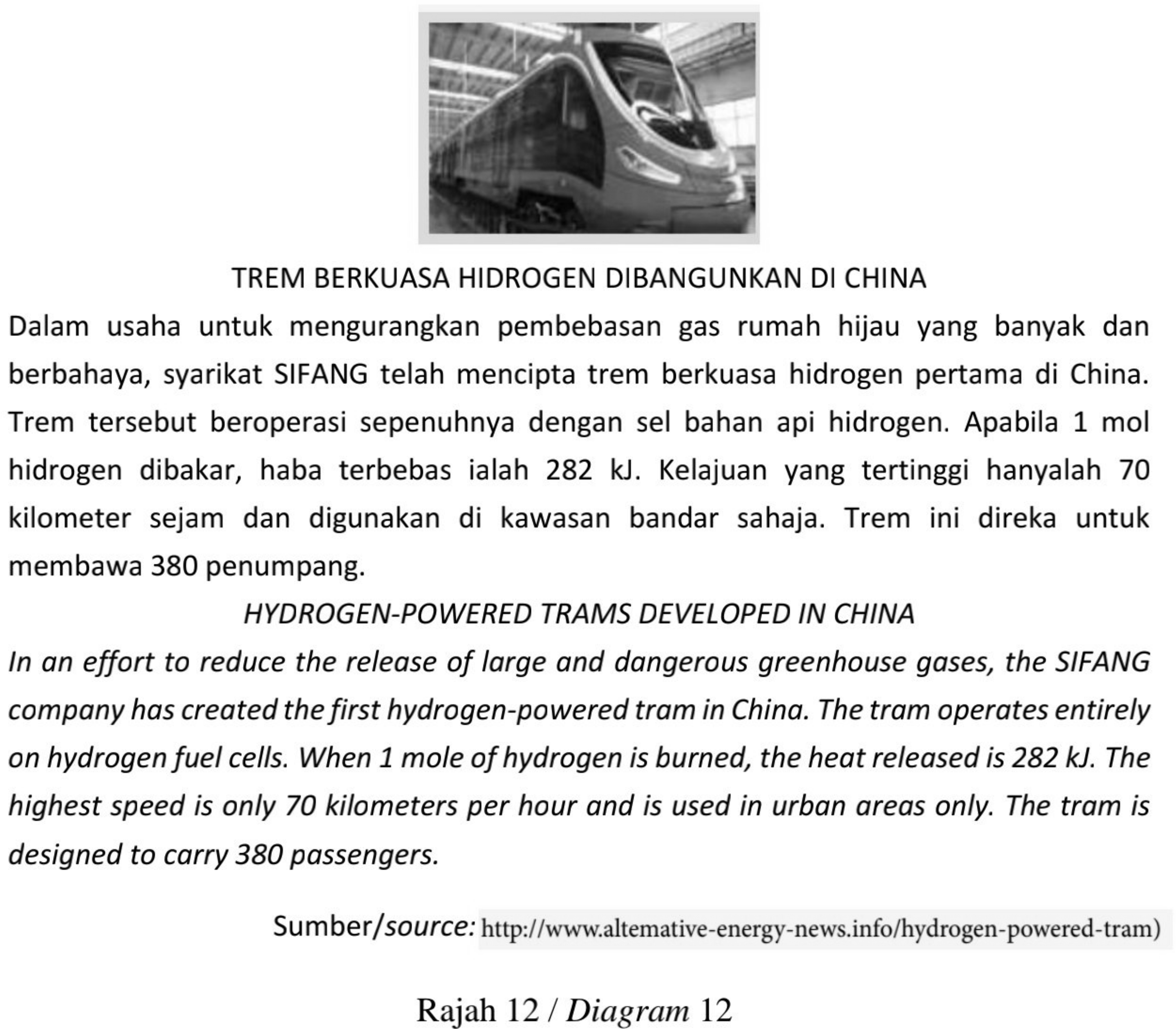
Diagram 12 shows a statement from an article about a hydrogen-powered tram in China. When 1 mole of hydrogen is burned, the heat released is 282 kJ.
What is the energy released when 50 g of hydrogen is burned?
[Relative atomic mass: H = 1]
Medium
Which of the following factors will increase the heat of combustion for alcohol?
Medium
The following chemical equation represents the displacement reaction of copper from its salt solution: Zn + Cu(NO3)2 → Zn(NO3)2 + Cu. When excess zinc powder is added into 50 cm3 of 0.1 mol dm-3 copper (II) nitrate solution, the temperature of the mixture increases from 28.0°C to 40.0°C. What is the heat of displacement of copper? [Specific heat capacity of solution = 4.2 J g-1 °C-1, density of solution = 1 g cm-3]
Medium
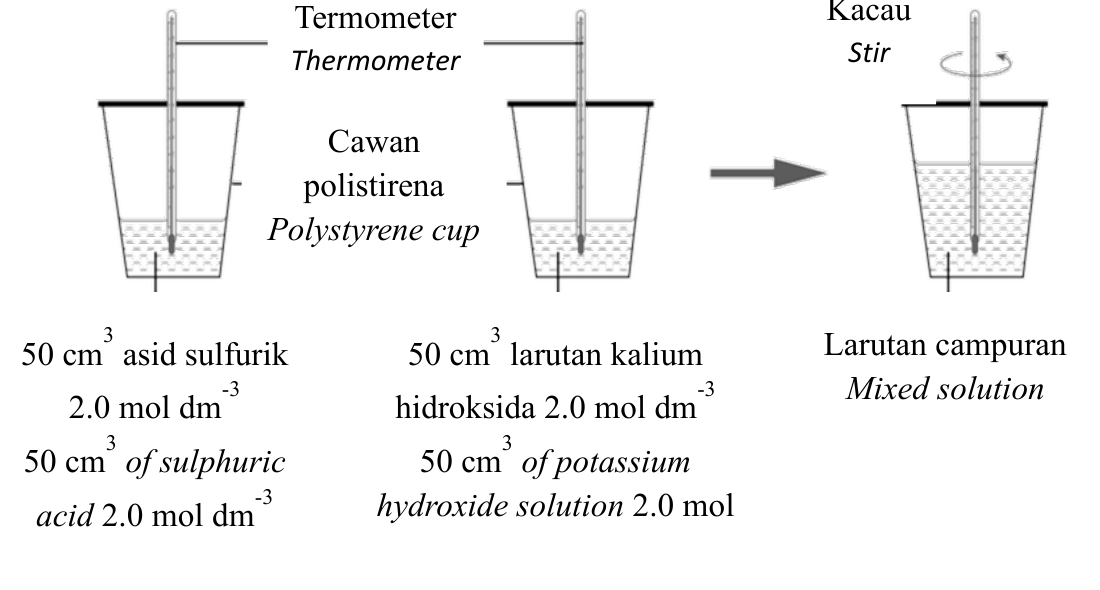
Diagram 9 shows the neutralisation reaction between 50 cm3 of 2.0 mol dm-3 sulphuric acid and 50 cm3 of 2.0 mol dm-3 potassium hydroxide solution. The heat of neutralisation for the reaction is -57 kJ mol-1. Calculate the highest temperature of the mixture if the average initial temperature of the mixture is 29.0 °C.
Medium
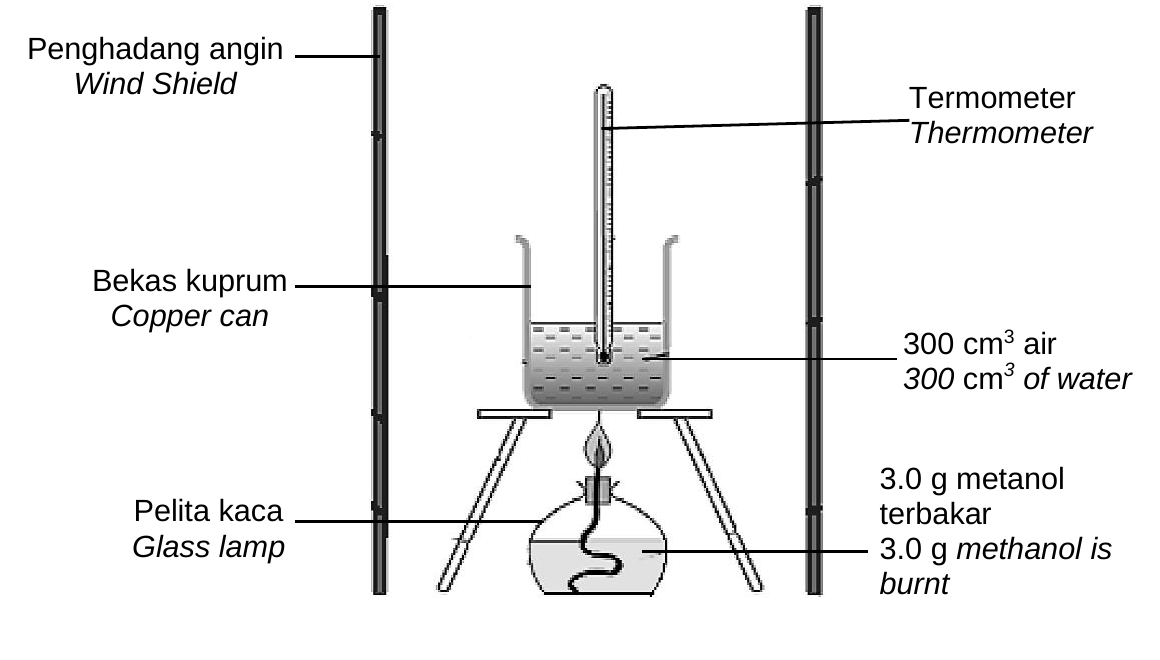
Diagram 21 shows the apparatus set up to determine the heat of combustion of methanol: 3.0 g of methanol is burnt to heat 300 cm3 of water in a copper can. The heat of combustion of methanol obtained is -938.29 kJ mol-1. Calculate the temperature change in the reaction. [Relative atomic mass: H = 1, C = 12, O = 16; specific heat capacity of water = 4.2 J g-1 °C-1]
Medium
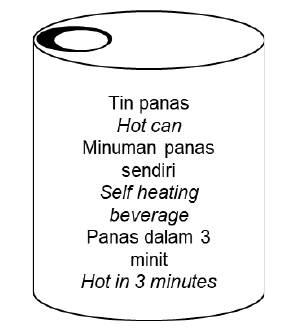
Diagram 22 shows an application of a reaction in daily life (a self-heating beverage can, hot in 3 minutes). Which of the following equations represents the same type of reaction as that reaction?
Medium
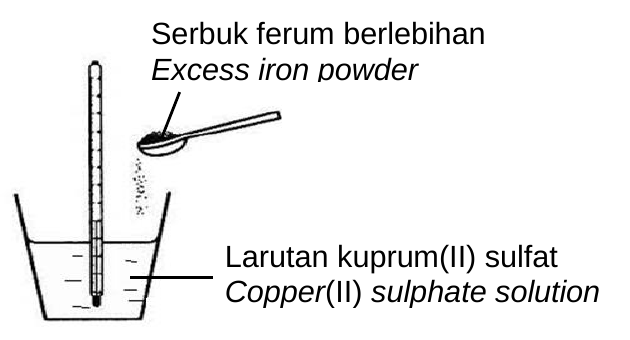
Diagram 25 shows excess iron powder added to copper(II) sulphate solution. The heat of displacement for this reaction is -150 kJ mol-1. What is the heat change when 3.2 g of copper is formed? [Relative atomic mass: Cu = 64]
Medium
The thermochemical equation CaCO3 → CaO + CO2, ΔH = +540 kJ mol-1 represents the decomposition of calcium carbonate. Which statement correctly describes the equation?
Medium
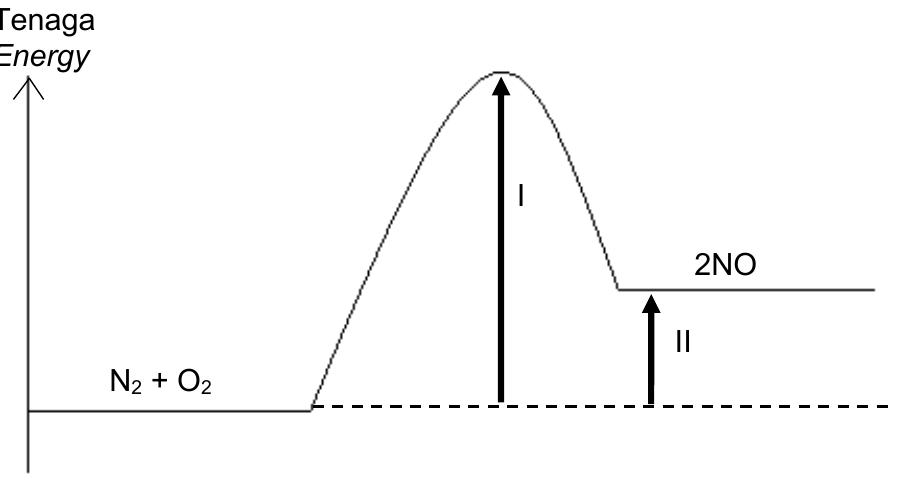
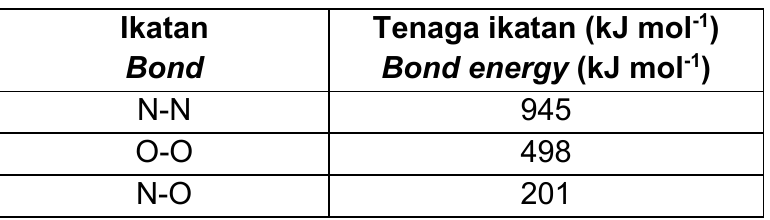
Diagram 9 shows the energy profile diagram and Table 5 shows the bond energy values for the reaction between nitrogen and oxygen (N2 + O2 → 2NO; level I is the activation energy arrow, level II is the energy difference between N2 + O2 and 2NO).
Bond | Bond energy (kJ mol⁻¹)
N≡N (N-N) | 945
O=O (O-O) | 498
N-O | 201
Which of the following represents the correct level and value for the heat of reaction?
Option | Level | Heat of reaction (kJ mol⁻¹)
A | I | -1242
B | I | +1242
C | II | +1041
D | II | -1041
Medium
Table 9 shows two thermochemical equations.
Experiment I: Zn + CuSO4 → Cu + ZnSO4 ΔH = -46.2 kJ mol⁻¹
Experiment II: Mg + CuSO4 → Cu + MgSO4 ΔH = -84.0 kJ mol⁻¹
What is the difference in reaction temperature between experiments I and II if 50 cm³ of 1.0 mol dm⁻³ copper(II) sulphate solution was used?
[Specific heat capacity of solution = 4.2 J g⁻¹ °C⁻¹]
Medium
Which of the following chemicals will lower the temperature when dissolved in water?
Easy
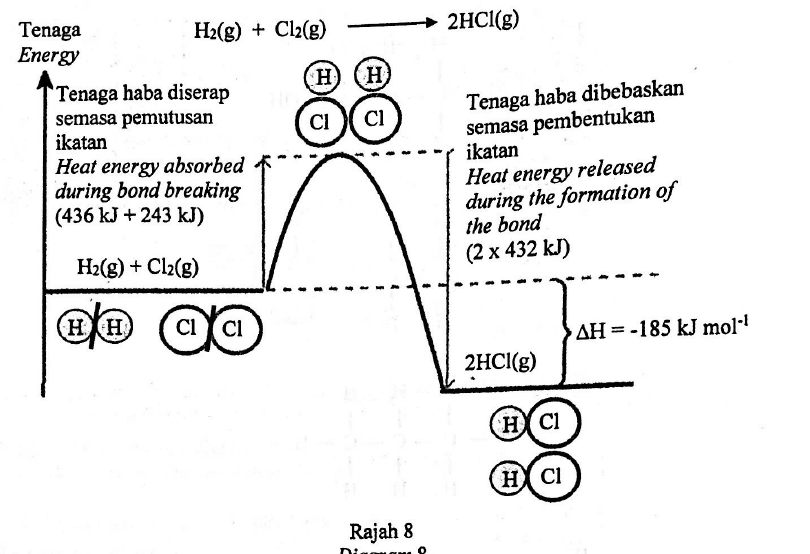
Diagram 8 shows the energy profile diagram of a reaction: H₂(g) + Cl₂(g) → 2HCl(g), ΔH = −185 kJ mol⁻¹; heat energy absorbed during bond breaking (436 kJ + 243 kJ); heat energy released during formation of the bond (2 × 432 kJ).
Which statement is correct about the energy profile diagram?
Medium
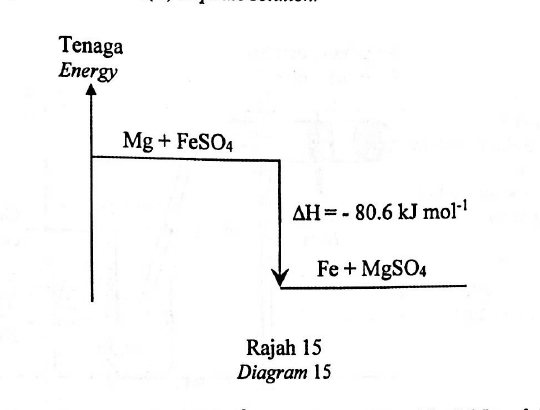
Diagram 15 shows the energy level diagram of the displacement reaction between magnesium powder and iron(II) sulphate solution: Mg + FeSO₄ → Fe + MgSO₄, ΔH = −80.6 kJ mol⁻¹.
What is the increase in temperature if 50 cm³ of 0.25 mol dm⁻³ iron(II) sulphate solution is reacted with excess magnesium?
[Specific heat capacity of the solution = 4.2 J g⁻¹ °C⁻¹]
Medium
Which of the following neutralisation reactions release a lower amount of heat?
Medium
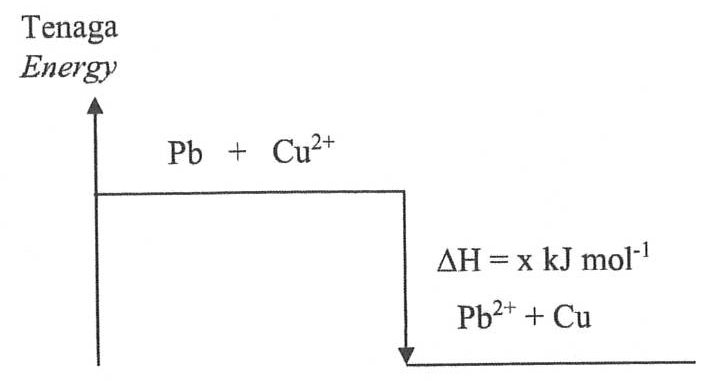
Diagram 15 shows the energy level diagram for a reaction (Pb + Cu²⁺ at a higher energy level than Pb²⁺ + Cu, ΔH = x kJ mol⁻¹). Which of the following is correct? (Explanation; heat change)
Medium
Diagram 17 shows the apparatus set-up to determine the heat of reaction (magnesium nitrate solution 29.0 °C + sodium carbonate solution 29.0 °C → reaction mixture 26.0 °C). Which of the following statement is true? I Bond formation occurs. II The temperature decreases during the reaction. III The value of ΔH for the reaction is negative. IV The total energy content of the products is higher than the total energy content of the reactants.
Medium
The fuel value of charcoal is 34 kJ g⁻¹. Calculate the mass of charcoal needed to boil 2.0 dm³ of water. [Heat capacity of water = 4.2 J g⁻¹ °C⁻¹, Density of water = 1 g cm⁻³, Temperature of water at room temperature = 27.0 °C]
Medium
Which of the following particles absorb heat energy when dissolves in water?
Medium
Which of the following is true about endothermic reaction and exothermic reaction? (Table comparing heat release/absorption, surrounding temperature, energy content and bond breaking/formation.)
Medium
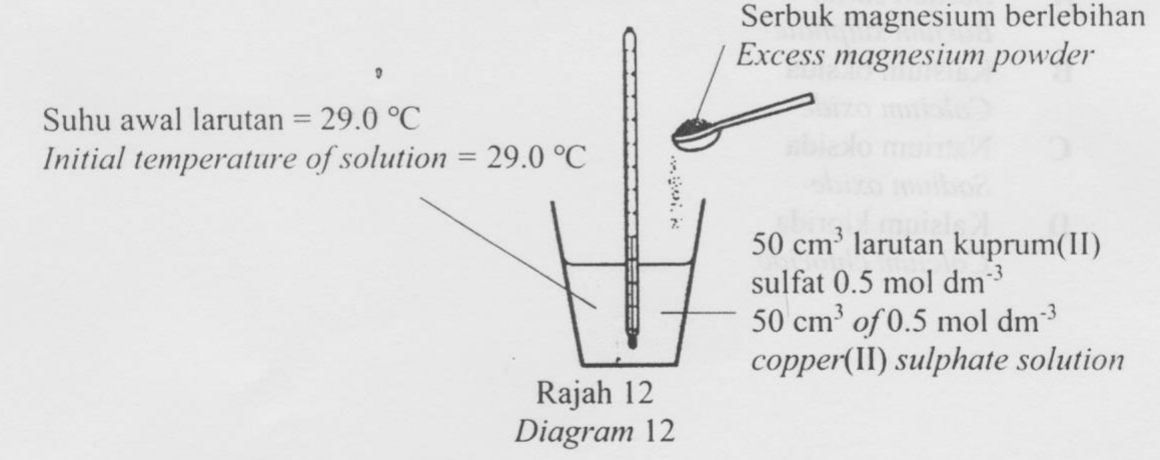
Diagram 12 shows an experiment to determine the heat of displacement of copper by magnesium: excess magnesium powder added to 50 cm3 of 0.5 mol dm-3 copper(II) sulphate solution; initial temperature 29.0 °C; highest temperature recorded 70.0 °C. What is the heat of displacement for copper? [Specific heat capacity of water = 4.2 J g-1 °C-1, density of water = 1.0 g cm-3]
Medium
The following thermochemical equation shows a chemical reaction: N₂ + O₂ → 2NO, ΔH = +Y kJ mol⁻¹. Which of the following aspects have a bigger value? I The heat energy released during the formation of bond in products; II The heat energy absorbed to break the bonds in the reactants; III The total energy content of the products; IV Temperature of mixture
Medium
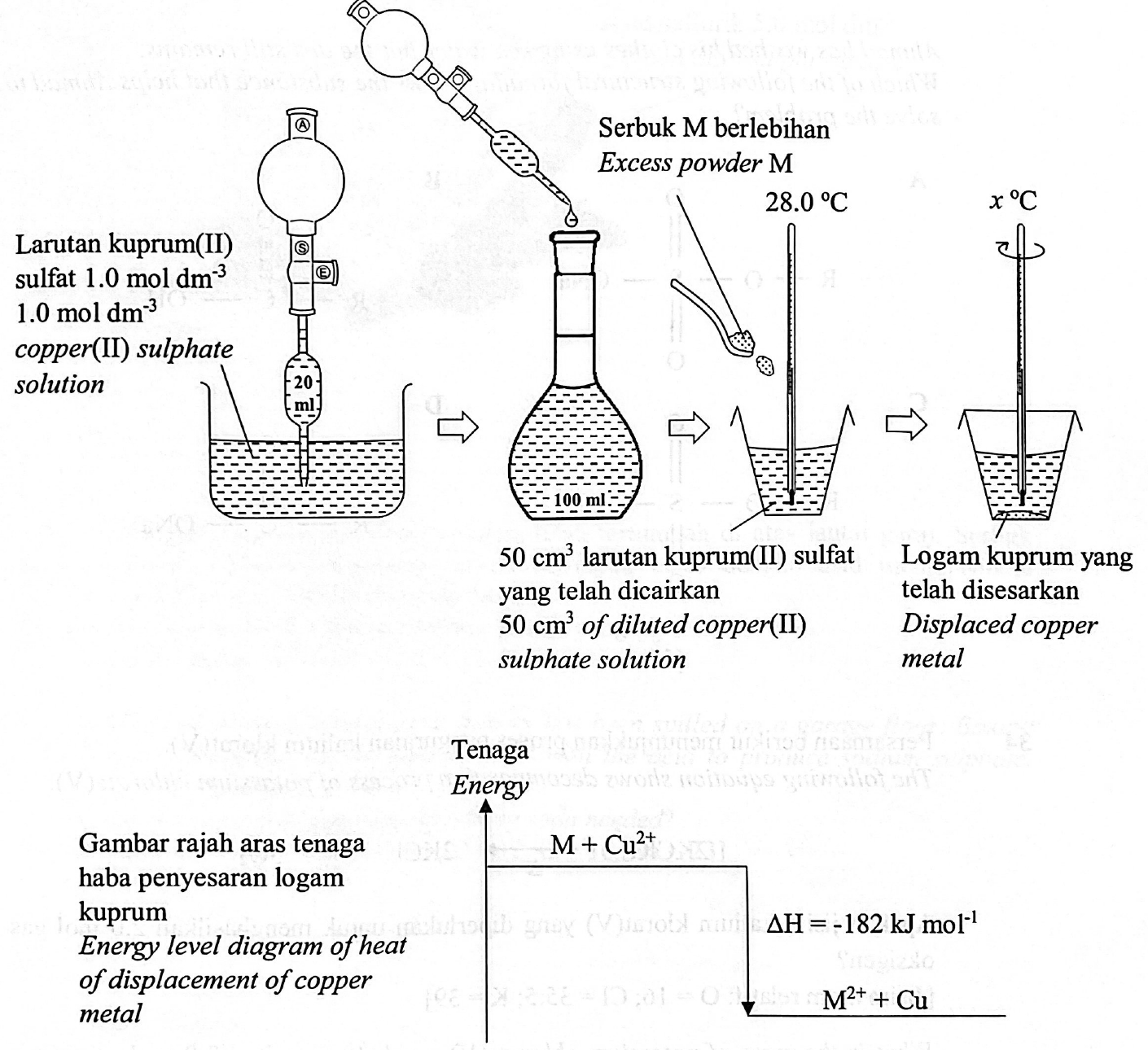
Diagram 10 shows the steps to determine the heat of displacement of copper metal from its salt solution by metal M with its energy level diagram (20 mL of 1.0 mol dm⁻³ copper(II) sulphate solution diluted to 100 mL; 50 cm³ of the diluted solution at 28.0 °C; excess powder M added; final temperature x °C; ΔH = -182 kJ mol⁻¹). What is the value of x? [Specific heat capacity of water, c = 4.2 J g⁻¹ °C⁻¹]
Medium
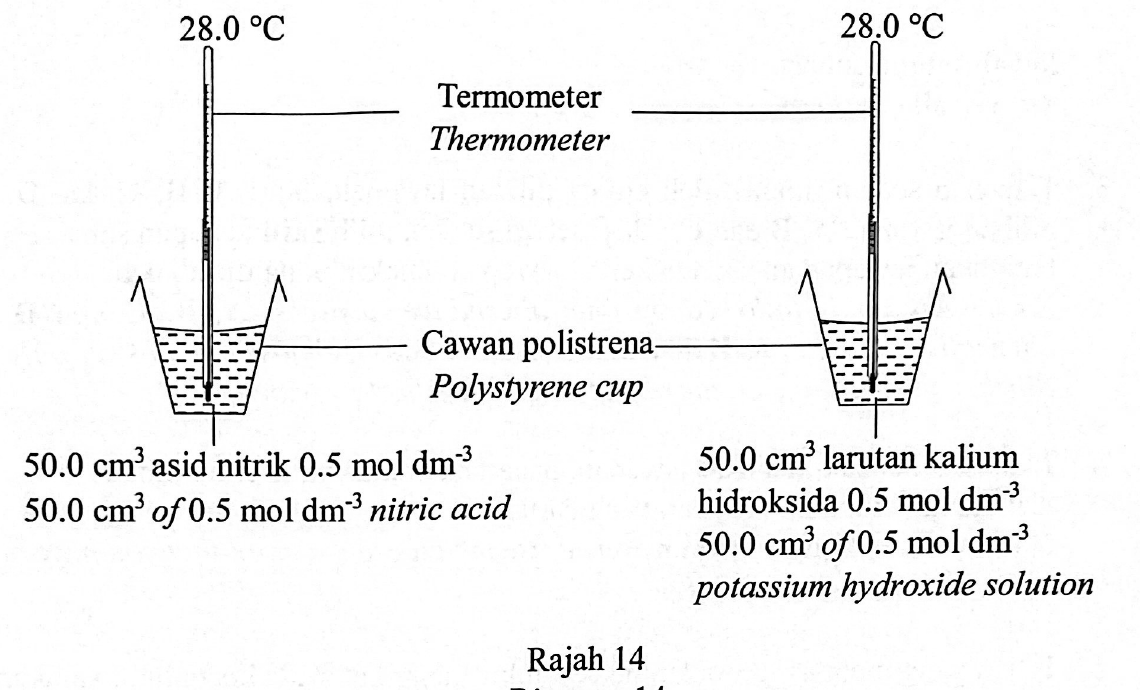
Diagram 15 shows the apparatus set-up prepared by a student to investigate the heat of neutralisation (50.0 cm³ of 0.5 mol dm⁻³ nitric acid with 50.0 cm³ of 0.5 mol dm⁻³ potassium hydroxide solution, both at 28.0 °C). Which of the following reactions will release the same amount of heat as above reaction?
Medium
Which of the following is an example of endothermic reaction?
Easy
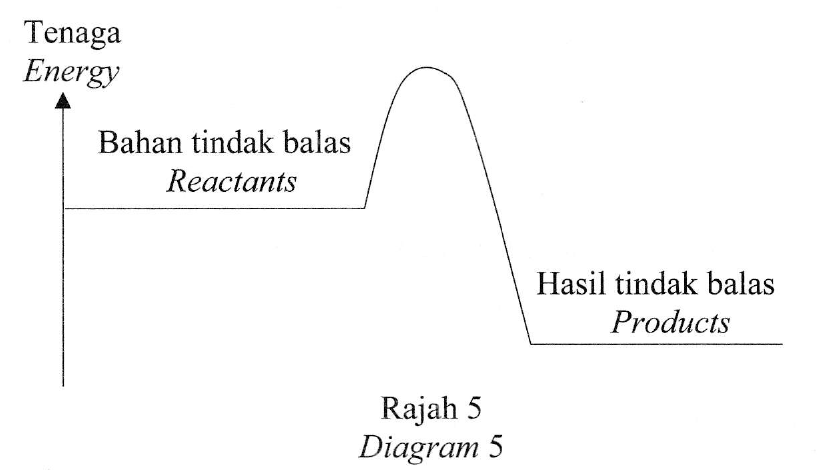
Diagram 5 shows the energy profile diagram for a reaction (products at a lower energy level than reactants). Which of the following are correct reactants and description about the reaction?
Medium
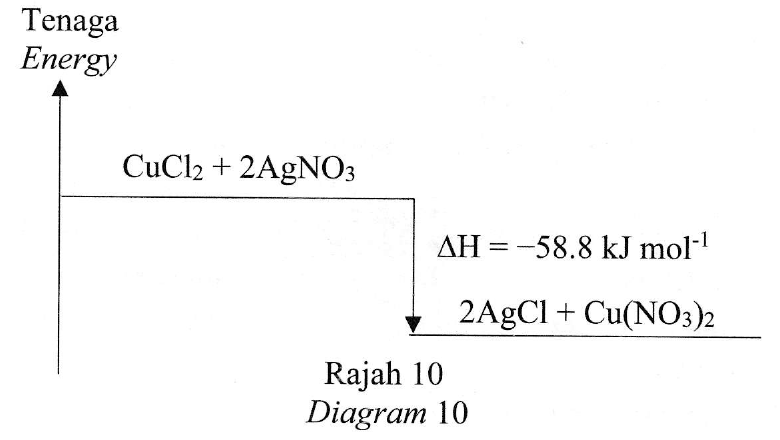
Diagram 10 shows the energy level diagram for the reaction between copper(II) chloride solution with silver nitrate solution (CuCl₂ + 2AgNO₃ → 2AgCl + Cu(NO₃)₂, ΔH = −58.8 kJ mol⁻¹). In an experiment, 50 cm³ of 1.0 mol dm⁻³ silver nitrate is added into a beaker containing 25 cm³ of 1.0 mol dm⁻³ copper(II) chloride solution. What is the temperature change in the reaction? [Specific heat capacity of solution = 4.2 J g⁻¹ °C⁻¹]
Medium
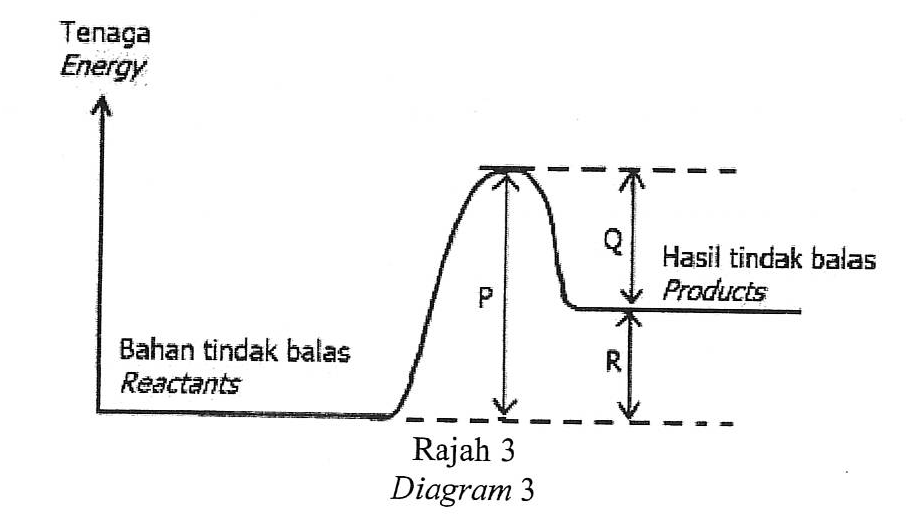
Diagram 3 shows an energy profile diagram (P, Q and R are marked as energy differences). Which of the following represents the heat of reaction?
Medium
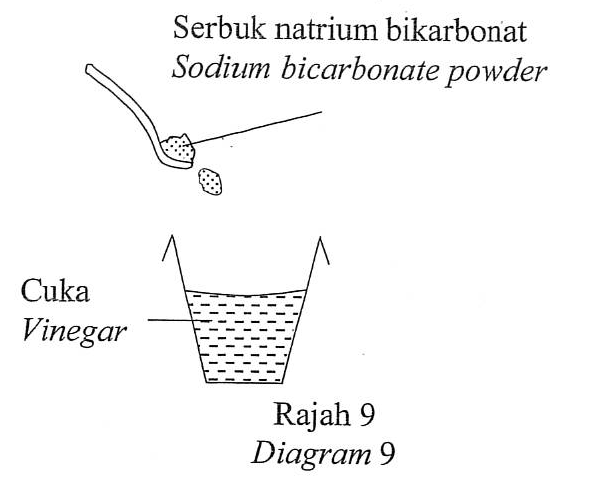
Diagram 9 shows two substances used to determine heat of reaction (sodium bicarbonate powder added to vinegar). Which of the following statement is correct based on the above reaction?
Medium
Diagram 14 shows the set-up of apparatus to determine the heat of precipitation of silver chloride (50 cm³ of 1.0 mol dm⁻³ sodium chloride solution and 50 cm³ of 1.0 mol dm⁻³ silver nitrate solution). The temperature of mixture increases by 5 °C. What need to be done to double the temperature rise?
Medium
Which statement is correct about endothermic reaction?
Easy
Diagram 8 shows the energy level diagram for the displacement reaction (Zn + CuSO4 -> ZnSO4 + Cu). Among A, B and C, which represents the value of heat of displacement for this reaction?
Medium
Diagram 10 shows energy level diagram for the reaction between nitric acid and sodium hydroxide solution (ΔH = -57 kJ mol⁻¹). Calculate the amount of heat released when 50 cm³ of 2 mol dm⁻³ nitric acid reacts with 50 cm³ of 2 mol dm⁻³ sodium hydroxide solution.
Medium
Table 5 shows the heat of combustion for four alcohols: W CH3OH -710; X C2H5OH -1370; Y C3H7OH -2020; Z C4H9OH -2670 kJ mol⁻¹. Which statement explains the difference in heat of combustion from alcohol W to alcohol Z?
Medium
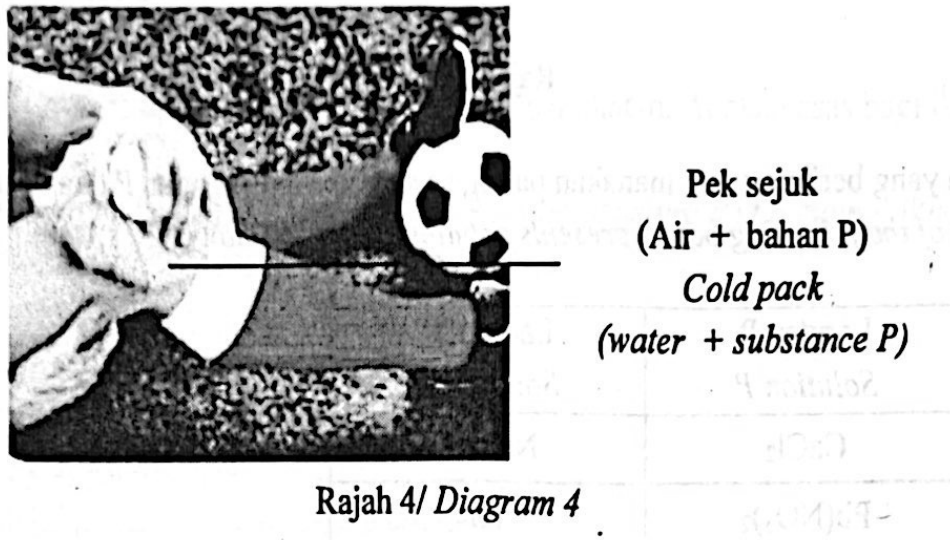
Diagram 4 shows treatment for a football player who suffered injury on his leg. A cold pack (water + substance P) is used. What is substance P?
Easy
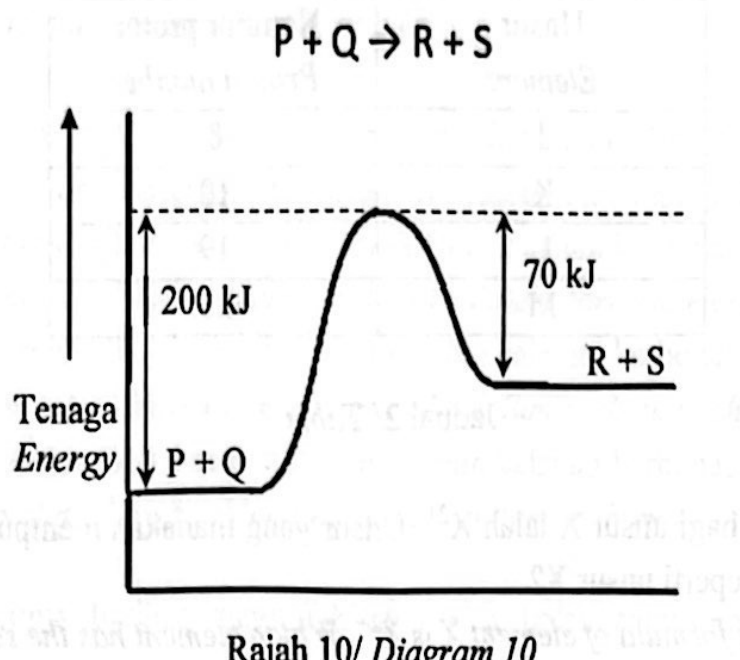
Diagram 10 shows the energy level diagram of the reaction P + Q → R + S (P + Q lower than R + S; 200 kJ from P + Q to the peak; 70 kJ from the peak line down to R + S). Which of the following statements is true?
Medium
The thermochemical equation Mg + CuSO₄ → MgSO₄ + Cu; ΔH = -630 kJ mol⁻¹ shows the reaction between magnesium and copper(II) sulphate solution. Calculate the temperature change when 100 cm³ of 0.1 mol dm⁻³ copper(II) sulphate solution reacts with excess magnesium powder. [Specific heat capacity of solution = 4.2 J g⁻¹ °C⁻¹]
Medium
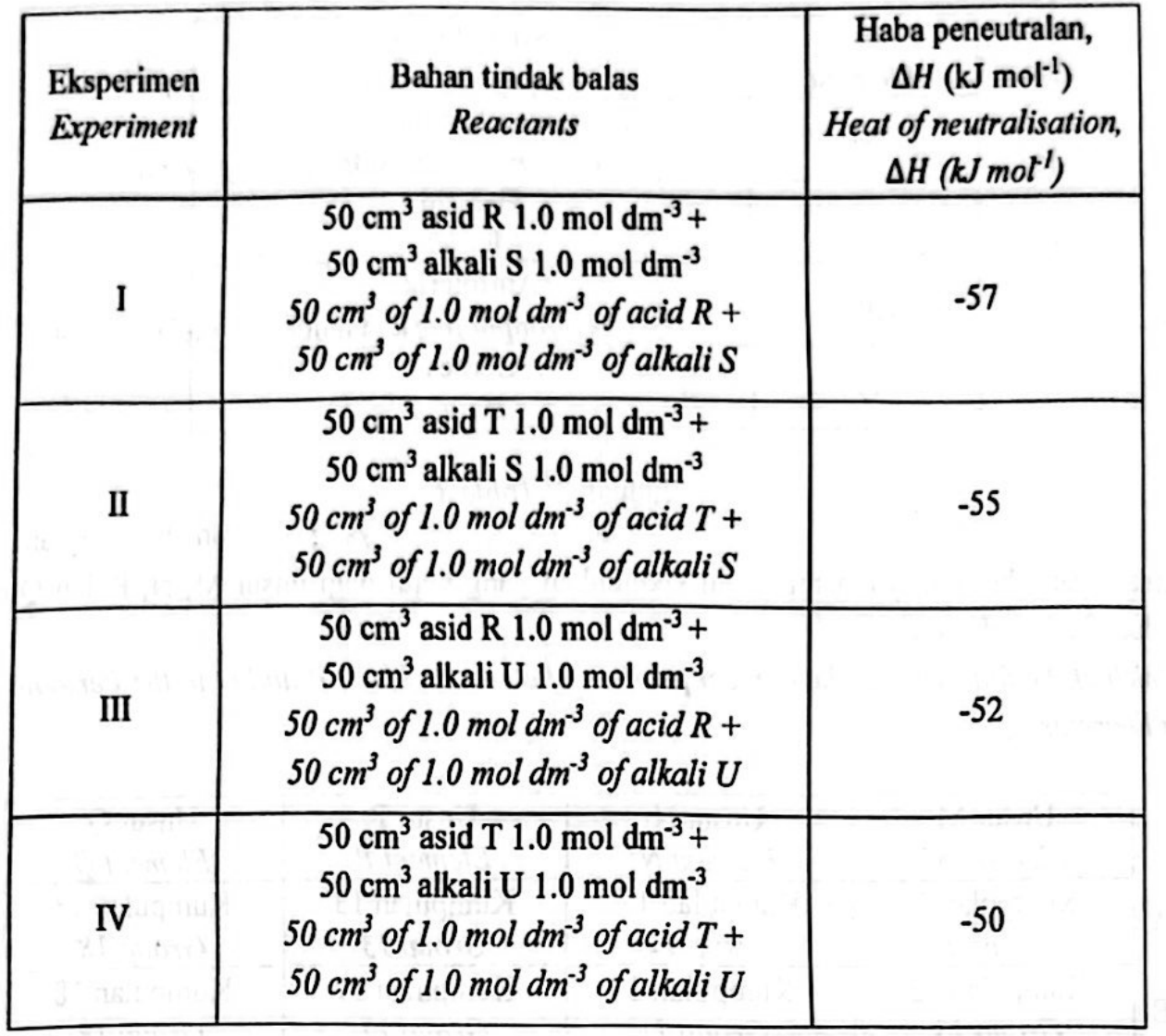
Table 4 shows the heat of neutralisation of various neutralisation reactions: I acid R + alkali S, -57 kJ mol⁻¹; II acid T + alkali S, -55; III acid R + alkali U, -52; IV acid T + alkali U, -50 (all 50 cm³ of 1.0 mol dm⁻³). Which of the following is the correct acid and alkali used for the four experiments?
Medium
Diagram 7 shows an energy profile diagram of an exothermic reaction (A + B at higher energy than C + D; Ea marked from A + B to the peak; ΔH marked). Which of the following is true about the diagram?
Medium
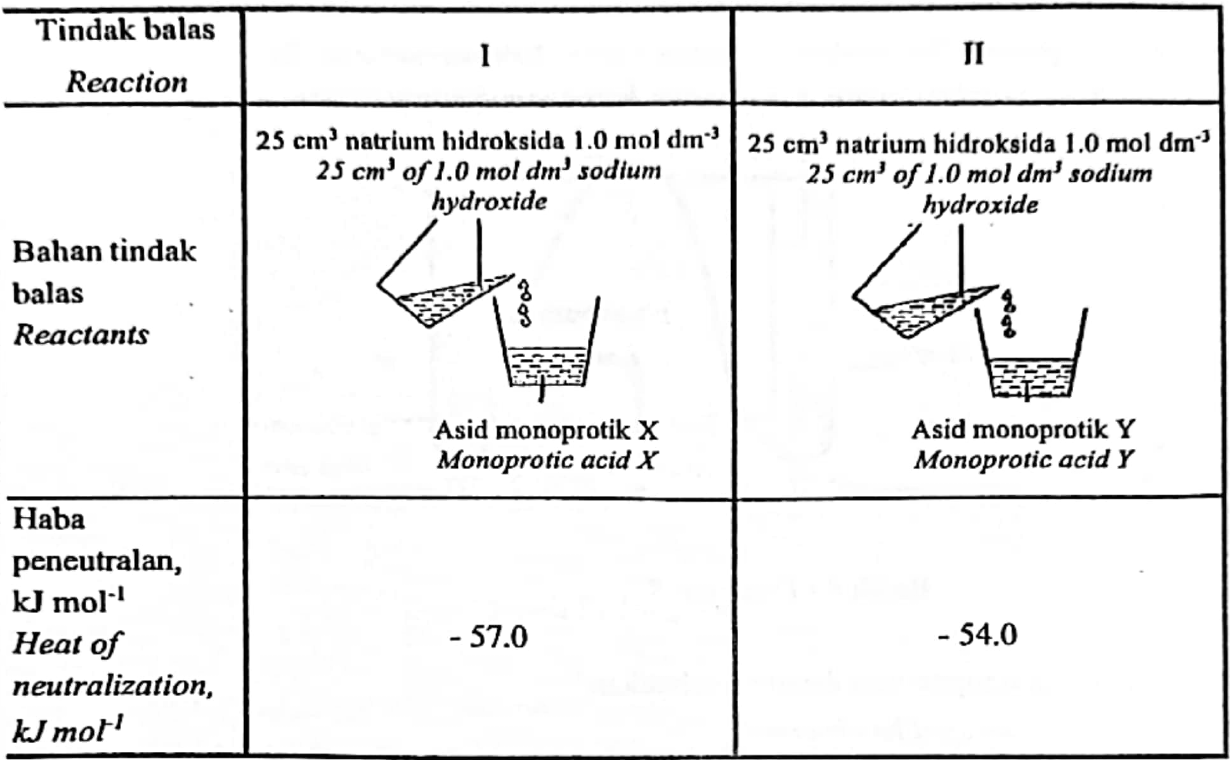
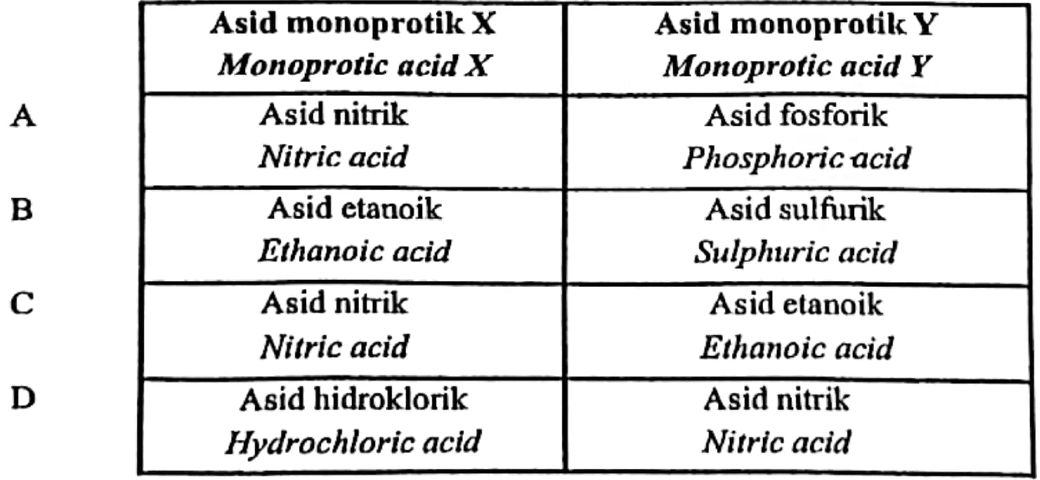
Table 4 shows the heat of neutralisation for the reaction between 25 cm3 of 1.0 mol dm-3 sodium hydroxide, NaOH with monoprotic acid X (−57.0 kJ mol-1) and monoprotic acid Y (−54.0 kJ mol-1). What is the monoprotic acid X and monoprotic acid Y?
Medium
Zinc powder in excess is added into 20.0 cm3 silver nitrate solution 0.1 mol dm-3. The temperature of the mixture increases 7.2 °C. Calculate the heat of displacement in this reaction. [Specific heat capacity of solution = 4.2 J g-1 °C-1, density of solution = 1 g cm-3]
Medium
Athletes use a pack which contains ammonium nitrate and water to treat muscle cramps. Which statement is true about the reaction in the pack?
Medium
The fuel value of charcoal is 34 kJ g-1. Calculate the mass of charcoal needed to boil 2.0 dm3 water. [Specific heat capacity of water = 4.2 J g-1 °C-1, density of water = 1 g cm-3, temperature of water at room condition = 27 °C]
Medium
The following is a factor in fuel selection except
Easy
The following shows the thermochemical equations for neutralisation reactions.
KOH + HCl → KCl + H₂O ΔH = -57 kJ mol⁻¹
KOH + CH₃COOH → CH₃COOK + H₂O ΔH = -54 kJ mol⁻¹
Which of the following statements explain the difference of heat of neutralisation for both reactions?
Medium
Zn + CuSO₄ → ZnSO₄ + Cu ΔH = -240 kJ mol⁻¹. Heat released when 100 cm³ of x mol dm⁻³ copper(II) sulphate solution reacts with excess magnesium powder is 4 800 J. Calculate the x value. [Specific heat capacity of solution = 4.2 J g⁻¹ °C⁻¹]
Medium
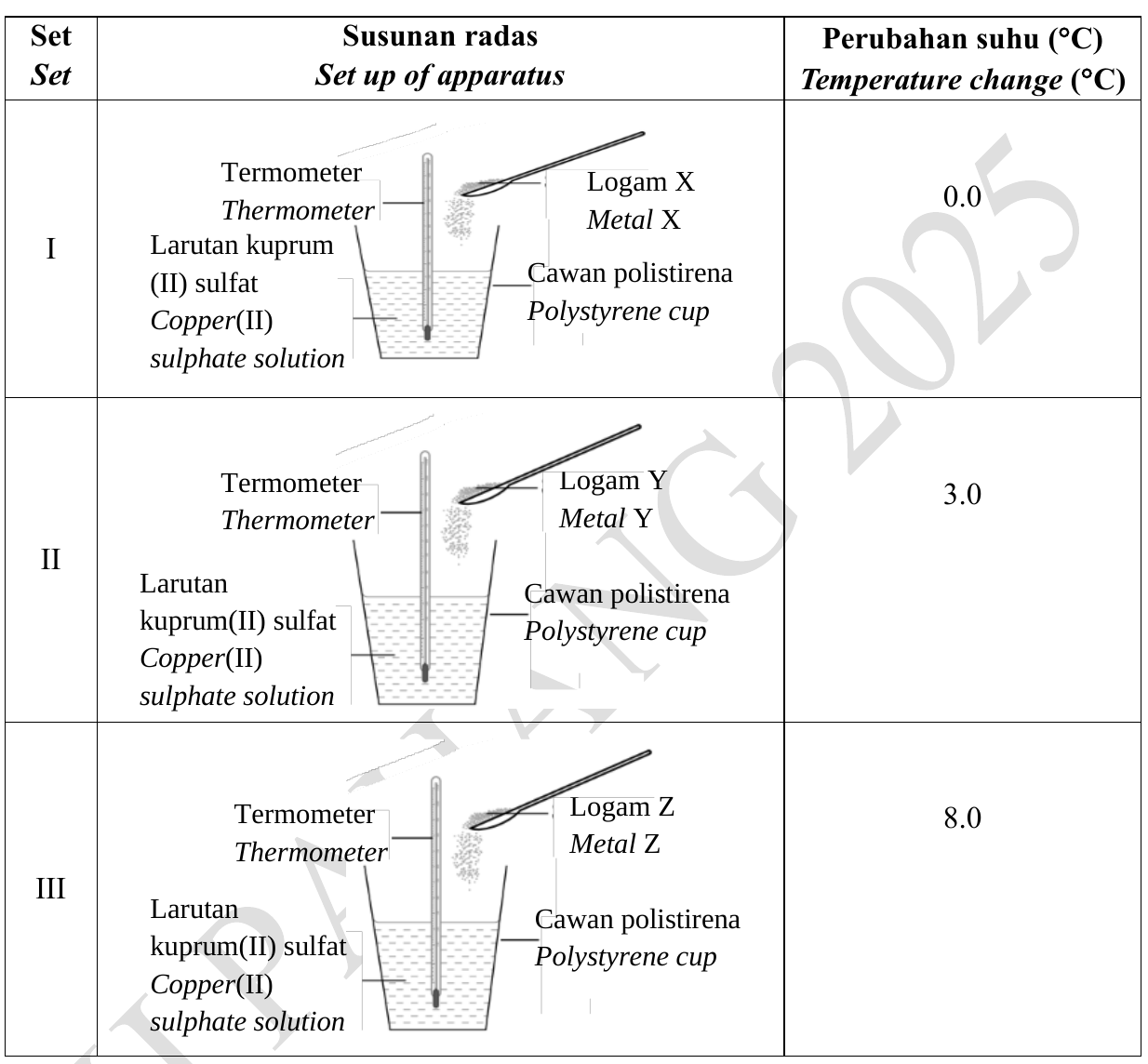
Diagram 16 shows three sets of experiments to determine the heat of displacement: metal X added to copper(II) sulphate solution, temperature change 0.0 °C; metal Y, 3.0 °C; metal Z, 8.0 °C. Which of the following represent metal X, Y and Z?
Medium
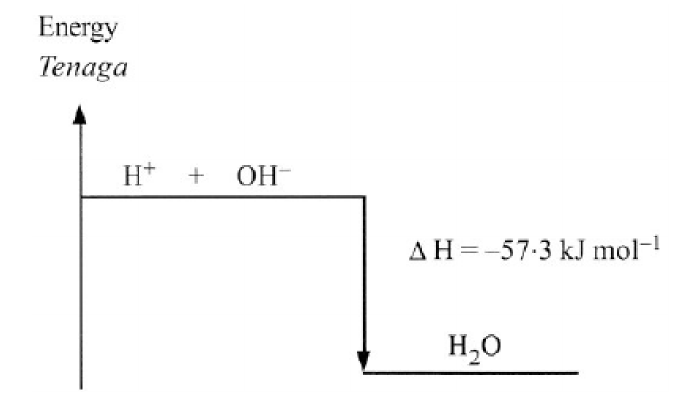
Diagram 9 shows an energy level of a reaction: H+ + OH- at a higher energy level, H2O at a lower level, ΔH = -57.3 kJ mol-1. What is the type of the reaction?
Easy
The thermochemical equation HNO3 + KOH → KNO3 + H2O; ΔH = -57 kJ mol-1 represents the reaction between nitric acid and potassium hydroxide solution. What is the heat released when 50 cm3 of 2.0 mol dm-3 nitric acid is added to 25 cm3 of 2.0 mol dm-3 potassium hydroxide solution?
Medium
Which of the following is an endothermic reaction?
Easy
Which of the following reactions release heat to the surrounding?
Easy
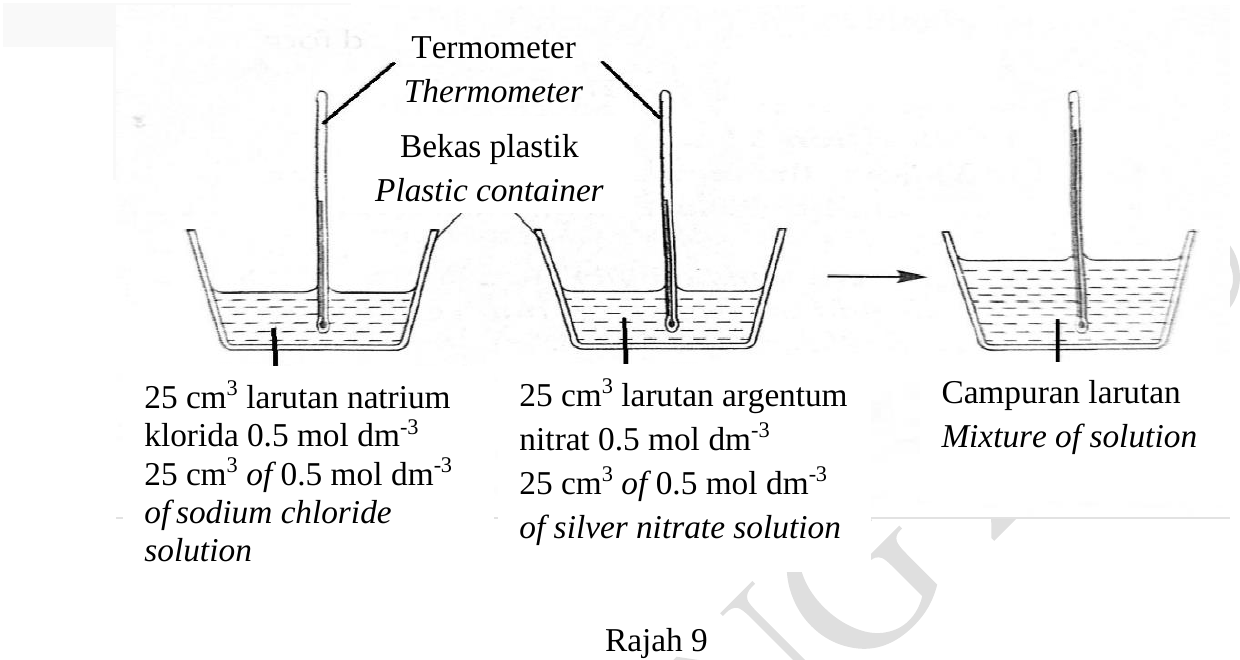
Diagram 9 shows the apparatus for precipitate reaction of silver chloride: 25 cm³ of 0.5 mol dm⁻³ sodium chloride solution mixed with 25 cm³ of 0.5 mol dm⁻³ silver nitrate solution in a plastic container. Calculate the maximum temperature rise in the mixed solution if the heat of precipitation of silver chloride is -67 kJ mol⁻¹. [Specific heat capacity of solution = 4.2 J g⁻¹ °C⁻¹]
Medium
Which of the following reactions absorbs heat from the surrounding?
Medium
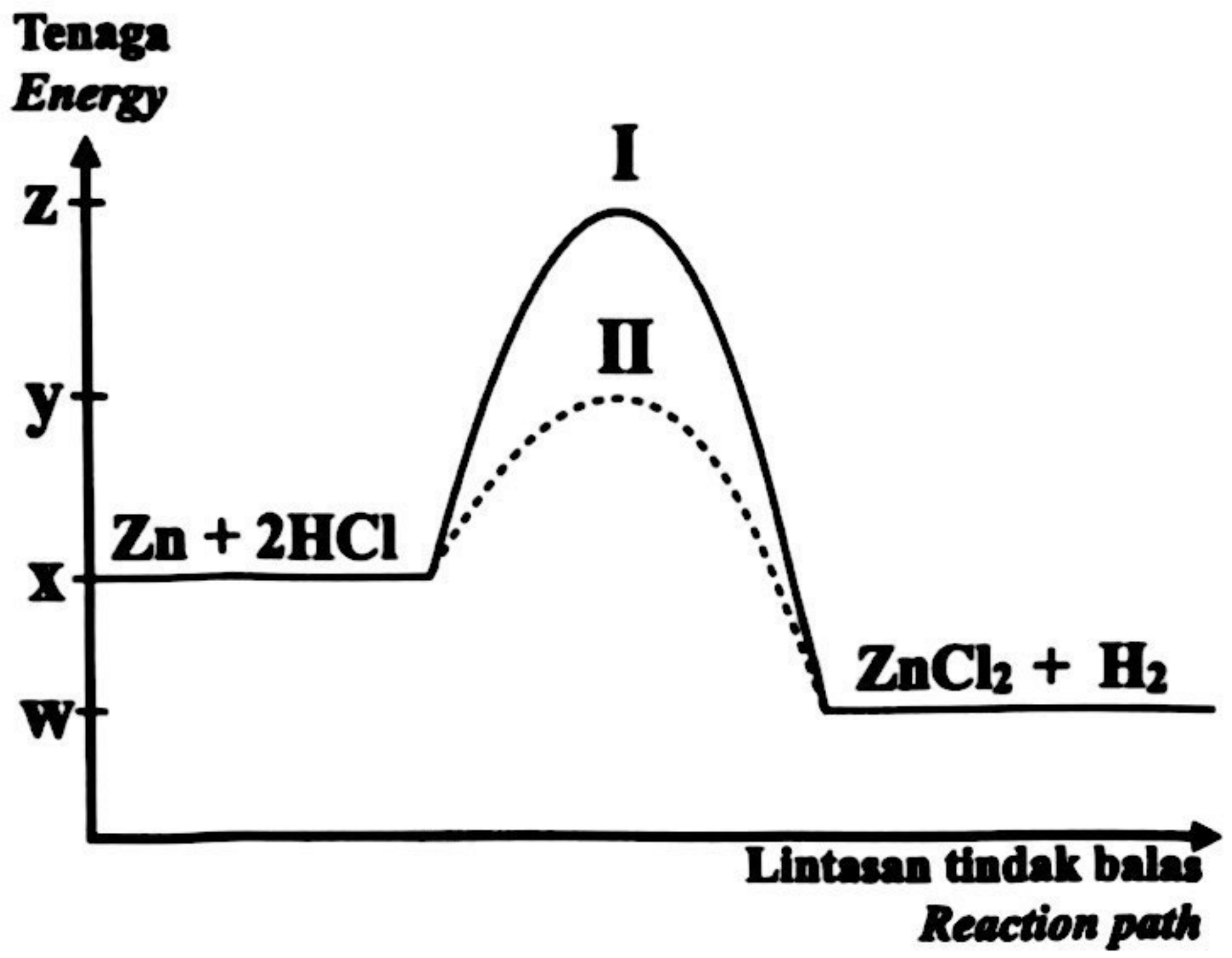
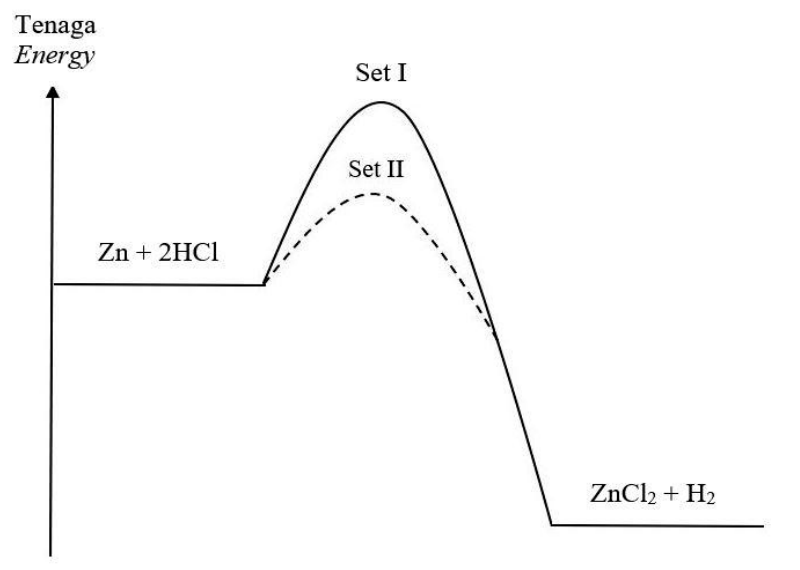
Diagram 14 shows energy profile diagram that obtained from two sets of experiments (Zn + 2HCl at energy x to ZnCl₂ + H₂ at energy w; Set I peak at z; Set II peak at y). Which of the following represents the heat of reaction for Set II?
Medium
The reaction between calcium nitrate solution and sodium carbonate solution is an endothermic reaction. Which of the following energy level diagrams represents the reaction?
Medium
The following thermochemical equation shows the combustion of butane gas: C₄H₁₀ + 13/2 O₂ → 4CO₂ + 5H₂O, ΔH = -2880 kJ mol⁻¹. 2400 cm³ oxygen gas, O₂ is burnt completely in butane gas. What is the heat change of the reaction? [1 mol of any gas occupies 24 dm³ at room conditions]
Medium
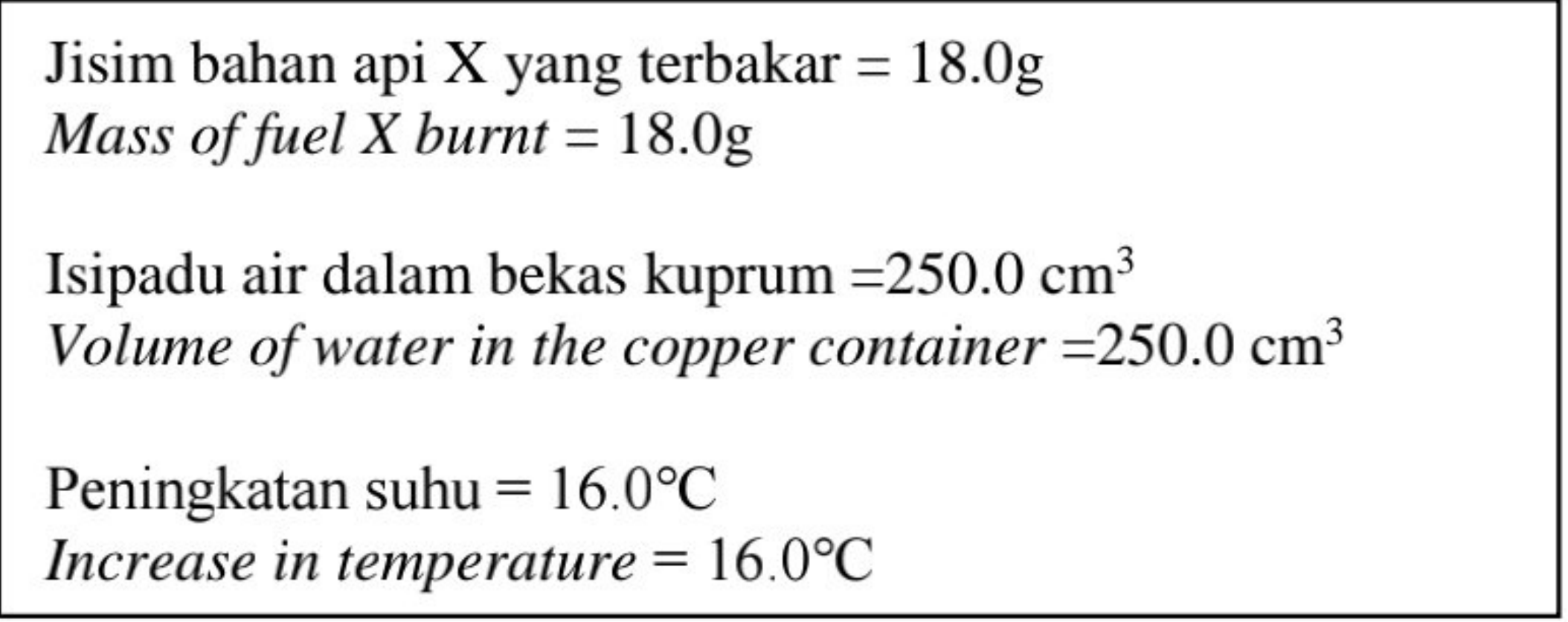
The following information shows the results of an experiment to determine the heat of combustion of fuel X: mass of fuel X burnt = 18.0 g; volume of water in the copper container = 250.0 cm3; increase in temperature = 16.0°C. What is the heat of combustion of fuel X? [Molar mass of fuel X = 180 g mol-1; Specific heat capacity of water = 4.2 J g-1 °C-1; density of water = 1.0 g cm-3]
Medium
When 50 cm³ of 2.0 mol dm⁻³ lead(II) nitrate was added to 50 cm³ of 1.5 mol dm⁻³ sodium sulphate, the temperature increased by 9.0 °C. What is the value of heat of precipitation?
[Specific heat capacity of solution = 4.2 J g⁻¹ °C⁻¹; Density of solution = 1.0 g cm⁻³]
Medium
Which of the following is correct for an endothermic reaction?
Easy
An experiment to determine the heat change for combustion of propanol, C₃H₇OH: volume of water in copper container 300 cm³; initial temperature 27.5 °C; highest temperature 68.5 °C. What is the heat released by the combustion of propanol? [Specific heat capacity of water = 4.2 J g⁻¹ °C⁻¹, water density = 1 g cm⁻³]
Medium
Which of the following is not an endothermic reaction?
Easy
The following equation represents the formation of magnesium sulphate, MgSO₄.
Mg + H₂SO₄ → MgSO₄ + H₂
Heat released when 1 mol of MgSO₄ is 467 kJ mol⁻¹.
Which energy level diagram is correct for the reaction?
Medium
Which chemical reaction produces the highest heat of neutralisation?
A CH₃COOH + NaOH → CH₃COONa + H₂O
B HNO₃ + NH₄OH → NH₄NO₃ + H₂O
C H₂SO₄ + 2NaOH → Na₂SO₄ + 2H₂O
D H₂SO₄ + 2NH₄OH → (NH₄)SO₄ + 2H₂O
Medium
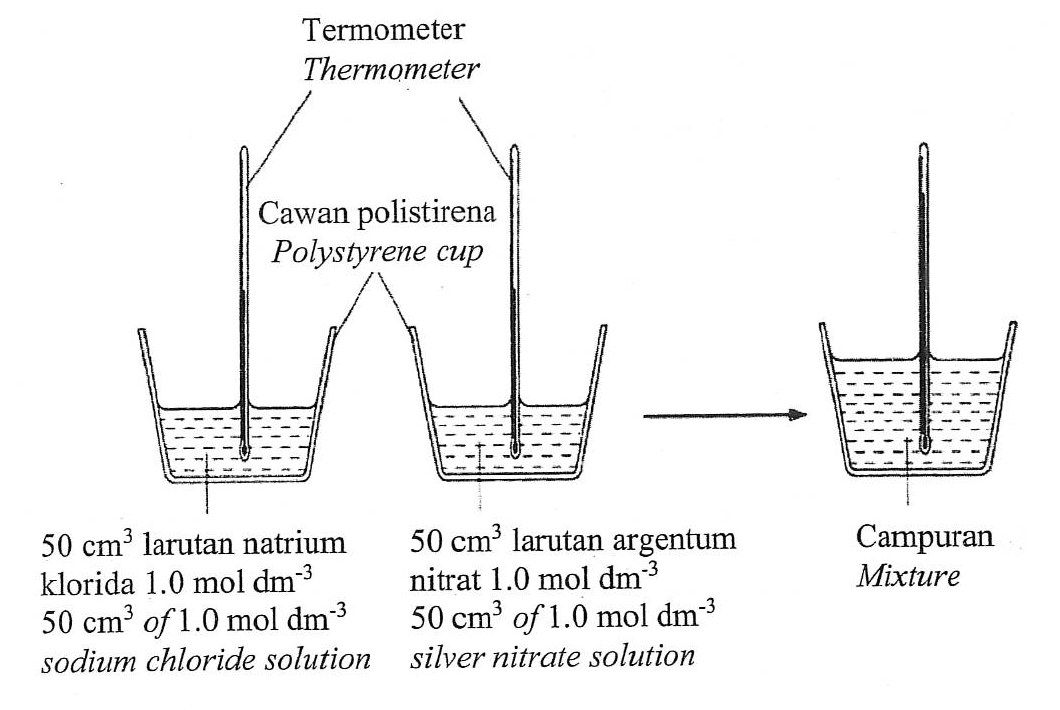
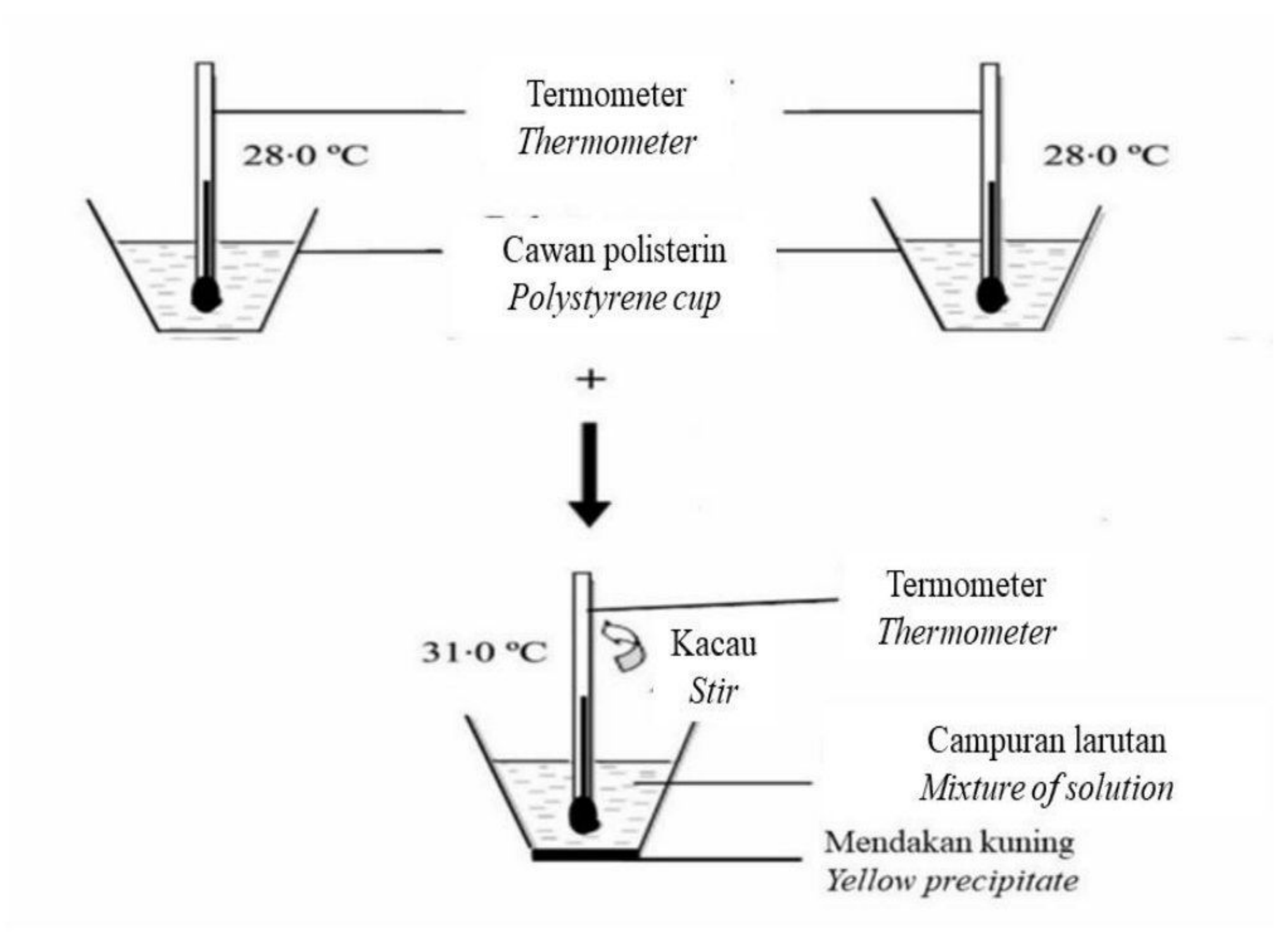
Diagram 8 shows an experiment to determine the heat of precipitation: two solutions at 28.0 °C are mixed in a polystyrene cup; the temperature rises to 31.0 °C and a yellow precipitate forms.
Which of the following mixtures to obtain the result shown?
Medium
Diagram 3 shows the experimental set-up to determine the heat of combustion of ethanol, C2H5OH (a copper can containing a liquid Y heated by a spirit lamp X). What is appropriate for X and Y?
Medium
Diagram 5 shows reaction between zinc powder and copper(II) sulphate solution in a polystyrene cup with a thermometer. Which of the following explained about the reaction?
Medium
Diagram 9 shows an energy level diagram: N₂(g) + O₂(g) at a lower level, 2NO(g) at a higher level, ΔH = +180 kJ mol⁻¹. Which of the following does not explain the reaction in Diagram 9?
Medium
25 cm³ nitric acid and 25 cm³ potassium hydroxide solution of the same molarity react: HNO₃(aq) + KOH(aq) → KNO₃(aq) + H₂O(l), ΔH = -57.3 kJ mol⁻¹. The temperature of the mixture increased by 7 °C. [Specific heat capacity of the solution = 4.2 J g⁻¹ °C⁻¹, density of the solution = 1 g cm⁻³] What is the molarity of both solutions?
Medium
What is the meaning of fuel value?
Easy
Which of the following is an alternative hydrocarbon energy source?
Easy
Which of the following represent an endothermic reaction?
Easy
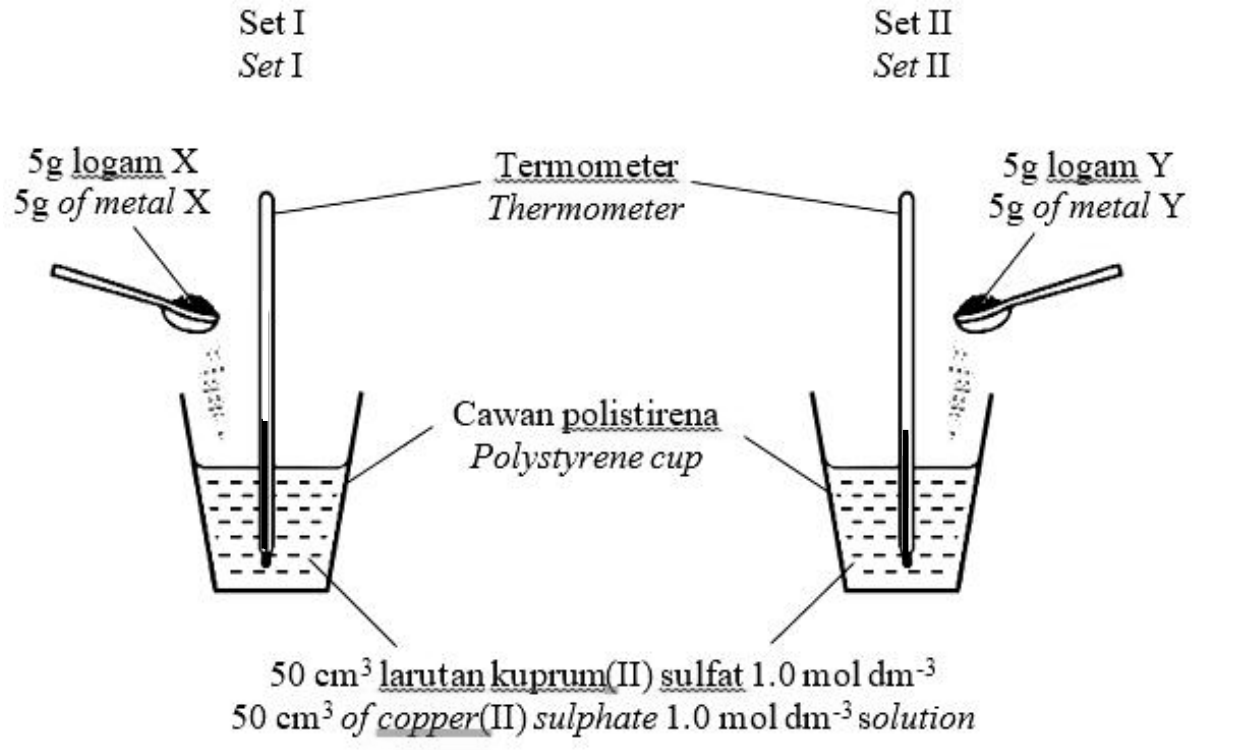
Diagram 7 shows two sets of experiments conducted by Farah to determine the heat of displacement: Set I - 5 g of metal X added to 50 cm³ of 1.0 mol dm⁻³ copper(II) sulphate solution; Set II - 5 g of metal Y added to 50 cm³ of 1.0 mol dm⁻³ copper(II) sulphate solution, each in a polystyrene cup with a thermometer. Farah found that the temperature of the mixture in set II is higher than in set I. What is the reason for the observation that was obtained?
Medium
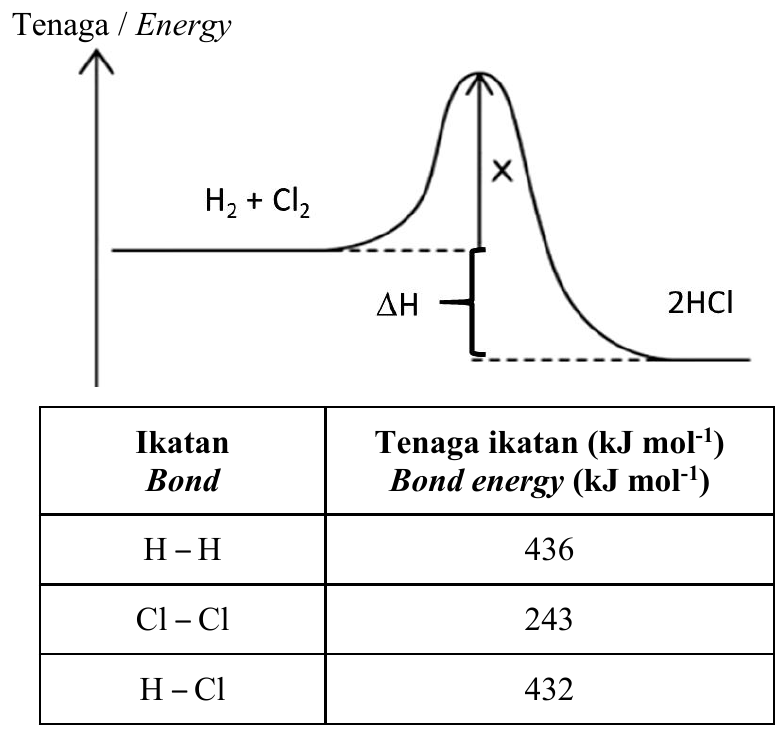
Diagram 12 shows energy profile of breaking of bond and formation of bond in exothermic reaction (H2 + Cl2 → 2HCl). Bond energies (kJ mol⁻¹): H-H 436; Cl-Cl 243; H-Cl 432. Determine heat of reaction formation of HCl based on Diagram 12.
Medium
When 15 g of carbon burns completely in air, the heat produced raises the temperature of 500 cm³ of water by 23.8 °C. What is the heat of combustion of carbon? [Relative atomic mass: C = 12; Specific heat capacity of water, c = 4.2 J g⁻¹ °C⁻¹; Density of water = 1 g cm⁻³]
Medium
Diagram 15 shows an energy profile diagram obtained from two sets of experiments (Zn + 2HCl → ZnCl2 + H2; Set I has a higher activation energy curve, Set II a lower dashed curve; products are at lower energy than reactants). Which of the following statements are correct about Set I and Set II? A: Set I - reaction releases heat without catalyst; Set II - releases heat with catalyst. B: Set I - releases heat with catalyst; Set II - without catalyst. C: Set I - absorbs heat with catalyst; Set II - absorbs heat without catalyst. D: Set I - absorbs heat without catalyst; Set II - absorbs heat with catalyst.
Medium
Which of the following processes occur when ice changes to water?
Easy
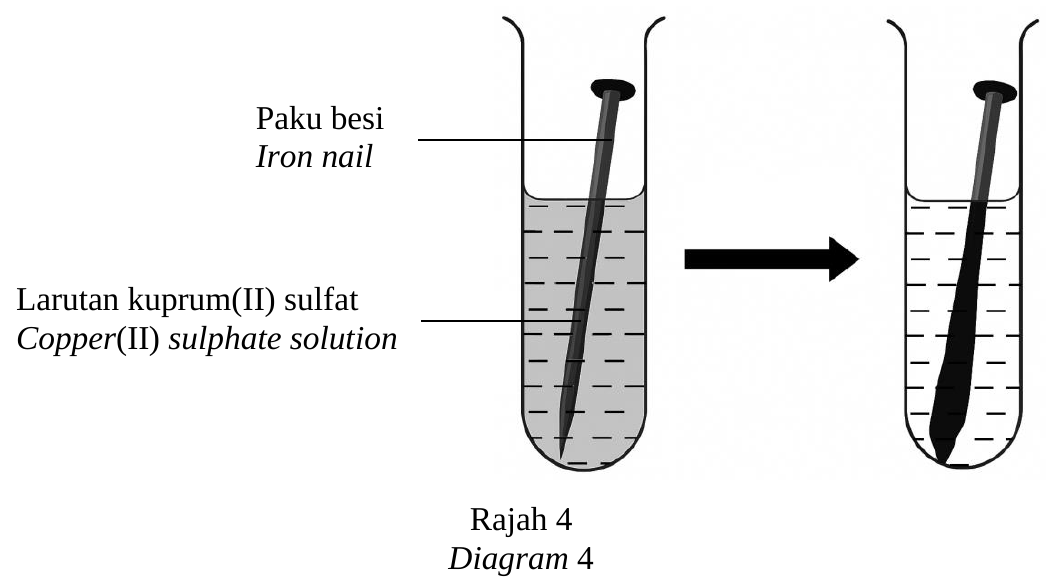
Diagram 4 shows a reaction that releases heat (an iron nail in copper(II) sulphate solution). What statement best describes the heat of reaction in the above situation?
Medium
Diagram 13 shows the thermochemical equation for the formation of barium sulphate: Ba2+ + SO4 2- → BaSO4, ΔH = X kJ/mol. In this reaction, the thermometer reading increases. Among the following pairs, which one is correct about the type of reaction and the value of X?
A Endothermic, +858.56
B Endothermic, -858.56
C Exothermic, +858.56
D Exothermic, -858.56
Medium
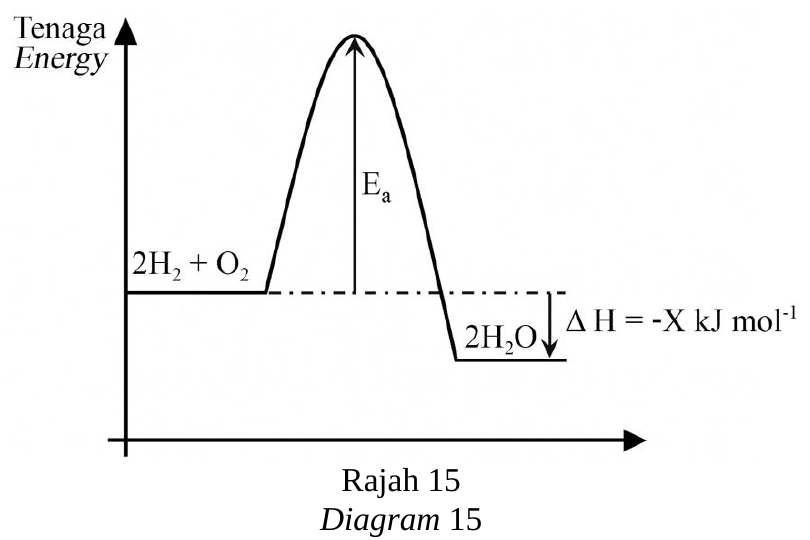
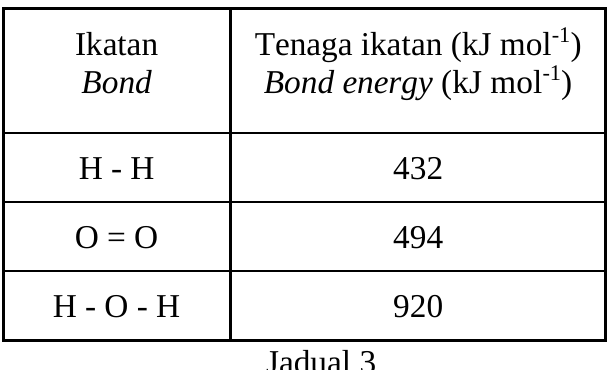
Diagram 15 shows an energy level diagram for combustion of hydrogen gas (2H2 + O2 → 2H2O, ΔH = -X kJ mol⁻¹). Table 3: bond energy H-H 432, O=O 494, H-O-H 920 (kJ mol⁻¹). A Chinese company is manufacturing a high-capacity train using hydrogen gas as fuel. If 0.8 kg hydrogen was used to propel the train for 100 km, how much heat energy was released? [Relative atomic mass : H = 1]
Medium
Table 4 shows the value of the heat of neutralisation, ΔH for chemical reactions. Set I: HCl + NaOH → NaCl + H2O, ΔH = x; Set II: CH3COOH + NaOH → CH3COONa + H2O, ΔH = y. Which of the following statements is true regarding the thermochemical equation above?
A Set I: HCl is a strong acid that ionises partially in water; Set II: CH3COOH is a weak acid that ionises fully in water
B Set I: HCl produces high concentration of hydrogen ion; Set II: CH3COOH produces low concentration of hydrogen ion
C Set I: The reaction between HCl and NaOH is complete; Set II: The reaction between CH3COOH and NaOH is incomplete
D Set I: Heat of reaction ΔH is positive; Set II: Heat of reaction ΔH is negative
Medium
In an experiment, 0.24 g of magnesium powder is added to 50 cm³ of 0.2 mol dm⁻³ zinc sulphate solution. The temperature of the mixture increases by 12 °C. What is the heat of displacement in the experiment?
[Specific heat capacity of a solution = 4.2 J g⁻¹ °C⁻¹; Relative atomic mass of Mg = 24]
Medium
The following equation shows the combustion of heptane, C₇H₁₆ in excess oxygen.
C₇H₁₆ + 11O₂ → 7CO₂ + 8H₂O ΔH = -5512 kJ mol⁻¹
In an experiment the combustion of heptane in excess oxygen releases 1378 kJ energy. What is the mass of heptane used?
[Relative atomic mass: H = 1; C = 12]
Medium
When 50 cm3 of 2.0 mol dm-3 lead(II) nitrate was added to 50 cm3 of 2.0 mol dm-3 of sodium sulphate, the temperature increased by 10 °C. What is the value of heat of precipitation? [Specific heat capacity of solution = 4.2 J g-1 °C-1; Density of solution = 1.0 g cm-3]
Medium
The thermochemical equation represents the combustion of heptane in excess oxygen: C7H16(l) + 11O2(g) → 7CO2(g) + 8H2(l); ΔH = -7521 kJ mol-1. The combustion of heptane in excess oxygen releases 526.47 kJ of energy. What is the mass of heptane used? [Relative atomic mass: H = 1, C = 12]
Medium
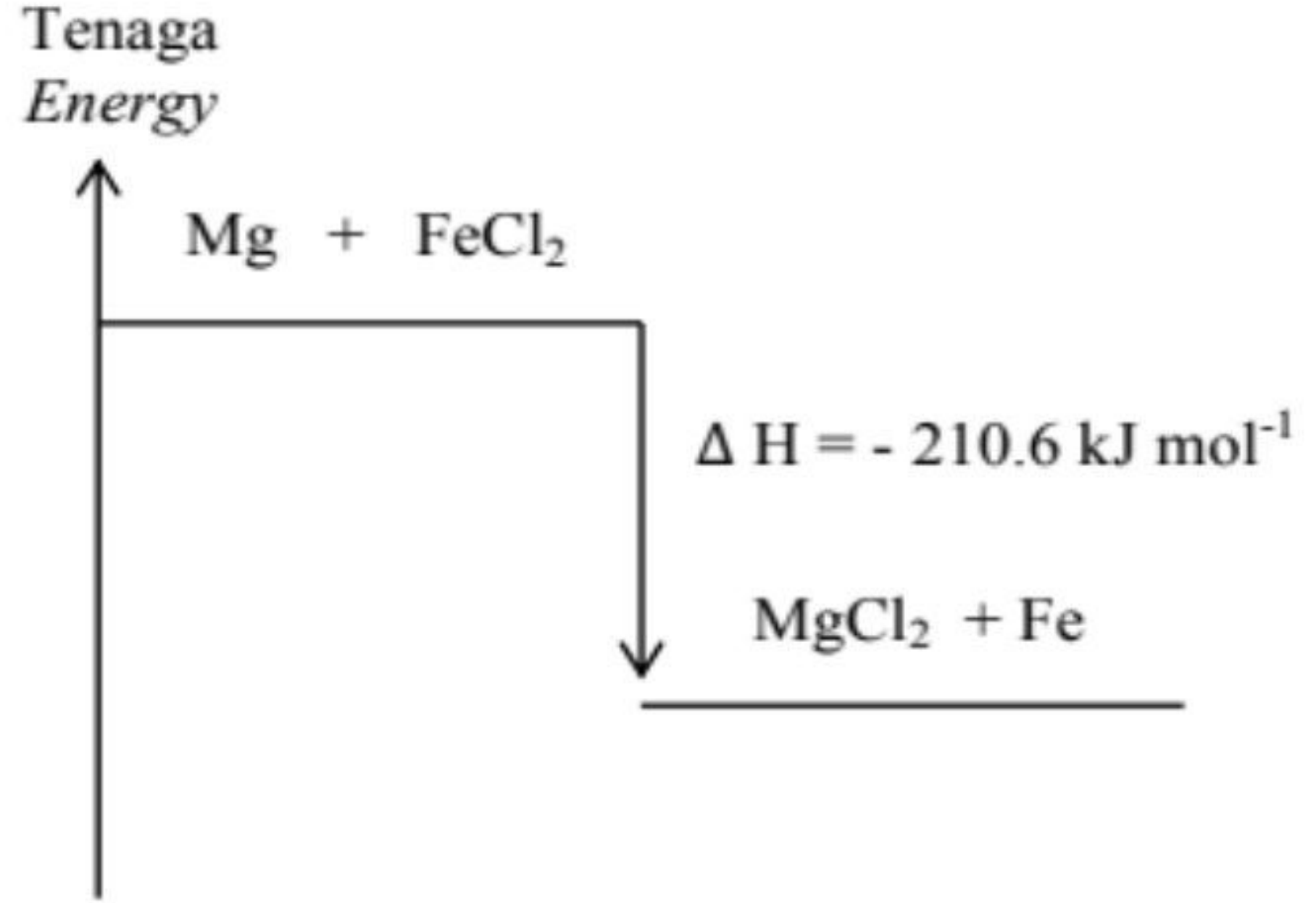
Diagram 15 shows the energy level diagram of the displacement reaction between magnesium and iron(II) chloride solution (Mg + FeCl2 → MgCl2 + Fe; ΔH = -210.6 kJ mol-1). What is the increase in temperature if 50 cm3 of 0.20 mol dm-3 iron(II) chloride solution is reacted with excess magnesium? [Specific heat capacity of the solution = 4.2 J g-1 °C-1; Density of solution = 1.0 g cm-3]
Medium
Which of the following is true about endothermic and exothermic reactions? (Endothermic / Exothermic)
A Releases heat energy / Absorbs heat energy
B Surrounding temperature increases / decreases
C Total energy content of reactants higher than products / lower than products
D Heat energy absorbed during bond breaking is more than heat released during bond formation / is less than heat released during bond formation
Medium
Diagram 37 shows the thermometer reading (29.0 °C before, 56.0 °C after) when excess magnesium powder is added to 50 cm³ of 0.5 mol dm⁻³ copper(II) chloride solution in a polystyrene cup. What is the heat of displacement for the reaction? [Specific heat capacity of water = 4.2 J g⁻¹ °C⁻¹; density of water = 1.0 g cm⁻³]
Medium
An experiment is conducted to determine the heat of neutralisation for the reaction between sulphuric acid and potassium hydroxide solution. What is the information that has to be gathered from the experiment?
I The increase in temperature of the mixture.
II The volume of both solutions used.
III pH value of both acid and alkali used.
IV The size of the polystyrene cup used.
Medium
Diagram 12 shows an energy level diagram (H⁺ + OH⁻ above H₂O, ΔH = −57 kJ mol⁻¹). Which of the following statements is correct about the energy level diagram?
Medium
The fuel value of charcoal is 34 kJ g⁻¹. Calculate the mass of charcoal needed to boil 2.0 dm³ of water. [Specific heat capacity of water = 4.2 J g⁻¹ °C⁻¹, density of water = 1 g cm⁻³, temperature of water at room temperature = 27.0 °C]
Medium
The thermochemical equation: Cu(NO₃)₂ + 2NaOH → 2NaNO₃ + Cu(OH)₂ ΔH = −60 kJ mol⁻¹. What is the highest temperature of the mixture when 25 cm³ of 1.0 mol dm⁻³ copper(II) nitrate solution is added to 50 cm³ of 1.0 mol dm⁻³ sodium hydroxide solution with the initial temperature for both solutions 29.0 °C? [Specific heat capacity of solution = 4.2 J g⁻¹ °C⁻¹; density of solution = 1.0 g cm⁻³]
Hard
Diagram 8 shows a thermochemical equation for reaction between magnesium and sulphuric acid: Mg(s) + H2SO4(aq) → MgSO4(aq) + H2(g) ΔH = -467 kJ mol⁻¹. Which of the following statement is correct?
Medium
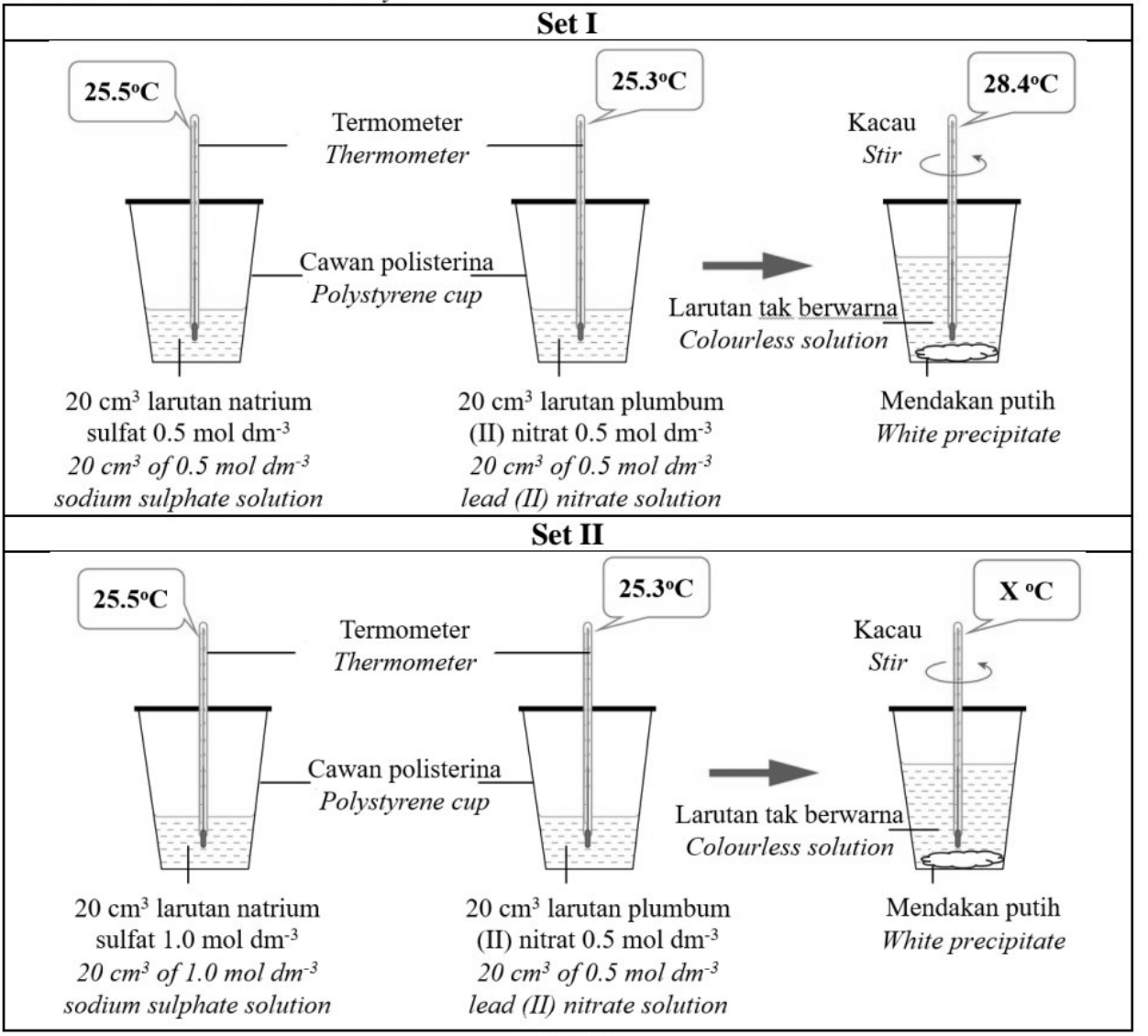
Diagram 21 shows the apparatus set-up and the observations of two experiments. Set I: 20 cm³ of 0.5 mol dm⁻³ sodium sulphate solution (25.5 °C) + 20 cm³ of 0.5 mol dm⁻³ lead(II) nitrate solution (25.3 °C) gives a white precipitate, highest temperature 28.4 °C. Set II: 20 cm³ of 1.0 mol dm⁻³ sodium sulphate solution (25.5 °C) + 20 cm³ of 0.5 mol dm⁻³ lead(II) nitrate solution (25.3 °C), highest temperature X °C. The experiment is repeated by changing the concentration of sodium sulphate solution to 1.0 mol dm⁻³. What is X? [Specific heat capacity = 4.2 J g⁻¹ °C⁻¹]
Medium
Which of the following processes absorbs heat from surroundings?
Easy
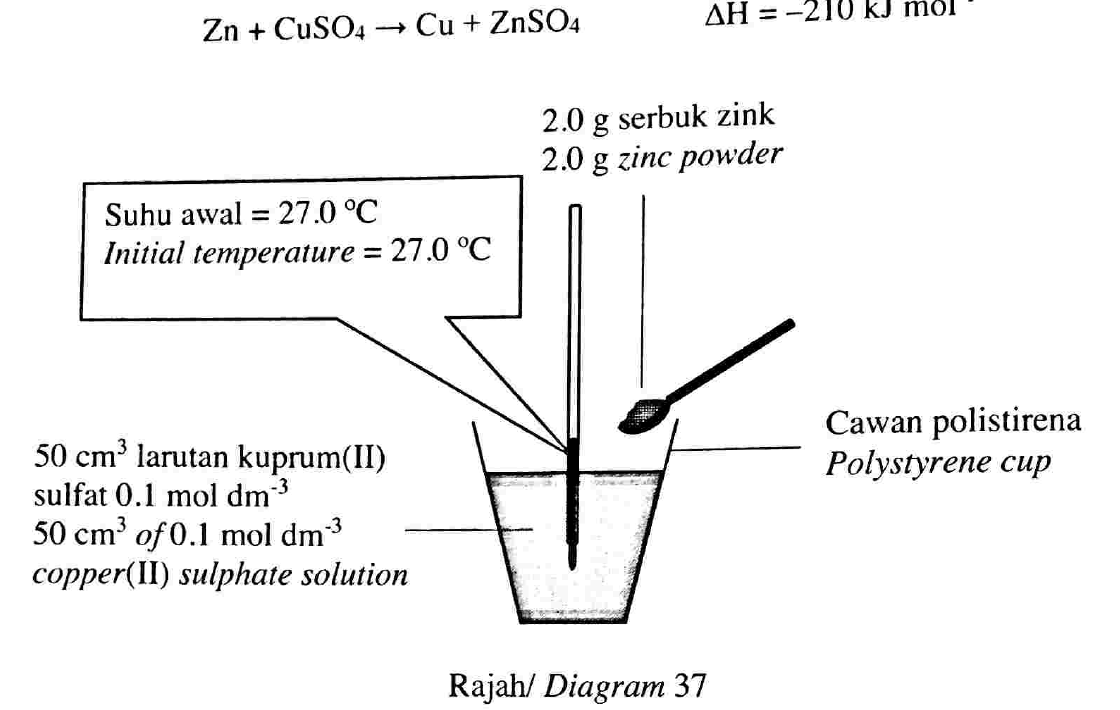
Diagram 37 shows the apparatus set-up to determine the heat of displacement of copper: 2.0 g zinc powder added to 50 cm³ of 0.1 mol dm⁻³ copper(II) sulphate solution in a polystyrene cup, initial temperature 27.0 °C. Zn + CuSO₄ → Cu + ZnSO₄, ΔH = −210 kJ mol⁻¹. What is the highest temperature reached in the reaction? [Relative atomic mass: Zn = 65; Specific heat capacity of solution = 4.2 J g⁻¹ °C⁻¹; Density of solution = 1.0 g cm⁻³]
Medium
Which of the following reactions releases heat energy to the surroundings?
Easy
Diagram 6 shows the energy level diagram: OH⁻(aq) + H⁺(aq) at a higher level, H₂O(l) at a lower level, ΔH = -57 kJ mol⁻¹.
Which of the following statements is correct about the energy level diagram?
Medium
Diagram 10 shows the apparatus set-up to determine the heat of precipitation of silver chloride: 25 cm³ of 0.5 mol dm⁻³ silver nitrate solution (28.0 °C) mixed with 25 cm³ of 0.5 mol dm⁻³ sodium chloride solution (28.0 °C); highest temperature 31.0 °C.
What is the heat of precipitation of silver chloride?
[Specific heat capacity of solution = 4.2 J g⁻¹ °C⁻¹; Density of solution = 1 g cm⁻³]
Medium
When substance P is added to distilled water, the temperature increases and the container becomes hot. What is substance P?
Easy
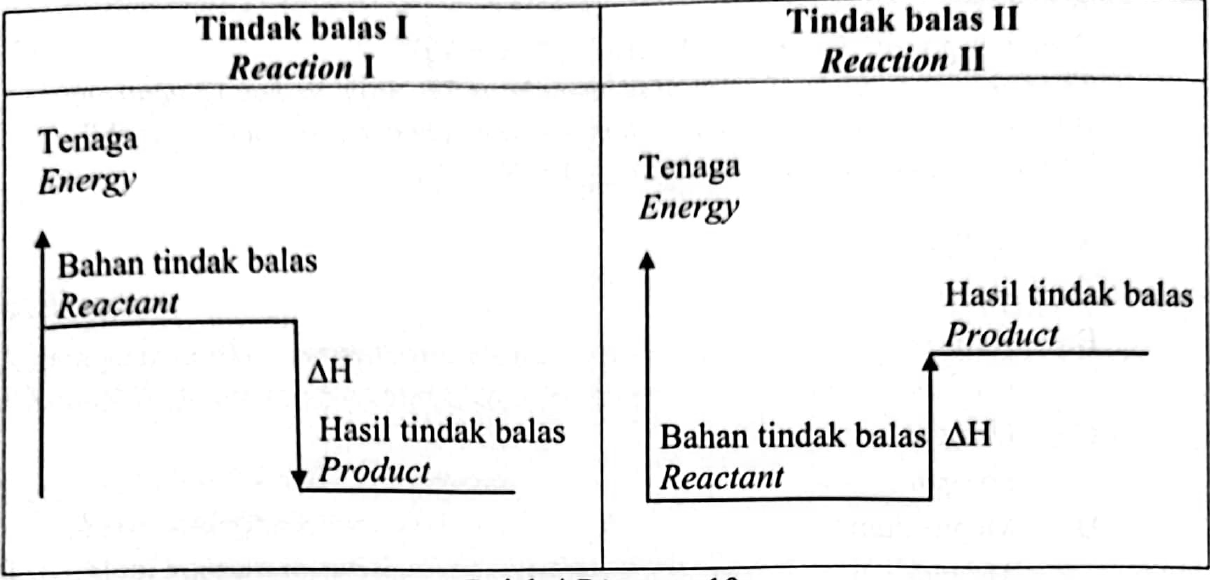
Diagram 10 shows energy level diagrams. Reaction I: products lower than reactants (exothermic, ΔH negative). Reaction II: products higher than reactants (endothermic, ΔH positive). Which of the following are the correct match for Reaction I and II?
Medium
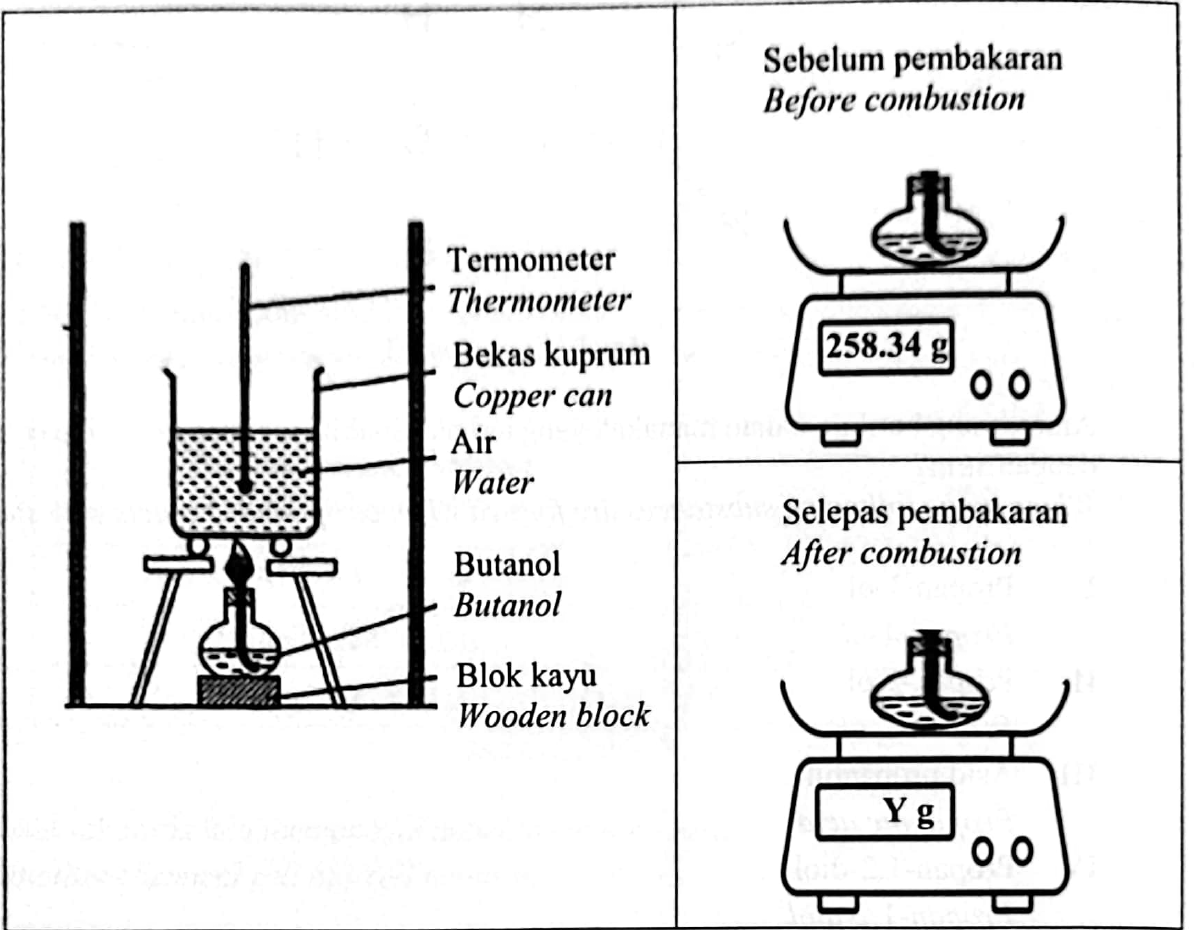
Diagram 14 shows an experiment carried out to determine the heat of combustion of butanol. Before combustion the mass of the spirit lamp with butanol is 258.34 g; after combustion it is Y g. Fuel value of butanol is 23.65 kJ g⁻¹. In this experiment, combustion of butanol in excess oxygen will increase 25 °C the temperature of 500 cm³ of water. What is the value of Y? [Specific heat capacity of water, c = 4.2 J g⁻¹ °C⁻¹; Density of water = 1 g cm⁻³; Relative atomic mass: H = 1, C = 12, O = 16]
Medium
Which of the following number of moles represented the correct heat of reaction?
Medium
Diagram 29 shows the apparatus set up of an experiment to determine the heat of reaction (200 cm³ water in a copper container heated by a spirit lamp with fuel, wind shield, thermometer). Which of the following assumption should be made in the calculation to determine the heat of reaction?
Medium
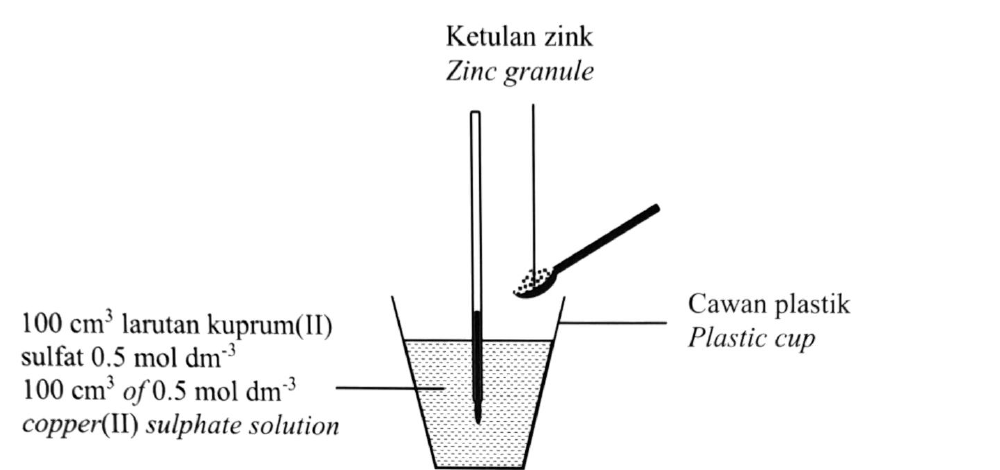
Diagram 37 shows an apparatus set up for an experiment to determine the heat of displacement of copper (zinc granules added to 100 cm³ of 0.5 mol dm⁻³ copper(II) sulphate solution in a plastic cup). The heat of displacement of copper obtained is -210 kJ mol⁻¹. What is the maximum temperature of the mixture if the initial temperature of the solution is 30.0 °C? [Specific heat capacity of solution = 4.2 J g⁻¹ °C⁻¹]
Medium
Diagram 1 shows how Bukhari fell off his bicycle during a picnic and bruised his knee. His sister, Zara, quickly took out an emergency cold pack from the first aid kit. She added substance Z into a plastic bag of water and shook it. The bag turned cold after a few seconds and was applied to the bruise. What is substance Z used to produce the cooling effect?
Medium
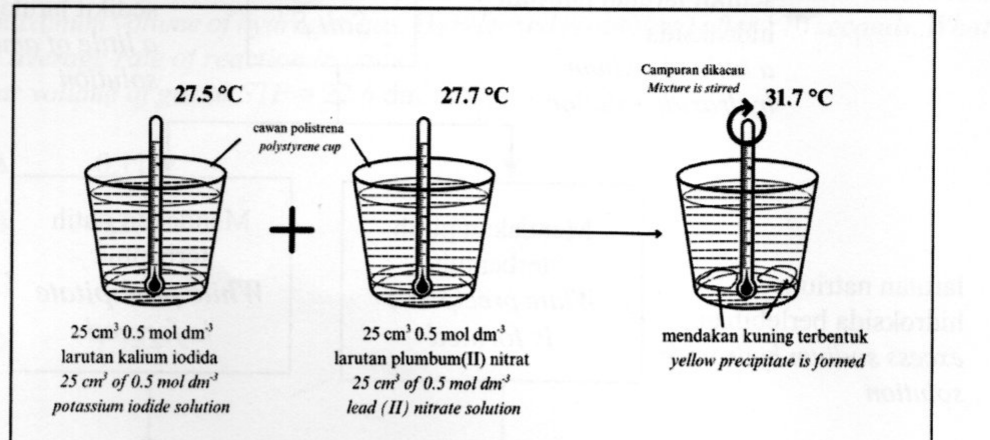
Diagram 12 shows the apparatus setup and the observations of an experiment to determine the heat of precipitation (25 cm³ of 0.5 mol dm⁻³ potassium iodide solution at 27.5 °C + 25 cm³ of 0.5 mol dm⁻³ lead(II) nitrate solution at 27.7 °C gives a yellow precipitate and a highest temperature of 31.7 °C). The experiment is repeated by changing the concentration of the potassium iodide solution to 1.0 mol dm⁻³. What is the highest temperature obtained? [Specific heat capacity of water = 4.2 J g⁻¹ °C⁻¹]
Medium
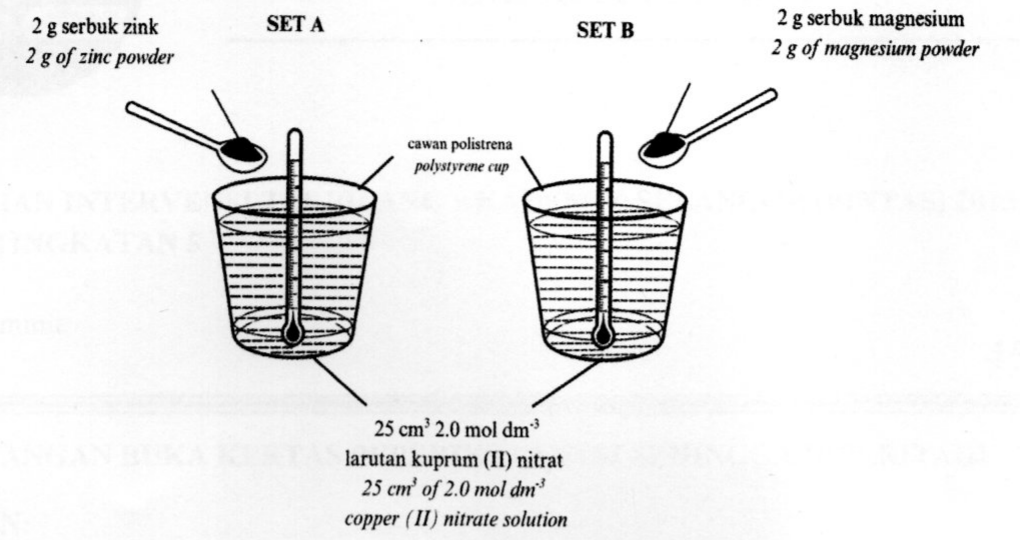
Diagram 19 shows Samson conducting two experiments using zinc metal powder in Set A and magnesium metal powder in Set B, each added into copper (II) nitrate solution. After a few minutes, he observed that the temperature of the mixture in Set B increased more than in Set A. Why did Set B show a higher temperature increase?
Medium
Which of the following is true about an endothermic reaction?
Easy
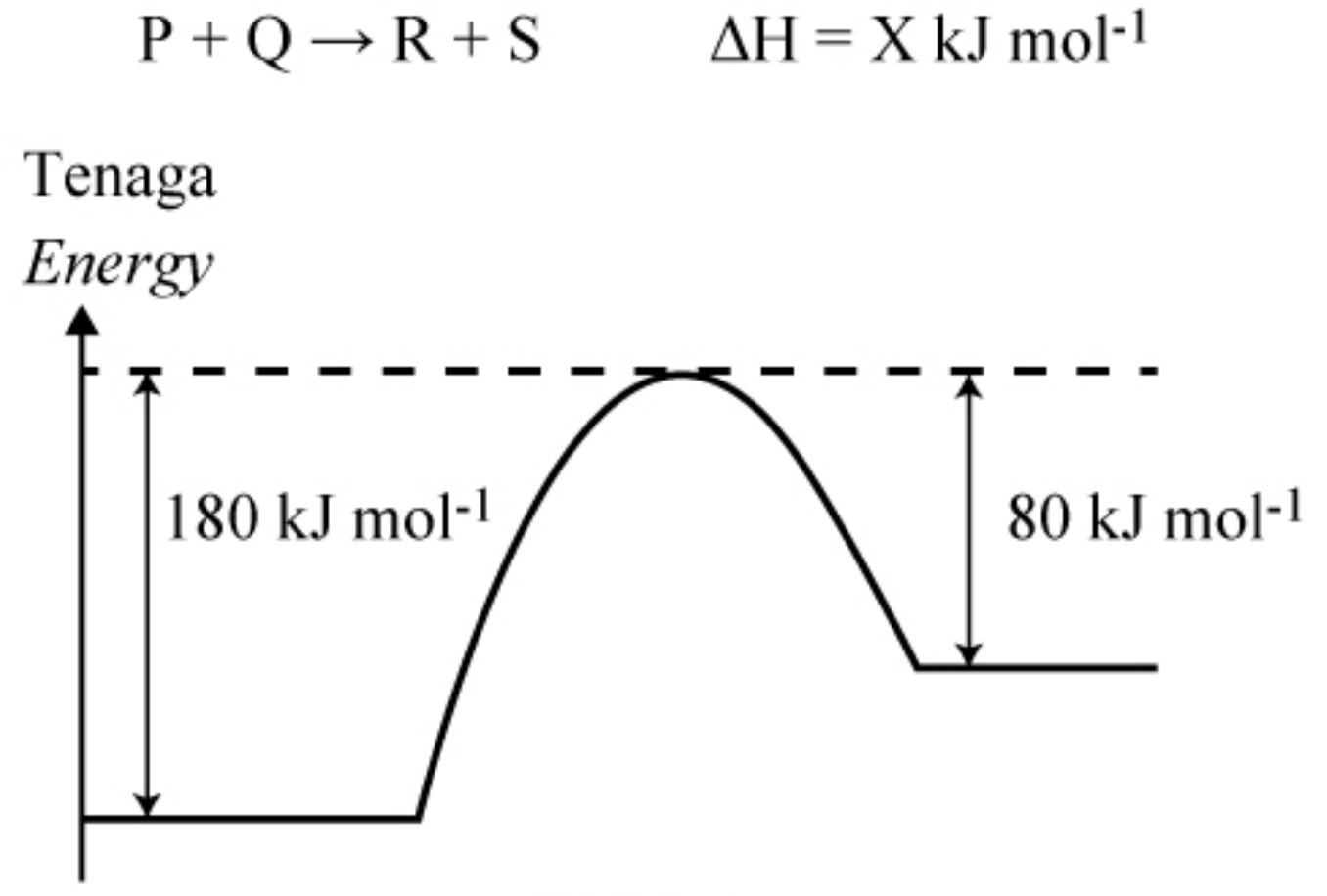
Diagram 6 shows the energy profile diagram for the reaction between P and Q: P + Q → R + S, ΔH = X kJ mol-1 (activation energy 180 kJ mol-1; products 80 kJ mol-1 below the peak). What is the value of X?
Medium
Bazli's leg was sprained while loosening the soil in his farm. Bazli asked his son to take substance X from the store and mix it into a plastic bag containing water. His son shake the plastic bag and pressed it onto the injured part. What is substance X?
Medium
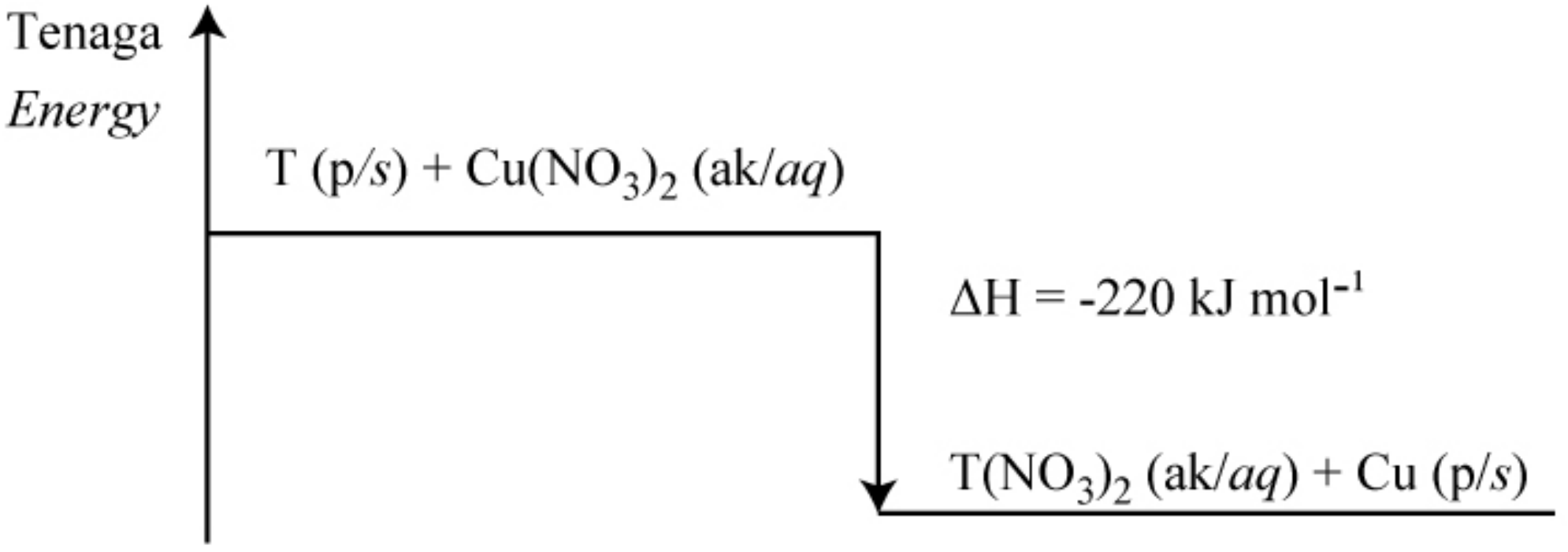
Diagram 14 shows the energy level diagram for the reaction between 50 cm3 of 0.2 mol dm-3 copper(II) nitrate solution with excess metal T (ΔH = -220 kJ mol-1). [Specific heat capacity of solution = 4.2 J g-1 °C-1] What is the temperature change in the reaction?
Medium
Which statement exactly explains the meaning of the heat of neutralisation?
Easy
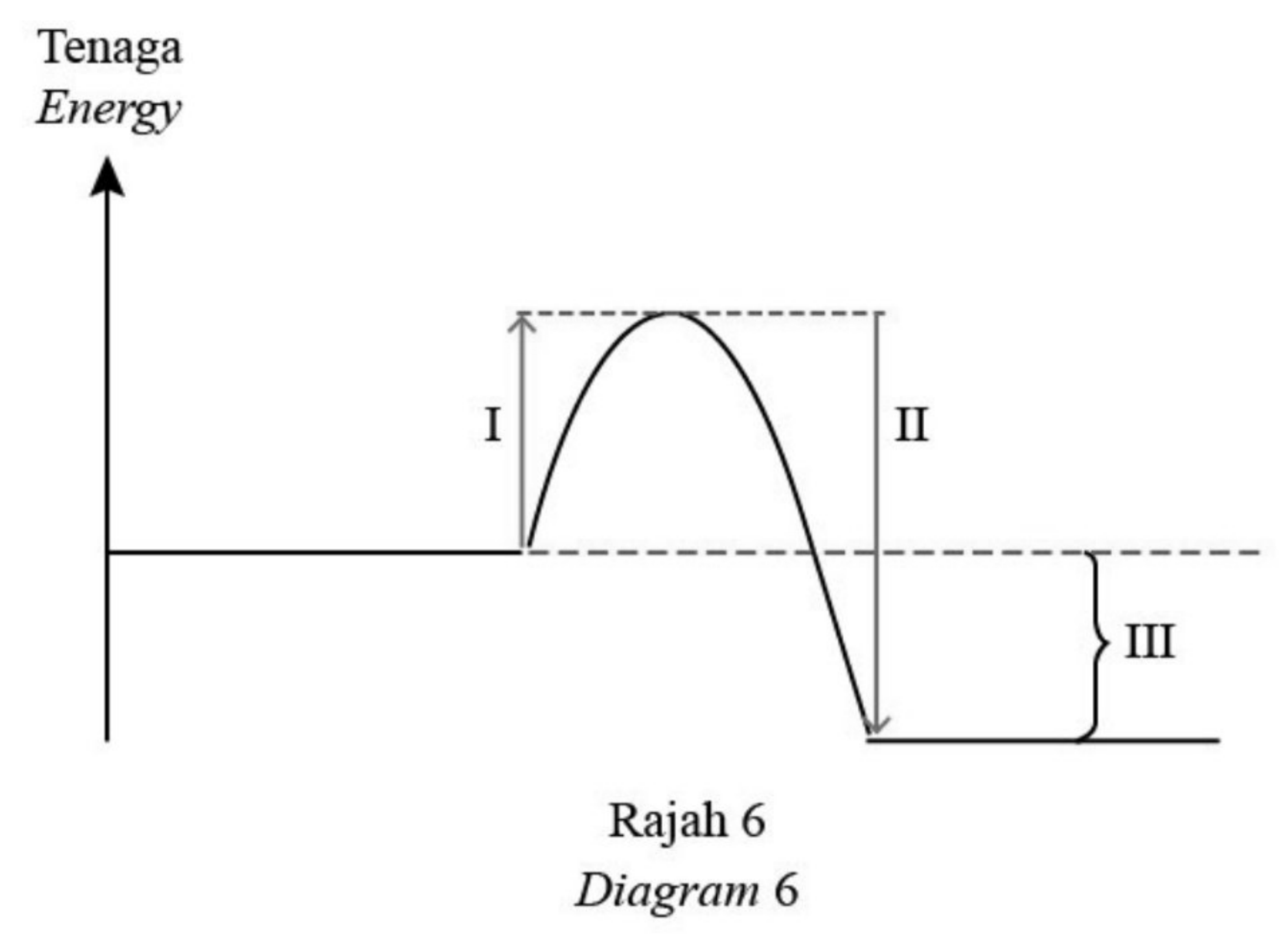
Diagram 6 shows the energy profile for a reaction. Which of the following explains the energy profile in Diagram 6?
Medium
The following thermochemical equation represents a metal displacement reaction. Fe(s) + CuSO₄(aq) → FeSO₄(aq) + Cu(s) ΔH = −250 kJ mol⁻¹. Calculate the heat released when excess iron powder is added to 100 cm³ of 2 mol dm⁻³ copper(II) sulphate solution?
Medium
Diagram 12 shows energy level for the neutralisation reaction between sodium hydroxide and hydrochloric acid: NaOH(aq) + HCl(aq) → NaCl(aq) + H₂O(l), ΔH = −57 kJ mol⁻¹. How much heat is released when 50 cm³ of 0.1 mol dm⁻³ sodium hydroxide solution is reacted with 50 cm³ of 0.2 mol dm⁻³ hydrochloric acid?
Medium
Which of the following reactions absorbs heat from the surrounding?
Medium
50 cm³ of 1.0 mol dm⁻³ lead(II) nitrate solution was added to 50 cm³ of 1.0 mol dm⁻³ potassium sulphate solution in a plastic cup. The temperature changes is 2.5 °C. The experiment is repeated by using 50 cm³ of 1.0 mol dm⁻³ lead(II) nitrate solution and 100 cm³ of 1.0 mol dm⁻³ potassium sulphate solution. What is the change in temperature of the reaction?
Medium
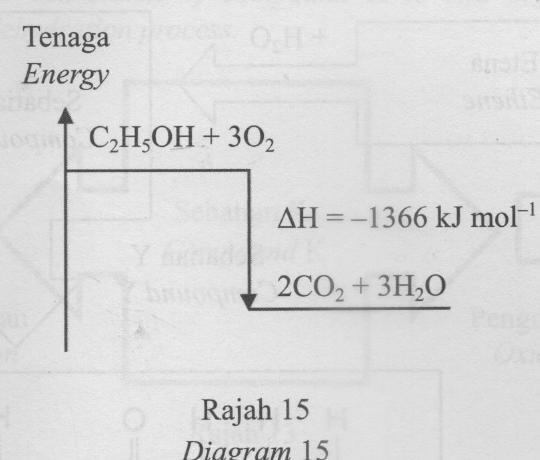
Diagram 15 shows the energy level diagram for the combustion of ethanol, C₂H₅OH (ΔH = –1366 kJ mol⁻¹). What is the mass of ethanol needed to raise the temperature of 200 cm³ of water by 31.0 °C? [Molar mass of C₂H₅OH = 46 g mol⁻¹; Specific heat capacity of water = 4.2 J g⁻¹ °C⁻¹; Density of water = 1 g cm⁻³]
Medium
57 kJ of heat is released when 1 mol of water is formed from the neutralisation between 1 mol of hydrochloric acid and 1 mol of sodium hydroxide. Which pair of acid and alkali produces higher heat of neutralisation than heat of neutralisation for hydrochloric acid and sodium hydroxide?
Medium
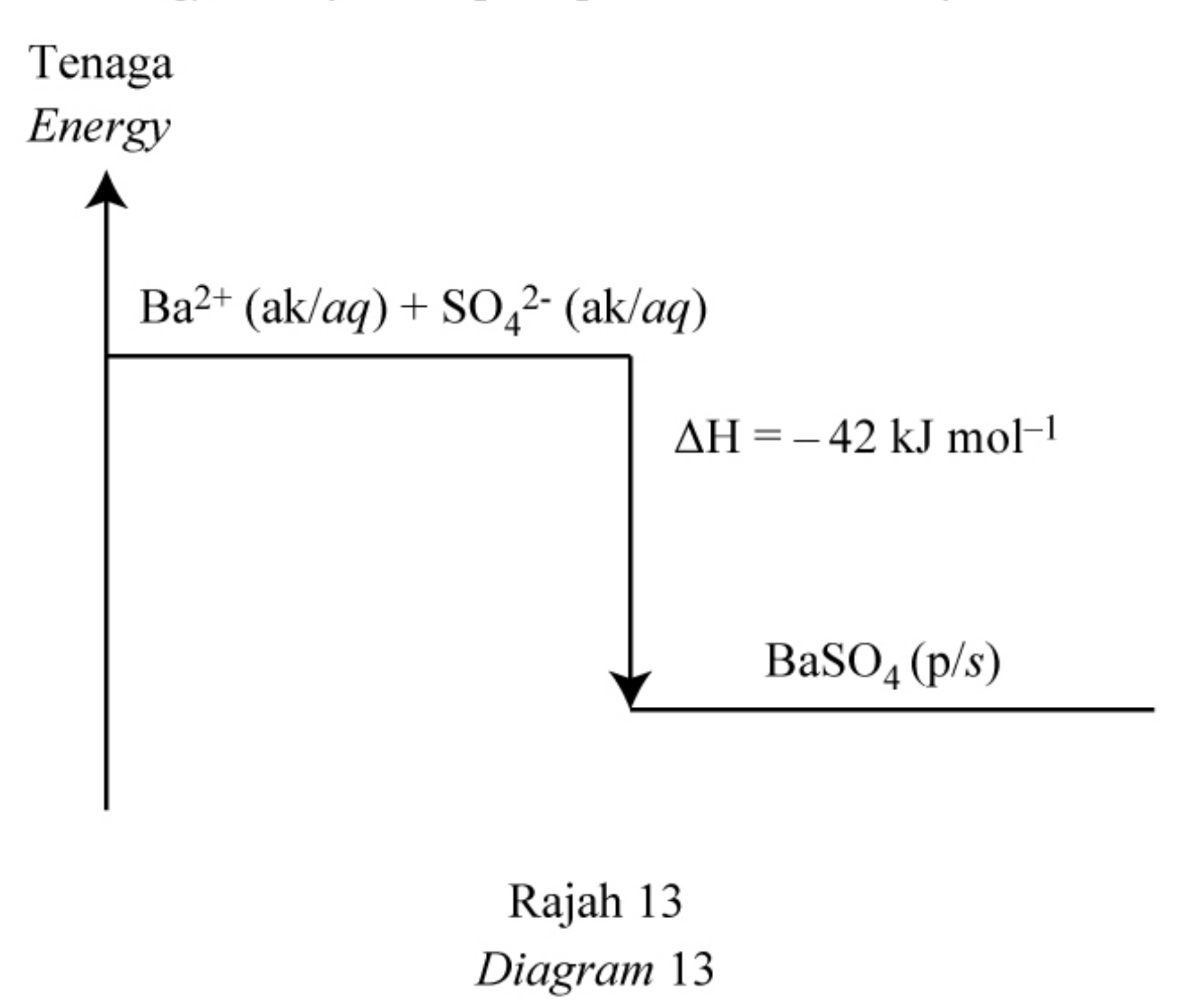
Diagram 13 shows energy level for the precipitation reaction of barium sulphate (ΔH = –42 kJ mol⁻¹). How much heat is released when 48 g of barium sulphate is formed? [Relative atomic mass: Ba = 137, S = 32, O = 16]
Medium
1 376 kJ of heat is released when 1 mol of ethanol is completely burnt in excess oxygen. How much mass of ethanol need to be burned to produce heat that can heat up 200 g of water from 30 °C to 80 °C? [Specific heat capacity of water = 4.2 J g⁻¹ °C⁻¹, Density of water = 1 g cm⁻³, Molar mass of ethanol = 46 g mol⁻¹]
Medium
Which statement exactly explains the meaning of heat of displacement?
Easy
The following thermochemical equation represents the precipitation reaction between barium ion and sulphate ion. Ba²⁺(aq) + SO₄²⁻(aq) → BaSO₄(s); ΔH = -x kJ mol⁻¹. Which of the following statements is true about the above equation?
Medium
Ali's leg was injured during loosening the soil in his farm. Ali asked his son to take substance X from the store and mix it into a plastic bag containing water. His son shake the plastic bag and pressed it onto the injured part. What is substance X?
Medium
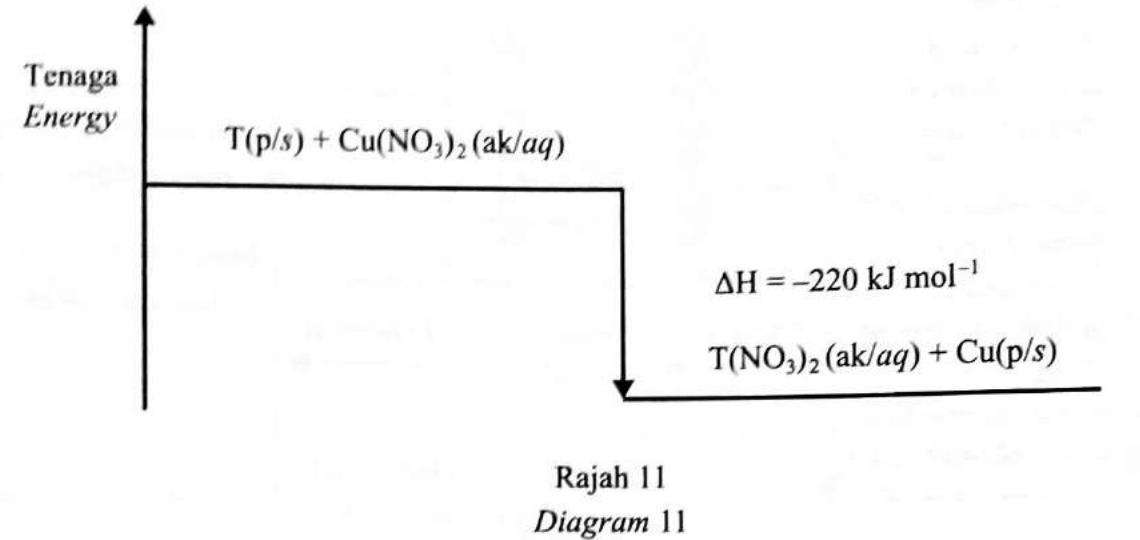
Diagram 11 shows the energy level diagram for the reaction between 50 cm³ of 0.2 mol dm⁻³ copper(II) nitrate solution and excess metal T: T(s) + Cu(NO₃)₂(aq) → T(NO₃)₂(aq) + Cu(s), ΔH = -220 kJ mol⁻¹. [Specific heat capacity of solution = 4.2 J g⁻¹ °C⁻¹] What is the temperature change in the reaction?
Hard
Which of the following chemical equation is an endothermic reaction?
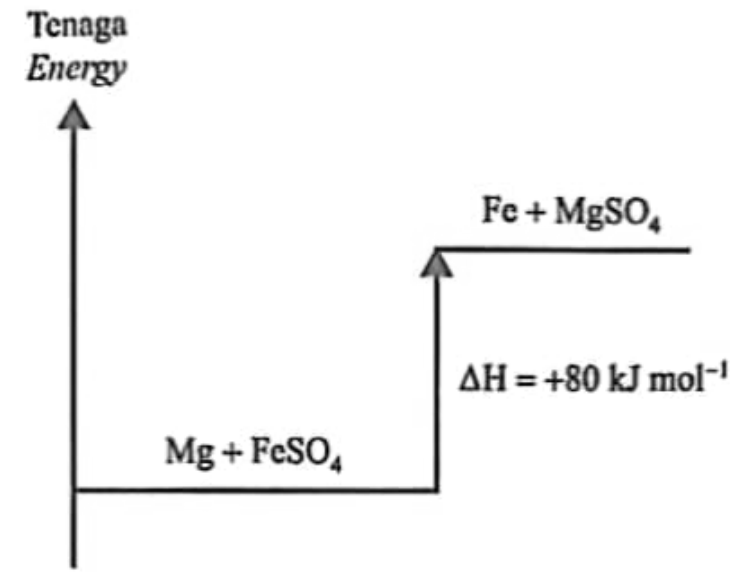
Medium
Diagram 11 shows an energy level diagram: Mg + FeSO₄ at the lower level, Fe + MgSO₄ at the higher level, ΔH = +80 kJ mol⁻¹. Which of the following is true about the energy level diagram above?
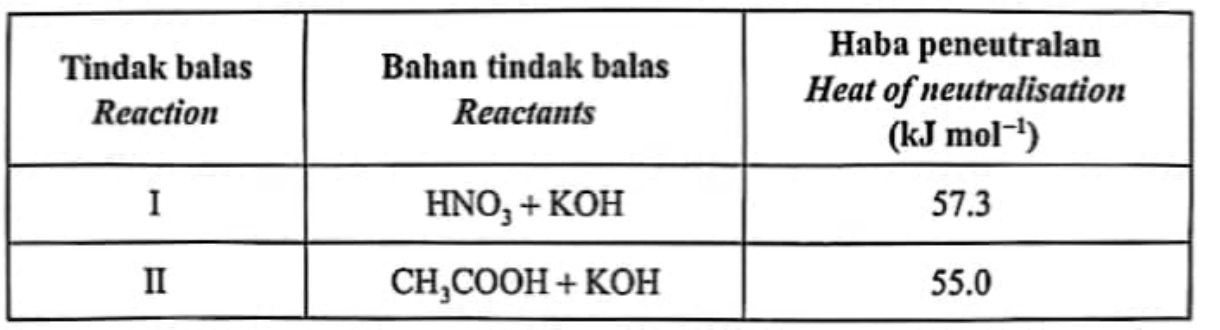
Medium
Table 4 shows the heat of neutralisation of two reactions between acid and alkali: I HNO₃ + KOH, 57.3 kJ mol⁻¹; II CH₃COOH + KOH, 55.0 kJ mol⁻¹. Which is the best statement explaining the difference of heat of neutralisation for reaction I and II?
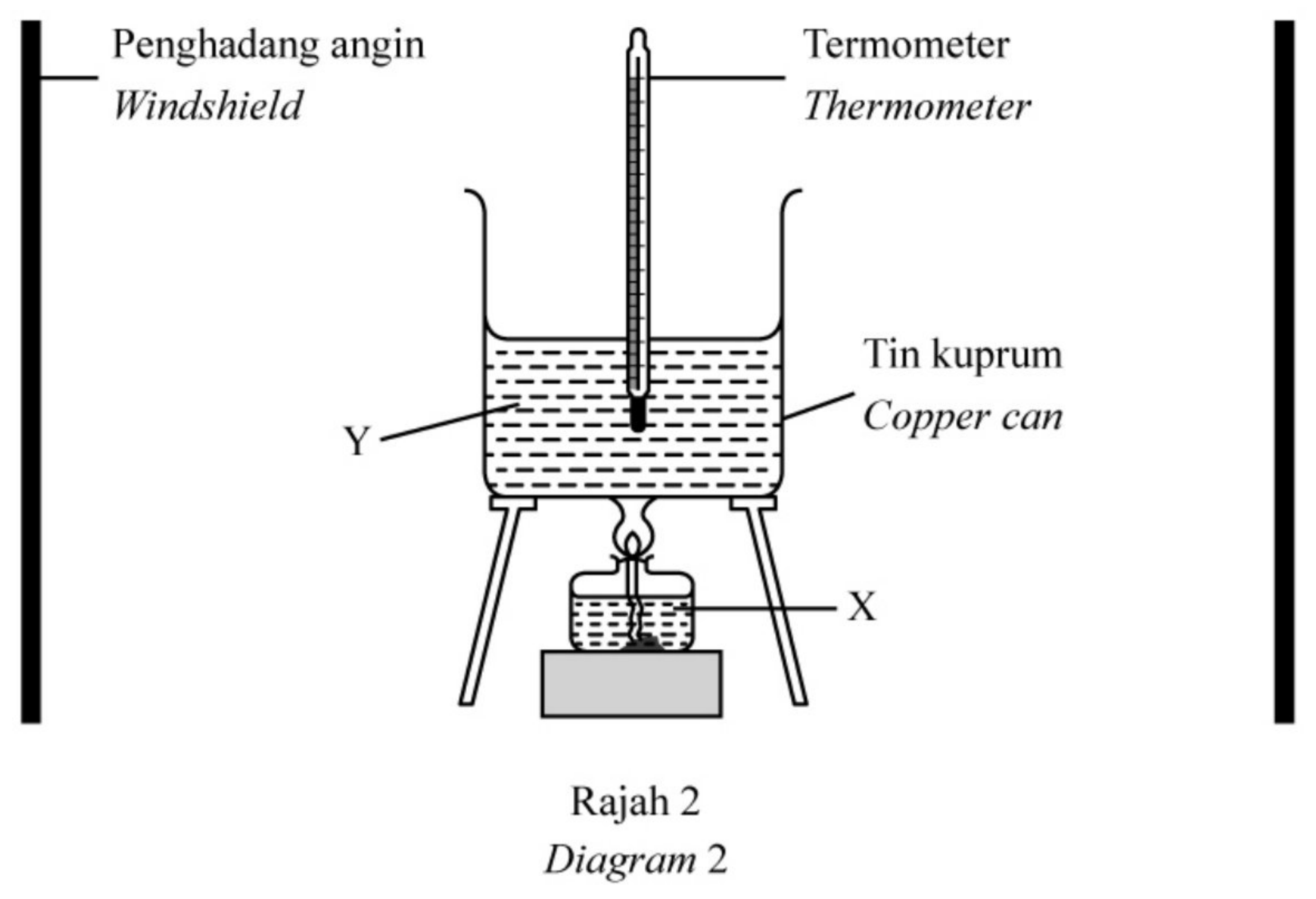
Medium
Diagram 2 shows the apparatus set-up to determine the heat of combustion of ethanol, C₂H₅OH (labels: windshield, thermometer, copper can, Y = liquid in copper can, X = liquid in lamp). What are X and Y? A: X Ethanol, Y Water; B: X Water, Y Ethanol; C: X Naphthalene, Y Water; D: X Water, Y Naphthalene.
Medium
Which reaction absorbs heat from the surrounding?
Medium
The heat of combustion of ethanol is –1 371 kJ mol⁻¹. If 3 g of ethanol is burnt to heat up 300 cm³ of water, calculate the temperature change. [Relative atomic mass: H = 1, C = 12, O = 16; Specific heat capacity of water = 4.2 J g⁻¹ °C⁻¹]
Medium
The following thermochemical equation represents a precipitation reaction: Na₂CO₃(aq) + Ca(NO₃)₂(aq) → CaCO₃(s) + 2NaNO₃(aq), ΔH = +30 kJ mol⁻¹. 100 cm³ of 1.0 mol dm⁻³ sodium carbonate solution is added to 100 cm³ of 1.0 mol dm⁻³ calcium nitrate solution. What is the temperature change of the mixture? [Specific heat capacity of the solution = 4.2 J g⁻¹ °C⁻¹; Density of the solution = 1 g cm⁻³]
Medium
Which reaction absorbs heat from the surrounding?
Easy
Thermochemical equation below shows the complete combustion of ethanol, C2H5OH.
C2H5OH + 3O2 → 2CO2 + 3H2O ΔH = -1376 kJ mol⁻¹
Choose the correct statement for the thermochemical equation.
Medium
The reaction between 25.0 cm³ of hydrochloric acid and 25.0 cm³ of sodium hydroxide solution releases the heat of 2100 J. What is the temperature change of the mixture?
[Specific heat capacity of solution = 4.2 J g⁻¹ °C⁻¹; density of solution = 1 g cm⁻³]
Medium
Which of the following is the formula for calculating the difference in heat energy content?
Medium
Diagram 28 shows a thermochemical equation: N₂(g) + O₂(g) → 2NO(g) ΔH = +180 kJ mol⁻¹. Which of the following statements is correct to explain the reaction above?
Medium
The following equation represents the precipitation reaction: Ba(NO₃)₂ + Na₂SO₄ → BaSO₄ + 2NaNO₃, ΔH = -42 kJ mol⁻¹. What is the value of the increase in reaction temperature when 100 cm³ of each solution is mixed and 13.98 g of precipitate is formed? [Specific heat capacity = 4.2 J g⁻¹ °C⁻¹; density of solution = 1 g cm⁻³; Relative atomic mass: Ba = 137, S = 32, Na = 23, O = 16, N = 14]