JOHOR SET 2 2025 P2 Q9
HardWrite your answer on paper. Then open the answer to check it.
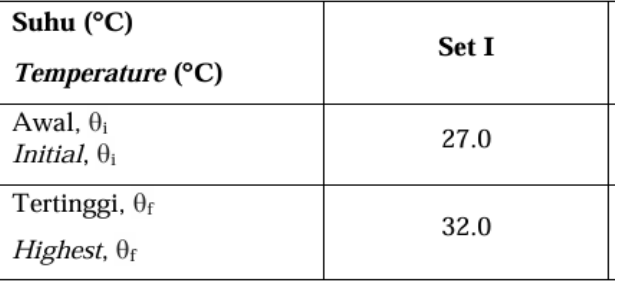
Answer any one question in Section B. (a) Diagram 9.1 shows the apparatus set up to compare the heat of displacement of copper from copper(II) sulphate solution by magnesium powder, Mg, using polystyrene cups (100 cm³ of 0.5 mol dm⁻³ copper(II) sulphate solution). Table 9.1 shows the result: initial temperature θ₁ = 27.0 °C; highest temperature θf = 32.0 °C (Set I).
Hard20 marks- (a)(i)
State the meaning of heat of displacement.
[1] - (a)(ii)
Apart from the temperature change, state other observations for the experiment.
[1] - (a)(iii)
Why polystyrene cups were used in this experiment.
[1] - (a)(iv)
Based on Table 9.1, calculate the heat of displacement of the reaction between copper(II) sulphate solution and magnesium. [Given that the specific heat capacity of solution c = 4.2 J g⁻¹ °C⁻¹, density of solution = 1 g cm⁻³]
[3]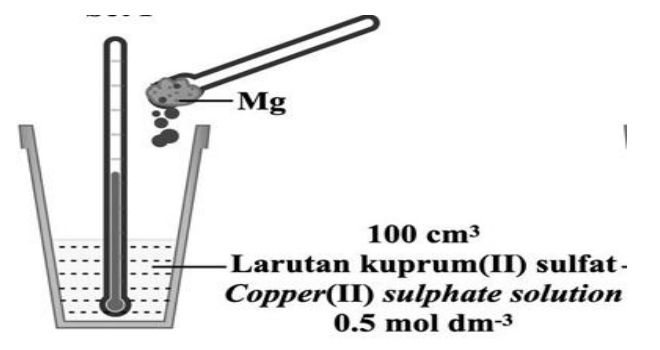
- (a)(v)
Write a balanced chemical equation for the reaction in experiment.
[2] - (a)(vi)
Draw the energy level diagram for the reaction.
[2] - (a)(vii)
Predict the heat of displacement if experiment is carried out using zinc to replace magnesium. Explain your answer.
[2] - (b)
Diagram 9.2 shows substance A (hot pack) and substance B (cold pack) used in daily life. Hot pack applied to your injured part by your physical therapist and cold pack can be used to relieve pain and swelling. Compare the reaction occur in substance A and substance B in terms of: type of reaction; temperature change; change in the total energy content of reactant and total energy content of product; formation and breaking bond.
[4]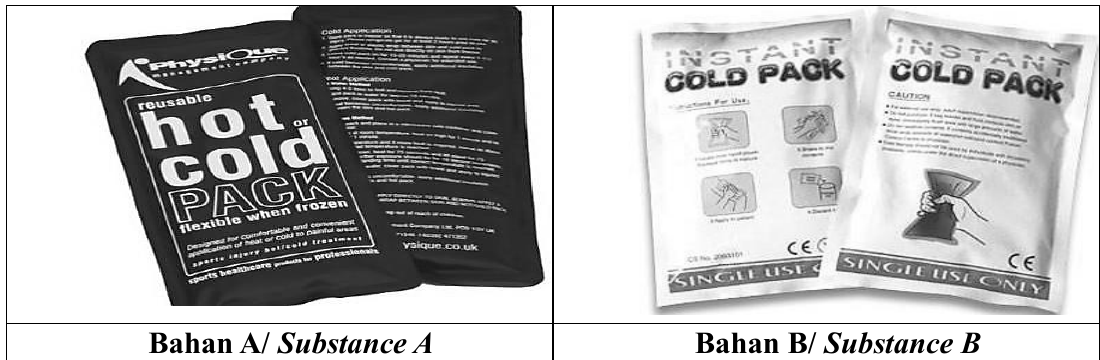
- (c)
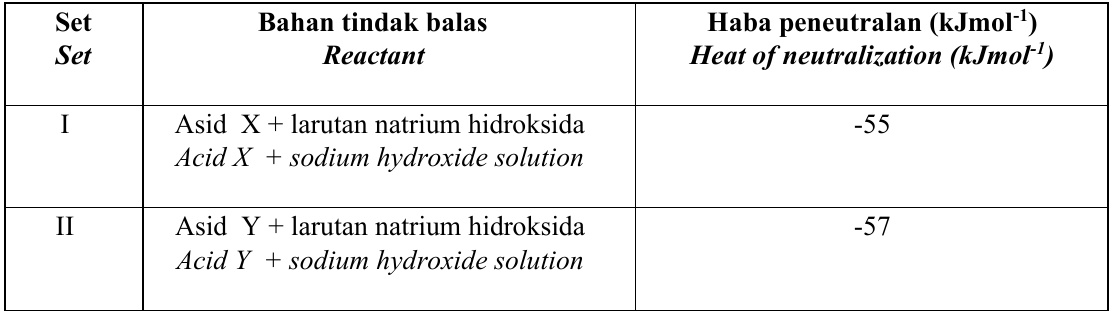
Table 9.2 shows the heat of neutralisation for two sets of experiment using different monoprotic acids, X and Y reacting with potassium hydroxide solution (Set I: acid X + sodium hydroxide solution, −55 kJ mol⁻¹; Set II: acid Y + sodium hydroxide solution, −57 kJ mol⁻¹). Based on the table above, suggest acid X. Explain why the heat of neutralisation for Set I is lower than Set II.
[4]