Which of the following sentences is a true statement?
Easy
The information shows an implication: If 4x + 5 = 21, then x = 4. Which of the following is the antecedent for the implication above?
Easy
Which of the following is not a statement?
Easy
Diagram 13 shows a form of deductive argument. Premise 1: If 3m = 2n, then m : n = 2 : 3. Premise 2: m : n ≠ 2 : 3. Conclusion: ______. Which of the following is the most appropriate conclusion to replace the conclusion in Diagram 13?
Medium
Which of the following is a statement?
Easy
Given the implication 'If x is a factor of 3, then x is a factor of 9'. The contrapositive of this implication is
Easy
Which of the following is not a statement?
Easy
Diagram 14 shows a form of deductive argument. Premise 1: If 6p = 4q, then p : q = 4 : 6. Premise 2: p : q ≠ 4 : 6. Conclusion: ? What is the conclusion for the deductive argument?
Medium
Which of the following is the negation of the statement below? “6 is a factor of 72.”
Easy
Diagram 9 is an implication: “If x = 5, then x³ = 125.” What is the antecedent of the implication?
Easy
Which is the negation of the following statement? '12 is a multiple of 6'
Easy
Premise 1: If x + 8 = 10, then x = 2. Premise 2: x + 8 = 10. Make a conclusion based on the two given premises.
Easy
Which of the following statements is true?
Easy
Premise 1: If x + 3 = 5 then x = 2. Premise 2: x ≠ 2. Conclusion: ____. What is the conclusion to that argument?
Easy
Which of the following statements is the contrapositive of "If 12 is the multiple of 6, then 12 is the multiple of 3"?
Easy
Form an inductive conclusion for the number pattern −2, −2, 0, 4, ... where −2 = 1 − 3(1), −2 = 4 − 3(2), 0 = 9 − 3(3), 4 = 16 − 3(4), ...
Medium
Which of the following is a false statement?
Easy
It is given that 0.3, 0.6, 0.9, 1.2, ... is a number sequence. Find the inductive conclusion for the given number sequence.
Medium
Which of the following is a statement?
Easy
Diagram 13 shows a number pattern: 5 = 4(1)³ + 1, 36 = 4(2)³ + 4, 117 = 4(3)³ + 9, … Determine the inductive conclusion that correctly represents the pattern of numbers above.
Medium
Which of the following is a statement?
Medium
Premise 1: If x + 3 = 5 then x = 2. Premise 2: x ≠ 2. What is the conclusion of the argument?
Easy
Which of the following is not a statement?
Easy
The statement below is the inverse of an implication.
If k + 4 ≠ 9 then k ≠ 5
Which of the following is the contrapositive of the implication?
Medium
Which of the following is a false statement.
Easy
Which of the following is a statement?
Easy
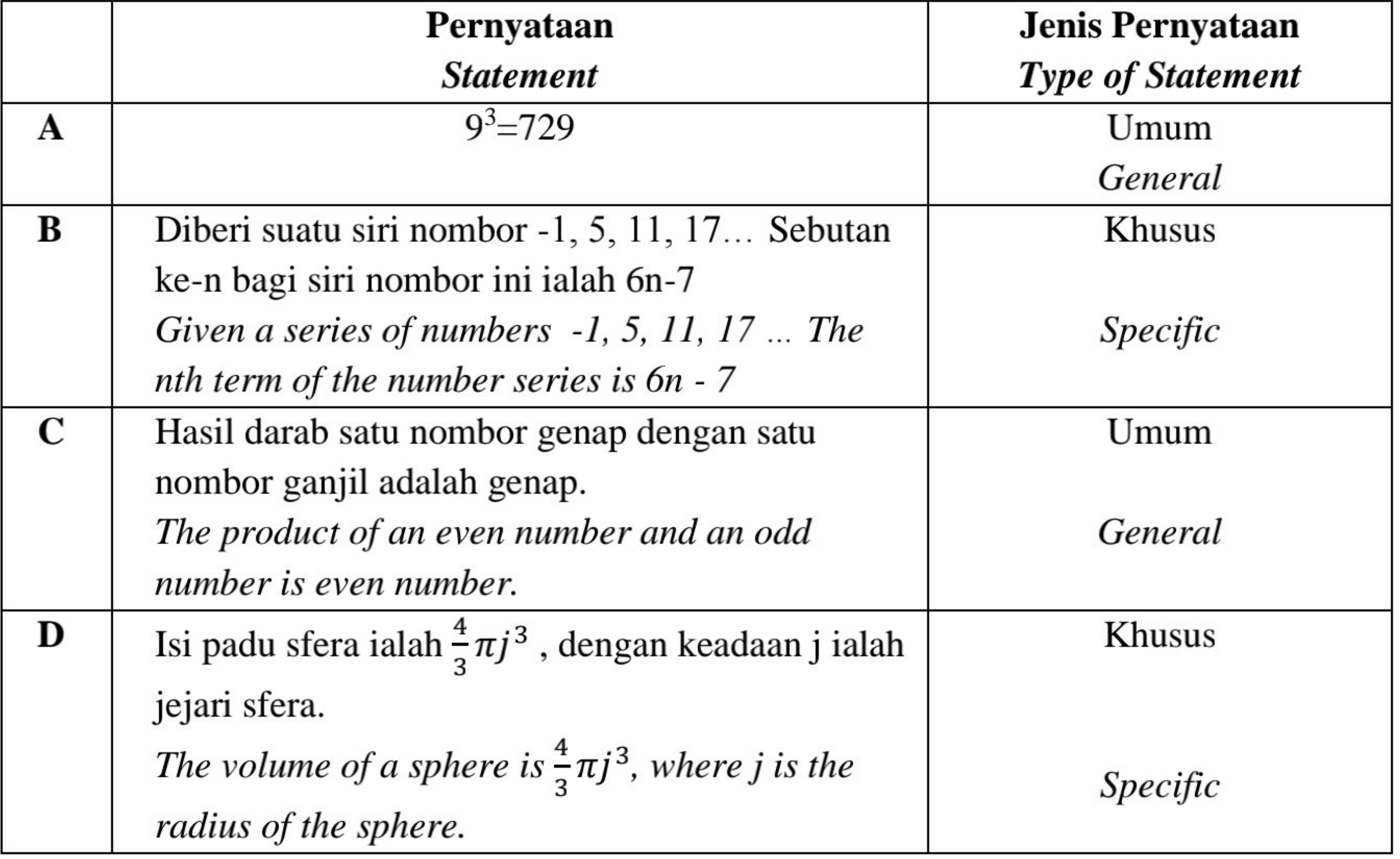
Which of the following is TRUE? (Statement and type of statement in the table.)
Easy
Statement: If k is a perfect square, then √k is an integer. State the contrapositive of the statement.
Medium
The following is a number sequence. 8, 24, x, 216, y, 1944, … Calculate the value of x + y.
Medium
Choose a strong inductive conclusion for the following number sequence 1, 7, 17, 31, … given 1 = 2(1)² − 1, 7 = 2(2)² − 1, 17 = 2(3)² − 1, 31 = 2(4)² − 1.
Medium
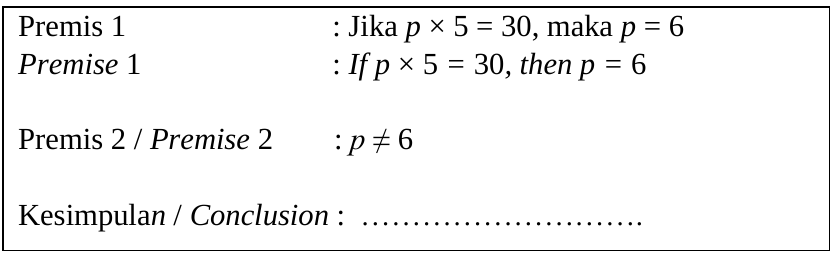
Diagram 17 shows a form of a deductive argument. Premise 1: If p × 5 = 30, then p = 6. Premise 2: p ≠ 6. Conclusion: ……. Which of the following is the correct conclusion for the argument?
Medium
The total sales of 50 packs of nasi lemak obtained is RM150. Total sales for 100 packs of nasi lemak obtained is RM300. Which of the following is the most suitable assumption for the situation.
Medium
Which of the following statements is false?
Medium
Diagram 11 shows a number sequence: 0.25, 0.1111, 0.0625, … Make a conclusion by induction for the number sequence.
Medium
Diagram 3 shows a statement: "All prime numbers are odd numbers." Which of the following pairs show the correct negation and the truth value?
Medium
Diagram 4 shows an implication: "If w = 0, then aʷ = 1". Which of the following is the converse of the above statement?
Easy
Premise 1: If y less than zero, then y is a negative number. Premise 2: ……… Conclusion: −2 is a negative number. Based on the above argument, state Premise 2 to complete the argument.
Easy
The statement below is the inverse of an implication.
"If k + 4 ≠ 9, then k ≠ 5"
Which of the following is the contrapositive of the inverse?
Medium
Premise 1: The sum of interior angles of a n-sided polygon is (n − 2) × 180°. Premise 2: W is a 7-sided polygon. Determine the sum of interior angles of polygon W.
Easy
'2 is a prime number or 4 is an odd number.' What is the truth value of the statement?
Easy
Statement below is the inverse of an implication: If k + 4 ≠ 9 then k ≠ 5. Which of the following is the contrapositive of the implication?
Medium
Premise 1: If w > 5, then 5w > 20. Premise 2: 7 > 5. What is the conclusion of the above premises to form a valid argument?
Easy
Which of the following is a statement?
Easy
Which of the following statements is true? A: −5 × (−9) = −45 or −5 − (−9) = −4; B: 5x + 10x = 15x² or (5 + 10)x = 15x²; C: 6 < −3 or −6 > 3; D: 6 × 4 = 30 or 6 + 4 = 10.
Medium
Which of the following statements is false?
Medium
Which of the following implications can form the implication "p if and only if q"?
Medium
Which of the following is a deductive argument?
Medium
Diagram 18 shows a form of a deductive argument. Premise 1: If x + 3 ≠ 8 then x ≠ 5. Premise 2: x + 3 ≠ 8. Conclusion: ______. What is the conclusion for the deductive argument?
Medium
Which of the following is a statement?
Easy
Which of the statements is true? A: If 7 + 3 × 4 = 40, then 3 × 4 = 12. B: All the factors of 16 can be divided by 2. C: If x < y, then 2/x < 2/y. D: X² − Y² = (X − Y)(X − Y).
Medium
State the contrapositive of the implication: If x + 3 > 2, then x > −1.
Easy
Which of the following is a statement?
Easy
Which of the following is a statement?
Easy
Which of the following statements is a true statement?
Easy
Which of the following is the negation of the statement “12 is a multiple of 2”?
Easy
Which of the following is a false statement?
Medium
Which of the following is a statement?
Easy
Which of the following is not a statement?
Easy
Which of the following is a statement?
Easy
Which of the following is a statement?
Easy
Which of the following statements is the contrapositive of "If 2x − 5 = 5, then x = 5."?
Medium
The following information shows an argument. Premise 1: If x + 3 = 5 then x = 2. Premise 2: x ≠ 2. Conclusion: ____. What is the conclusion to that argument?
Easy
Which of the following is a true statement?
Easy
Which is the negation of the following statement? 12 is a multiple of 6.
Easy
Which of the following sentences is a statement?
Easy
Which of the following is NOT true about the statement “If x > 4, then x > 6”?
Medium
Premise 1: If x < 5, then x − 5 < 0. Premise 2: x − 5 > 0. Conclusion: ______. Complete the conclusion to form a valid deductive argument.
Easy
Which of the following is a statement?
A 3x + 5 = 8
B Solve x² − 36 = 0
C A cylinder has two curved surfaces
D p² − q²
Easy
Diagram 14 shows an implication: 'If 3 is a root of x² − 9 = 0, then 3 is not a root of (x + 3)(x − 3) = 0.' State the contrapositive of the implication.
Medium
Which of the following is a false statement?
Medium
What conclusion can be made so that the argument below is valid? Premise 1: All factors of 15 are less than 20. Premise 2: 3 is a factor of 15. Conclusion: ______
Easy
Which of the following statements is true?
Easy
p: 3 is a prime factor of 42. q: 3 is a multiple of 42. Determine the truth values of statement p, statement q and the compound statement p or q.
Easy
Write the consequent of the following implication: If ∛n = 7, then n = 343
Easy
Diagram 6 shows a numerical pattern: 5, 12, 19, 26, … Which of the following is the conclusion for the sequence?
Medium
Diagram 27 shows a deductive argument. Premise 1: If x + 3 = 5, then x = 2. Premise 2: ………. Conclusion: x + 3 ≠ 5. What is Premise 2?
Medium
The statement below is the inverse of an implication: 'If 2 is not a factor of 10, then 10 cannot be divided exactly by 2.' Which of the following is the contrapositive of the implication?
Medium
"If x = 3, then 2x + 9 = 15" is the converse of an implication. Which of the following is the inverse of that implication?
Medium
Which of the following statements is true?
Easy
Premise 1: If x < 0, then x is negative. Premise 2: ……… Conclusion: x > 0. Which of the following is Premise 2?
Medium
"Starting with the numbers 0, 1, 1, each next number is the sum of the two previous numbers." What is the pattern of the statement above?
Easy
Which of the following is a true statement?
Easy
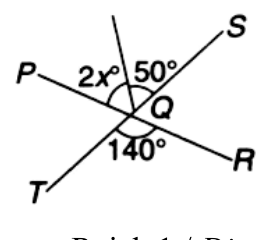
In Diagram 1, PQR and SQT are straight lines. Find the value of x. (2x° and 50° on one side, 140° below.)
Easy
Diagram 8 shows an implication: 'If m = −7, then m² = 49'. State the antecedent for this implication.
Easy
Which of the following statements is true?
Medium
Which of the following is not a statement?
Easy
Premise 1: If x < 0, then x is negative. Premise 2: ………. Conclusion: x > 0. Which of the following is Premise 2?
Medium
State the contrapositive of the statement: “If 3 is a factor of 9, then 9 can be divisible by 3.”
Medium
If 13 is an even number, then 13 is exactly divisible by 2. Determine the contrapositive for the above implication.
Easy
Which of the following statements is true?
Easy
Determine the validity and soundness of the argument below. Premise 1: If α > 90°, then α is an acute angle. Premise 2: α is not an acute angle. Conclusion: α < 90°.
Medium
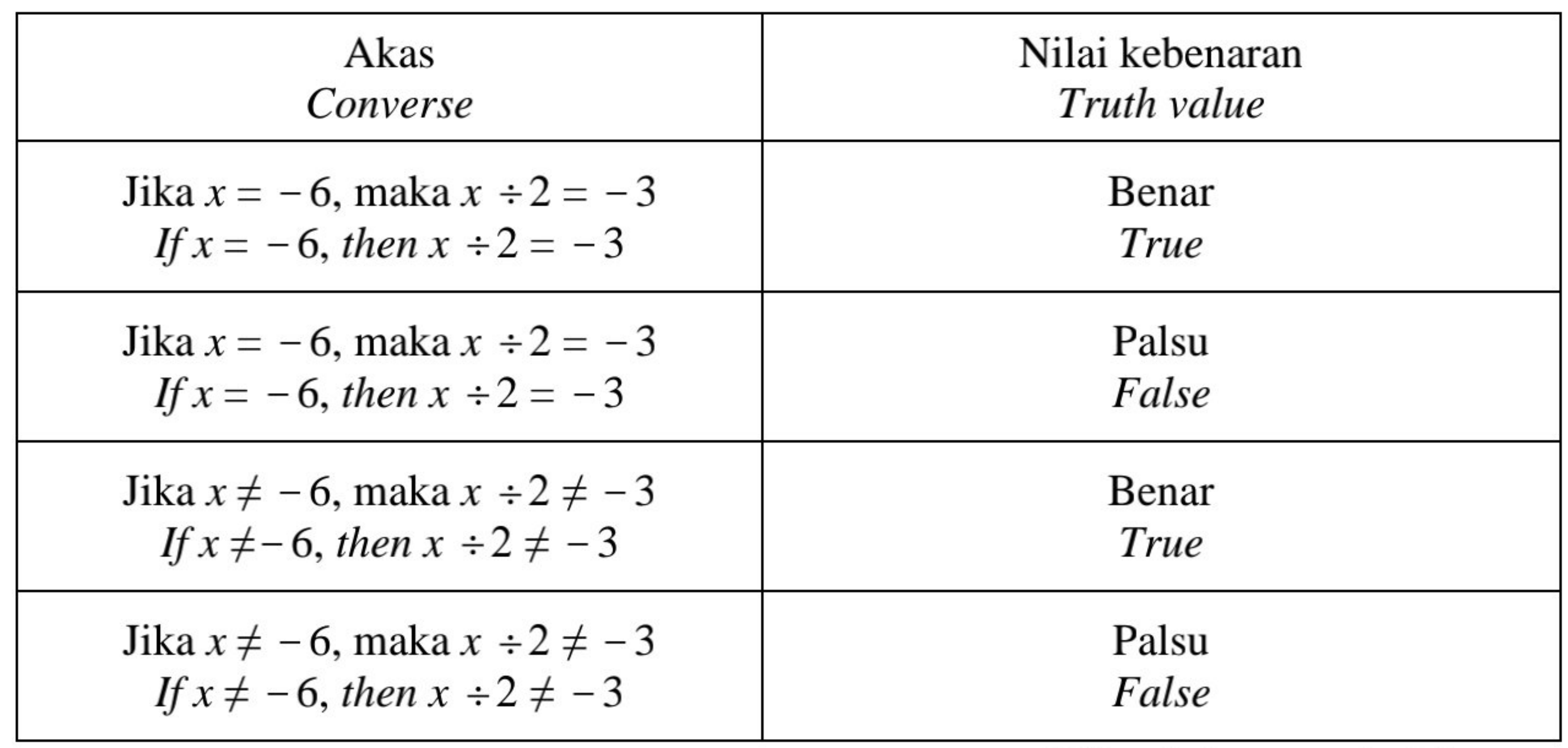
Diagram 8 shows an implication: "If x ÷ 2 = −3, then x = −6". Which of the following is true? (Converse and truth value) A: "If x = −6, then x ÷ 2 = −3", True. B: "If x = −6, then x ÷ 2 = −3", False. C: "If x ≠ −6, then x ÷ 2 ≠ −3", True. D: "If x ≠ −6, then x ÷ 2 ≠ −3", False.
Medium
Which of the following compound statements is true?
Medium
Determine the contrapositive for the given implication: If n(A ∪ B) = n(A) + n(B) − n(A ∩ B) then A ∩ B ≠ { }.
Medium
Which of following statement is true statement?
Easy
Which is the negation of the following statement? "12 is a multiple of 6"
Easy
Diagram 1 shows a set of number patterns arranged in a certain pattern: 55, 47, 39, ... What is the pattern of the set of numbers?
Easy
Which of the following is a false statement?
Medium
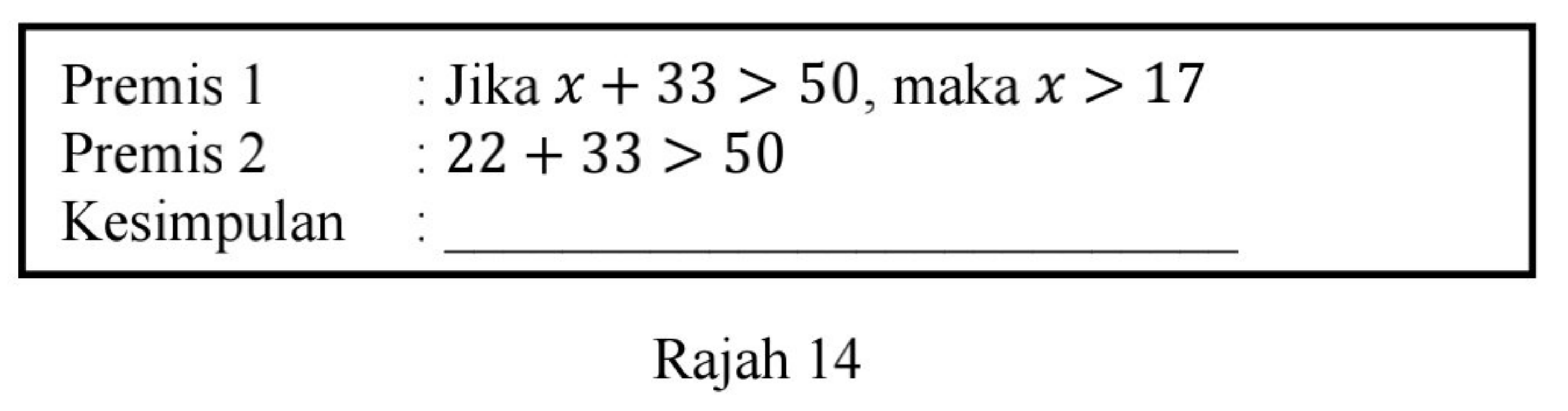
Diagram 14 shows an argument. Premise 1: If x + 33 > 50, then x > 17. Premise 2: 22 + 33 > 50. Conclusion: ______. What is the conclusion to form a valid argument?
Easy
What is the antecedent of the implication below? "If 3m = 18, then m = 6"
Easy
Premise 1: All pentagon have five sides. Premise 2: PQRST is a pentagon. Which is the conclusion of the above premises to form a valid argument?
Easy
Diagram 6 shows an incomplete argument. Premise 1: If m is divisible by 2 then m is an even number. Premise 2: ........ Conclusion: 25 is not divisible by 2. Which of following premise 2 makes the argument a valid deductive argument?
Medium
Diagram 22 shows an implication: If m = −7, then m² = 49. State the antecedent for this implication.
Easy
Diagram 6 shows an incomplete argument. Premise 1: If the straight line JK is parallel to the straight line MN, then m_JK = m_MN. Premise 2: ______. Conclusion: The straight line JK is not parallel to the straight line MN. Which of the following is the correct premise 2 to form a valid deductive argument?
Medium
Diagram 7 shows the contrapositive of an implication: "If P(R ∪ S) ≠ P(R) + P(S), then events R and S are non-mutually exclusive." Which of the following is the converse of the implication?
Medium
Diagram 3 shows two statements. p: 7 is a prime factor of 42. q: 7 is a multiple of 42. Which of the following represents the correct truth values of statement p, statement q and compound statement p or q? (Options give p, q, p or q.)
Easy
Diagram 4 shows a statement: x³ > x, x ∈ ℝ. Which of the following is the counter-example of the statement in Diagram 4?
Medium
Which of the following is a statement?
Easy
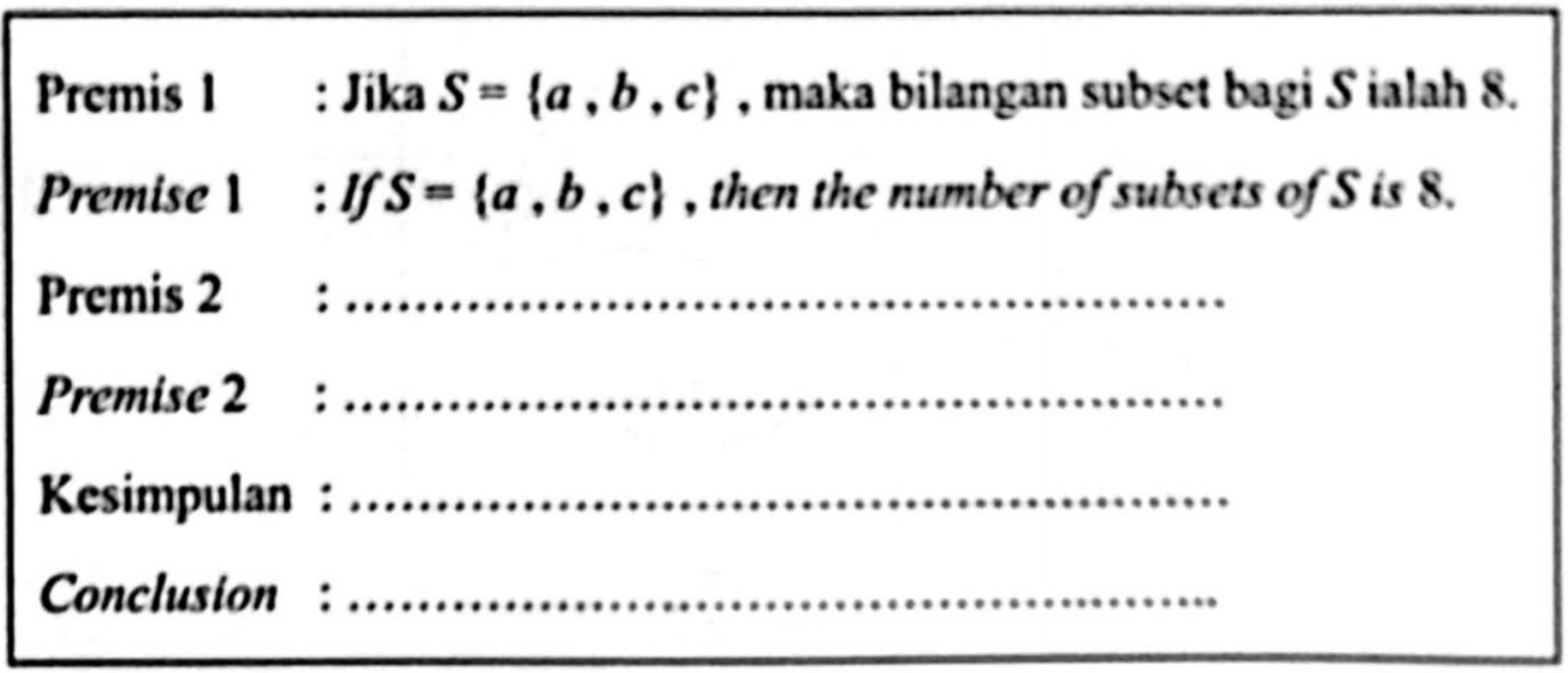
Diagram 1 shows an incomplete argument. Premise 1: If S = {a, b, c}, then the number of subsets of S is 8. Premise 2: ........ Conclusion: ........ Which of the following arrangement is correct to form deductive argument which is valid and sound?
Medium
Which of the following is a statement?
Easy
Diagram 1 shows an incomplete argument. Premise 1: If x is a factor of y, then y is divisible by x. Premise 2: ... Conclusion: ... Which of the following arrangements is correct to form a deductive argument which is valid and sound?
Medium
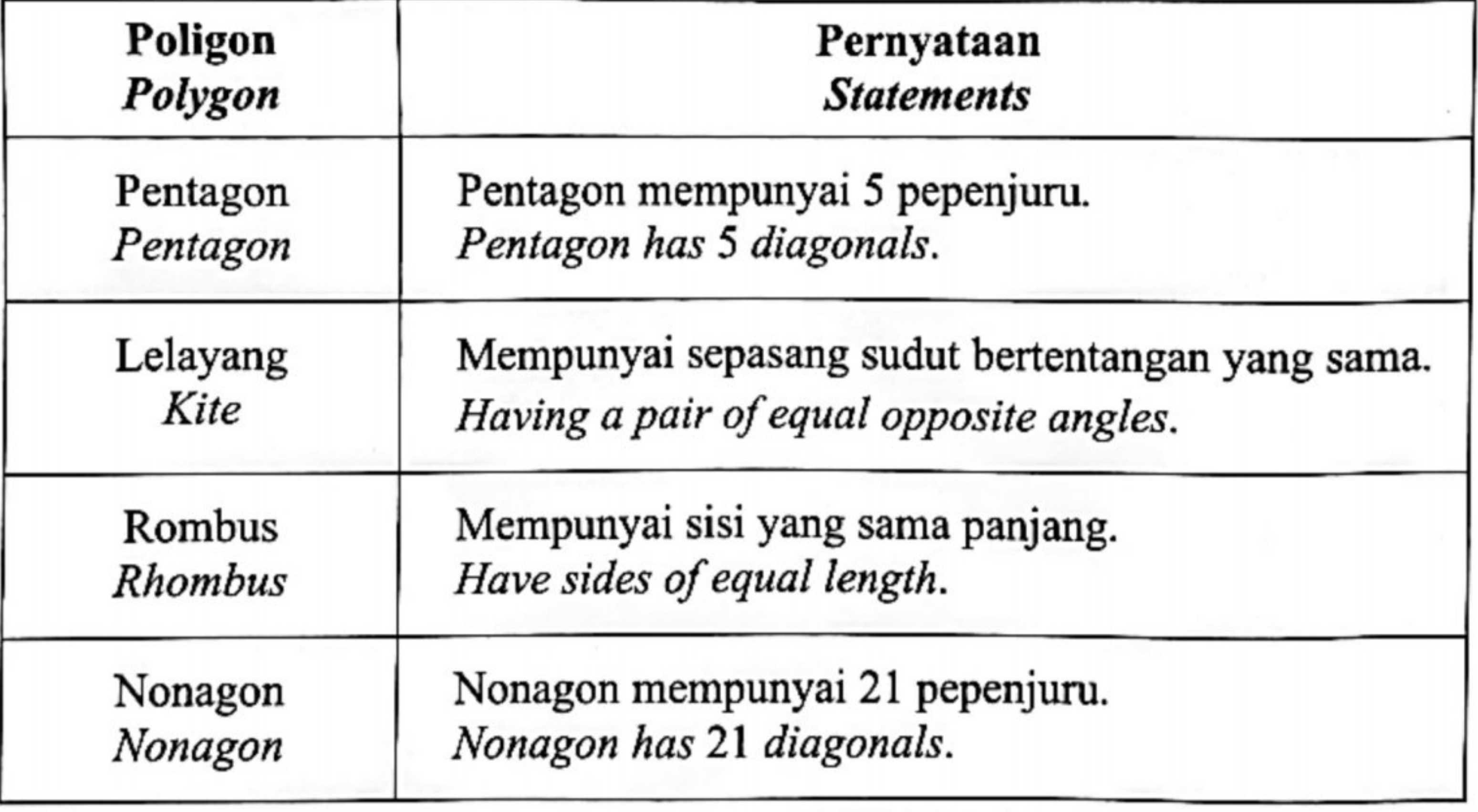
Which of the following statements is FALSE? A: Pentagon — Pentagon has 5 diagonals. B: Kite — Having a pair of equal opposite angles. C: Rhombus — Have sides of equal length. D: Nonagon — Nonagon has 21 diagonals.
Easy
Premise 1: If x < 0, then x is negative. Premise 2: ……. Conclusion: x > 0. Which of the following is Premise 2?
Medium
Which of the following is a statement?
Easy
Which of the following is a false compound statement?
Medium
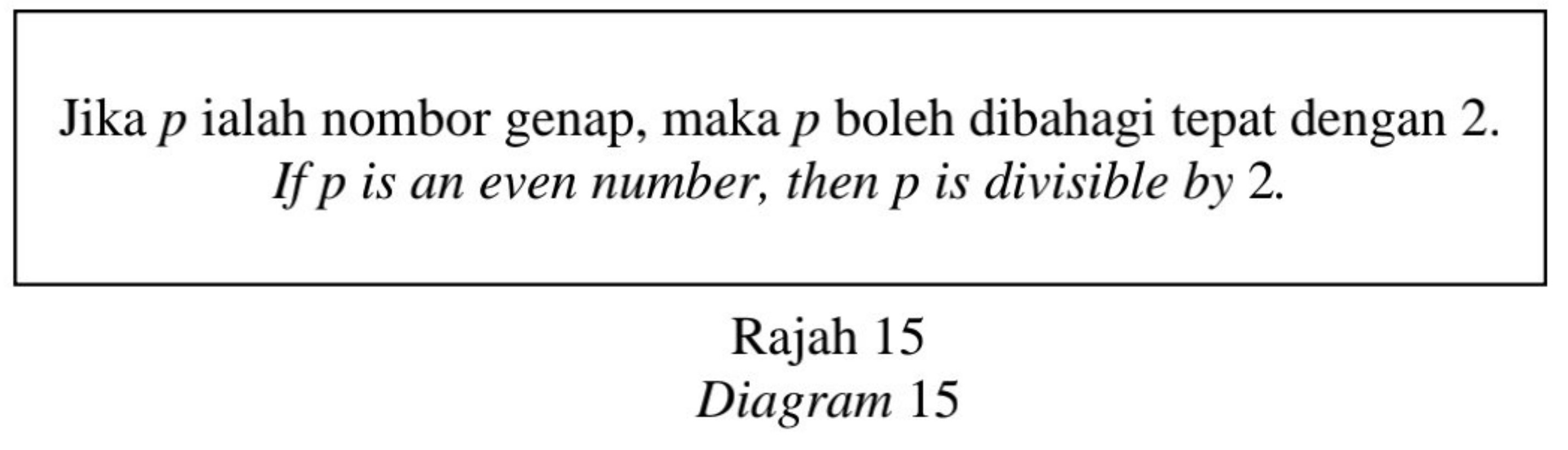
Diagram 15 shows an implication: 'If p is an even number, then p is divisible by 2.' Which of the following is the inverse of the implication?
Easy
Which of the following is not a statement?
Medium
Which of the following is a valid and reasonable argument?
Medium
State the antecedent of the following implication. If q² = 169, then q = 13