A shirt costs RM35 and a pair of trousers costs RM45. A discount of 15% is given on a shirt and 10% on a pair of trousers. Write the sales formula z if Syamsul buys x shirts and y pairs of trousers.
Medium
Adam equally fills three cylindrical glasses with orange juice up to 80% full. The radius and height of each glass are 0.03 m and 14 cm. Calculate the volume, in cm³, of juice in one glass. [Use π = 22/7]
Medium
A cone-shaped metal block with a radius of 14 cm and a height of 9 cm is melted to produce several pyramid-shaped metal pieces with a square base of 5 cm and a height of 6 cm. How many cone blocks are needed to produce 435 pyramid-shaped metal pieces?
Medium
The following is a set of numbers: –10, –4, 2, 8, … Determine the correct pattern for the set of numbers above.
Easy
Calculate the surface area of a cone that has a diameter of 6 cm and a height of 4 cm. Use π = 22/7.
Medium
Given that the length of the arc of a circle is 16.5 cm and the angle at the centre of the circle is 45°. Calculate the length, in cm, of the radius of the circle. (Use π = 22/7)
Medium
The gas pressure in a balloon at the temperature 30°C is 50 kPa. What is the gas pressure when the temperature increased to become 80°C? Based on the problem above, what assumption needs to be made in the Mathematical modelling?
Medium
Which of the following is not a component in mathematical modeling?
Easy
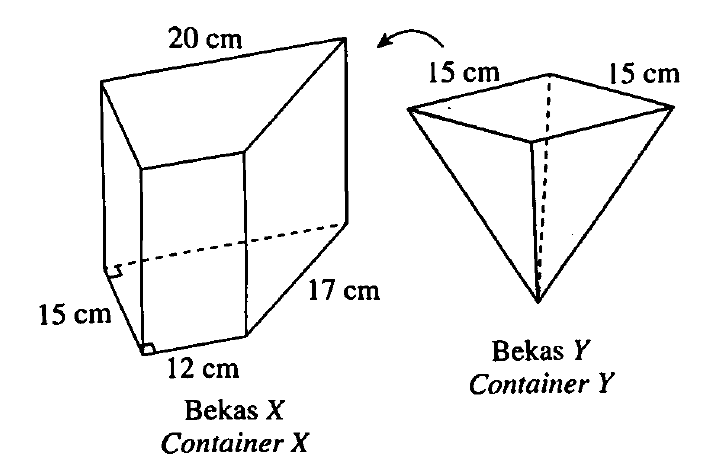
Diagram 13 shows a water container X in the shape of a right prism. Its uniform cross section is a trapezium (dimensions 20 cm, 15 cm, 12 cm and 17 cm shown in the figure). Karim has a container Y in the shape of a right pyramid filled up with water. The height of the container Y is 20 cm and its base is a square with sides of 15 cm. Karim pours all the water from container Y into container X. Calculate the height, in cm, of the water level in the container X.
Medium
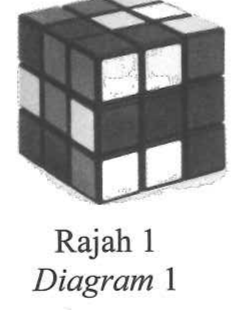
Alfred has one Rubik's cube as shown in Diagram 1. Total surface area of the Rubik's cube is 294 cm². Calculate the perimeter, in cm, of the Rubik's cube.
Medium
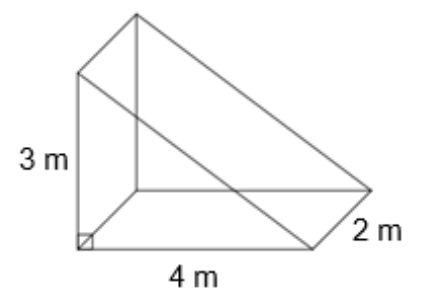
Diagram 1 shows a prism shaped piece of metal (the cross section is a right-angled triangle with base 4 m and height 3 m, and the length of the prism is 2 m). The metal is melted to form several small cubes weighing 5 g each. Given that the density of the metal is 3 100 kg/m³, find the number of cubes that can be formed. [Density = Mass ÷ Volume]
Medium
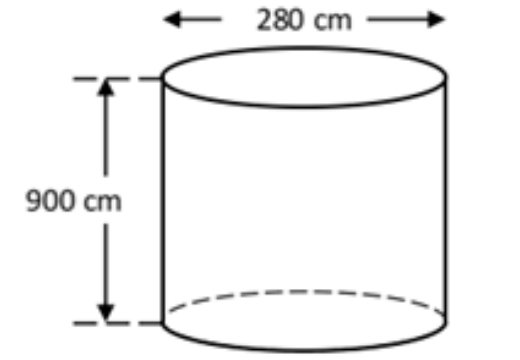
Diagram 9 shows an empty cylinder with diameter 280 cm and height 900 cm. Hanna fills the cylinder full with water. Calculate the volume, in cm³, of water needed to fill five cylinders of the same size.
Medium
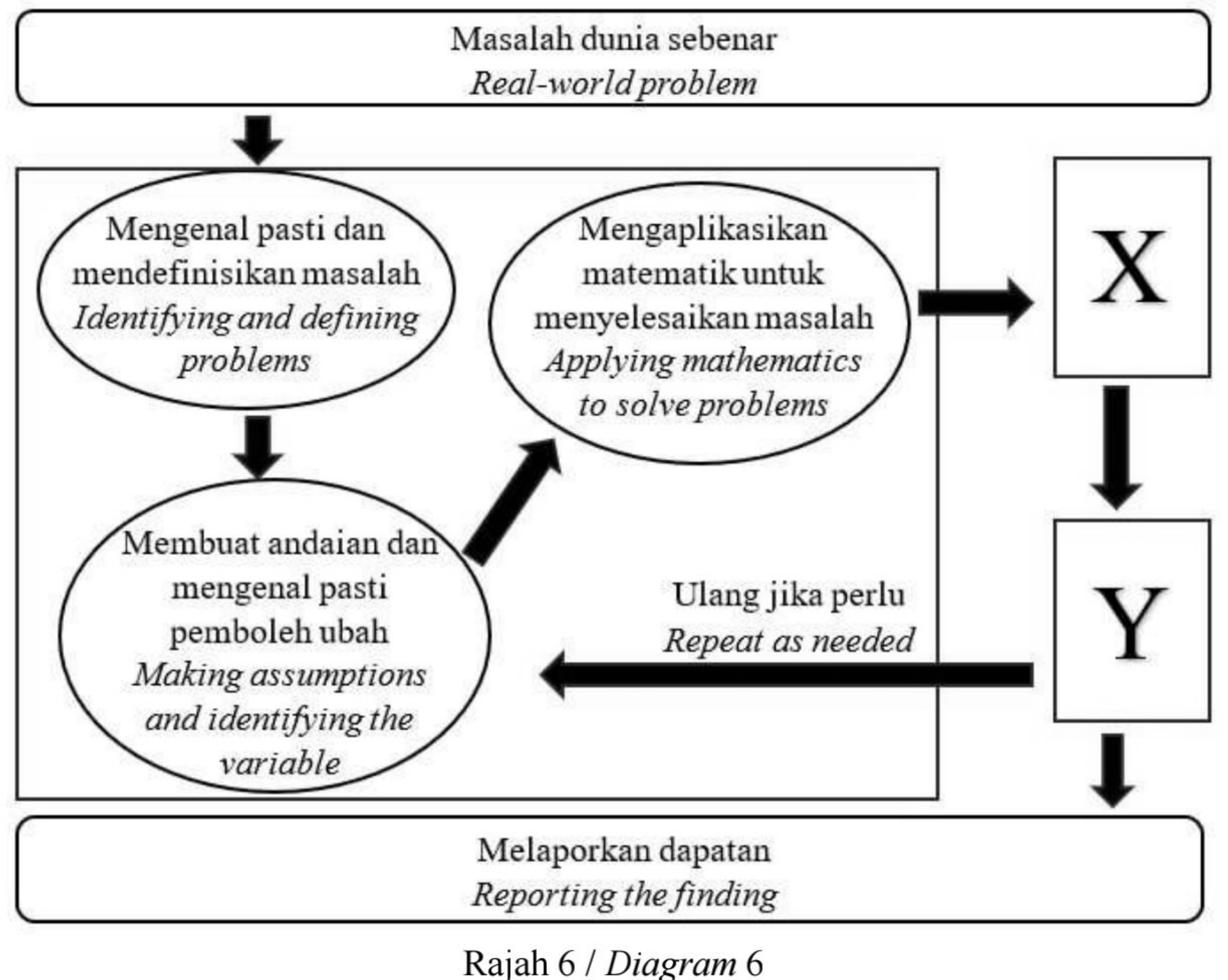
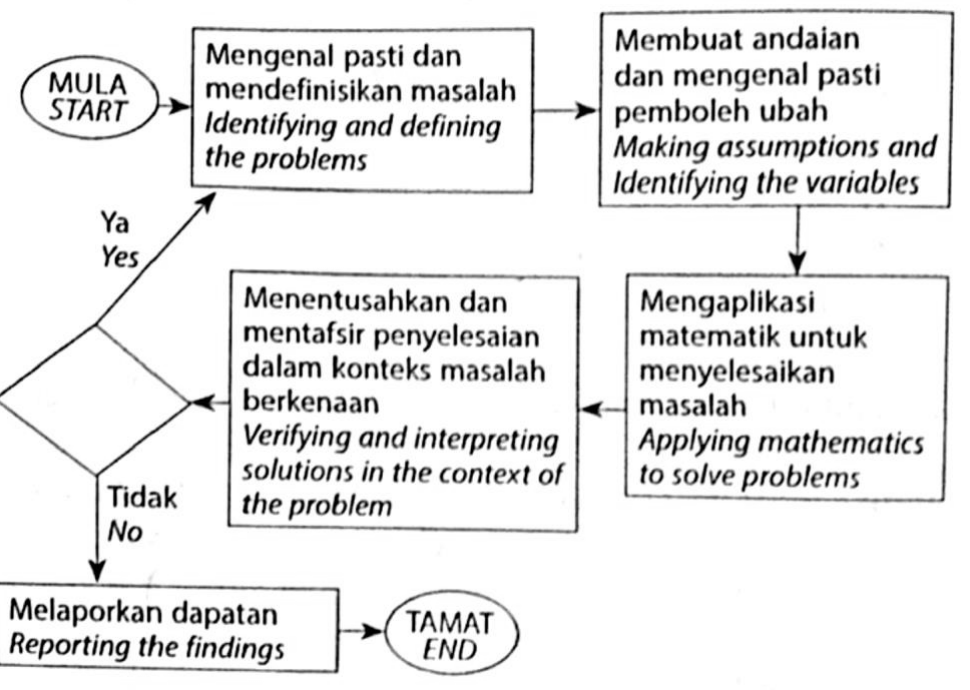
Diagram 6 shows the simplified modelling process (real-world problem; identifying and defining problems; making assumptions and identifying the variable; applying mathematics to solve problems; X; Y; reporting the finding). What is X and Y?
Medium
The following is part of a number sequence: 1.5, x, y, 40.5, 121.5. State the value of x and of y.
Medium
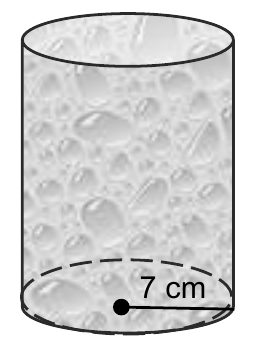
Diagram 9 shows a cylindrical container fully filled with water. The radius is 7 cm. Given the height of the cylinder is twice the radius, calculate the surface area of the cylinder. [Use π = 22/7]
Medium
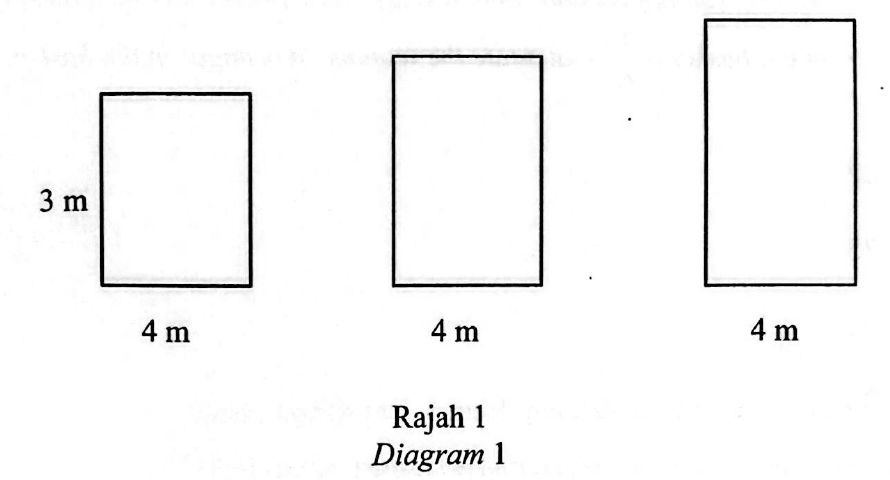
Diagram 1 shows the arrangement of the first three rectangular billboards. The width of each billboard is 4 metre. The height of the first billboard is 3 m. Each subsequent billboard is 1 m taller than the previous one. Find the area, in m², of the 6th billboard.
Medium
Statement: 'Verify and interpret solutions in the context of the problem'. The above statement is an important component that needs to be done to solve problems through mathematical modelling. At what position the process occur?
Easy
The 3R Club would like to hold a recycling campaign in the neighbourhood. They set up a one-stop centre for the collection of recycled materials and want to study the rate of its use. Which of the following is a correct assumption about the number of residents who will use the one-stop centre?
Easy
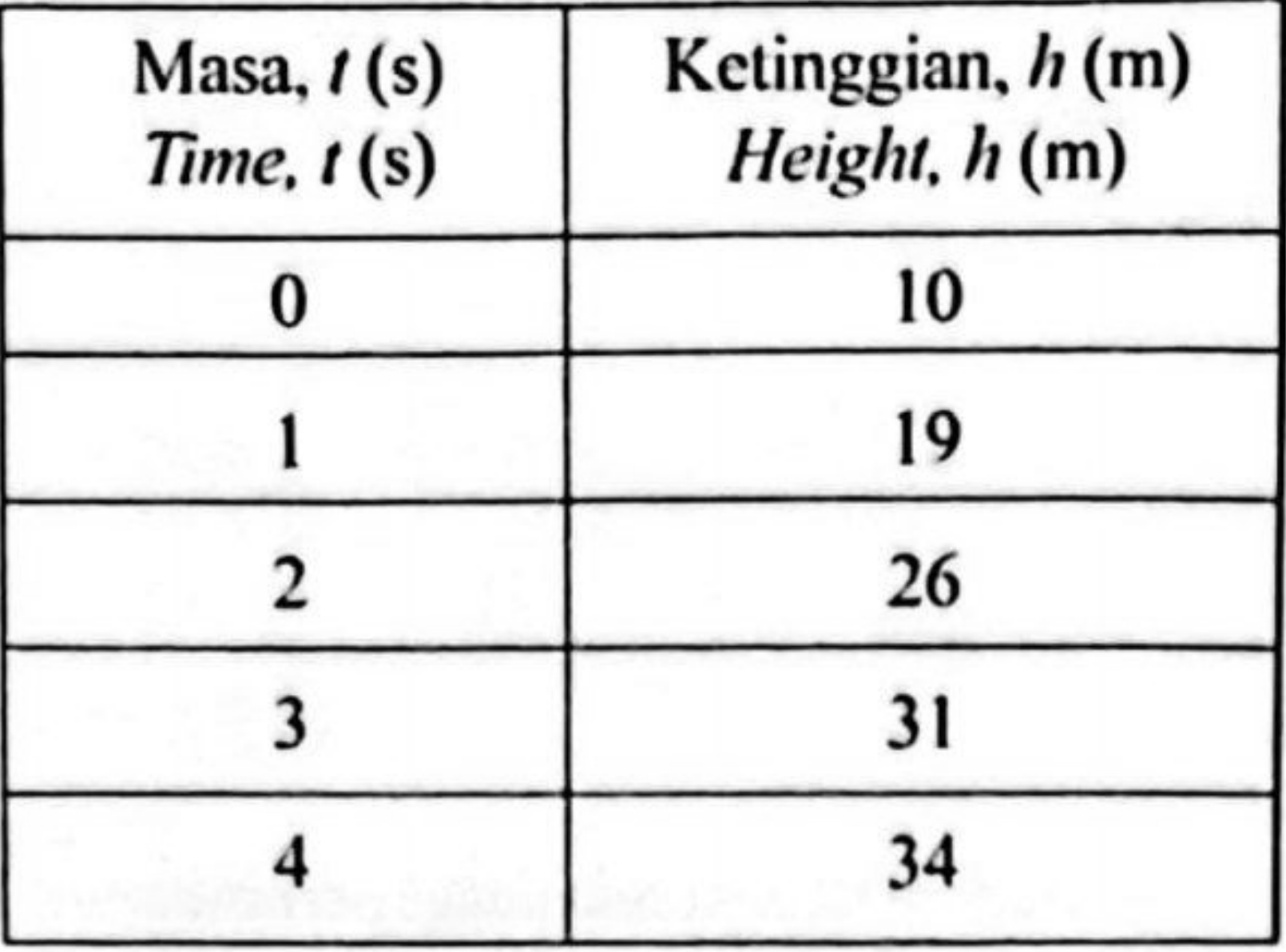
Izzah tossed a ball into the air from a high building. Table 3 shows the ball's height, h m, at time t seconds. State the function involved in the ball toss model made by Izzah.
Medium
Which of the following is not a variable in a mathematical model?
Easy
Which of the following is NOT an important component in mathematical modelling?
Easy
Mr Jamil bought a new house worth RM179 800. Due to rapid economic growth in the area, the value of his house increased at an average rate of 8% per year for 5 years. Which assumption can be stated based on the situation?
Medium
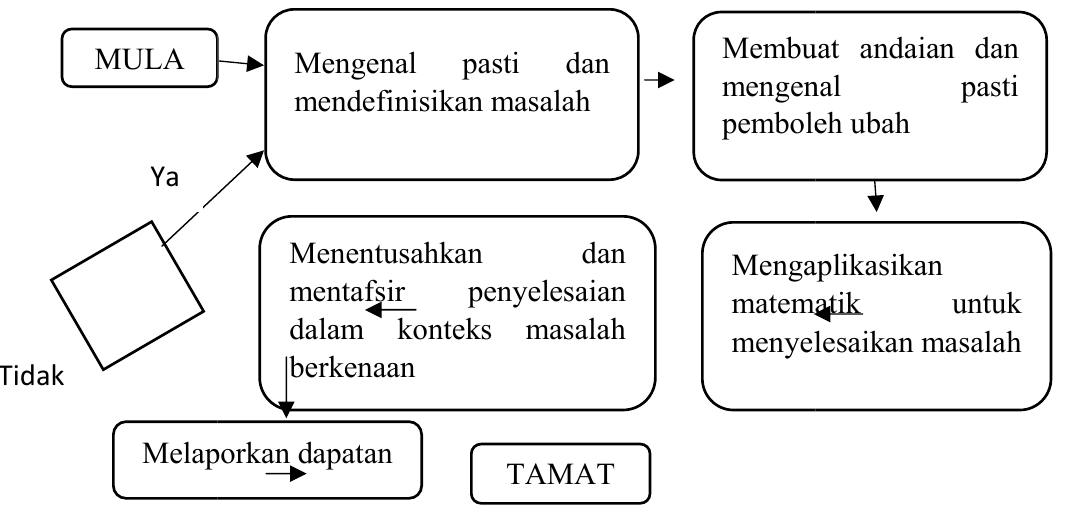
Diagram 11 shows the mathematical modeling process (flow chart with a decision box). The appropriate statement in the blank is:
Easy
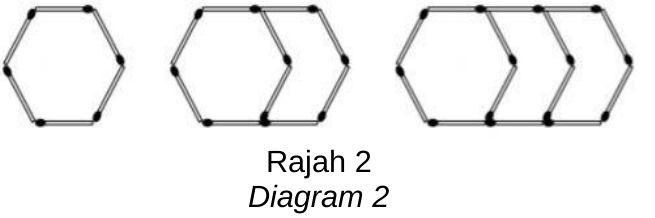
Diagram 2 shows the arrangement of matchsticks forming a sequence. How many total matchsticks are needed in the 5th and 6th shapes?
Medium
What is the next process in mathematical modelling after applying mathematics to solve problems?
Easy
What is mathematical modelling?
Easy
Which of the following components are involved in mathematical modelling? I Refining the mathematical model II Making estimation and identifying hypothesis III Identifying and defining the problem IV Report the findings
Easy
Which of the following is not an important component in mathematical modelling?
Easy
Which of the following statements is not involved in mathematical modelling?
Easy
The current population of a town is 47000. With a new policy, the population is expected to grow 1% annually. If P is the population after t years, which model represents the above information?
Medium
The table shows an exponential relationship between x and f(x).
x: 0, 1, 2, 3
f(x): 45, 13.5, 4.05, 1.215
Which of the following exponential models represents f(x)?
Medium
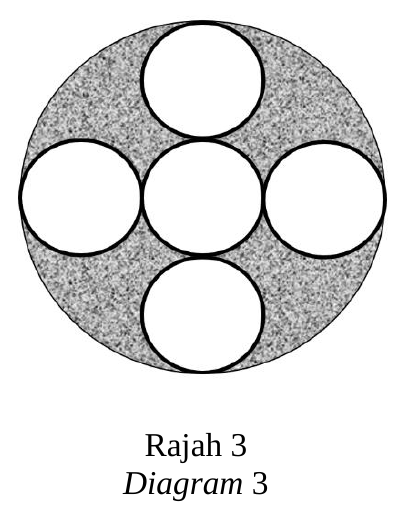
In a museum there is a round window decorated with circular rings of the same size as in Diagram 3. The radius of the window is 45 cm. Calculate the area that is not covered by the decoration. (Use π = 3.142)
Medium
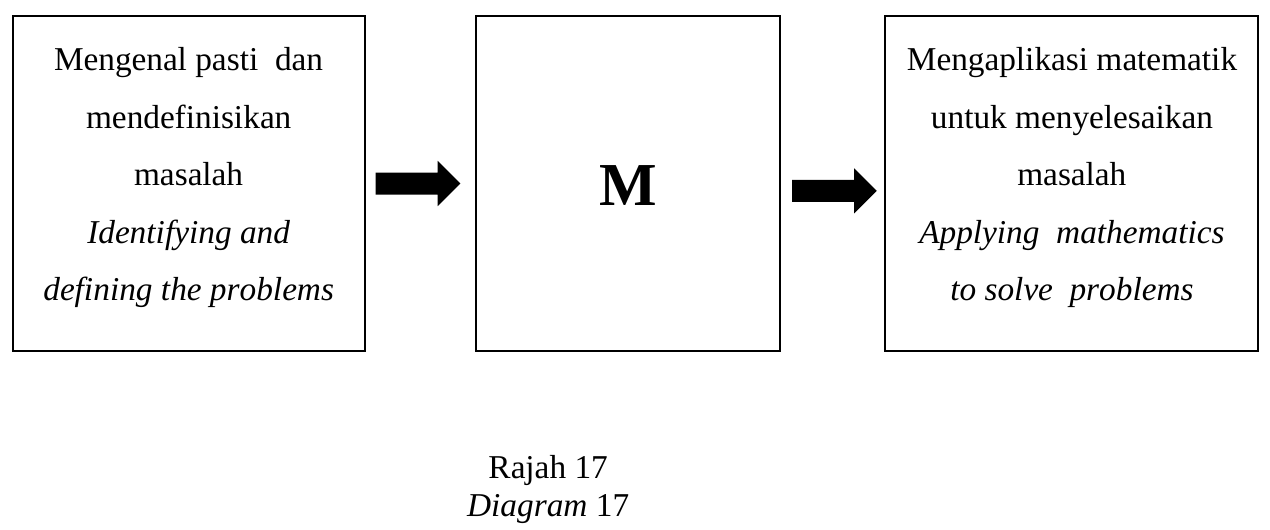
Diagram 17 shows part of the incomplete mathematical modelling process (Identifying and defining the problems → M → Applying mathematics to solve problems). Which of the following shows the process M?
Easy
The following are the six components in mathematical modeling process.
I. Making assumptions and identifying the variables
II. Verifying and interpreting solutions in the context of the problem
III. Refining the mathematical model.
IV. Identifying and defining the problems
V. Applying mathematics to solve problems
VI. Reporting the findings
Easy
Diagram 3 shows a number sequence: −256, 128, −64, 32, k, ... What is the value for k?
Easy
Calculate the sum of the 7th term and 14th term in the number sequence 3, 1, −1, −3, …
Medium
Given the sequence of numbers 1, 5, 9, 13, … and 1 = 4 × 1 − 3, 5 = 4 × 2 − 3, 9 = 4 × 3 − 3, 13 = 4 × 4 − 3, …. Find the 9th term of the sequence.
Medium
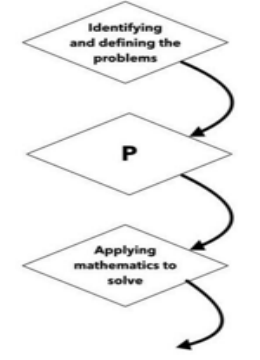
Diagram 18 shows part of the mathematical modelling process (Identifying and defining the problem → P → Applying mathematics to solve). P is
Easy
Which of the following is NOT the correct step to solve a problem using Mathematical Modelling?
Easy
A quadratic function y = 3x² + 8x + 1 is used to model a real situation. By substituting x = 1, y = 12 is obtained as an estimate. Which step of mathematical modelling does this represent?
Medium
Which of the following components is NOT involved in mathematical modelling?
Easy
Construct a linear equation in one variable for the following statement: Siti bought five pens for y cent each and a book for RM 5. The amount she paid was RM 8.
Medium
The 3R Club would like to hold a recycling campaign in the neighborhood. They set up a one-stop center for the collection of recycled materials and want to study the rate of its use. Which of the following is a correct assumption about the number of residents who will use the one-stop center?
Easy
Diagram 10 shows the mathematical modelling process. The suitable statement for the blank is
Easy
The 7th term, T7, for −1, 2, −4, 8, ... is
Medium
A train A departs from city B to city C. The journey takes t hours. Based on the statement above, which is the variable?
Easy
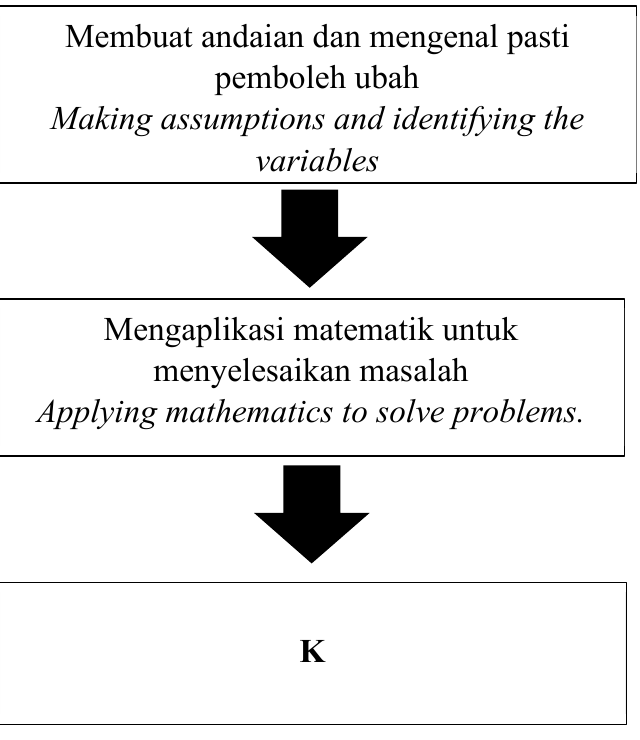
Diagram 12 shows part of the incomplete mathematical modelling process: Making assumptions and identifying the variables → Applying mathematics to solve problems → K. State the components of K.
Easy
Aunt Faridah wants to buy 10 kg of rice. The price of rice at supermarket A is more expensive than supermarket B. However, supermarket B is located further from her house than supermarket A. Which of the following is the problem for the situation above?
Medium
Sarah has deposited RM50 000 into a saving account with an interest rate of 3% per annum. How much interest will Sarah get in 4 years? Determine the variables in the solution of this problem.
Easy
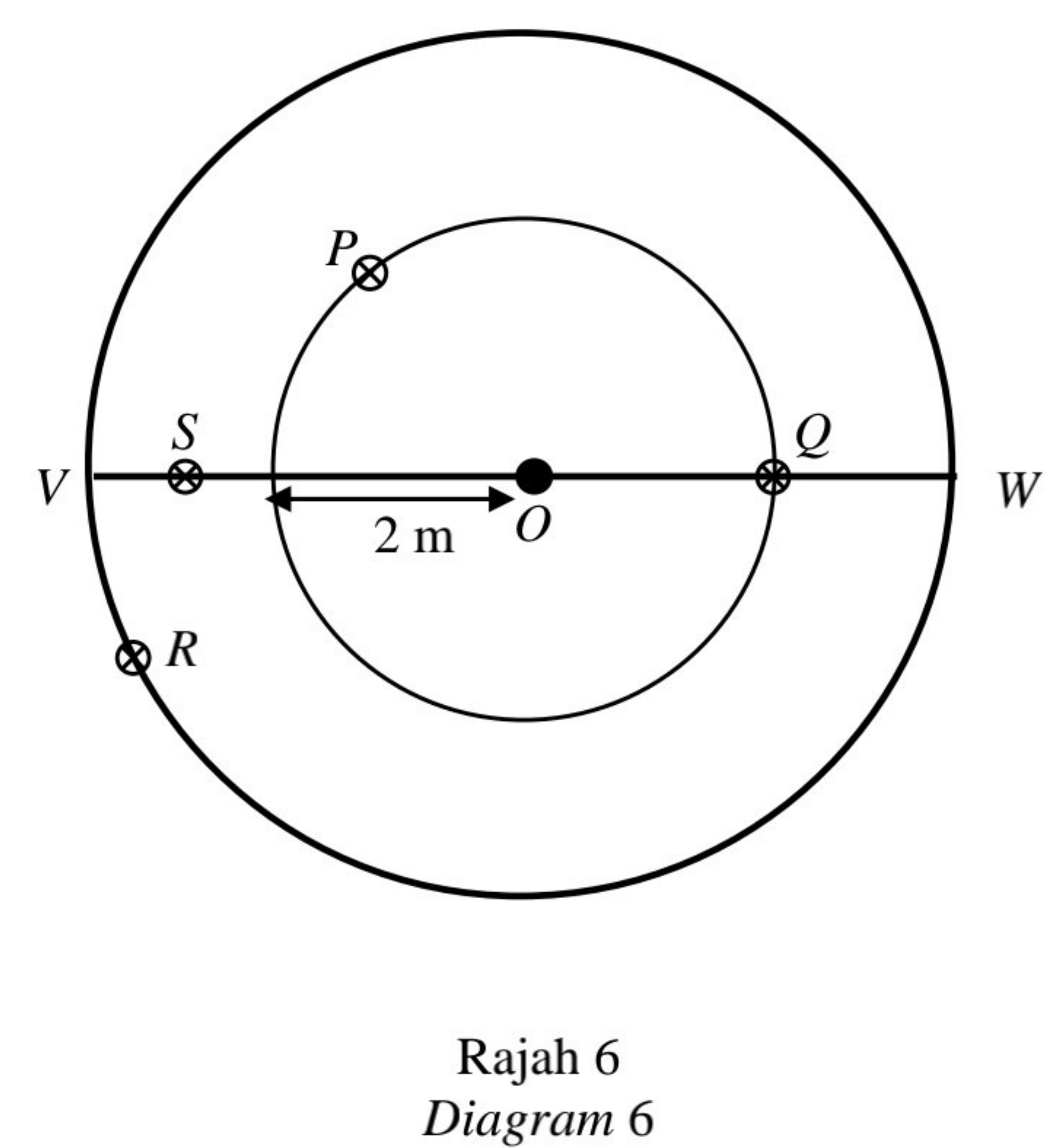
Diagram 6 shows the plan of the circular pond will be built by Savitha. O is the centre of the pond and VW is the bridge. A fountain will be built so that the distance is 1.5 m from the bridge and 2 m from the centre of the pond. Which of the points P, Q, R and S represents the location of the fountain?
Medium
In a treasure hunt competition, Siti moves from Station A to the north towards Station B for a distance of 93 m. He then moves east towards Station C for a distance of 37 m. Next, Siti moves back to Station A. Assuming all of Siti's movements are in a straight line, calculate the distance, in m, from Station A to Station C.
Medium
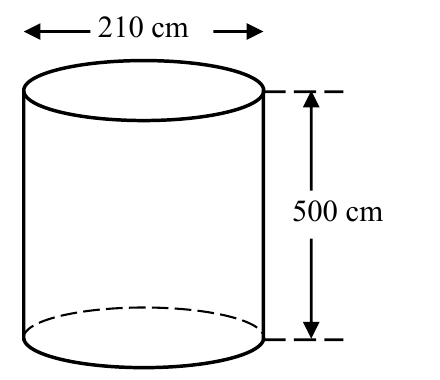
Diagram 14 shows an empty cylinder with height 500 cm and diameter 210 cm. A worker fills up the cylinder with water. Calculate the volume, in cm³, of water needed to fill up three cylinders of the same size. (Use π = 22/7)
Medium
Diagram 12 shows an arrangement of numbers according to a sequence: −11, −6, −1, 4, 9, ... From the sequence number above, determine the 17th term.
Medium
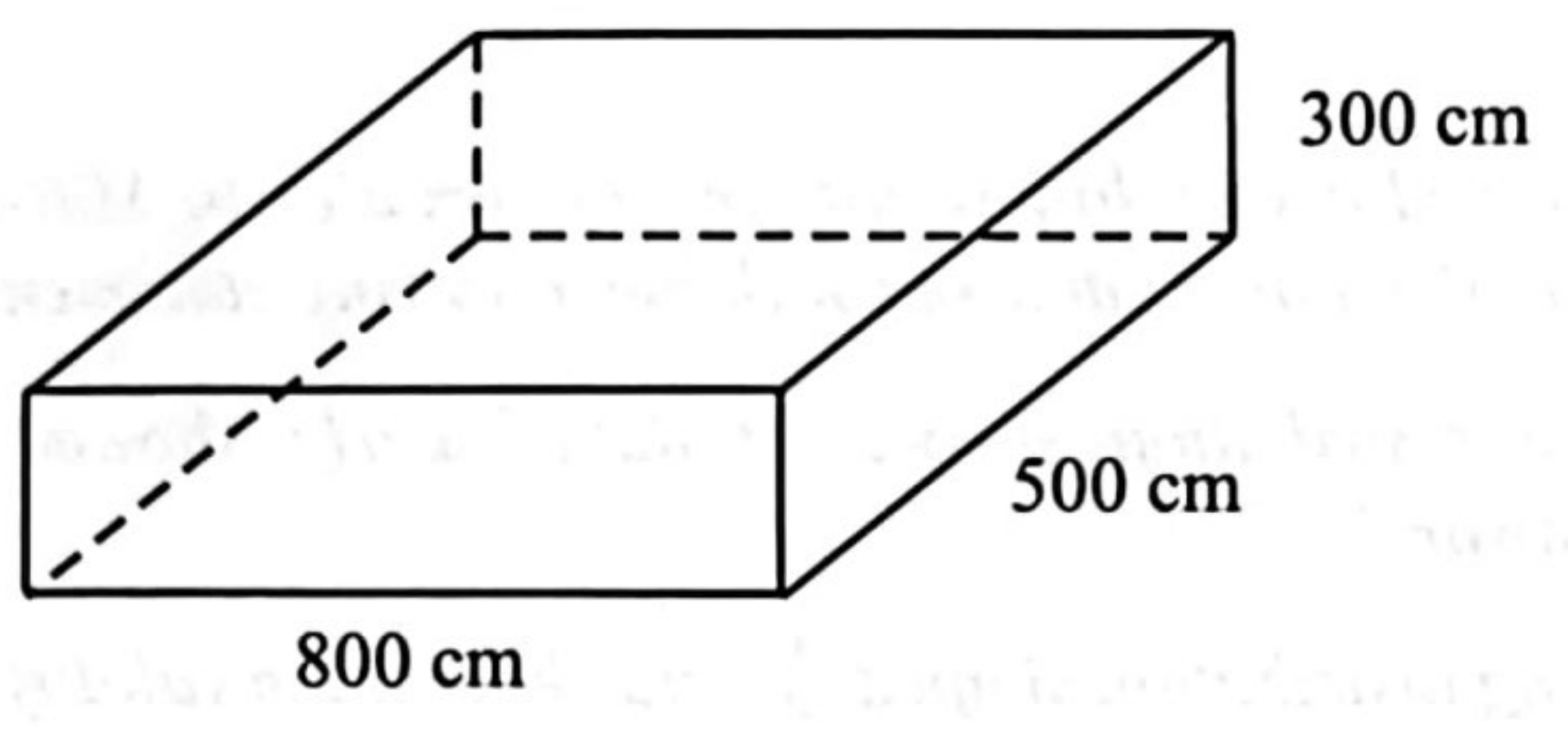
Diagram 14 shows an empty cuboid shaped tank with length of 800 cm, width of 500 cm and height of 300 cm. A worker fills 80% of the tank with water. Calculate the volume, in cm³, of water in the tank.
Easy
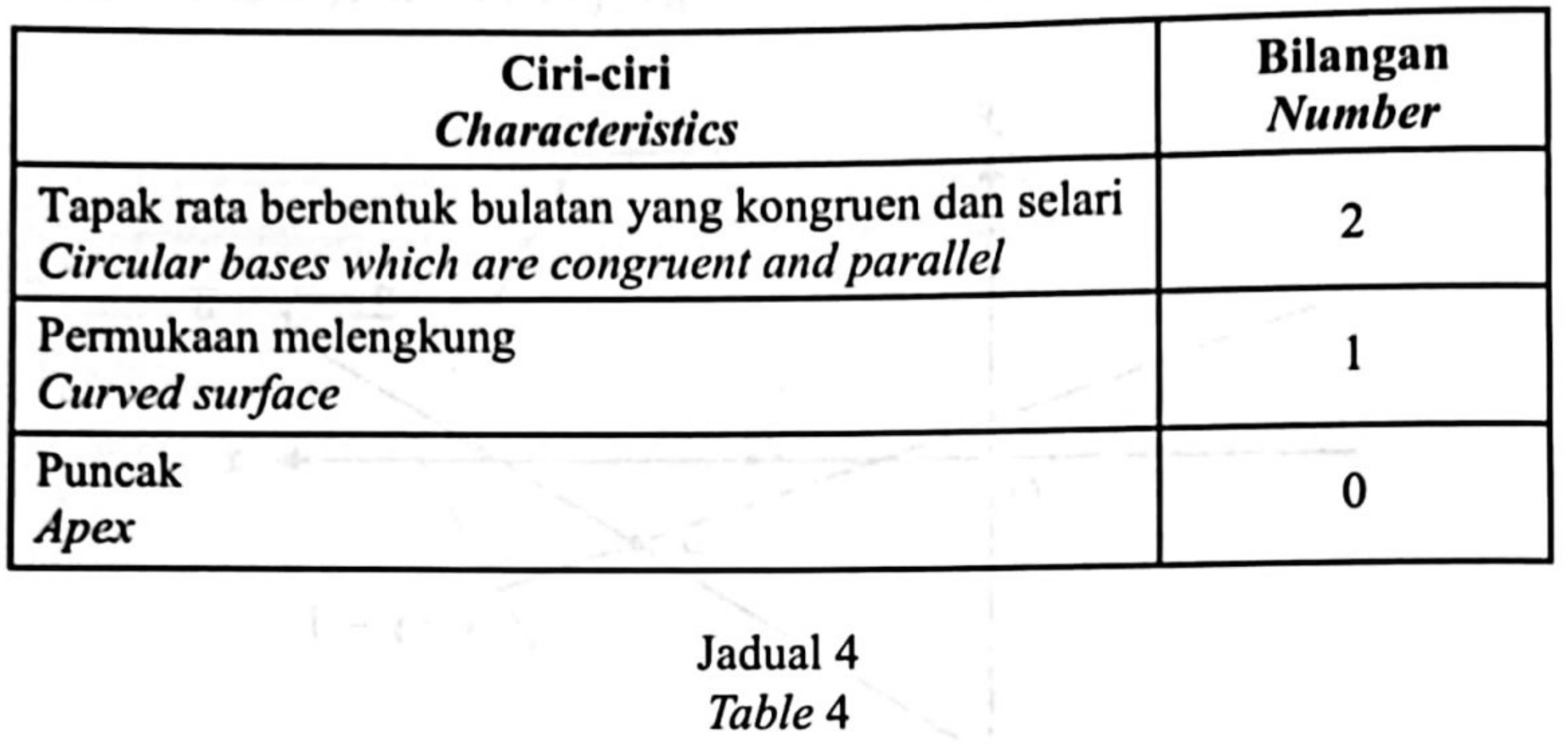
Table 4 shows information of three-dimensional geometric shape Y: circular bases which are congruent and parallel: 2; curved surface: 1; apex: 0. Given that base area and height of the geometric shape Y are 616 cm² and 7 cm respectively. Using π = 22/7, calculate the volume, in cm³, of geometric shape Y.
Medium
Arrange the ratios in Diagram 19 in ascending order: 4:5, 2:3, 5:6, 4:7.
Easy
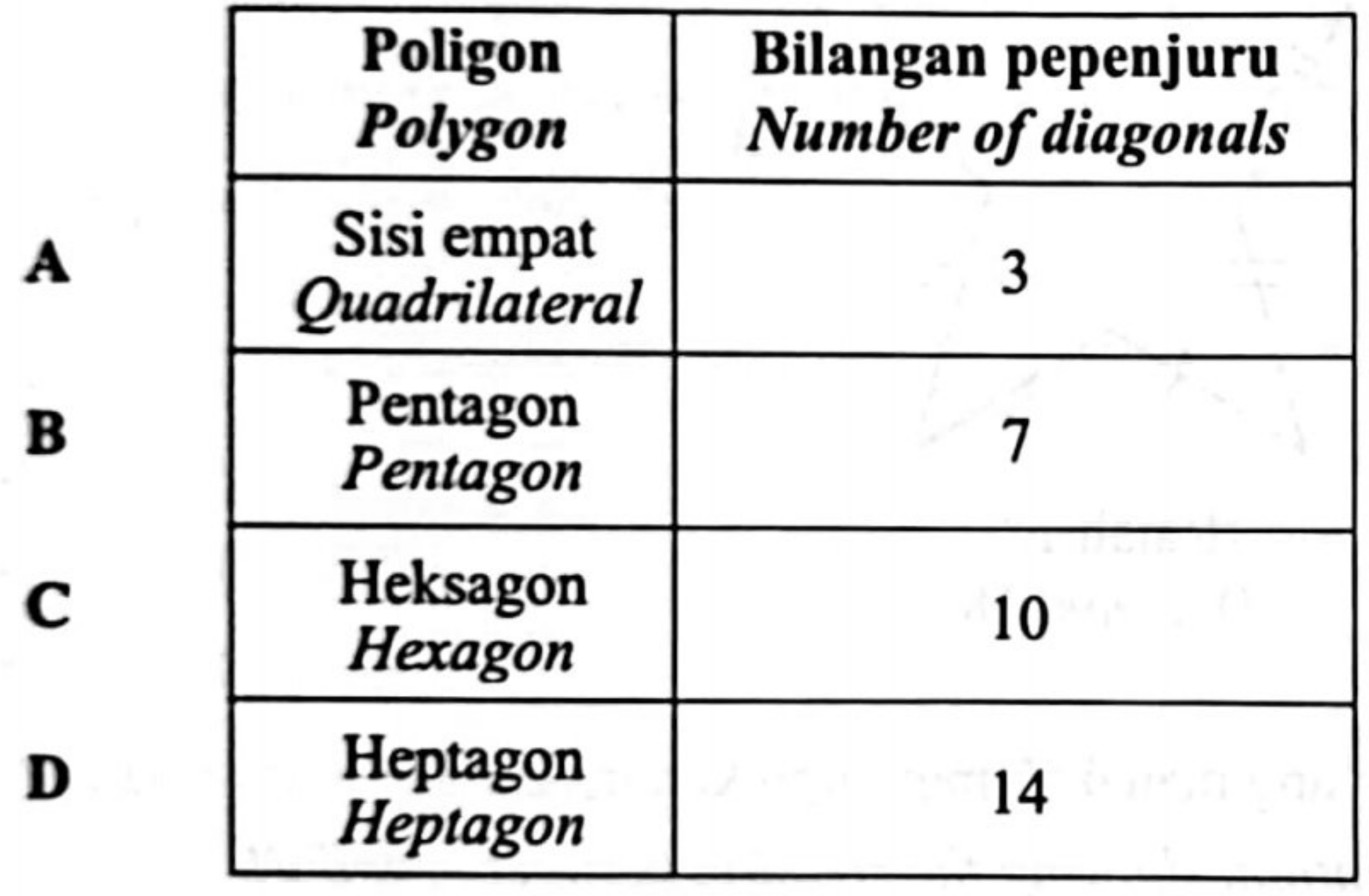
Which of the following is true? A: Quadrilateral, 3 diagonals; B: Pentagon, 7 diagonals; C: Hexagon, 10 diagonals; D: Heptagon, 14 diagonals.
Medium
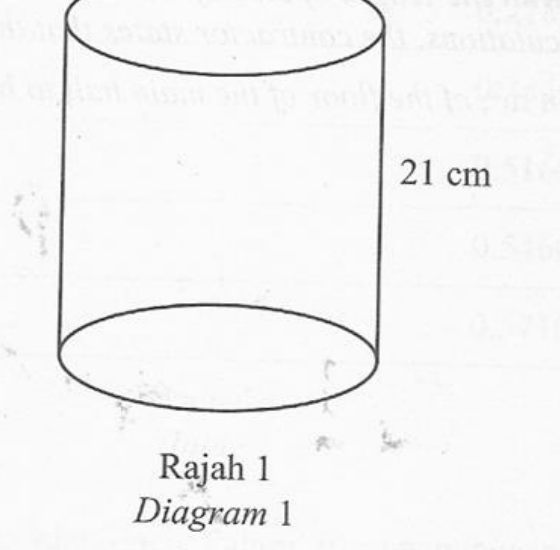
Diagram 1 shows a cylinder of height 21 cm. Given that the volume of the cylinder is 12 936 cm³, using π = 22/7, calculate the length, in cm, of the circumference of the base of the cylinder.
Medium
Klang Municipal Council plans to build a multipurpose hall. The appointed contractor uses square tiles of side 60 cm to cover the floor of the main hall. After calculation, the contractor states that 2 160 tiles are needed. Calculate the area, in m², of the floor of the main hall that will be covered by tiles.
Medium
Which of the following is a sequence?
Easy
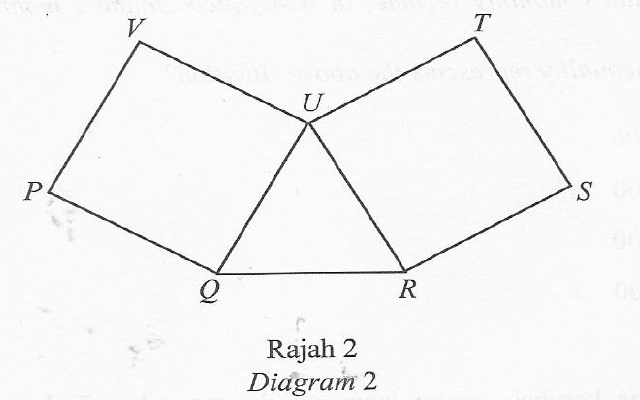
Diagram 2 shows an equilateral triangle, QRU and two squares, PQUV and RSTU. Given area of PQUV is 36 cm², calculate the difference in area between square RSTU and equilateral triangle QRU.
Medium
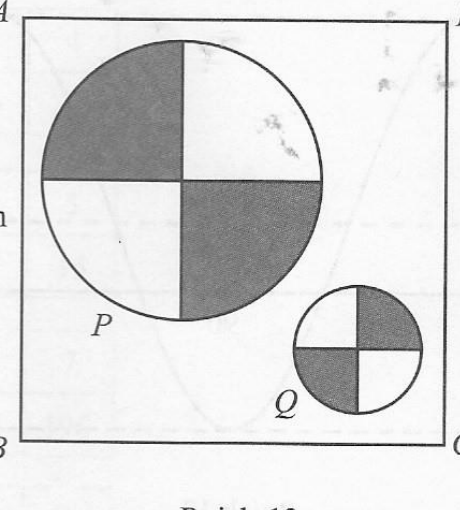
Diagram 13 shows a square hijab ABCD of side 60 cm purchased by Rosnah. There are two circles, P and Q painted on the hijab, each divided into four quadrants with two opposite quadrants shaded. Given the areas of circle P and circle Q are 1 386 cm² and 154 cm² respectively. Calculate the area, in cm², of the unshaded region.
Medium
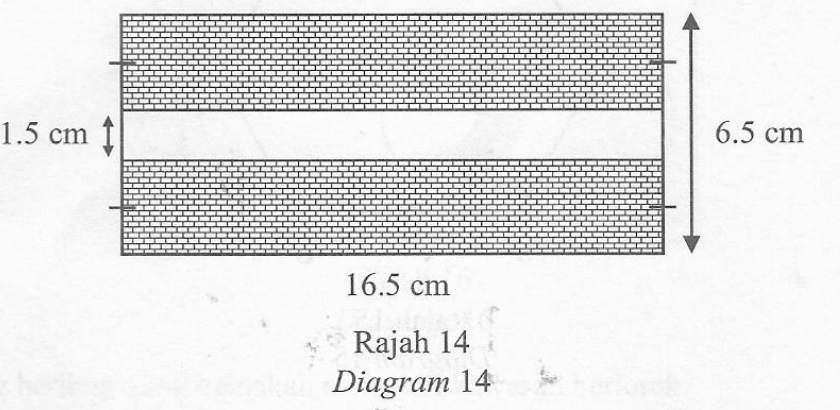
Diagram 14 shows the floor plan of a piece of land to be made into a parking area, drawn to scale 1 : 200. The white region is the lane area (1.5 cm wide), the whole plan is 16.5 cm by 6.5 cm. The owner wants to make parking bays of 2.5 m × 5 m each and will charge RM3.00 per hour for each vehicle. Calculate the maximum parking fee, in RM, that can be collected in one hour.
Medium
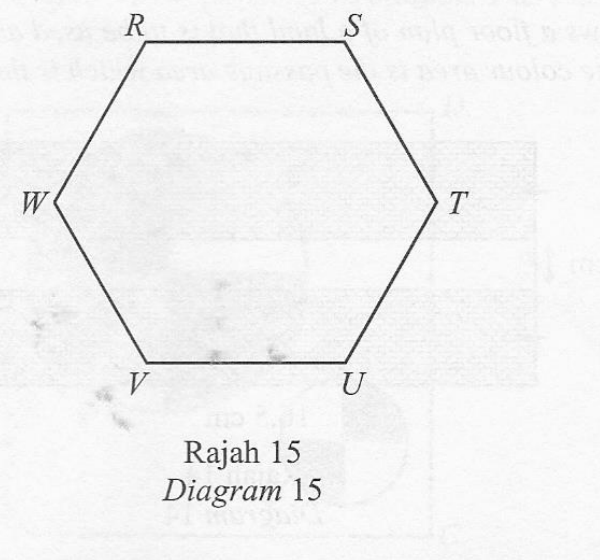
Diagram 15 shows a regular hexagon RSTUVW. Locus J is a point which moves such that it is always equidistant from line RS and line RW. Locus K is a point which moves such that it is always equidistant from point S and point U. Which of the following is true for locus J and locus K?
Medium
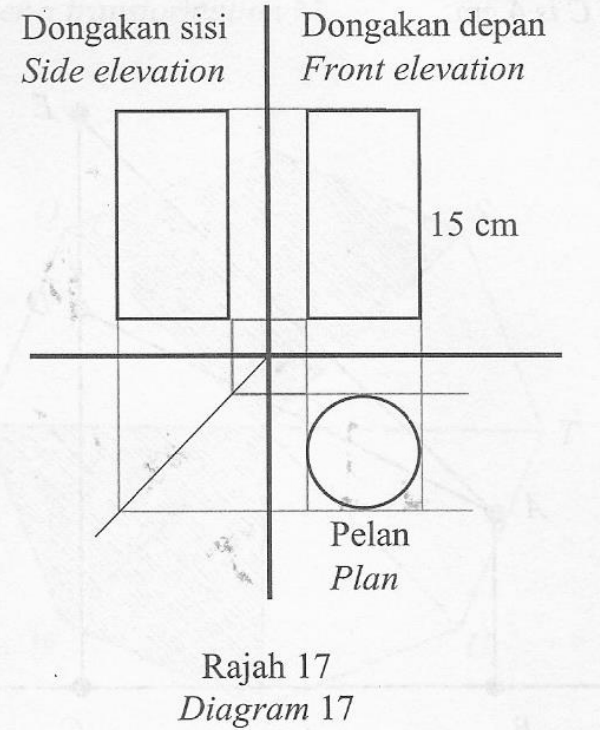
Diagram 17 shows a plan, front and side elevations of a solid Z (a cylinder of height 15 cm). Given the area of the circle is 38.5 cm². Using π = 22/7, calculate the total surface area, in cm², of solid Z.
Medium
Given P (−2, 5), Q and R (7, 2) are collinear such that PQ : PR = 1 : 2. Find coordinate of Q.
Medium
Given the number sequence 70, 65, 60, 55, ... Determine which term in the sequence is 35.
Easy
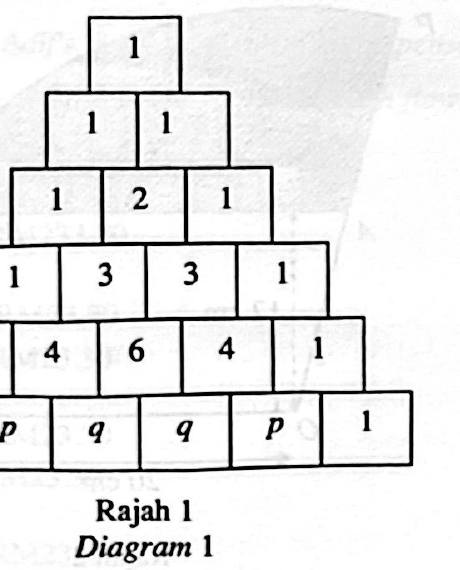
Diagram 1 shows a Pascal's Triangle. State the value of p. (Bottom row: 1, p, q, q, p, 1; the row above is 1, 4, 6, 4, 1.)
Easy
Given a number sequence 15, 6, −3, x, −21, y, … Calculate the value of x − y.