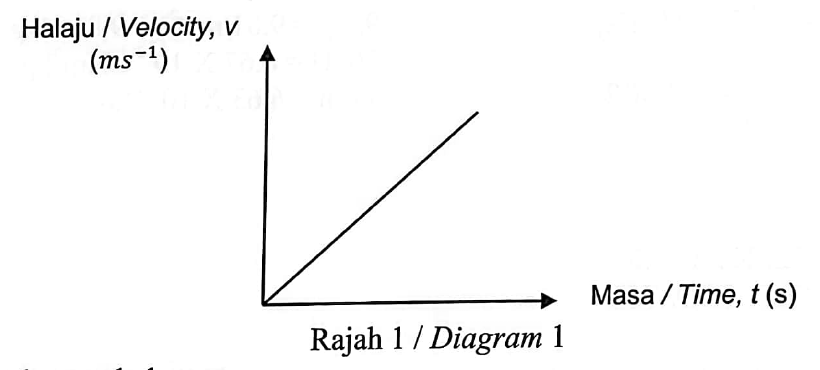
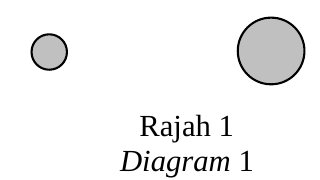
Diagram 1 shows graph of velocity against time for a car (a straight line rising from the origin). The car is moving with
Medium
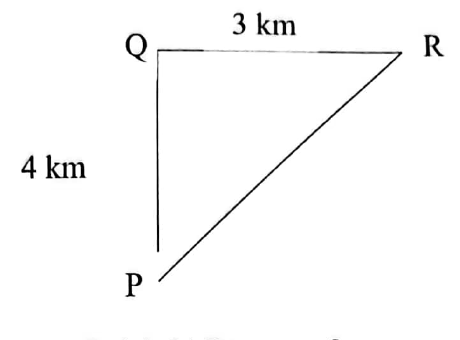
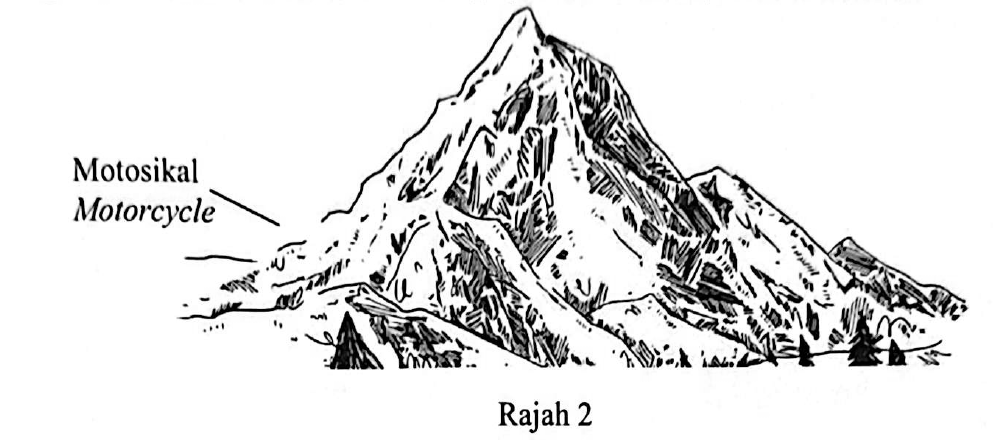
Ramli takes 30 minutes to cycle through P, Q and R as shown in Diagram 2 (P to Q = 4 km, Q to R = 3 km). What is the speed of Ramli cycles from P to R?
Medium
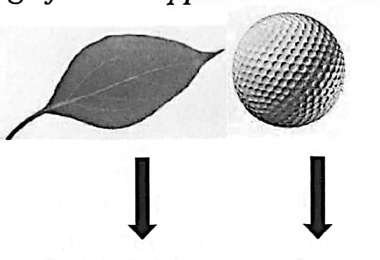
Diagram 3 shows a leaf and a golf ball dropped simultaneously in a vacuum. Which of the following describes the movement of leaf and golf ball?
Easy
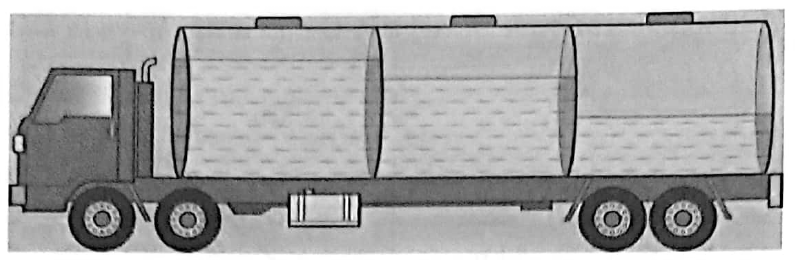
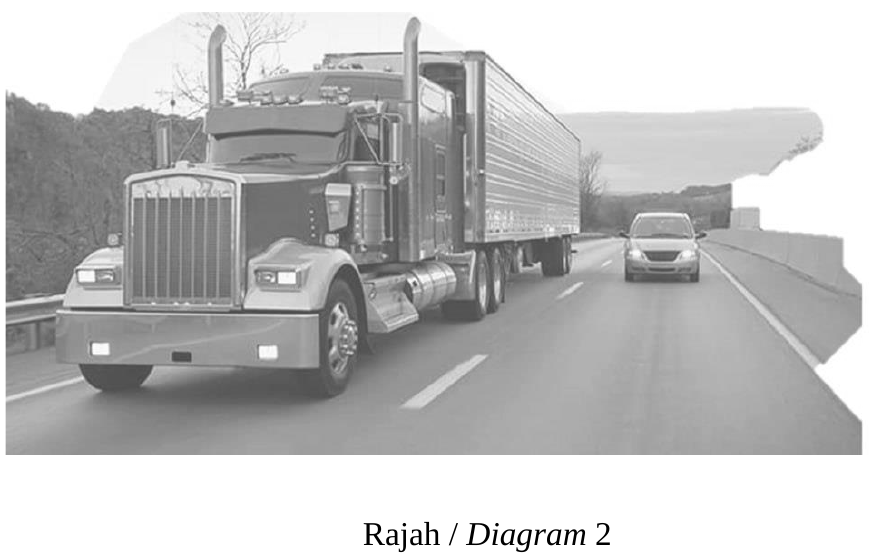
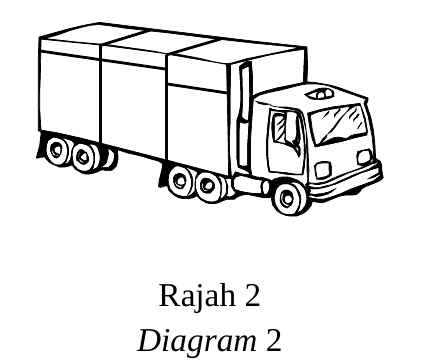
Diagram 4 shows an oil tanker truck. The oil tanker truck has its storage tank divided into several separate tanks to
Medium
A car of mass 1000 kg at rest is moved by a force of 200 N. What is the acceleration of the car and time taken for the car to reach a velocity of 1.5 m s⁻¹?
Medium
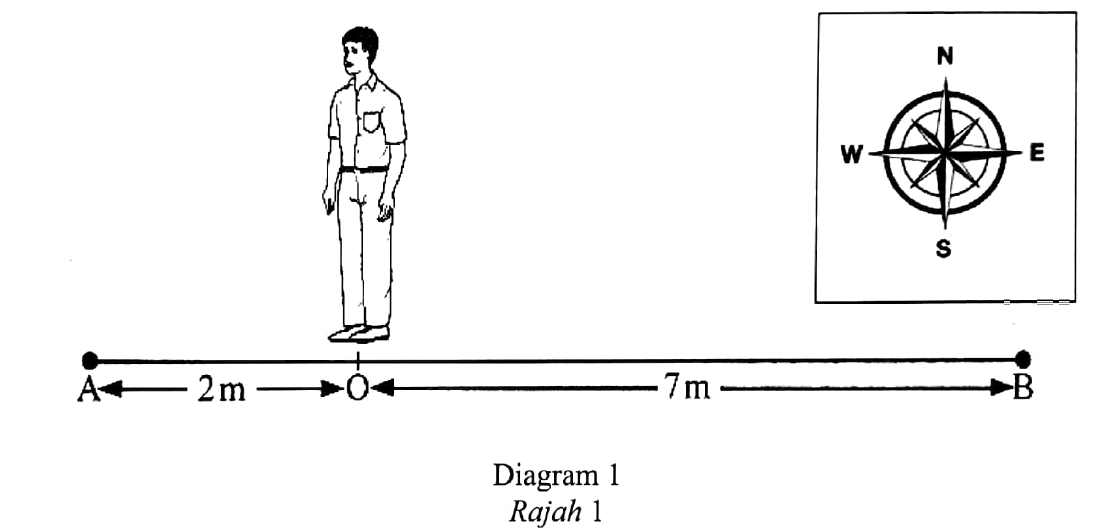
Diagram 1 shows Richard stands at O. He walks towards A, then moves towards B and stops at B. (OA = 2 m to the west, OB = 7 m to the east.) What is the displacement of Richard?
Medium
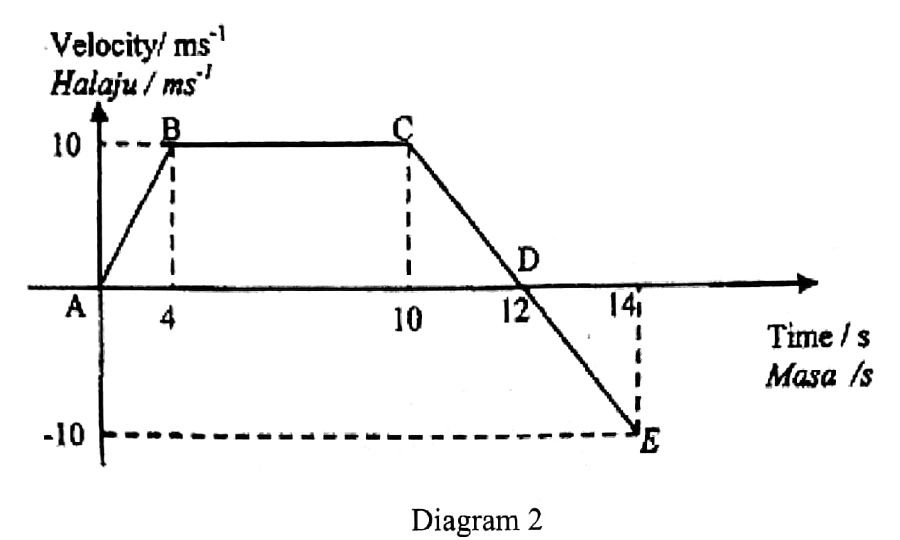
Based on the velocity-time graph below (Diagram 2), what is the displacement of the car in 14 s? (Graph: velocity rises from 0 to 10 m s⁻¹ at 4 s, constant until 10 s, falls to 0 at 12 s, then to -10 m s⁻¹ at 14 s.)
Medium
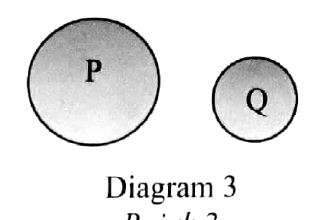
Diagram 3 shows two steel balls, P and Q, dropped from the top of a building to the ground. Assume the air resistance is negligible. Which of the following velocity-time graphs shows the correct motion of P and Q?
Medium
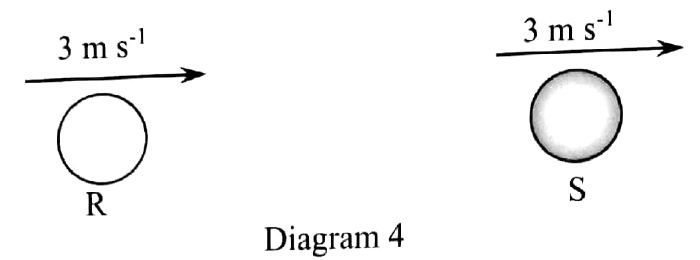
Diagram 4 shows two spheres, R made of cork and S made of steel. Both are moving at a speed of 3 m s⁻¹. Which comparison about the momentum is correct?
Easy
Force F acting on an object of mass 3 kg on a smooth floor produces an acceleration of 4.0 m s⁻². What is the acceleration of an object of mass 5 kg if force 2F acts on it?
Medium
A ball of 1.2 kg with velocity of 4 m s⁻¹ is hit by a car moving in the same direction as the ball. The velocity of the ball increases to 10 m s⁻¹ in 0.5 s. What is the impulse on the ball?
Medium
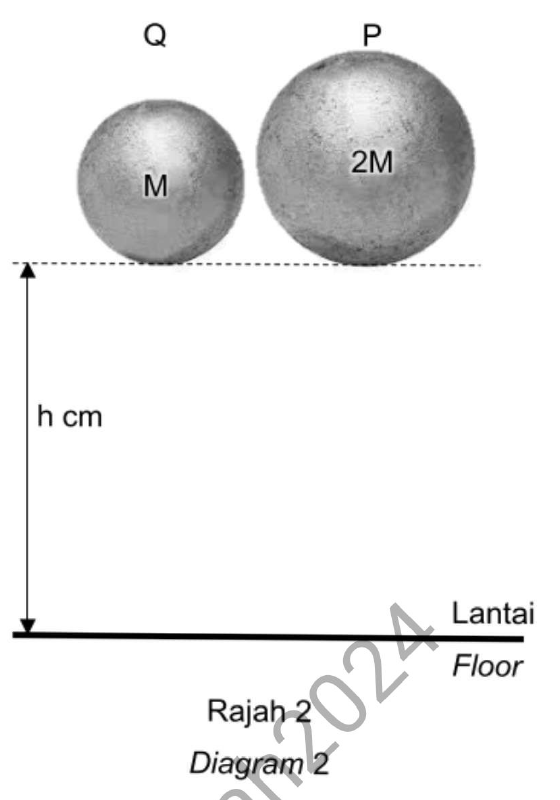
Diagram 2 shows two shot put balls P and Q of masses M and 2M each at the same height, h. The two balls are dropped simultaneously. Which of the following statements is true?
Medium
The driver and passengers of a car are advised to wear seat belts. The purpose of wearing seat belts is to reduce the negative effect of
Medium
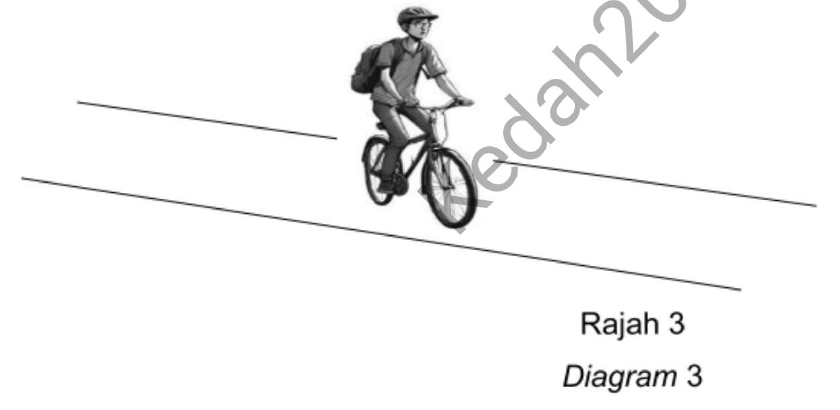
Diagram 3 shows a cyclist cycling on a road. What is the force acting between the bicycle tyre and the road?
Easy
Which activity produces the largest impulsive force? (A: hitting a billiard ball with a cue; B: catching a ball with a glove; C: long jump landing; D: high jump landing on a mattress)
Medium
An astronaut of mass 80 kg can jump 10 cm high off the surface of the Earth. When he is on the Moon, he can jump higher than this because on the Moon
Medium
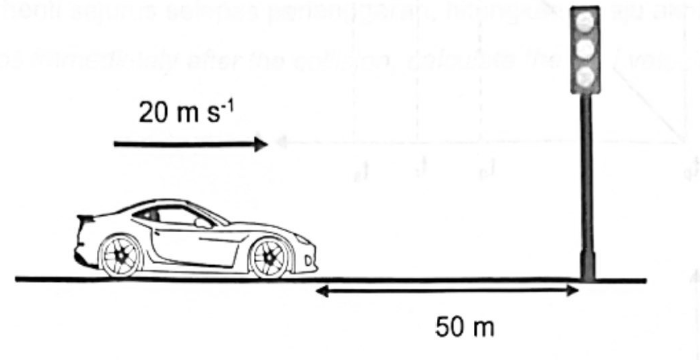
Diagram 2: a car moving at 20 m s⁻¹ slows down and stops completely after travelling 50 m. Find the acceleration of the car.
Medium
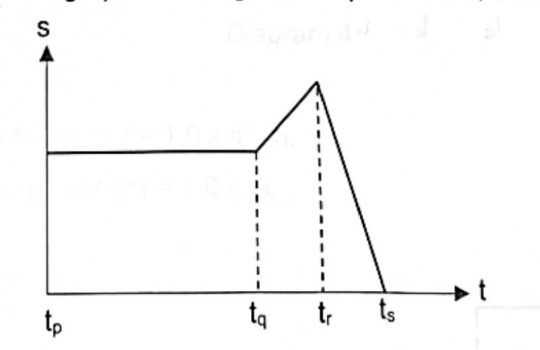
Diagram 3 is a displacement-time graph of an object: constant displacement from t_p to t_q, then displacement rises to t_r, then falls steeply to t_s. Which velocity-time graph represents the same motion?
Medium
Trolley X (6 kg, 3 m s⁻¹) collides elastically with trolley Y (3 kg, 2 m s⁻¹). Trolley X stops immediately after the collision. Calculate the final velocity of trolley Y.
Medium
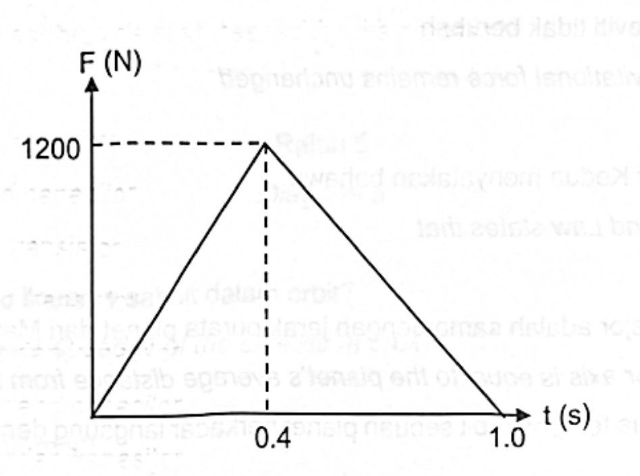
Diagram 4 is a force-time graph (triangle, peak 1200 N at 0.4 s, force falls to zero at 1.0 s). Find the impulse of the object at t = 1.0 s.
Medium
"Every object remains in a state of rest or uniform motion in a straight line unless it is forced to change that state by an external force applied to it". This statement is explained by
Easy
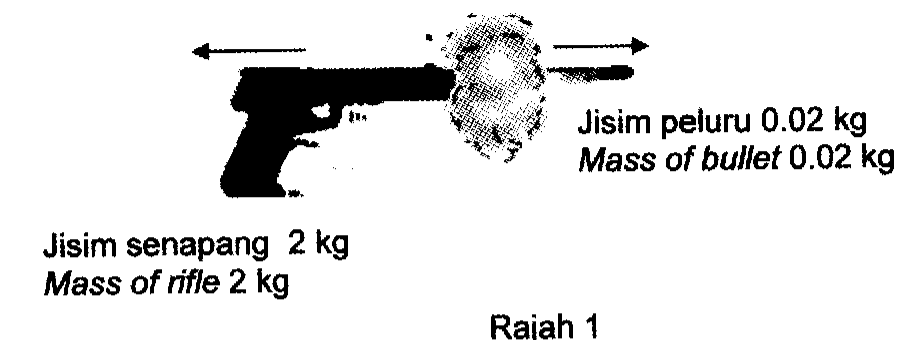
Diagram 1 shows a rifle. A bullet is fired with a velocity of 150 m s⁻¹. Mass of bullet 0.02 kg, mass of rifle 2 kg. What is the recoil velocity of the rifle?
Medium
A goalkeeper catches a ball. The impulsive force can be reduced if
Medium
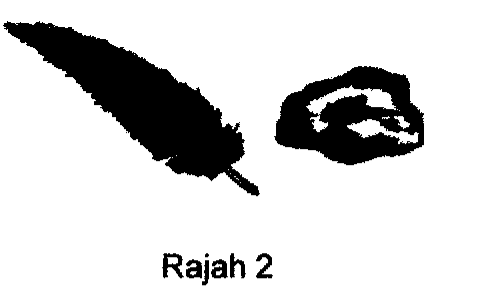
Diagram 2 shows a stone and a piece of feather were dropped simultaneously from the same height. What happens to the fall time for both objects?
Medium
An object will remain at rest, or continue moving with uniform velocity unless it is acted upon by an external force to change its state of motion. What law is explained by the statement above?
Easy
Which sport event uses the Principle of Conservation of Momentum?
Medium
A football of mass 0.5 kg is kicked by a force of 30 N in 0.5 s. What is the impulse experienced by the ball?
Medium
A plasticine ball of mass 0.05 kg is thrown at a velocity of 10 m s⁻¹ and hits the wall. It sticks to the wall. If the impact time during collision is 0.2 s, what is the magnitude of the impulsive force acting on the wall?
Medium
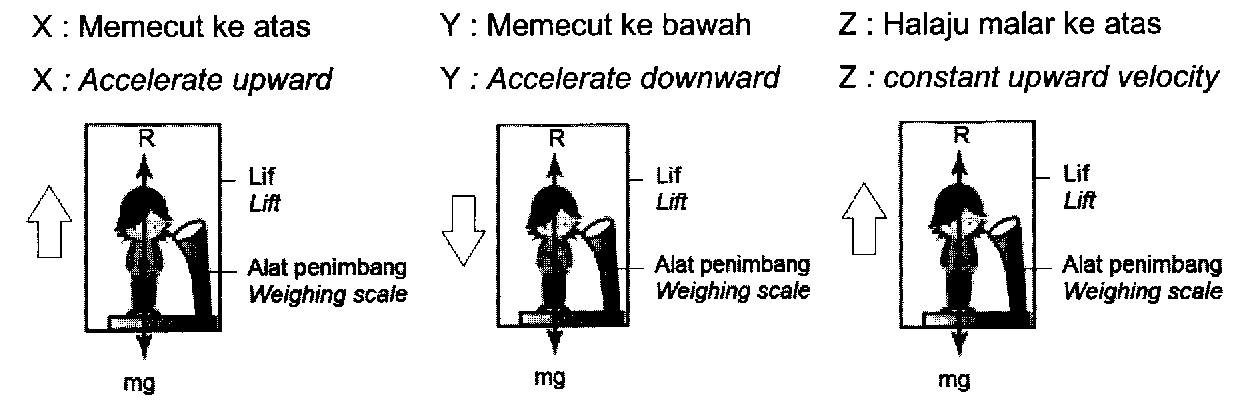
Diagram 8 shows a student stands on a weighing scale. He experienced three different elevator motion situations X, Y and Z. X: accelerate upward; Y: accelerate downward; Z: constant upward velocity. Which of the following equations is true about apparent weight, R?
Medium
Which physical quantity is equal to displacement / time?
Easy
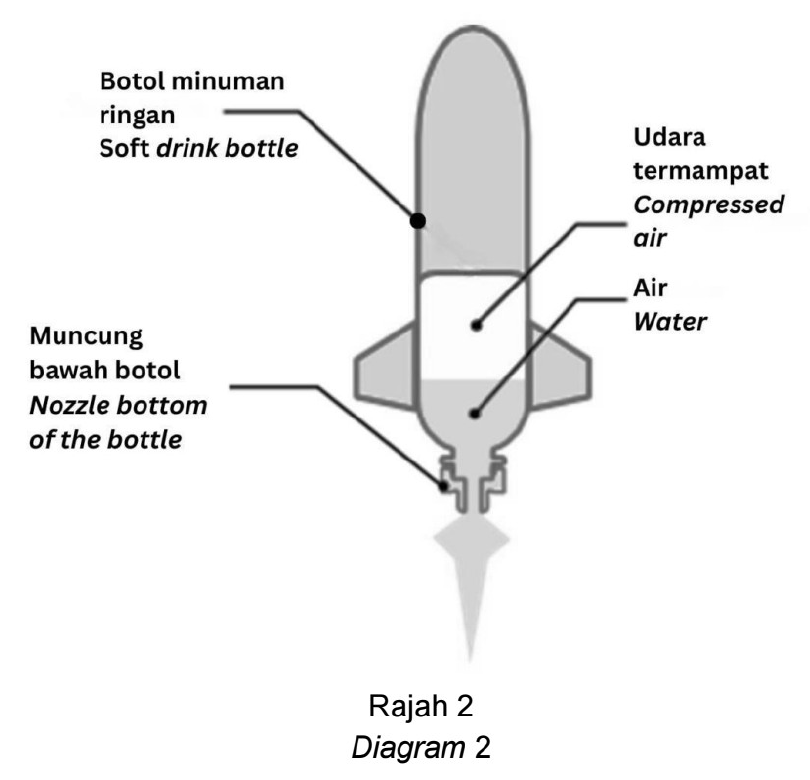
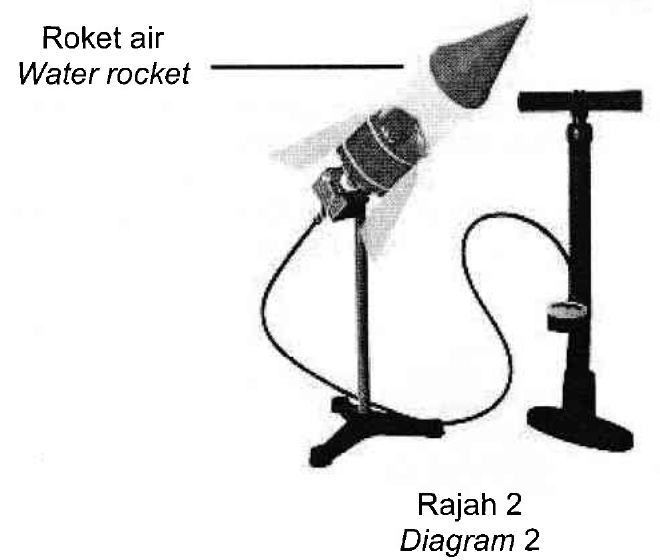
Diagram 2 shows a water rocket that is launched upwards. As the water rocket is released, water spurts out at high speed through the nozzle at the bottom. Which of the following statements is true about the motion of the water rocket?
Medium
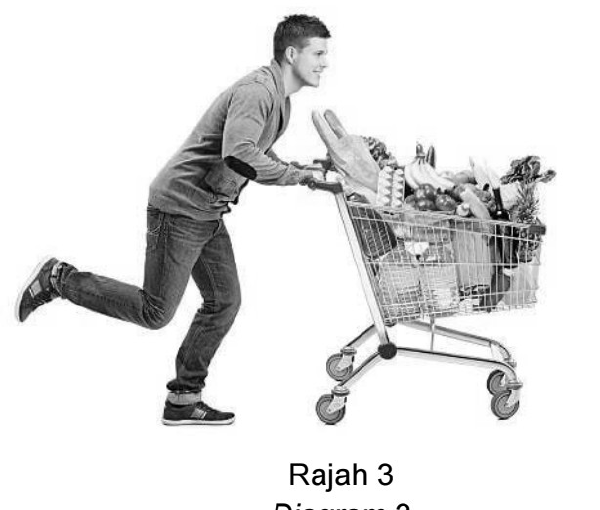
Diagram 3 shows a worker pushes a trolley containing goods with a mass of 60 kg along a horizontal surface with a force of 120 N. If the frictional force acting on the horizontal surface is 15 N, what is the acceleration of the trolley?
Medium
Which of the following situations produces a small impulsive force?
Medium
A car starts from rest at a junction and takes 8.0 s to reach a velocity of 50 m s⁻¹. Calculate the acceleration of the car.
Medium
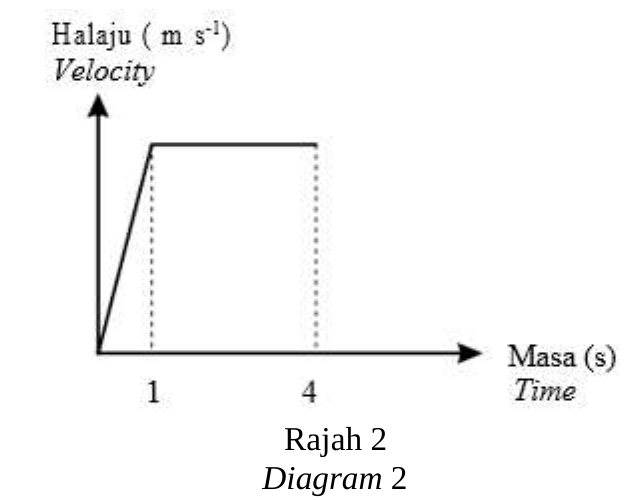
Diagram 2 shows a velocity-time graph for an object (velocity rises uniformly from 0 to 1 s, then stays constant until 4 s). Which of the following acceleration-time graphs represents the motion of the object?
Medium
Principle of conservation of momentum states that
Easy
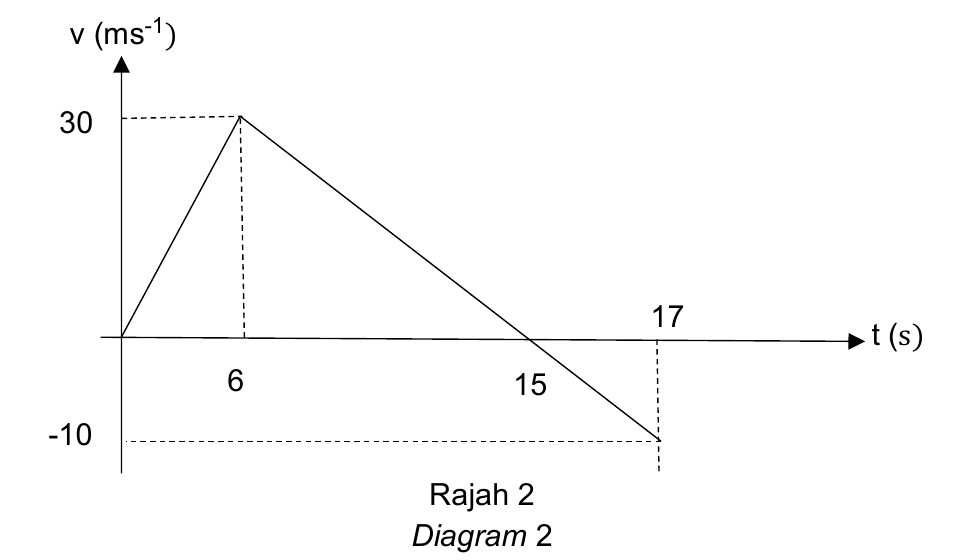
Diagram 2 shows the velocity against time graph (v rises from 0 to 30 m s⁻¹ at t = 6 s, falls to 0 at t = 15 s and to -10 m s⁻¹ at t = 17 s). Find the total displacement.
Medium
An atomic nucleus at rest emits an α-particle of mass 4 u. The speed of the α-particle is found to be 5.6 × 10⁶ m s⁻¹. Calculate the speed of the daughter nucleus, of mass 218 u.
Medium
A tennis ball of mass 60 g is served at a speed of 55 m s⁻¹. The ball is in contact with the racket for 25 ms. Calculate the average force exerted by the racket on the ball.
Medium
Which of the following is true regarding the motion of a car with zero acceleration?
Easy
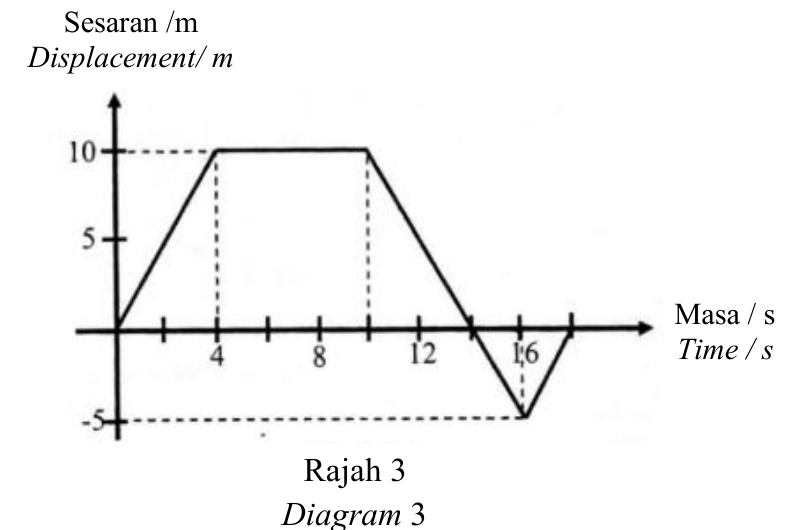
Diagram 3 shows a displacement-time graph for the motion of an object in a straight line. Calculate the total displacement and distance travelled by the object.
Medium
Wong's weight on the moon is 80 N. What will happen to his weight on the surface of Earth?
Medium
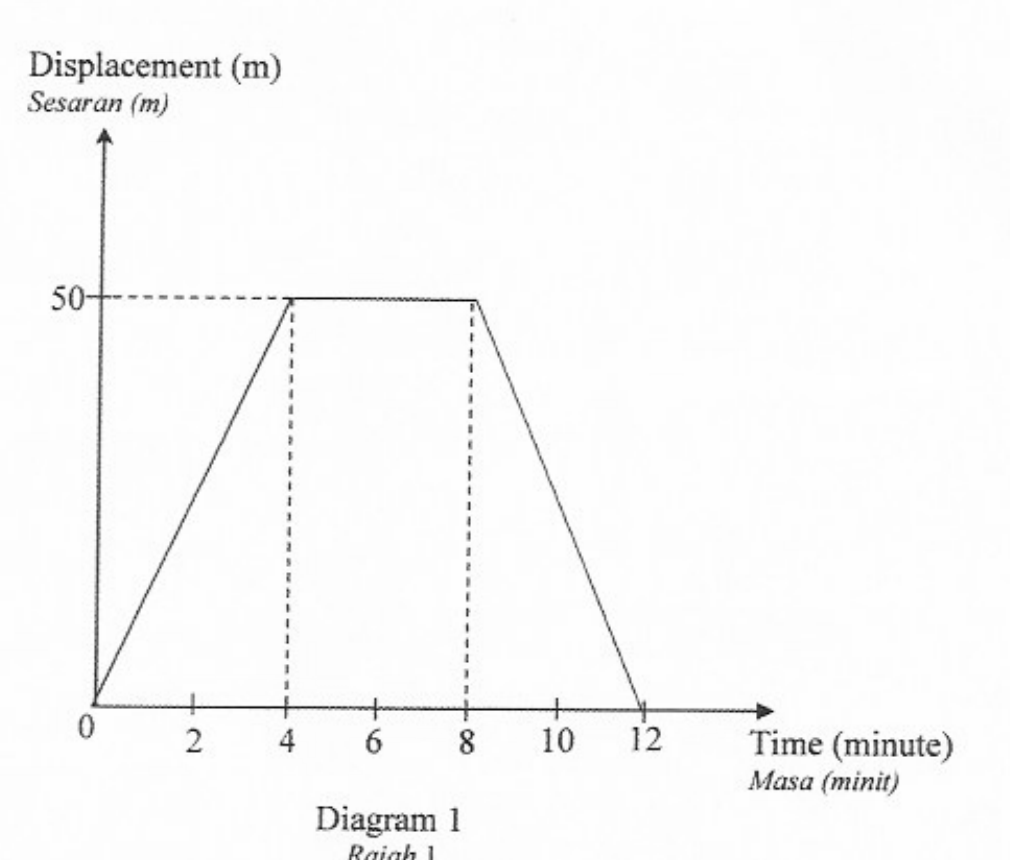
Diagram 1 shows a displacement-time graph of an object that moves towards a target and returns to its original position. The graph rises from 0 to 50 m in 4 minutes, stays at 50 m until 8 minutes, then falls to 0 at 12 minutes. What is the total displacement of the object?
Medium
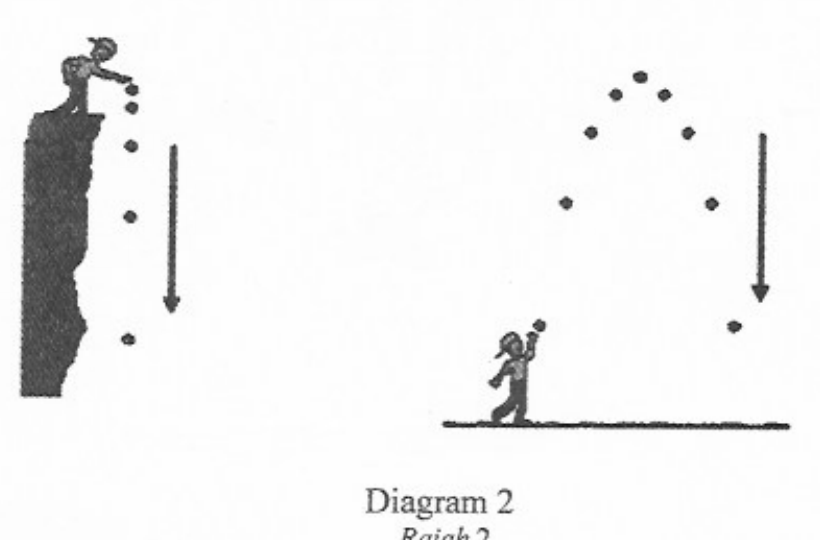
Diagram 2 shows an object is free falling in two different situations. Which statement is correct to explain the motion of the object when it moves downward?
Easy
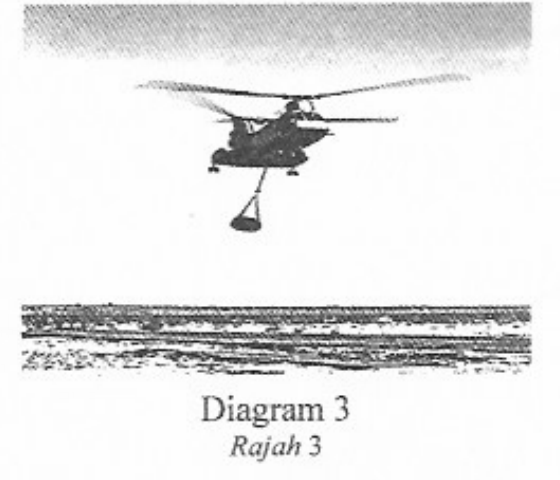
Diagram 3 shows a box with mass of 55 kg being dropped from a helicopter. At the moment before touching the ground, the velocity of the box is 300 m s⁻¹ and it stops after 2 seconds touching the ground. What is the magnitude of the impulsive force acted on the box?
Medium
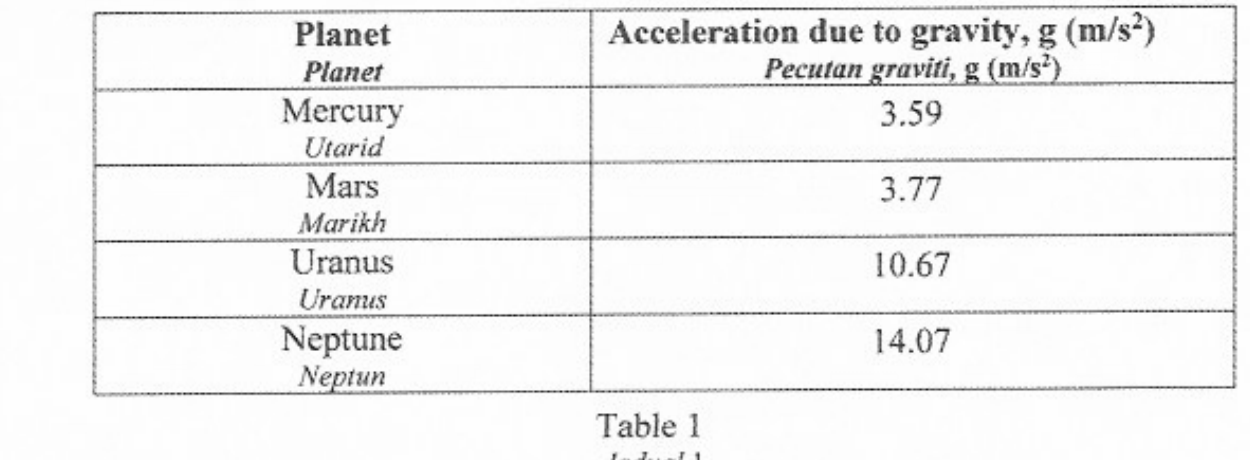
Table 1 shows the acceleration value due to gravity for planet Mercury, Mars, Uranus and Neptune (Mercury 3.59 m/s², Mars 3.77 m/s², Uranus 10.67 m/s², Neptune 14.07 m/s²). Which planet produced the greatest weight on an identical object?
Easy
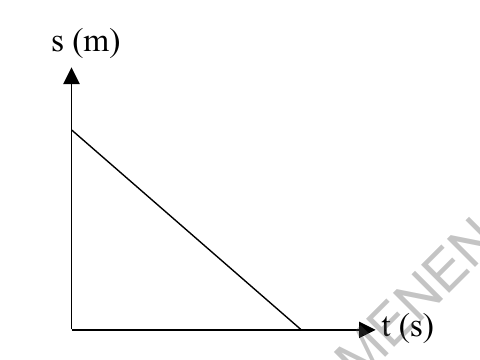
Diagram 1 shows the graph of s against t. Which of the following relationship is correct? (The graph is a straight line with a positive intercept on the s-axis and sloping downwards to the t-axis.)
Medium
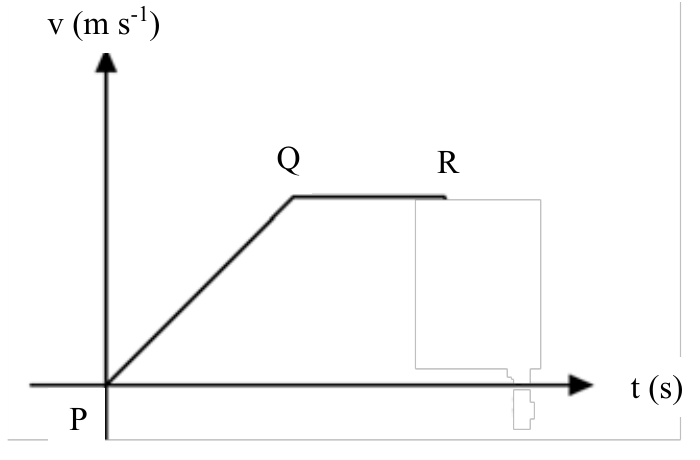
Diagram 2 shows the velocity-time graph of the motion of an object (constant acceleration P to Q, then constant velocity Q to R). Which of the acceleration-time graph equivalent to the graph in Diagram 2?
Medium
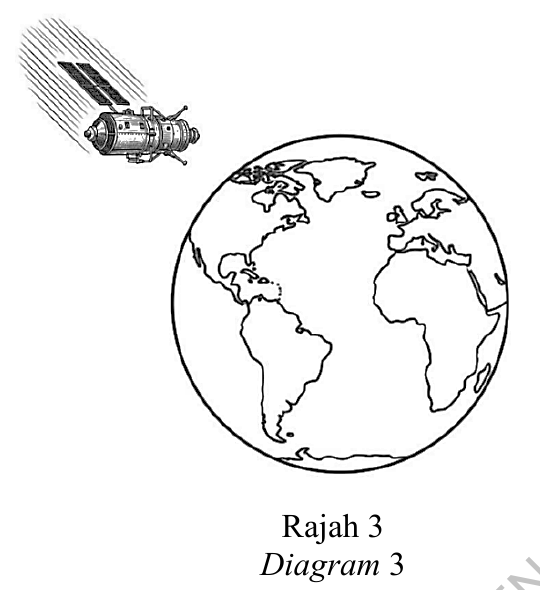
Diagram 3 shows a satellite falling to earth before entering the atmosphere. Which physical quantity that is unchanged during the fall?
Medium
A student found that it is easier to move a football compared to a bowling ball on the floor. Which of the following best describe the situation above?
Easy
Diagram 4 shows a car moving with smaller momentum than a lorry. The momentum of the car will be the same as the lorry when
Medium
Which of the following explains Newton’s Second Law of Motion?
Easy
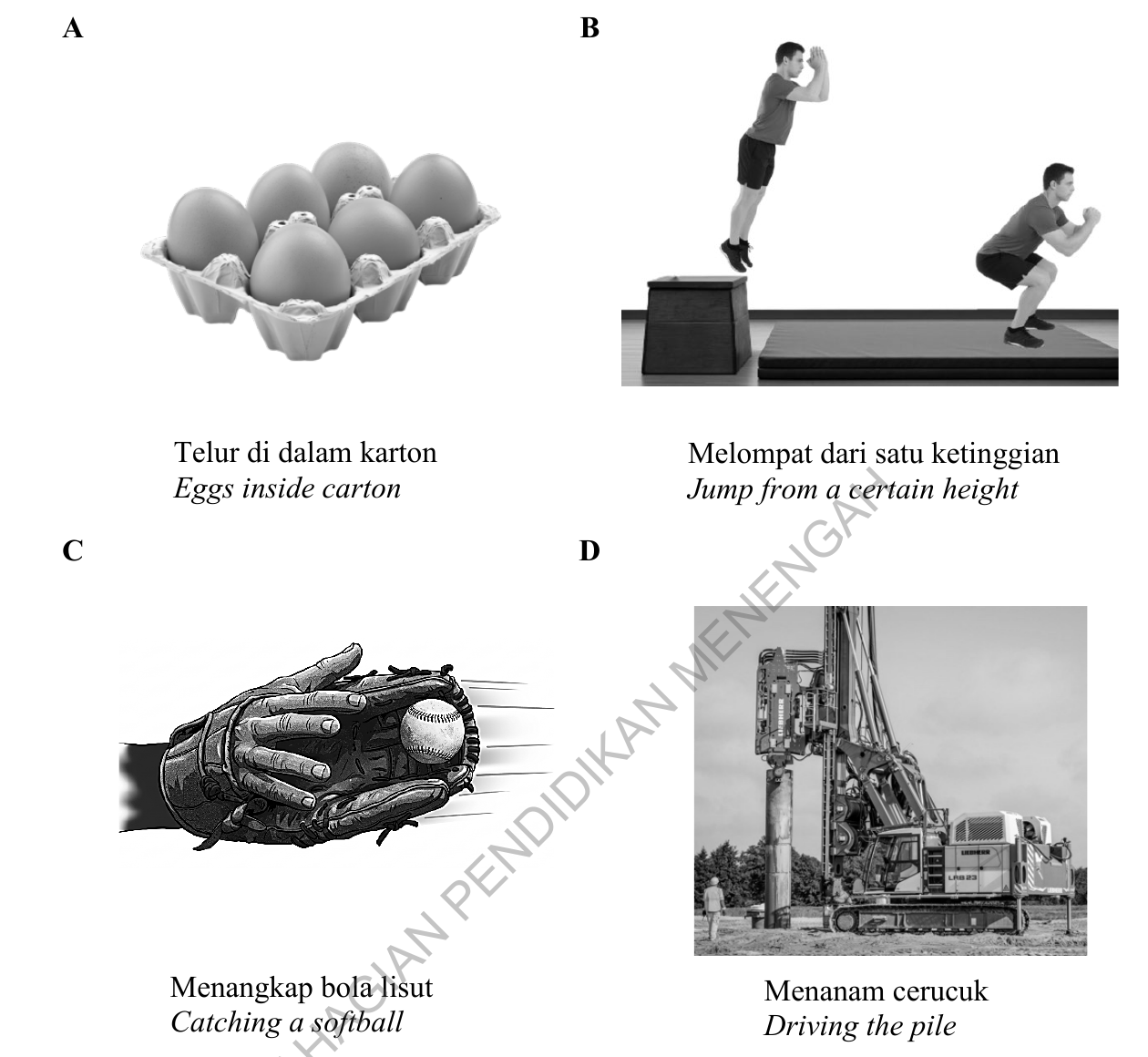
Which situation produces high impulsive force? (Four photographs A to D are shown.)
Easy
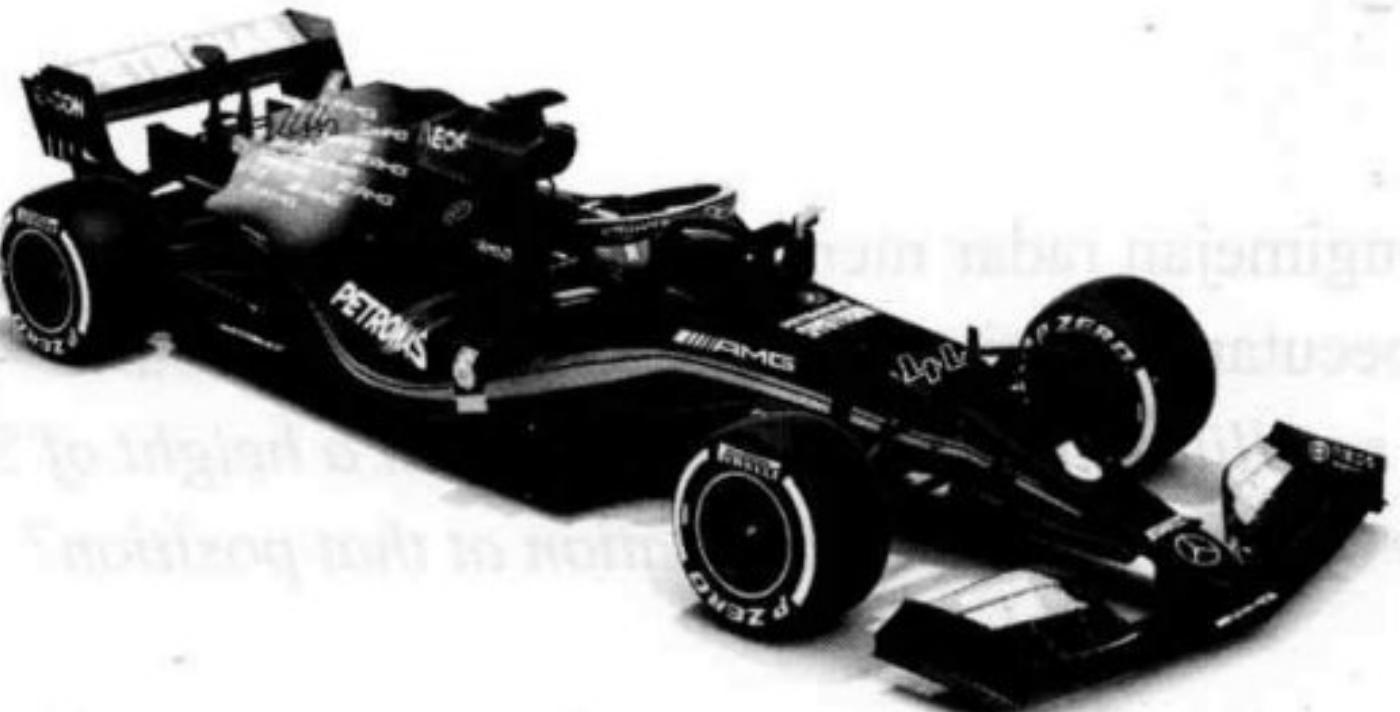
Diagram 2 shows a Formula One racing car. The car uses materials with low density in its construction. This is because
Medium
A 'follow through' action with a constant force on a stationary object can change all of the following except
Medium
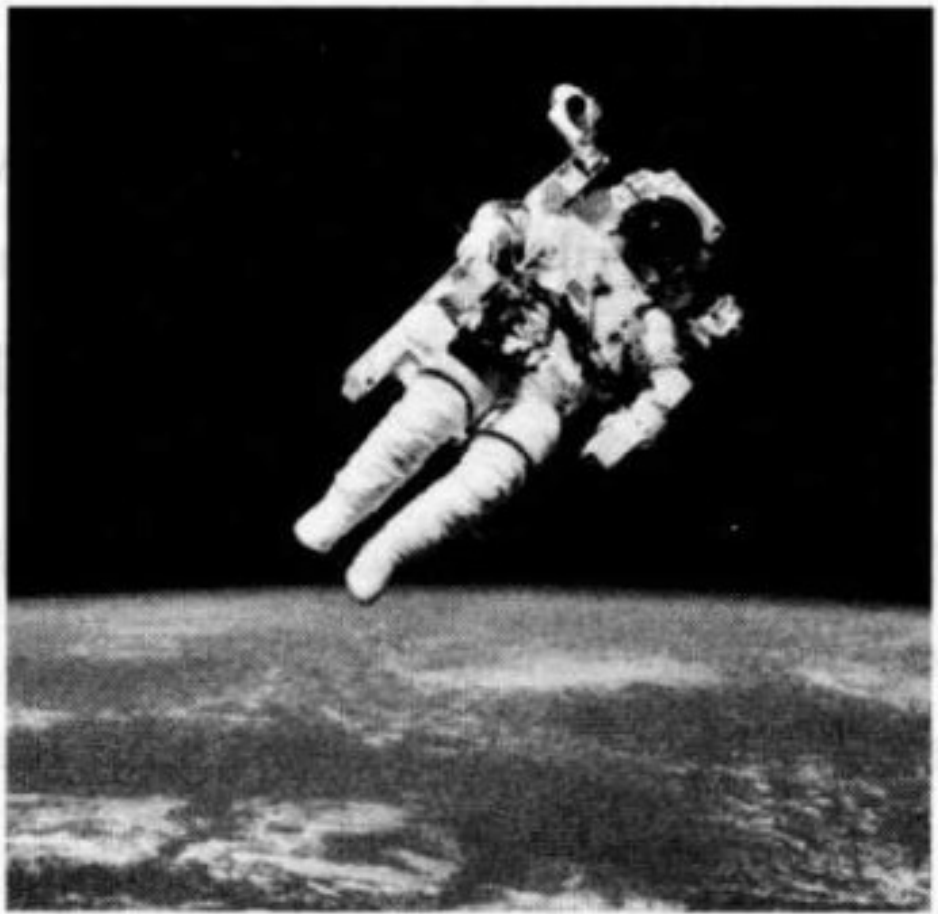
Diagram 3 shows an astronaut floating on the Moon. "When the astronauts landed on the Moon in 1969, they wore space suits and carried packs of heavy equipment. On the Moon, astronauts would weigh six times less than they do on Earth". Which statement explains the situation correctly?
Medium
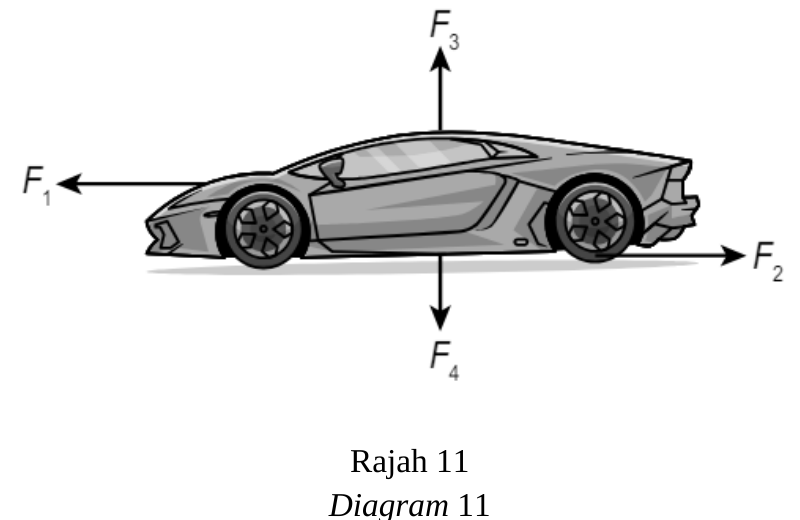
Diagram 11 shows three horizontal forces (air resistance, thrust, friction) acting on a car moving along a straight level road. Which combination of forces would result in the car moving at constant velocity?
Combination (air resistance / thrust / friction): A 1000 N / 1500 N / 500 N; B 500 N / 1500 N / 500 N; C 1500 N / 500 N / 1000 N; D 1000 N / 500 N / 1500 N.
Medium
Which of the following statement is correct about distance?
Easy
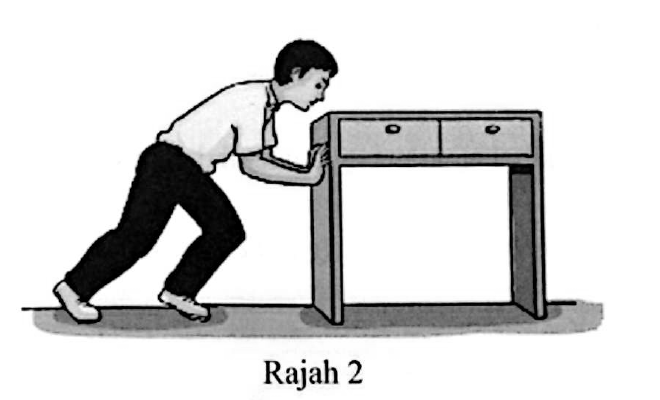
Diagram 2 shows Ali applied 50 N of force to move a table with mass 10 kg at a constant velocity. What is the frictional force acting on the table?
Medium
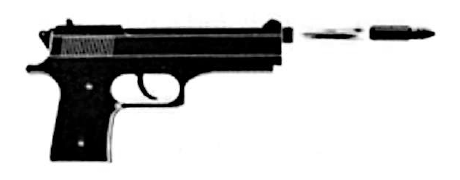
Diagram 3 shows a bullet being fired from a pistol. The bullet moves forward and the pistol moves in the opposite direction. Which of the following statements is correct?
Medium
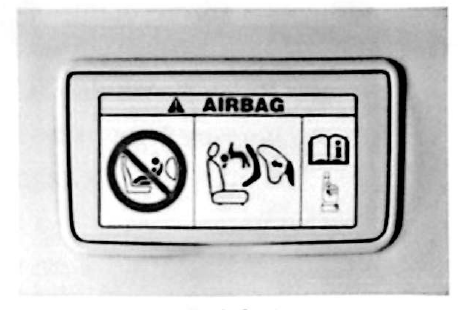
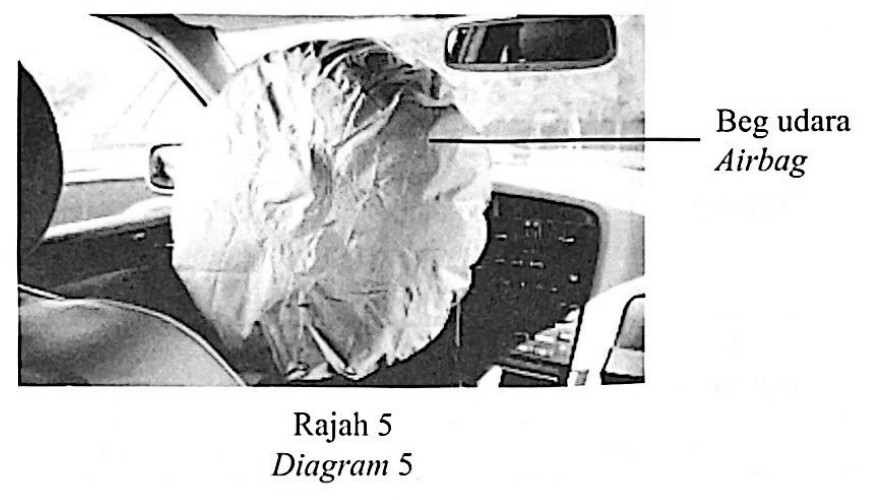
Diagram 4 shows an air bag warning sign in a car. What is the function of the air bag?
Medium
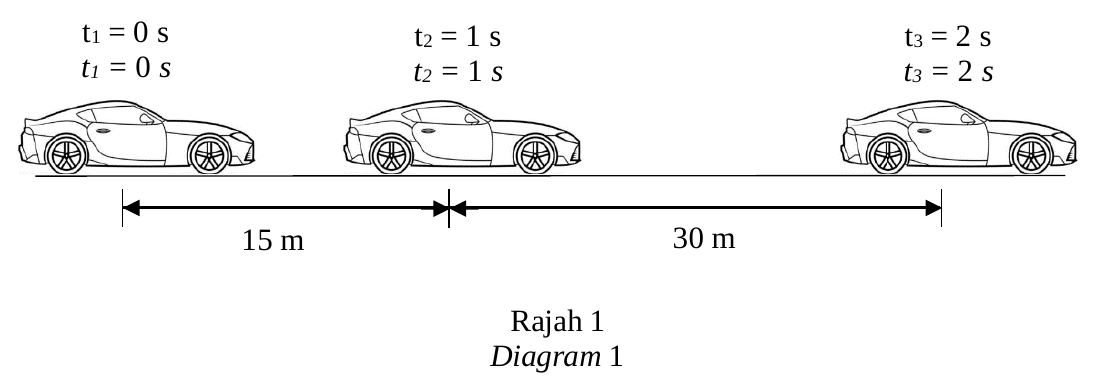
Diagram 1 shows a car moving in a straight line. The car is at t1 = 0 s, t2 = 1 s and t3 = 2 s. The distance between the first and second positions is 15 m and between the second and third positions is 30 m. What type of motion does the car have?
Medium
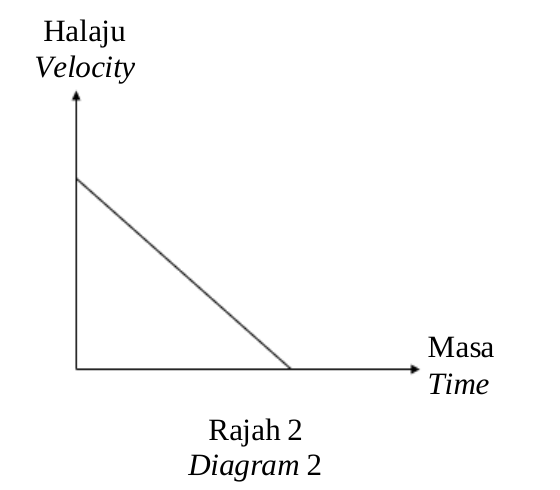
Diagram 2 shows a velocity-time graph (velocity decreasing linearly with time). Which of the following graphs is equivalent to the graph above?
Medium
Which of the following statement is correct about inertia?
Easy
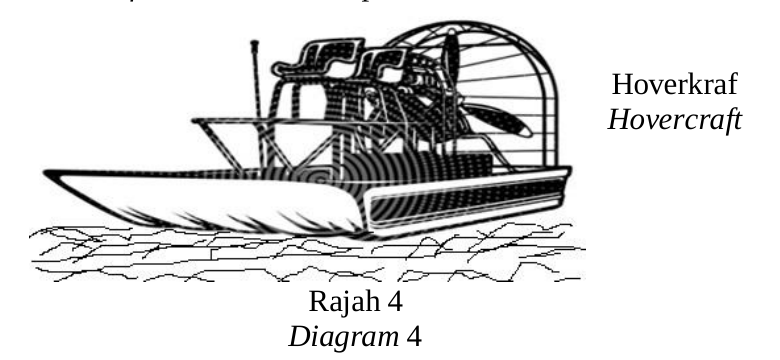
Diagram 4 shows a hovercraft used in the swamp. Which principle is applied to move the hovercraft?
Medium
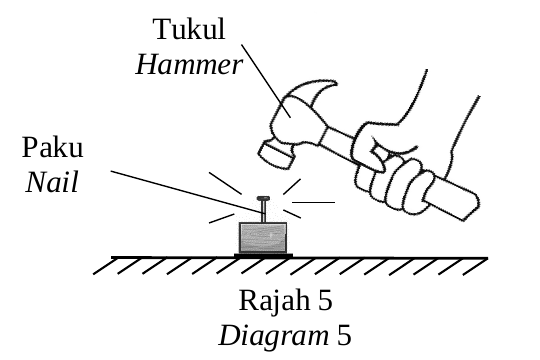
Diagram 5 shows a nail being tapped by a hammer. The nail sinks into the wood after being tapped. Which of the following statements is true?
Medium
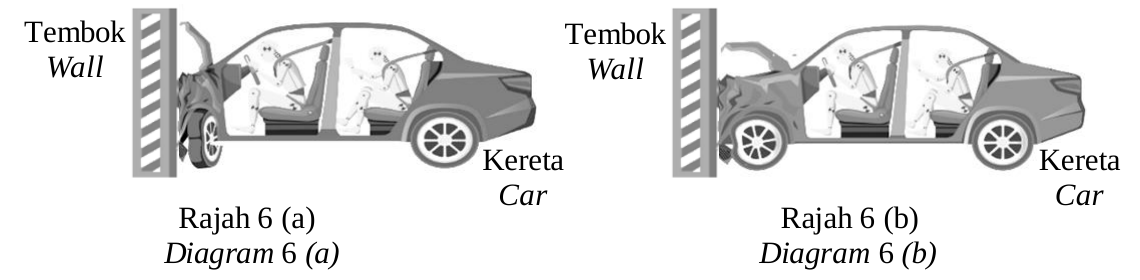
Diagram 6 (a) and Diagram 6 (b) show two cars that hit the wall. The car in Diagram 6 (a) moves with a higher velocity before the collision than the car in Diagram 6 (b). Which of the following relationships describes the situation above?
Medium
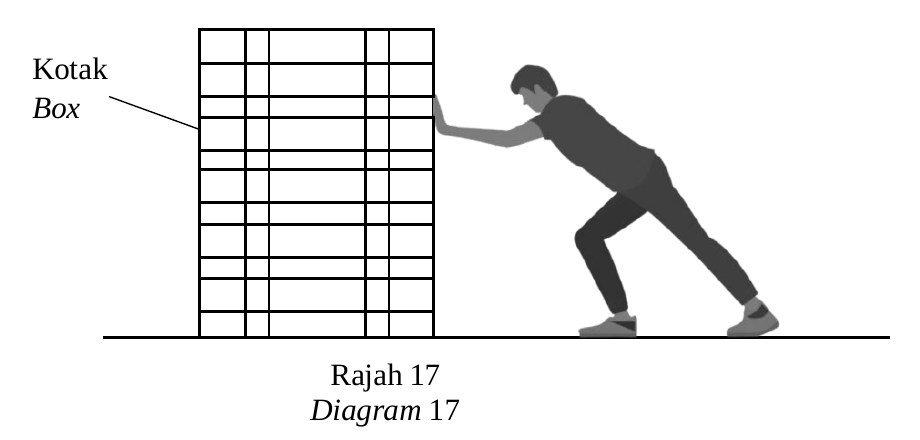
Diagram 17 shows a box being pushed on a smooth surface. Which of the following statements can increase the acceleration of the box?
Medium
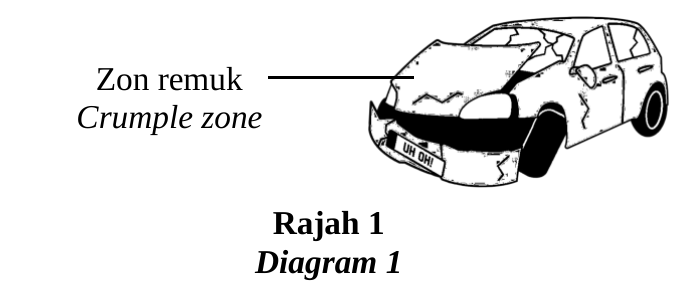
Diagram 1 shows the state of the crumpled zone of a car after being involved in an accident. A crumple zone is a deliberately created part of a vehicle. The function of the crumple zone of the car is to reduce
Medium
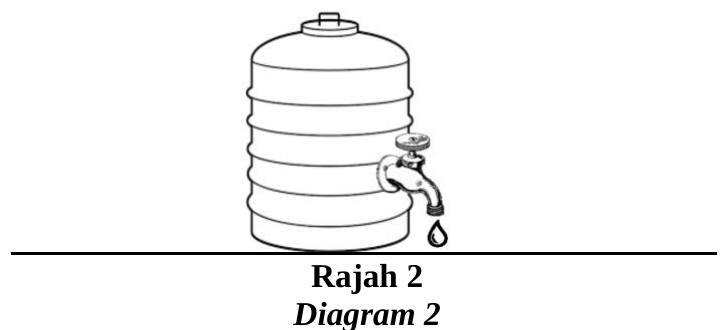
Diagram 2 shows water flows out from a water tank. Which of the following statements is true after the water continuously flows out for some times?
Medium
The diagrams below show a strip of ticker tape of a moving object. Which of the following tapes shows that the object is moving with uniform acceleration?
Medium
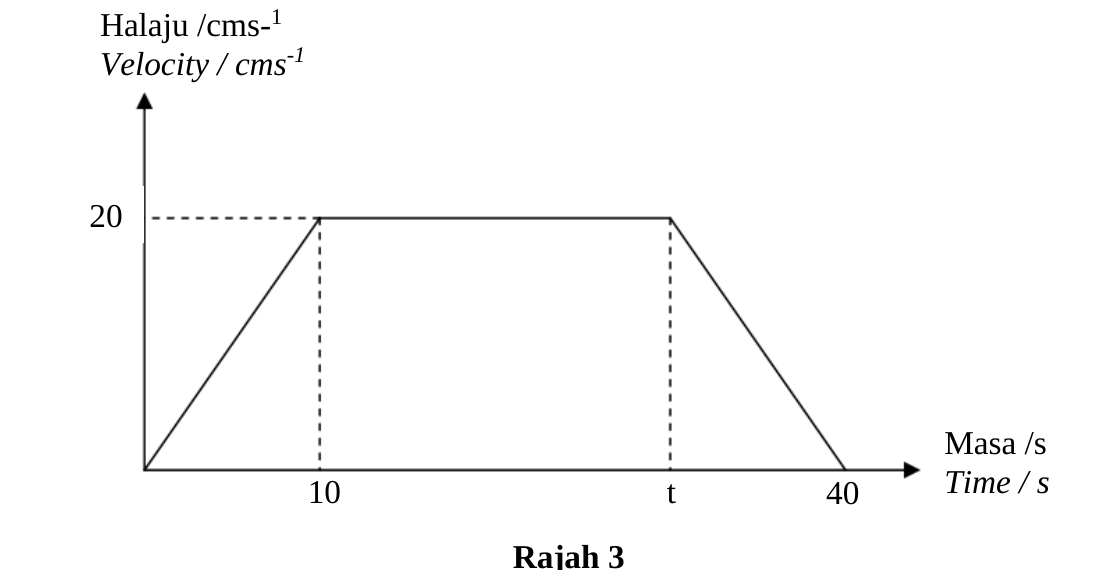
Diagram 3 shows a velocity against time graph for an object (velocity in cm s⁻¹; velocity rises from 0 to 20 cm s⁻¹ at 10 s, stays constant until time t, then falls to 0 at 40 s). If total distance travelled is 600 cm. Determine value of t.
Medium
The Principle of the Conservation of Momentum states that
Easy
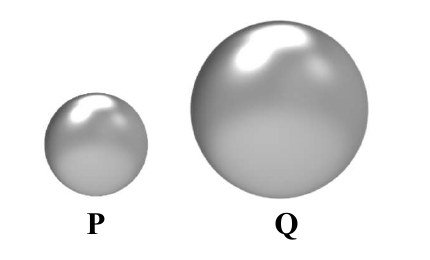
Diagram 3 shows two steel balls, P (smaller) and Q (larger), dropped simultaneously from the top of a building to the ground. Assume air resistance is negligible. Which of the following velocity-time graphs shows the correct motion of P and Q?
Medium
Which of the following shows the effect of inertia? I: A girl dries her wet hair by moving her head quickly. II: A strong steel structure is installed on a lorry between the driver's seat and the area used to carry logs. III: The hammer head is tightened by tapping the handle against the floor.
Easy
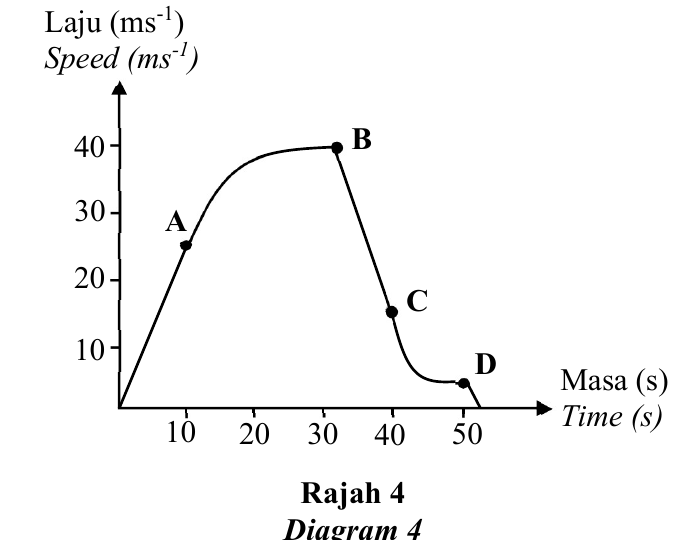
Diagram 4 shows the speed-time graph for a skydiver. He falls freely from an aircraft, then opens his parachute and lands safely on the ground. At which point does the parachute fully open? (Points A, B, C, D are marked on the graph: A on the initial rising curve at about 25 m s⁻¹, B at the top at 40 m s⁻¹ and about 32 s, C on the falling line at about 15 m s⁻¹, D near the bottom at about 5 m s⁻¹ and 50 s.)
Medium
When an object is moving at a constant velocity, its acceleration will be
Easy
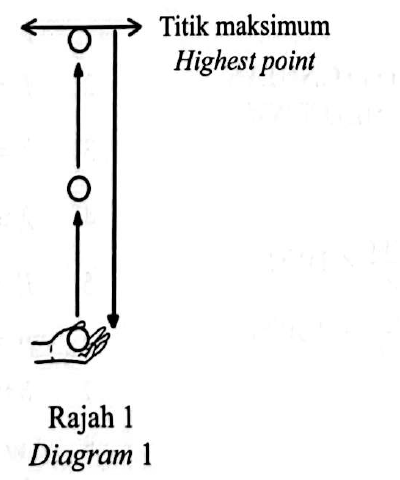
A student threw a ball upward with a velocity of 35 m s⁻¹ as shown in Diagram 1. How long does it take for the ball to return to his hand?
Medium
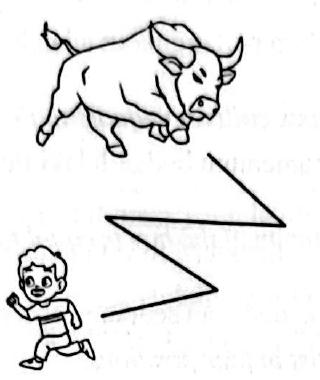
Diagram 2 shows a boy being chased by a cow. The boy ran in a zigzag pattern because he knew that it was difficult for the cow to change the direction of its movement due to its large inertia compared to him. What causes the inertia of the cow to be bigger?
Easy
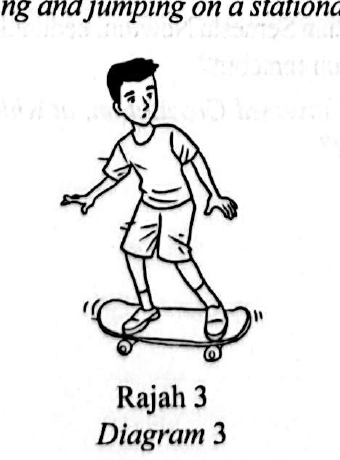
Diagram 3 shows a boy running and jumping on a stationary skateboard. Which of the following statement is correct about the above situation?
Medium
What is meant by an object that experiences a free fall?
Easy
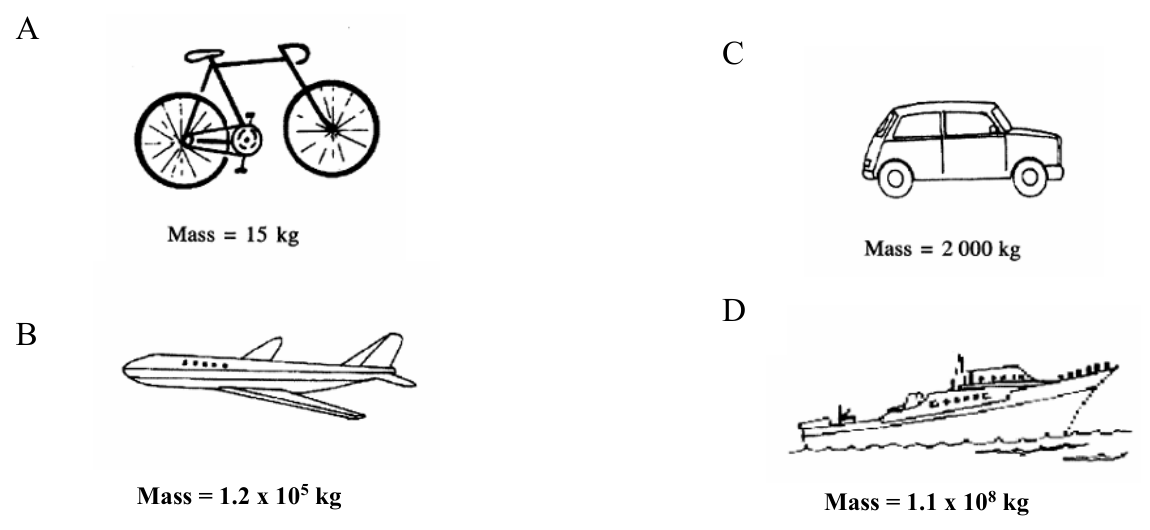
Which object has the largest inertia? A: bicycle, mass = 15 kg; B: aeroplane, mass = 1.2 × 10⁵ kg; C: car, mass = 2 000 kg; D: ship, mass = 1.1 × 10⁸ kg.
Easy
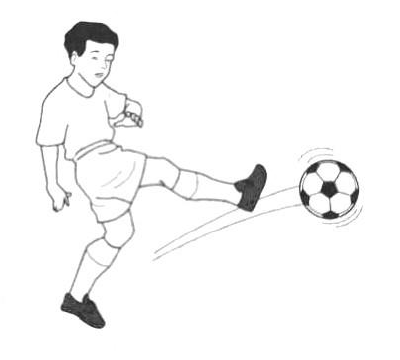
Diagram 2 shows a boy kicking a ball with a force of 20 N. If the ball moves with an acceleration of 50 m s⁻², what is the mass of the ball?
Medium
Which of the following statement is correct about distance?
Easy
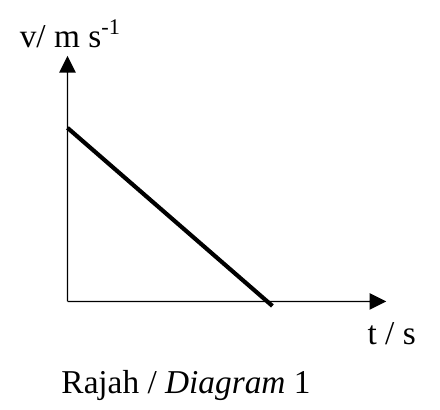
Diagram 1 shows a linear motion graph of a moving object (velocity v / m s⁻¹ against time t / s: a straight line sloping downwards from a positive initial velocity to zero). Which of the following statement is the correct interpretation of the graph?
Medium
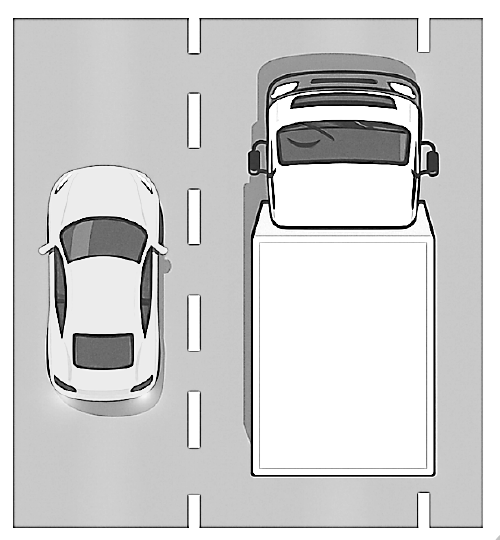
Diagram 2 shows a car and a lorry moving on a highway. Why is the lorry more difficult to stop if both vehicles are driven at the same velocity? I Big mass needs greater force to stop; II Big mass needs greater energy to stop; III Big mass possesses greater impulse to stop; IV Big mass possesses greater momentum to stop.
Medium
What happens to the acceleration of an object if the force acting on it is doubled while its mass is fixed?
Medium
A clay ball of mass 68 g is horizontally thrown at a velocity of 15 m s⁻¹ and stuck to a vertical wall. If the time of impact is 0.005 seconds, what is the impulsive force acting on the clay ball?
Medium
What is the S.I. unit of weight?
Easy
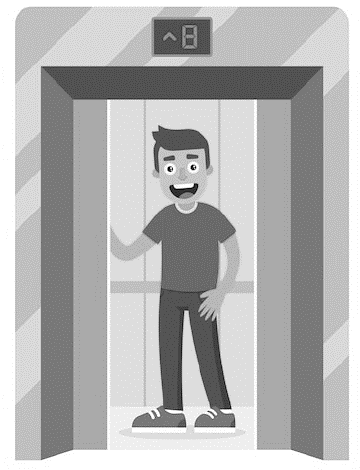
Diagram 13 shows a passenger of mass 65 kg in an elevator. Calculate the magnitude of normal reaction, R when the lift moves upward with an acceleration 1.5 m s⁻². (g = 9.81 m s⁻²)
Medium
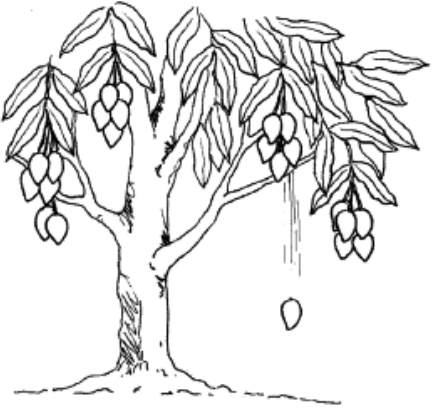
Diagram 1 shows a mango falling from a tree. Which graph shows how the acceleration a of the mango changes with time t?
Medium
Which of the following have a very small inertia?
Easy
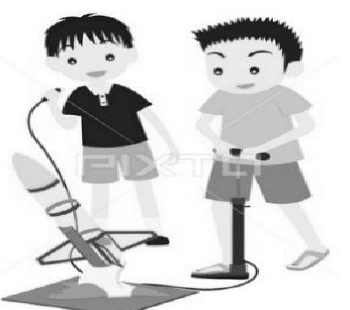
Diagram 2 shows two boys launching a water rocket. The physics principle applied is ...
Medium
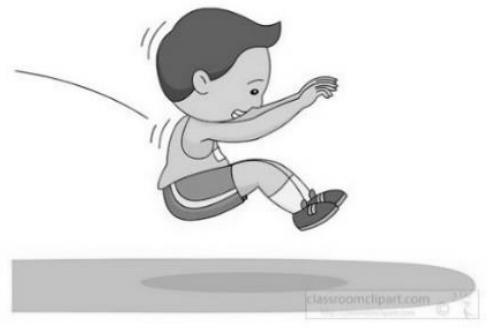
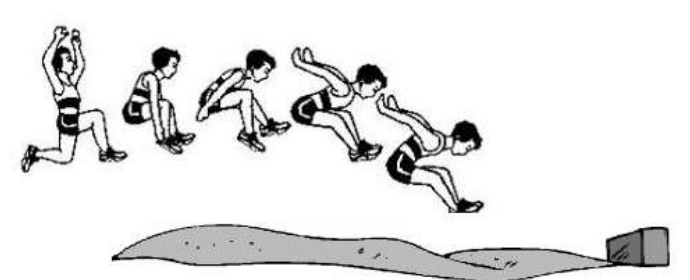
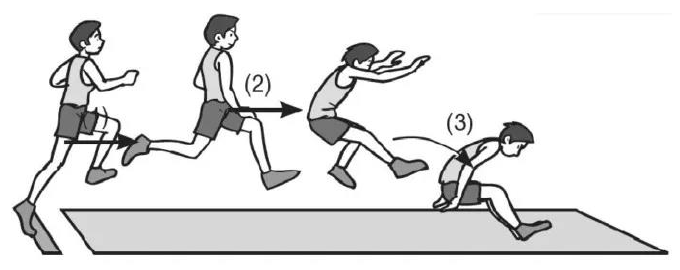
Diagram 3 shows an athlete bending his legs when landing in a long jump event. Why does the athlete need to bend his legs?
I To reduce the impulse
II To reduce impulsive force
III To increase the time in the air
IV To get maximum distance
Medium
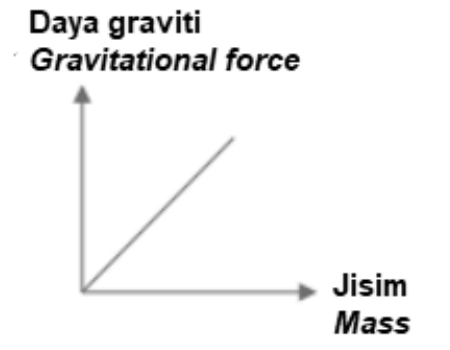
Graph 1 shows the relationship between gravitational force and mass for objects near to earth surface. Gradient of graph represent
Medium
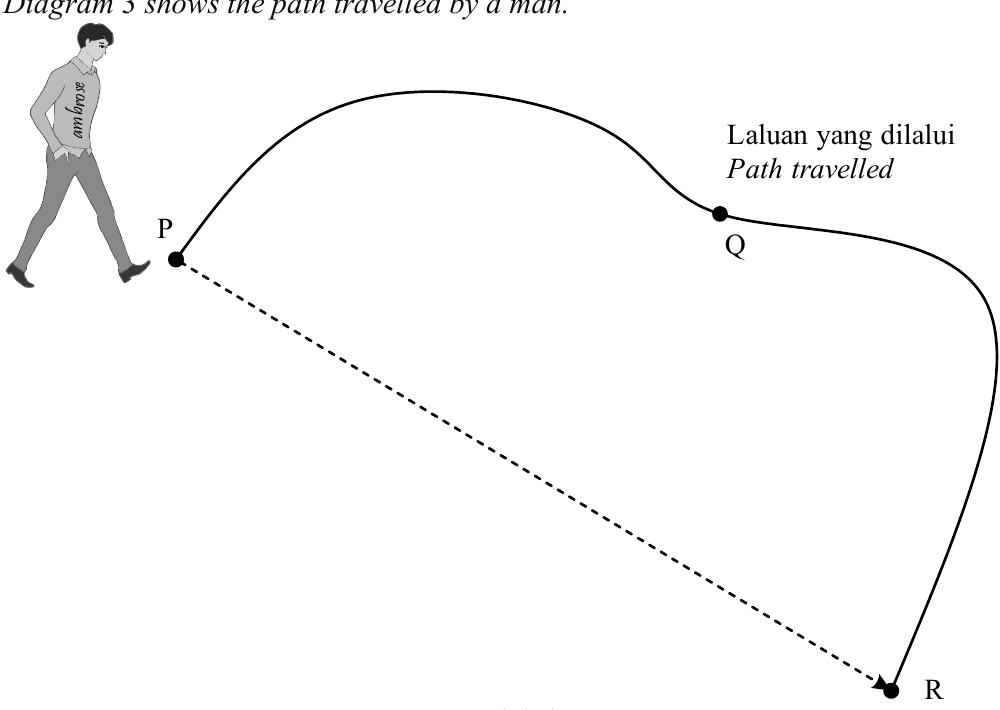
Diagram 3 shows the path travelled by a man (curved path PQR, straight dashed line PR). What is the quantity can be determined from path PQR and PR?
Medium
Diagram 4 shows an aeroplane taking off along a runway. How long must a runway be for an aeroplane to reach take off velocity 75 m s⁻¹ if it can accelerate 2.0 m s⁻²?
Medium
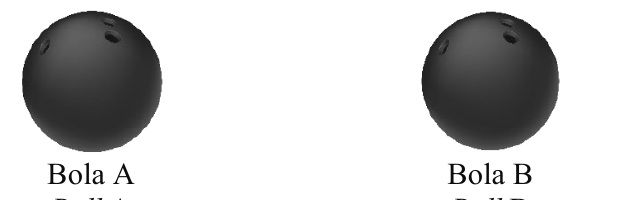
Diagram 5 shows Ball A and Ball B have different masses. One ball has mass twice the other ball. Without lifting and weighing, how to determine which ball has greater mass?
Medium
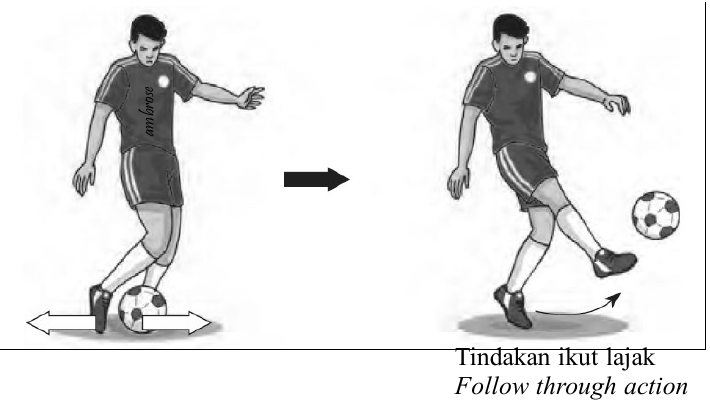
Diagram 6 shows follow through action by a football player. What is the purpose of follow through action?
Medium
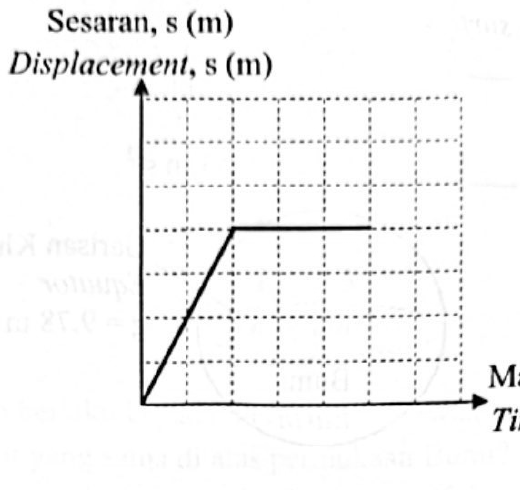
Diagram 1 shows the displacement-time graph for the motion of an object (displacement rises uniformly, then stays constant). Which velocity-time graph describes the movement of the object?
Medium
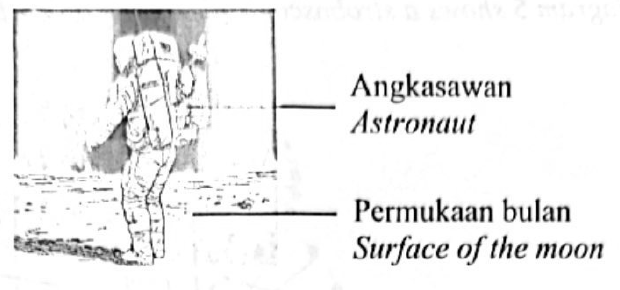
Diagram 3 shows an astronaut walking on the surface of the moon. What would happen to the inertia of the astronaut if the astronaut walked in the same suit on the surface of the Earth?
Easy
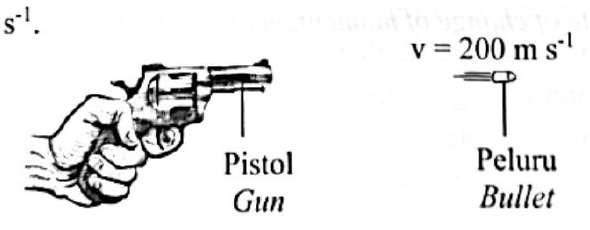
Diagram 4 shows a 0.025 kg bullet fired from a 1.20 kg pistol. The velocity of the bullet, v is 200 m s⁻¹. What is the momentum of the bullet after being fired from the gun?
Medium
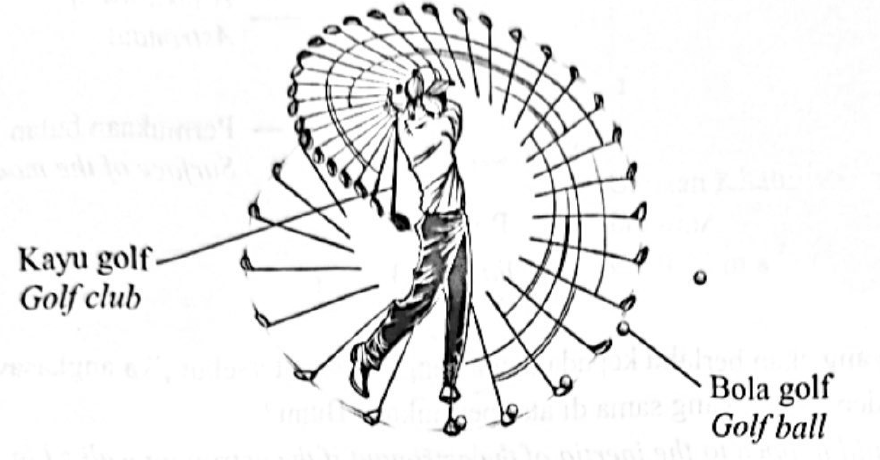
Diagram 5 shows a stroboscopic photo of a golfer performing a follow through action. State the effect of the follow through action.
Medium
State the factor that affects acceleration. I Force; II Mass; III Power; IV Energy.
Medium
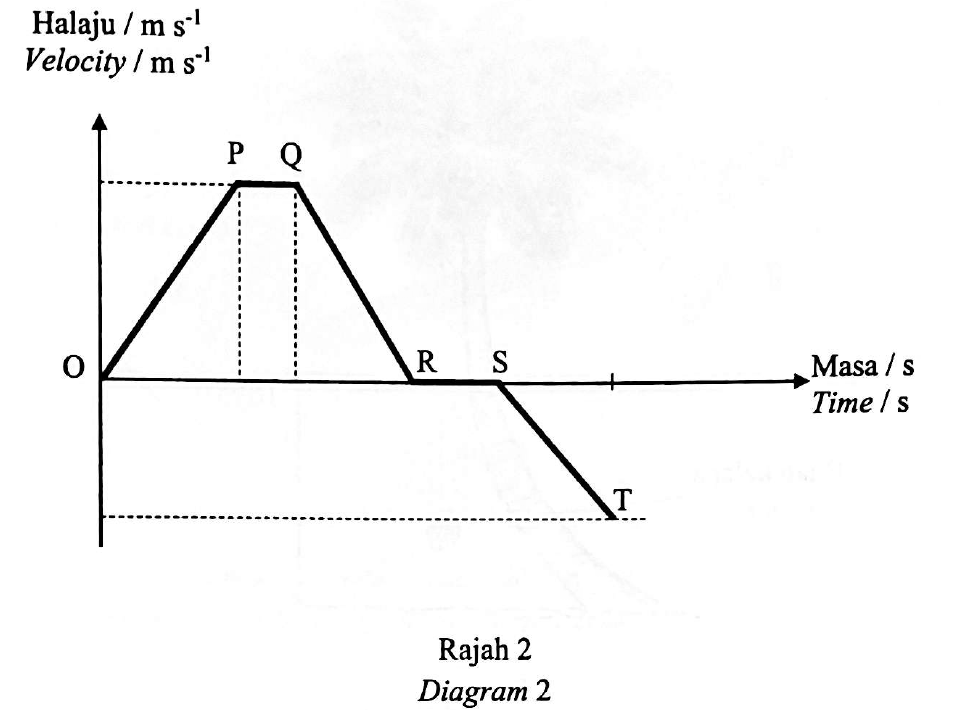
Diagram 2 shows a velocity-time graph for the motion of a car. Points: O at origin; velocity rises uniformly O to P, constant P to Q, falls uniformly Q to R (R on the time axis), zero velocity R to S, then velocity becomes negative uniformly S to T. Which statement is correct regarding the motion?
Medium
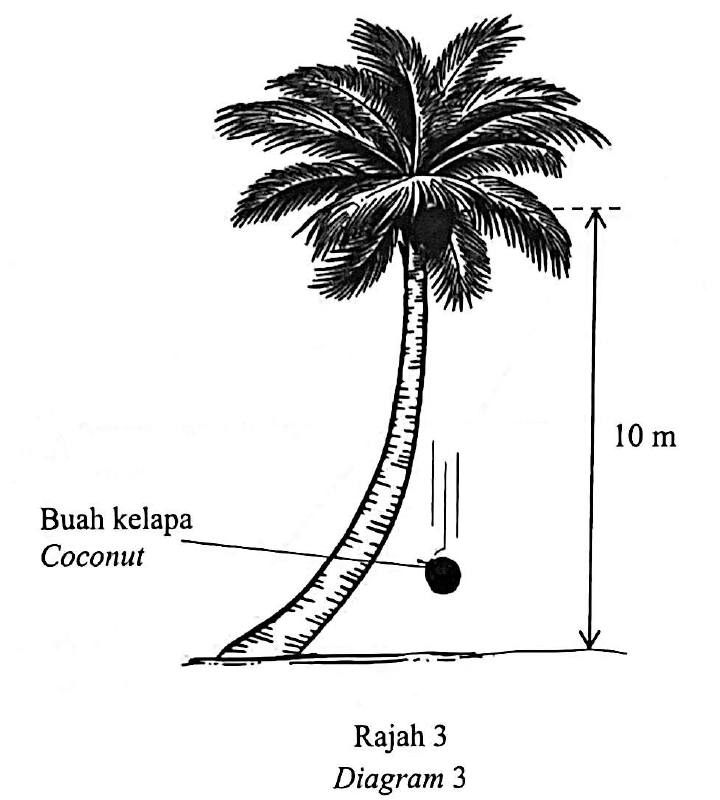
Diagram 3 shows a coconut falls 10 m high from a tree. Determine the time for the coconut to reach the ground. [Ignore the air resistance]
Medium
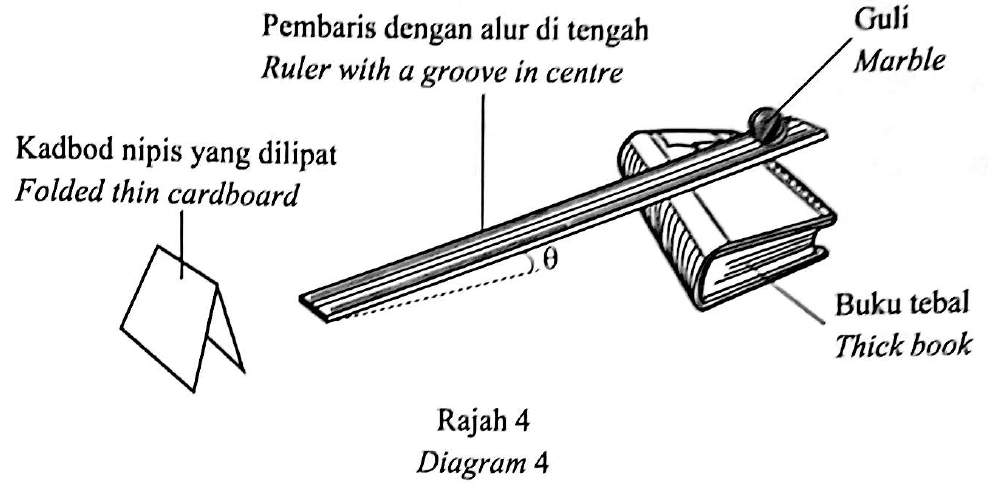
Diagram 4 shows an arrangement of a simple experimental apparatus to understand the concept of momentum (a marble released on a grooved ruler inclined at angle θ against a thick book, hitting a folded thin cardboard). When the marble is released, which statement is true?
Medium
An object of mass 0.5 kg is pulled with a force of 100 N for 15 s. What is the impulse acting on the object?
Medium
The weight of a boy on the Earth is 700 N. What happens to the weight of the boy when he is on the surface of the Moon?
Medium
Diagram 2 shows a motorcyclist riding up a hill with uniform deceleration. The motorcyclist then went down the hill with uniform acceleration. Which graph is correct for the relationship between velocity, v and time, t for the motion?
Medium
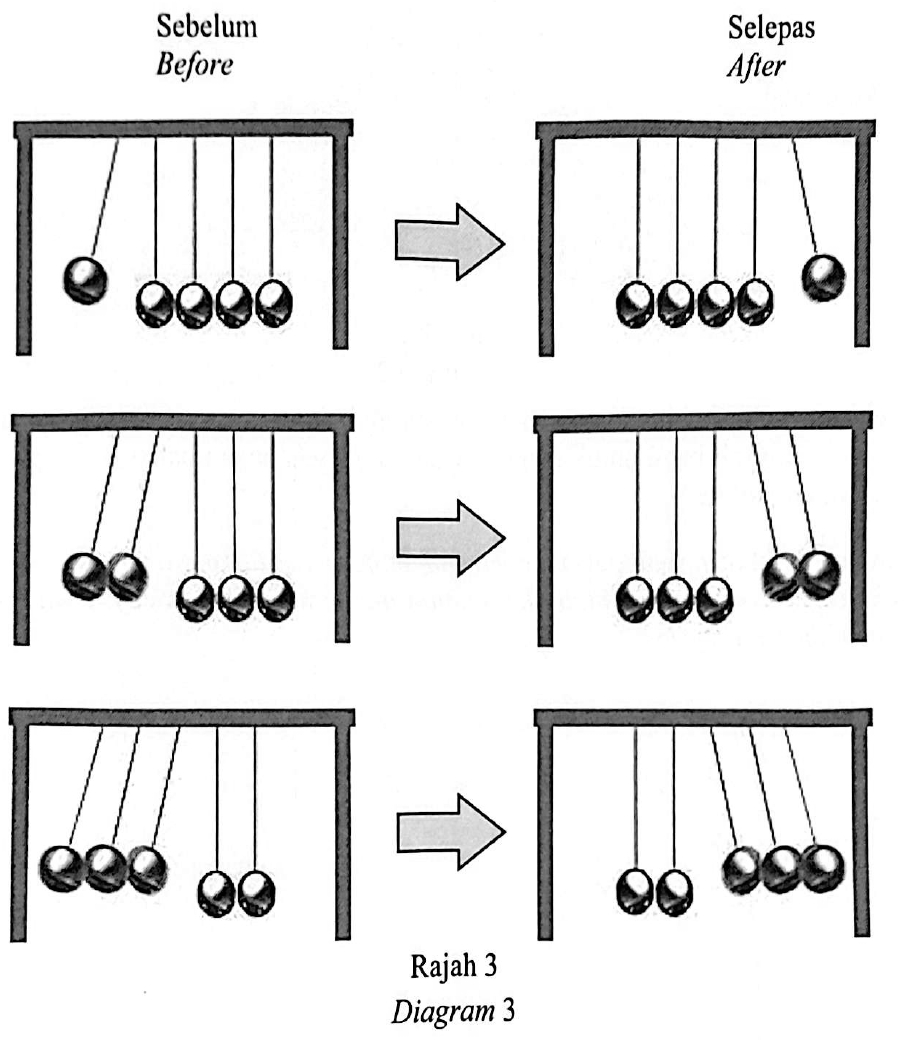
Diagram 3 shows the state of Newton's cradle after several balls are displaced and then released to collide with other balls. Which statement is correct about the motion of Newton's cradle?
Medium
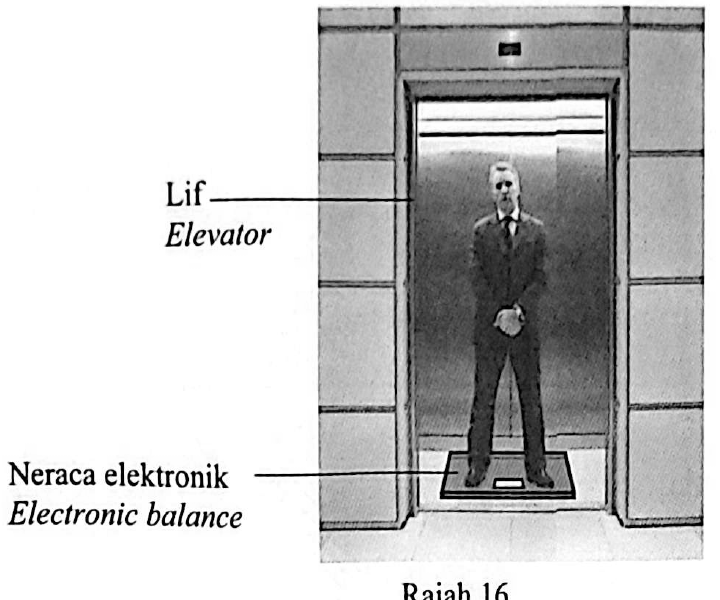
Diagram 16 shows a man standing on an electronic balance in an elevator. Choose the correct statement when the elevator is moving up at a uniform velocity.
Medium
Diagram 1 shows two steel ball bearings, P and Q, of different sizes, being dropped near the surface of the earth. Which are the correct velocity-time graphs for the motion of P and Q?
Medium
Which of the following shows effect of inertia? I: A girl dried her wet hair by moving her head quickly. II: A sturdy steel structure is installed in the space between the driver's seat and the logs. III: The hammer head is tightened by striking the handle part on the floor.
Medium
Which of the following is true about an elastic collision between two bodies? Options give total momentum and total kinetic energy as conserved or not conserved.
Easy
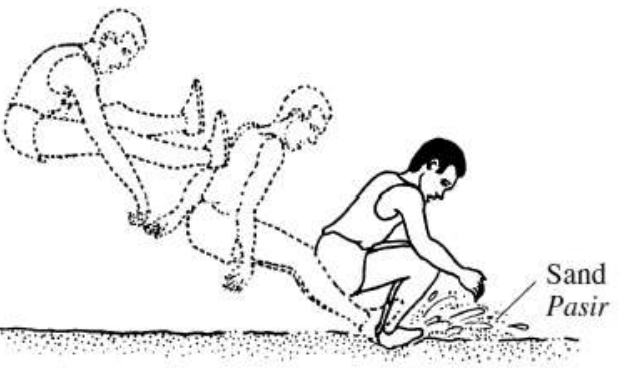
Diagram 3 shows a long jump pit which is filled with sand. The purpose of the sand in the pit is to
Medium
Weight of a stone on Earth is 19.62 N, what is the weight on the Moon? The Moon gravitational field strength is 1.64 N kg⁻¹.
Medium
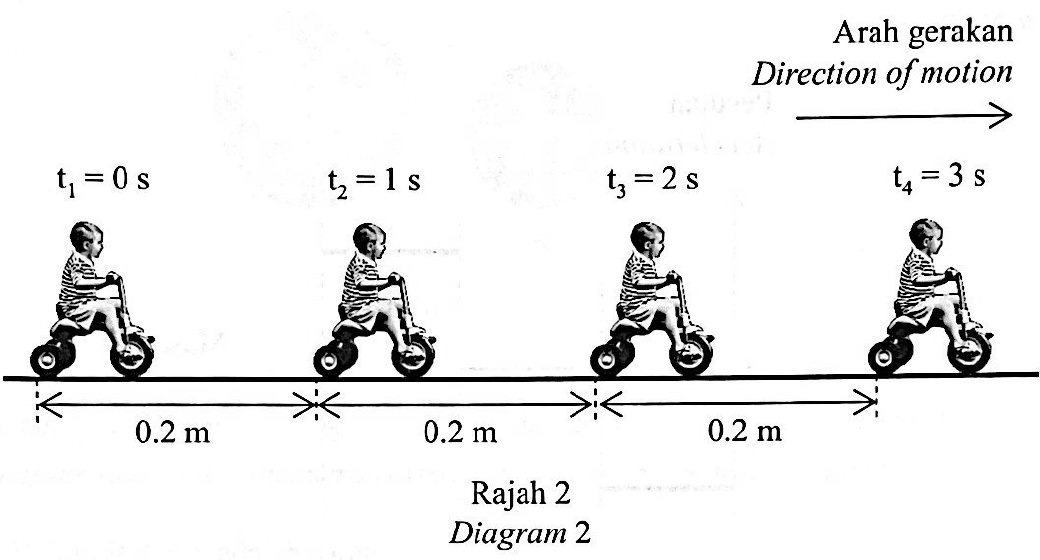
Diagram 2 shows the motion of a bicycle at t = 0 s, 1 s, 2 s and 3 s; the displacement between successive positions is 0.2 m each time. What is the type of motion?
Medium
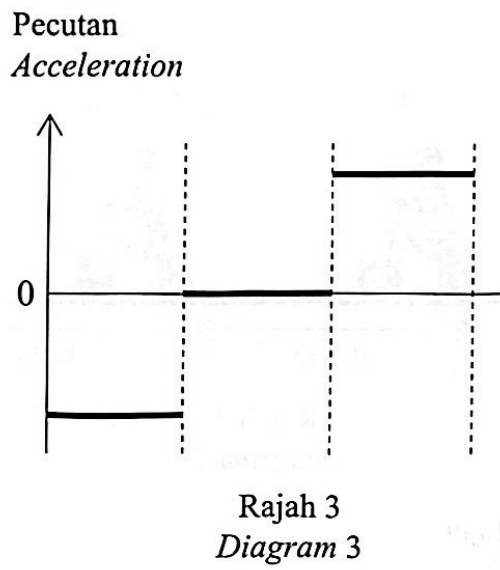
Diagram 3 shows the acceleration-time graph of the motion of a car that is kept moving along a highway (negative acceleration, then zero, then positive acceleration). Which velocity-time graph represents the motion of the car?
Medium
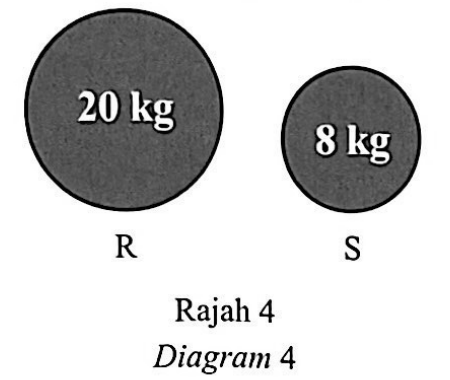
Diagram 4 shows two metal spheres, R (20 kg) and S (8 kg). Which of the following statements is true when R and S are free falling?
Medium
What happens to a ball in motion if there is no external force applied on it?
Easy
Which of the following vehicles has the highest momentum when moving at a velocity of 30 km h⁻¹? (A bicycle, B motorcycle, C car, D lorry)
Easy
A male runner with a mass of 50 kg runs with a force of 100 N. Calculate his acceleration.
Medium
Diagram 5 shows an airbag as a safety feature in a car. What is the purpose of the airbag?
Easy
A marble of mass 0.2 kg is free fall from a certain height. Which of the following statements is correct?
Medium
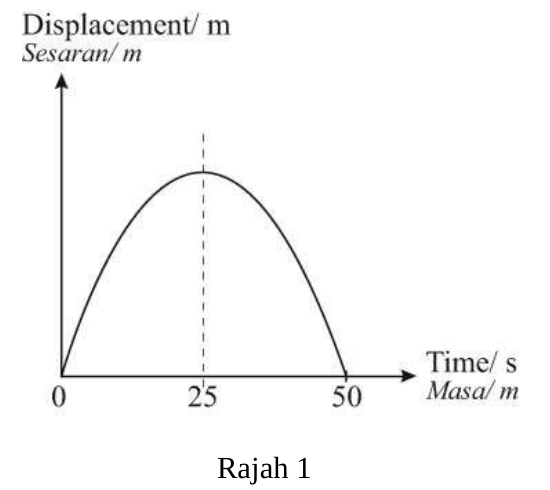
Diagram 1 shows a displacement-time graph of a car moving in a straight line (a parabola rising from 0 m at 0 s to a maximum at 25 s and returning to 0 m at 50 s). Which of the following velocity-time graphs represents the motion of the car?
Medium
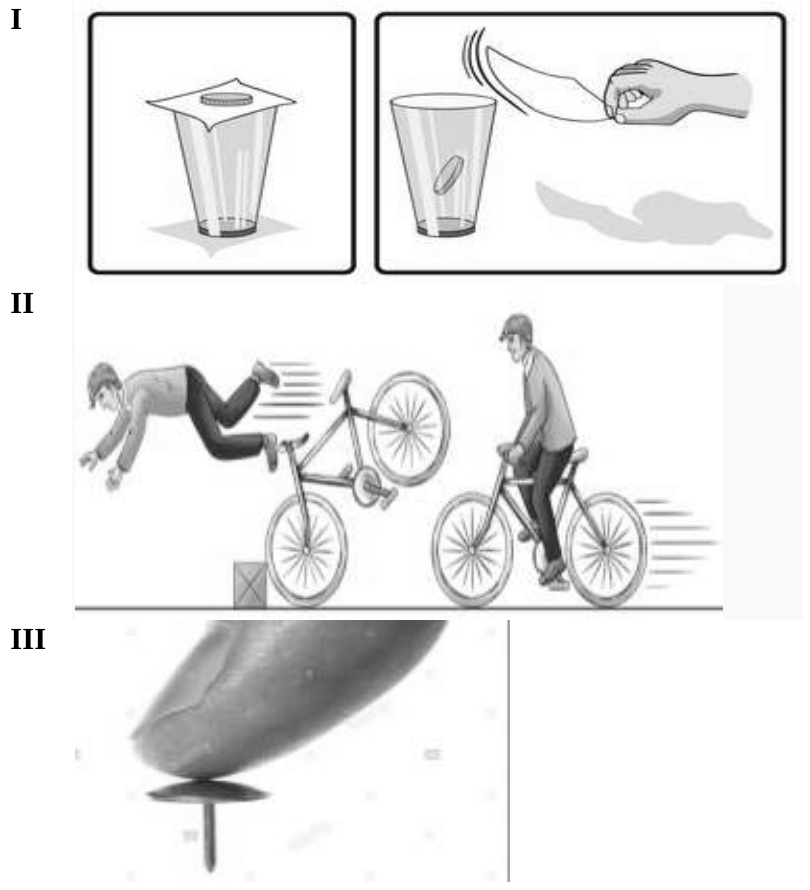
Which of the following shows effect of inertia?
I Coin drops into the glass when the card is flicked away
II Cyclist thrown forward when the bicycle hits an obstacle
III Thumbtack pressed by a finger into a surface (shown in Diagram)
A I and II
B I and III
C II and III
D I, II and III
Hard
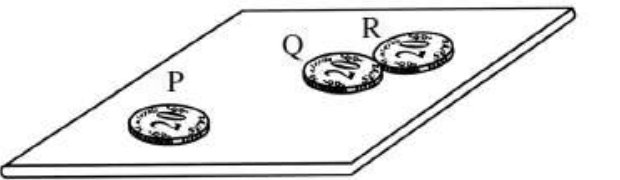
Diagram 2 shows three identical coins, P, Q and R, at rest on a horizontal surface. What happens if P is pushed and collided with Q?
P / Q / R
A Moves / Stationary / Stationary
B Stationary / Stationary / Moves
C Moves / Moves / Stationary
D Moves / Stationary / Moves
Medium
Which of the following systems will give the greatest acceleration on an object of mass m?
Medium
Diagram 3 shows an athlete bending his legs upon landing in a long jump event. The athlete bent his legs to reduce the
A impulse on his feet
B impulsive force on his feet
C velocity just before landing
D time of impact between his feet and the sand
Medium
When an object is travelling with a constant velocity, its acceleration will be
Easy
Which graph shows the motion with constant acceleration?
Medium
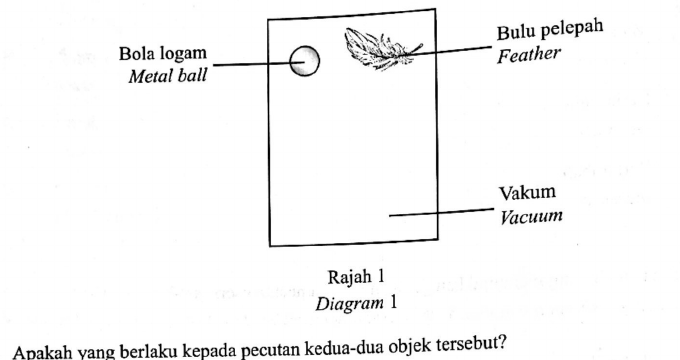
Diagram 1 shows a metal ball and a feather dropped from the same height in a vacuum. What happens to the acceleration of both objects?
Easy
Which of the following have a very small inertia?
Easy
The Principle of Conservation of Momentum states that
Easy
Which of the following are not the effect of a force acting on a moving car?
Easy
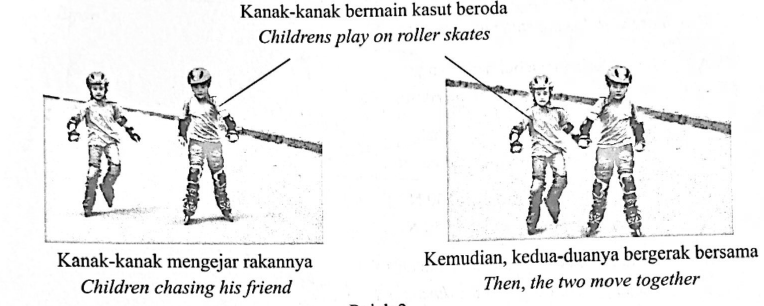
Diagram 2 shows two children playing with roller skates. One child chases his friend, then the two move together. Which statements are correct?
I Total momentum is conserved
II Total kinetic energy is conserved
III Both children experience elastic collision
IV Both children experience inelastic collision
Medium
A durian of mass 1.5 kg falls freely from a tree branch. Which of the following statements is correct?
Medium
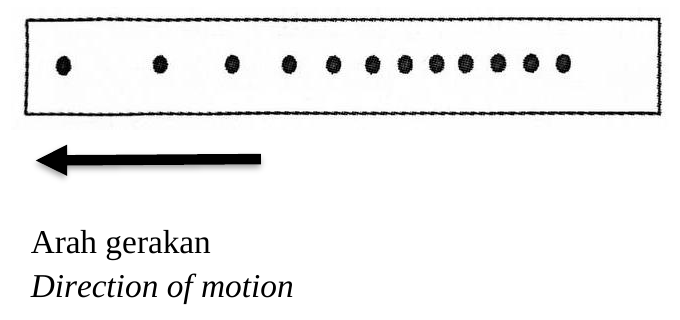
Diagram 1 shows a ticker tape for a motion of an object (direction of motion: left). Which statement is correct about the motion?
Medium
Ahmad throws a stone upwards vertically with an initial velocity of 20 m s⁻¹. What is the maximum height that the stone can reach if the air resistance is neglected? [g = 9.81 m s⁻²]
Medium
Diagram 2 shows an oil tanker with three tanks. The use of three tanks is to
Easy
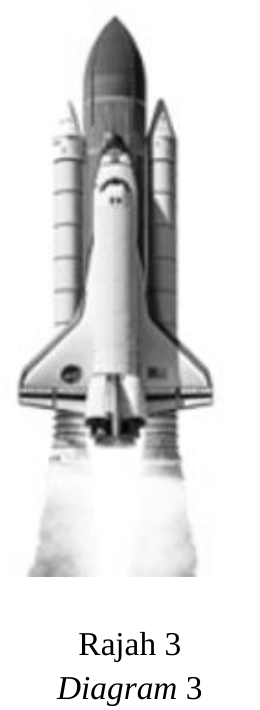
Diagram 3 shows a rocket launch, an example of an explosion. Which of the following statements is true?
I The total momentum is conserved in the explosion
II The total momentum is not conserved in the explosion
III Total momentum before explosion = total momentum after explosion
IV Total momentum before explosion > total momentum after explosion
Medium
Diagram 11 shows a car at rest. F₁, F₂, F₃ and F₄ are the forces acting on the car. Which equation shows the correct relationship of forces when the car starts moving forward with acceleration?
Medium
A car moving with uniform velocity has acceleration
Easy
The inertia of an object is affected by
Easy
The principle of the Conservation of Momentum states that
Easy
The diagram shows a force acting on an object. The impulse given to the object is influenced by
Easy
Karim's weight on Earth is 800 N. What will happen to his weight on the moon?
Medium
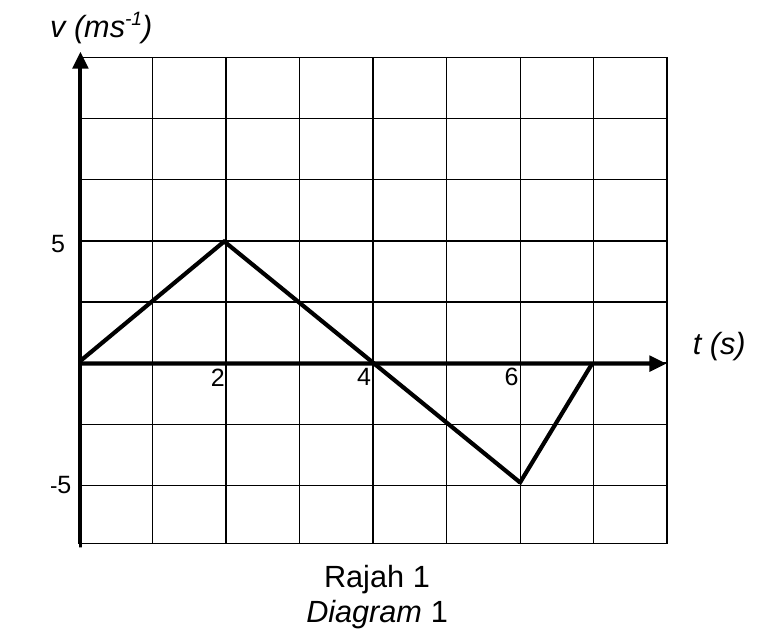
Diagram 1 shows the velocity-time graph of a moving object along a straight line (v is 5 m s⁻¹ at 2 s, 0 at 4 s, -5 m s⁻¹ at 6 s and 0 at 7 s). What is the displacement of the object during the first 6 seconds?
Medium
A free fall experiment of a tennis ball and a feather are dropped from the same height in a vacuum chamber. Which physical quantity does not change?
Medium
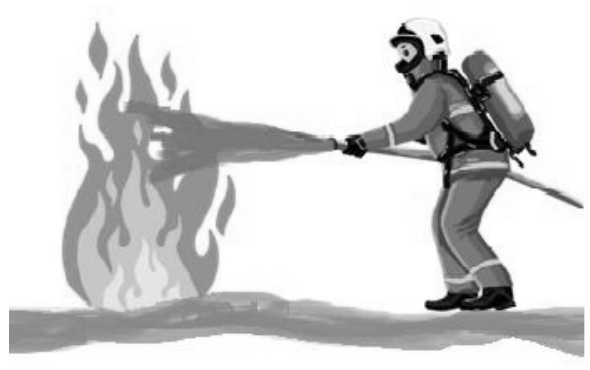
Diagram 2 shows a firefighter who is putting out a fire and will be thrown backwards when the water spurts out of the hose at a high speed. Which of the following factors affects the water gushing out of the hose?
Medium
Diagram 3 shows a boy using the correct long jump technique (bending the legs on landing) to avoid injury to his legs. What is the cause of the above situation?
Medium
Which of the following statements is correct about weight?
Hard
Speed is defined as
Easy
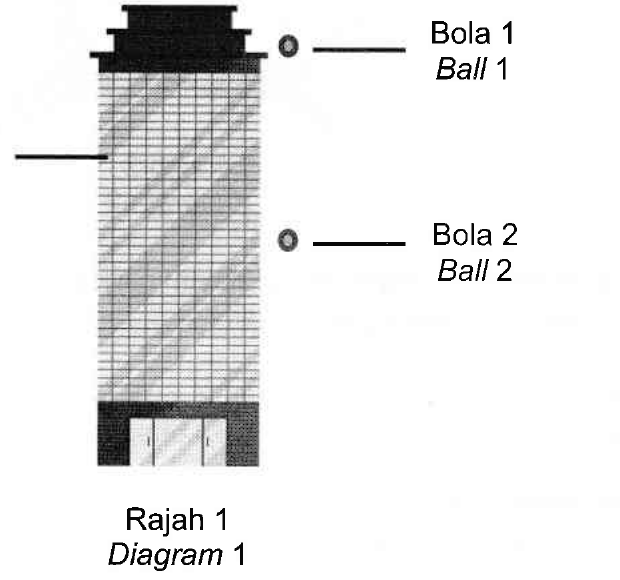
Diagram 1 shows two identical balls released from an 80 m tower at the same time. One of the balls falls from the top of the building, and the other falls from half the height of the building. Which physical quantity is the same for both balls?
Medium
Factors that affect the inertia effect of an object is
Easy
Diagram 2 shows a project to launch a water rocket. What concept is applied in this project?
Medium
When a force is applied to an object, which state will not occur?
Easy
Two plasticine balls are dropped simultaneously on two surfaces of different hardness. Which physical quantity is constant related to the two surfaces?
Medium
The weight of an object on the surface of the moon is 50 N. What is the mass of the object on the surface of the moon? [Gravitational acceleration on the surface of the moon = 1/6 of gravitational acceleration on the surface of the earth]
Medium
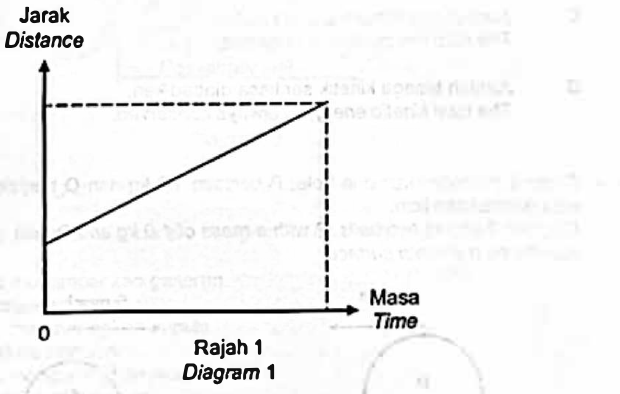
Diagram 1 shows a graph distance-time travelled by a moving car. If the gradient of the graph is more steeper, what will happen to the car's motion?
Medium
Which of the following statements is correct about the Principle of Conservation of Momentum in a closed system?
Easy
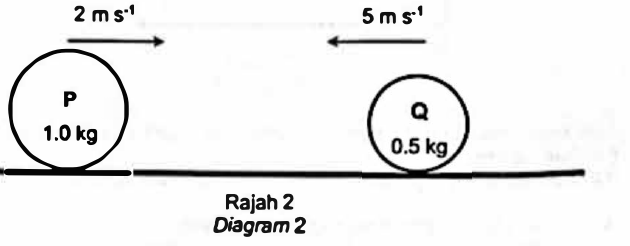
Diagram 2 shows two balls. P with a mass of 1.0 kg moves at 2 m s⁻¹ to the right and Q with a mass of 0.5 kg moves at 5 m s⁻¹ to the left on a smooth surface. If both of the balls stick together immediately after the collision, what is their common final velocity?
Medium
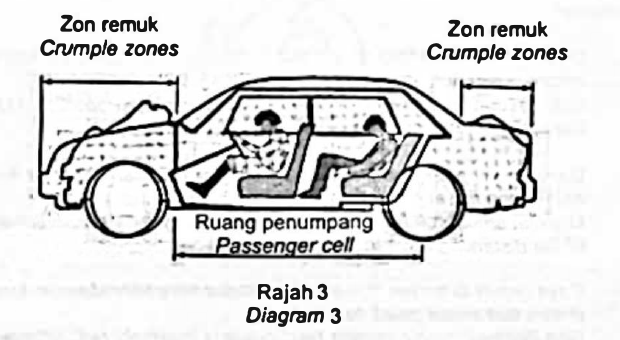
Diagram 3 shows the parts of the crumpled zone of a car. Why are the front and rear of a car designed to be easily crumpled?
Easy
Why would an astronaut wearing a space suit find it difficult to walk on the surface of the Earth compared to the moon?