KELANTAN 2025 P2 Q9
MediumWrite your answer on paper. Then open the answer to check it.
Diagram 9.1 shows the Moon and a satellite orbiting the Earth (orbital radius of satellite rs, of Moon rm). Section B: answer one question (Q9 or Q10).
Medium20 marks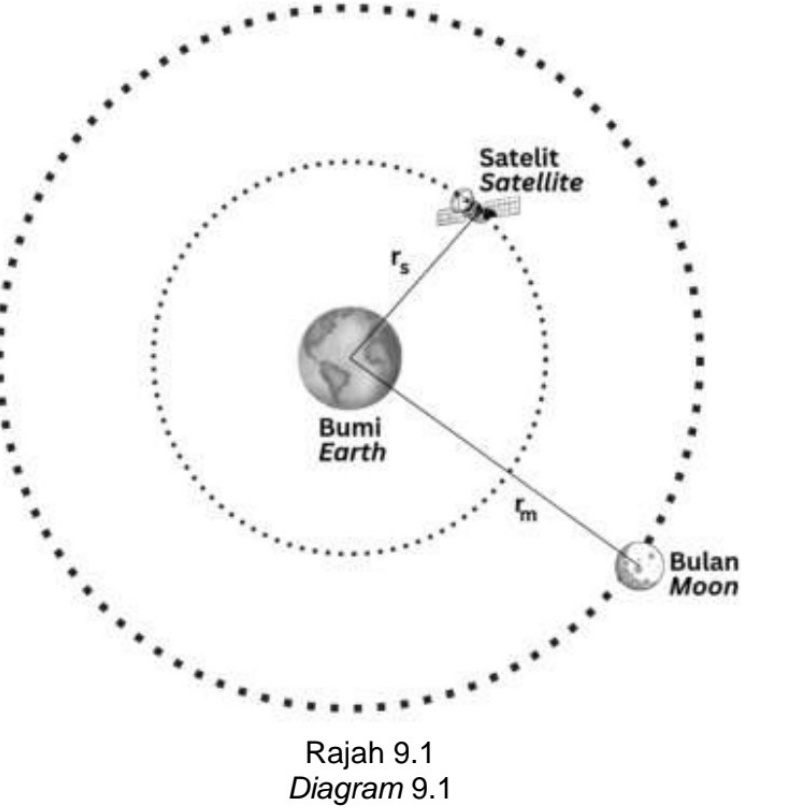
- (a)
Name the physics law that relates the orbital period, T and orbital radius, r.
[1] - (b)
Derive an expression that describes the physics law in 9(a) using the equations F = GMm/r², F = mv²/r and v = 2πr/T.
[4] - (c)(i)
The orbital radius of the Moon is 57 times greater than the orbital radius of the satellite. [Radius of the Earth, R = 6.37 × 10⁶ m, Mass of the Earth, M = 5.97 × 10²⁴ kg, Mass of the Moon, m = 7.35 × 10²² kg, Orbital radius of the Moon, rm = 3.83 × 10⁸ m, Period of the Moon orbiting the Earth, T = 655.2 hours] Calculate the height of the satellite from the surface of the Earth.
[3] - (c)(ii)
Calculate the period taken by the satellite to orbit the Earth.
[2] - (d)
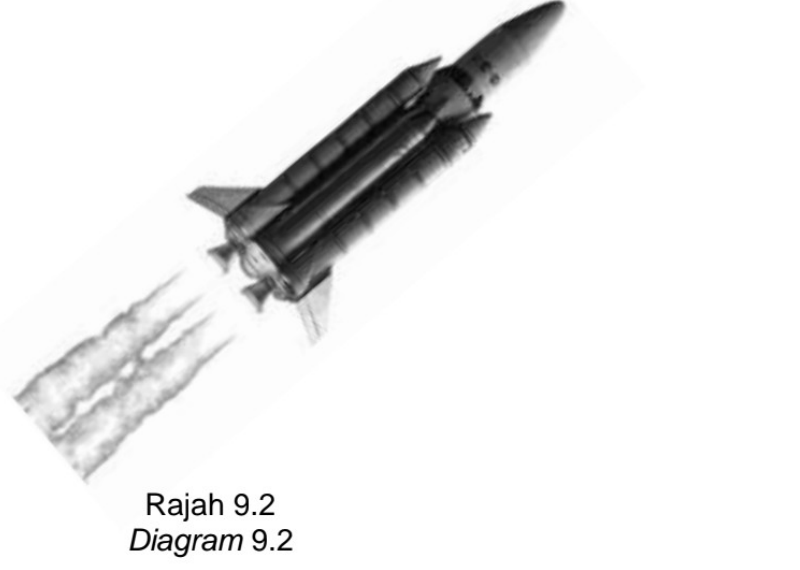
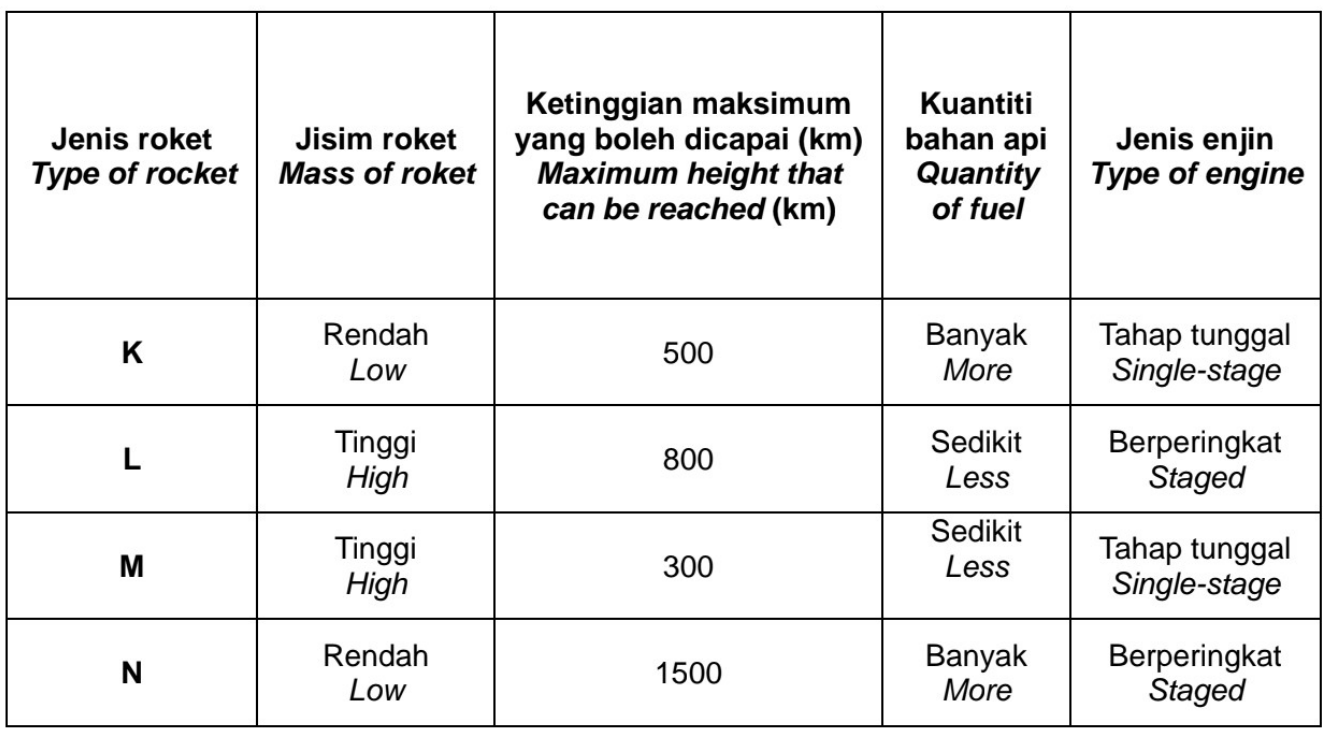
Diagram 9.2 shows a rocket being launched to carry a communications satellite into its orbit. Table 9 shows the characteristics of rockets K, L, M and N that can be used in satellite delivery missions. Table 9 (Type of rocket; Mass; Maximum height (km); Quantity of fuel; Type of engine): K Low, 500, More, Single-stage; L High, 800, Less, Staged; M High, 300, Less, Single-stage; N Low, 1500, More, Staged. You are required to investigate the characteristics of the rocket suitable for the mission of sending the communication satellite into its orbit. Explain the suitability of each characteristic and determine the most suitable rocket. Give reasons for your choice.
[10]