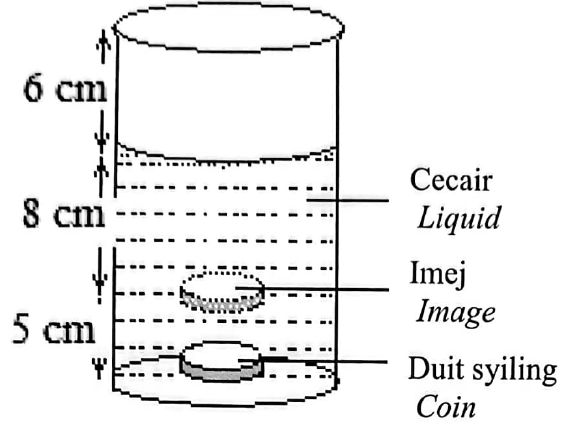
Diagram 13 shows a coin is placed at the bottom of a container filled with liquid. Image of the coin is seen 5 cm from the bottom of the container. What is the refractive index of the liquid? (Liquid depth marked 6 cm and 8 cm above the image, 5 cm from image to coin.)
Medium
Which of the following statement about optical instrument is not true?
Easy
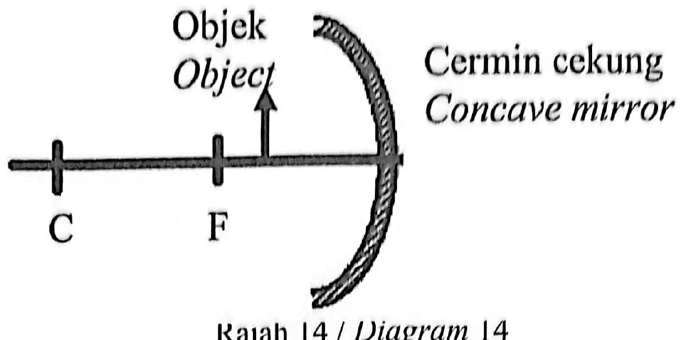
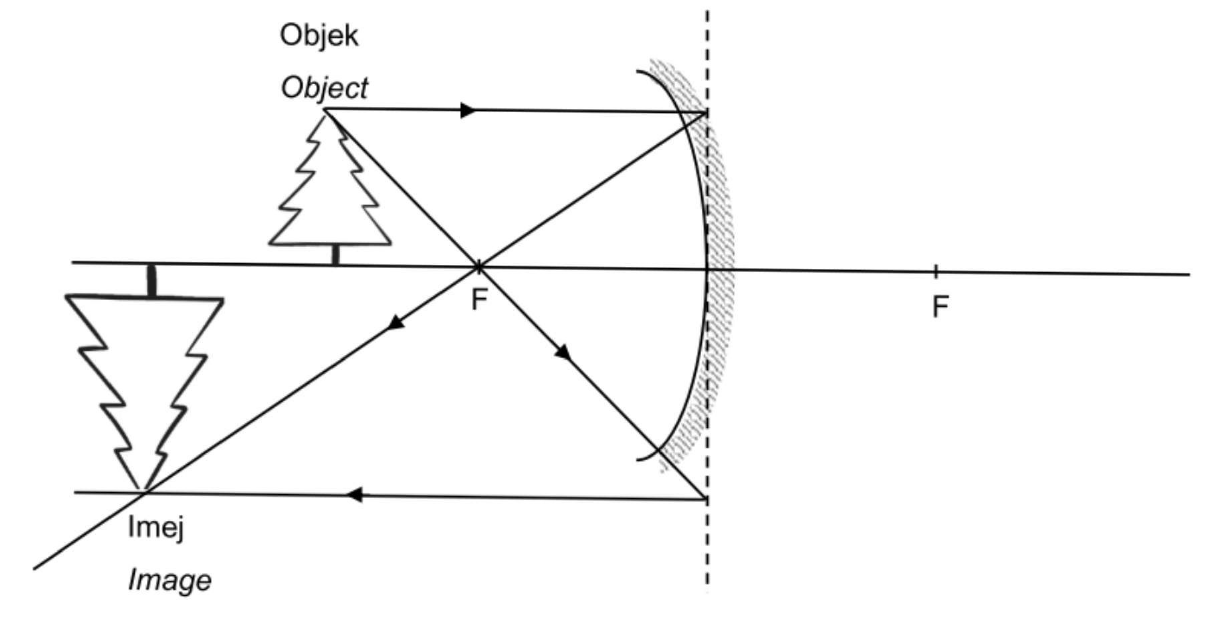
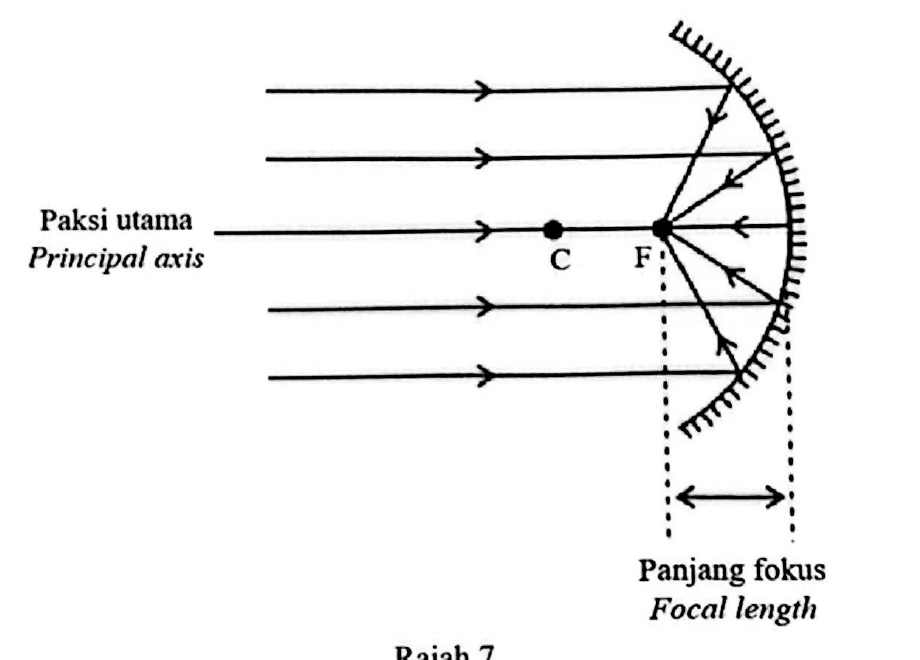
Diagram 14 shows a ray diagram of a concave mirror (object between F and the mirror; C and F marked). What is the modification can be done to produce a torch light which is bright?
Medium
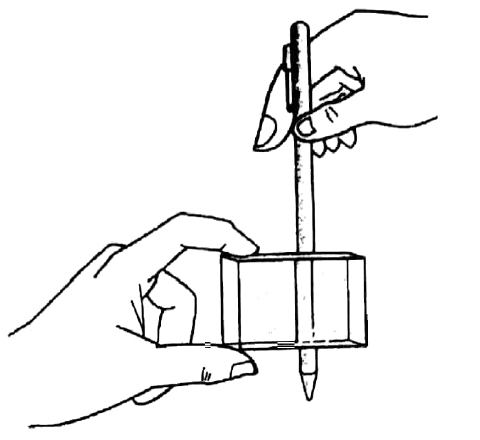
Diagram 8 shows a glass block is placed in front of a pen. The pen appears bent is due to
Medium
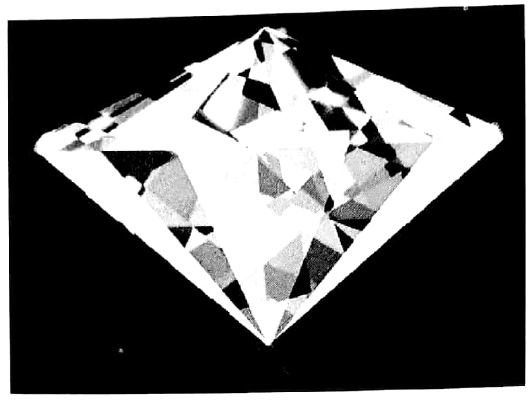
Diagram 9 shows a diamond glitters when struck by light rays. This phenomenon is caused by
Medium
Which of the following ray diagrams produces an image that is virtual, upright and bigger than the object?
Medium
An object is placed 5 cm in front of a convex lens which has a focal length of 10 cm. What is the value of m, the magnification of the image?
Medium
Which of the following does not change when a light ray is refracted in a certain medium?
Easy
A convex lens has a focal length of 10 cm. An object is placed 20 cm in front of the lens. Determine the position of the image formed by the lens.
Medium
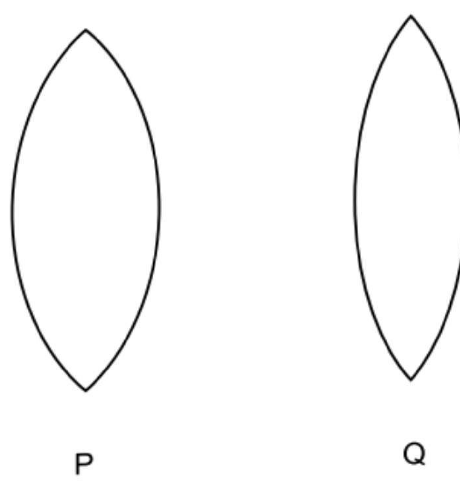
Diagram 9 shows two lenses which are used to make a telescope. Which of the following statements is correct about both lenses?
Medium
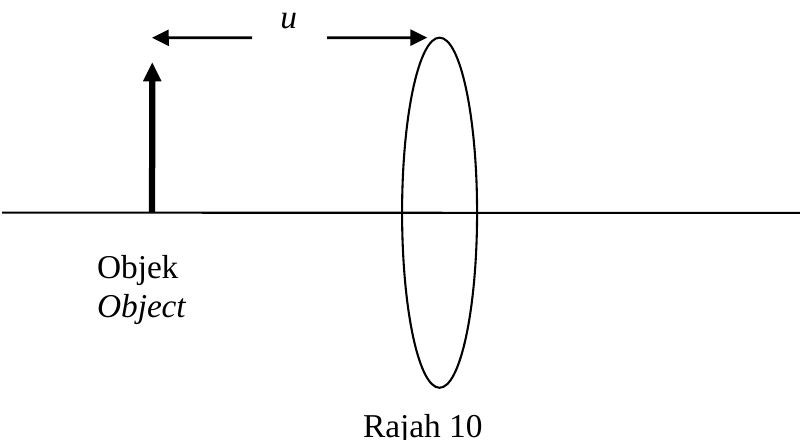
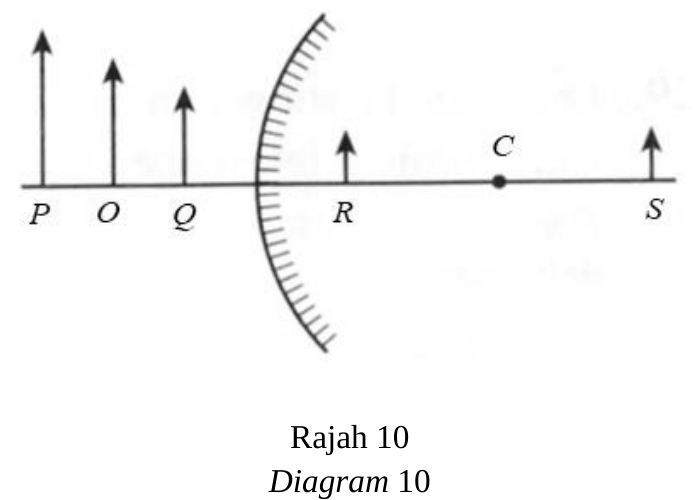
Diagram 10 shows the formation of an image by a concave mirror. If the curvature of the mirror is increased, what will happen to the size of the image?
Medium
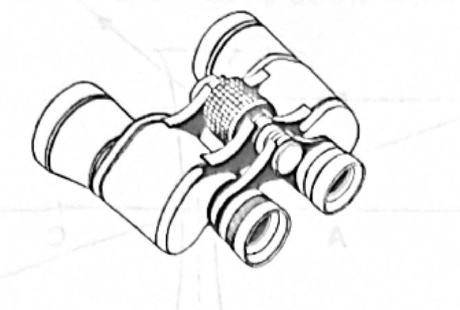
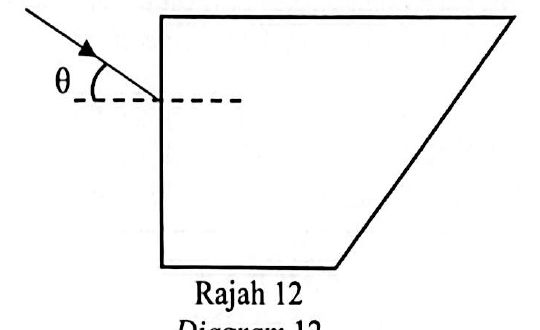
Diagram 12: binoculars use a prism to see distant objects. What is the physics concept used?
Easy
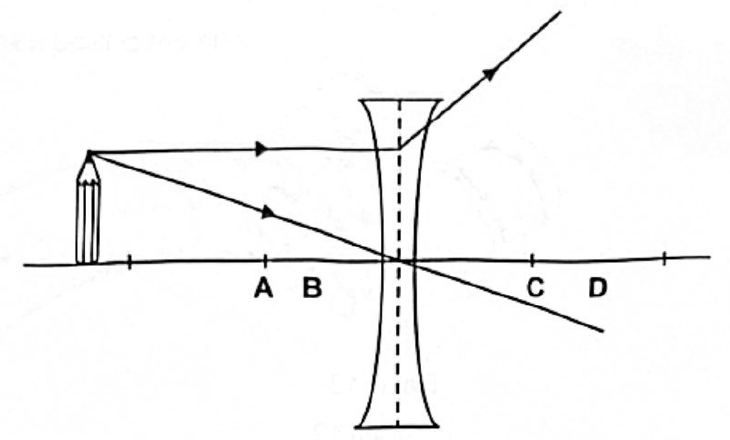
Diagram 13: incomplete ray diagram for a concave lens. Among positions A, B, C and D, which is the position of the image formed?
Medium
The focal lengths of the objective lens and eyepiece of a light microscope are f_o and f_m. The distance between the lenses is L. Which relationship is correct at normal adjustment?
Medium
The focal length of a convex lens is f. Where should the object be placed for its image to be the same size as the object?
Medium
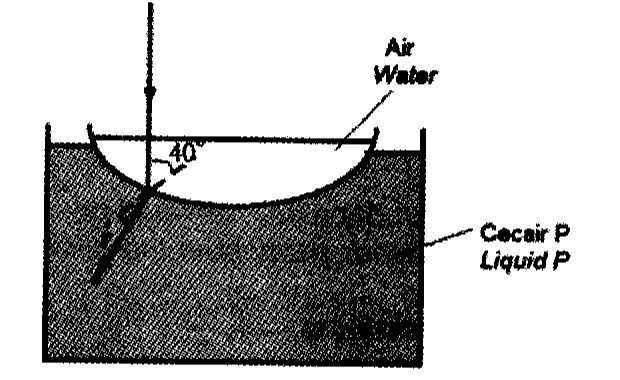
Diagram 10 shows a path of light. The refractive index of water and liquid P are 1.3 and 1.5 respectively. What is the refracted angle, r in liquid P?
Medium
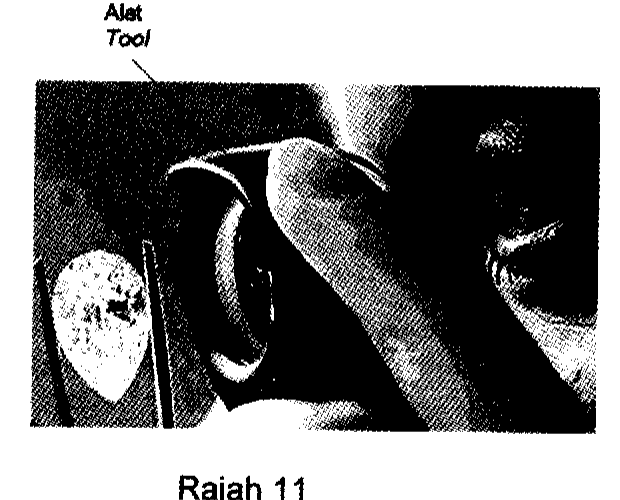
Diagram 11 shows an optical tool used by a gemologist to evaluate a gemstone. At which position the gemstone should be placed in front of the optical tool to enable the gemologist to see an upright and magnified image?
Medium
An object is placed at a distance 15.0 cm from a convex lens with focal length 10.0 cm. What is the image distance?
Medium
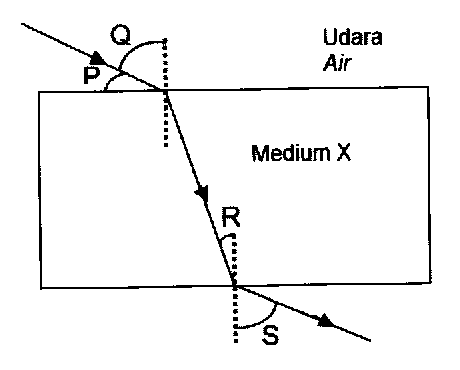
Diagram 4 shows a beam of light travelling from air to medium X (angles P, Q in air at the top surface; R inside medium X; S on emergence into air). What is the refractive index of that medium?
Medium
Which of the following instruments applies total internal reflection?
Medium
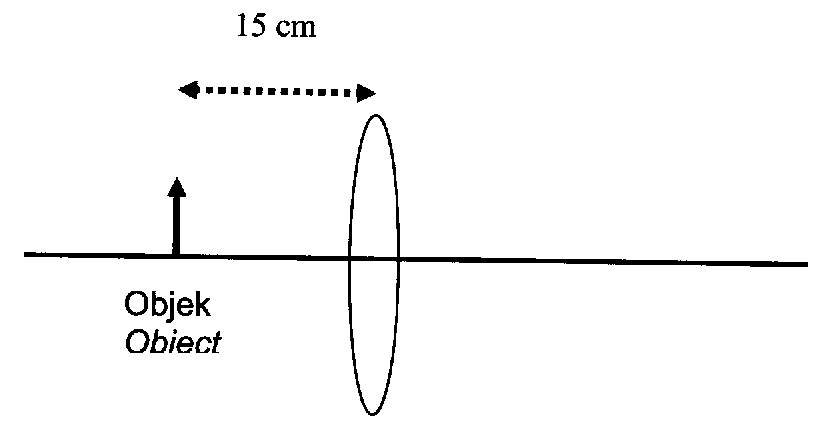
Diagram 5 shows an object is placed in front of a convex lens with focal length of 10 cm (object distance 15 cm). What are the characteristics of image formed?
Medium
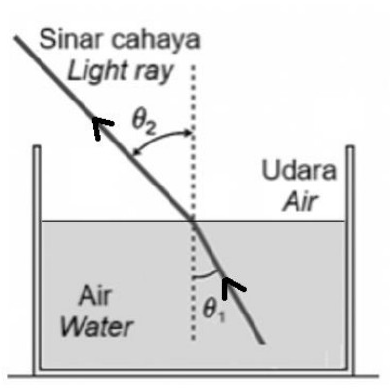
Diagram 8 shows a light ray propagating from water to air. If the angle of incidence, θ₁ is 40°, calculate the angle of refraction, θ₂ in air. [Refractive index of air, n = 1.00, refractive index of water, n = 1.33]
Medium
Which of the following is true about the conditions for total internal reflection to occur?
Medium
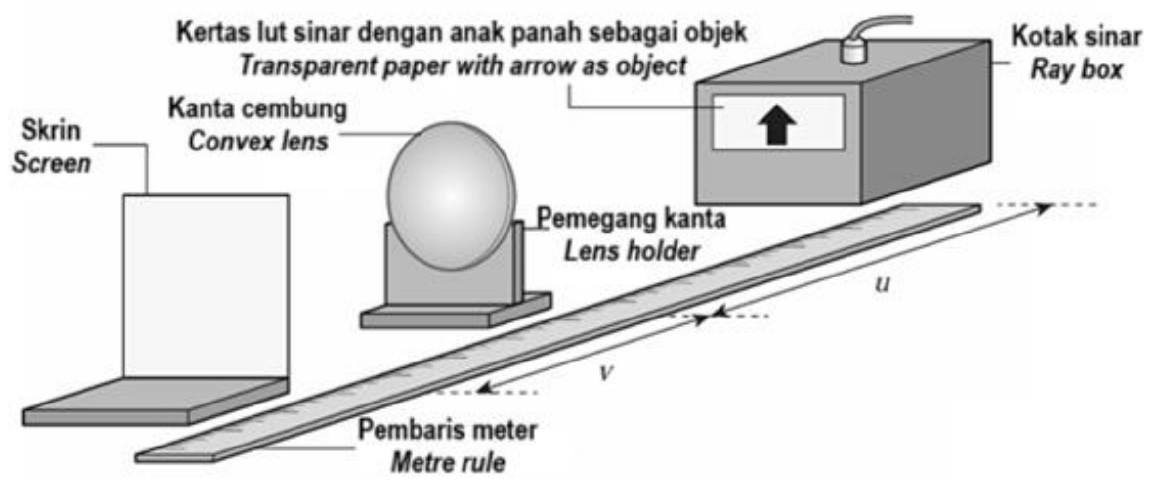
Diagram 9 shows an experimental setup to detect the position and characteristics of images formed by a convex lens (ray box with object, convex lens, screen, metre rule). When the screen is moved forward and backward, no image is formed on the screen. What is the most suitable conclusion?
Medium
Which of the following ray diagrams shows the correct reflection of light from a curved mirror?
Medium
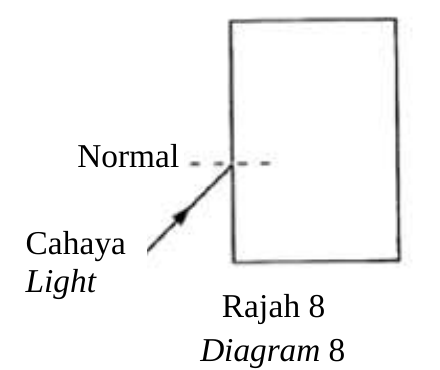
Diagram 8 shows a ray of light directed to a glass block. Which statement is correct?
Medium
A critical angle of a semicircle glass block is 42°. Which diagram shows a total internal reflection?
Medium
Which of the following shows the characteristics of an image seen under a magnifying glass?
Easy
An object is 25 cm in front of a convex lens with a focal length of 10 cm. What is the distance of the image formed?
Medium
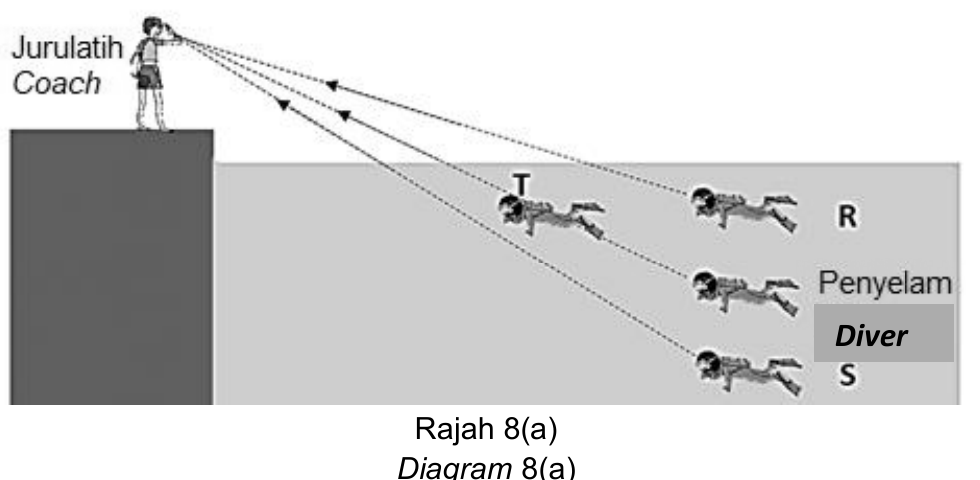
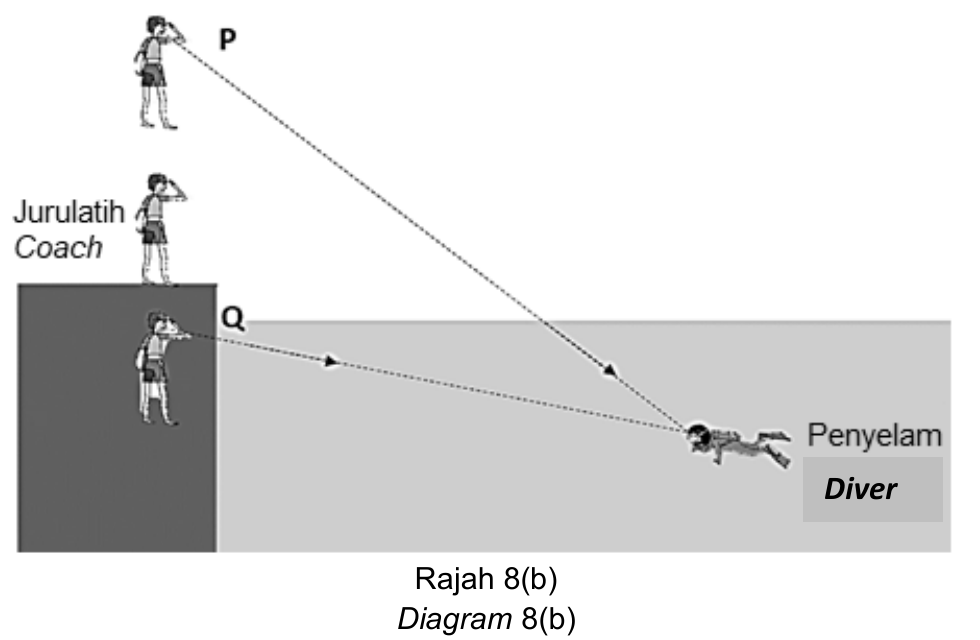
Based on Diagram 8(a), the possible position of the diver's image is R, S or T. Diagram 8(b) shows the possible position of the coach's image is P or Q. Choose the correct combination of both image positions.
Medium
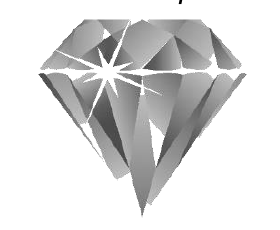
Diagram 12 shows a diamond, a mineral composed of pure carbon. Why does the sparkle of diamonds make them unsurpassed as gems?
Medium
Table 13: Lens: convex; focal length: P; object distance: 10 cm; characteristics of image: Q, R and T; image formed at: infinity. Based on Table 13, choose the correct information of P, Q, R and T.
Medium
An object is put in front of a convex lens at a position of 30 cm from the optical centre. If the focal length of the convex lens is 15 cm, what is the magnification ratio of the final image to the object?
Medium
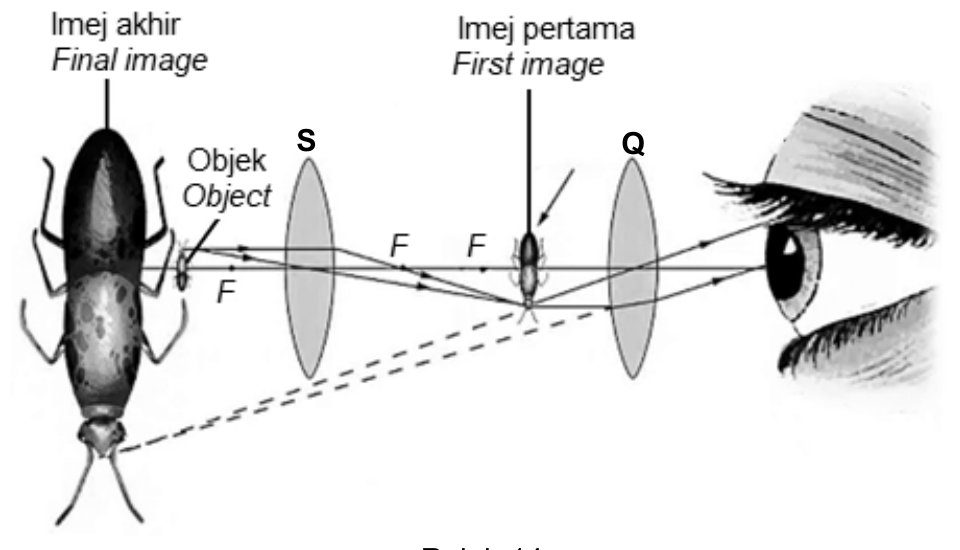
Diagram 14 shows the position of the first image and the final image of an object using a compound microscope (objective lens S, eyepiece Q). Choose the false statement.
Medium
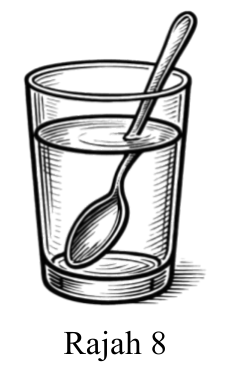
Diagram 8 shows a spoon being placed in a glass containing water. Why does a spoon placed in a glass of water appear bent at the water surface?
Easy
An object is placed in front of a convex lens with focal length f. An image of the same size as the object is formed on the screen. Which of the following statements is true about the object distance?
Medium
Which of the following are the characteristics of an image formed by a convex lens when the object is at infinity?
Medium
A student places a small object in front of a concave mirror and slowly moves it towards the focal point. The image changes from real to virtual and becomes increasingly magnified. Based on this observation, what is a real-life application of this principle?
Medium
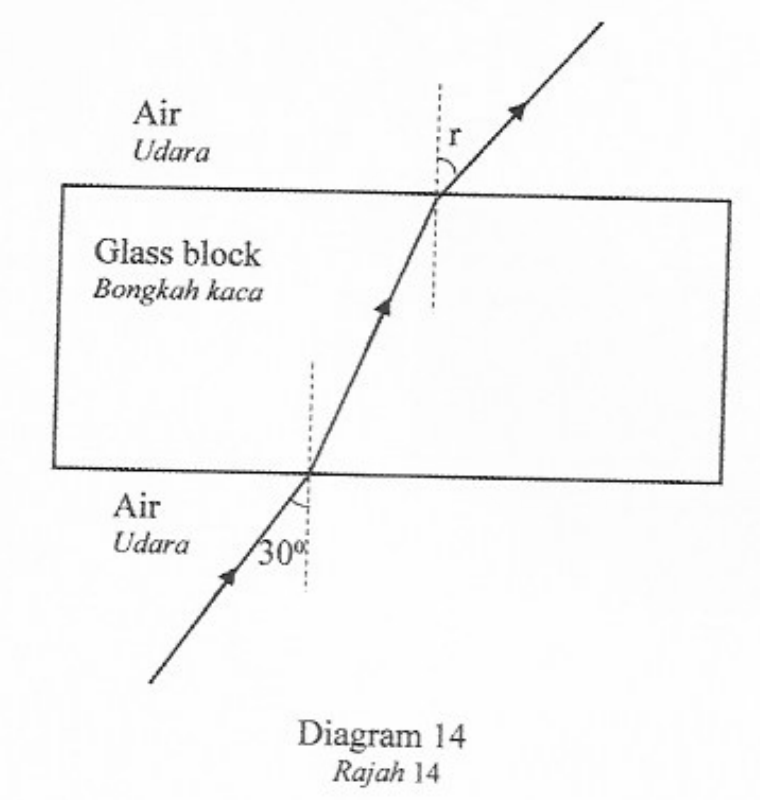
Diagram 14 shows a beam of light that is directed towards a glass block. The incident angle in air is 30°. Which is the correct value for angle r (the angle of the emergent ray in air at the top surface)?
Medium
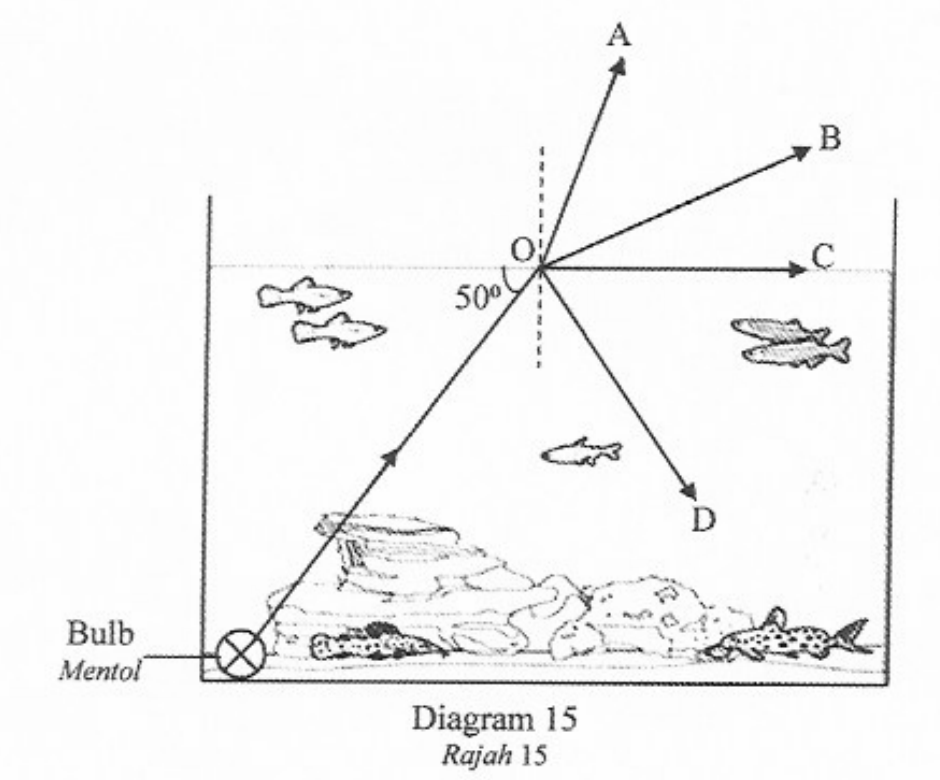
Diagram 15 shows light ray from a bulb placed at a bottom of an aquarium. The ray meets the water surface at O with an angle of incidence of 50°. Which path of the light ray (A, B, C or D) is correct after point O? [Critical angle of water = 49°]
Medium
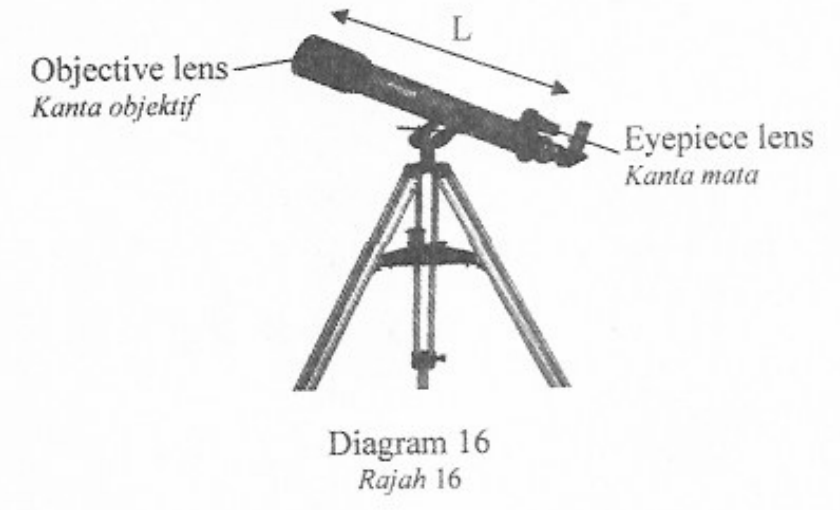
Diagram 16 shows an astronomical telescope. The focal length of the objective lens and eyepiece lens of the telescope is f₀ and fₑ respectively. The length of the tube of the telescope is L. Which of the relationships between L, f₀ and fₑ is correct for the astronomical telescope at normal adjustment?
Medium
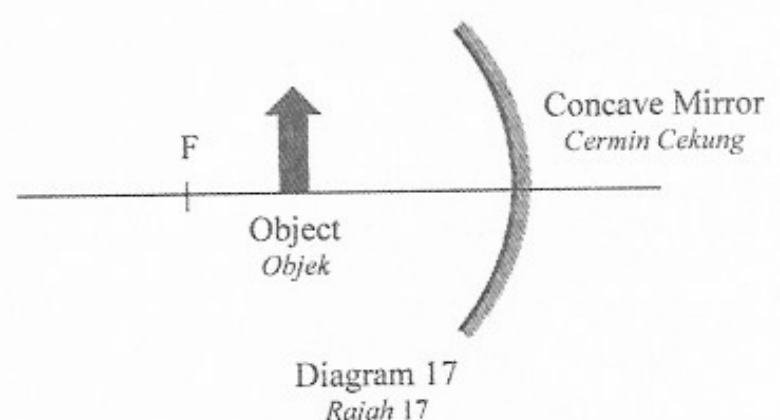
Diagram 17 shows an object is placed in front of a concave mirror with focal point, F. The object is between F and the mirror. What are the characteristics of the image formed?
Easy
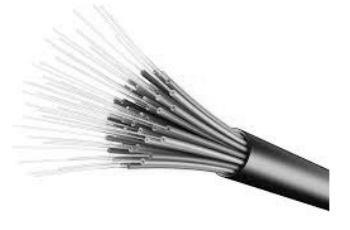
Diagram 13 shows a bundle of optical fibers. Which phenomenon shows the same physics concept as Diagram 13? (A: mirage on a road; B: interference of water waves; C: reflection of a mosque in water; D: diffraction of water waves.)
Medium
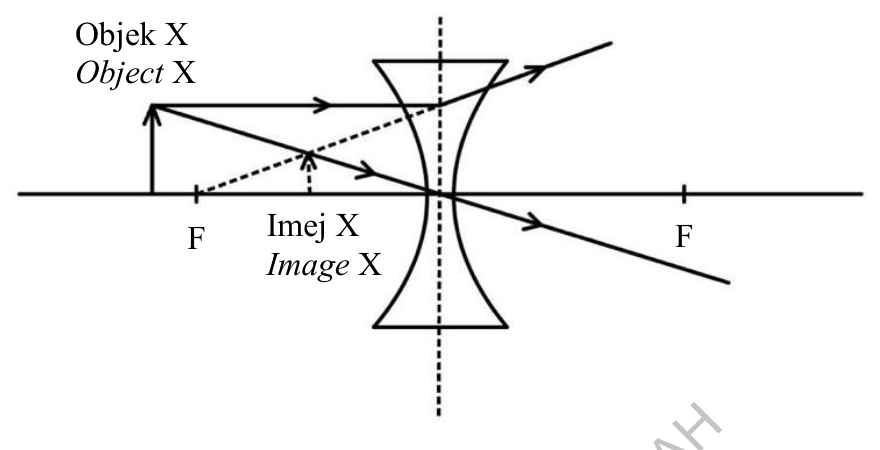
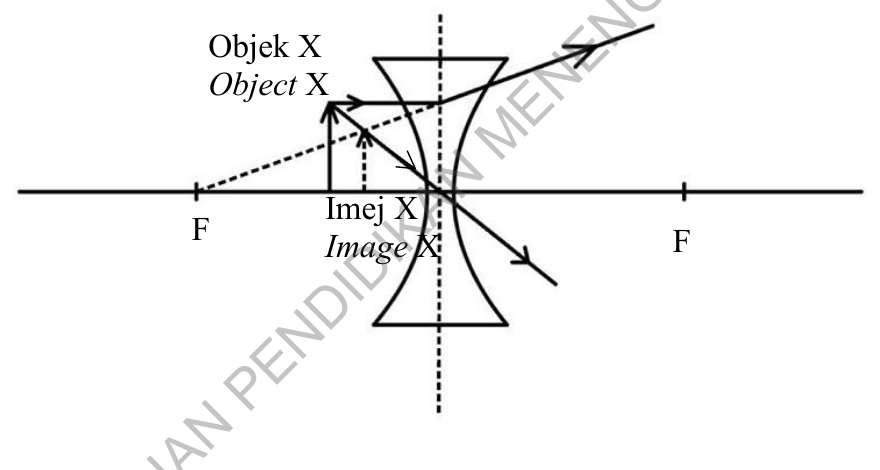
Diagram 14 shows a ray diagram of a concave lens for two object positions (the second object is closer to the lens). Which statement is correct to explain the above situation?
Medium
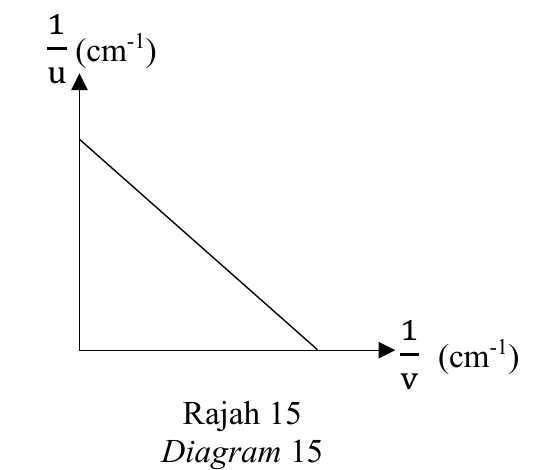
Diagram 15 shows the graph of a thin lens (1/u against 1/v, a straight line with negative gradient). Which of the following represents the y-intercept of the graph?
Easy
Diagram 16 shows a telescope. What is the characteristic of the image of the objective lens?
Medium
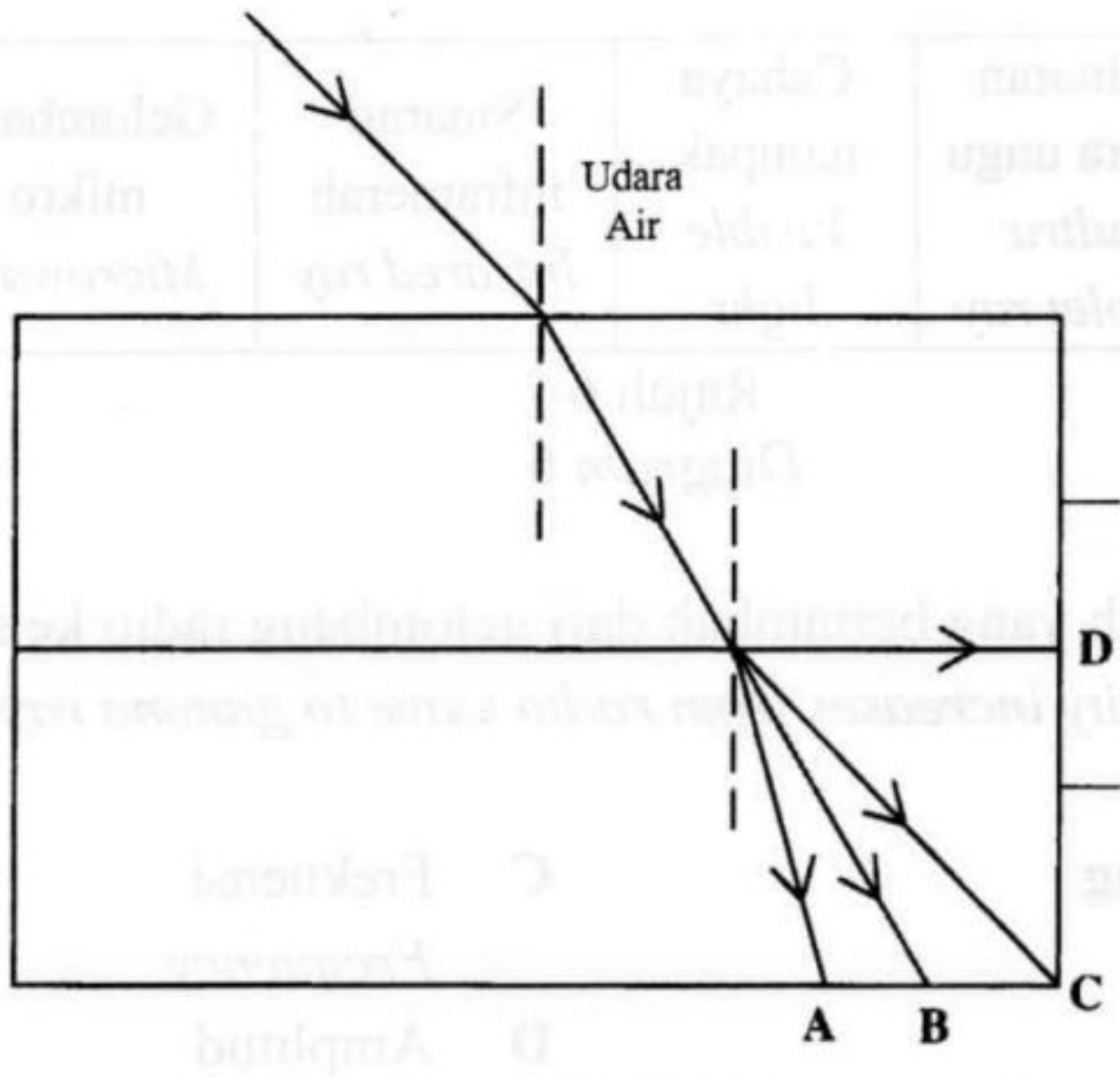
Diagram 7 shows a ray path through air, medium Y and medium Z. Which path A, B, C, and D shows the correct propagation of light as it enters medium Z of greatest refractive index?
Medium
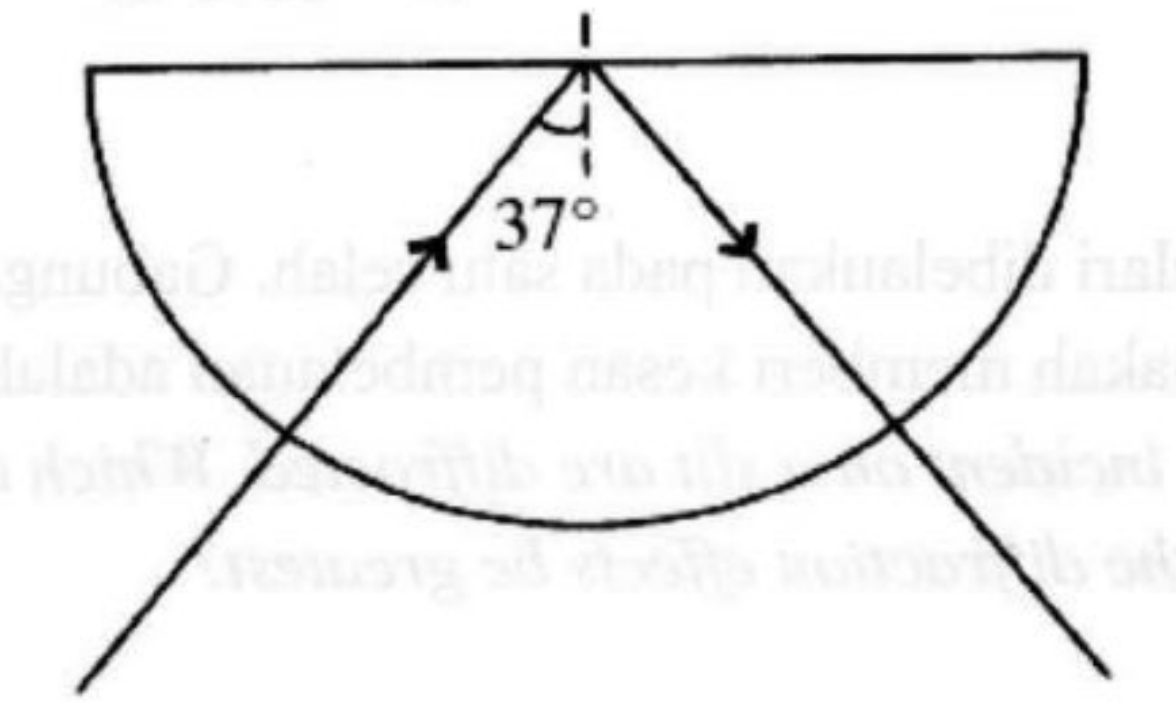
Diagram 8 shows a ray of light propagates in a transparent semicircular block. The ray meets the flat surface at an angle of incidence of 37°. What is the possible refractive index of the transparent block?
Medium
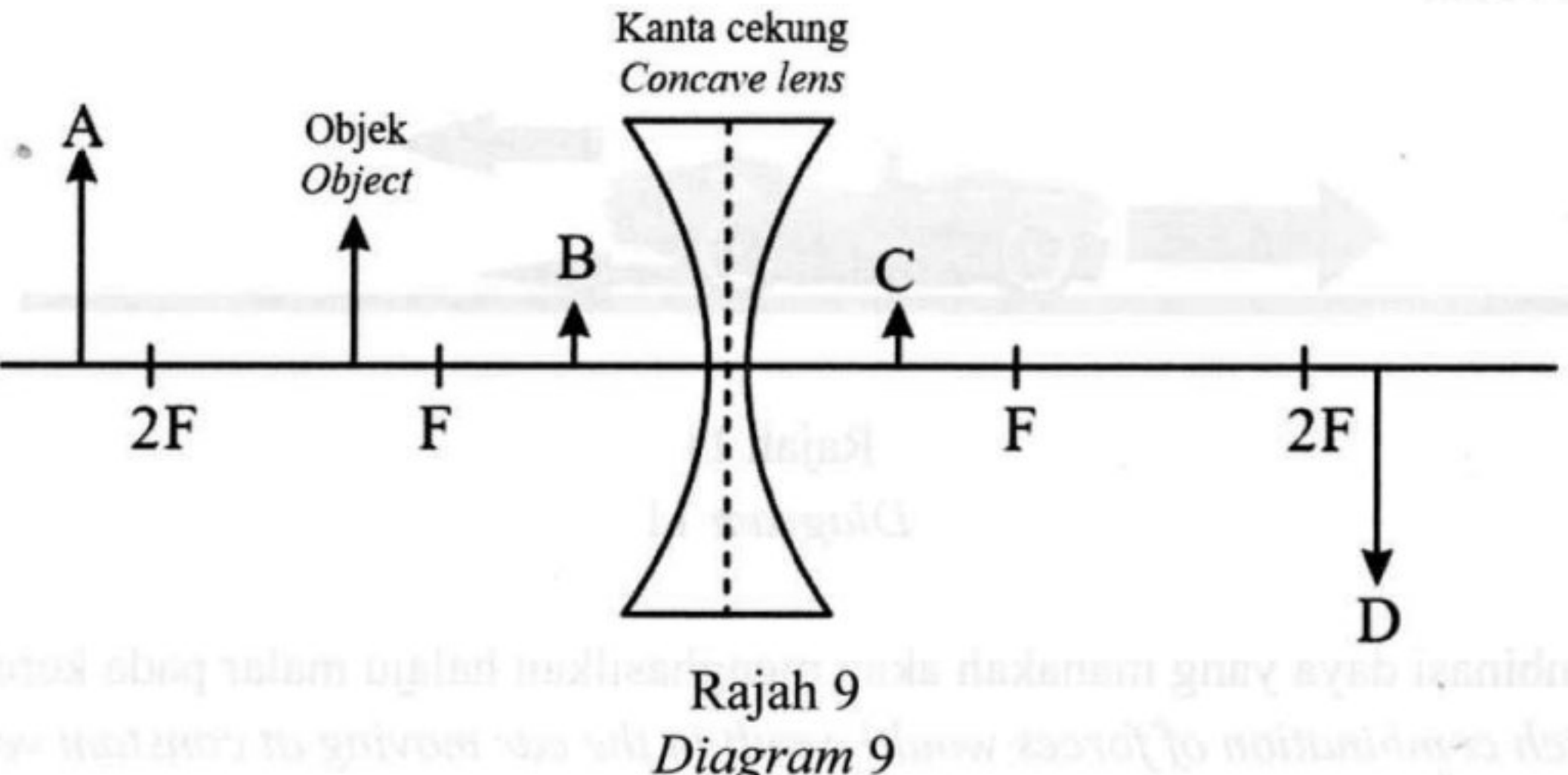
Diagram 9 shows an object placed in front of a concave lens. Which position is the image formed? (Positions A, B, C and D are marked on the diagram.)
Medium
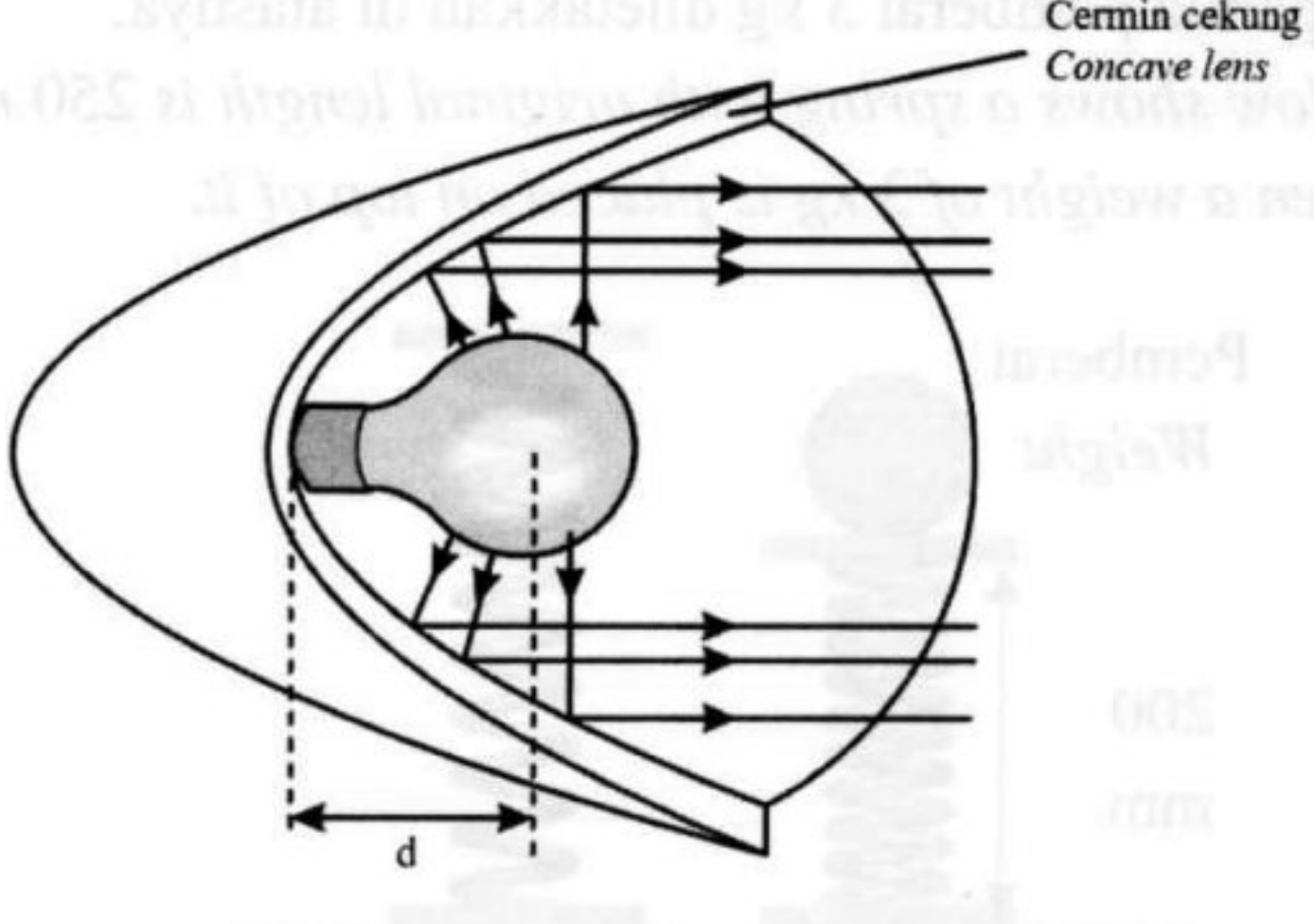
Diagram 10 shows a cross-sectional area of a concave mirror with a bulb used in a car headlight. The distance between the bulb and the pole of the spherical mirror is d. At which position bulb will produce a parallel reflection of light?
Easy
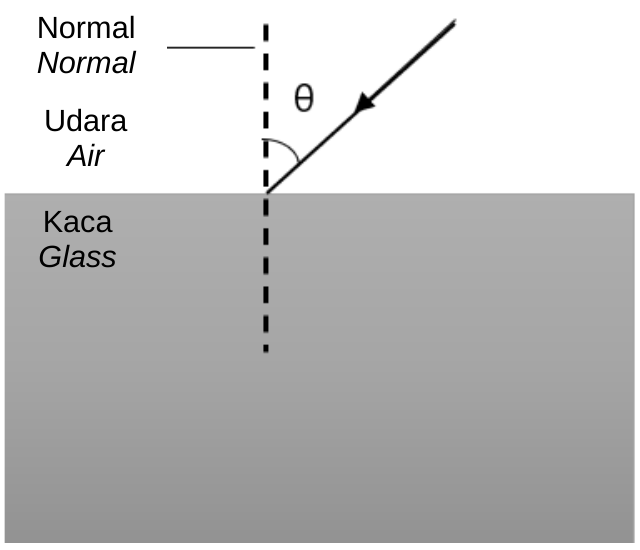
What happens when light travels from air to glass?
Easy
What phenomenon is involved when light propagates through optical fibre?
Easy
Diagram 7 shows reflected ray of a concave mirror. A concave mirror can form a magnified and inverted image when the object distance
Medium
Which of the following devices usually uses a convex lens?
Medium
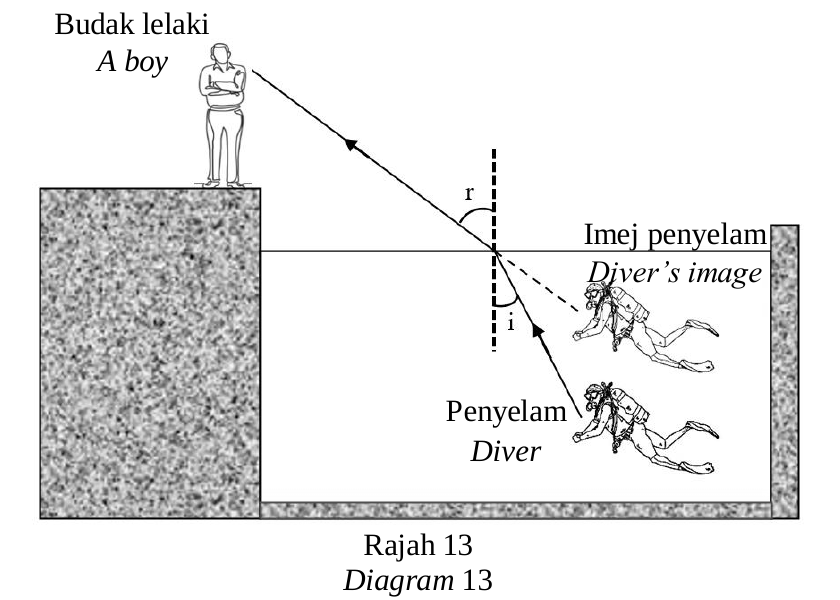
Diagram 13 shows a boy observing a diver in a swimming pool. The diver appears to be closer to the water surface. Which statement explains the phenomenon above?
Medium
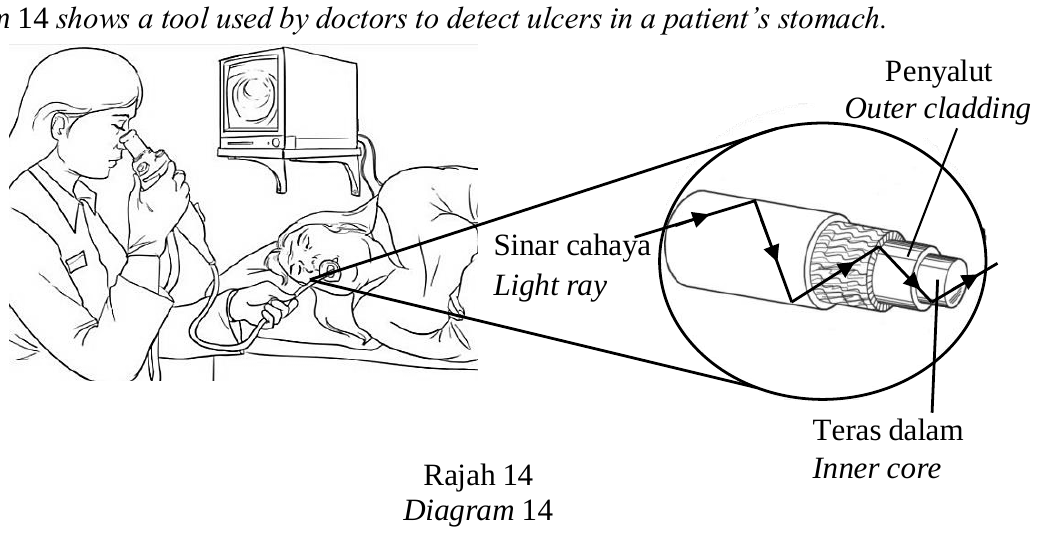
Diagram 14 shows a tool used by doctors to detect ulcers in a patient’s stomach (an optical fibre with inner core and outer cladding). Which statement describes how the doctor can see the image of the ulcer?
Medium
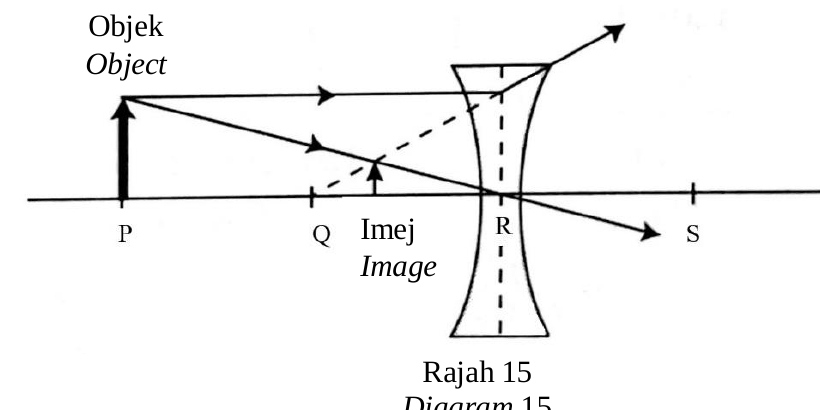
Diagram 15 shows light rays passing through a concave lens. Points P, Q, R and S lie on the principal axis (P at the object, Q at the image, R at the lens, S on the far side). Which point is the focal point for that lens?
Medium
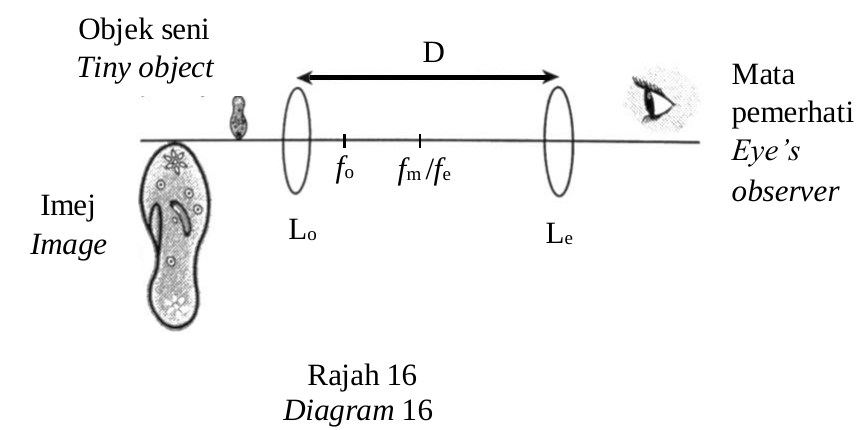
Diagram 16 shows the position of the objective lens, Lo and eyepiece lens, Le of a compound microscope. Which arrangement of lenses is correct for the compound microscope at normal adjustment? (Focal length, f / Distance between two lenses, D)
Medium
A periscope is an optical device used to see obstructed objects. Periscopes are used in submarines to see conditions on the surface of the sea. Which of the following diagram represents the path of a ray of light that passing through the prisms in a periscope?
Medium
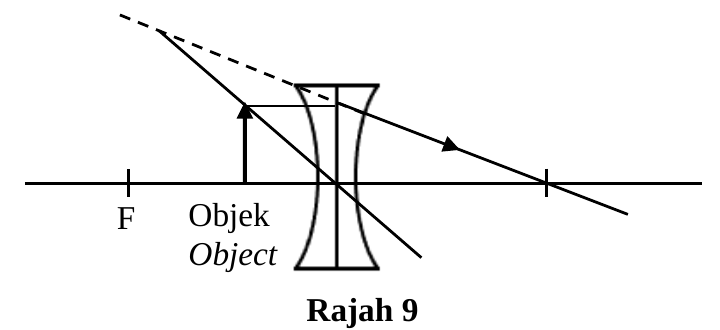
Diagram 9 shows an object is placed in front of a concave lens. What are the characteristics of the image formed?
Easy
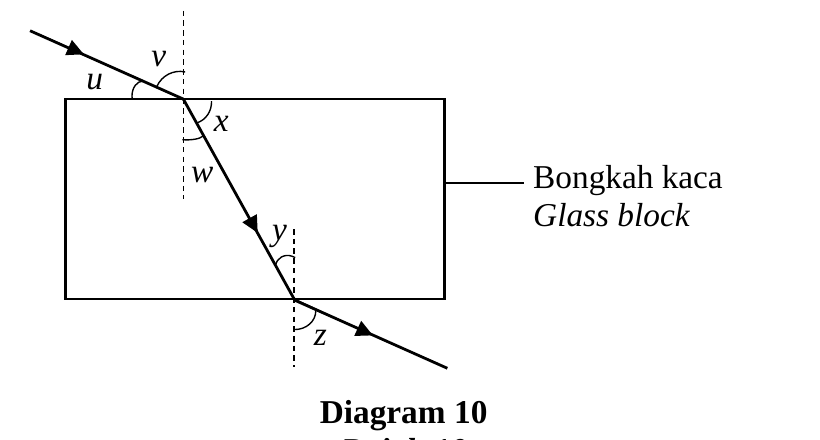
Diagram 10 shows a light ray directed into a glass block. Based on the Diagram 10 above, the refractive index of the glass block is
Medium
In a compound microscope, two convex lenses are used to obtain images of very fine objects. Diagram 11 shows the position of the two lenses. Which statement is correct for a compound microscope at normal adjustment?
Medium
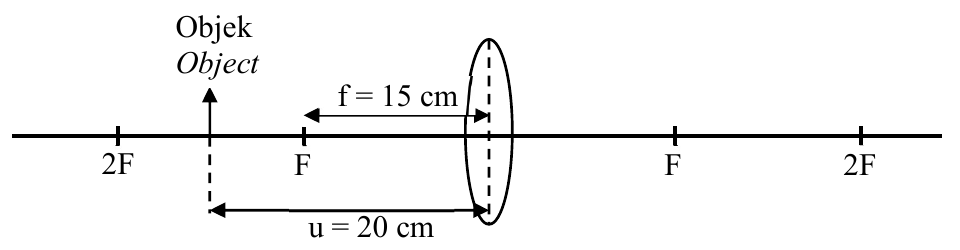
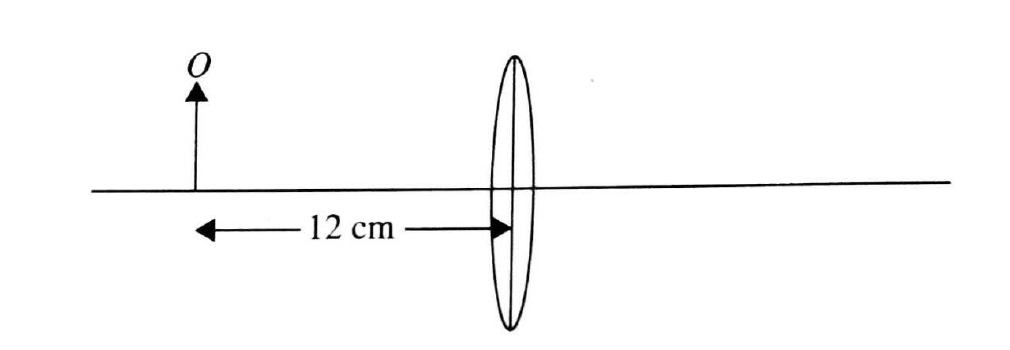
Diagram 12 shows an object in front of a convex lens. The focal length is f = 15 cm and the object distance is u = 20 cm. What is the image distance?
Medium
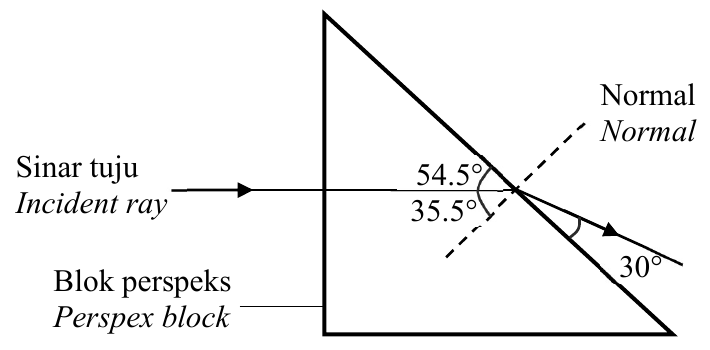
Diagram 13 shows a light ray emerging from a perspex block (angles 54.5°, 35.5° and 30° are marked at the emergent point). What is the critical angle of the perspex?
Medium
Which of the following optical instruments apply the concept of total internal reflection? (Options are pictures: A camera, B binoculars, C projector, D microscope.)
Easy
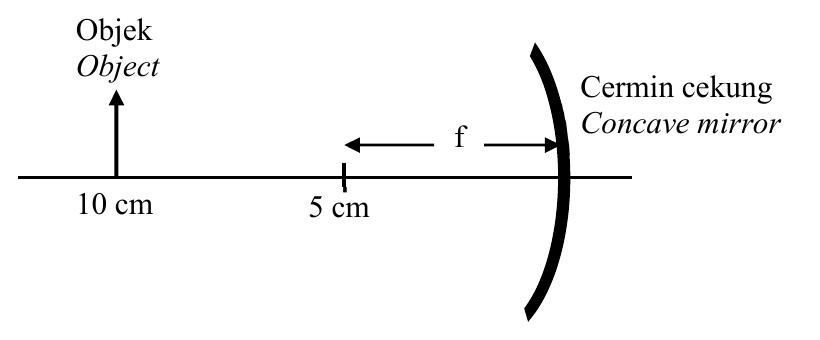
Diagram 14 shows an object placed 10 cm in front of a concave mirror. The focal length, f, of the concave mirror is 5 cm. What are the characteristics of the image formed?
Medium
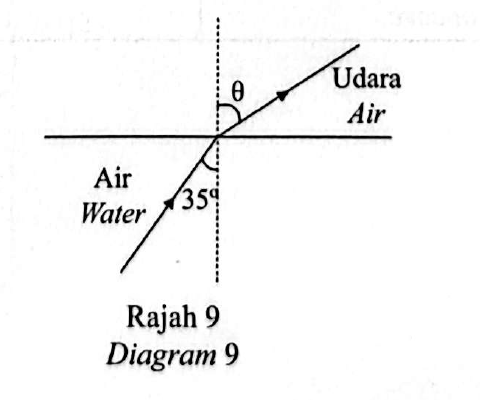
Diagram 9 shows a light ray propagating from water to air. The refractive index of water is 1.33. What is the value of angle θ?
Medium
Which of the following equipment is the application of total internal reflection?
Easy
Which of the following is the characteristics of the objective lens for a telescope? (type of objective lens, fo; focal length of the objective lens, fo compared to the eyepiece, fe)
Medium
Which of the following are the characteristics of the image produced by a concave mirror? I: Real, inverted, diminished. II: Real, inverted, same size as object. III: Virtual, inverted, magnified. IV: Virtual, upright, diminished.
Medium
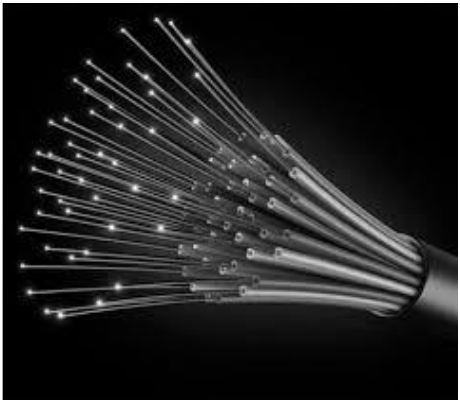
Diagram 8 shows an optical instrument (optical fibres) that is used widely in the fields of telecommunications and medicine. What is the phenomenon of light that enables the instrument to function?
Easy
Diagram 9 shows an object placed 12 cm from a convex lens. The focal length of the lens is 8 cm. What is the image distance from the lens?
Medium
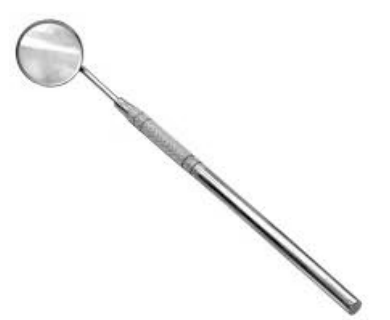
Diagram 10 shows a dental mirror used by a dentist to examine the condition of the patient’s teeth. Why is the mirror used by the dentist not a convex mirror?
Medium
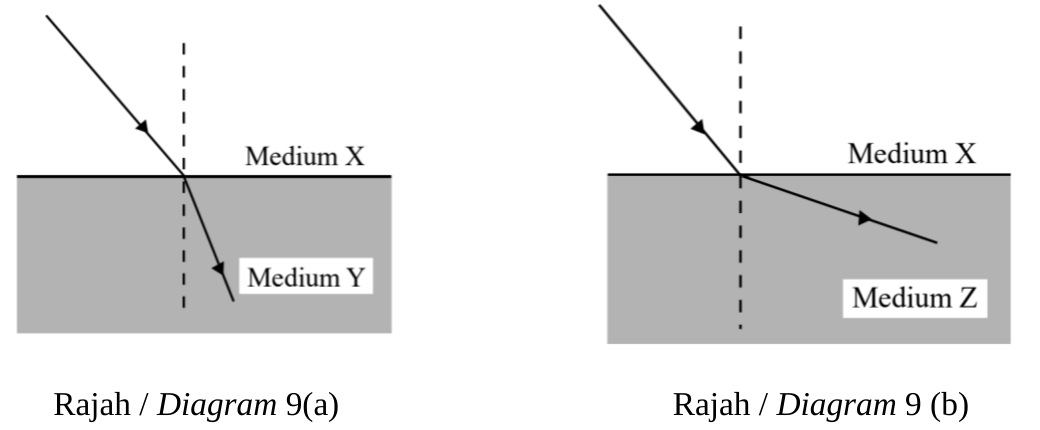
Diagram 9(a) shows a ray of light passing from medium X to medium Y while Diagram 9(b) shows a ray of light passing from medium X to medium Z. Which of the following sequence of optical density of a medium is in descending order?
Medium
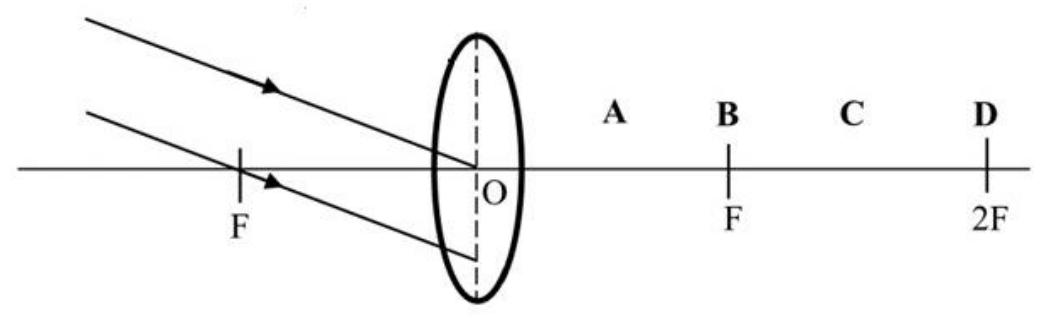
Diagram 10 shows light rays travelling from a distant object to a convex lens (positions A, B at F, C, D at 2F on the right of the lens). At which position A, B, C or D is the image formed?
Medium
An astronomical telescope has 120 cm of normal adjustment with the focal length of the eyepiece 40 cm. What is the magnification of the telescope?
Medium
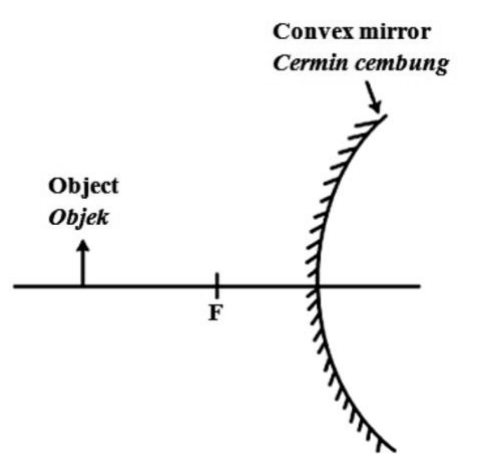
Diagram 12 shows an object positioned in front of a convex mirror. Which of the following is the characteristic of the image formed?
Medium
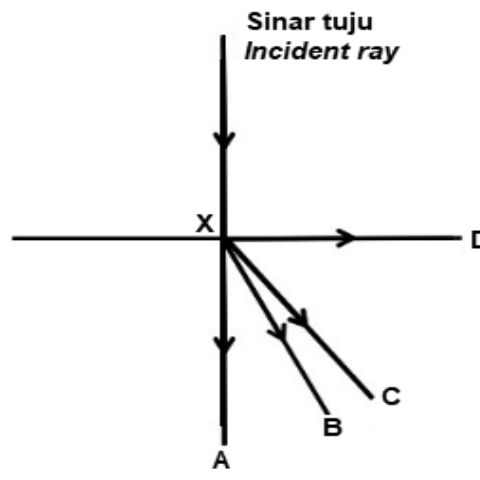
Diagram 9 shows a incident ray, is directed into glass block. Which direction does the light travels after through X?
Easy
Where should the object be placed in front of a convex lens for its image to be the same size as the object? The focal length of the convex lens is f.
Medium
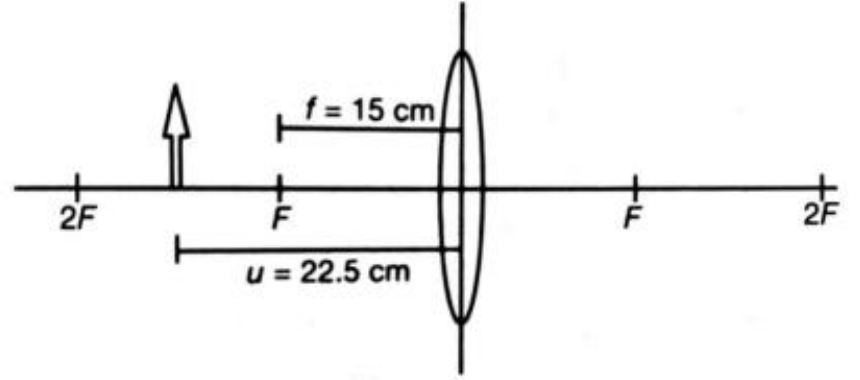
Diagram 10 shows an object in front of a convex lens (f = 15 cm, u = 22.5 cm). Calculate the image distance.
Medium
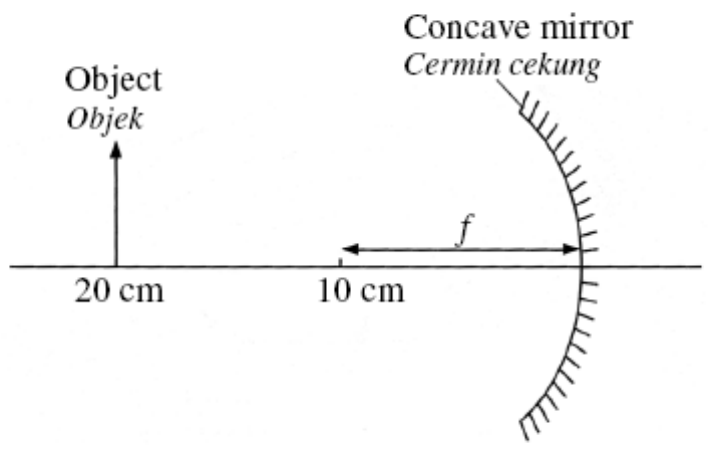
Diagram 11 shows an object placed 20 cm in front of a concave mirror of focal length, f, 10 cm. What are the characteristics of the image formed?
Medium
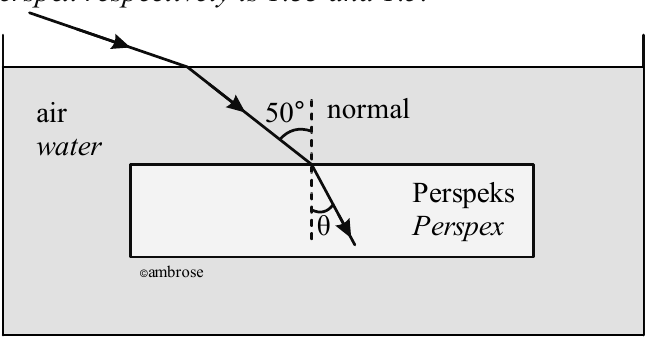
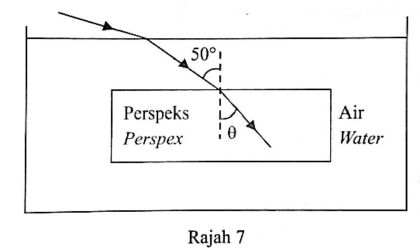
Diagram 17 shows a light from air refracted when enter the water and perspex. Refractive index of water and perspex respectively is 1.33 and 1.5. The angle in water is 50° to the normal. Determine the angle, θ.
Medium
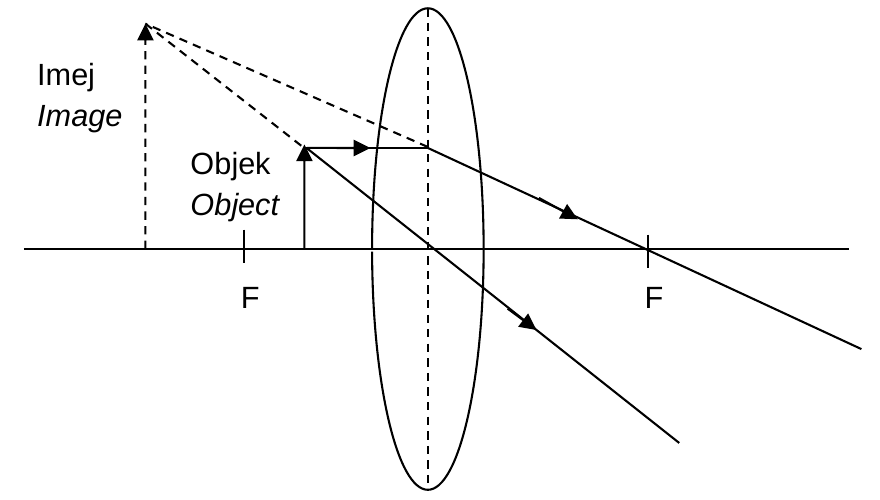
Diagram 18 shows the image formed by a magnifying glass. Which of the following ray diagram is correct to show the characteristics of the image formed?
Medium
Which of the following diagram is not the application of concave mirror? (A make up mirror, B reflector in car headlight, C dental mirror, D blind spot mirror)
Medium
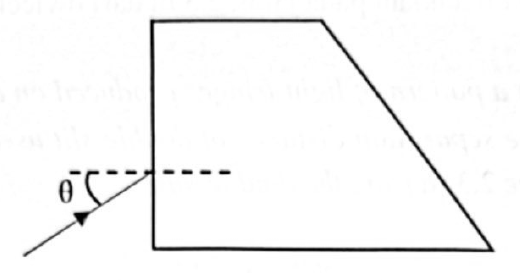
Diagram 15 shows a light ray propagate from air into glass block (angle of incidence θ at the vertical face). Which diagram shows the correct path of the ray?
Medium
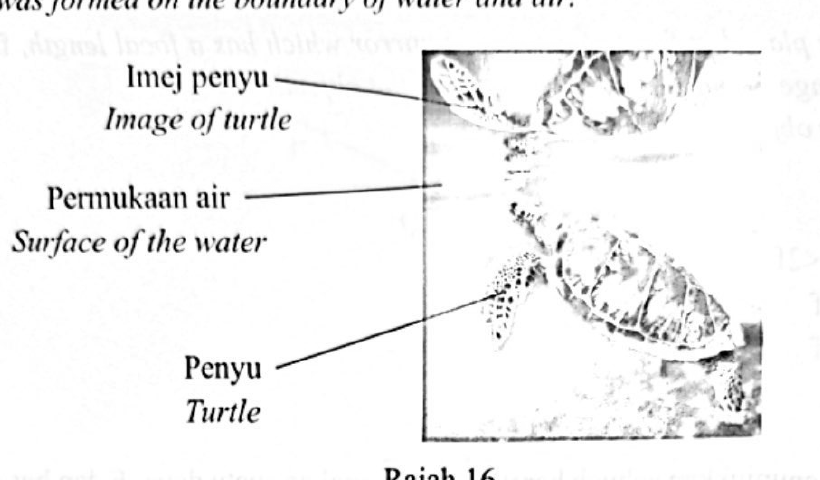
Diagram 16 shows a turtle swimming in water. It was found that the image of the turtle was formed on the boundary of water and air. Which light phenomenon forms the image?
Medium
Telescope is an optical device that uses two convex lenses to see distant objects. Why concave lens is not used in the telescope?
Medium
A candle is placed in front of a concave mirror which has a focal length, f. It is found that the image formed has the same size as the object. What is the object distance, u?
Medium
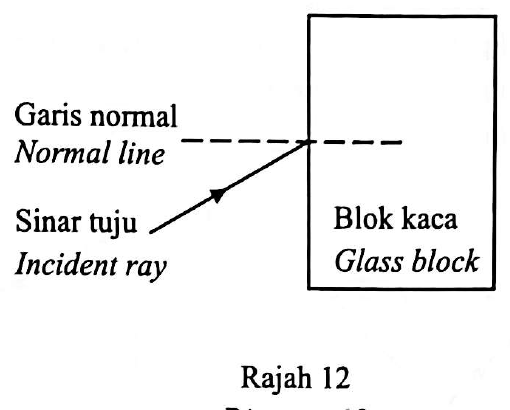
Diagram 12 shows a light ray is directed to a glass block. Which statement is correct?
Medium
A ray of light is directed at one side of a glass prism at an angle of 45° – 90° – 45°. Which of the following diagrams is correct? [The critical angle of glass is 42.2°]
Easy
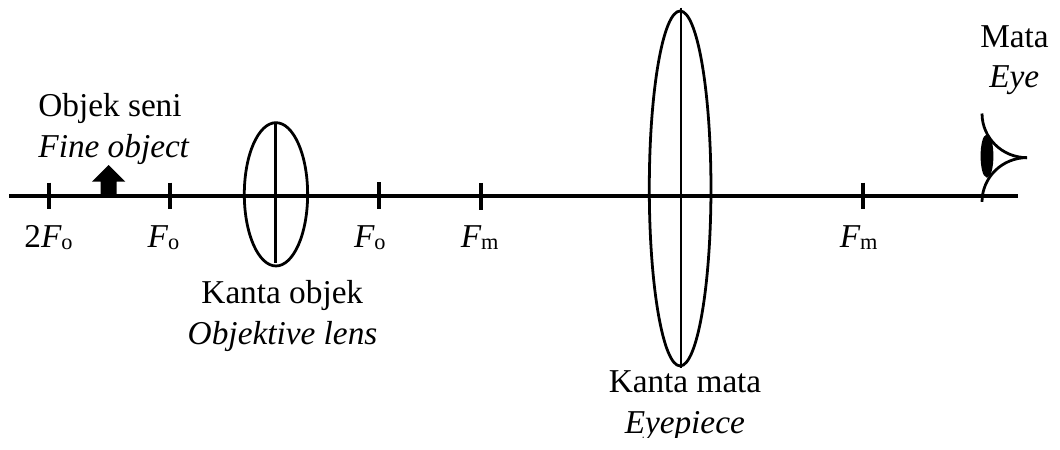
Given that the focal points of the objective lens and eyepiece are Fo and Fe respectively. Which of the following is the correct position of the object and the final image in a compound microscope?
Medium
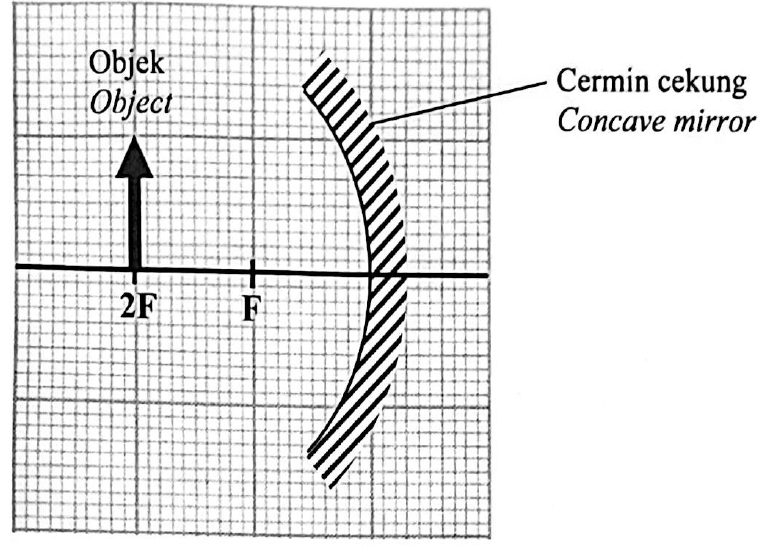
Diagram 13 shows an object placed in front of a concave mirror (object between the mirror and its focal point, f). What are the characteristics of the image formed?
Medium
Diagram 12 shows a light ray propagating from air into a glass block. Which diagram shows the correct path of the ray?
Medium
Which diagram A, B, C or D shows the correct definition of a critical angle, c when light propagates through two mediums of different densities?
Medium
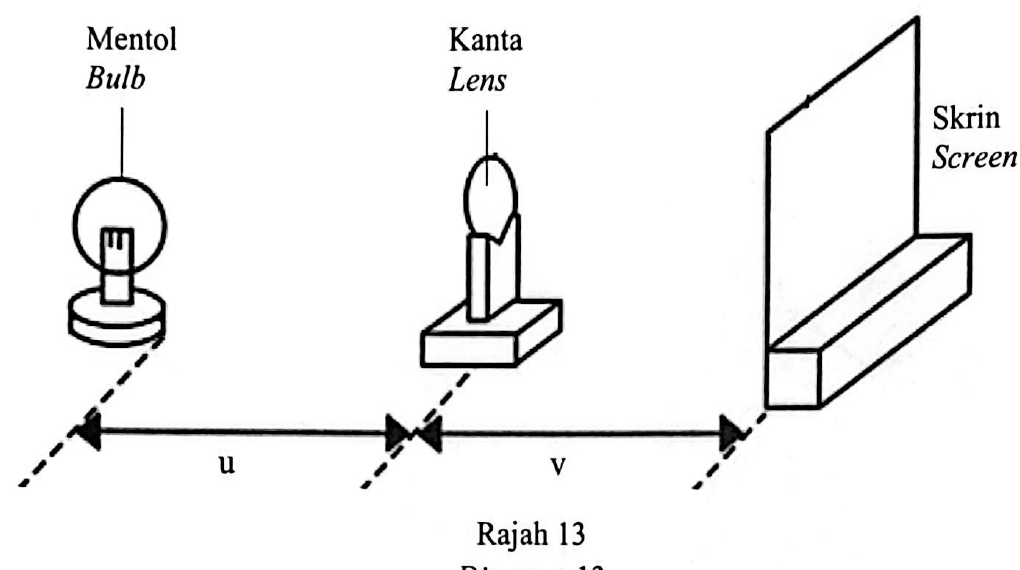
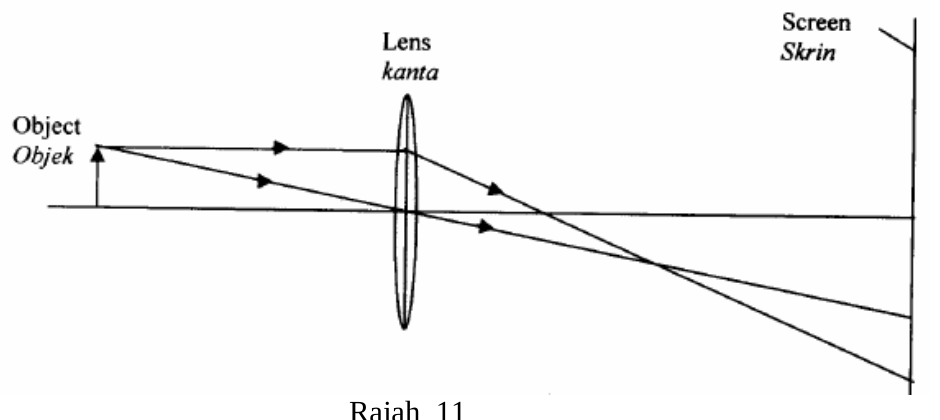
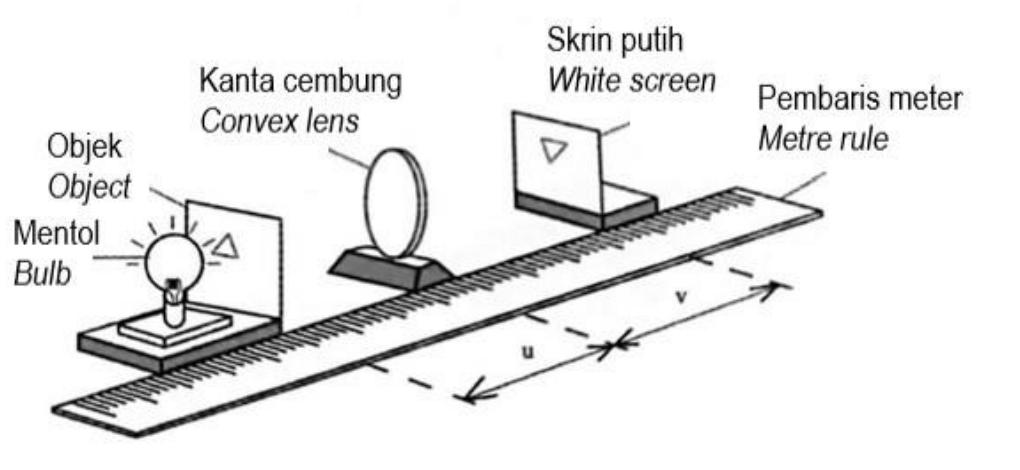
Diagram 13 shows an experiment to study the relationship between the object distance, u and the image distance, v and then to determine the focal length, f. It is found that when the bulb is moved farther away from the lens, the sharp image formed becomes smaller. Choose the most appropriate statement referring to the situation.
Medium
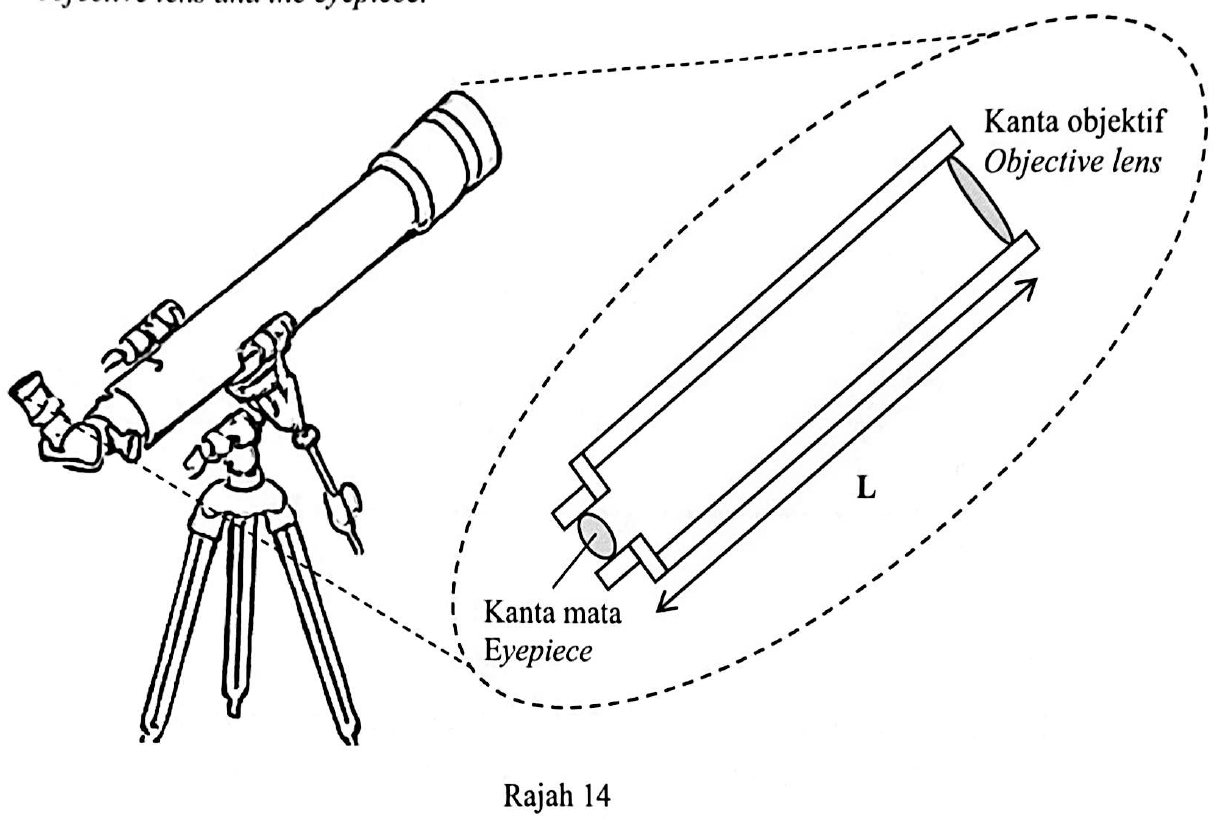
Diagram 14 shows a convex lens used in an astronomical telescope. The focal length of the objective lens and the eyepiece are fo and fm, respectively, and L is the distance between the objective lens and the eyepiece. Determine the distance between the objective lens and the eyepiece to produce the clearest image.
Medium
Diagram 15 shows an object is placed at distance of 2f in front of a concave mirror which f is focal length. What is the characteristics of the image formed?
Medium
The speed of light in vacuum is 3 × 10⁸ m s⁻¹. When the light penetrates a glass window, its speed becomes 1.86 × 10⁸ m s⁻¹. What is the refractive index of the glass window?
Medium
A periscope is made from two 45°-90°-45° prisms. Which of the following diagrams shows the correct arrangement of the glass prisms?
Easy
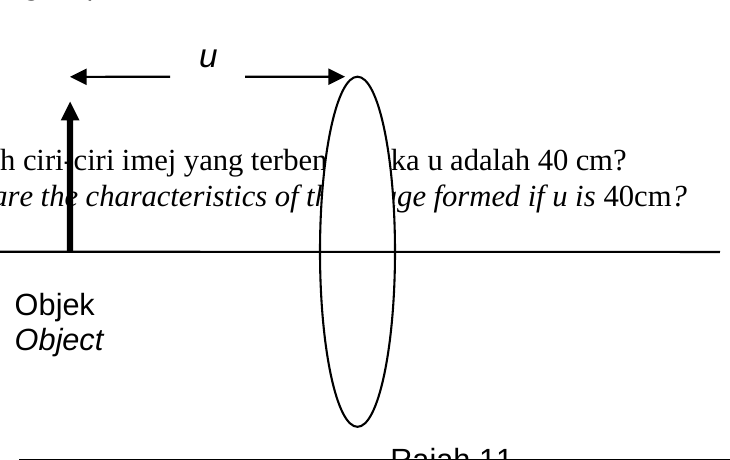
Diagram 11 shows an object placed at u cm from the centre of a convex lens. The focal length of the lens is 20 cm. What are the characteristics of the image formed if u is 40 cm?
Medium
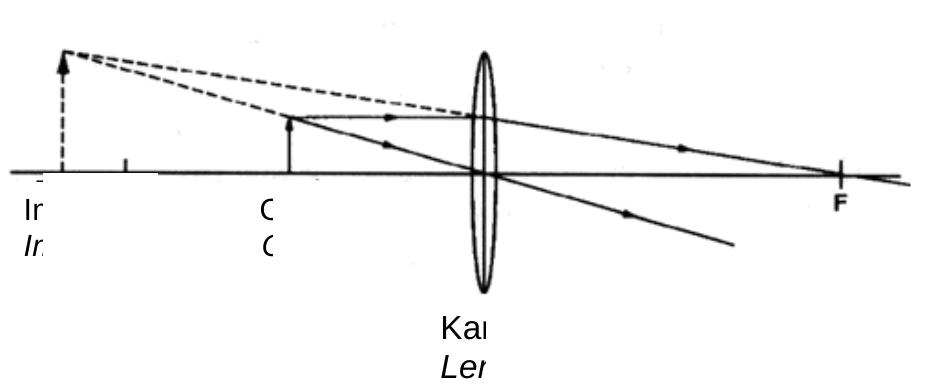
Diagram 12 shows a converging lens producing an upright and virtual image. Which optical instrument uses this arrangement?
Medium
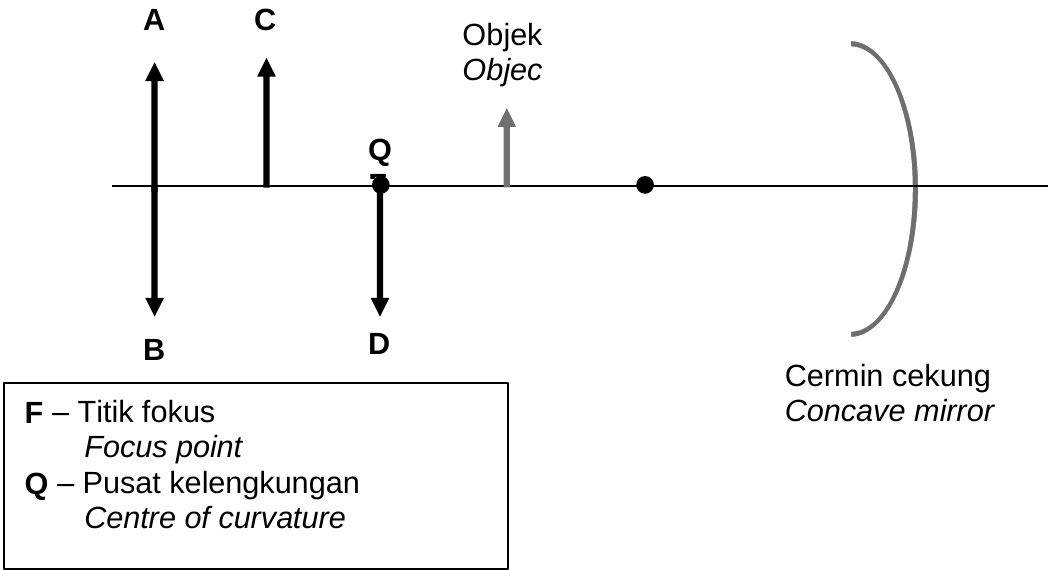
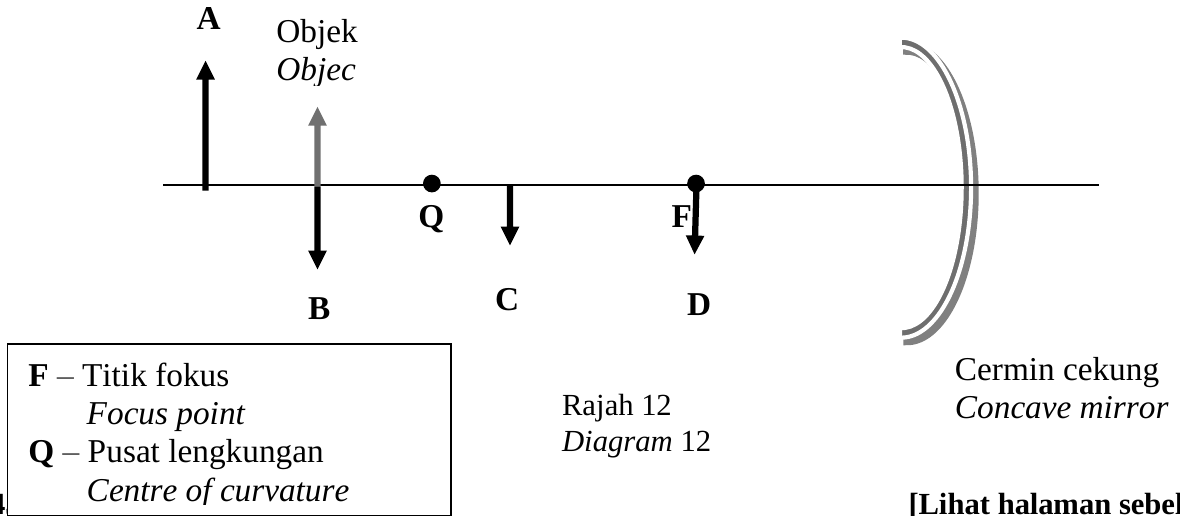
Diagram 13 shows an object placed in front of a concave mirror (F is the focus point, Q is the centre of curvature). Which is the correct position of the image: A, B, C or D?
Medium
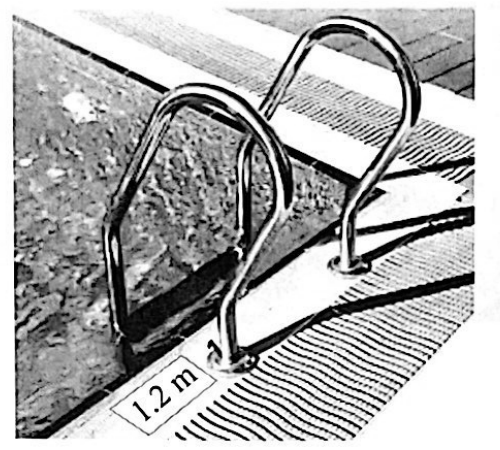
Diagram 13 shows a water depth marker attached to the side of a swimming pool (real depth 1.2 m). The bottom of the pool appears shallow due to refraction. Given the apparent depth of the bottom of the pool seen is 0.9 m, determine the speed of light in water.
Medium
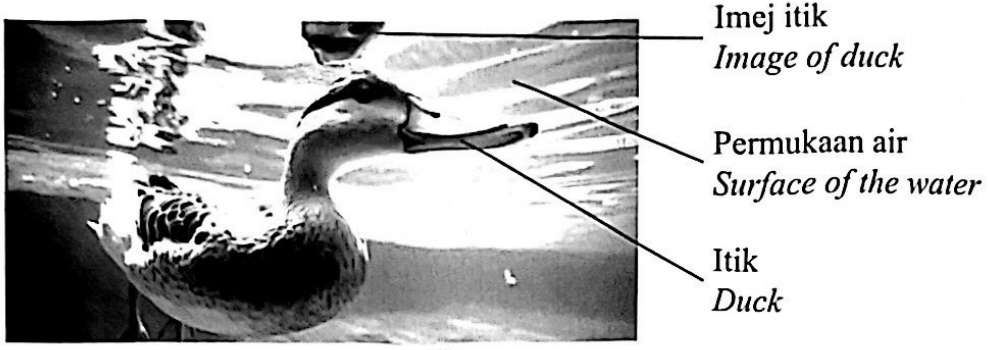
Diagram 14 shows a duck swimming in water. It was found that the image of the duck was formed in the inner part of the surface of water. Which light phenomenon forms the image?
Medium
An object is placed 15.0 cm in front of a convex lens with a focal length of 10.0 cm. Determine the image distance.
Medium
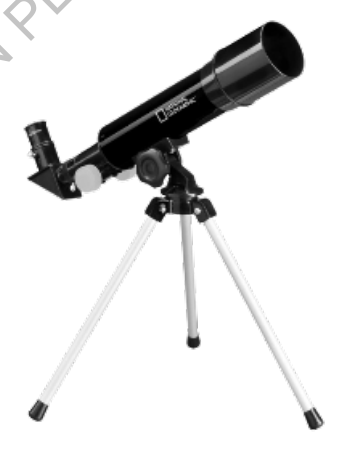
Two convex lenses are required to construct the optical instrument Q. What is the optical instrument Q?
Easy
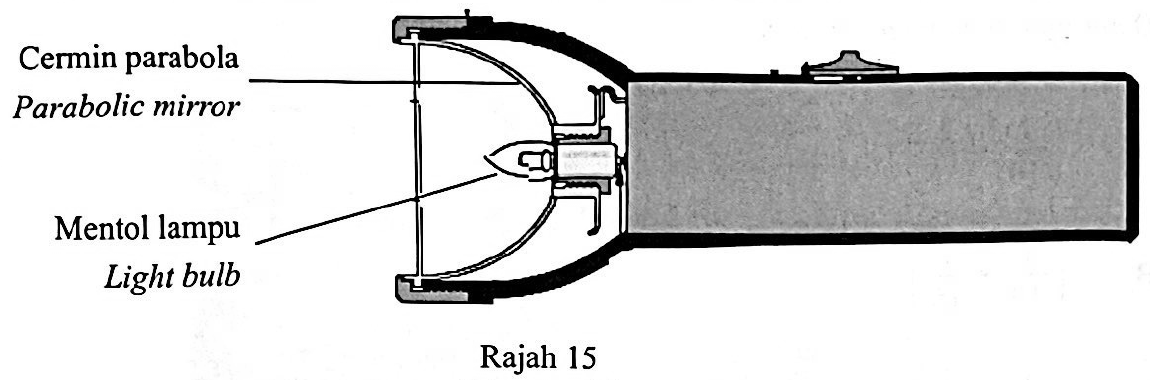
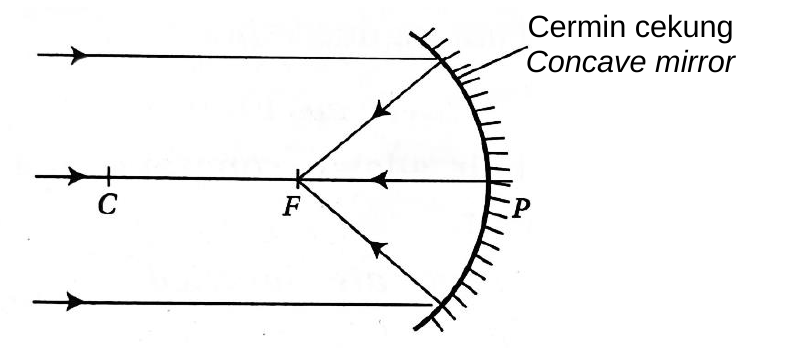
Diagram 15 shows a parabolic mirror in a torchlight. The light bulb in the torchlight is positioned at the focal point of the parabolic mirror so that light
Easy
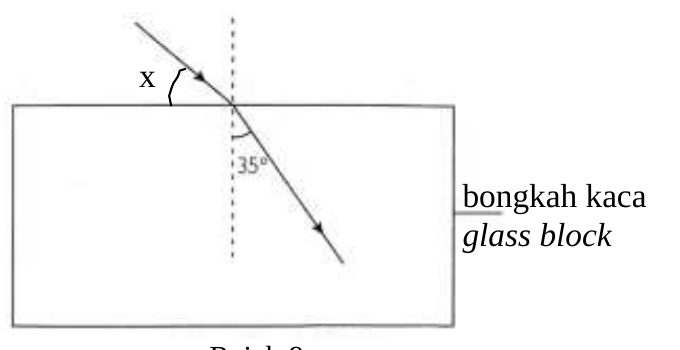
Diagram 9 shows a ray of light passing into a glass block. The refractive index of the glass is 1.52. The angle of refraction shown is 35° and x is the angle between the incident ray and the glass surface. What is the angle of x?
A 23.0°
B 29.3°
C 60.7°
D 67.0°
Medium
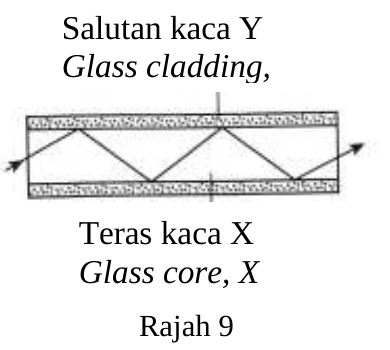
Diagram 9 shows a light ray travelling through an optical fiber. The optical fiber has a glass core, X, of refractive index, nX and a glass cladding, Y, of refractive index, nY. Which of the following is correct?
A nX = nY
B nX > nY
C nX < nY
D nX < 1, nY > 1
Medium
Diagram 10 shows an object placed at u cm from the center of a convex lens. The focal length of the lens is 30 cm. Which of the following characteristics of the image is correct if u is 25 cm, 40 cm, 60 cm and 70 cm from the lens?
A u = 25 cm: Virtual and bigger
B u = 40 cm: Virtual and smaller
C u = 60 cm: Real and smaller
D u = 70 cm: Real and bigger
Medium
Diagram 11 shows the image formed on the screen is blurred (the rays from the lens meet before reaching the screen). Which modification will produce a sharp image on the screen?
A Replace the lens with another convex lens of longer focal length
B Replace the lens with another convex lens of shorter focal length.
C Move the object further from the lens.
D Move the object until it is at the focal point of the lens.
Medium
Diagram 12 shows an object in front of a concave mirror. Which is the correct image? (F = focus point, Q = centre of curvature; candidate images are marked A, B, C and D on the diagram.)
Medium
Diagram 7 shows a light from air undergoes refraction when the light enter the water and perspex. The refractive index of water and perspex are 1.33 and 1.5 respectively. Determine the angle, θ.
Medium
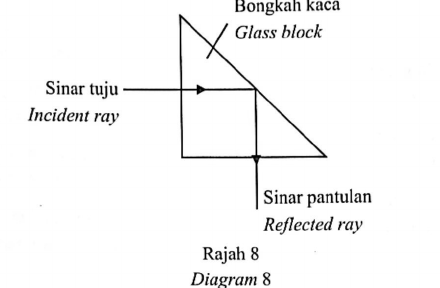
Diagram 8 shows a ray of light propagates in a glass block. Why the incident ray is reflected in the glass block?
Medium
An object is placed 10.0 cm in front of a convex lens with a focal length of 5.0 cm. Determine the image distance.
Medium
Which optical instrument produce a real, diminished and inverted image?
Medium
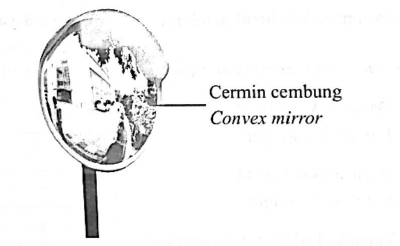
Diagram 9 shows a convex mirror works as a safety mirror placed at a sharp corner. Which of the following is an advantage of using a convex mirror as a safety mirror?
Easy
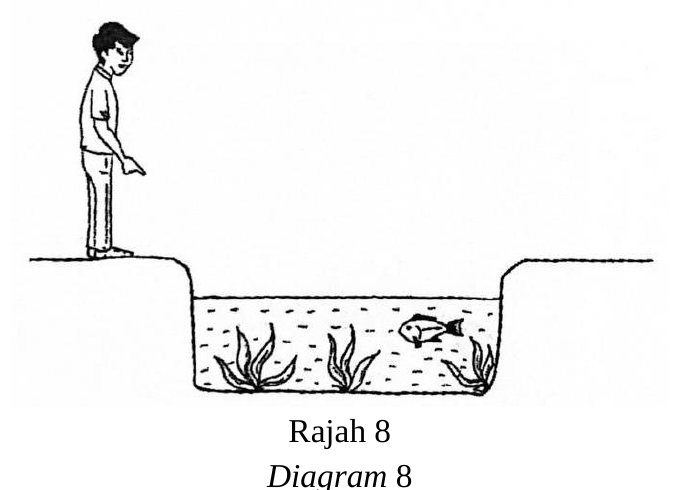
Diagram 8 shows a boy observing a fish in a pond. The fish appears to be closer to the surface of the water. Which statement is correct to explain this situation?
Medium
The critical angle of a semicircular glass block is 42°. Which diagram shows the total internal reflection?
Medium
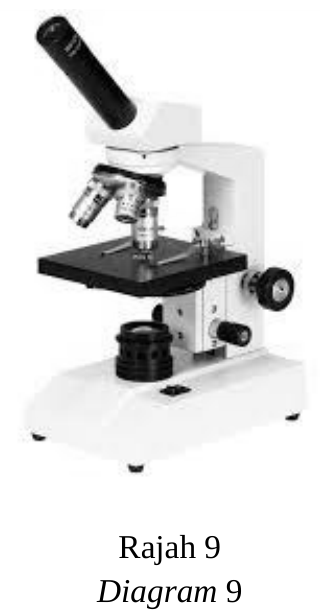
Diagram 9 shows a compound microscope. What are the characteristics of the final image formed?
Medium
Diagram 10 shows an object O in front of a convex mirror. C is the centre of curvature of the mirror. The image is formed at point
Medium
The velocity of light in vacuum is 3 × 10⁸ m s⁻¹. The refractive index of water is 1.30. What is the velocity of light in the water?
Medium
The diagram shows an optical fibre (denser inner glass, less dense outer glass; light enters at one end and exits at the other). What is the wave phenomenon that occurs?
Easy
The diagram shows a ray diagram (a convex lens forming a virtual, upright, magnified image of an object placed between F and the lens). This is a ray diagram of a
Medium
The focal length of the objective lens and the eyepiece lens of an astronomical telescope are fo and fe respectively. The distance between the two lenses is L. Which relationship between L, fo and fe is correct for the astronomical telescope at normal adjustment?
Easy
Diagram 7 shows a light ray propagating from air into glass. What happens to the light ray in the glass?
Easy
• Light travels from a medium of high optical density to a medium of low optical density. • The angle of incidence is greater than the critical angle, c. Based on the above statement, what is the phenomenon involved?
Medium
Diagram 8 shows an apparatus set-up of an experiment to investigate the relationship between object distance, u and image distance, v of a convex lens. Which change increases the image distance, v?
Medium
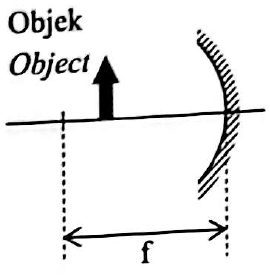
Diagram 9 shows a concave mirror (P is the pole, F is the focal point, C is the centre of curvature). What is the distance between P and F?
Medium
What will happen to light when it travels from glass to water?
A: speed decreases; angle of refraction decreases compared to the angle of incidence
B: speed increases; angle of refraction increases compared to the angle of incidence
C: speed decreases; angle of refraction increases compared to the angle of incidence
D: speed increases; angle of refraction decreases compared to the angle of incidence
Medium
The critical angle of a material is
Medium
The formation of an image by a lens is due to
Easy
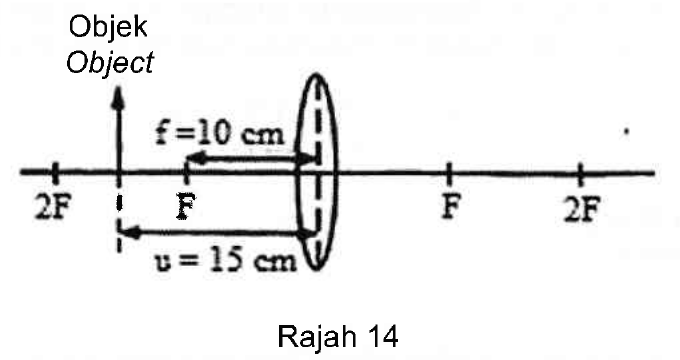
Diagram 14 shows an object in front of a convex lens (f = 10 cm, object distance u = 15 cm). What is the image distance?
Medium
Which of the following is true about the combination of lenses used in a microscope?
A: objective lens concave, f = 3 cm; eye lens convex, f = 120 cm
B: objective lens convex, f = 3 cm; eye lens concave, f = 120 cm
C: objective lens concave, f = 3 cm; eye lens concave, f = 5 cm
D: objective lens convex, f = 3 cm; eye lens convex, f = 5 cm
Medium
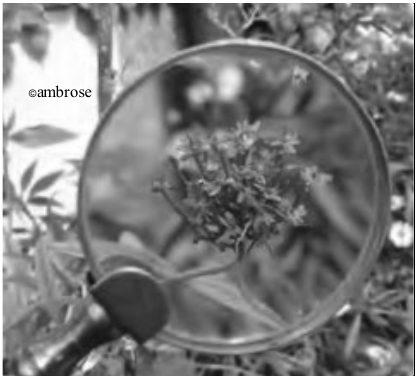
Which of the following is the correct reason why a vehicle's rear view mirror uses a convex mirror instead of a plane mirror?
Easy
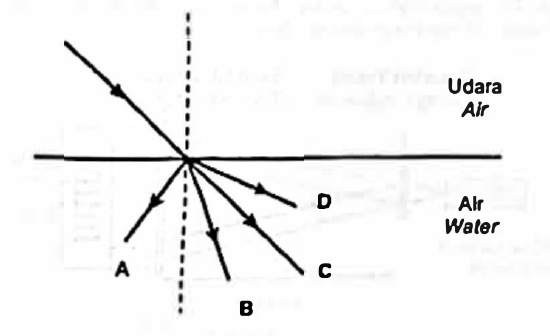
Which of the following shows the correct light path when light propagates through two different mediums (air to water)? Choose the ray A, B, C or D in the diagram.
Medium
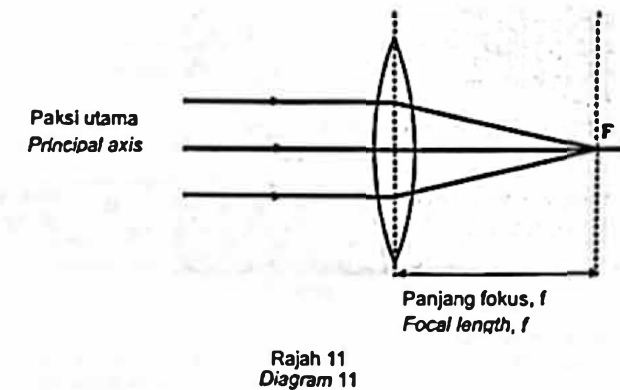
Diagram 11 shows parallel light rays converged at a focal point of the lens after passing through a convex lens. What will happen to the focal length, f when a convex lens with larger diameter is used?
Medium
An object is placed at a distance of 60.0 cm from a concave lens of focal length 20.0 cm. Calculate the linear magnification of image formed.
Medium
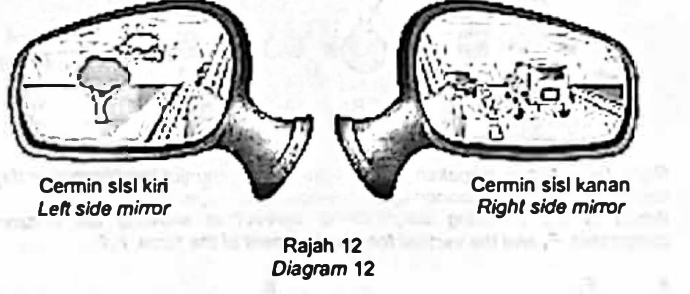
Diagram 12 shows the left side mirror and the right side mirror of a car. Which of the following is an advantage of using a convex mirror as car side mirrors?