Table 1 shows the record of the activity of a radioactive sample stored in the laboratory: 5 April 2020: 1680 s⁻¹; 15 April 2020: 420 s⁻¹; 25 April 2020: 105 s⁻¹. What is the half-life of the radioactive sample and the activity of sample on 30 April 2020?
Medium
The following equation represents a nuclear reaction: ²₁H + ³₁H → ⁴₂He + ¹₀n + Energy. The above reaction occurs when
Easy
In a nuclear reaction, the energy released is 2.926 × 10⁻¹¹ J, what is the mass defect in this reaction?
Medium
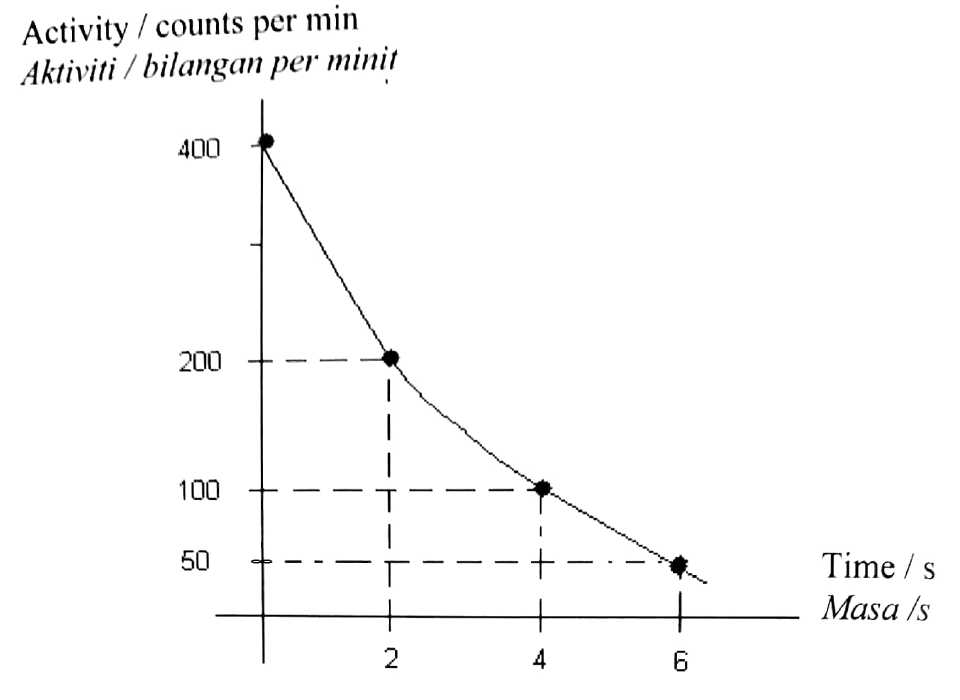
Diagram 23 shows a graph of activity against time for a radioactive element (activity 400, 200, 100, 50 counts per min at 0, 2, 4, 6 min). How many half-lives has the element gone through after 6 minutes?
Medium
A radioactive decay is represented by ²¹²₈₄Po → ᴬ_ZX + 2 ⁴₂He. Determine the values of A and Z for the nucleus X. A: A = 208, Z = 80. B: A = 204, Z = 86. C: A = 220, Z = 86. D: A = 204, Z = 80.
Medium
Which of the following nuclear reactions is an example of fusion?
Medium
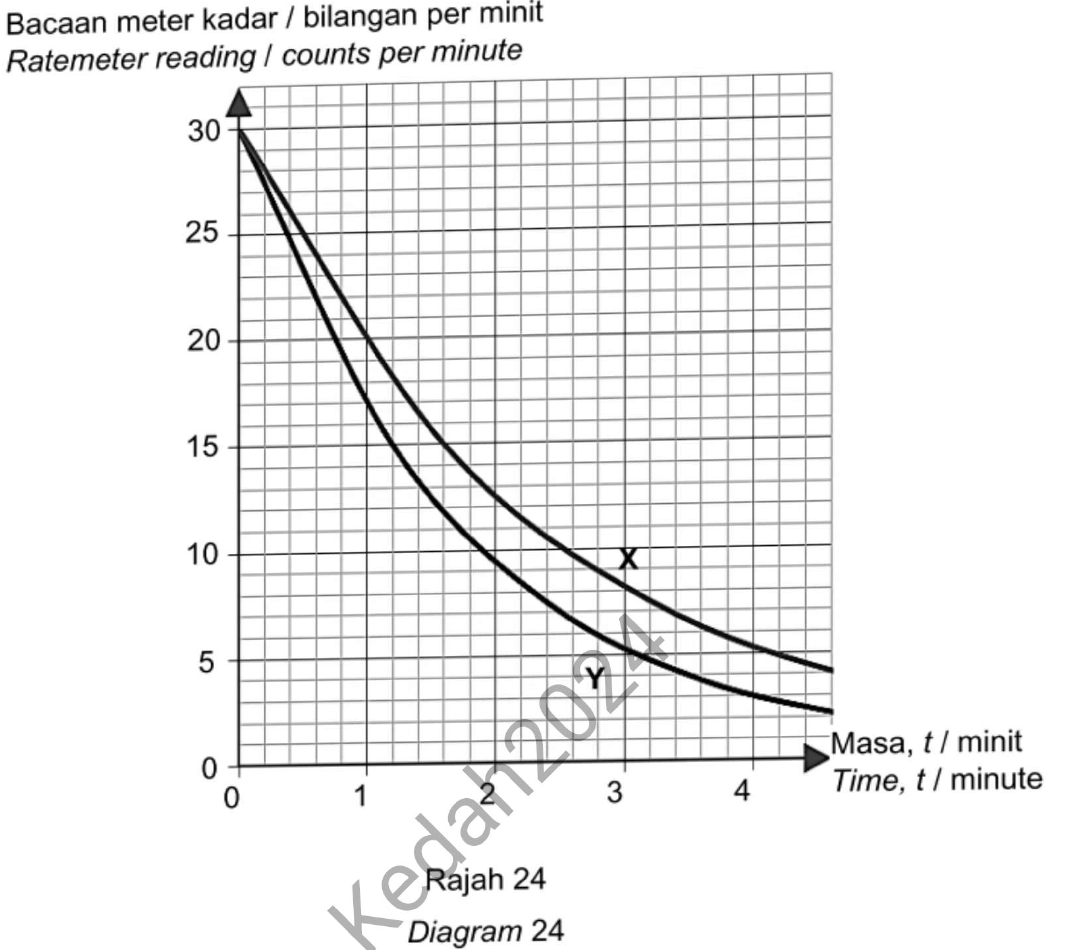
Diagram 24 shows the decay graphs of two different radioactive sources. Which of the following statements is correct about both graphs?
Medium
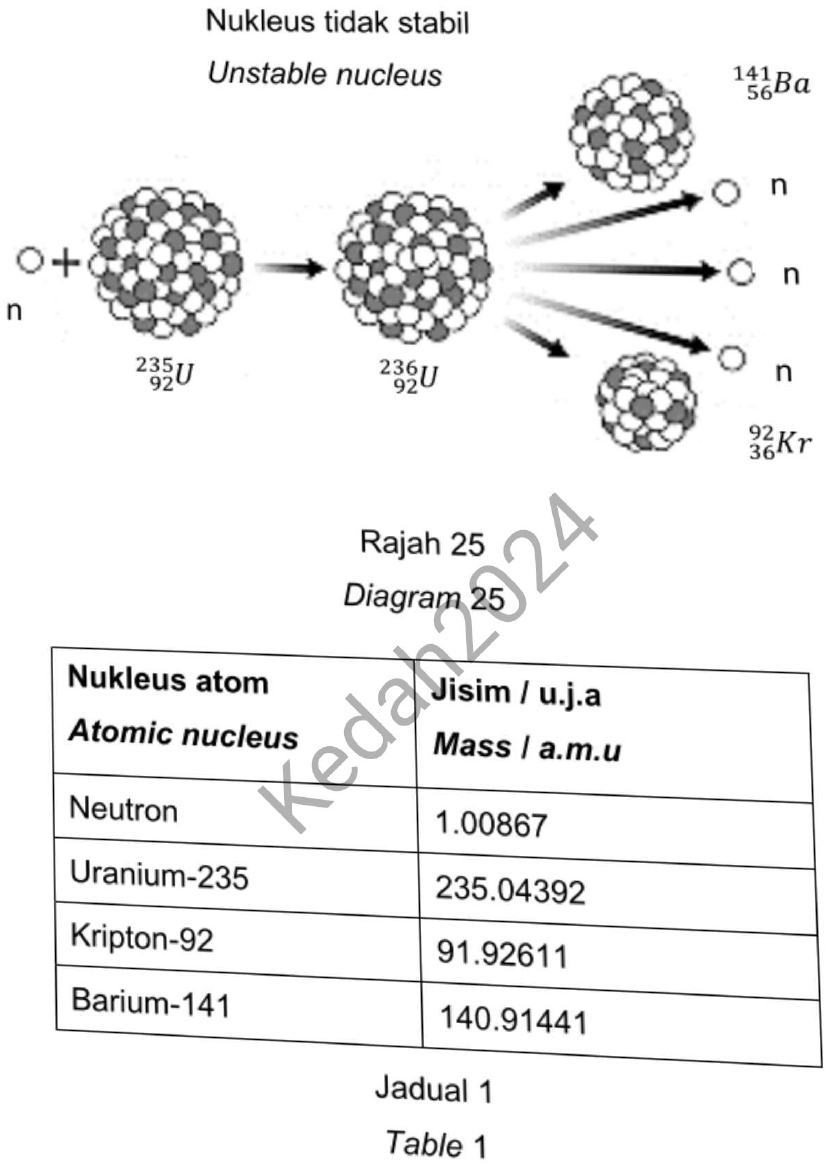
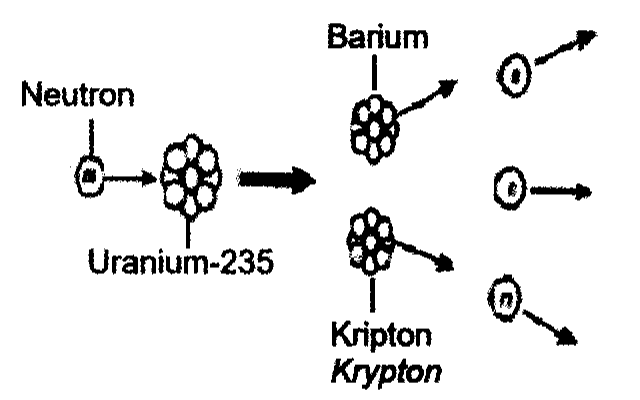
Diagram 25 shows a nuclear fission process for the Uranium-235 atom that produces the nucleus of the Krypton-92 and Barium-141 atoms as well as nuclear energy. Table 1 shows the mass of the neutron and nucleus of the atom involved: Neutron 1.00867 a.m.u; Uranium-235 235.04392 a.m.u; Krypton-92 91.92611 a.m.u; Barium-141 140.91441 a.m.u. Calculate amount of nuclear energy released in this process. [1 a.m.u = 1.66 × 10⁻²⁷ kg]
Medium
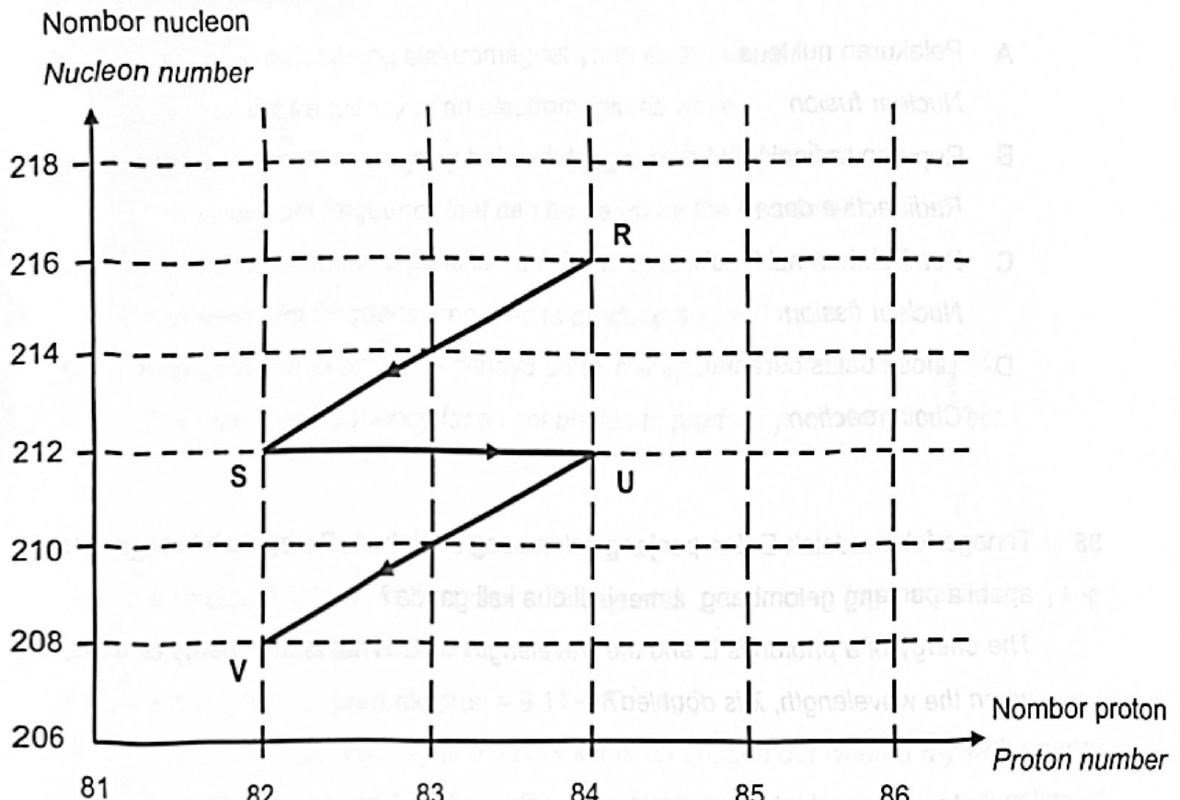
Diagram 29 shows the decay series of nucleus R (nucleon 216, proton 84) to nucleus V (nucleon 208, proton 82) through S and U. How many alpha and beta particles are emitted?
Medium
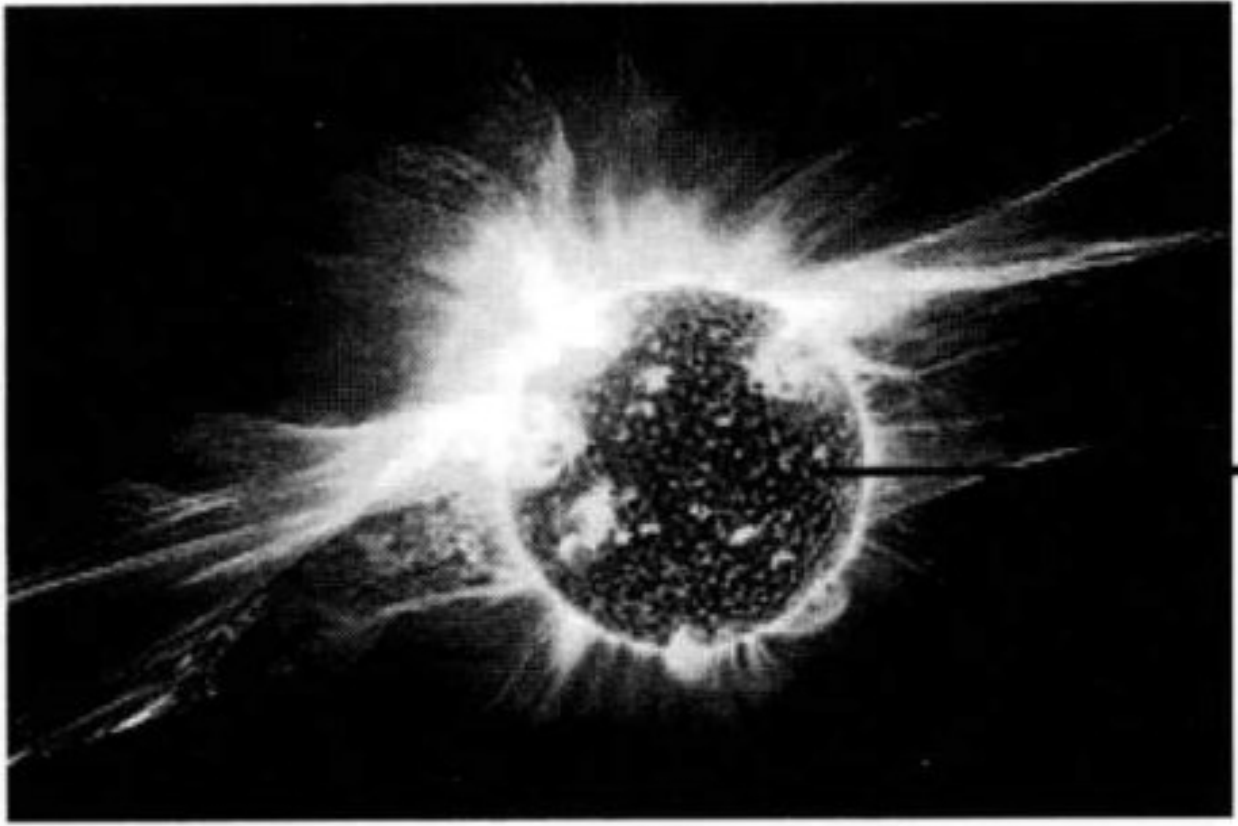
What is the nuclear reaction that produces energy on the surface of the Sun?
Easy
The following equation represents the decay of the Polonium nucleus: ²¹⁰₈₄Po → ²⁰⁶₈₂Pb + X. What is represented by X?
Medium
In a nuclear reaction 2.69 × 10⁻¹² J of energy is released. What is the mass defect?
Medium
Diagram 22 shows a nuclear reaction (a neutron strikes uranium-235 producing barium, krypton and three neutrons). The reaction is
Easy
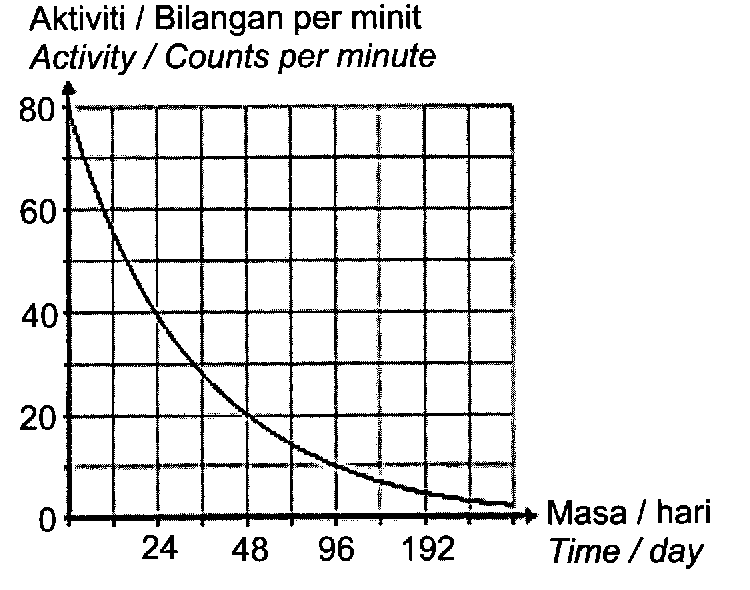
Diagram 21 shows a graph of activity against time of a radioactive substance X. What is the half-life of substance X?
Medium
The following equation represents the decay of Radium substance which occurs spontaneously: ²²⁶₈₈Ra → ²²²₈₆Rn + ⁴₂He. The mass defect of the decay is 0.004 amu. What is the nuclear energy released from the decay? (1 amu = 1.66 × 10⁻²⁷ kg)
Medium
The ratio of decaying uranium-238 nuclei to lead-208 in a uranium rock sample is 3:1. If at the beginning of the Uranium rock formation, no lead-208 element was trapped in it, what is the approximate age of the rock if the half-life of uranium-238 is 5 × 10⁹ years?
Medium
What is the meaning of the half-life of a radioactive nuclei?
Easy
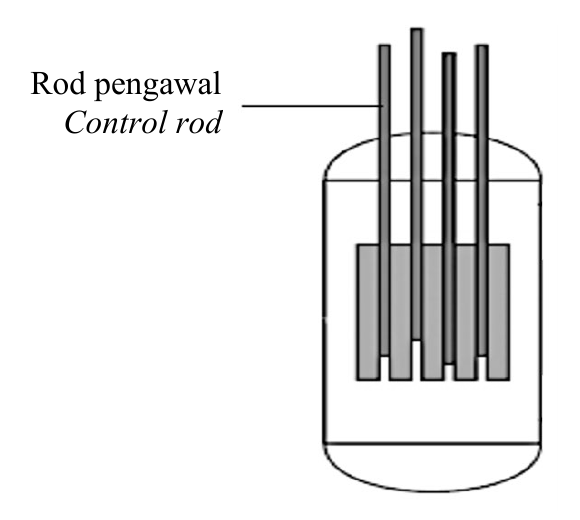
Why is a nuclear reactor equipped with control rods?
Medium
The following are the types of radioactive radiation except
Easy
Nuclear fission can happen in a nuclear reactor. Which component is matched with the correct function?
Medium
What is the quantity of energy when there is a mass defect of 0.01 g?
Medium
The following equation shows the decay of Thorium-234: ²³⁴₉₀Th → ²²⁶ₓRa + y ⁴₂He + 2 ⁰₋₁e. What are the values of x and y?
Medium
The following equation shows a nuclear fusion: ²₁H + ³₁H → ⁴₂He + ¹₀n + energy. The mass defect from the reaction is 0.028688 u. Calculate the energy released in the reaction.
Medium
What is meant by half-life?
Easy
In a nuclear fusion reaction, a portion of the mass of the substances involved is converted into energy. What can be concluded about the energy released in this reaction?
Medium
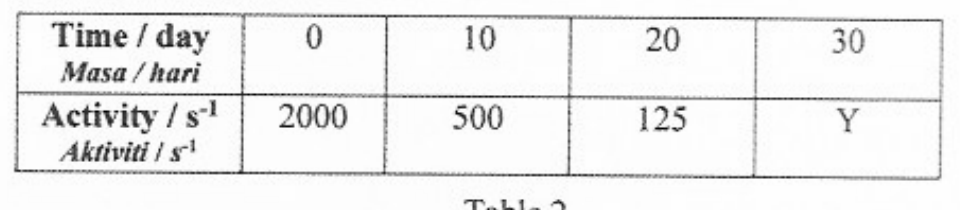
Table 2 shows record of radioactive activity of sample X stored in a laboratory. Time / day: 0, 10, 20, 30. Activity / s⁻¹: 2000, 500, 125, Y. What is the value of Y?
Medium
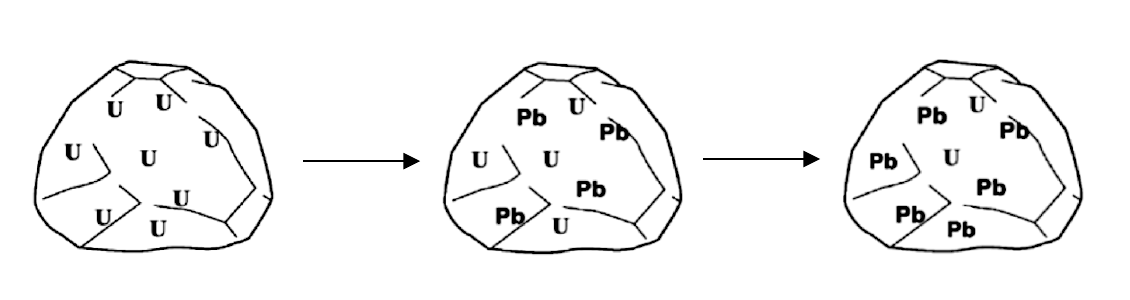
Diagram 29 shows a decay process from uranium to lead in granite rock. Which of the following graph shows the correct radioactive decay for Uranium?
Medium
Diagram 30 shows control rods in a nuclear reactor. What will happen if the number of control rods is reduced?
Medium
In a nuclear reactor, graphite is used as moderator. The function of the moderator is to ....
Easy
Diagram 24 shows a reaction that occurs on the surface of the Sun. Which statement is not true about the reaction?
Medium
In a nuclear decay process, the following reaction occurs in the nucleus of an atom which a neutron decomposes into one proton and one electron: ¹₀n → ¹₁p + ⁰₋₁e. Name the type of decay involves
Medium
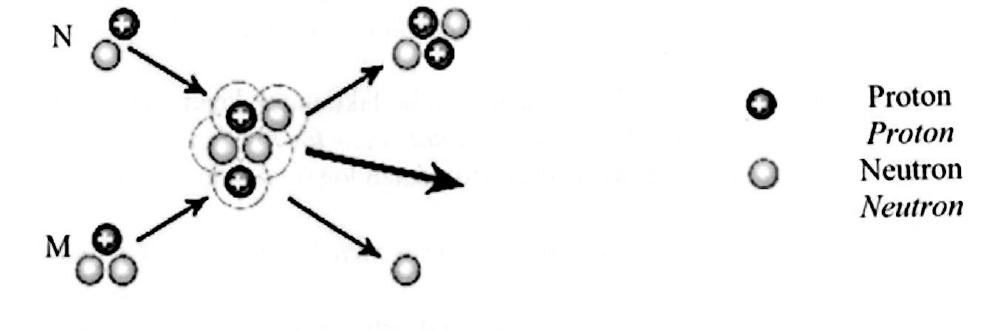
Diagram 17 shows a nuclear reaction where two light nuclei fuse to form a heavy nucleus by releasing a lot of energy. Names isotopes M and N that are involved in this nuclear reaction. (M: 1 proton + 2 neutrons; N: 1 proton + 1 neutron)
Medium
The ratio of the number of Nitrogen-14 to Carbon-14 nuclei in a sample of animal bone is 7 : 1. While the animal is still alive, there is no Nitrogen element trapped in it. If Carbon-14 decays into Nitrogen-14 with a half-life of 5730 years, estimate age of the bone.
Medium
In a nuclear fission reaction, the energy released is 3.5 x 10⁻¹¹ J for the decay of an atom of Uranium-235. What is the loss of mass in the reaction?
Medium
The equation below represents a radioactive decay: ²¹⁰₈₄Po → ²⁰⁶₈₂Pb + ⁴₂He. What is represent by ⁴₂He?
Easy
Half-life is the time taken for
Easy
Diagram 27 shows a nuclide notation of radioactive element X: ²³⁸₉₂X. Which of the following is correct?
(Columns: proton number, nucleon number, number of neutron)
Easy
The function of the graphite core in a nuclear reactor is to
Easy
Diagram 26 shows an equation that represents alpha decay: ⁿ²¹⁴Po → ⁸²ᵐPb + α, that is, polonium with nucleon number 214 and proton number n decays to lead with nucleon number m and proton number 82, plus an alpha particle. What are the values of m and n?
Medium
A radioactive element has an initial mass of 40 g and a half-life of 5 days. Which of the following statements is correct about the mass of the radioactive element?
Medium
A chain reaction can occur in a reactor because during nuclear fission
Easy
Which of the following radioactive decay equation shows beta decay? A: ²¹⁴₈₃Bi → ²¹⁴₈₃Bi + X; B: ⁹⁰₃₈Sr → ⁹⁰₃₉Y + X; C: ²³⁸₉₂U → ²³⁴₉₀Th + X; D: ²¹⁴₈₄Po → ²¹⁰₈₂Pb + X
Medium
The tremendous energy released in a nuclear fission reaction is due to
Easy
A small amount of a radioactive isotope contains 72 billion unstable nuclei. The half-life of the isotope is 4 hours. What is the remaining number of unstable nuclei after 12 hours?
Medium
Based on the statements below, which best explains the reaction of nuclear fusion?
Easy
Which of the following materials is used in the nuclear reactor to control the rate of a chain reaction?
Easy
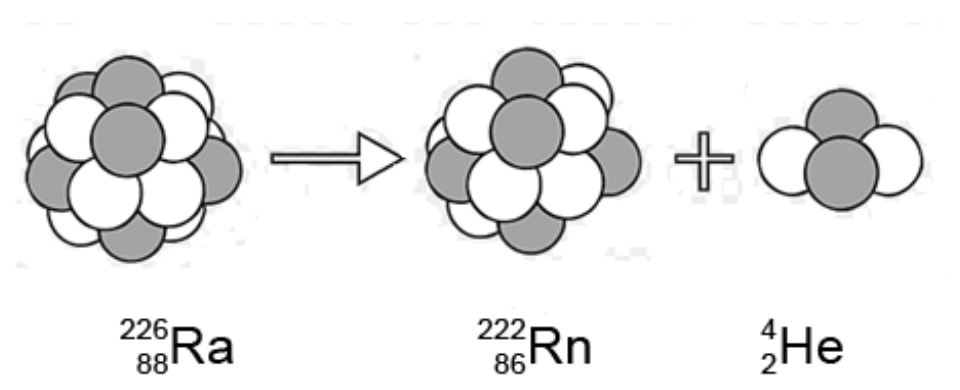
Diagram 25 shows a radioactive decay of a nucleus: Ra-226 (88) → Rn-222 (86) + He-4 (2). What is the type of radiation emitted by the nucleus?
Medium
Diagram 26 shows a series of radioactive decay: ²¹⁸₈₄Po → ²¹⁴₈₂Pb → ²¹⁴₈₃Bi → ²¹⁴₈₄Po → ²¹⁰₈₂Pb. Which of the following sequence of radioactive rays is correct in explaining the decay series?
Medium
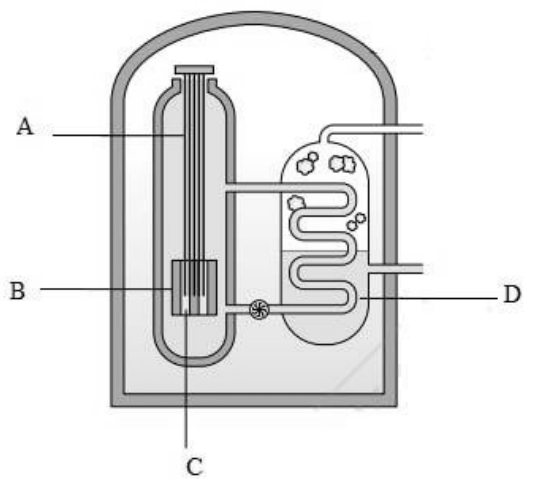
Diagram 27 shows the cross section of the internal section of a nuclear reactor (parts A, B, C, D labelled). Which of the following represents the control rod which absorbs excessive neutrons?
Easy
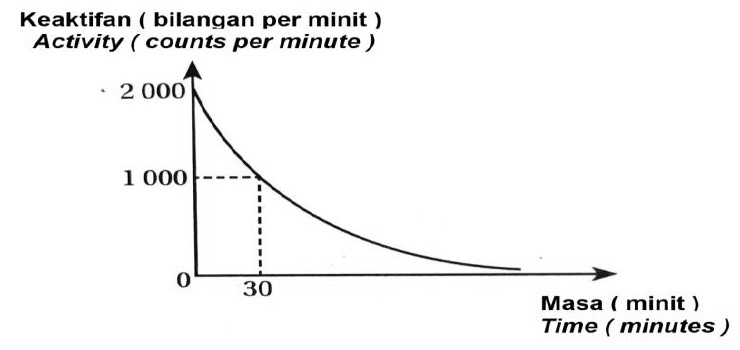
Diagram 24 shows a graph representing the decay of a radioactive material. If the initial activity of the radioactive material is 2 000 counts per minute, what is its activity after an hour?
Medium
In a nuclear fission reaction of Uranium-235, the energy produced is 3.15 × 10⁻⁸ J. Calculate the total loss of mass in the reaction. [Speed of light, c = 3.0 × 10⁸ m s⁻¹]
Medium
Which of the following equation shows alpha decay?
Medium
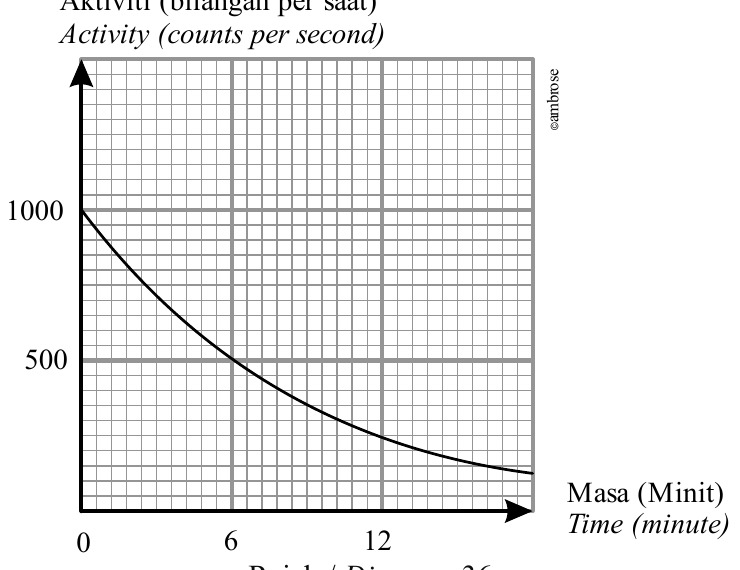
Diagram 36 shows a curve graph for radioactive decay for a substance (activity 1000 counts per second at 0 min, 500 at 6 min). What is the activity of the sample after 30 minutes?
Medium
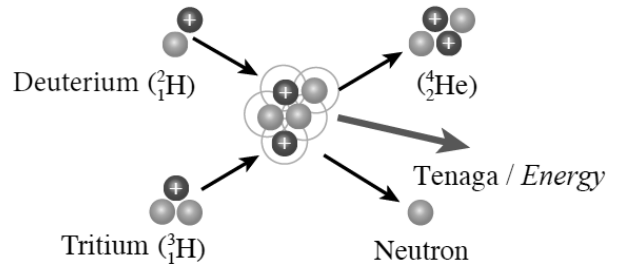
Diagram 37 shows a nuclear reaction between radioactive substance (deuterium ²₁H + tritium ³₁H → helium ⁴₂He + neutron + energy). What is the type of the reaction?
Easy
What is radioactive decay?
Easy
In a nuclear reactor, the material used to absorb excess neutrons is
Easy
An energy of 2.068 × 10⁻¹¹ J was produced from the nuclear reaction of a radioisotope. Calculate the mass defect involved in the unit of a.m.u. [The speed of light in air/vacuum, c = 3 × 10⁸ m s⁻¹ and 1 a.m.u = 1.66 × 10⁻²⁷ kg]
Medium
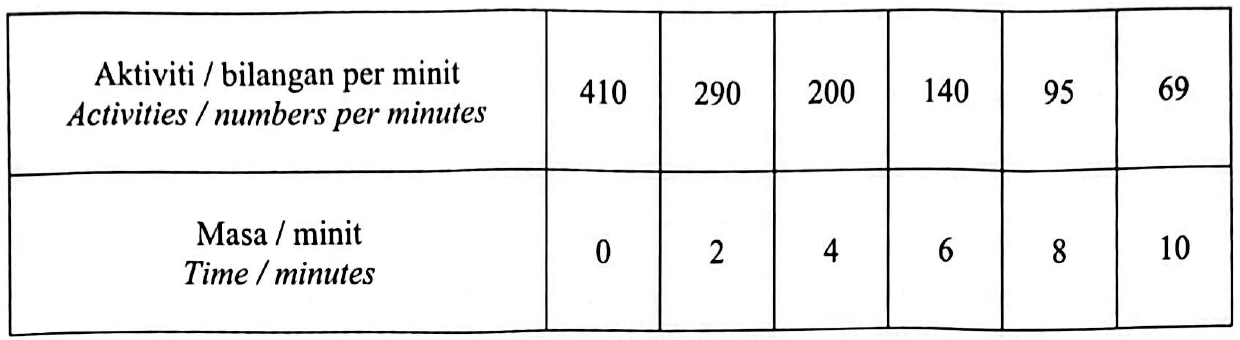
In an experiment to determine the half-life of radioactive isotope, the following results were obtained: activity (counts per minute) 410, 290, 200, 140, 95, 69 at time 0, 2, 4, 6, 8, 10 minutes. What is the approximate half-life of the isotope?
Medium
Which of the following nuclear reactions is an example of fission?
Medium
Which of the following is a fusion reaction?
Medium
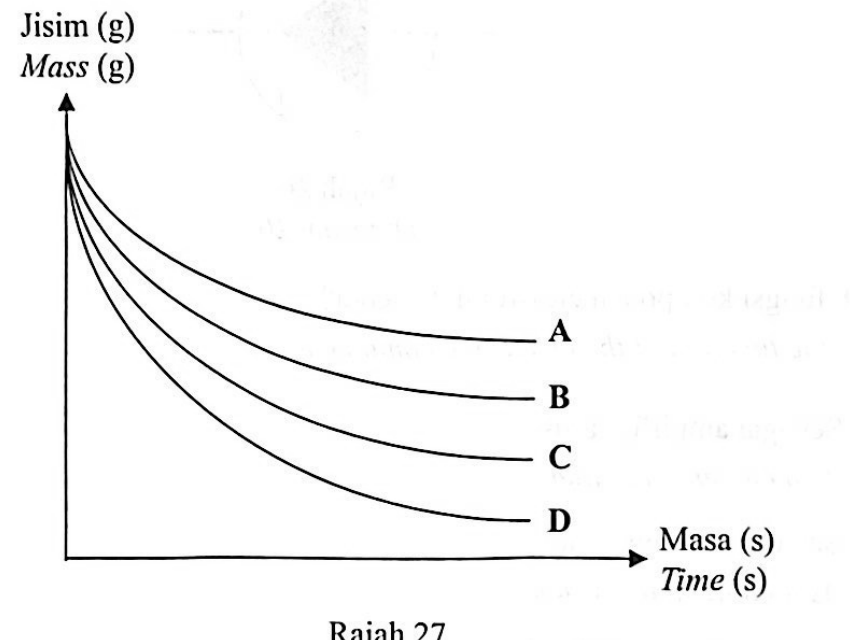
Diagram 27 shows the decay curve (mass in g against time in s) of radioisotopes A, B, C and D. Which radioisotope has the longest half-life?
Medium
Which of the following is a fission reaction?
A ²₁H + ²₁H → ³₂He + ¹₀n + E
B ²²⁶₈₈Ra → ²²²₈₆Rn + α + E
C ²¹₁₁Na → ²¹₁₂Mg + β + E
D ²³⁹₉₂U → ⁹⁵₃₈Sr + ¹⁴¹₅₄Xe + 3¹₀n + E
Medium
The following equation shows the decay of a Radium nucleus: ²²⁴₈₈Ra → ²¹⁶₈₈Po + y ⁴₂He + z ⁰₋₁e. What are the values of y and z?
Medium
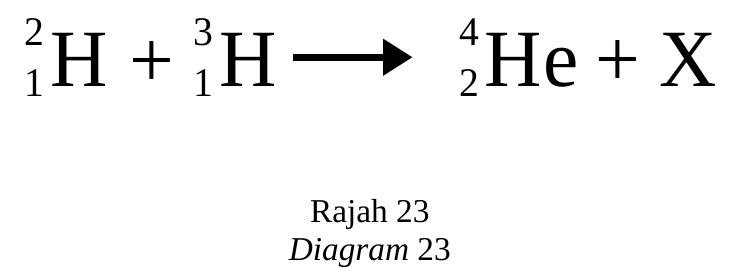
Diagram 23 shows the equation for a nuclear fusion reaction: ²₁H + ³₁H → ⁴₂He + X. What is represented by X?
Medium
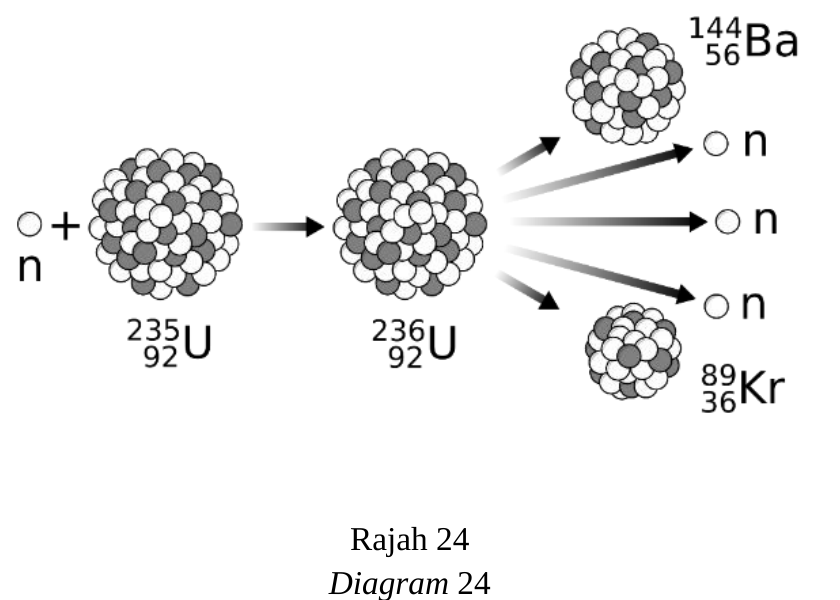
Diagram 24 shows a nuclear reaction (²³⁵₉₂U + n → ²³⁶₉₂U → ¹⁴⁴₅₆Ba + ⁸⁹₃₆Kr + 3n). The reaction is
Medium
The activity of sample P becomes 3.125 % of its original value after 200 minutes (100% → 50% → 25% → 12.5% → 6.25% → 3.125%, each step one half-life). What is its half-life?
Medium
A large amount of energy is released when two light nuclei combine to form a heavy nucleus. What is the name of this process?
Easy
87.5% of Gallium-65 atoms has decayed after 24 minutes. What is the half-life of Gallium-65?
Medium
Which of the following is a fusion reaction?
Medium
What is the meaning of half-life?
Easy
What is needed to slow down high-speed neutrons during a chain reaction in a nuclear reactor?