Which is the following statement is true about black body radiator?
Medium
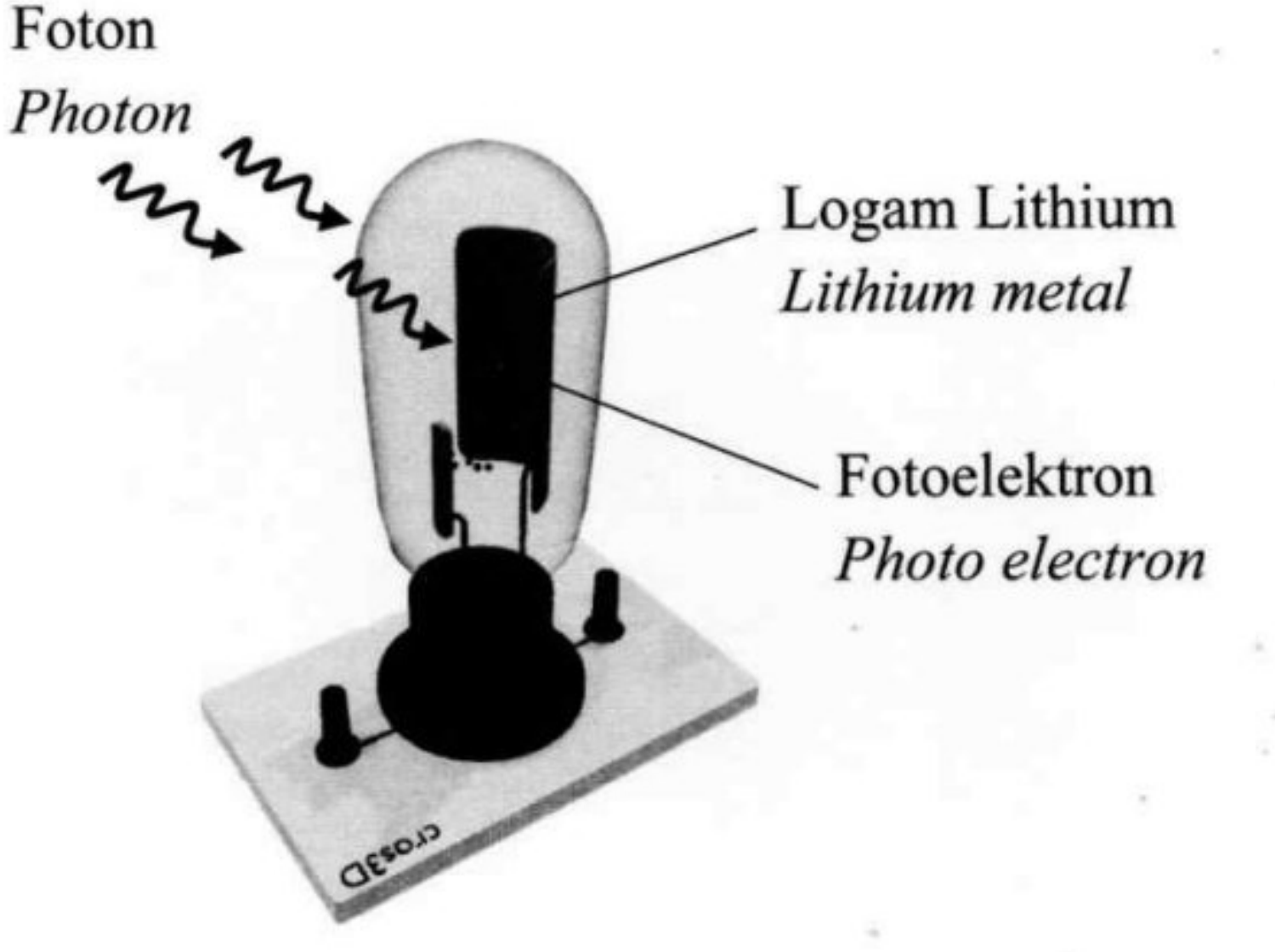
A blue light with a frequency of 6.67 × 10¹⁴ Hz is shone on a clean lithium metal surface. What is the maximum kinetic energy of photoelectrons emitted? [Work function of lithium = 2.50 eV; Planck's constant = 6.63 × 10⁻³⁴ J s]
Medium
A black body is
Easy
Which is the correct statement about continuous spectrum?
Medium
Which of the following is true about the photoelectric effect?
Medium
The energy of a photon is E and its wavelength is λ. What is the energy of the photon when the wavelength is doubled?
Medium
What is the meaning of threshold frequency?
Easy
Light of energy 1.213 × 10⁻¹⁸ J shines on a platinum surface with work function 6.35 eV. Find the maximum velocity of the emitted photoelectron. [1 eV = 1.6 × 10⁻¹⁹ J, electron mass = 9.11 × 10⁻³¹ kg]
Medium
Which of the following graph shows the variation of de Broglie wavelength, λ with speed, v of an electron?
Medium
Threshold frequency is
Easy
The work function of a metal is 3.1 eV. What is the threshold frequency of the incident radiation for an electron to escape from a metal surface. [h = 6.63 × 10⁻³⁴ J s, 1 eV = 1.6 × 10⁻¹⁹ J]
Medium
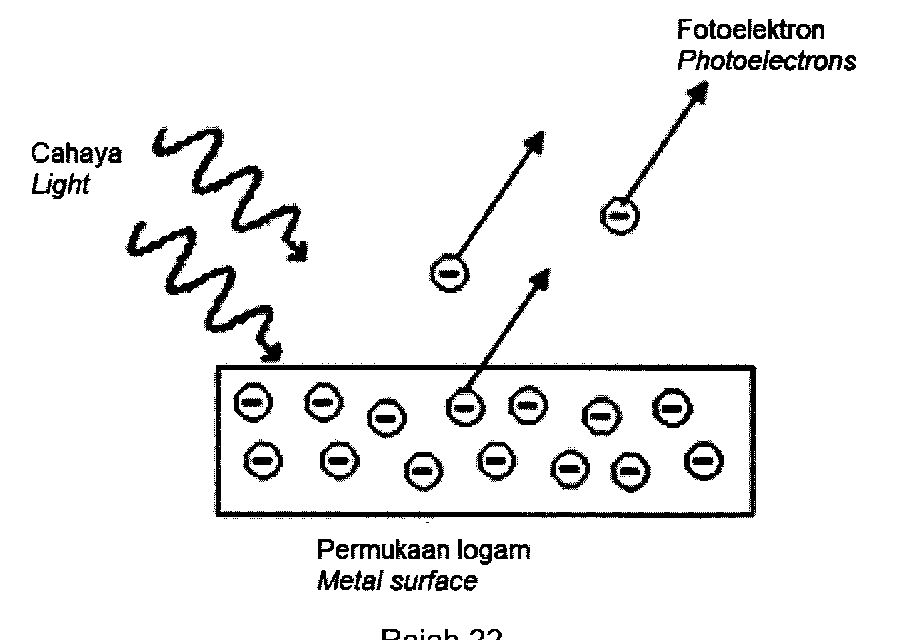
Diagram 22 shows photoelectric effect. Which of the following is true?
Medium
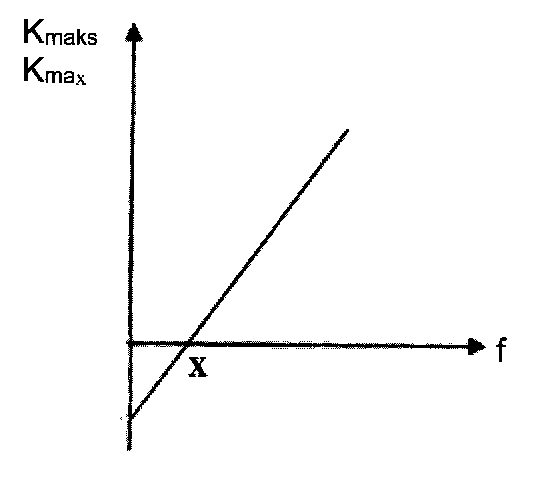
Diagram 23 shows maximum kinetic energy, Kmax of photoelectron against frequency of light, f graph. The value of X (intercept on the f axis) represents
Medium
What is the work function of a metal which has a threshold frequency of 4.8 × 10¹⁴ Hz? [h = 6.63 × 10⁻³⁴ J s]
Medium
Which of the following describes the photoelectric effect?
Medium
A metal has a work function of 3.2 eV. Light of frequency 8.5 × 10¹⁴ Hz is shone on the metal. What is the maximum kinetic energy of the emitted electron? [h = 6.63 × 10⁻³⁴ J s, and 1 eV = 1.6 × 10⁻¹⁹ J]
Medium
A photon of electromagnetic wave has the same momentum as an electron moving at a speed of 2.0×10⁶ m s⁻¹. What is the de Broglie wavelength of the photon? [Mass of electron = 9.1×10⁻³¹ kg]
Medium
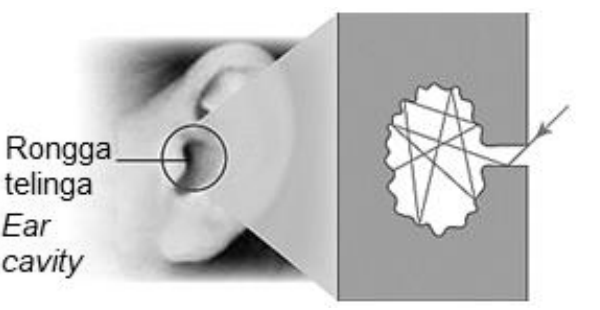
Diagram 30 shows the process that occurs when light radiation enters the ear cavity. The ear cavity can act as
Medium
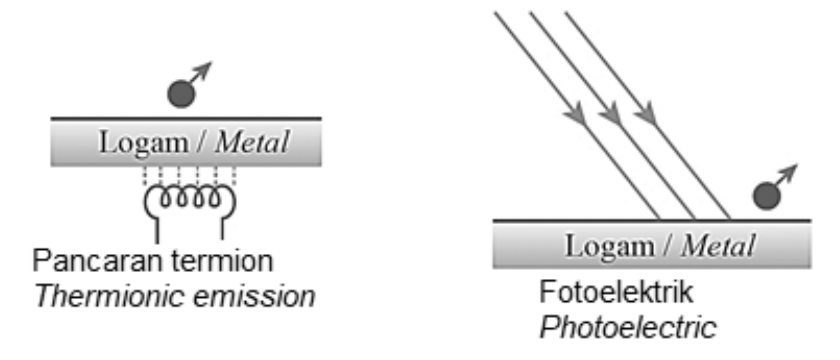
Diagram 31(a) shows thermionic emission. Diagram 31(b) shows the photoelectric effect. Which is correct about the time taken for an electron to be released from a metal surface?
Medium
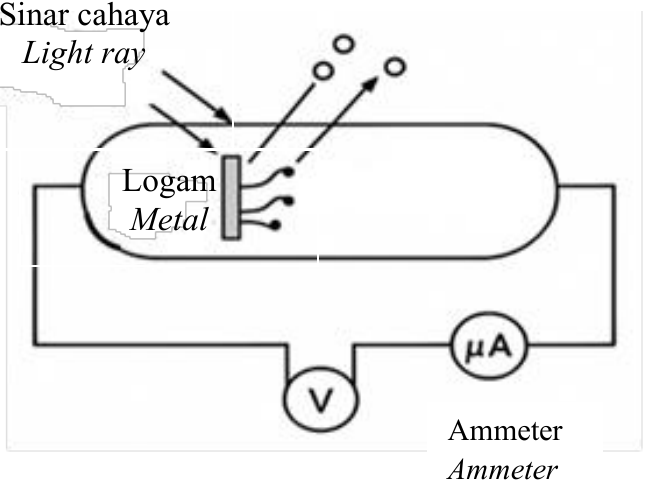
Diagram 23 shows a photoelectric effect experiment. When the intensity of light is increased, the reading of the ammeter increases. What is the most appropriate conclusion based on the characteristics of the photoelectric effect?
Medium
Diagram 24 shows an experiment to determine the photoelectric effect on a metal surface with threshold frequency f₀. The light used has different frequencies. Student A uses light with frequency fA > f₀. Student B uses light with frequency fB = f₀. Compare the maximum kinetic energy of photoelectrons released in both situations.
Medium
Diagram 33 shows Louis de Broglie, a physicist that came out with the hypothesis on the wave nature of particles in 1924. Which statement is correct regarding his hypotesis?
Medium
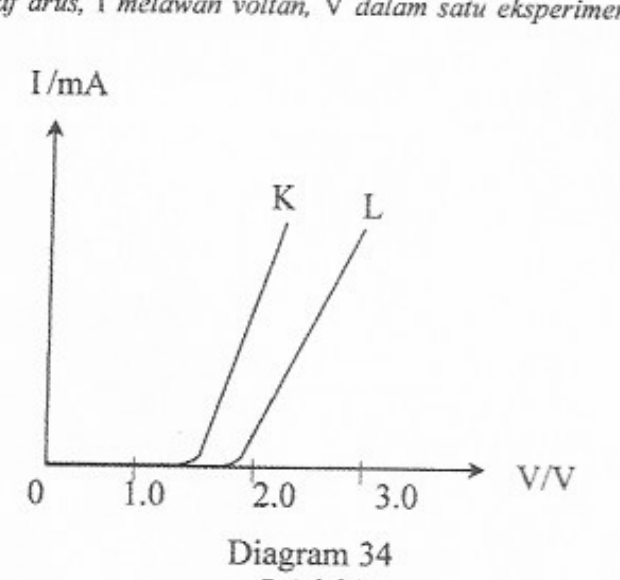
Diagram 34 shows a graph of current, I against voltage, V in an experiment to determine the value of Planck's constant (curve K turns on at about 1.5 V and curve L at about 2.0 V; both then rise steeply, K steeper than L). Which conclusion is correct from the graph?
Medium
Einstein's photoelectric equation for a metal is hf = ½mv² + W. ½mv² represents
Easy
When a photoelectric material is shone with blue light of wavelength, λ = 452 nm, a photoelectron with 0.75 eV is emitted. What is the threshold wavelength of the photoelectric material? [Given hc = 1.243 × 10³ eV nm]
Medium
The equation below represents Einstein’s photoelectric theory: E = W + Kmax. What does the symbol W represents?
Easy
All of the following statements are true except
Medium
Diagram 25 shows a process that occurs when light is shone onto a metal surface (photons strike lithium metal and photoelectrons are emitted). Which of the following is true based on the process that occurs as in the diagram?
Medium
Which of the following is true about the photoelectric effect? I The emission of electrons will not occur for low light intensity; II The emission of electrons from a metal surface by a photoelectric effect is instantaneous; III The photoelectric effect is the release of electrons from the metal surface when irradiated with light with certain frequency; IV The kinetic energy of a photoelectron depends on the intensity of light
Medium
Which of the following metals does not emit electrons when a photon with a frequency 1.304 × 10¹⁴ Hz is irradiated onto its surface? Threshold frequency f₀: A Platinum, Pt 13.6 × 10¹³ Hz; B Iridium, Ir 0.12 × 10¹⁵ Hz; C Tantalum, Ta 1.03 × 10¹⁴ Hz; D Molybdenum, Mo 1.11 × 10¹⁴ Hz
Easy
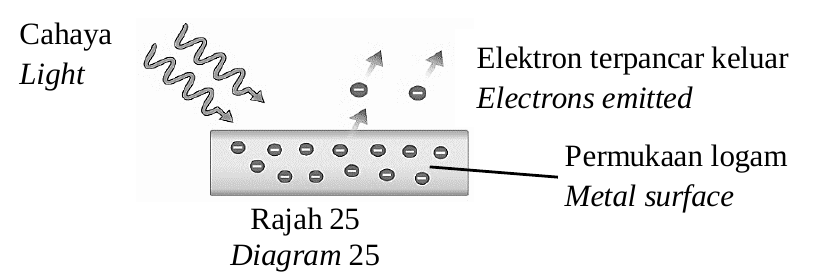
Diagram 25 shows a phenomenon of electrons being released from a metal surface when light shines on it. What is the name of the phenomenon?
Easy
What is the work function of Platinum metal if the threshold frequency, fo is 1.36 x 10¹⁴ Hz? [Planck constant, h = 6.63 x 10⁻³⁴ J s]
Medium
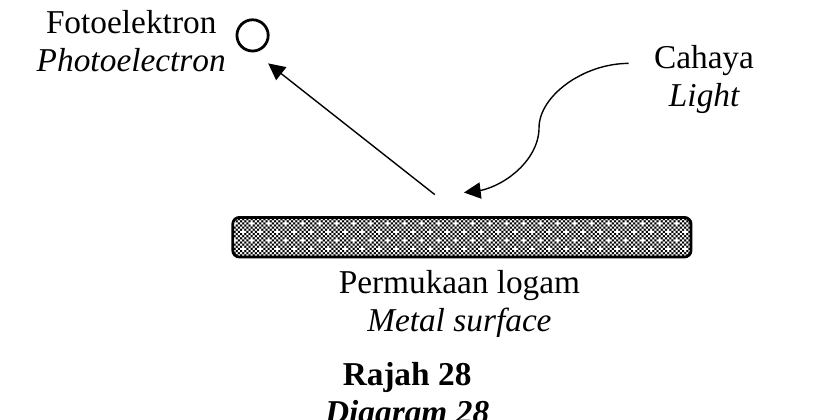
Diagram 28 shows the emission of photoelectron from metal surface. Photoelectron emission occurs when
Medium
Einstein's photoelectric equation for a metal is hf = ½mv² + W. ½mv² represents
Easy
When a photoelectric material is illuminated with blue light of wavelength λ = 452 nm, a photoelectron with 0.75 eV is emitted. What is the threshold wavelength of the photoelectric material? [Given hc = 1.243 × 10³ eV nm]
Medium
Quantum physicist had confirmed the properties of light and electron through experiment. Choose the correct statements. I: Light exhibits wave characteristics. II: Light exhibits particle characteristics. III: Electron exhibits wave characteristics. IV: Electron exhibits particle characteristics.
Medium
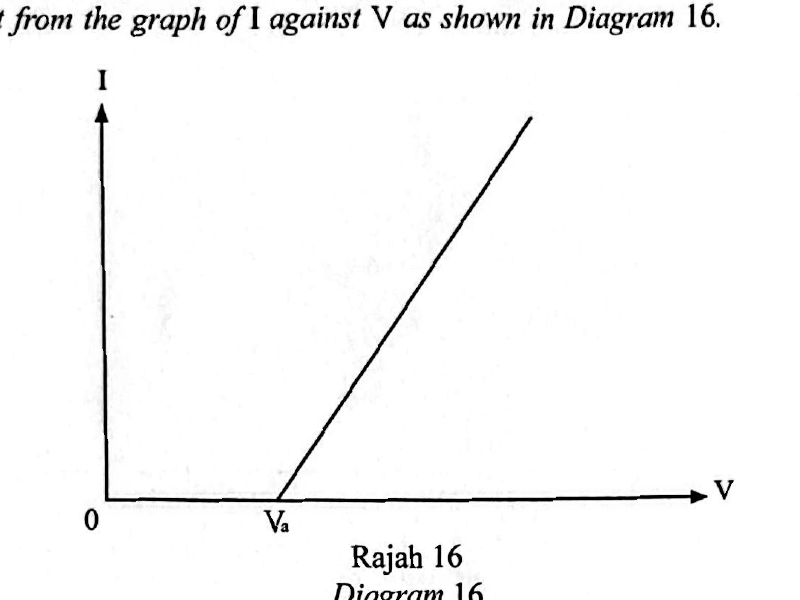
In the experiment of photoelectric effect, one physical quantity, Va can be obtained through V-intercept from the graph of I against V as shown in Diagram 16. What is represented by the physical quantity of Va?
Medium
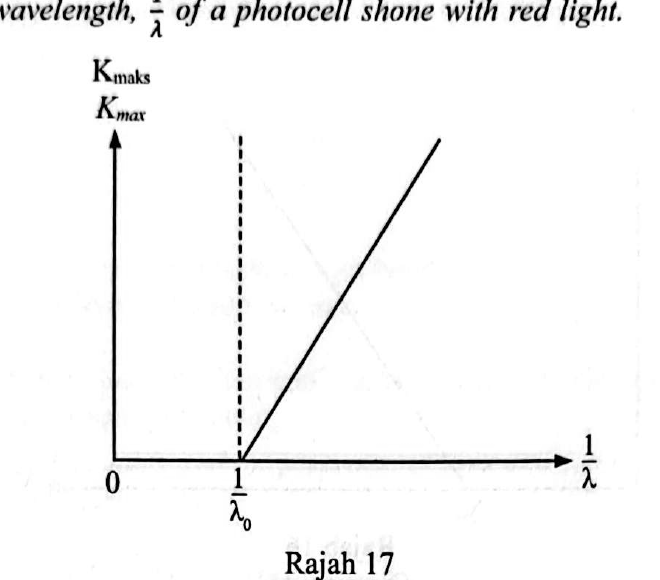
Diagram 17 shows a graph of maximum kinetic energy of photoelectron, Kmax against the reciprocal of wavelength, 1/λ of a photocell shone with red light. What happen to value of Kmax when the value of λ decreases?
Medium
An idealised body that is able to absorb all electromagnetic radiation that falls on it. Based on the above statement, what is meant by the idealised body?
Easy
What is the energy of a 500 nm light photon when the Planck’s constant, h is 6.63 × 10⁻³⁴ J s and the speed of light in vacuum, c is 3.00 × 10⁸ m s⁻¹?
Medium
Which of the following statements correctly explains the process of work function, W?
Medium
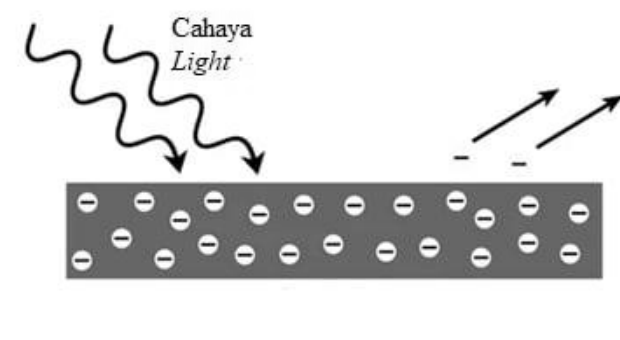
Diagram 28 shows a phenomenon on a metal surface (light falls on the metal and electrons are emitted). Which of the following is correct about the phenomenon?
Easy
A black body is ...
Easy
What is the meaning of photoelectron?
Medium
Diagram 25 shows a graph of maximum kinetic energy of photoelectrons, Kmax against light frequency, f for four different types of metals. What conclusion can you draw from the graph?
Medium
What is the contribution of Albert Einstein in Quantum Physics?
Medium
Which of the following statement is not characteristics of photoelectric effect?
Medium
Calcium metal has work function 3.00 eV. What is the maximum kinetic energy possessed by the electrons when irradiated with violet light (λ = 380 nm)?
Medium
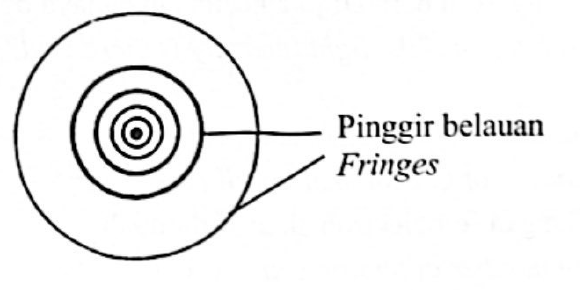
Diagram 28 shows the diffraction pattern of electrons through a thin layer of graphite. If the flow of electrons is replaced by a flow of protons moving with the same momentum, what will happen to the distance between diffracted fringes?
Medium
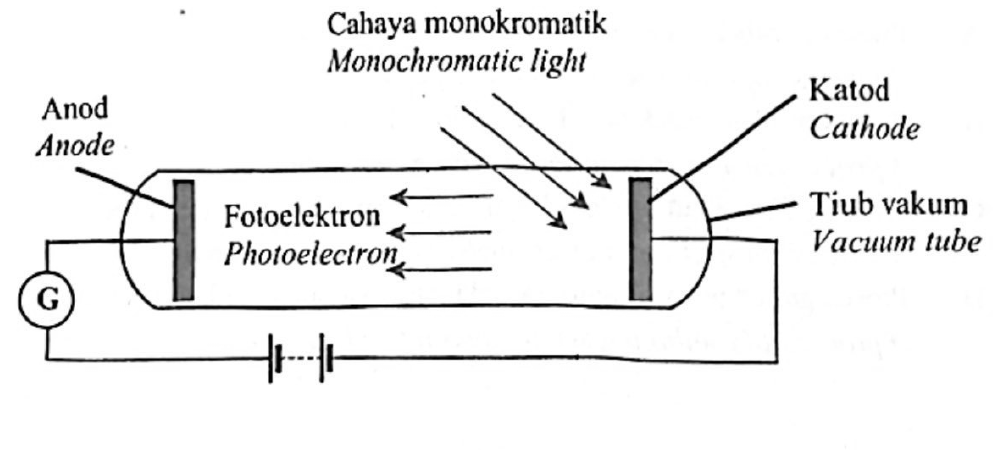
Diagram 29 shows a cathode is illuminated with monochromatic light. What will happen if the light intensity is increased?
Medium
Which of the following will increase the velocity of photoelectrons?
Medium
A beam of light with a wavelength of 550 nm is directed to a metal surface that has a work function of 6.83 × 10⁻²⁰ J. Calculate the maximum kinetic energy of the photoelectron emitted from the metal surface. [Planck's constant, h = 6.63 × 10⁻³⁴ J s]
Easy
What is the factor that affect the photoelectric current?
Medium
A metal with a work function of 3.424 × 10⁻¹⁹ J is shone on by a light of wavelength 3.8 × 10⁻⁷ m. What is the maximum kinetic energy of an emitted photoelectron? [h = 6.63 × 10⁻³⁴ J s, c = 3.0 × 10⁸ m s⁻¹]
Medium
Calculate the number of photons per second emitted by a red light lamp of wavelength λ = 7.0 × 10⁻⁷ m if the power of the lamp is 50 W. Given Planck constant h = 6.63 × 10⁻³⁴ J s.
Medium
Photoelectric effect is used in
Easy
What is the factor that affect the photon energy?
Easy
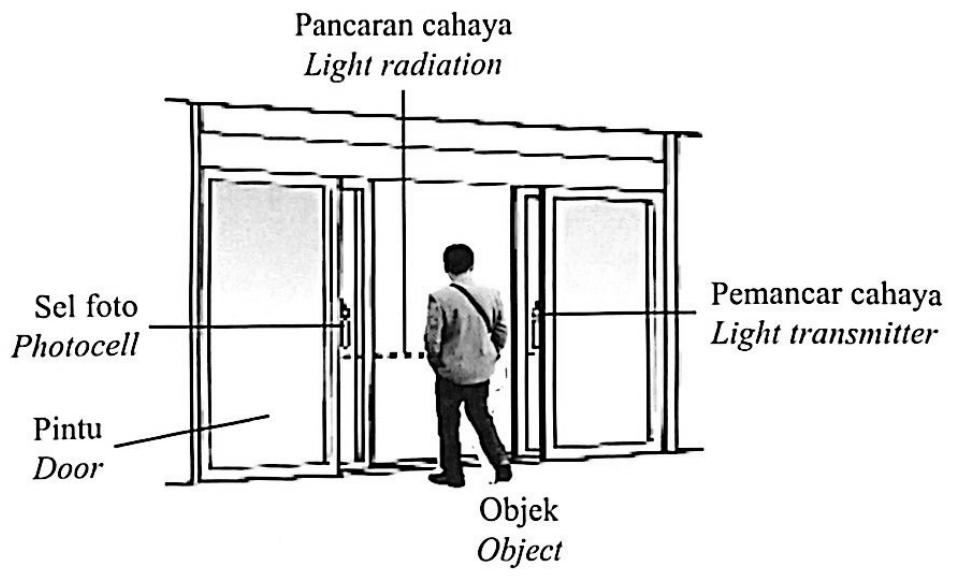
Diagram 28 shows an automatic gate system that operates when light is directed by a light transmitter onto the cathode metal in a photocell. What causes automatic door to open?
Medium
Calculate the power of the red light lamp which emits 1.76 × 10²⁰ photons per second. Wavelength, λ, of red light = 7.0 × 10⁻⁷ m. Given Planck constant, h = 6.63 × 10⁻³⁴ J s
A 40 W
B 50 W
C 120 W
D 150 W
Medium
Photoelectric effect is used in
I Solar panel
II Polaroid camera
III Laser pointer
IV Endoscope
A I and III
B II and IV
C I, II and III
D II, III and IV
Medium
What is photon energy?
Easy
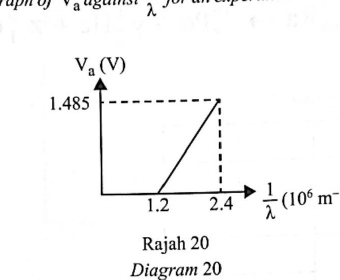
Diagram 20 shows a graph of Va against 1/λ for an experiment to determine the value of Planck's constant, h. Given: the gradient of the graph, m = hc/e; charge of a photoelectric, e = 1.60 × 10⁻¹⁹ C; speed of light in a vacuum, c = 3.00 × 10⁸ m s⁻¹. Based on Diagram 20 (Va = 1.485 V; 1/λ from 1.2 to 2.4 × 10⁶ m⁻¹), calculate the Planck's constant value, h.
Medium
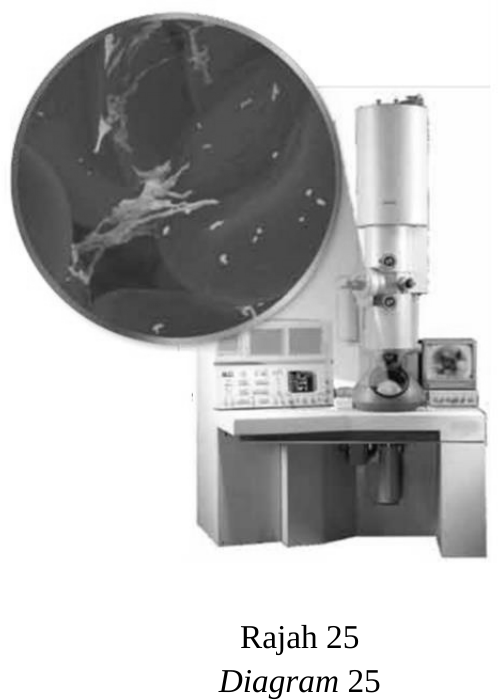
Diagram 25 shows an image of red blood cells produced under an electron microscope. Which of the following describes the above situation?
I Electron beam travels in a straight line
II Electrons have wave-particle duality
III Electron beam has a longer wavelength than light
IV Electron beam has a shorter wavelength than light
Medium
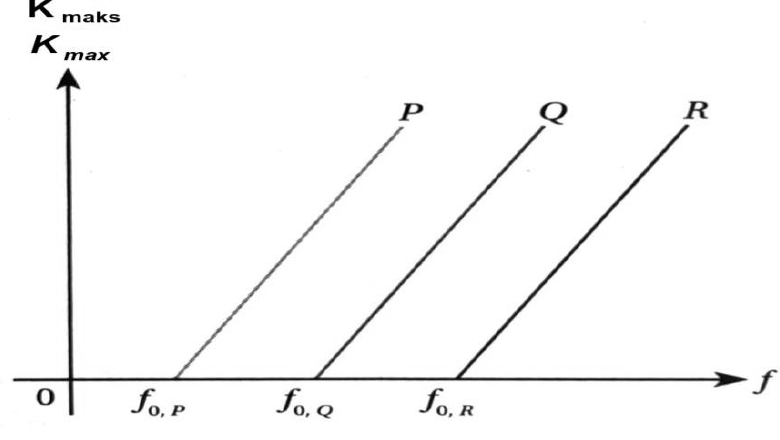
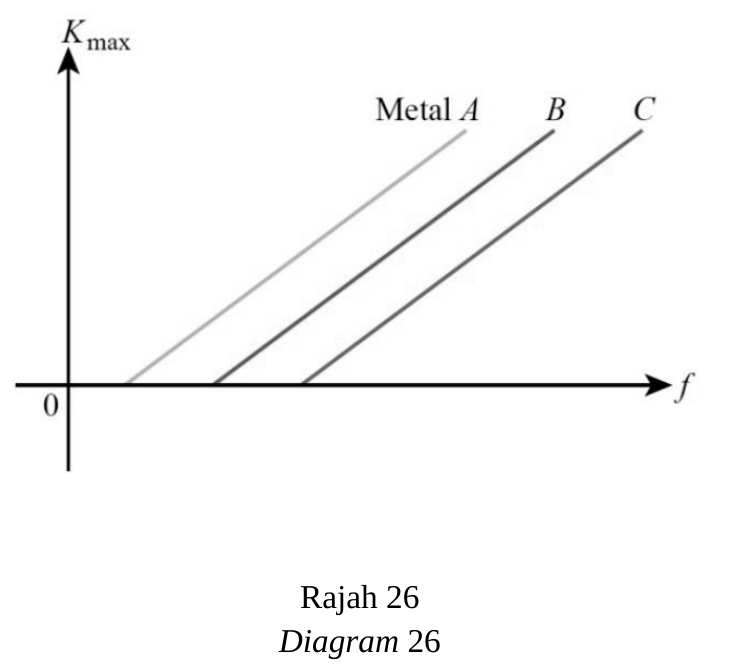
Diagram 26 shows the graph of maximum kinetic energy, Kmax against frequency, f of metal A, B and C. Which is correct to show the comparison of threshold frequency for metal A, B and C?
Medium
Which of the following is true about the photoelectric effect? I The emission of electrons will not occur for very low light intensity. II The emission of electrons from a metal surface by a photoelectric effect is instantaneous. III The photoelectric effect is the release of electrons from the metal surface when irradiated with electromagnetic radiation. IV The kinetic energy of a photoelectron depends on the intensity of light.
Medium
The Einstein's photoelectric equation in the word equation is...
Easy
Which of the following is light energy that exists in the form of energy packets?
Easy
A photon of electromagnetic wave has the same momentum as an electron which moves at a speed of 2.0 × 10⁶ m s⁻¹. What is the de Broglie wavelength of the photon? [Mass of electron = 9.1 × 10⁻³¹ kg]
Medium
A semiconductor emits electrons when illuminated by blue light. What happens to the photoelectric effect if the blue light is changed to violet light?
Medium
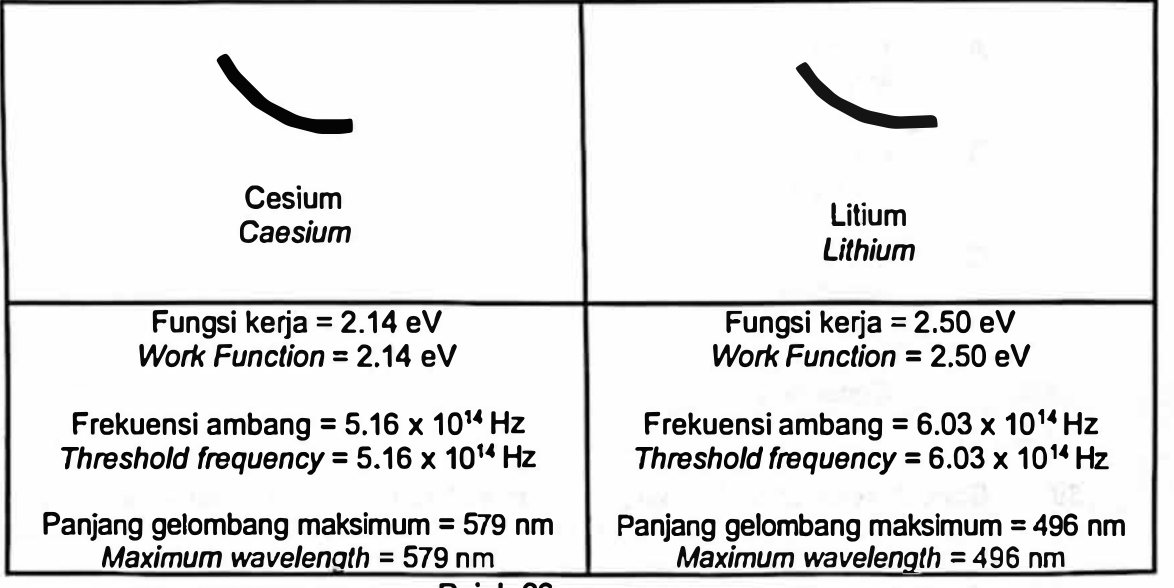
Diagram 26 compares two metals in a photocell circuit. Caesium: work function 2.14 eV, threshold frequency 5.16 × 10¹⁴ Hz, maximum wavelength 579 nm. Lithium: work function 2.50 eV, threshold frequency 6.03 × 10¹⁴ Hz, maximum wavelength 496 nm. Which of the following statements is correct?