SPM Tuition
Subject
Request Tuition

FORM 4

01Introduction to Chemistry
02Matter and the Atomic Structure
03The Mole Concept, Chemical Formula and Equation
04The Periodic Table of Elements
05Chemical Bond5.1 Basics of Compound Formation0/35.2 Ionic Bond0/35.3 Covalent Bond0/35.4 Hydrogen Bond0/35.5 Dative Bond0/35.6 Metallic Bond0/35.7 Properties of Ionic Compounds and Covalent Compounds0/3Topical past papers0/285
06Acid, Base and Salt
07Rate of Reaction
08Manufactured Substances in Industry

FORM 5

01Redox Equilibrium
02Carbon Compound
03Thermochemistry
04Polymer
05Consumer and Industrial Chemistry
Past papers
  1. Chemistry
  2. Chapter 5 Chemical Bond
  3. 5.2 Ionic Bond
  4. Charge balance

5.2 Ionic Bond: Charge balance

  1. Transfer then attraction
  2. Charge balance
  3. Practice

Charge balance

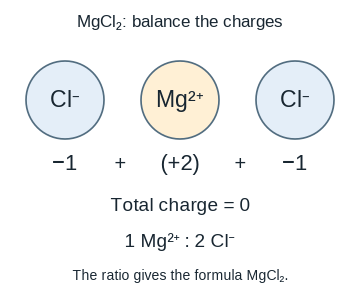
One magnesium ion balances two chloride ions, giving MgCl₂.
Add the charges. Check the ion ratio.
CompoundIon changesRatio
MgOMg loses two; O gains two1:1
MgCl₂Mg loses two; each Cl gains one1:2
Na₂OEach Na loses one; O gains two2:1
Exam tip: Draw full outer shells and charges in ion diagrams. Ionic solids contain lattices, not separate NaCl molecules.